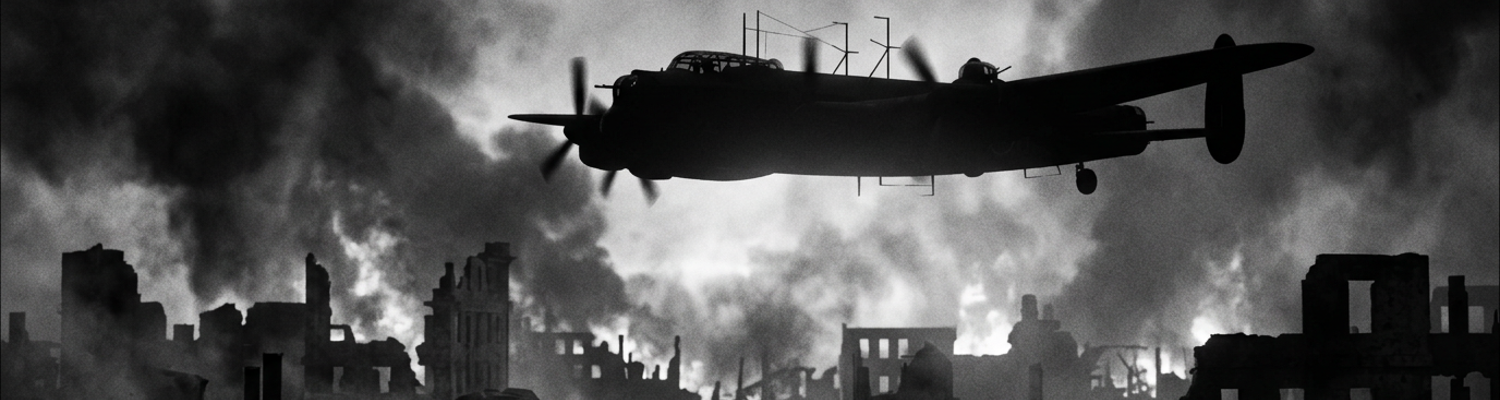

Improvised Airborne Tactical Air Direction Centers
Unbearable heat exceeded ninety-five degrees Fahrenheit over the lowlands. The temperature radiated off stagnant canals. Seasonal squalls drove freezing rain across high-altitude ingress routes over the mountain ridgelines. Ruptured municipal water mains mixed with soot to coat the ground in thick sulfuric mud. Visibility swung wildly from crystal clarity to zero within minutes.
The air offered zero relief.
When examining the historical record, Fifth Air Force operational staff at Lingayen and Mangaldan airfields recognized a severe command deficit. Isolated headquarters officers could not direct urban strikes through delayed telephone landlines or distant liaison posts. In February 1945, the Fifth Air Force deployed modified Stinson L-5 Sentinels and B-25 Mitchells as makeshift airborne tactical air direction centers. Ground mechanics ripped out auxiliary passenger seats and rear armor plating. They removed non-essential gun mounts to bolt heavy high-frequency and very-high-frequency radio chassis into place. B-25J Mitchells from the 38th Bombardment Group received SCR-522 four-channel VHF command transceivers. Mechanics spliced trailing wire antennas directly onto existing battery buses.
Stinson L-5 liaison monoplanes operated by the 25th Liaison Squadron were fitted with battery-draining SCR-284 receiver-transmitters. Ground crews lashed these units to rear observer compartments with heavy web strapping.
These light aircraft possessed loiter speeds below seventy miles per hour. This low velocity gave pilots extended observation time directly above contested urban sectors. Fifth Air Force planners viewed this improvised aerial tier as a workable stopgap. The goal was to lift senior planners out of their sensory isolation and supply frontline targeting data directly to strike squadrons.
Pilots operated with engine cowlings stripped bare to avoid vapor lock.
A close review of operational logs indicates that airborne controllers attempted to visually identify targets and vector close air support strikes into fortified Manila city blocks. Flying at altitudes between eight hundred and fifteen hundred feet, airborne observers looked through layers of dense smoke. This smoke rose from burning districts like Paco, Ermita, and Malate. Japanese troops belonging to Rear Admiral Sanji Iwabuchi and his Manila Naval Defense Force converted thick reinforced concrete government structures into self-contained firing bastions. These structures included the Legislative Building, the Finance Building, and the ancient stone ramparts of the Intramuros.
Standard military grid maps proved inadequate.
Controllers in circling B-25s made repeated low passes to spot red smoke markers fired by 37th Infantry Division rifle companies. They relayed coordinates to inbound Douglas A-20 Havocs and P-47 Thunderbolts. Dive angles had to be calculated manually on cockpit knee boards. This manual math prevented ordnance from crashing into adjacent friendly platoons positioned fifty yards away across street intersections. When visual verification succeeded, high-explosive ordnance leveled target positions with substantial tactical precision.
Dense urban architecture blocked radio waves.
Archival evidence shows that signal degradation and rudimentary radio setups hampered continuous air-to-ground communication with forward air controllers. Ground teams attached to the 1st Cavalry Division carried BC-1000 backpack transceivers or vehicular SCR-299 radio trucks. Both systems suffered severe signal attenuation amid multistory masonry ruins. The steel rebar inside gutted buildings formed screening barriers that reflected high-frequency signals. This interference generated dead zones across entire street grids.
In the air, the dry-cell batteries powering L-5 radio modifications lost voltage after ninety minutes of continuous operation. This voltage drop caused transmitter frequencies to drift away from designated channels. Vibration in the B-25 airframes frequently shook the quartz crystals inside the SCR-522 transceivers loose from their sockets. This mechanical failure suddenly cut off communications during terminal bomb runs. Without continuous frequency stability, airborne directors frequently lost contact with forward observers. This loss occurred at the exact moment strike aircraft rolled into target runs. Pilots were forced to break off bomb releases rather than risk friendly fire on the streets below.
Atmospheric Blindness and Radio Shadow Dynamics
Archival evidence shows that physical geography severed the command link between orbiting air directors and rear echelons before the first bombs fell. Operating from forward strips, modified Stinson L-5s and B-25 directors maintained continuous orbit over the capital. Their low-power VHF transmitters could not defeat the massive topographical barrier of the Sierra Madre. Rising along the eastern flank of Luzon to peaks topping four thousand feet, this ridgeline cast an impenetrable radio shadow across the northern corridors leading back to Fifth Air Force headquarters at Mangaldan. The headquarters sat over one hundred miles away.
Line-of-sight propagation of the SCR-522 transceivers failed against the basalt crests. This failure produced complete signal dropouts whenever an aircraft dipped below three thousand feet to inspect street-level resistance. Ground relay stations established near Clark Field attempted to bridge the gap with vehicular SCR-399 transmitters. Knife-edge diffraction and ground-wave absorption along the volcanic soils degraded voice clarity into unreadable static. Rear commanders at Lingayen operated without incoming reports. They received fragmentary tactical updates with delays running up to forty-five minutes.
Airborne liaisons had to choose between climbing into clear transmission altitudes or staying low to track 37th Division infantry platoons.
Climbing meant losing visual track of urban street fighting. Staying low meant being completely cut off from operational headquarters. The ridgeline severed the operational link entirely.
When examining the historical record, optical tracking collapsed across the central urban basin due to widespread industrial arson. Elements of the Manila Naval Defense Force fell back across the Pasig River. Demolition squads systematically detonated the commercial fuel reserves at the Pandacan petroleum depot. This action ignited millions of gallons of diesel fuel, bunker oil, and aviation gasoline. Thick oily soot climbed to five thousand feet before spreading horizontally across the Manila plain under a stagnant atmospheric inversion.
Orbiting crews in the 25th Liaison Squadron found their windscreens coated with sticky greasy particulate. Hand wipers could not shift the grime. Downward visibility vanished entirely over the districts of Paco, Ermita, and Malate. Forward air observers could not spot the cerise identification panels laid out across rooftops by advancing troops of the 148th Infantry Regiment. They could not identify yellow smoke markers indicating Japanese barricades inside the Paco Railroad Station.
Circular holding patterns descended to five hundred feet over burning residential blocks to identify targets. This low altitude exposed unprotected fabric airframes to point-blank rifle and 25mm antiaircraft fire from fortified rooftops. Blind strikes were canceled to prevent friendly fire.
A close review of operational logs indicates that sudden weather shifts dismantled what little remained of airborne tactical control. Fast-moving tropical squalls regularly swept in from Manila Bay. These storms produced extreme atmospheric turbulence and violent convective updrafts directly over the urban combat zone. Localized thermal shears battered the fragile Stinson airframes. The turbulence threw pilots against instrument panels and tore radio headsets from mounting plugs.
In the observer seats, grease pencils snapped. Target maps were violently dislodged as vertical wind gusts exceeded forty feet per second. Torrential downpours saturated unsealed radio junctions. This moisture caused wet tracking and arc-overs across the trailing-wire antenna insulators of the SCR-284 sets. Signal strength between the circling aircraft and forward air controllers from the 1st Cavalry Division plunged instantaneously.
High-frequency reception degraded into violent audio clipping. This severed voice contact while P-47 Thunderbolts and SBD-5 Dauntless dive-bombers were already descending through cloud ceilings on terminal runs. Ground controllers shouted into dead microphones while airborne observers struggled to maintain level flight. The ground teams were drenched and isolated in rubble-strewn alleys.
On February 9, two L-5 observers abandoned their surveillance orbits. Heavy convective winds pushed engine cylinder temperatures past critical thresholds over Manila Bay.
Detached Command at XIV Corps Headquarters
The headquarters map boards bore no resemblance to the ground.
When examining the historical record, Major General Oscar Griswold established the XIV Corps forward command echelon over fifteen miles north of the city center near Calumpit and Malolos. He deliberately kept his operational nucleus behind the slow-moving heavy corps artillery train. Staff officers from the G-2 intelligence and G-3 operations sections set up field desks inside concrete provincial administrative structures. These buildings insulated them from the street-to-street fighting erupting across the northern approaches to Manila.
Thick plaster walls and sprawling palm groves muffled the sound of Japanese naval guns and mortar barrages detonating along the Pasig River. Large 1:62,500 scale tactical maps hung from temporary timber framing. Hum-producing gasoline generators illuminated the rooms. The exhaust drifted through rear courtyards.
Griswold tracked the combat through tidy grease-pencil markings. These markings grouped whole regiments into singular broad arrows. These static representations severed the corps commander from the tactical friction of urban warfare. The upper command echelon was enclosed in a self-contained headquarters bubble. Strategic decisions were formulated without sensory awareness of the burning streets. Distance converted immediate tactical crises into ancient history.
Archival evidence shows that XIV Corps communications relied on motorcycle couriers and four-wheel-drive liaison jeeps struggling across broken transit corridors. Dispatch riders from the 114th Signal Company traversed Route 3. They confronted blown concrete culverts and sniper ambushes from bypassed Japanese pockets. Axle-deep volcanic sludge repeatedly flooded engine crankcases.
A simple dispatch run between forward division outposts and Griswold staff commonly consumed three to five hours. High-frequency wireless networks fared no better. The vehicular SCR-399 and SCR-193 transmitters operating at corps headquarters suffered from chronic transmitter tube failures. Localized electrical storms garbled high-frequency Morse code transmissions.
Signalmen spent valuable hours transcribing enciphered groups through mechanical M-209 converter machines. This process introduced administrative bottlenecks before combat reports reached the planning tables. By the time a frontline transmission detailing an anti-tank barrier or an intact river bridge arrived at Griswold desk, the tactical picture had shifted three or four times over. Planners mistook delayed radio static for steady progress.
A close review of operational logs indicates that the physical isolation of headquarters generated false situational assessments regarding the rate of infantry advance. Hours-old dispatches misled Griswold and his operations staff. They assumed that the 37th Infantry Division and the 1st Cavalry Division were sweeping forward with the speed of mechanized rural columns. Headquarters directives repeatedly urged field commanders to sprint southward to capture intact water filtration plants and commercial docks. This push relied on the flawed assumption that Japanese resistance consisted of demoralized retreating rear guards.
Elements of the 148th Infantry Regiment and the 5th Cavalry Regiment were pinned down outside the reinforced concrete walls of Bilibid Prison and the Paco railway station. They were caught in overlapping interlocking fire from concealed 20mm dual-purpose antiaircraft guns. Griswold staff believed friendly troops held intersections that were fiercely contested. Corps artillery batteries were repeatedly denied fire missions to prevent suspected friendly fire.
On February 7, Griswold issued orders directing a general advance toward the Pasig River. He was unaware that lead assault platoons had sustained forty percent casualties. They were completely immobilized behind brick rubble two miles to the north.
General Headquarters Directives and Ordnance Restrictions
General Headquarters strictly prohibited aerial bombing within the municipal limits of Manila.
When examining the historical record, General Douglas MacArthur issued operational directives from his command post at Hacienda Luisita. These orders barred Fifth Air Force bombers from dropping ordnance inside the city boundaries. The theater commander intended to save Philippine administrative architecture, cultural monuments, and dense civilian populations from aerial obliteration.
Field orders dispatched to Sixth Army commander Lieutenant General Walter Krueger on February 5 prohibited heavy artillery bombardments against urban structures. Forward spotters had to verify that every noncombatant had evacuated the target zone before firing. MacArthur sought to present an intact capital to the global press.
The directive banned 155mm and 240mm howitzer high-explosive shells from engaging occupied buildings without prior personal clearance from theater headquarters. Even 105mm artillery batteries faced severe operational limits. Observers had to establish positive line-of-sight visual confirmation before gun crews could pull lanyards. Aircrews flying modified B-25 Mitchells and A-20 Havocs were relegated to dropping propaganda leaflets or conducting photographic reconnaissance north of the Pasig River. Their bomb bays remained empty of high explosives while circling directly over active enemy gun emplacements.
The regulations failed against reinforced concrete.
Archival evidence shows that assault battalions from Major General Robert S. Beightler 37th Infantry Division and Major General Vernon D. Mudge 1st Cavalry Division slammed directly into heavily fortified strongpoints across south Manila. East of the central business district, elements of the 148th Infantry Regiment encountered Japanese naval personnel from the Manila Naval Defense Force. These defenders had converted the multi-story Paco Railroad Station into an impenetrable fortress.
Japanese engineers had reinforced three-foot-thick concrete walls with railroad ties, sandbags, and salvaged steel plating. They embedded Type 92 heavy machine guns and 20mm automatic cannons inside ground-floor ticket windows and second-story passenger galleries. Standard 60mm and 81mm infantry mortars burst harmlessly against the reinforced stone facade without chipping the exterior plaster.
Across the district at the Concordia College compound and the Paco estero, troops of the 5th Cavalry Regiment stalled under interlocking fields of fire that swept open roadways. They suffered dozens of casualties within thirty minutes of stepping past street corners. M4 Sherman tanks armed with 75mm main guns fired point-blank armor-piercing rounds into reinforced basement embrasures. The projectiles bounced off or failed to penetrate the double-reinforced rebar barriers shielding Japanese gun crews.
Griswold was trapped between dead infantrymen and headquarters regulations.
A close review of operational logs indicates that Major General Oscar Griswold spent February 8 through February 12 buried under urgent combat requests that violated theater standing instructions. Radio dispatches from frontline regimental commanders flooded into XIV Corps headquarters. They demanded immediate tactical air strikes and sustained heavy corps artillery barrages to crack the concrete bunkers pinning down their rifle companies. Griswold knew that authorizing 500-pound general-purpose bomb drops or unrestricted 155mm howitzer fires directly defied MacArthur preservation orders.
Corps staff drafted urgent variance petitions and routed them upward through Sixth Army channels. The multi-echelon administrative chain required hours of hand-carried paper routing and signal decryption. Staff officers debated coordinate lines and civilian density estimates at rear map tables. Company commanders in Paco and Malate withdrew surviving riflemen under smoke screens.
Griswold repeatedly denied requests from forward air controllers for P-47 Thunderbolt dive-bombing missions. Division commanders were forced to expend infantrymen in frontal assaults using satchel charges, handheld bazookas, and M2-2 flamethrowers against fortified Japanese positions.
At 1630 hours on February 11, XIV Corps operations recorded the denial of five separate air support requests for strikes along the Paco canal line.
Communication Lags and Periphery Friendly Fire
A close review of operational logs indicates that along the northern and eastern urban perimeters, American infantrymen were repeatedly caught in the explosive radius of their own air support. MacArthur ordnance restrictions legally barred Fifth Air Force bombers from dropping high explosives into the central city core. Close air support strikes were systematically cleared for peripheral target grids around Grace Park airfield, Balintawak, and the open approaches east of the San Juan Reservoir.
In these semi-rural transition zones, dive-bombers and attack aircraft encountered a devastating command-and-control breakdown. Airborne observers in modified Stinson L-5 Sentinels and B-25 Mitchell direction centers spotted Japanese pillboxes. They drafted target coordinates and routed strike requests back to Fifth Air Force forward staging bases at Mangaldan or Clark Field. The operational communication delay averaged between thirty and sixty minutes. This delay spanned the initial observation pass, manual phone transcription at the air-ground control center, flight briefing, engine warm-up, and the inward flight of Douglas A-20 Havocs and Republic P-47 Thunderbolts.
Over thirty to sixty minutes, a fluid battle line dissolves entirely.
Clocks ticked. Ordnance flew toward coordinates that had already ceased to be the front.
Archival evidence shows that this half-hour to full-hour latency produced catastrophic friendly fire along the urban perimeter. Forward ground spotters watched strike flights of P-47s dive out of five-thousand-foot cloud decks. The planes released five-hundred-pound general-purpose bombs directly onto terrain features that American assault platoons had successfully stormed and occupied fifteen minutes earlier.
At the Grace Park airstrip on the northern outskirts of Manila, forward elements of the 1st Cavalry Division 5th Cavalry Regiment pushed across open taxiways. They moved to neutralize Japanese bunker positions behind the runway drainage ditches. Circling airborne controllers had logged those exact revetments as active enemy resistance thirty-five minutes prior. The light observation planes could not reach headquarters by high-frequency radio to abort the mission in time. Four inbound P-47s dropped AN-M64 high-explosive ordnance directly across the runway lip. The blast killed several American soldiers and shredded two M8 armored cars with bomb fragments.
The delays turned close air support into blind artillery.
When examining the historical record, ordnance dropped on target markers laid hours earlier regularly smashed into advanced infantry units. Frontlines shifted without the awareness of circling air controllers. Forward rifle companies from the 37th Infantry Division frequently designated Japanese strongpoints by laying out fluorescent cerise fabric panels along rooftops. They hurled colored smoke grenades into road junctions or directed phosphorus mortar shells into reinforced barricades.
In the congested topography of perimeter neighborhoods like Caloocan, heavy wind gusts and smoldering wood fires quickly scattered the smoke markers. Advancing infantrymen surged forward to exploit momentary gaps in Japanese fire. Forward observers had marked target buildings two to three hours before the attack aircraft finally arrived overhead. Lead infantry squads had already cleared the target structures and established machine-gun positions on the opposite side of the street.
Orbiting strike pilots received stale target briefings before takeoff. They visually aligned on the residual smoke and the map coordinates assigned at base. They dropped 260-pound fragmentation bombs and strafed .50-caliber machine guns directly into the newly won American positions. Riflemen threw themselves into open sewer trenches to escape fire originating from their own air corps.
Target markers outlived the positions they were meant to destroy.
A technical examination of field equipment confirms that this tactical fratricide stemmed directly from a total absence of common radio channels between the men in the dirt and the men in the cockpits. Ground air liaison parties attached to the 37th Infantry and 1st Cavalry Divisions operated vehicular SCR-299 radio trucks and SCR-193 sets. These units transmitted along low-frequency and high-frequency military wavebands between 1.5 and 18 megahertz.
Circling Fifth Air Force P-47s and A-20s carried SCR-522 transceivers. These were four-channel crystal-controlled units operating exclusively within the very-high-frequency band from 100 to 156 megahertz. Ground air liaison teams lacked direct real-time frequency parity with orbiting Fifth Air Force strike aircraft.
A forward air party crouching in a ditch outside an active Japanese bunker could not press a microphone button and talk directly to the pilot diving toward them at three hundred miles per hour. Every single emergency abort directive or target correction had to be keyed by high-frequency Morse code or voice back to an intermediate radio tent at XIV Corps rear headquarters. Staff officers converted the message into an air control channel and retransmitted it across very-high-frequency wavelengths to the strike flight leader.
By the time the radio wave completed its relay circuit through rear headquarters, the bomb shackle had already opened.
In late February, during combat operations near the water filtration plant east of Manila, an entire flight of dive-bombers completed three consecutive strafing runs over an entrenched platoon of the 148th Infantry Regiment. The forward tactical air party sat helplessly pounding their SCR-284 radio key. They were unable to transmit on the VHF crystal frequency used by the orbiting aircraft. Ground troops frantically burned orange recognition smoke. The pilots were conditioned to expect enemy deception and mistook the colored markers for pre-briefed Japanese defensive signals.
Ground troops fired green star-cluster flares from handheld projector tubes into the sky to wave off subsequent runs. Two more high-explosive bombs impacted forty yards from the 2nd Battalion command post. The blast concussed the battalion staff and cut landline wires back to division artillery. The flight leader climbed away to the north with his mission log marked as a confirmed enemy target destroyed.
Breakdown of Urban Joint Fire Coordination
The radio network failed completely. The infantry relied entirely on cold steel and gunpowder.
Archival evidence shows that the breakdown of aerial command loops forced front-line units to abandon air support and roll heavy field artillery pieces directly into open streets. Deprived of responsive air strikes against fortified government complexes, Major General Robert S. Beightler authorized 37th Infantry Division gunners to employ point-blank direct fire. Gun crews from the 136th Field Artillery Battalion wrestled M2A1 105mm howitzers into exposed road intersections along Taft Avenue and Padre Faura Street. They sighted directly through open gun barrels into ground-floor windows from distances under one hundred and fifty yards.
The 105mm shells failed to crack the five-foot reinforced concrete walls of the Manila City Hall and the New Police Station. Corps commanders pushed 155mm M1 howitzers from the 757th Field Artillery Battalion into forward rifle company lines. Artillerymen stripped off sandbags and locked their split trails against curbs. They fired high-explosive concrete-piercing shells on horizontal trajectories straight into the masonry ramparts of the Intramuros.
These direct-fire salvos pulverized exterior stone facades. They blasted Japanese naval gun crews out of reinforced basements and collapsed inner courtyards room by room. This action replaced the missing aerial ordnance with point-blank terrestrial barrages.
Concrete dust neutralized aerial observation.
When examining the historical record, the fighting revealed that circling light aircraft could not manage tactical strikes over a heavily built-up smoke-obscured urban combat zone. Orbiting at twelve hundred feet, observers in 25th Liaison Squadron Stinson L-5s looked down onto a solid blanket of black petroleum soot and atomized concrete. This cloud was generated by burning city blocks across Ermita and Malate. High-rise administrative architecture created vertical blind spots that concealed enemy firing positions tucked beneath masonry porticos and deep colonnades.
Pilots could not track the progression of friendly rifle squads moving through mouse-holed interior walls or subterranean drainage conduits beneath the street surface. An aircrew might spot muzzle flashes from a Japanese dual-purpose 25mm gun emplacement. The steep dive angles required for inbound P-47 Thunderbolts made precise release impossible inside narrow street grids flanked by multistory masonry structures. A bomb released two seconds late skidded across flat concrete rooftops into adjacent company command posts. The vertical complexity of three-dimensional urban terrain coupled with non-existent forward visibility negated every tactical advantage of overhead air control.
The air-ground control architecture required total rebuilding.
A close review of operational logs indicates that post-action assessments from the Manila campaign prompted sweeping changes across American military doctrine regarding urban fire coordination. Sixth Army field commanders and Fifth Air Force staff officers acknowledged in formal combat evaluations that airborne liaison planes could never substitute for dedicated tactical air control parties embedded directly within front-line assault companies. Doctrinal revisions drafted during late spring 1945 eliminated reliance on circuitous corps-level high-frequency relay networks.
The revisions established dedicated unified very-high-frequency radio nets that linked forward ground spotters directly with orbiting fighter-bombers. Ground forces began mandating the deployment of armored liaison vehicles equipped with modified SCR-522 transceivers. This placement put forward air controllers in the same roadside ditches as company commanders. These forward teams received personal control over waveband allocations. This ended the practice of relaying targeting coordinates through detached rear headquarters miles outside contested cities.
On May 14, 1945, Sixth Army headquarters distributed specialized joint air-ground training circulars based entirely on the communications failures sustained inside Manila. The new doctrine mandated direct VHF radio links for all forward units.