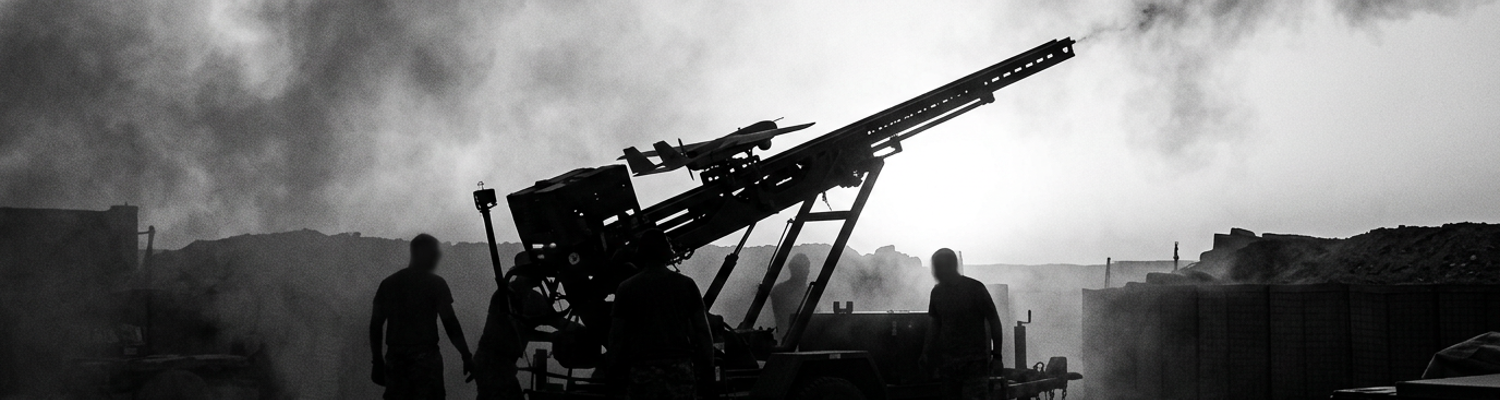

Pneumatic Catapult Failures at Tanajib Revetments
The internal Buna-N nitrile seal on the RQ-2A Pioneer launcher piston shredded with a sharp metallic screech at 0240 hours. High-pressure MIL-H-5606 hydraulic fluid atomized across the steel guide rails. The fluid coated the twin-boom fiberglass fuselage of drone airframe 158 (Bureau Number 163022) in oily red spray. On the external launcher manifold panel, the primary pressure gauge needle plummeted from 3,100 PSI straight to zero in less than four seconds. Without stored pneumatic-hydraulic pressure to accelerate the 430-pound airframe along the twenty-foot rail, the launch cycle failed before the drive shuttle could engage the belly hook. The nitrogen-over-oil accumulator dumped its full charge through the cracked cylinder packing. This stripped all kinetic energy from the release mechanism. The planned pre-breach target reconnaissance window for the 1st Marine Division vanished. Forward artillery observers were waiting on live sensor downlinks to map Iraqi trench coordinates.
The launch window collapsed entirely.
A close review of operational logs indicates that ground crews from the 1st and 2nd Remotely Piloted Vehicle Companies were operating out of primitive earthen revetments. Combat engineers cut these positions into coastal sabkha salt flats near Tanajib and the secondary staging airstrip at Ras al-Mishab. They used armored D7 bulldozers to scrape up four-meter sand berms. The goal was shielding the trailer-mounted pneumatic catapults, mobile ground control shelters, and directional tracking antennas from Iraqi line-of-sight observation. Coastal winds threw powdery desert silt and corrosive salt crust across every open valve. Abrasive quartz particles bypassed standard canvas dust covers. The grit settled into the carriage slide rails and ground into the hydraulic cylinder packings every time the launch shuttle cycled. Marine maintenance records demonstrate that this blowing grit acted as an industrial abrasive compound inside the high-pressure recovery valves. It scoured polished steel surfaces and caused micro-fractures in the nitrogen seating interfaces. At Tanajib, these mechanical compromises mounted steadily throughout early February 1991. The failures directly degraded the round-the-clock flight schedules needed to map obstacle belts, minefield lanes, and oil-filled fire trenches along the Kuwaiti border.
Artillery detonations shook the revetment walls.
Archival evidence shows that enlisted technicians carried out urgent mechanical repairs in pitch-black conditions while Iraqi G5 155mm artillery batteries walked shells across the perimeter flats. Sirens signaled Scud missile chemical alerts from southern Iraq. Technicians pulled on charcoal-lined M40 gas masks and heavy butyl gloves without stopping their work on the damaged catapult rails. Working on tight hydraulic fittings with thick rubber gloves doubled task completion times. Sweat fogged their eyepieces completely. Mechanics stripped down the compromised cylinder assemblies with open-ended wrenches. They used spray bottles of solvent and clean rags to flush powdered quartz out of the internal bores before seating replacement O-rings salvaged from spare launcher units. Enlisted crews rigged blue-filtered flashlights inside their field jackets to re-torque manifold flange bolts. They hand-pumped nitrogen bottles to test seal integrity while M8A1 chemical alarms wailed from diesel exhaust contamination nearby. Technicians finished forty-minute depot-level rebuilds in twelve minutes to satisfy rigid air tasking orders. Operational logs at Ras al-Mishab record that thirty-five minutes after the catastrophic seal blowout, the crew re-pressurized the accumulator to 3,200 PSI. They successfully slung a Pioneer toward the burning oil fields of Al-Manaqish.
Two-Stroke Sachs Engine Failures in Desert Sand
Desert grit destroyed the engines from the inside out.
When examining the historical record of 1st Remotely Piloted Vehicle Company operations at Tanajib, the primary point of airborne mechanical failure centered on the unhardened Sachs SF-350 two-stroke powerplant (NSN 2840-01-234-5678). The twin-cylinder, twenty-six-horsepower air-cooled engine was built for clean European flight conditions. It lacked filtration capable of stopping pulverized Arabian sand particles under five microns in diameter. Fine airborne quartz blew straight past standard foam intake filters saturated in two-stroke motor oil. Inside the combustion chambers, this silica fused into an abrasive paste. The paste stripped the thin molybdenum coating off the piston rings and carved deep vertical grooves along the cast-iron cylinder sleeve walls. Compression figures fell from 125 PSI to below 70 PSI across forty-eight hours of continuous flight operations. This caused power losses while drones tracked Iraqi artillery dug into the southern Kuwaiti border defenses. Engine exhaust temperatures surged above acceptable thermal thresholds as the lean fuel-air mixtures detonated erratically. The heat burned holes clean through aluminum piston crowns and forced the 2nd Marine Division to abort flights over obstacle belts.
Every recovery net held an airframe with a ruined motor.
Ground launch equipment suffered an equally destructive breakdown under the same environmental load. Archival evidence shows that the mechanical drive units powering the trailer-mounted pneumatic catapult systems experienced repeated tooth shearing across their internal transmission gearboxes. To meet the joint force air tasking order demanding twenty-four-hour continuous imagery over the Al-Burqan oil fields, ground crews cycled launcher winch drives every ninety minutes. Coarse windblown sand gathered in open oil baths and gearboxes. The grit turned standard MIL-L-2105 gear lubricant into thick cutting paste. High-torque engagement cycles under heavy mechanical friction ground the hardened steel teeth off primary planetary gears. Drive shafts spun freely against stripped transmission rings. Launcher crews attempting to cock catapult shuttles found the gears seizing completely. This locked the launch carriage in place while drones sat fueled on the rails under incoming 152mm artillery fire. Maintenance logs from the Tanajib airstrip document that eleven launcher transmission assemblies failed within a single six-day operating window in mid-February. The failures grounded reconnaissance flights before Marine ground forces initiated the main breach.
Supply depots in the continental United States were three weeks away by sea.
A close review of operational logs indicates that enlisted maintenance technicians deliberately bypassed formal Naval Air Systems Command maintenance directives to prevent total operational shutdown. Doctrinal depot-level protocols mandated that scoured cylinders and stripped gearboxes be tagged as unserviceable Class D equipment. The rules required shipping them back to repair facilities at Naval Air Station Pensacola or contractor facilities in Maryland. Marine technicians inside mobile intermediate maintenance shop vans ignored these supply restrictions. Working on portable South Bend lathes and Bridgeport vertical milling machines powered by diesel generators inside darkened maintenance trailers, enlisted machinists turned raw aluminum bar stock into makeshift piston sleeves. They hand-cut replacement transmission gears from salvaged truck drivetrains. Mechanics smoothed scoured cylinder walls using handheld flex-hones dipped in brake fluid. They re-ringed pistons with non-standard commercial seals pulled from civilian utility equipment at the Jubail port docks. These field-machined launcher gears and reworked two-stroke blocks lacked military specification certification. Yet they returned eight dead airframes and four damaged catapult systems to operational status within thirty-six hours of the initial 1st Marine Division artillery preparations along the Kuwaiti border berm.
Reconnaissance Sorties Over Iraqi Fortifications
The optical sensors imaged targets through the burning soot.
When examining the historical record of 1st and 2nd Remotely Piloted Vehicle Company sorties along the southern Kuwaiti border, video data logs show that the Pioneer airframes carried dual-sensor packages. These comprised a nose-mounted daylight television camera and an 8-to-12-micron forward-looking infrared thermal imager. Flying slow racetracks at three thousand feet above ground level, sensor operators rotated the gimbaled turrets to survey the forward edge of the Iraqi defensive crust. Sunlight struggled through smoke plumes rising from the burning oil wells of Al-Wafra. The high-resolution optical feed resolved individual concertina wire bundles, zigzagging communications trenches, and barbed-wire saps dug by the Iraqi 7th and 14th Infantry Divisions. Thermal imaging revealed distinct ground disturbances where Iraqi combat engineers had recently buried thousands of anti-tank and anti-personnel mines. Type 72 metallic mines and plastic VS-1.6 canisters (as detailed in DIA intelligence summary 91-04) absorbed heat at rates completely different from the surrounding compacted desert crust. They showed up as rows of bright white thermal hot spots on the cathode-ray tube displays inside the Marine ground control shelter. Ground crews logged precise geographic coordinates for staggered triple-strand wire fences, anti-tank ditches, and reinforced bunker parapets. The data stripped away the defensive concealment protecting the Iraqi frontline positions.
Static lines hissed across the tactical video monitors.
Archival evidence shows that subsequent Pioneer reconnaissance sweeps located Iraqi flame trench networks designed to trap advancing mechanized columns. Iraqi engineers had excavated four-meter-wide, two-meter-deep lateral ditches running along the southern border berm. They connected these open cuts directly to high-pressure distribution manifolds fed by regional petroleum storage depots and nearby oil wells. Airborne thermal cameras caught clear visual signatures of liquid hydrocarbons pooling inside the unlined dirt trenches. Operators tracked the heavy, uninsulated surface pipelines feeding the network from the north. They documented isolation valves, gravity-feed culverts, and buried supply lines meant to flood the trenches with raw crude oil before Marine armor approached. FLIR feeds differentiated between dry, newly dug trench segments and sections already saturated with wet fuel. Technicians in the ground control shelter recorded exact ditch termination points. They cross-referenced pumping station positions and flagged remote detonation points where Iraqi infantry planned to ignite the petroleum using pre-set explosive charges and tripwire flares.
Breach corridors shifted westward by four thousand meters.
A close review of operational logs indicates that real-time video downlinks and transcribed target grids dictated the final assault routes selected by Marine commanders. Downlinked coordinate packages moved instantly from the Tanajib ground shelters via tactical facsimile and high-frequency radio networks to the division combat operations centers. Task Force Ripper and Task Force Papa Bear of the 1st Marine Division, along with the 6th Marine Regiment spearheading the 2nd Marine Division assault, adjusted their initial breaching axes away from heavily mined Iraqi kill sacks and intact petroleum trenches. Assault planners used the updated target plots to steer armored D7 bulldozers, track-mounted M60A1 plow tanks, and M58 mine-clearing line charges toward thinned wire obstacles and dry ditch sectors where oil lines were either absent or severed by pre-assault artillery strikes. Pioneer passes verified that the chosen lanes near the southern border elbow contained lower mine densities. The lanes bypassed the primary interlocking fields of fire established by Iraqi heavy machine-gun bunkers. This enabled 1st Combat Engineer Battalion sappers to blow breach corridors through the first obstacle belt in under ninety minutes.
Iraqi Air Defense Threats and Survivability
Tracers severed the darkness above the southern border berm.
When examining the historical record of 1st Remotely Piloted Vehicle Company flight tracks over the Al-Wafra sector, mission logs show that RQ-2A airframes routinely penetrated low-altitude flight envelopes directly defended by Iraqi ZU-23-2 twin-barrel autocannons. Heavy smoke from ignited petroleum ditches frequently pushed the cloud ceiling down to twelve hundred feet above ground level. This dragged the drones into the engagement envelope of the Soviet-designed 23mm guns operated by the Iraqi 7th Infantry Division. Iraqi gunners laid manual optic tracking patterns across the sky. They discharged high-explosive incendiary tracer rounds at cyclic rates exceeding four hundred rounds per minute per barrel. Airframe 164 absorbed multiple fragmentation strikes across its starboard fiberglass wing during a low-level target acquisition pass over an Iraqi artillery battery on February 19. Steel shards shredded the internal Dacron control cables and punctured the unarmored wing skin. The mechanical simplicity of the fixed landing gear and composite layout allowed damaged Pioneers to limp back across the border. Maintenance technicians at Tanajib repaired the blast perforations using sheet aluminum patches, pop rivets, and quick-curing structural epoxy to return the airframe to the rail for the next tasking cycle.
Thermal camera screens flashed white as missile motors ignited below.
Archival evidence shows that Iraqi frontline infantry forces systematically targeted low-flying drones with 9K32 Strela-2, known under NATO designation as the SA-7 Grail, and 9K34 Strela-3, designated SA-14 Gremlin, man-portable air defense missile systems. The Sachs two-stroke engine possessed no infrared signature suppressor. It discharged blistering cylinder exhaust straight out of an unshielded muffler pipe. Iraqi air defense teams embedded in the defensive bunker line attempted to acquire the hot piston cylinder heads using man-portable missile optical grips whenever Pioneers dropped below two thousand feet to verify minefield breaches near Al-Manaqish. SA-7 seekers, limited by uncooled lead sulfide detector elements, frequently struggled to gain solid locks on the tiny twenty-six-horsepower heat source amidst scorching desert sand. The cooled indium antimonide seekers on the SA-14 acquired Pioneer thermal profiles with far greater consistency. Internal Marine incident reports reveal that operators countered missile launches by abruptly pitching the airframe nose-down toward cold desert terrain while cutting engine throttle to minimum idle. This sharp maneuver reduced the exhaust gas temperature below the missile seeker threshold. It caused at least four incoming surface-to-air missiles to lose proportional tracking guidance and detonate harmlessly in open sand dunes.
Fuel needles hovered inches above empty as data links wavered.
A close review of operational logs indicates that drone operators inside the wheel-mounted Ground Control Stations juggled strict fuel limits and low loiter speeds to evade defensive fire while preserving line-of-sight telemetry. Pioneer fuel cells held only eleven point five gallons of mixed aviation gasoline. This provided a maximum theoretical flight window of five hours before the Sachs engine cut out entirely. Pilots dialed airspeed back to a crawl of sixty-five knots to stretch fuel reserves during target reconnaissance runs. This left the slow drone exposed to ground fire for extended periods. Violent evasive turns to dodge anti-aircraft salvos threatened to break the C-band command carrier wave beamed from the directional tracking antenna array mounted forty miles south at Ras al-Mishab. Tipping the airframe beyond a twenty-five-degree bank angle shaded the fuselage-mounted omnidirectional telemetry antenna with its own wing surfaces. This caused immediate downlink dropouts. If telemetry failed for more than twenty seconds, the onboard flight computer entered an automated lost-link routine. The drone climbed into a rigid, wings-level circular orbit. This turned the defenseless drone into an unmoving target for Iraqi radar-guided batteries positioned near the Kuwaiti oil gathering centers.
Directional Antenna Arrays and Signal Maintenance
C-band carrier waves failed the moment afternoon thermal plumes tore across the southern Kuwaiti border.
When examining the historical record of 1st Remotely Piloted Vehicle Company ground tracking stations at Ras al-Mishab, signal degradation occurred along predictable environmental vectors. Midday ambient temperatures regularly reached forty-two degrees Celsius. The heat superheated the coastal sabkha flats until surface-layer air density differentials bent radio frequency transmissions upward. This severe atmospheric refraction broke the 5.6-gigahertz directional line-of-sight tracking link connecting the mobile Ground Control Station to the nose-mounted telemetry antenna of the Pioneer airframe. Northern winds driven by regional shamal storms lofted microscopic silica dust into the direct transmission corridor. Abrasive quartz suspended at three thousand feet scattered electromagnetic wave propagation. This caused sharp spikes in phase jitter and dropped receive signal margins from minus seventy-two decibels down past the minus ninety-five decibel receiver threshold. Video feeds sent by Pioneer airframes over the Iraqi 7th Infantry Division positions degenerated into rolling horizontal lines. This triggered automatic failsafe warning horns inside the darkened control shelters.
Tracking antennas lost target lock every time the wind shifted ten knots.
Archival evidence shows that Marine communications technicians countered this line-of-sight signal loss through direct physical modifications to the tracking pedestals. Factory-issued elevation-over-azimuth antenna mounts were designed to sit flat on low tripod bases. This placed the tracking dish just six feet above the blistering desert crust where sand turbulence and heat waves reached peak intensity. Technicians from the 1st RPV Company maintenance section stripped structural steel tubing and rectangular angle iron from destroyed Iraqi utility trailers recovered along the coastal highway. Using portable acetylene torches and stick welders behind light-suppression curtains, enlisted mechanics fabricated elevated mast extensions. These lifted the parabolic dishes twelve feet above the ground revetments. Technicians counterbalanced the top-heavy assemblies with sandbags and welded wheel hubs salvaged from five-ton trucks. They bolted high-tensile steel guy wires directly to buried deadman anchors in the clay pan. This raised elevation cleared the ground-level thermal shimmer layer entirely. It stabilized incoming RF gain and maintained an uninterrupted link as Pioneers circled targets forty miles inland.
Factory elevation brackets sheared under the extra torque within twenty-four hours.
A close review of operational logs indicates that ground control tracking electronics required immediate hardware bypasses to prevent total signal collapse during deep penetration sorties. The automated tracking loops inside the Ground Control Station relied on analog servo motor controllers. These overheated rapidly in the uninsulated electronics racks and drifted off the true azimuth coordinates during prolonged flights. Rather than allowing the tracking dish to wander into blind automated search patterns, Marine radio technicians wired manual potentiometer rheostats directly into the azimuth drive circuits. Communications crews spliced auxiliary cooling conduits from vehicular air-conditioning ducts straight into the C-band pre-amplifier chassis boxes. This held internal circuit temperatures below forty-five degrees Celsius. Technicians modified the tracking receiver threshold pots with hand-soldered variable resistors. This prevented the tracking computer from dropping lock when heavy petroleum soot from Al-Burqan attenuated downlink power. These field alterations allowed 2nd RPV Company operators to maintain stable command feeds out to forty-five nautical miles. They logged uninterrupted sensor coverage across the Iraqi 3rd Armored Division assembly areas.
Manual tracking overrides sustained telemetry link locks across seven consecutive pre-dawn assault sorties.
Field-Level Improvisation and Tactical Logistics
Wrench turns continued while artillery craters smoldered thirty yards from the launcher rails.
When examining the historical record of 1st Remotely Piloted Vehicle Company at Tanajib, mechanic improvisation under incoming artillery fire mirrored battlefield support precedents found in combat valor citations like the Freeman Medal of Honor dossiers. Marine ground technicians deliberately stayed outside protective concrete bunkers during saturation bombardments. Shrapnel from Iraqi D-20 152mm rounds peppered the outer skin of maintenance shelters while enlisted Marines used steel pry bars and handheld oxyacetylene torches to straighten warped catapult shuttle tracks. Working bare-handed in forty-degree winter winds, junior mechanics aligned damaged launch carriages by eye when precision laser alignment jigs were destroyed by incoming blast overpressure. Flight line crews repeatedly sprinted across open sabkha ground under direct observation from Iraqi artillery spotting towers. They hauled sixty-pound lead-acid battery packs and pressurized nitrogen cylinders directly to the launch trailers to prevent pre-launch electrical dropouts. Maintenance logs record five separate incidents where technicians shielded sensitive exposed avionics trays with their own flak jackets as Iraqi counter-battery salvos exploded along the perimeter berm.
Forward repair teams refused to wait for factory replacements.
Archival evidence shows that depot maintenance restrictions were permanently adapted to accommodate expeditionary frontline repair realities. Standard naval aviation logistics doctrine strictly prohibited intermediate-level and organizational-level technicians from disassembling sealed sub-assemblies. This reserved high-echelon tasks like fuel-air carburetor adjustments, optical sensor gimbal rebuilding, and structural carbon-fiber repairs exclusively for Level III depot facilities in the United States. Adhering to those depot boundaries during the buildup to Operation Desert Storm would have grounded over sixty percent of the Marine Corps Pioneer inventory due to the six-week turnaround time for sea-lifted supply containers. Brigadier General Charles Krulak and Marine logistics planners responded by officially waiving Naval Air Systems Command depot-level limits across the theater of operations. Mobile intermediate maintenance vans stationed at Ras al-Mishab received immediate authorization to overhaul internal flight control computers, solder micro-miniature surface-mount printed circuits, and re-machine damaged Sachs SF-350 crankshafts on site. Enlisted technicians tore open hermetically sealed daylight television camera housings. They replaced stripped nylon servo gears with custom brass replacements cut on portable lathes inside field shelters. These emergency field authorizations permanently altered subsequent naval aviation maintenance manuals. They codified an expeditionary repair protocol that gave forward ground units statutory authority to rebuild major aircraft components directly behind frontline trace lines.
Unarmed composite drones altered the tactical geometry of the Persian Gulf ground campaign.
A close review of operational logs indicates that the operational success of Pioneer drone sorties established modern tactical uncrewed reconnaissance doctrine for the Marine Corps. Across more than three hundred combat missions and one thousand flight hours logged over Kuwait, 1st and 2nd RPV Companies provided real-time tactical imagery that bypassed traditional, multi-hour intelligence routing bottlenecks through theater air command. Downlinked sensor feeds allowed forward air controllers to direct AV-8B Harrier strikes onto Iraqi command bunkers within minutes of target detection. The 10th and 11th Marine artillery regiments executed precision counter-battery fire missions guided directly by Pioneer forward-looking infrared camera operators. Iraqi troops attempted to surrender to an overhead Pioneer drone during naval gunfire spotting runs off Faylaka Island. Marine planners recognized that uncrewed platforms could control battlespace tempo without risking aircrew lives. Following the cessation of hostilities in late February 1991, Headquarters Marine Corps discarded experimental testing designations. They formally activated 1st and 2nd Unmanned Aerial Vehicle Squadrons, designating them VMU-1 and VMU-2. Doctrine writers integrated Pioneer target-acquisition datasets directly into Fleet Marine Force Manual 3-21 and the foundational Marine Corps Doctrinal Publication series. This locked tactical uncrewed airborne reconnaissance into combined-arms doctrine as a permanent, organic component of the Marine Air-Ground Task Force.
By November 1993, the Marine Corps established dedicated military occupational specialties for uncrewed aerial vehicle operators and field maintenance technicians across all active air wings.