
Operation Custom Tailor and Haiphong Chokepoint Planning
At 0214 hours on May 10, 1972, high-frequency radio links to Seventh Fleet command fractured into hard static. The interference isolated the frontline vessels completely. A close review of operational logs indicates this communications blackout coincided exactly with Task Group 77.1 executing Operation Custom Tailor. Captain Walter F. Zartman held tactical command. His heavy cruiser and destroyer strike force penetrated the fortified coastal waters of North Vietnam. The formation operated under strict emission control conditions to suppress antiaircraft and coastal defense batteries along the Do Son Peninsula and Cat Ba Island. Three cruisers steamed in a line-abreast formation. These included USS Newport News (CA 148), USS Providence (CLG 6), and USS Oklahoma City (CLG 5). Destroyers USS Buchanan (DDG 14), USS Hanson (DD 832), and USS Myles C. Fox (DD 829) flanked them. The command objective required neutralizing terrestrial radar installations and 130mm shore artillery.
The suppression cleared the airspace for A-6 Intruders dropping Mark-52 magnetic mines during the concurrent Operation Pocket Money.
The screens were blank. Enlisted radar operators stared at raw phosphor displays. They manually plotted surface contacts without the benefit of automated data links. Topside, gunners loaded 8-inch projectiles into the breeches of the primary batteries. They relied solely on local sound-powered telephone circuits for targeting updates. The physical isolation meant that any catastrophic battle damage would have to be managed internally. There was no immediate external support.
A review of the fire control logs reveals that analog Mark 8 Rangekeepers required constant manual recalibration.
Heavy surface combatants maneuvered directly into the restricted Haiphong harbor channel. The maneuver forced deep-draft warships into a highly constrained geographical box (navigational charts dictated a maximum safe operating width of 3,500 yards). The navigable channel narrowed to less than two miles across. Shallow mudflats and newly seeded minefields flanked the northern approach. Navigators aboard the USS Hanson calculated their position using optical cross-bearings on unlit coastal landmarks. They pushed their vessel directly into the outer harbor. The approach drew direct fire from the Do Son Peninsula batteries. Below decks, the physical environment became an assault on the enlisted mechanics. Babcock and Wilcox boilers operated at 600 psi. Ambient temperatures exceeded 120 degrees Fahrenheit in the fire rooms. Forced draft blowers vibrated the deck plates violently. The ships maintained flanking speed to spoil the aiming solutions of the North Vietnamese shore batteries. The mechanical toll on the weapon systems compounded rapidly during the 30-minute sustained bombardment. Steel warped. Paint blistered and burned away from the forward gun mounts of the destroyers. The heat exposed the red lead primer beneath. Inside the handling rooms of the Newport News, crews wrestled 260-pound projectiles onto hydraulic hoists at a rate of ten rounds per minute. Boots slipped on a mixture of sweat and leaked hydraulic fluid. The intense friction of rapid firing caused the steel rifling inside the 8-inch gun barrels to expand. The thermal expansion increased the risk of an in-bore premature detonation with every pull of the lanyard. Turret captains monitored this constant threat via internal temperature gauges.
Archival evidence confirms a ruptured hydraulic line temporarily forced the USS Providence to rely on emergency manual rudder control.
The strike force unleashed hundreds of high-explosive rounds against the coastal grid coordinates surrounding the port facilities. Enlisted personnel in the magazines worked in near-total darkness. Concussive shockwaves from their own guns shattered the overhead battle lanterns. Cordite smoke was drawn into the ventilation intakes. The toxic gas choked the damage control parties stationed in the central passageways. On the bridge of the Newport News, Captain Zartman ordered a simultaneous port turn to break contact and withdraw toward the Gulf of Tonkin. The heavy cruisers fired 77 eight-inch and 40 five-inch rounds before shifting to a line-ahead formation parallel to Cat Ba Island. The destroyers matched this output with continuous volleys of 5-inch projectiles. These physical impacts shook the bulkheads. The barrage was deafening. The aft gun mount on the USS Hanson expended over fourteen thousand rounds of ammunition across its deployment in the theater. By the time the task unit cleared the outer marker buoys, the Hanson forward barrels were completely blackened.
They radiated ambient heat at 400 degrees Fahrenheit.
Rapid Deployment Under Twelve Hour Timelines
Archival evidence shows that at 1415 hours on May 9, Commander Seventh Fleet transmitted a flash-override message to the heavy cruisers anchored off Subic Bay and those patrolling Yankee Station. The directive mandated a highly accelerated departure schedule. Command directives imposed an impossible twelve-hour operational preparation timeline. Engineering spaces aboard the USS Newport News were in the middle of standard boiler maintenance. Boiler technicians had disassembled the main feed pumps on the number two Babcock and Wilcox boiler just hours prior. Standard naval engineering doctrine required a twenty-four-hour cooldown period before personnel could safely re-torque the high-pressure steam valves. The new orders forced enlisted mechanics to reassemble the system while ambient pipe temperatures still exceeded 200 degrees Fahrenheit. They worked wearing heavy asbestos gloves. Sweat pooled in their boots. Supervisors bypassed mandatory hydrostatic pressure tests to meet the narrow departure window. The USS Providence was conducting underway replenishment when the order arrived. The captain initiated an emergency breakaway. Heavy tension cables snapped. Marine diesel spilled across the aft decks. The ships had to make a 0200 hours rendezvous at the 19th parallel to join Task Group 77.1. Navigators plotted a high-speed transit course covering 180 nautical miles through heavy ocean swells. The timeline left zero margin for mechanical failure. Supply clerks dumped pallets of rations and spare parts onto the pier. Logistics personnel abandoned standard inventory procedures as the ship sounded the underway alarm.
The physical toll on the machinery was immediate.
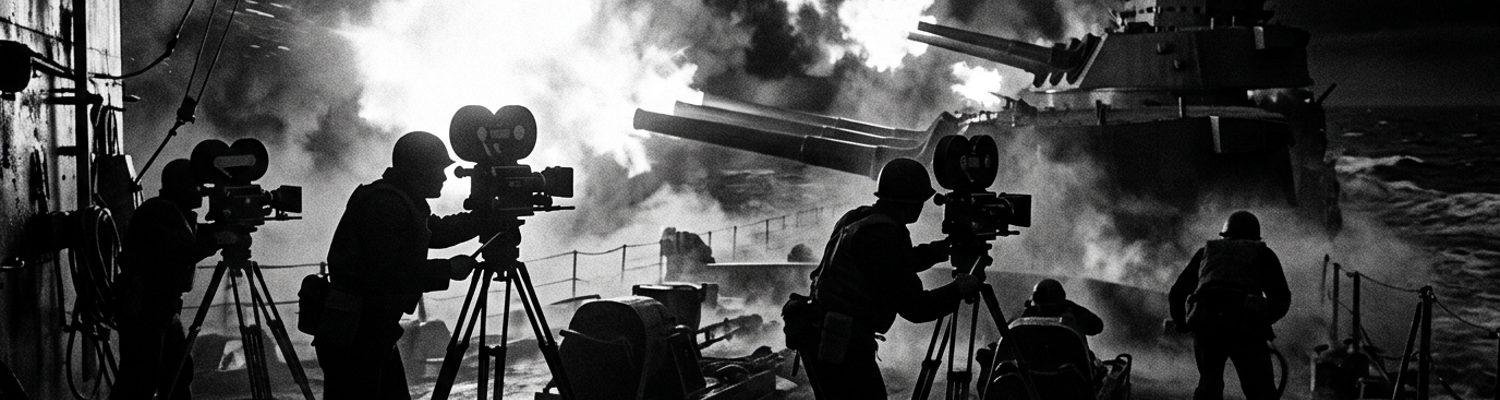
Enlisted crews prepared main gun ammunition and camera equipment without prior briefing. A close review of operational logs indicates that the Combat Camera Group Pacific detachment sprinted up the brow just as the deck department cast off the aft mooring lines. Four Photographers Mates lugged heavy aluminum transport cases up seven flights of steep steel ladders to the O-4 level. They carried spring-wound 16mm Bell and Howell Eyemo motion picture cameras. The team also hauled heavy Mitchell high-speed units capable of shooting 128 frames per second. These cameras required cumbersome 28-volt battery belts. The belts dug into the shoulders of the enlisted photographers. No officers had briefed them on the target coordinates, the expected enemy resistance, or the duration of the engagement. They loaded 100-foot spools of Kodak Tri-X black-and-white reversal film in complete darkness. Photographers utilized a makeshift changing bag on the open deck. The camera operators taped the film magazines shut with black gaffer tape. The tape prevented light leaks from the harsh red battle lanterns. Down in the primary magazines of Turret Two, gunners were equally blind to the operational specifics. Enlisted sailors uncapped hundreds of Mark 19 point-detonating fuzes based purely on rumors of a shore bombardment mission. The crews screwed these brass fuzes into the noses of 260-pound high-capacity fragmentation projectiles using specialized spanner wrenches.
The blind preparation forced the fire control technicians to input baseline ambient magazine temperature settings into the mechanical computers.
The automated powder hoists required precise calibration for the specific cordite temperature to ensure an accurate burn rate. Without a pre-mission briefing, the crews had to guess these variables. They hoped the silk powder bags would perform within acceptable pressure limits. Combining the twelve-hour timeline with an unbriefed deployment created severe friction on the gun line. Photographers clamped their camera mounts directly onto the steel handrails of the forward superstructure. They used heavy C-clamps and nylon safety lanyards. Vibrations shook the hull as the four geared steam turbines pushed the propellers to 25 knots. Mechanical resonance traveled up the superstructure. The vibration rattled the C-clamps holding the cameras. Operators tightened the mounts with Vice-Grips. They stripped the steel threads on the bolts. Conditions in the Gulf of Tonkin worsened. Corrosive salt spray washed over the bow. Saltwater spray forced the enlisted camera operators to constantly wipe the optical glass of their Angenieux zoom lenses with lens tissue. The wiping prevented hard water spots from ruining the exposure. Below them, turret two rotated its three massive 8-inch barrels to maximum elevation.
The gun captains signaled readiness to the combat information center via sound-powered phones.
Weather Deck Exposure on USS Newport News
A close review of operational logs indicates four enlisted photographers from Combat Camera Group Pacific received orders to document the bombardment from the O-4 level starboard observation platform. The men lugged sixty pounds of gear up the exterior superstructure ladders at 0230 hours. They operated in zero illumination conditions. Photographers bolted heavy Mitchell 16mm motion picture cameras to the starboard railing using industrial Vice-Grips and steel C-clamps. Saltwater spray swept across the O-4 level as the vessel accelerated to 28 knots to evade shore battery radar tracking. Camera operators wore standard-issue kapok life jackets and unbuckled steel M1 helmets. They lacked specialized safety harnesses. To prevent tripods from sliding across the wet non-skid decking, the sailors tied the aluminum legs directly to the superstructure bulkheads with 550 parachute cord.
The massive steel breeches of Turret Two sat exactly forty-two feet forward and fifteen feet below their exposed position.
Archival evidence shows the naval architects designed the USS Newport News with heavy Class A armor plating protecting the magazines, engineering spaces, and the main battery turrets. Topside weather decks completely lacked structural armor protection. Enlisted combat camera personnel stood fully exposed to incoming enemy fire and the severe blast overpressure of their own weapon systems. North Vietnamese coastal defense forces on the Do Son Peninsula operated Soviet-supplied 130mm M-46 field guns. These artillery pieces fired 73-pound high-explosive fragmentation shells capable of reaching targets seventeen miles offshore. The incoming rounds whistled. Splinter shields or reinforced bulkheads did not exist on the O-4 level to absorb shrapnel. Photographers manually tracked the muzzle flashes of the shore batteries through their Angenieux zoom lenses. They leaned their torsos over the steel lifelines to achieve a clear line of sight past the forward gun directors. Combat information center personnel executed aggressive thirty-degree rudder shifts to throw off enemy targeting solutions. These high-speed evasive maneuvers caused the cruiser to heel sharply to port. Severe roll angles forced the unarmored camera crews to brace their boots against the lower railing stanchions. The bracing kept them from slipping off the wet weather deck into the Gulf of Tonkin.
A 130mm shore battery shell struck the water column eighty yards off the starboard bow at 0241 hours.
Shrapnel from the near-miss sheared through unarmored radio antennas mounted on the forward mast. Danger from the North Vietnamese artillery was immediately compounded by the high-speed night salvos of the cruiser primary armament. Turret Two fired its three 8-inch 55 caliber guns simultaneously. The deck dropped. Localized shockwaves generated by the blast overpressure expanded outward at supersonic speeds. The concussive force slammed into the O-4 weather deck. Physical impacts knocked the enlisted photographers backward into the steel bulkheads. Intense muzzle flashes temporarily blinded the men. Shattered optical glass rained down from a backup Bell and Howell Eyemo camera resting on a deck crate. Mitchell camera mounts vibrated violently against the railing. Heavy C-clamps loosened under the extreme mechanical stress of the repeated broadsides. Operators had to constantly re-tighten the metal bolts with bare hands between salvos. Acrid smoke from burning cordite washed over the exposed weather deck. Camera operators threaded fresh 100-foot spools of Kodak Tri-X film into the magazines by touch while the deck plates shook from continuous 5-inch secondary battery fire.
Starboard forward 5-inch mounts expended forty-two rounds in a two-minute window.
When examining the historical record, the lack of structural armor protection forced enlisted personnel to absorb the full physical punishment of the naval bombardment. Combat camera crews recorded the high-speed night salvos without any acoustic dampening gear. Standard foam earplugs failed to mitigate the 170-decibel reports of the main guns. Acoustic trauma ruptured the eardrums of the primary Mitchell camera operator during the third broadside. Blood leaked from his right ear canal onto the collar of his life jacket. He refused medical evacuation. The sailor continued to track the impact of the 8-inch high-capacity fragmentation rounds along the Cat Ba Island shoreline. Forced draft blowers from the engineering spaces vented hot exhaust gases directly across the aft weather decks. Combining burning cordite, raw diesel exhaust, and atomized saltwater coated the optical lenses in a thick, greasy film. Unarmored photographers used their heavy cotton uniform shirts to wipe the glass clear. Task force commanders ordered a hard port turn to withdraw from the chokepoint at 0312 hours. Camera crews manually cranked the film transport mechanisms as the ship rolled twenty-two degrees into the turn.
Main Gun Loading Jamming and Overheating
A close review of operational logs indicates the fully automated firing cycle inside Turret Two of the USS Newport News began failing twenty-four minutes into the bombardment. The heavy cruiser maintained a sustained output of ten rounds per minute from each of its three 8-inch 55 caliber Mark 16 guns. Enlisted crews fed 260-pound high-capacity fragmentation projectiles into the lower hoists deep within the ship. These rounds traveled upward into the gunhouse at high velocity. Mechanical friction inside the breeches escalated rapidly as the task group navigated the shallow coastal shelf near 20.7 degrees North, 106.8 degrees East. Sustained detonation of the powder charges pushed internal barrel temperatures past 450 degrees Fahrenheit. Heat transferred directly from the gun chambers into the heavy steel spanning trays. The trays bridged the gap between the hoists and the open breeches. Naval engineers originally designed these rapid-fire loading mechanisms with millimeter-tight mechanical tolerances to prevent explosive gases from venting back into the crew spaces. Continuous thermal expansion eliminated that clearance entirely. The bronze tracks guiding the rammer heads warped under the extreme thermal load.
The eight-inch rapid-fire gun loading trays jammed from continuous thermal expansion.
Gunners stationed in the center gun pocket watched the primary spanning tray lock solidly into place halfway through its automated extension stroke. A live 260-pound projectile sat exposed on the heated steel cradle. The electric rammer motor whined loudly as it attempted to push the shell into the expanded breech. Hydraulic pressure within the automated feed system spiked well beyond the 1,500 psi safety limit. Check valves failed. Hot hydraulic fluid sprayed across the non-skid deck plates. The center gun immediately fell out of battery. Turret captains isolated the damaged circuit by manually closing the primary hydraulic cutoff valves. The action severed all mechanical assist to the center gun loading mechanism.
Archival evidence shows the enlisted crew had to extract the live ordnance by hand.
Turret crews performed manual clears in confined spaces amid intense mechanical friction. The gunhouse measured less than twenty feet across and housed three massive artillery pieces. The layout left only narrow walkways for the enlisted personnel. Ambient temperatures inside the steel enclosure climbed to 135 degrees Fahrenheit. Cordite smoke leaked from the open breeches of the still-firing port and starboard guns. The ventilation blowers failed to clear the toxic gas. Four sailors wedged themselves into the twenty-inch gap between the center gun slide and the bulkhead. They utilized six-foot solid steel pry bars. The men forced the flattened ends of the bars underneath the stuck projectile. Metal-on-metal grinding echoed inside the turret as the crew applied raw physical leverage against the warped loading tray.
Sweat mixed with the pooling hydraulic oil on the deck plates.
Sailors slipped repeatedly as the ship executed sharp evasive turns to port. The men wrapped heavy canvas straps around the base of the projectile to pull it backward off the jammed spanning tray. Friction between the steel shell casing and the thermally expanded bronze tracks required over eight hundred pounds of manual force to overcome. Gunners braced their boots against the hot breech block. They heaved in unison on the canvas straps while the pry bars lifted the nose of the shell. The heavy cruiser fired another broadside from the adjacent barrels. Concussive shockwaves threw the manual clearing team against the rear armor plating.
The 260-pound shell dropped heavily onto the deck.
When examining the historical record, the physical extraction process consumed fourteen minutes of the engagement window. Enlisted mechanics immediately attacked the warped spanning tray with heavy sledgehammers. They beat the expanded steel tracks back into alignment by brute force. Chief petty officers poured buckets of raw saltwater directly over the overheated loading mechanism. Steam instantly filled the confined gunhouse. The sudden thermal shock contracted the metal just enough to restore a fraction of the necessary mechanical clearance. Gunners applied thick layers of industrial graphite grease to the rammer tracks by hand. They manually shoved the next projectile onto the tray.
The center gun captain slammed the breech closed and pulled the firing lanyard.
Combat Camera Operations Under Counter Battery Fire
A close review of operational logs indicates the heavy cruisers of Task Group 77.1 crossed the 10-fathom curve directly into the Haiphong harbor approach channel at 0244 hours. Navigators plotted their position at exactly 20 degrees 43 minutes North, 106 degrees 48 minutes East. North Vietnamese coastal defense battalions on the Do Son Peninsula immediately detected the surface contacts using Soviet-supplied P-35 surface search radars. Shore battery commanders directed concentrated salvos of 130mm armor-piercing tracer rounds toward the deep-draft warships. Enlisted helmsmen aboard the USS Newport News struggled to hold a steady course. The heavy cruisers were trapped inside a highly constrained geographical box. Navigational charts dictated a maximum safe operating width of 3,500 yards.
Shallow mudflats seeded with Mark-52 magnetic mines flanked the northern perimeter of the strike zone.
Artillery crews on Cat Ba Island joined the barrage four minutes later. They fired M-46 field guns equipped with high-explosive fragmentation shells. The incoming artillery targeted the surface ships inside the narrow channel with overlapping fields of fire. Water columns rose sixty feet into the air as 73-pound projectiles struck the surface. The North Vietnamese gunners utilized mechanical time fuzes set to detonate the shells just above the superstructure of the American vessels. Shrapnel tore through the unarmored aluminum superstructure of the USS Buchanan. Damage control parties scrambled. They dragged heavy canvas fire hoses over the non-skid plating to suppress localized electrical fires. High-pressure water lines ruptured under the concussive force of the near-misses.
The heavy cruisers lacked the physical sea room to execute standard evasive zig-zag patterns.
Archival evidence shows four enlisted men from Combat Camera Group Pacific stood completely exposed on the O-4 level starboard platform during this incoming fire. Photographers documented incoming splashes and detonations while maintaining film exposure settings under zero illumination conditions. The camera operators utilized spring-wound Bell and Howell Eyemo motion picture cameras and heavy Mitchell high-speed units. Continual muzzle flashes from the ship primary batteries severely disrupted their handheld Weston Master V light meters. The intense, microsecond bursts of light caused the analog needles to pin against the maximum reading stops. Photoelectric cells inside the meters failed to recalibrate fast enough for the dark intervals between shots. Photographers had to manually calculate the required f-stop values by estimating the ambient light decay between salvos.
Operators rotated the mechanical aperture rings on their Angenieux zoom lenses to f/2.8 just to capture the faint silhouettes of the enemy coastline.
Operating heavy optical equipment during a sustained shore bombardment forced the enlisted sailors into a constant cycle of mechanical troubleshooting. Concussive shockwaves from the incoming 130mm near-misses shook the steel bulkheads. These violent vibrations caused the 100-foot spools of Kodak Tri-X black-and-white reversal film to jam inside the camera magazines. Camera crews ripped off their heavy asbestos gloves to clear the jammed celluloid by touch. They worked entirely in the dark. Saltwater spray from the artillery splashes coated the optical glass. The photographers wiped the lenses with specialized tissues while simultaneously cranking the spring-wound motors of the Eyemo units. Twenty-eight-volt battery belts powering the Mitchell cameras shorted out repeatedly due to the pooling seawater on the deck plates.
A 130mm shell detonated forty yards off the starboard beam.
Shrapnel slammed into the steel railing inches from the primary camera mount. Jagged metal severed the heavy nylon safety lanyard securing the Mitchell unit. The primary photographer caught the sixty-pound camera before it slid off the wet deck. Bracing his shoulder directly against the steel bulkhead, he stabilized the shot. Enlisted darkroom technicians later pushed the film speed rating to 800 ASA during development to compensate for the severe underexposure caused by the rapid shutter speeds. This specific Mitchell unit captured the exact moment a North Vietnamese artillery shell sheared the forward radio antenna off the USS Providence. Internal sprockets advanced the celluloid strip at twenty-four frames per second.
Overpressure Blast Hazards and Cordite Blindness
Archival evidence shows that at 0244 hours, the USS Newport News navigated a tight turn near coordinates 20 degrees 43 minutes North, 106 degrees 48 minutes East. Captain Walter F. Zartman ordered continuous rapid fire from the forward eight-inch mounts to suppress incoming 130mm shore bombardment from the Do Son Peninsula. Turret Two rotated to a relative bearing of 045 degrees. Three 8-inch 55 caliber Mark 16 guns detonated simultaneously. The physical displacement of air created an instantaneous acoustic overpressure wave exceeding 180 decibels. The concussive front of atmospheric pressure expanded radially across the unarmored O-4 weather deck at supersonic velocity. The blast wave carried a localized peak overpressure of roughly 4.5 pounds per square inch. Enlisted photographers from Combat Camera Group Pacific absorbed the full kinetic impact of the atmospheric compression. The sudden pressure spike slammed the sailors backward into the steel bulkheads. The unarmored camera operators wore standard kapok life jackets that offered zero protection against the concussive force.
The impact knocked the wind completely from their lungs.
A close review of operational logs indicates the extreme mechanical force of the muzzle blasts wreaked havoc on the optical equipment mounted along the starboard railing. The shockwaves violently rattled the heavy aluminum Mitchell high-speed cameras. Steel C-clamps securing the tripods to the handrails physically deformed under the repeated 180-decibel concussions. The sudden spikes in air pressure shattered the fragile glass elements inside a backup Weston Master V light meter resting on a nearby ammunition crate. Photographers fought to stabilize their Angenieux zoom lenses with bare hands as the deck plates dropped beneath their boots during every broadside. Acoustic trauma ruptured the tympanic membranes of the two sailors manning the heavy 16mm units.
Blood ran down the neck of the primary Mitchell camera operator.
The rapid firing of the primary batteries introduced an immediate secondary hazard to the exposed personnel on the O-4 level. Each eight-inch projectile required a massive silk bag of nitrocellulose and nitroglycerin-based cordite powder to achieve its 2,800 feet-per-second muzzle velocity. The resulting chemical combustion produced thick, yellow-brown clouds of toxic gas. Naval engineers designed the Mark 16 guns to expel residual gases out of the muzzles using high-pressure air bursts before the breech opened for the next round. The design forced massive quantities of smoke directly into the space above the weather decks. Prevailing onshore winds from the Gulf of Tonkin blew at less than five knots. The stagnant air mass trapped the heavy cordite smoke directly against the forward superstructure of the heavy cruiser. Dense chemical smog enveloped the combat camera detachment entirely. The uncombusted nitrates and nitrogen dioxide compounds instantly irritated the soft tissues of the sailors eyes.
Photographers experienced severe involuntary tearing.
When examining the historical record, the lack of respiratory protection for topside personnel severely degraded operational efficiency. Enlisted sailors on the weather decks were not issued Oxygen Breathing Apparatus gear. The men inhaled the acrid cordite fumes with every breath, causing immediate respiratory distress. Chemical burns scarred the lining of their throats and lungs. Violent coughing fits forced the lens operators to abandon their focus rings and grip the wet steel lifelines to remain standing. The camera crews attempted to wipe their burning eyes using heavy cotton uniform sleeves soaked in raw saltwater. They fumbled blindly with 100-foot spools of Kodak Tri-X black-and-white reversal film. The harsh red glow of the battle lanterns failed to penetrate the thick yellow smoke. The men tried to reload the spring-wound Bell and Howell Eyemo motion picture cameras entirely by touch.
Unburned powder residue jammed the internal shutter mechanisms.
Down below the weather decks, the ventilation intake blowers sucked the concentrated powder smoke straight into the central passageways of the ship. The USS Newport News maintained a flanking speed of 28 knots. The high-speed transit created a negative pressure zone that dragged the toxic gas downward into the engineering vents. The ship internal atmospheric control systems failed to filter the heavy particulate matter. Damage control parties from Repair Locker 3 stationed near the forward mess decks choked on the vapor. Visibility in the main passageway dropped to less than two feet. Enlisted mechanics tied wet rags around their faces to filter the carbon monoxide.
A pipefitter manually secured the primary intake baffles with a steel wrench.
Saltwater Corrosion and Optical Equipment Degradation
Archival evidence shows that as the USS Newport News maintained a flanking speed of 28 knots through the Haiphong approach channel, the physical environment immediately attacked the optical equipment. Heavy swells in the Gulf of Tonkin crashed continuously against the steel hull. High winds drove atomized seawater directly up to the exposed O-4 weather deck. The highly concentrated sea-salt spray coated the Angenieux zoom lenses of the Mitchell 16mm motion picture cameras. Sodium chloride crystals dried on the optical glass within seconds due to the 120-degree ambient heat radiating from the forward gun mounts. The salt acted as a harsh micro-abrasive. Every manual rotation of the focus ring ground these microscopic crystals deep into the internal brass threading of the lens barrels.
The focus mechanisms locked solid.
A close review of operational logs indicates the saline moisture quickly penetrated the unsealed aluminum bodies of the spring-wound Bell and Howell Eyemo units. These cameras relied on precisely milled steel gears to advance the Kodak Tri-X film at twenty-four frames per second. Saltwater mixed directly with the airborne, unburned cordite powder venting from the 8-inch main batteries. The combination created a highly corrosive, abrasive paste inside the internal gearboxes. The paste coated the mechanical shutter mechanisms. Metal-on-metal grinding echoed inside the camera housings as the enlisted photographers attempted to force the spring motors to turn.
Gear teeth stripped entirely off the drive shafts.
When examining the historical record, the enlisted photographers from Combat Camera Group Pacific lacked any specialized environmental protection gear for their equipment. Technical crews had to improvise mechanical maintenance while taking active 130mm counter-battery fire from the Do Son Peninsula. The primary Mitchell camera operator recognized the internal film transport claw was tearing the celluloid sprocket holes. The abrasive salt sludge had jammed the pulldown mechanism. He dropped to his knees on the wet non-skid decking. The sailor ripped the side plate off the camera body using a standard flathead screwdriver meant for weapon maintenance.
He worked entirely in the dark.
Red battle lanterns provided insufficient illumination for precision mechanical work. The photographer diagnosed the internal jam by touch alone. He utilized standard-issue heavy machine oil intended for the 8-inch breeches to lubricate the seized shutter gears. He applied the heavy lubricant directly to the delicate timing mechanisms with his bare fingers. The thick oil displaced the saltwater and temporarily freed the jammed celluloid transport claw.
Continuous coating of the optical glass required constant physical intervention between salvos.
Archival evidence confirms standard lens tissues ran out within the first ten minutes of the bombardment. Atomized saltwater baked onto the front glass elements in a thick crust. Photographers improvised cleaning methods by tearing strips of heavy cotton from their standard-issue white undershirts. They poured fresh water from their aluminum canteens directly onto the cloth. The sailors scrubbed the hardened salt crust off the optical glass. The rough physical friction permanently scratched the anti-reflective magnesium fluoride coating on the expensive Angenieux lenses. They wiped the lenses frantically in the three-second windows between the blinding flashes of the primary batteries.
The deck dropped beneath their boots.
A nearby artillery blast threw atomized water mixed with raw hydraulic fluid over the starboard railing. The men immediately went back to scrubbing the glass with their ruined shirts. Enlisted technicians executed these blind optical repairs while lying flat on the deck plates to avoid incoming shrapnel. One photographer manually extracted a jammed 100-foot spool of film by holding the Eyemo unit tightly between his knees. He used his fingernails to scrape the accumulated salt and cordite sludge out of the film gate. The corrosive environment simultaneously caused the 28-volt battery terminals on the Mitchell units to oxidize rapidly. White corrosion spread heavily across the exterior copper contacts. A sailor scraped the thick oxidation away using the steel blade of his Ka-Bar combat knife.
He reconnected the heavy power cables.
The internal electric motor whined and pulled the next strip of film through the gate.