
Subterranean Psychological Warfare Myths
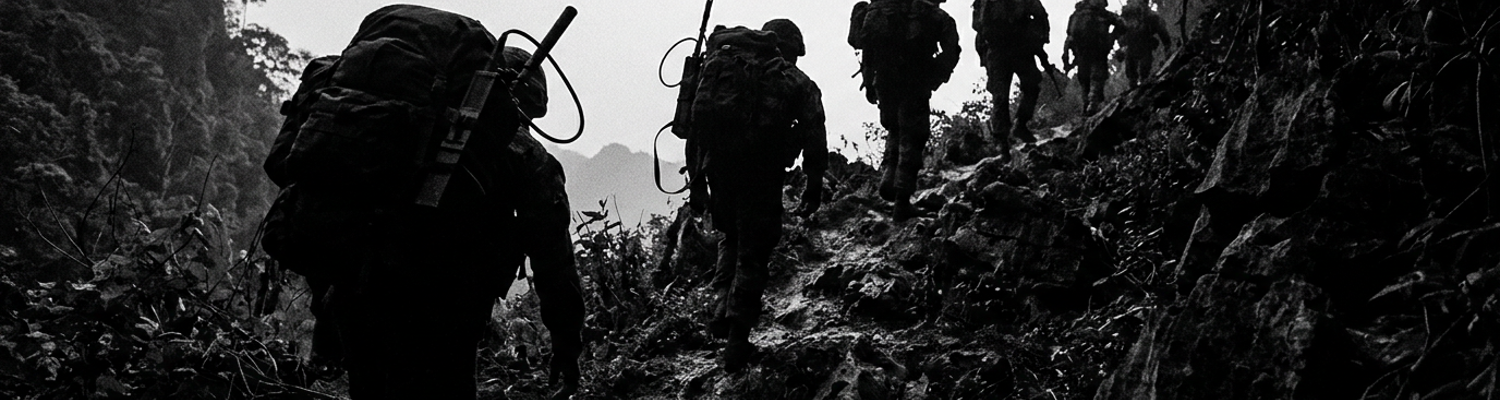
When examining the historical record, postwar films created a persistent fiction of operatives slipping silently into enemy tunnels to manipulate subterranean defenders. Archival evidence shows operations in the Southwest Pacific Area bore no resemblance to these portrayals. Teams assigned to subterranean psychological warfare consisted of overburdened infantrymen drawn from the 152nd Infantry Regiment headquarters company. They worked alongside Nisei interpreters from the Allied Translator and Interpreter Section. Office of Strategic Services Morale Operations personnel dragged civilian public address gear through dense jungle underbrush. Lead acid batteries weighing forty pounds leaked corrosive fluid down the backs of radio operators. These men struggled up forty-five degree mud grades under direct enemy observation.
The field units deployed commercial grade University brand horn speakers.
They utilized Armour magnetic wire recorders that repeatedly jammed when wet tropical grit entered the open mechanical drives. The spooling mechanisms seized after less than three hours of field operation. Field teams operated under direct observation from concealed Japanese observation posts located on Hill 3. They set up heavy tripod mounts while pinned down by Type 92 heavy machine gun fire. Communications wire severed repeatedly on sharp volcanic rocks. Technicians crawled through exposed clearings to splice cables with friction tape. Mortar rounds fell across their positions during these repairs.
A close review of operational logs indicates the entire enterprise rested on flawed sociopolitical projections developed in Washington.
Analysts within the Office of Strategic Services Research and Analysis Branch operated on a specific assumption. They believed subterranean Japanese garrisons would surrender if presented with honor saving options through tactical public address systems. Branch planners theorized hunger and dysentery would break the discipline of frontline soldiers. Carbon monoxide buildup in sealed bunkers was expected to aid this process. They drafted standardized scripts. These scripts attempted to convince imperial troops that laying down arms represented a temporary cessation of hostilities.
Field conditions dismantled this theory immediately.
Elements of the Japanese 8th Division and the Kawashima Detachment entrenched along the Shimbu Line had received direct orders from Lieutenant General Shizuo Yokoyama. They were instructed to convert the caves into mutual support killing zones. They were ordered to hold to the death. Subordinates who showed hesitation were executed on the spot by their unit commanders. Tactical broadcasts did not generate defections.
They provided Japanese mortar squads with fixed auditory targets.
Field reports from the 38th Infantry Division sector in April 1945 record the acoustic failure caused by the Montalban terrain. Mount Pacawagan rose directly above the Marikina River as a sheer massif of fractured Miocene epoch limestone karst. The rock was riddled with sinkholes and vertical chimneys. Underground drainage caverns formed a complex network extending hundreds of yards into the mountain core. When the detachment powered up their twenty-five watt amplifiers, the acoustic energy struck the irregular limestone faces. The sound scattered erratically into adjacent canyons. Narrow subterranean tunnel mouths reflected sound waves backward. This produced multiple delayed echoes that blurred Japanese spoken phrasing into unintelligible reverberation. High frequency speech consonants dropped out entirely against the dense rock walls.
Only a low frequency hum carried across open valleys.
Imperial Japanese Army gunners inside the Pamitinan cave complex utilized this low frequency hum. They plotted the sound truck coordinates. They walked ninety millimeter mortar bursts directly onto the speaker emplacements at grid reference 34.2 18.7.
Mount Pacawagan and the Noguchi Detachment
The arrival of the Office of Strategic Services Morale Operations Branch at Mount Pacawagan in the second week of April 1945 exposed a failure of psychological theory in frontline combat.
The tactical detachment was attached directly to forward elements of the 152nd Infantry Regiment, 38th Infantry Division. They brought specialized recording gear and sound trucks into the Montalban sector. Major General William C. Chase pushed these personnel forward across the broken ravines flanking the Marikina River. He ordered them to crack the defensive perimeter without waiting for conventional artillery preparation. Field personnel carried heavy disc cutters and hand cranked generators across exposed talus slopes. Sniper harassment was continuous from elevated spider holes. Shielded telephone lines snagged on the jagged rocks.
Tropical downpours soaked the untreated paper amplifier cones within forty-eight hours of debarkation.
Diaphragms tore whenever technicians pushed input volume past twelve watts. Operational logs reveal the Morale Operations specialists had received no preliminary training on mountain karst movement. Combat infantry squads from Company E and Company F were forced to divert riflemen from perimeter defense. These riflemen acted as pack mules for audio apparatus across five hundred yards of open fire zones.
The mountain belonged to the Noguchi Detachment.
Archival evidence shows this garrison was organized around the 3rd Battalion of the 31st Infantry Regiment. Major Kiyoaki Noguchi commanded the unit. He transformed the fractured limestone peaks of Mount Pacawagan into an interconnected fortress. Noguchi drew strength from roughly nine hundred imperial soldiers and naval landing personnel. He abandoned open field fighting to anchor his defensive lines inside natural subterranean caverns. His engineers blasted firing embrasures directly into six foot thick limestone walls. They covered every approach ravine with Type 99 light machine guns. Forty-seven millimeter anti-tank weapons fired canister shot down the narrow trails.
Underground cisterns fed by mountain springs provided a self sustaining water supply.
Deep natural sinkholes served as ammunition magazines protected beneath thirty feet of solid rock. Japanese troops blocked interior passages with heavy timber bulkheads. Sandbag revetments reinforced the defensive positions. They constructed deadfall traps to eliminate intruders who entered outer chambers. Disciplinary enforcement was absolute. Noguchi issued standing commands that any soldier retreating to the rear cavern systems would face summary beheading.
Sound could not penetrate the rock.
Allied technical teams devised an experimental acoustic delivery system designed to route sound waves into the mountain interior. Combat engineers lugged two inch diameter flexible pneumatic hoses up the western escarpment. They carried threaded galvanized conduit. They attempted to thread the piping directly into jagged cave fissures and sinkhole vents above the main subterranean galleries. The operational concept called for injecting tailored Japanese language appeals directly past external baffle walls. They used pneumatic air pressure to overcome acoustic dead zones. Technicians spliced customized wire recordings into modified compression drivers coupled to the pipe fittings.
The mechanical assemblies disintegrated against the terrain.
A close review of operational logs indicates jagged limestone edges sheared the rubber hoses. Engineers shoved them into rock crevices, venting pressurized air into dead end fissures hundreds of feet away from the troop bunkers. Internal cave drafts created by surface barometric drops blew speech signals backward through the pipe joins. American observation posts filled with muffled audio while Japanese living quarters remained silent. Subterranean moisture corroded the brass threading on the pipe couplings within three days. The lines separated inside unmapped vertical chimneys.
Japanese defensive teams spotted the bright metallic conduit protruding through ceiling crevices.
They severed the lines with pickaxes. Some squads packed the pipe mouths with wet river mud and rocks. On April 22, an infiltration team from the 152nd Infantry managed to lower eighty feet of armored pneumatic hose into a central chimney above the main redoubt. Noguchi riflemen fired a volley of Type 89 knee mortar rounds up the aperture. The explosions severed the feed cable and killed two technicians on the surface ledge.
Field Modifications of Submachine Guns
Trench warfare inside the cave networks demanded weapons that did not exist in division inventories.
Archival evidence shows ordnance mechanics attached to the 38th Infantry Division ordnance depot at Marikina took hacksaws to standard issue weapons. They modified M3 .45 caliber submachine guns and M1 carbines. Infantrymen needed to maneuver within two foot wide limestone squeeze holes near Mount Pacawagan Hill 2. Armorers sawed eight inches off M1 carbine barrels. They cut M3 outer guide tubes down to the receiver collars. They removed the collapsing wire stocks entirely to reduce snag hazards.
The resulting blowback pressures caused severe chamber fouling and ruined weapon cycling.
In place of factory made sound suppressors, field teams threaded oil filters onto raw barrel muzzles. They used perforated steel water pipes and stacked brass washers wrapped in copper wire mesh. When tested inside subterranean fissures, the high chamber pressure of .30 carbine cartridges tore the handmade interior baffles loose. This occurred after five to ten rounds. Fragments of shattered brass washers turned into internal obstructions. These obstructions blew out the weapon muzzle ends. They caused severe receiver bulges, sending hot gas and unburnt propellant back into the shooter's eyes.
Standard infantry rifles became unusable liabilities underground.
A close review of operational logs indicates illumination posed an equally intractable mechanical dilemma for the clearance teams. Standard brass bodied TL-122 flashlights threw insufficient candlepower into subterranean blackness. They died within twenty minutes of exposure to cave condensation. Ordnance officers stripped twenty-eight volt sealed beam landing lights from wrecked Douglas C-47 transports at Nichols Field. They mounted them onto wooden rifle stocks with bailing wire and vulcanized rubber strips.
Powering these heavy filaments required six volt and twelve volt lead acid motorcycle batteries.
These batteries were scavenged from 11th Airborne Division quartermaster stores. Soldiers carried these twelve pound corrosive power blocks on web belts. They ran two wire civilian lamp cords through unshielded toggle switches taped directly beneath the weapon fore ends. Acid seeped through the battery vent caps whenever an infantryman crawled forward on his belly. The fluid blistered flesh and ate through the canvas trousers of soldiers working through Sector Baker.
This makeshift electrical equipment collapsed under subterranean environmental conditions.
Cave chambers around Mount Pacawagan held ninety-eight percent relative humidity. Constant cold groundwater dripped through the limestone overhead. Bare wire splices short circuited across wet rock walls. This drained motorcycle battery cells in less than ninety seconds. It shocked the men carrying the packs. When the landing lights did fire, the four hundred watt beams illuminated nothing. Subterranean condensation formed a thick suspended water vapor mist within the enclosed galleries. This mist combined with dense cordite smoke from discharged grease guns.
High intensity light refracted directly backward off these suspended particulates.
The reflection created a white wall that blinded the American operators. It illuminated their exact physical positions to Japanese defenders waiting behind interior sandbag parapets. On April 26, three Morale Operations team members were shot at point blank range inside Cave Three. A shorted battery harness ignited trapped hydrogen gas on an assault line.
Operational Failure of Broadcast Scripts
A close review of operational logs indicates the psychological profiles generated by the Office of Strategic Services Research and Analysis Branch in Washington broke down completely.
Social scientists and cultural anthropologists had constructed elaborate broadcast scripts. These scripts were designed to exploit structural vulnerabilities in the imperial military psyche. These theoretical models assumed frontline Japanese infantrymen would respond to appeals separating devotion to the Emperor from obedience to field officers. Morale Operations technicians broadcast detailed descriptions of warm food and field hospital treatment. They promised honored repatriation. They alternated these promises with recordings of traditional folk songs and manufactured messages from purported prisoners of war.
Archival evidence shows across three weeks of continuous high volume transmission into the Montalban karst network, not a single soldier from Major Noguchi's detachment laid down his weapons.
The Imperial Japanese Army operational indoctrination overrode every linguistic trigger devised in American research offices. Battalion officers executed any soldier acknowledging Allied acoustic transmissions. Physical geology presented a harder barrier to the Morale Operations experiment than military discipline. Mount Pacawagan subterranean geography consisted of deeply dissolved limestone fissures and vertical sinkholes. Multi chambered cavern systems were lined with dense wet calcium carbonate deposits. Stalactite formations disrupted linear sound wave propagation.
Washington produced zero surrenders.
Allied sound crews pointed thirty watt Western Electric compression drivers into these cave openings. The acoustic properties of the stone distorted the Japanese speech patterns beyond recognition. Consonant frequencies essential for comprehending spoken Japanese flattened against the wet jagged cavern walls. Low frequency vowel sounds bounced across subterranean chambers with reverberation delays exceeding four seconds. The spoken words blended into a loud unintelligible drone. This drowned out syllable boundaries before the acoustic energy traveled forty feet past the cavern thresholds.
Japanese defenders trapped inside the deeper galleries heard only a persistent mechanical roar.
Speech turned into static.
The acoustic injection points functioned in reverse. Japanese combat teams inside the outer redoubts quickly realized every broadcast aperture marked the exact coordinates of an Allied psychological warfare team. Rather than attempting to block the openings, Noguchi troops used the acoustic conduits to direct lethal counter fire into Allied forward positions. Sound crews shoved armored speaker horns and conduit pipes through surface crevices to direct Japanese scripts into the lower galleries. Imperial soldiers below drove Type 89 fifty millimeter knee mortar barrels directly into the fissures. They fired Type 99 light machine guns up the shafts.
Defending squads packed Type 97 fragmentation grenades into the pipe mouths.
They used the enclosed pressure of the bore holes to blast metal shrapnel and shattered speaker diaphragms straight back into Allied operating pits. On April 28, an acoustic team from the 152nd Infantry attempted to broadcast surrender instructions through a fissure on the northern slope. They were wiped out when Japanese defenders triggered an improvised mine. This mine consisted of four fused 75 millimeter artillery shells packed into the base of the injection shaft. Six Morale Operations technicians died on the rock before division command terminated the transmissions.
Sixth Army Engineer Interventions
A close review of operational logs indicates the Sixth Army G-3 section officially terminated all non-kinetic psychological clearance operations across the Montalban sector on May 2, 1945.
Field reports submitted by the 152nd Infantry Regiment confirmed three weeks of continuous acoustic broadcasting had produced zero voluntary surrenders. The operations had exposed frontline combat teams to fatal mortar counter battery fire. Lieutenant General Walter Krueger directed XI Corps to strip the Office of Strategic Services Morale Operations teams of forward transport priorities. He reallocated division supply assets to kinetic clearance operations. Tactical commanders abandoned psychological scripts entirely.
Staff officers recognized the Japanese defenders inside the limestone redoubts were operating under strict imperial orders to contest the ground until physical annihilation.
Persuasion had failed to advance the frontline a single yard toward the Wawa Dam watershed. Operational control over subterranean interdiction shifted directly from psychological specialists to conventional assault units. Infantry commanders stopped negotiating with the mountain. Archival evidence shows the 113th Engineer Combat Battalion assumed primary assault responsibility across the eastern face of Mount Pacawagan within twelve hours of the command change. First Platoon of Company B spearheaded the initial demolitions effort.
Combat engineers moved up the forty degree scree slopes.
They were burdened with standard M37 demolition kits and forty pound composition C-2 satchel charges. They carried M1A1 Bangalore torpedoes. Sapper squads operated under direct suppression fire from company level Browning M1919A4 machine guns. They crawled across jagged limestone fissures to reach contested cave mouths. Technical teams prepared specialized pole charges. They lashed twenty pound blocks of cast trinitrotoluene to fifteen foot green bamboo poles with friction tape.
Soldiers shoved these improvised assemblies past Japanese sandbag revetments into cave apertures.
They ignited forty-five second delay non-electric blasting caps with M1 chemical fuse lighters before scrambling behind exterior rock spurs. The shockwaves generated by high velocity detonations detonated stored enemy munitions caches within the forward galleries. The blasts stripped interior timber supports and blew noxious carbon monoxide gas back into Japanese interior living bunkers.
Caves were no longer cleared.
They were demolished.
When examining the historical record, Sixth Army engineers executed a systematic program of permanent subterranean entombment across the Noguchi Detachment strongpoints. They abandoned room to room entry tactics. Major Noguchi 3rd Battalion, 31st Infantry Regiment had anchored its central redoubt inside a massive natural cavern complex at grid reference 34.8 19.1. This position was protected by twelve feet of overhead limestone. Sapper teams bypassed the heavily defended outer embrasures entirely. They ascended vertical cliff faces using rope ladders and pitons.
Working directly above the subterranean chambers, assault squads cleared loose karst topsoil with entrenching tools.
They exposed natural vertical drainage fissures and structural stress fractures. Teams tamped twenty pound blocks of composition C-3 explosive and fused 155 millimeter artillery projectiles into these ceiling shafts. They packed the boreholes with wet river clay and fifty pound sandbags to direct explosive energy downward into the rock strata.
The imperial garrison was sealed alive inside the dark.
Coordinated detonations triggered simultaneous structural failures throughout the subterranean complex. At 1400 hours on May 5, engineer squads initiated four thousand pounds of high explosives. This ordnance was daisy chained along the northern limestone ridge with Primacord detonating lines. The concussive overpressure fractured the natural ceiling arches. Hundreds of tons of shattered limestone boulders dropped into the primary living quarters. The cisterns and ammunition galleries of the Noguchi redoubt collapsed. Secondary explosions from subterranean Japanese ordnance stores tore through adjacent escape chimneys. The blasts sheared off exterior firing embrasures and buried all secondary ventilation shafts under twenty feet of pulverized rock. Post action engineer surveys recorded twelve distinct cave entrances along the western approach were collapsed flush with the mountain face. All defensive fire from the complex ended without American infantrymen setting foot inside the subterranean galleries.