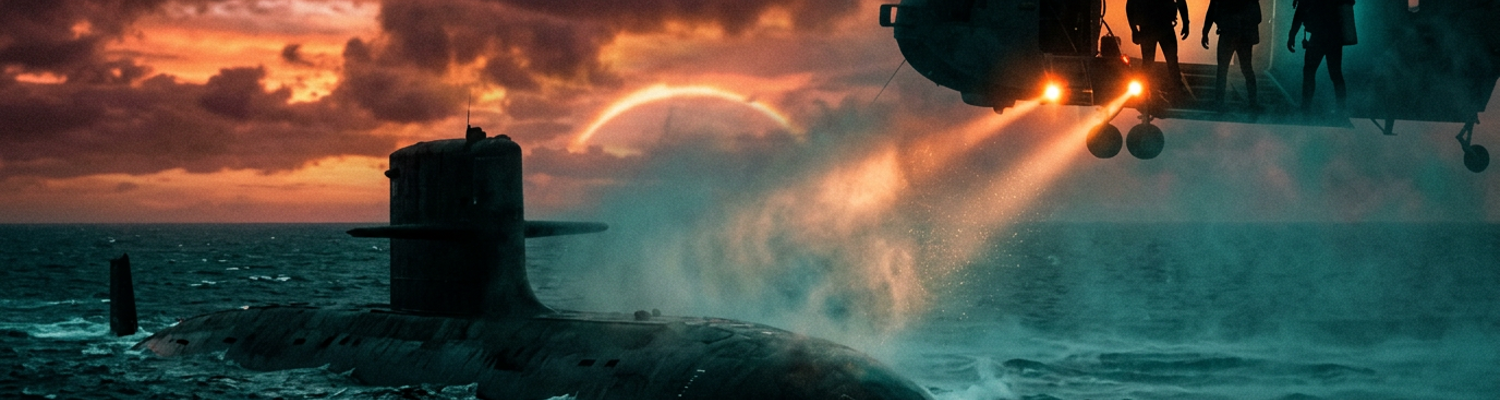

USS Grayback and the Littoral POW Rescue Mission
Batteries powering the Mark VII Swimmer Delivery Vehicle held barely enough electrical charge for a single covert run through heavy surf and coastal currents. Engineers built this unpressurized wet submersible to glide just beneath the surface, forcing its crew to wear standard scuba gear in open water while relying on a basic magnetic compass and dead reckoning for navigation. Submarine designers stored the compact craft inside the large forward missile hangar of USS Grayback, an old cruise missile boat converted into an amphibious transport. USS Grayback deployed to the Red River Delta littoral zone in late May 1972 under strict operational secrecy, carrying the submersible into North Vietnamese waters. Crew members inside the humid steel hull knew that the craft could not fight strong river outflows or navigate blind without draining its power cells completely.
Divers from a joint reconnaissance element from SEAL Team ONE and UDT-11 prepared to aid escaping American prisoners of war by studying hydrographic charts to calculate how those river outflows would sap their equipment. Intelligence reports indicated that two aviators planned to escape from a camp near Hanoi and float down the river network toward the sea on a raft. Planners designated an offshore island near the river mouth as the primary intercept point, betting that a small commando unit could set up a hidden observation post on the sand. The covert operation utilized the Mark VII Swimmer Delivery Vehicle launched from the submarine to carry the reconnaissance team across the final miles of shallow water. Technicians worked in the damp hangar alongside the swim team, checking depth gauges and sealing battery compartments before the boat moved into position.
Steel outer doors of the converted missile bay opened slowly into the dark water as USS Grayback settled into the shallow seabed off the North Vietnamese coast. Seawater flooded into the hangar chamber, completely submerging the four man reconnaissance crew seated inside the flooded cockpit of the vehicle. Electric motors hummed to life as the pilot steered the craft out of the submarine and into the offshore current, guiding the wet submersible away from the mothership. Heavy tidal swells immediately began pushing the low powered vehicle off its planned compass heading, dragging the divers into unexpected coastal rip currents. Pilot John Lutz and his navigation partner checked their instruments, realizing within minutes that the sluggish electric craft could not make headway against the accelerating outgoing tide. Rapidly dropping battery levels forced the pilot to push the propulsion controls forward, consuming precious electrical power that the team needed for their return rendezvous.
Battery cells inside the vehicle drained to empty within two hours, leaving the craft drifting helplessly sideways as the delta current overpowered its dual rudders. Crewmen watched their primary compass spin erratically in the churning surf, losing their true position relative to the extraction island. Exhaustion and dwindling breathing gas forced the four divers to surface into open water, exposing their dark rubber suits to enemy coastal lookouts. Lieutenant Dry made the emergency tactical decision to abort the reconnaissance mission and sink the disabled vehicle to prevent North Vietnamese forces from capturing the classified hull. Divers scuttled the craft in deep water and began swimming toward the open sea, leaving the submarine crew on USS Grayback waiting in total darkness for a rendezvous signal that never came.
Mark VII SDV Navigation Failures and Scuttling
Seawater dragged the four swimmers eastward into the open gulf while USS Grayback remained anchored in total darkness on the continental shelf. Severe shallow rip currents and gyrocompass deviation caused the Mark VII submersible to drain its battery reserves prematurely during the initial June 3 insertion attempt. Magnetic variation along the shallow delta floor disrupted the onboard navigation instruments, throwing the craft off course almost immediately after leaving the flooded missile hangar. The pilot ran the electric propulsion motor at continuous full power to fight the torrential outward surge of the Red River, draining the silver zinc cells far faster than mission planners anticipated. Lieutenant Melvin Spence Dry and Chief Warrant Officer Philip Martin scuttled the flooded submersible offshore after discovering that damaged trim tanks prevented the crew from controlling their depth or reaching the extraction beach. Both men manually opened the flooding valves and pushed the classified machine into deep water to prevent North Vietnamese coastal patrols from capturing sensitive American hardware.
Lieutenant Melvin Spence Dry gathered his three swimmers together in the heavy offshore swells to prevent the powerful littoral drift from scattering them across the Gulf of Tonkin. The four operators linked their buoyancy harness lines together in the rolling surf, conserving their physical strength while scanning the horizon for enemy patrol craft. Chief Warrant Officer Martin unclipped an emergency survival beacon from his vest pocket and switched the transmitter to the designated combat rescue frequency. Faint electronic pulses radiated into the night atmosphere, bypassing North Vietnamese coastal radar installations while alerting American fleet units stationed over the horizon. Combat information center watchstanders aboard Seventh Fleet destroyers patrolling on Yankee Station detected the distress transmission within minutes of activation. Radar operators plotted the signal vectors across their plotting tables, confirming that the lost reconnaissance team was drifting several miles seaward of the enemy river mouth.
Helicopters assigned to Combat Search and Rescue Detachment 110 scrambled from their flight decks as soon as commanders confirmed the emergency coordinates. Pilots navigated toward the datum point in near total blackout conditions, using infrared night vision sensors to scan the whitecaps for signs of life. Crewmen spotted a pulsating strobe light breaking through the ocean spray, guiding the aircraft directly over the floating cluster of divers. Flight technicians winched a rescue collar down to the water, hauling the waterlogged operators up through the cabin door amid blinding rotor wash. An HC-7 Seadevils helicopter retrieved the stranded operators and transferred them to the guided missile cruiser USS Long Beach. Support crews on the cruiser flight deck rushed the shivering commandos into the medical bay to treat hypothermia and assess their physical readiness for further operations.
Officers inside the cruiser flag plot debriefed Dry and Martin about the lost vehicle and the extreme navigation hazards near the river mouth. Strict operational security protocols barred the task force commander from transmitting a radio broadcast to USS Grayback, leaving the submerged submarine completely blind to the aborted mission. Submarine crews inside Grayback proceeded under the original schedule, preparing a second Mark VII submersible and a backup team of divers to launch into the exact same treacherous tidal currents. Lieutenant Dry refused to abandon the mission, arguing that his team had to return to Grayback immediately to brief the submarine captain and lead the next insertion attempt personally. Task force commanders approved an emergency night helicopter drop to return Dry and his reconnaissance team directly back into the sea alongside the submarine.
Coastal Radar Detection and Broken Wave Off Signals
Sikorsky HH-3A aircrews from Helicopter Combat Support Squadron Seven loaded Lieutenant Dry and his three reconnaissance divers into the cargo bay for the nighttime return flight. Flight engineers ran through preflight checks on the auxiliary fuel tanks and navigation gear, preparing the twin engine helicopter to locate the submarine in complete darkness without using active landing spotlights. USS Grayback surfaced onto the choppy waters of the Red River Delta littoral zone on the evening of June 5 to establish visual and radio contact with the inbound aircraft. Electronic warfare technicians inside the submarine radar spaces suddenly intercepted active pulses from a North Vietnamese coastal patrol radar sweeping across their offshore coordinates. Watch officers evaluated the hostile radar track as an immediate threat to the exposed submarine and its crew, recognizing that North Vietnamese patrol craft could close the distance within minutes. Commander John D. Chamberlain ordered his radiomen to transmit an urgent wave off signal to the fleet network while deck crews cleared the ballast vents to submerge the boat back into the safety of deep water.
Radio operators sent the coded abort message over high frequency naval circuits, routing the wave off through Seventh Fleet command centers stationed far out at sea. Complex relay protocols and encryption bottlenecks immediately choked the flow of tactical data between the submerged submarine, offshore cruisers, and airborne units. Atmospheric interference and strict radio silence procedures compounded the technical friction, preventing the urgent cancellation order from reaching the inbound HC-7 helicopter crew. The abort transmission failed to reach the inbound helicopter due to severe communications friction across multiple command nodes and mismatched tactical radio frequencies. Aviators inside the cockpit maintained their steady approach toward the drop zone on the original flight schedule, fully believing that Grayback was still waiting on the surface to guide them down. Navigators tracked their elapsed time and magnetic headings over the pitch black water, scanning their forward view with early generation night observation devices that struggled to penetrate the heavy ocean mist.
Pilots searched the black water for the infrared beacon that the submarine deck crew was supposed to activate during the final approach. Overcast cloud layers blocked all ambient starlight over the Gulf of Tonkin, plunging the surrounding coastal waters into absolute zero illumination conditions. Looking out through the cockpit glass, the aircrew mistook an unshielded surface light for the designated clandestine drop location. Flight crewmen believed this faint visual reference marked the submarine conning tower or a marker buoy deployed by Grayback topside watchstanders. Pilot controls shifted to bring the heavy aircraft into a low hover directly over the visible gleam, aligning the cabin door above the rolling surf to deploy the reconnaissance swimmers. Copilots monitored their engine torque gauges while the pilot wrestled with cyclic controls, trying to stabilize the shuddering airframe against strong offshore gusts without any visible horizon to orient the aircraft.
Crew chiefs opened the starboard cargo door into the roaring rotor wash, signaling Lieutenant Dry and his team to ready their swim gear at the threshold. Powerful downdrafts churned the surface into flying ocean spray, obscuring the sea beneath the aircraft and distorting the pilots visual depth perception in the pitch black night. Aircrewmen had actually aligned the helicopter over an unshielded civilian fishing light or drifting debris rather than the American submarine, positioning the aircraft several miles away from the intended rendezvous point. Radar altimeters gave deceptive readings over the fluctuating wave crests, leading the flight crew to miscalculate their true altitude above the dark water. Lieutenant Dry moved to the edge of the open doorway with his gear secured, preparing to lead his men into the water while the aircraft drifted unchecked in the dark. Diver Philip Martin stood directly behind him on the vibrating cabin floor, double checking their equipment straps as the helicopter descended toward the invisible surface.
Catastrophic Night Water Drop and Open Ocean Triage
Aircrewmen signaled the four divers to jump from the open cargo threshold, mistakenly believing that the aircraft had settled into a steady twenty foot hover. Blinding sea mist and low clouds hid the ocean surface from the pilots, while an unmeasured twenty knot tailwind propelled the heavy Sikorsky helicopter forward across the water. Preflight agreements between the reconnaissance team and the aviators strictly mandated that drops occur at no more than twenty feet of altitude and twenty knots of forward speed to protect personnel from high velocity water impact. Pilots lost their visual depth perception against the featureless black swells, misinterpreting their cockpit instruments as they drifted downwind over the sea. The helicopter discharged the team at excessive forward airspeed and altitude above the water, dropping the heavily laden commandos from an estimated height of forty to fifty feet while moving at nearly forty knots across the surface. Lieutenant Melvin Spence Dry leaped outward into the black rotor downdraft first, followed immediately by Martin, John Lutz, and Thomas Edwards into the blind drop.
Seawater struck the falling men with massive hydraulic force as their bodies and heavy scuba equipment hit the Gulf of Tonkin. Lieutenant Melvin Spence Dry sustained fatal impact trauma upon striking the sea surface, suffering severe neck damage that killed him instantly. Chief Warrant Officer Martin crashed into the surging water an instant later, enduring severe chest contusions and torn muscles as his life vest took the brunt of the collision. Diver John Lutz and Fireman Thomas Edwards plunged into the ocean directly behind Martin, sustaining severe full body bruising and deep physical shock as the ocean tore their dive masks and breathing regulators from their harnesses. Martin fought through blinding physical pain to kick his swim fins and break through the surface foam, coughing up saltwater while scanning the turbulent waves for his missing teammates. Scattered gear and damaged equipment floated across the darkness as the three injured survivors struggled to stay afloat against the powerful coastal chop.
Martin shouted into the darkness and located Lutz and Edwards, pulling the two injured swimmers together to form a tight defensive perimeter in the heavy sea swells. Search efforts in the pitching water quickly revealed Lieutenant Dry floating face down and unresponsive fifty yards away from the group. Surviving team members conducted urgent midnight open water triage while treading water until extraction, rolling Dry onto his back and checking his airway for signs of breathing. Martin confirmed the complete absence of a heartbeat, administered emergency chest compressions while keeping the lieutenant above water, and quickly determined that field resuscitation in the ocean was impossible. Team members manually inflated their fallen commander flotation vest and bound his harness to their own gear with nylon tether lines, refusing to let his body drift away into enemy controlled waters. Painful muscle cramps and saltwater ingestion plagued the three surviving divers as they fought to support the weight of their deceased officer while holding their positions in the swells.
Divers from the second Swimmer Delivery Vehicle shouted through the darkness from nearby swells, alerting Martin and his exhausted men to their presence. Crewmen from this separate reconnaissance craft swam toward the calls, explaining that their own vehicle had flooded and sunk during a failed launch attempt from the submarine earlier that night. Martin united the seven stranded Americans into a single floating circle, rationing their remaining signaling flares and shielding a lone infrared survival beacon from enemy shore lookouts. Exhaustion and hypothermia set in over several grueling hours as the men treaded water in the North Vietnamese littoral zone, keeping the body of Lieutenant Dry secured in their midst. Lookouts aboard American fleet units tracked the faint electronic locator pulses and dispatched recovery aircraft to the coordinates just before dawn. Helicopters from Combat Search and Rescue Detachment 110 arrived over the ocean coordinates at first light, lowering rescue slings to hoist the injured survivors and Lieutenant Dry out of the Gulf of Tonkin.
Post Mission Tactical Inquiries and Littoral Warfare Reforms
Helicopter crews swung the steel rescue hoists into the cargo bays and transported the survivors directly to the guided missile cruiser USS Long Beach for emergency medical triage. Navy doctors treated Martin, Lutz, and Edwards for ruptured eardrums, broken ribs, and severe internal trauma while mortuary technicians examined the blunt force injuries that killed Dry on impact. Command staff initiated an immediate inquiry into the night insertion, tracing how conflicting radio frequencies and deceptive surface lights caused the pilots to drop the divers at high speed into open water. Military officials initially classified the entire operation under strict secrecy to protect the covert rescue attempt, reporting the death of Lieutenant Dry as an offshore training accident. Decades of declassification reviews eventually revealed the true circumstances of the mission, formally recognizing Lieutenant Melvin Spence Dry as the last Navy SEAL to die during the Vietnam War.
Investigators focused their operational inquiries on the fatal drop height and excessive forward speed of the aircraft that threw Dry and his divers into the dark sea. Flight data and witness interviews proved that the helicopter had hovered fifty feet above the water while traveling forward at forty knots, far beyond the physical endurance of combat divers carrying heavy scuba tanks. Naval Special Warfare implemented strict altitude and airspeed safety minimums for night rotary wing maritime drops to prevent similar catastrophic water entries. New tactical safety rules established mandatory drop limits of no more than ten feet of altitude and ten knots of forward speed during darkness, requiring both pilots and the crew chief to cross check radar altimeters before clearing personnel to exit the cabin. Flight crews received specialized instrument training and strict abort protocols that ordered pilots to wave off the approach immediately whenever visual surface contact was lost over the ocean.
Submariners aboard USS Grayback confronted an equally catastrophic mechanical crisis as both lost submersibles forced an end to the entire rescue attempt. Technicians reviewed the loss of both wet submersibles, finding that heavy surf, battery exhaustion, and failed trim controls had doomed both insertion efforts before divers ever reached the target beach. The mission highlighted critical technological limitations in early Swimmer Delivery Vehicle navigation and battery endurance. Strong littoral currents pushing out of the Red River Delta quickly drained the silver zinc battery packs within two hours, leaving the electric motors without power to steer or hold depth. Navigation instruments proved equally inadequate, as the basic magnetic compasses onboard spun wildly in coastal shallows where shifting river sediments and metallic seabed minerals disrupted accurate heading readings.
Engineers resolved these critical hardware vulnerabilities by replacing the problematic Mark VII platform with the far more capable Mark VIII Swimmer Delivery Vehicle. Designers equipped the new submersible hulls with solid state electronics, Doppler velocity navigation systems, and high capacity battery banks capable of fighting heavy coastal surf for extended operational periods. Tactical planners eliminated the fragmented communications hierarchy that had delayed the emergency abort signal between Grayback and the incoming helicopters, instituting direct radio links between submarines and support aircraft during joint littoral missions. Seventh Fleet commanders formally terminated Operation Thunderhead and directed USS Grayback to retrieve its remaining dive team, drain the flooded forward missile hangars, and steam south across the South China Sea toward the naval station at Subic Bay.