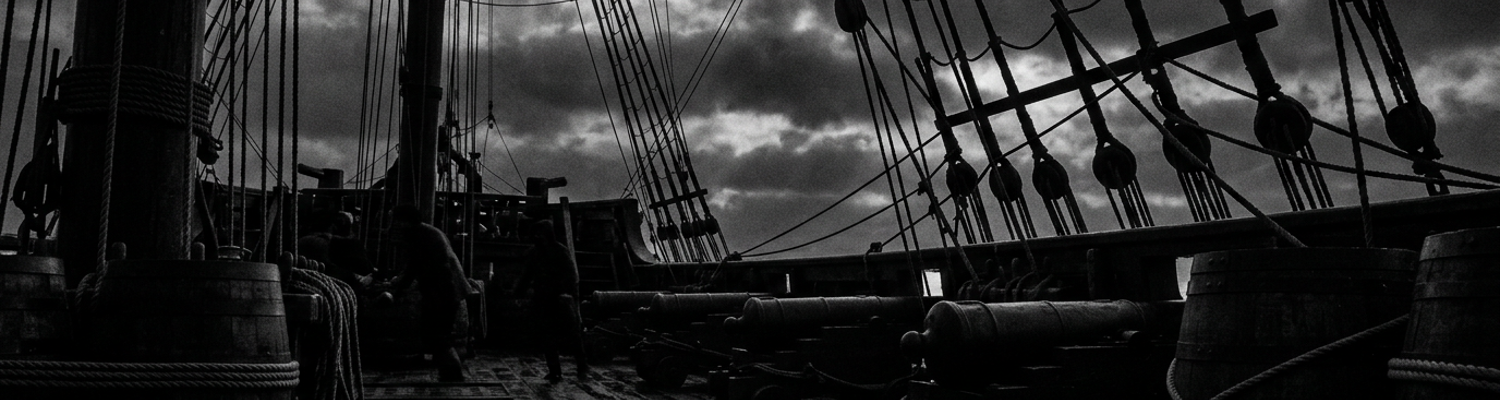

Capture of USS Franklin and Code Compromises
August 1802. The exact moment the weighted canvas bag failed to clear the port railing, the secure communications link between the United States Navy and its frontline blockade squadrons was physically severed. Archival evidence shows Tripolitan corsairs executed a coordinated boarding action against the 8-gun brig USS Franklin. Captain Andrew Morris commanded the vessel during the initial phases of Thomas Jefferson's naval expansion. This period involved rapid shipbuilding and deployed squadrons intended to choke off the Barbary ports. Three shallow-draft Tripolitan polaccas approached the brig under the cover of a moonless night. The enemy vessels utilized long wooden sweeps to outmaneuver the wind-bound American ship. They closed the engagement distance to zero while remaining outside the firing arc of the brig's main battery. The Franklin carried 6-pounder long guns. The crew lacked the time to run out the heavy wooden carriages. They could not prime the touchholes or depress the muzzles for a close-range broadside.
Iron grappling hooks slammed into the wooden rails.
Over one hundred Tripolitan fighters swarmed the main deck in a matter of minutes. They collapsed the defensive perimeter around the aft quarterdeck. Physical mechanics of the defense broke down as cutlass-wielding boarders severed the rigging lines and overwhelmed the helm. Morris and his remaining men were subdued by sheer numbers before any standing orders regarding the destruction of classified materials could be executed. The boarding party systematically stripped the vessel of its cargo. They took its brass navigational instruments and its command documents. The attackers secured the ship. They took the crew as prisoners and sailed the prize toward North African ports. The captured hull was immediately integrated into the enemy coastal patrol fleet.
A close review of operational logs indicates the true tactical disaster was the intact capture of the early US Navy signal books.
These bound ledgers contained the exact numerical flag hoist combinations used by American warships to identify each other. They coordinated blockade maneuvers and relayed fleet intelligence. Jefferson's naval strategy required a decentralized fleet operating across thousands of miles of ocean. This approach depended entirely on these cryptographic texts to maintain unit cohesion. Pages within the manuals detailed the specific sequences of pennants and square flags required to transmit orders over the horizon. Standard operating procedure dictated that the last officer on a captured ship must toss the lead-lined signal pouch into the sea. This ensured it sank beyond recovery. Rapid physical collapse of the Franklin's defense prevented this action. Tripolitan forces recovered the documents directly from the captain's cabin. They secured the accompanying translation tables.
The Pasha of Tripoli possessed the American tactical code combinations.
Enemy shore batteries and coastal lookouts stationed along the Barbary Coast could read the colored bunting flying from American masts. Tripolitan captains used the translated codes to anticipate fleet movements. They identified isolated stragglers and avoided heavily armed frigates. Squadron commanders were suddenly operating in a highly compromised tactical environment. Every hoisted signal broadcasted their intentions to the enemy. The surviving American captains had to improvise an entirely new communication architecture while actively engaged in blockade duties. Sailmakers aboard the blockading frigates cut apart existing flags. They sewed ad-hoc geometric patterns to create unrecognized visual signals. Officers drafted temporary numerical ciphers on scrap parchment. They distributed them via small boats during dangerous nighttime rendezvous.
The standardized communication framework built during the naval expansion was replaced by a fragmented system of hand-written codes.
Engineers and signal officers worked below decks by lantern light to manually update the compromised tables. Remapping the numerical values assigned to specific tactical maneuvers rendered the stolen books obsolete through sheer clerical repetition. The process required cross-referencing hundreds of individual commands and writing new corresponding flag combinations by hand. Newly drafted code sheets were sealed in wax. Rowboats smuggled them to adjacent blockading ships. Fleet communication networks were entirely rebuilt by manually writing new numerical values next to every tactical command in the surviving logs.
Purser Ledgers and Financial Accountability
Archival evidence shows that below the waterline of the frigates patrolling the 33rd parallel north, seawater constantly seeped through strained oak hull seams during the winter gales of 1803. This brine pooled directly in the purser's storage compartments aboard vessels blockading the Barbary Coast near the Gulf of Sidra. Clerks assigned to the USS John Adams audited damaged muster rolls while under operational stress in the Mediterranean. They often worked through active fleet engagements. A close review of operational logs indicates these men labored by the dim light of gimballed oil lamps to peel apart sheets of soaked parchment. Saltwater dissolved the iron gall ink used to record crew names, ranks, and daily ration allocations. When a 24-pound solid iron shot from a Tripolitan coastal fort smashed into the ship's port side, the kinetic impact shattered the wooden bulkheads of the lower deck offices. Splinters and heavy oak debris covered the ledger tables. Clerks ignored the structural damage and focused entirely on salvaging the payroll documents. They used specialized bone folders to separate the wet pages without tearing the fragile paper fibers. Once the sheets were apart, the men laid the damaged records across the top of cold iron cannons to dry in the ambient draft.
The physical survival of the crew's financial records took precedence over the clerk's personal safety.
Reconstructing these documents required cross-referencing surviving fragments with the captain's logbook. This determined the exact number of men aboard at any given hour. Every dead, sick, or transferred sailor had to be accurately tracked to prevent payroll discrepancies across the squadron. Pursers scraped away ruined ink with pumice stones and wrote new entries over the dried water stains. They calculated the exact dates of a sailor's enlistment. They noted any time spent in the brig. They logged the specific days a man received a half-ration due to disciplinary action. Gunfire from enemy polaccas frequently forced the ship to heel sharply. This sent glass inkwells and brass sand shakers crashing to the deck. The clerks simply uprighted their tools. They wiped the spilled ink from the floorboards with canvas scraps and resumed their calculations.
Accountability stopped at the purser's desk.
The Navy Department required precise financial ledgers despite combat disruptions. Secretary of the Navy Robert Smith issued standing orders from Washington mandating that every blockading vessel submit double-entry accounting books at the end of their deployment. These strict regulations did not include exemptions for battle damage, dismasting, or heavy crew casualties. Pursers were held personally liable for any financial shortfall discovered by government auditors upon the ship's return to port. If a ledger failed to balance to the exact half-cent, the treasury deducted the missing funds directly from the purser's own accumulated wages.
A missing receipt meant an automatic pay docking.
To comply with these rigid directives, clerks recorded daily transactions in heavy leather-bound daybooks using precise fractional mathematics. They tracked deductions for slops. This included two-dollar canvas jackets, woolen trousers, and tobacco issued from the ship's stores. When a boarding action against a Tripolitan corsair resulted in American casualties, the purser immediately calculated the dead sailor's remaining pay. He transferred the balance to a separate widow's fund ledger. During the chaotic aftermath of ship-to-ship engagements, surgeons amputated limbs on the deck above. Carpenters hammered lead patches over hull breaches below. Financial officers sat at their desks calculating currency conversions. Confiscated Spanish milled dollars, British pounds, and local Barbary piastres required conversion into standard US currency values using handwritten exchange rate tables. Every captured cutlass or barrel of enemy gunpowder was inventoried. Clerks appraised the items and entered them into the prize money columns. Heavy canvas wrappers sealed the final tallies. Iron strongboxes bolted directly to the ship's keel stored the documents.
Improvised Mechanical Lanterns and Tactical Signals
Archival evidence shows that by October 1803, the loss of the standard numerical codebooks forced Commodore Edward Preble to authorize a complete mechanical overhaul of nighttime signaling apparatus across the Mediterranean Squadron. Operating at the exact coordinates of 32 degrees 53 minutes North, 13 degrees 11 minutes East. This was just outside the effective range of the Bashaw's 24-pounder coastal batteries. Engineers aboard the frigate USS Constitution and the schooner USS Enterprise began dismantling standard issue ship-to-ship illumination devices. Standard naval lanterns emitted a continuous 360-degree beam fueled by highly refined spermaceti oil. Enemy lookouts stationed on the elevated limestone ramparts of Tripoli harbor easily tracked these static light sources. They monitored American fleet deployments and anticipated coastal raids. Blockade vessels employed improvised mechanical lanterns to secure communications. This required armorers to cut thin sheets of copper and tin from powder magazine linings. Blacksmiths fabricated sliding shutter mechanisms from these scrap metals. They mounted the opaque plates on crude brass tracks directly over the glass lantern panes.
Saltwater corrosion seized the untreated iron springs intended to pull the shutters closed.
A close review of operational logs indicates the technical troubleshooting required constant manual intervention by the quartermasters during heavy winter swells. When the iron components failed, sailmakers replaced the return springs with tensioned strips of heavy canvas. They used greased leather hinges cut from spare rigging gear. Modified lanterns required an operator to manually push a wooden lever downward to expose the flame. Leather bands snapped the copper shield back into place the exact second physical pressure was released. Ambient heat generated by the burning spermaceti oil frequently cracked the standard glass panes trapped behind the closed metal shutters. Crews solved this thermal expansion failure by replacing shattered glass with shaved horn or mica sheets requisitioned from the purser's dry stores.
The resulting directional beam was visible only to ships positioned directly within a narrow five-degree viewing arc.
Crews bypassed compromised signals using customized light sequences during night operations to restore fleet coordination. Captured Franklin codebooks allowed Tripolitan gunboats to interpret standard American lantern arrays. This rendered the official nighttime fleet doctrine a direct threat to ship safety. Officers aboard the brig USS Argus and the schooner USS Syren discarded the compromised manuals entirely. They drafted localized timing charts based on exact seconds of light exposure rather than the physical placement of multiple lanterns in the rigging. Midshipmen stood on the freezing quarterdecks clutching brass Breguet pocket watches. They timed the intervals between flashes down to the half-second. A designated sequence of two three-second bursts followed by a ten-second blackout became the temporary recognition signal. This was used for vessels approaching the western edge of the blockade perimeter near the Karamanli fortifications.
Signal officers etched these ad-hoc timing schedules directly into wooden deck planks using sail needles.
This localized cryptographic system required constant revision to prevent enemy shore watchers from recognizing the new rhythmic patterns. Every seventy-two hours, squadron commanders dispatched rowboats under the cover of darkness. They distributed updated sequence timings to the outlying picket ships. Engineers below decks scraped the previous week's timing intervals off the wooden boards with iron carpentry planes. They then burned new sequences into the raw wood using heated iron marlinspikes. This ensured the instructions remained legible in wet conditions. During a December squall off the Gulf of Sidra, operators aboard the Syren had to manually hold the scorching hot copper lantern shutters open with their bare hands. The leather tension bands had snapped in the freezing rain.
Tripolitan coastal patrols attempted to counter this new signaling method by lighting false fires along the shoreline to confuse American navigators. Lookouts on the Constitution had to differentiate between the precise timed flashes of sister ships and the erratic burning of enemy decoy pyres scattered across the beaches of North Africa. The improvised timing charts included specific abort codes consisting of rapid half-second stutter flashes. This warned approaching vessels of enemy gunboats loitering near the rendezvous coordinates. Navigators cross-referenced the angle of the incoming light with their compass headings. This verified the transmitting ship was positioned in deep water, rather than grounded on a shallow reef to serve as a tactical decoy.
Ship logs confirm the successful transmission of a four-flash intercept order while the operator treated second-degree burns on his palms.
Underway Transfers of Water and Powder
Archival evidence shows that maintaining a continuous naval presence outside Tripoli harbor required ships to resupply directly within the firing arc of enemy coastal defenses. Frigates assigned to the Mediterranean Squadron could not abandon their patrol sectors to restock at friendly ports in Malta or Syracuse without leaving the harbor entrance unguarded. Underway replenishment occurred near hostile shorelines to sustain the ongoing blockade throughout the winter of 1803. Navigators charted these supply rendezvous at coordinates 32 degrees 55 minutes North, 13 degrees 09 minutes East. This positioned the American vessels less than three miles from the elevated limestone walls of Fort English. Karamanli shore batteries mounted 24-pounder cannons capable of hurling solid iron shot into the designated staging areas. The prevailing northerly winds constantly pushed the deep-draft warships toward the shallow coastal shoals during the transfer operations. Topmen reefed the main topsails to reduce forward momentum while backing the mizzen sails to physically counter the drift.
The depth soundings dropped to forty feet just south of the rendezvous coordinates.
A close review of operational logs indicates that keeping two heavy wooden vessels parallel in open ocean swells demanded constant physical exertion from the helm crews. The 44-gun USS Constitution and the chartered civilian store-ship Traveller lashed their hulls together using twelve-inch thick hemp hawsers. Quartermasters at the ship wheels fought the rudder kickback as rogue waves slammed the side of the supply vessel into the frigate's heavy oak wales. Sailors deployed thirty-foot wooden spars as improvised fenders. These absorbed the kinetic impacts between the rolling ships. The friction generated by thousands of tons of displacement grinding together shredded the exterior tar coatings. It splintered the outer hull planking. Coarse fibers of the mooring ropes smoked from the intense friction before snapping under the sudden tension of opposing wave troughs. Boatswains stood on the precarious netting with heavy axes. They were ready to sever the connecting lines if the store-ship began to drag the frigate toward the coastal reefs.
Both crews operated in complete silence to avoid alerting the Tripolitan gunboats patrolling the surf line.
American store-ships conducted night-time transfers of water casks and black powder to minimize the risk of enemy interception. Moving liquid cargo between pitching decks in pitch-black conditions required engineers to rig heavy block-and-tackle systems directly from the mainmast yardarms. Riggers utilized heavy double-sheave jeer blocks to multiply the mechanical advantage of the hoisting lines. Men stationed on the store-ship attached heavy iron hooks to the thick rope slings wrapped around 50-gallon oak water casks. Each fully loaded barrel weighed over four hundred pounds. Deckhands heaved on the capstan bars to hoist the massive loads into the air. They relied entirely on physical touch and shouted whispers to coordinate the lift in the dark. The hoisted casks swung wildly on the pendulum of the crane ropes as the ships rolled in the Mediterranean chop. Handlers on the receiving frigate had to physically wrestle the swinging wooden barrels onto the wet deck planks before the rigging lines snapped back.
Spilled freshwater froze into a thin layer of ice across the upper gun deck.
When examining the historical record regarding munitions handling, the movement of explosive materials under these conditions required extreme mechanical precautions. Store-ships carried hundreds of 100-pound wooden kegs filled with coarse-grained black powder destined for the frigate magazines. Armorers inspected every single barrel. Checking the cooperage ensured the builders utilized copper hoops rather than standard iron bands. Any metal-on-metal impact between an iron hoop and a steel deck ring generated a spark. A single spark possessed the capability to ignite the ambient powder dust clinging to the sailors' clothes. Crews transferred these kegs entirely by hand. A human chain formed across the narrow wooden gangplanks bridging the gap between the two ships. Men passed the heavy wooden cylinders chest-to-chest while balancing on the slippery boards suspended thirty feet above the crushing hulls. The receiving crew immediately covered the transferred kegs with heavy woolen blankets. This action blocked stray static charges before lowering the munitions down the narrow hatches into the lead-lined magazine rooms.
Gunner's mates walked barefoot across the frost-covered planks to eliminate the friction of leather boot nails.
Carpenter Damage Control Under Battery Fire
Archival evidence shows that during the shallow-water bombardment operations of August 1804, American blockading frigates frequently sustained direct hits below the waterline from Tripolitan shore batteries. Navigators anchored the USS Constitution and the USS John Adams at coordinates 32 degrees 54 minutes North, 13 degrees 10 minutes East to maximize the firing arcs of their starboard guns. This static positioning placed the wooden hulls directly within the effective range of the 24-pounder cannons mounted on the elevated limestone ramparts of Fort English. Solid iron spheres traveling at hundreds of feet per second smashed through the heavy exterior oak wales of the American ships. The kinetic impact shattered the dense timber framing. It sent jagged three-foot wooden splinters tearing through the crowded lower decks. Seawater immediately surged through the exterior breaches at a rate of hundreds of gallons per minute. Ship carpenters stationed on the unlit orlop deck rushed to the impact zones. They carried heavy canvas bags filled with tapered pine plugs, raw oakum, and sheets of rolled lead. They operated entirely in the dark after the violent kinetic shocks of the enemy broadsides extinguished the gimballed oil lanterns hanging from the overhead beams.
The men waded through waist-deep freezing brine to locate the structural fractures by touch.
A close review of operational logs indicates the damage control teams executed emergency repairs while the enemy batteries maintained a sustained rate of fire. Mechanics drove the conical wooden plugs directly into the circular cannonball holes using long-handled iron mauls. The incoming water pressure repeatedly forced the plugs back out into the interior compartments before they could be secured. Carpenters countered this hydraulic failure by wedging heavy wooden shoring timbers against the opposite bulkheads. This physically braced the plugs in place. They then packed the surrounding splintered gaps with thick ropes of tarred hemp fibers. Men boiled blocks of hard pine pitch over enclosed iron stoves in the forward galley. They carried the molten tar below decks in heavy copper buckets. They poured the boiling pitch directly over the packed oakum to create a watertight seal against the Mediterranean current.
Armorers hammered large squares of lead over the damaged interior strakes using thick copper nails.
When examining the historical record regarding shipboard administration, these emergency physical repairs occurred simultaneously with strict material accounting protocols. The Department of the Navy required exact documentation for every piece of government property consumed during a combat deployment. Chief carpenters assigned junior mates to stand directly behind the repair crews in the flooded compartments. They held heavy wooden tally boards. These clerks recorded every single pine plug, every foot of lead sheeting, and every pound of oakum utilized to seal the hull breaches. Tracking the exact number of copper nails driven into the wood was mandatory. The chief carpenter faced personal financial liability for any discrepancy between the purser's initial supply inventory and the materials remaining in the ship's dry stores. Government auditors in Washington reviewed these specific ledgers upon the ship's return to port to calculate the exact cost of the battle damage.
A missing sheet of lead resulted in an automatic deduction from the carpenter's monthly wage.
Crews balanced this rigid record-keeping with the immediate physical necessity of keeping the warship afloat. Clerks used sticks of raw charcoal to scratch expenditure figures directly onto the dry upper sections of the interior bulkheads when their paper ledgers became too soaked to absorb ink. Men shouted inventory numbers over the deafening roar of the 24-pounder broadsides firing from the gun deck directly above their heads. If a carpenter dropped a handful of copper nails into the flooded bilges, the clerk immediately tallied the dropped hardware as a combat loss in the charcoal columns. The administrative staff copied these temporary bulkhead tallies into the official leather-bound expenditure logs once the ship rotated out of the enemy firing arc. They utilized specialized bone folders to press the wet pages flat and transcribed the charcoal numbers using iron gall ink.
The updated ledgers documented the consumption of forty pounds of tarred hemp and eighty copper spikes during a single thirty-minute engagement.