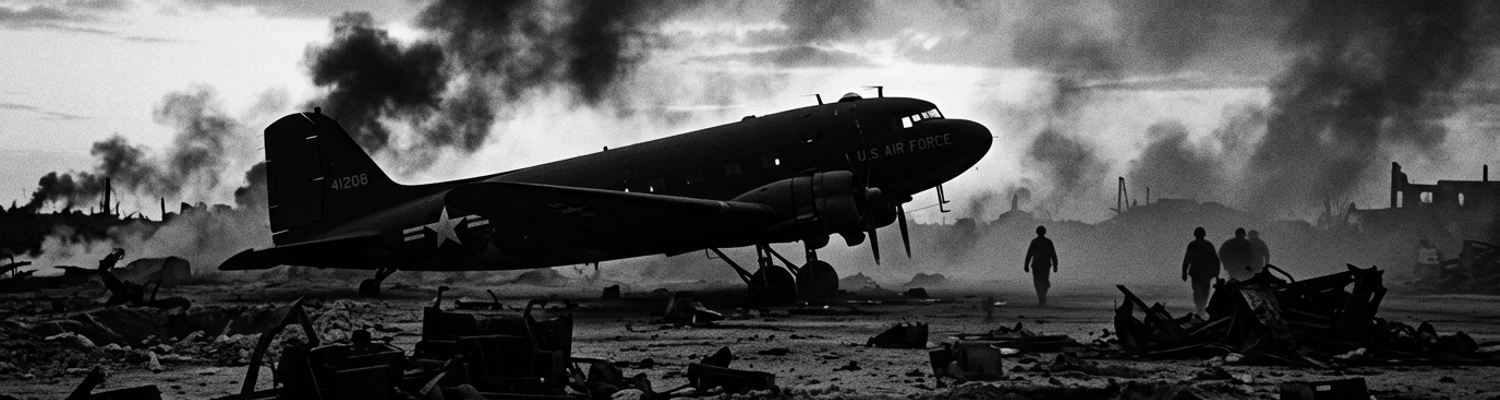

Initial Assault and Tactical Paralysis at Mokmer Drome
Army amphibious doctrine promised rapid results. Landing forces supported by naval gunfire were expected to overrun coastal defenses. They were supposed to establish secure forward airfields within forty-eight hours of hitting the beach. Soldiers of the 41st Infantry Division faced immediate tactical paralysis instead. When examining the historical record of Operation Horlicks, Sixth Army intelligence drastically underestimated the Japanese garrison on Biak Island. Planners projected fewer than five thousand poorly supplied troops across the entire sector. Over eleven thousand entrenched defenders under Colonel Naoyuki Kuzume actually waited behind prepared positions cut into prehistoric coral shelves. Major General Horace Fuller deployed his 41st Infantry Division near Bosnek in late May 1944. The objective was to secure critical air facilities for the Southwest Pacific campaign. Douglas MacArthur required fighter cover for his planned drive into the Philippines. The narrow coastal approach immediately bottlenecked the 162nd Infantry Regiment along a track pinched between the sea and vertical limestone bluffs. Troops carried forty-pound combat loads in equatorial heat exceeding one hundred degrees Fahrenheit. They drained their canteens within hours.
LVT water trailers cracked apart on jagged offshore reefs.
Thirst incapacitated front-line rifle companies before they ever established contact with the main Japanese defense line.
Archival evidence shows that American forces captured the austere coral runway of Mokmer Drome in early June 1944. This followed nearly two weeks of grinding close-quarters combat. Securing the blinding white strip solved none of the tactical danger. Japanese gunners positioned inside the East Caves and West Caves maintained direct observation from nearby bluffs. They looked straight down the flight line from jagged terraces rising two hundred feet over the coastal plain. Artillery spotters zeroed Type 41 75-millimeter mountain guns onto every square yard of the exposed runway. Infantrymen from the 186th Infantry Regiment dropped into shallow bomb craters for cover. Razor-sharp coral edges shredded their herringbone twill uniforms. The rock sliced down to the bone. Kuzume directed interlocking fire from Type 92 heavy machine guns and concealed 20-millimeter dual-purpose autocannons. These weapons raked the open field whenever an American soldier moved. Tank crews from the 603rd Tank Company attempted to suppress the bluffs. Concentrated anti-materiel fire shattered their M4 Sherman periscopes and vision blocks.
The vehicles were left blind and immobilized under direct mortar salvos.
Direct observation from the bluffs turned the entire runway into an inescapable kill zone.
A close review of operational logs indicates that engineers and forward units struggled to establish an operational strip. They faced brutal tropical heat and constant sniper activity. Heavy construction equipment took an immediate beating. Caterpillar D7 bulldozers assigned to the 116th Engineer Combat Battalion suffered punctured radiators and severed hydraulic lines. Japanese snipers camouflaged inside cavern fissures less than three hundred yards away singled out equipment operators. Standard armor kits failed against steel-core 7.7-millimeter rounds fired from elevated angles. Maintenance crews field-welded salvaged naval boiler plating to the open tractor cabs. The excessive weight repeatedly burned out steering clutches in the suffocating heat. Surface temperatures on the white limestone runway reached 115 degrees Fahrenheit by midday. Metal hand tools became impossible to handle without heavy work gloves. Acute heat exhaustion knocked out up to forty percent of engineering personnel daily. This compounded the severe dehydration caused by water rations dropping below one canteen per man. Mechanics worked under continuous sniper harassment to clear shell holes. The first battered P-40 Warhawks of the 49th Fighter Group finally staged onto the strip on June 22. Mortar shells were still scattering jagged coral fragments across the dispersal areas at the time.
Subterranean Fortifications and the West Caves Complex
Archival evidence shows that Colonel Kuzume Naoyuki abandoned standard Imperial Japanese Army doctrine. He refused to waste his garrison in suicidal counterattacks along the Bosnek beaches. Kuzume concentrated the 222nd Infantry Regiment within a honeycombed subterranean complex known as the West Caves. This position was located barely one mile northwest of the Mokmer airstrip. Prehistoric coral uplifts had formed three colossal natural sinkholes. These dropped down into caverns measuring up to one hundred feet deep. Japanese engineers expanded these sinkholes into an interconnected labyrinth. They excavated lateral tunnels that linked subterranean barracks to field dressing stations and deep ammunition magazines. Over two thousand combat troops lived beneath seventy feet of limestone and coral. Heavy naval bombardment from American cruisers shook the bedrock. The underground garrison remained intact. Constant darkness and tropical humidity exceeding ninety percent took a heavy toll. An accumulating stench of gangrene and rotting rations produced rapid psychological deterioration among the trapped defenders.
Seventy feet of solid coral overhead completely nullified American air strikes.
When examining the historical record of Sixth Army operations, the tactical deadliness of the West Caves becomes apparent. The threat came from concealed firing platforms engineered directly into the cliffs. Japanese positions inside natural fissures shielded Type 41 75-millimeter mountain guns. These sat alongside Type 97 81-millimeter and Type 94 90-millimeter heavy mortars zeroed directly on the exposed runway. Kuzume and his gunners possessed pre-registered firing data for every five-hundred-foot section of the strip. The Type 41 mountain gun weighed roughly 1,190 pounds. It proved well suited for subterranean fighting. Teams pushed the artillery pieces on spoked wheels to cave apertures. They fired sudden three-round salvos. The crews then rolled the guns behind protective blast bulkheads before counter-battery spotters identified the flash. Muzzle blast confined within the limestone tunnels ruptured the eardrums of gunners who lacked protective cotton plugs. Airborne coral dust constantly choked the interrupted-screw breeches. Maintenance crews had to flush sliding mechanisms with salvaged motor oil between volleys.
Every sector of the airfield had a specific firing pin setting recorded on Japanese map boards.
A close review of operational logs indicates that the garrison maintained lethal efficiency. Forward artillery observers hid along the surrounding ridge. Observers crawled through narrow rock chimneys to reach concealed perches overlooking the coastal plain. They ran heavy insulated telephone cables through deep cracks to the gun pits below. These forward observers singled out incoming Douglas C-47 Skytrain transport flights struggling down toward the damaged runway. The unarmed twin-engine transports descended over the water at ninety knots. They were unable to take evasive action during landing approaches. Spotters timed mortar volleys to impact the moment transport wheels touched down. Razor-sharp coral and metal fragments riddled the thin aluminum fuselages. American flight crews experienced intense combat fatigue from the unpredictable shelling. They never knew which landing approach would trigger an artillery strike. Shrapnel-torn cabins frequently killed wounded soldiers already secured to evacuation litters. Transport pilots were forced to abort approaches and circle over the open ocean while low on fuel.
Field hospital units recorded thirty-seven transport aborts in five days. Direct mortar hits on the landing strip caused every single one.
ATIS Intercept Operations and Signal Intelligence
Archival evidence shows that intelligence personnel worked in physical conditions designed to test human endurance to its absolute limits. Embedded Allied Translator and Interpreter Section linguists operated out of humid sandbagged dugouts. These heat-stressed bunkers were hollowed directly into the coral rubble fifty yards off the Mokmer taxiway. Second-generation Japanese-American soldiers were assigned directly to forward command elements of the 41st Division. They endured subterranean bunker temperatures exceeding 105 degrees Fahrenheit. Ambient humidity hovered near 95 percent. This created a corrosive microclimate that rusted receiver chassis. Paper cipher logs disintegrated into wet pulp within forty-eight hours. Technical crews wired BC-348 radio receivers to salvaged lead-acid vehicle batteries. These batteries constantly leaked acidic fumes into the unventilated crawlspaces. Sweat ran continuously into bakelite headphone cups. This produced painful fungal ear infections that tormented the operators during sixteen-hour monitoring shifts. Concussion from heavy Japanese artillery impacts regularly sheared the dugout ceiling supports. Sensitive vacuum tubes were showered with fine limestone dust that shorted tuning condensers. Outside the sandbagged parapets American perimeter sentries maintained strict shoot-on-sight orders against night infiltrators. The Nisei linguists stayed trapped inside their pitch-black holes for days on end to avoid being gunned down by friendly riflemen.
Nerve strain broke men before the shrapnel reached them.
When examining the historical record of Sixth Army signal intelligence, the dugout teams targeted short-range high-frequency tactical transmissions. These signals linked Colonel Kuzume and his headquarters in the West Caves to hidden artillery batteries across the ridges. Kuzume bypassed vulnerable field telephone cables by routing fire orders through low-power Type 94 portable field transceivers. These radios were buried behind deep rock crevices. Japanese signal officers utilized non-standard tactical grids combined with katakana abbreviations. They transmitted coordinates through rapid voice calls and high-speed Wabun Morse transmissions. The Nisei specialists pulled these faint signals out of dense equatorial static using improvised wire aerials strung between splintered coconut palms. They operated under constant flightline bombardment. Decryption had to happen instantly inside the operator head without codebooks or mechanical aids. Linguists tracked shifting radio call signs. They deciphered encoded runway quadrants. They distinguished between deliberate false broadcasts and genuine firing commands directed at American positions. A single failure to catch a rushed military colloquialism or regional dialect meant misidentifying exactly which section of the airstrip was about to be pulverized.
Speed determined survival.
A close review of operational logs indicates that this immediate real-time radio exploitation provided brief advance warning windows. Ground personnel received alerts before artillery barrages struck the tarmac. The moment an intercept confirmed a battery release command from Kuzume network a linguist screamed the pre-designated grid coordinate into a sound-powered EE-8 field telephone. This line was wired directly to the flightline air control bunker. Ground personnel received anywhere from forty-five to ninety seconds of warning before incoming 75-millimeter mountain gun rounds cleared the cliffs. Sirens wailed across the flightline. Maintenance mechanics dove beneath armored Caterpillar bulldozers. Medical personnel dragged evacuation litters off idling C-47 transports and threw them into shallow drainage ditches. Flight crews slammed throttles wide to abort approaches. They hauled wounded infantrymen through cargo hatches as jagged shrapnel tore through unarmored aluminum fuselages. The psychological toll on the subterranean linguists reached catastrophic levels. Every shell explosion functioned as an immediate audit of their listening accuracy. This inflicted sustained panic and chronic nervous exhaustion on men who knew that a missed syllable meant immediate slaughter on the airstrip.
Records show intercept teams suffered an acute combat exhaustion rate of sixty percent by late June.
Aeromedical Triage Protocols on the Tarmac
Archival evidence shows that casualty holding areas at Mokmer were set up directly on the exposed white limestone apron. This location was alongside the primary taxiway barely eight hundred yards from Japanese gun emplacements in the cliffs. Medical officers from the 116th Medical Battalion had no corrugated iron or timber balks. They lacked sandbags to construct covered revetments. Litter bearers placed canvas stretchers straight onto jagged coral shelves. Surface temperatures routinely reached 120 degrees Fahrenheit by noon. Wounded men lay completely unprotected under direct sun. Their skin blistered against standard olive-drab canvas that became hot enough to cause contact burns through cotton field bandages. Bleeding soldiers suffered rapid cardiovascular collapse. Extreme dehydration compounded acute hemorrhagic shock. Shrapnel from airbursting Japanese Type 41 artillery shells peppered the open staging ground without resistance. The metal fragments shredded plasma infusion bottles suspended from inverted wooden stakes. They severed rubber intravenous lines. Orderlies covered open wounds with damp field jackets. Airborne coral dust swept up by taxiing aircraft quickly caked surgical dressings with alkaline grit. This contaminated open abdominal wounds and compound fractures.
Wounded men baked on the rock while waiting for artillery to find them.
When examining the historical record of the 804th Medical Air Evacuation Squadron, triage doctors had to assign survival categories under fire. Type 97 81-millimeter mortar rounds detonated across the dispersal area at intervals under three minutes. Flight surgeons checked airway patency and thoracic sucking wounds while lying flat on the gravel. They made irreversible sorting decisions with grease pencils directly on the foreheads of litter cases. Medics were forced to decide which dying men were dragged into two-foot-deep coral scrape holes. They had to choose who was left on their stretchers when incoming fire walked across the apron. Flightline surgeons abandoned men displaying massive intracranial trauma or penetrating chest wounds with cyanosis. They tagged them with red paper markers indicating non-transportable status. This prioritized casualties with tourniquets that had thirty minutes before hemorrhagic death. These physicians worked without surgical masks or morphia reserves. They shouted over the whine of Pratt & Whitney radial engines. They decided which screaming infantrymen would be abandoned on the runway if an incoming shell struck an embarking transport. Panic-stricken litter teams dropped stretcher handles and scrambled for defilade during sudden barrages. Paralyzed patients were left to absorb jagged rock splinters that severed femoral arteries.
Every mortar strike recalculated who lived and who was written off.
A close review of operational logs indicates that outbound Douglas C-47 transports assigned to the 54th Troop Carrier Wing faced severe space limitations. They could accommodate only eighteen litter patients per airframe on standard web strap tiers. Hundreds of critically injured soldiers overwhelmed the flights. Flight surgeons sorted through blast injuries caused by coral fragmentation. They evaluated third-degree petroleum burns from destroyed M4 Sherman tanks and exploding flamethrower pressure tanks. They weighed those traumatic wounds against a collapsing health crisis caused by scrub typhus and epidemic amoebic dysentery. Soldiers burning with 105-degree fevers from mite-borne tsutsugamushi disease drifted into delirium beside men with shattered pelvises and perforated bowels. Surgeons prioritized men who could survive the rough three-hour flight across Geelvink Bay to base hospitals in Hollandia. They deliberately bumped infectious medical cases and head wounds off the manifest. Transport pilots kept port engines running at fifteen hundred revolutions per minute on the damaged strip. This gave flight surgeons under four minutes to fill fuselage racks before taxiing away under renewed Japanese counter-battery fire.
By dusk on June 28 flightline triage personnel had logged twenty-six expectant casualties. These men succumbed to shock on the exposed coral before an empty cargo door ever opened.
Abrasive Coral Degradation and Mechanical Failures
Archival evidence shows that pulverized coral dust churned up by propeller wash caused widespread destruction. Douglas C-47 Skytrain transport squadrons operating from the Mokmer strip suffered heavy equipment losses. The crushed limestone covering the unpaved dispersal pads contained sharp calcium carbonate micro-particles. This dust bypassed standard intake screens on Pratt & Whitney R-1830-92 Twin Wasp engines. These crystalline grains entered the induction manifolds and settled directly inside the air-cooled cylinder heads. The abrasive matter ground into the chrome-plated cylinder walls once trapped against the reciprocating components. It chewed through cast-iron piston rings. It stripped the bronze exhaust valve guides within twenty operating hours. Loss of cylinder compression caused severe power drops during steep initial climbs over the water. Flight logs from the 317th Troop Carrier Group document multiple instances of engine failure. Twin-engine transports suffered heavy oil blow-by and pre-ignition backfires sixty seconds after clearing the beachhead. Pilots flying heavy medical evacuation loads across Geelvink Bay had to feather smoking engines. They dumped fuel to avoid ditching in shallow coastal reefs.
Fine mineral grit destroyed radial engines faster than Japanese anti-aircraft fire.
When examining the historical record of airfield perimeter defense, abrasive particulate contamination spread far beyond aircraft powerplants. It ruined small arms and fuselage hardware. Ground troops from the 162nd Infantry Regiment maintained security trenches along the taxiways. They discovered that standard issue light preservative lubricating oil blended with airborne coral sediment into a thick grinding paste. This mixture froze the reciprocating bolt assemblies of M1 Garand rifles. It jammed the operating slide groups of Browning Automatic Rifles during sudden close-quarters skirmishes with infiltrating Japanese patrols. The same airborne contamination crippled the structural fittings of departing transports. C-47 cargo doorways relied on external guide tracks and roller bearings. They used dual spring-loaded locking pins that bound up when coated in chalky grit. Crew chiefs attempted to secure doors during rapid combat turnarounds. They found the locking mechanisms completely seized while pilots pushed throttles forward under mortar bombardment. Transports routinely lifted off the coral runway with heavy aft cargo doors unlatched. The doors banged against the exterior fuselage. This destabilized aerodynamic trim and threatened to throw unsecured litters onto the limestone below.