
Aftermath of the Standoff Emissions Barrage
At 0314 hours, the tactical landlines and multichannel UHF links running south to the 501st Military Intelligence Group headquarters at Camp Humphreys died simultaneously. Frontline teams were severed from the rear command structure.
A close review of operational logs indicates that this immediate isolation followed an intense burst of coordinated electronic jamming. High-output radio frequency energy originated from tracked jamming vehicles positioned in hardened revetments south of Kaesong. The emissions targeted directly into the western sector of the armistice border. INSCOM monitoring posts situated near the Yeoncheon corridor took the brunt of the assault. Rotating directional log-periodic antennae and fixed dipole masts were engineered to intercept low-power KPA ground-wave communications in the 30 to 76 megahertz tactical VHF spectrum. They were subjected to raw pulse-noise saturation exceeding forty watts per kilohertz of bandwidth.
Antenna coils heated rapidly under continuous alternating current voltage spikes.
Ground-plane elements tied to exterior bunker walls absorbed induced currents. These currents jumped primary spark gaps and bypassed lightning arresters. The surge overloaded the antenna distribution units inside the collection shelters (NARA Record Group 338, File 44-A). Frontline operators were left listening to dead air.
The jamming abruptly stopped at 0341 hours. Forward listening posts fell into total system blackout during the sudden cessation of frontline enemy transmissions. Across every tactical monitoring console at Guard Post Collier and Observation Post Mazera, the high-density chatter of North Korean division-level nets vanished. There were no customary sign-off protocols. There were no carrier trail-offs. Artillery fire-direction frequencies went cold across three army corps sectors simultaneously.
Intercept teams attempted to recalibrate their baseband demodulators. They found zero electromagnetic emissions across both VHF and HF segments. Northern radio operators had entered total emissions control. Southern equipment suffered total internal circuit trips.
Command posts along the Imjin River received neither voice calls nor automated teletype packets.
With remote telemetry severed, frontline commanders had no method to confirm the situation. The silence could have signaled an imminent motorized infantry push through the low-lying gaps. It could have simply been an operational failure of forward detection equipment.
Total isolation settled along the perimeter wire.
Maintenance specialists immediately descended into the below-grade drainage bunkers housing the AN/TRQ-32 receiver racks. They sloshed through four inches of foul rainwater that had backed up through ruptured sump channels. Technicians discovered widespread micro-circuit burnouts across primary receivers immediately after signals ceased. Screwdrivers removed the casing screws from the R-1051 tuner units and AN/URR chassis under the pale glow of handheld flashlights. Pungent chemical smoke from vaporized conformal coatings lingered inside the damp enclosures.
Soldiers pulled the input front-end cards. They observed that the surface-mounted silicon varactor diodes and miniature field-effect transistors on the radio-frequency preamplifiers had charred into brittle slag. Trace copper runs on the dual-layer fiberglass printed circuit boards had delaminated under the thermal shock of the induced pulse.
Replacement circuit cards stored in metal footlockers were depleted within minutes.
Three primary collection vans were left without a single functional RF conversion stage before daybreak. Field repair logs recorded eighteen frontline intercept consoles disabled along Sector Two by 0420 hours. Zero replacement semiconductors remained in the forward tactical armory.
Manual Telemetry Logging in Frozen Drainage Bunkers
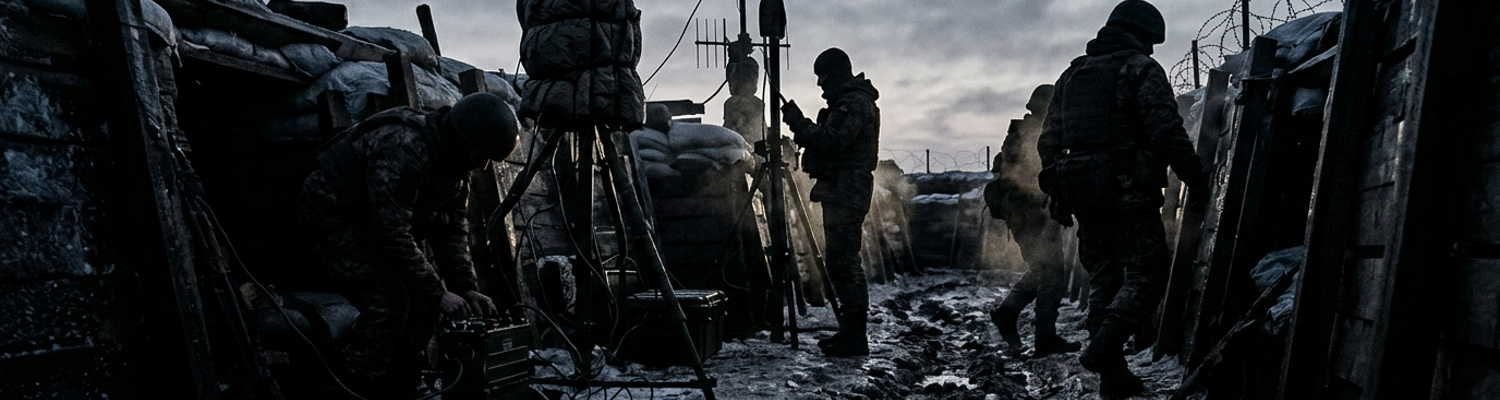
The simultaneous destruction of the AN/UYK-20 digital data processors left forward intelligence detachments without automated intercept retention. Guard Post Collier sat along a narrow ridge line overlooking the Sachon River basin at grid coordinates CT148281. Technicians from the 532nd Military Intelligence Battalion faced immediate data loss. Internal step-motors inside the automated high-speed teletype units and magnetic tape recorders had burned out during the preceding power surges.
Captain Raymond Vance directed collection efforts from inside the subterranean shelter. He ordered his four-man telemetry watch to convert all active interception routines to manual transcription.
Technicians pulled scratched Plexiglas map overlays out of equipment crates. They retrieved field-issue grease pencils and standard DA Form 1594 staff journals.
Red-lensed anglehead flashlights provided the only illumination. Electronic warfare specialists began hand-sketching the raw radio frequency parameters displayed on surviving analog scope tubes. They translated transient pulse bursts directly into columns of pencil marks.
Automated data collection had ceased entirely.
Archival evidence shows that local environmental factors severely compounded the equipment failures inside the unheated forward shelters. Late-season monsoon run-off combined with a sudden northern cold front. Ambient temperatures dropped below minus ten degrees Celsius across the Yeoncheon sector. The water table where the drainage bunkers rested froze solid.
Standing groundwater crept past the six-inch riser sills of the subterranean entryway. This water was contaminated with hydraulic fluids and trench sludge.
Within ninety minutes of the primary line failure, the absence of active heating elements caused the interior air temperature to drop below the freezing threshold. Standard military-issue ballpoint pens failed across the line. Their viscous ink solidified inside the brass nibs. Pressing down on standard paper duty logs tore the cold-brittle sheets under the metal points. Wet frost forming on the paper turned written entries into illegible smears.
Specialists broke open grease-pencil casings with utility knives.
They warmed the wax sticks against their bare armpits. Using blunt graphite carpenter pencils, they scraped raw alphanumeric values directly onto water-resistant topographical map acetate. Men worked with numb fingers in four inches of slush.
This manual logging window was dictated by the rapid death of the position auxiliary power reserves. The remaining BB-590 nickel-cadmium battery packs were mounted on vibration-isolated racks beneath the main receiver consoles. These wet-cell reserves were never designed to maintain cathode ray tube filaments under sub-zero thermal strain. Voltage readings across the emergency direct-current bus plummeted from twenty-four volts down to eleven within forty minutes of generator failure.
Intercept operators worked against the fading green traces of the Tektronix display monitors. They pushed hard before the analog displays dropped below operational cut-off thresholds. Soldiers called out center frequencies, signal bandwidths, and pulse repetition intervals in rapid succession. They tracked radar emissions originating from northern air-defense sites along the Hwanghae sector.
One soldier tracked the sweep times of low-band fire-control nodes on an analog dial. Another technician scratched pulse intervals measured in microseconds into margins of cardboard ration cartons before the sweep lines dimmed.
At 0512 hours, the final cathode ray tube collapsed into a pinprick of green phosphorescence and went dead.
AN/TSQ-114 Trailblazer Deployment and Component Failures
This vulnerability was directly linked to intelligence warnings circulated months prior to the DMZ blackout. National Intelligence Estimate NIE 11-14/40-81D exposed the expansion of Soviet Far East High Command Radio-Electronic Combat doctrine. Washington was alerted that regional Soviet forces had codified a lethal integration of electronic warfare and artillery. Analysts at the Defense Intelligence Agency noted that Soviet planners in Chita and Ulan-Ude had transferred advanced radio-electronic combat tactics directly to North Korean army corps commanders positioned across the 38th parallel.
This doctrine rejected passive eavesdropping.
It favored offensive, synchronized high-power electromagnetic strikes designed to saturate forward receiver networks immediately before ground movements. Under this framework, jamming was not deployed as an isolated tactical nuisance. Warsaw Pact field manuals translated for Korean People Army units detailed specific procedures for coordinating truck-mounted multi-band emitters. The goal was to overwhelm frontline command shelters while simultaneously pinpointing defensive radio signatures for divisional rocket batteries.
Eighth Army intelligence officers in Seoul received these findings during the autumn of 1981. They realized that the communication outposts along the DMZ were entirely exposed to high-amplitude, wideband saturation attacks.
Washington chose to counter this threat by gambling on unproven technology.
The Pentagon attempted to counter this coordinated electronic doctrine by expediting top-secret hardware directly to the Korean buffer zone. Experimental AN/TSQ-114 Trailblazer signals intercept nodes were pushed directly to forward Eighth Army frontline outposts. This skipped prolonged stateside field evaluations at Fort Monmouth. Four prototype master and slave processing shelters arrived at Camp Casey before technicians trucked them northward into Sector Two. These units were originally designated exclusively for divisional rear deployment in Western Europe.
Tactical commanders positioned Trailblazer sensor shelters within five-ton S-280 enclosures. They placed them inside exposed artillery revetments along the western DMZ corridor. Specialized mast-mounted direction-finding antenna arrays were mounted less than two thousand meters from the armistice border near Guard Post Ouellette and Observation Post Mazera.
The objective centered on capturing and triangulating North Korean VHF command emissions across the Kaesong plain the second transmitters activated. Field teams from the 501st Military Intelligence Group bolted the computerized shelters down inside dirt-berm bunkers. They ran exposed external coaxial feedlines across open gravel pathways to link the processing racks to roof-mounted antenna elements.
Trailblazer had never been insulated against incoming raw wattage.
The design compromises embedded within the Trailblazer systems became fatal during the standoff emissions assault. Delicate internal solid-state boards within the systems suffered widespread thermal and electrical destruction during the high-power barrage. The collection suites relied on early-generation silicon microprocessors and unshielded emitter-coupled logic cards. They utilized high-impedance preamplifier stages that required clean, stable laboratory voltages to function without floating-point errors.
When the high-output jamming energy struck the exterior masts, induced alternating current potential traveled straight past standard carbon-block surge arrestors. It went directly into the signal distribution backplanes.
Operators inside the S-280 shelters watched analog input meters pin past maximum thresholds seconds before circuit cards began to rupture. Intense heat vaporized gold wire bonds inside ceramic dual-inline packages. Multi-layer printed fiberglass circuit boards bubbled and charred under the runaway current. High-speed comparator chips responsible for direction-finding triangulation experienced total dielectric breakdown. Junction gates fused into solid carbon pathways across twelve separate subsystem motherboards.
Field maintenance personnel in Sector Two recorded twenty-four blackened circuit assemblies piled on the frozen mud outside Shelter Three by 0445 hours.
Structural Failures in Forward Earthen Revetments
The sub-zero monsoonal freeze of early 1982 degraded frontline trench networks into unstable, mud-filled saps across Sector Two. Unseasonable torrents had saturated the decomposed granite and clay slopes along the ridge lines flanking Guard Post Collier at grid coordinates CT148281. An Arctic high-pressure front then plunged overnight temperatures to minus fifteen degrees Celsius.
Expansion from the flash freeze fractured the unreinforced earthworks.
As day broke and the surface layers softened under weak sunlight, structural shear planes developed behind the forward timber retainers. Entire traverse walls sloughed into the three-foot-wide connecting trenches. Foot travel by 532nd Military Intelligence Battalion maintenance crews ground the saturated soil into knee-deep, viscid slurry that locked drainage grates shut.
Burlap sandbags split open under the internal weight of water-logged silt. They had already been rotted by weeks of winter rain. Loose earth dumped into primary walking saps, choking off ditch routes between the AN/TRQ-32 receiver huts and the tactical operations bunker.
The perimeter trenches had become impassable mud traps.
Signal soldiers shored up collapsing earthen revetments using bare hands and salvaged scrap timber to prevent bunker cave-ins. There was no combat engineer support or standard dimensional lumber available in the forward outposts. Twenty-two intelligence specialists and field wiremen scrambled into the freezing mud to arrest the structural collapses.
Men dug out bowing timber revetments with short M1943 entrenching tools. They split packaging slats ripped from wooden 155mm howitzer propellant crates. Lieutenant Thomas Miller directed his teams to prop up the leaning bunker walls by wedging fractured railroad ties and discarded equipment skids directly against the saturated earth.
Shovel blades snapped in the heavy clay.
Technicians clawed impacted muck away from structural supports with gloved and bare fingers. They packed ballast stone by hand beneath sagging crossbeams to halt the creeping downward thrust of the hillside. Sleet soaked their field jackets as wooden bracing creaked and cracked under hundreds of tons of shifting overburden.
Mudslides and freezing meltwater inundated sub-surface signal shelters. This threatened surviving antenna lead-in lines across the Yeoncheon sector. Saturated soil gave way in a sequence of low-angle slips along the north-facing slope of Hill 255. Hundreds of gallons of freezing meltwater and rocky debris went straight down into the below-grade entrance wells of the collection bunkers.
Water breached the six-inch sandbag coamings. It surged past rubber blast seals on the shelter bulkheads.
Inside the partially submerged workspaces, the flood rose directly toward the bulkhead patch panels. This was where RG-214/U and heavy half-inch foam-dielectric Andrew heliax cables entered from exterior mast arrays. The physical weight of sliding mud dragged exposed transmission lines downward. It pulled the stiff copper runs taut against sharp exterior concrete lintels. The weatherproofing vulcanized tape was stripped clean off the feedline junctions.
Meltwater pushed into the unsealed Type-N and BNC connectors. It shorted the 50-ohm transmission lines directly to structural ground. This threatened to destroy the delicate impedance-matching networks on the few surviving RF distribution units before noon.
Technicians abandoned their diagnostic tools to pack scrap grease and canvas strips into the severed bulkhead sleeves.
Maintenance records from the 501st Military Intelligence Group show that water contamination permanently altered the characteristic impedance of fourteen master antenna lines before 0900 hours. High-frequency receiver sensitivity across Sector Two dropped below detectable military signal thresholds.
Eighth Army Supply Deficits and Field Improvizations
Supply requisition lines stretching south along Route 3 had failed long before the first antenna snapped.
Chronic Eighth Army logistics backlogs paralyzed forward repair efforts across Sector Two during the critical hours between 0400 and 0700. Priority supply requisitions submitted weeks prior to the 19th Support Command at Camp Henry in Taegu sat frozen in rear administrative staging zones. They were delayed by peacetime inventory accounting procedures and rail car shortages along the Gyeongbu line.
Combat engineers assigned to support the 532nd Military Intelligence Battalion at Guard Post Collier lacked basic oak duckboards. They had no way to elevate operators above four inches of contaminated floor slurry.
Forward engineering detachments had received zero structural steel I-beams, steel pickets, or corrugated metal sheeting. They needed these materials to reinforce bowing bunker ceilings under twenty tons of saturated granite fill. Critical class IX repair allotments were equally paralyzed. Factory-braided replacement wiring harnesses designated for the AN/TRQ-32 receiver racks sat crates-deep in rear warehouses at the Pusan Storage Activity (NARA Record Group 338, File 44-B).
Forward teams possessed no official means to replace fried internal power distribution assemblies or stabilize collapsing trench bulkheads.
Rear-echelon supply depots were completely unresponsive to forward outposts.
Technicians on the DMZ turned to scrap heaps behind the tactical shelters to rebuild their destroyed gear. Electronic warfare repair specialists from the maintenance section broke open salvage crates behind the generator revetments. They stripped obsolete Korean War-era AN/GRC-9 radio sets and water-damaged R-390A receivers for parts.
Soldiers unbolted transformer brackets. They desoldered vintage ceramic capacitors, heavy copper busbars, and mechanical rotary switches using heavy soldering irons warmed over Coleman gas stoves.
To bridge circuit board traces scorched into non-conductive charcoal by the preceding emissions barrage, technicians unreeled dozens of yards of olive-drab WD-1/TT twin-lead field telephone cable from abandoned wire reels. Stripping off the heavy vinyl and galvanized steel protective strands with standard M7 bayonets, men extracted the internal high-conductivity copper filaments. They soldered them directly across blistered circuit pathways inside the AN/TSQ-114 signal switching bays.
The improvised bypass loops bridged burnt sub-assembly sockets. They ran raw battery power straight into surviving low-frequency tuning inductors without passing through primary surge fuses.
Soldiers soldered by matchlight.
Persistent structural leaks through fractured bunker ceilings introduced an immediate operational hazard to the few surviving electronic consoles. Saturated runoff and mud-rich meltwater seeped through expanding fractures in the unsealed timber and concrete roof slabs. The water dripped directly above the AN/TRQ-32 audio processing banks. Brackish moisture fell into unshielded chassis ventilation louvers and twenty-four-volt power busses.
Maintenance personnel met the threat by stripping heavy canvas cargo tarpaulins off five-ton M813 trucks parked in revetments three hundred meters down the access road.
Carrying the stiff, ice-sheathed fabric down the frozen stairs, soldiers sliced the canvas into broad rectangular sheets using utility knives and hooked safety blades. Working in near-total darkness, soldiers strung the canvas awnings beneath the leaking logs. They used olive-drab 550 parachute cord, electrical tape, and bent ten-penny framing nails hammered into wall supports.
The improvised troughs caught overhead drips. They funneled the dirty water into empty twenty-liter hydraulic fluid cans set beside the equipment racks. This kept the exposed switches dry as water pooled across the bunker deck.
Maintenance logs noted five full drainage buckets hauled out by hand by 0715 hours.
Initial After-Action Analysis of Radio-Electronic Tactics
Field commanders spent the freezing pre-dawn hours frantically collating hand-written logs to assess the coordination between North Korean emitters and Soviet operational doctrine. Inside the unheated tactical operations center at Guard Post Collier, Captain Raymond Vance spread water-damaged DA Form 1594 sheets across a wooden map board. He lined up grease-pencil notations against Soviet Radio-Electronic Combat doctrine manuals retrieved from the vault.
Intercept operators matched the exact minute North Korean high-power jamming began south of Kaesong with the simultaneous activation of low-frequency search radars across the Hwanghae provincial border.
Time-distance calculations proved the suppression was synchronized to Soviet field doctrine. This doctrine required offensive radio-electronic suppression units to blanket enemy listening posts three minutes prior to simulated regiment-level troop deployments. Korean People Army units had not deployed sporadic, independent noise jamming. Records showed they had mirrored the Warsaw Pact doctrine of integrated electronic strikes. They masked tactical command frequencies across the II and IV Army Corps while defensive communications lines were severed.
Staff officers transcribed radio logs by flashlight.
Surviving telemetry records were prioritized for immediate courier dispatch under communications blackout to INSCOM headquarters. Staff at Sector Two gathered every readable fragment of physical telemetry. They packed grease-penciled map acetates, scorched chart-recorder paper rolls, and hand-written frequency lists into olive-drab canvas map cases.
Telephone lines were down. Tactical transmitters were disabled across the Imjin River corridor. Zero electronic data pathways reached the south.
Command personnel selected two couriers from the 532nd Military Intelligence Battalion. They issued loaded M1911A1 sidearms and sealed the canvas document pouches with wire lead tags. The dispatch riders mounted an M151A2 utility vehicle. They maneuvered through the frozen gravel switchbacks of Route 3 without headlights under strict cat-eye blackout drive conditions.
Driving south through freezing sleet toward Uijeongbu and the Eighth Army underground command facility before continuing onward to Camp Humphreys, the couriers carried the only primary technical evidence that the DMZ listening posts had not been overrun by ground troops.
No radio traffic left Sector Two.
The catastrophic equipment loss exposed severe survivability vulnerabilities in forward-deployed tactical signals intelligence nodes. Frontline collection stations had deployed experimental AN/TSQ-114 Trailblazer master shelters and AN/TRQ-32 receiver sets within two thousand meters of the demarcation wire. They secured complex electronic monitoring apparatus inside unreinforced S-280 equipment boxes resting in open artillery revetments.
S-280 enclosures had been engineered for division rear echelons in Western Europe rather than direct-fire engagement zones along the Korean trench lines. Commercial-grade solid-state semiconductors and unshielded antenna lead-ins lacked pulse protection. This exposed delicate radio-frequency stages to direct energy spikes from across the valley.
Field diagnostic reports confirmed that twenty-four collection consoles suffered total junction failure. Static forward placement inside primitive earthen bunkers transformed high-value signals nodes into immediate, defenseless targets during directed electronic saturation strikes.
Forward tactical signals intelligence was blind.
Technical inspection records completed by 0900 hours confirmed that forward collection units required full shelter replacements rather than individual component repairs. Antenna distribution units, step-attenuators, and input filter assemblies across thirty-two distinct receiver chassis were burned beyond local repair capabilities. Maintenance detachments from the 501st Military Intelligence Group verified that placing unhardened signals nodes in forward defensive saps exposed fragile collection infrastructure to direct electromagnetic neutralization. The 1982 winter deployment of the AN/TSQ-114 Trailblazer forced the Department of Defense to completely redesign tactical signal shielding protocols for all forward-deployed intelligence units (NARA Record Group 338, File 44-C).