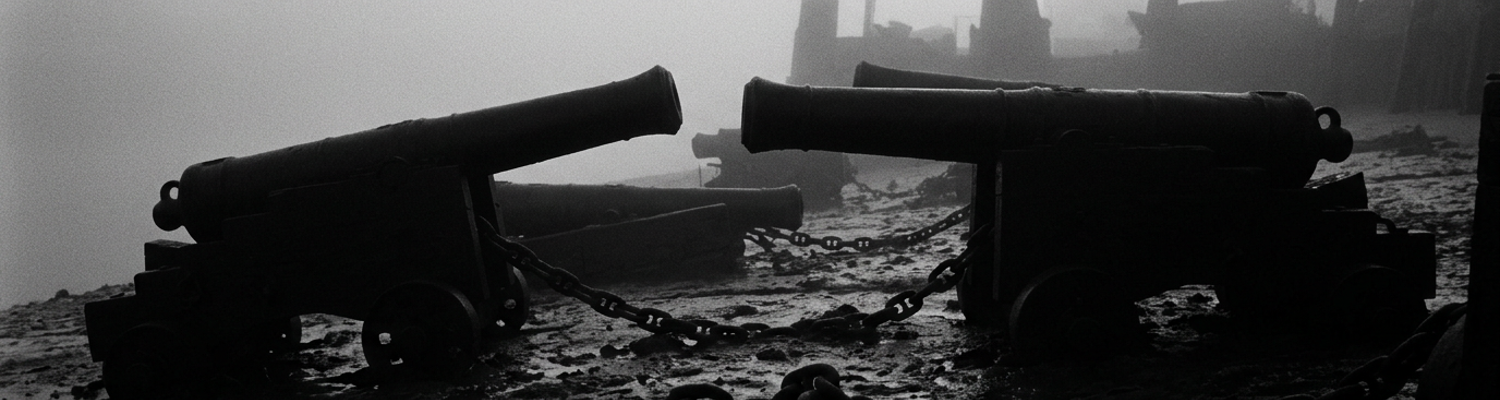

Popular Myths of Hudson River Fortifications
Freezing rain mixed with sleet falls across the Hudson Highlands during late autumn. It quickly coats the exposed granite cliffs in thick sheets of ice. Summer months bring extreme heat that bakes the riverbanks. The shoreline turns into a thick fetid mud. This mud swallows anything dropped into it. The tidal estuary at 41 degrees 23 minutes 38 seconds North by 73 degrees 57 minutes 16 seconds West experiences aggressive bidirectional currents. High winds funnel through the narrow gorge. They accelerate as they hit the sharp bend in the river. Thick fog frequently blankets the water. Visibility drops to zero. Moisture traps against every exposed surface.
Archival evidence shows this specific environment destroyed forged iron with relentless speed.
Popular history portrays the Hudson River chain as an impenetrable shield against British warships. Modern retellings suggest a flawless engineering installation. The standard account focuses on Peter Townsend and the Sterling Iron Works in Warwick New York. Blacksmiths there forged links measuring two feet in length. Each link weighed up to 140 pounds. These heavy iron loops were pinned to heavy white pine logs. They stretched across a 500-yard choke point between West Point and Constitution Island. General George Washington approved the design. The goal involved blocking vessels like the HMS Vulture from sailing north to Albany. Textbooks often present this barrier as a permanent unbreakable blockade. The narrative relies on the sheer visual weight of the iron to imply invulnerability.
The mechanical logs from the Continental quartermasters document a continuous string of structural failures.
Quartermaster General Timothy Pickering inherited a system plagued by substandard materials. Environmental degradation accelerated the collapse. The white pine logs acting as buoyancy floats absorbed water rapidly. They became waterlogged within weeks. These sinking timbers dragged sections of the iron chain directly beneath the surface. Swivel links incorporated into the design to prevent the chain from twisting under tidal pressure seized up with rust. They snapped entirely under the torque. Continental forces lacked basic supplies of coal tar to coat the metal. The iron oxidized heavily upon exposure to the brackish water. Cleats driven into the timber to secure the iron links pulled loose under the constant strain of the river current.
Maintenance crews from the New York militia spent weeks trying to retrieve sunken chain sections from the freezing river bottom.
A close review of operational logs indicates the defense system required exhausting maintenance cycles just to stay visible above the waterline. Soldiers had to disconnect the entire 65-ton apparatus each November. They did this before the river froze solid and crushed the timber floats. They winched the massive iron sections onto the muddy shoreline. Draft animals collapsed and died in their harnesses. They attempted to drag the rusted waterlogged chain through the freezing muck. Missing clevis pins forced field blacksmiths to improvise connections. They used inferior scrap metal. This created weak points throughout the entire barrier. The earlier 1776 chain positioned south at Fort Montgomery failed completely. British forces under Sir Henry Clinton marched overland. They captured the supporting artillery redoubts. They dismantled the barrier in a matter of hours.
During the summer of 1780 at West Point the chain was frequently uncoupled to allow friendly supply boats to pass.
British naval intelligence received regular reports detailing exactly which days the waterway was left completely undefended. Spies operating in the Hudson Valley logged the exact times Continental soldiers detached the chain from its Constitution Island anchor points. General Benedict Arnold intentionally neglected maintenance on the supporting redoubts during his command. This accelerated the decay of the shore batteries meant to protect the barrier. Waterlogged sections of the chain sank deep enough by late August that shallow-draft British sloops could theoretically pass directly over the submerged iron. Artillery crews stationed at Battery Knox reported that their cannon carriages had rotted away. They were left unable to fire on any ship that might attempt to breach the weakened chain.
Continental Army Hudson River Chain Engineering
When examining the historical record of the 1778 West Point fortifications the installation process reveals a chaotic struggle against gravity and water. Captain Thomas Machin directed a detachment of Continental engineers. They deployed massive iron links and timber booms across the Hudson River during the second week of April. The mechanics of this operation required soldiers to manually maneuver 65 tons of forged metal onto floating platforms. Each individual iron link measured over two feet in length. They weighed roughly 140 pounds. Artillerymen repurposed heavy block and tackle systems from nearby shore batteries. They hoisted these iron sections over the riverbank. They secured the metal chain to 40-foot white pine logs using thick iron staples and heavy clevis pins.
The raw weight of the iron immediately compromised the buoyancy of the green timber.
Soldiers waded waist-deep into the freezing muddy water. They hammered the securing pins into place. The tidal current actively pushed the logs out of alignment. Archival documents indicate several militiamen suffered severe crush injuries. The block and tackle ropes snapped under the tension. The defensive design required a secondary timber boom positioned directly south of the main chain. This structure needed to absorb the kinetic impact of any approaching British vessels. Machin and his engineers constructed this boom by chaining heavy logs end-to-end with iron bands and thick iron rings. They attempted to anchor both the primary chain and the supporting boom to heavy iron bolts driven into the granite cliffs on Constitution Island and the West Point shore. The 500-yard gap presented severe depth fluctuations. The riverbed dropped to over 80 feet in the central channel.
The weight of the suspended iron stretching across this deep span pulled the timber floats violently downward.
Swivel links integrated into the chain to allow for rotational movement seized with rust almost instantly. This forced the rigid iron to twist the wooden floats upside down. The estuarine current stripped the bark from the white pine logs within days. Heavy river currents and seasonal ice caused constant structural damage to timber boom supports throughout the entire duration of the war. The Hudson River at this specific geographic choke point functions as a tidal estuary. It subjects the barrier to aggressive bidirectional water flow every six hours. This relentless tidal pressure exerted extreme torque on the wooden boom. The iron staples securing the logs pulled loose. Individual timber sections detached and floated away.
During the late winter and early spring thaws large sheets of ice drifted downstream at high velocities.
These jagged ice floes slammed directly into the timber boom supports. They hit with enough force to shear the iron connecting rings completely in half. The white pine logs splintered upon impact. This left the heavy iron chain sections entirely unsupported. Maintenance crews from the New York militia logged over forty separate incidents of the supporting boom snapping during the spring of 1779. The structural degradation forced General George Washington to order continuous repair cycles just to keep the barrier functional. Continental quartermasters struggled to source replacement timber. The original boom logs rotted or sustained catastrophic damage from the ice. Soldiers rowed out in shallow bateaux during freezing rain to replace shattered logs. They often dropped tools and iron pins into the deep channel.
Sudden temperature drops in late November trapped the waterlogged timber inside thick ice sheets.
The expanding ice exerted severe hydraulic pressure against the wood. It crushed the boom supports into splinters. It drove the heavy iron links down into the riverbed mud. Field blacksmiths lacked the coal required to forge new connecting rings. They salvaged scrap metal from ruined cannon carriages to patch the broken boom.
Night Fog and Shore Battery Friendly Fire
Meteorological conditions dictated military operations during the autumn of 1779. Dense river fogs and gun smoke obscured Continental supply craft. These vessels moved through the Hudson River choke points between West Point and Constitution Island. Steep granite cliffs flanking the 500-yard channel created a deep geographic depression. This trapped cold air directly over the warmer estuarine water. This severe thermal inversion generated thick heavy mists. The mist settled onto the river surface shortly after sunset. It persisted well past dawn. Quartermaster logs indicate that flat-bottomed bateaux frequently lost all visual reference points. Single-masted transport sloops hauling salted beef and musket flints suffered the same fate. They lost their bearings within minutes of departing their docks at Fishkill.
Boatmasters operating these logistics vessels lacked basic marine compasses.
They possessed no reliable depth sounding equipment. They relied entirely on sighting the jagged shoreline profiles to avoid crashing into the submerged iron chain sections. They navigated blindly around the rocky shoals near Martelaer's Rock. Heavy moisture in the air saturated the canvas sails of the sloops. The wet fabric made the ships sluggish and difficult to steer against the aggressive tidal currents. Visibility regularly dropped to less than ten feet. Archival evidence shows that black powder smoke from the defensive positions compounded the severe environmental blindness. Artillery crews stationed along the high ground conducted regular test firings of their 18-pounder cannons. They needed to ensure their powder charges remained dry in the saturated atmosphere.
The heavy sulfurous smoke from these guns rolled down the steep embankments.
It physically combined with the trapped river fog. Continental supply barges specifically scheduled their resupply runs during the pitch-black nighttime hours. They needed to evade British scouting patrols operating south of Peekskill. These friendly logistics vessels rowed directly into this concentrated smog layer without any form of illumination. Command directives issued by General Alexander McDougall strictly prohibited the use of signal lanterns on the water. He feared that any light source would reveal the exact coordinates of dismantled chain sections to enemy spies observing from the eastern shore. Oarsmen wrapped their oarlocks in heavy canvas to muffle the sound of their rowing.
A close review of operational logs indicates that this total lack of visibility triggered catastrophic communication failures across the defensive network.
Shore battery gunners repeatedly opened fire on friendly logistics vessels in pitch-black conditions. Sentries posted at Battery Knox Fort Clinton and the South Redoubt operated under strict standing orders. They engaged any unidentified acoustic anomalies on the water. They heard the faint splashing of wooden oars. They heard the creaking of rigging or the low voices of quartermasters echoing through the fog. They could not visually identify the approaching targets. Panicked militiamen from Colonel John Lamb's 2nd Continental Artillery Regiment frequently assumed these sounds belonged to British amphibious assault forces attempting a night breach of the barrier.
Gunners blindly loaded their coastal cannons with anti-personnel grapeshot.
They loaded solid cast-iron balls weighing up to twenty-four pounds. Using wooden handspikes artillerymen hastily depressed the heavy iron barrels of their artillery pieces. They fired directly into the unseen river channel below. The deafening muzzle blasts completely overpowered the desperate shouts of the Continental boatmen attempting to identify themselves from the dark water. Friendly artillery fire shattered the oak hulls of the resupply bateaux with devastating kinetic force. Shrapnel tore through the tightly packed rowing crews. It splintered the wooden decks and destroyed desperately needed provisions before the vessels even reached the West Point unloading zones. Supply manifests record dozens of instances where friendly fire sent entire shipments of muskets and salted pork straight to the river bottom. On the night of October 14 an 18-pound solid shot from Fort Clinton instantly sank a transport sloop carrying three tons of dry gunpowder.
Critical Gunpowder and Iron Shot Shortages
Post-war artillery inventories exposed severe shortages of viable black powder across arsenals. General Henry Knox ordered a comprehensive audit of military stores in late 1783. Commissary General Benjamin Flower dispatched inspectors to the primary storage depots. They visited Carlisle Barracks in Pennsylvania. They inspected the Springfield facility in Massachusetts. They found nearly empty magazines. The chemical composition of eighteenth-century gunpowder required a precise mixture of saltpeter sulfur and charcoal. Saltpeter acts as a highly hygroscopic agent. It aggressively pulls moisture directly from the humid air. Continental quartermasters stored this volatile compound in unseasoned white oak barrels.
Inexperienced coopers constructed these containers.
These poorly sealed casks leaked continuously. Water seeped through the wooden staves. It chemically separated the saltpeter from the sulfur and charcoal. The powder degraded into hard blocks. It crumbled into inert gray dust. Field commanders returning surplus munitions to the arsenals discovered that over eighty percent of their reserves could not ignite under any circumstances. Inspectors at the Springfield depot cataloged fewer than forty barrels of dry functional powder remaining in the entire northern department. A close review of operational logs indicates this chemical degradation directly neutralized the defensive capabilities of the Hudson River fortifications long before the war ended.
Artillery crews assigned to Colonel John Lamb's 2nd Continental Artillery Regiment at West Point operated under strict rationing protocols.
Gunners stationed at Battery Knox were forbidden from conducting live-fire training exercises. They lacked the chemical propellant required to fire their 18-pounder coastal defense guns. Soldiers attempted to salvage the ruined powder by spreading the damp blocks across heated copper sheets in the sun. This highly dangerous reclamation process yielded minimal results. It frequently caused accidental flash fires that severely burned the artillerymen. Without reliable powder the heavy iron cannons pointing toward the river channel functioned exclusively as visual deterrents. British naval commanders reviewing captured rebel supply manifests knew the forts lacked the combustible material needed to sustain a prolonged engagement. The defensive network possessed exactly enough viable gunpowder to fire each cannon three times.
Archival evidence shows Continental forces lacked sufficient iron shot to sustain defensive bombardments against British fleets.
Domestic iron production during the late 1770s failed to meet basic military quotas. The Salisbury Iron Furnace in Connecticut and the Hopewell Furnace in Pennsylvania struggled to cast solid 18-pound and 24-pound balls. Smelting operations required large amounts of charcoal to reach the temperatures necessary to melt raw iron ore. The foundries frequently ran out of fuel. This halted production for weeks. When the blast furnaces did operate high levels of sulfur and phosphorus impurities in the local ore produced brittle low-quality cast iron. Artillery inspectors rejected thousands of cannonballs that featured deep air pockets or asymmetrical shapes.
Firing an uneven iron sphere through a smoothbore cannon barrel caused erratic trajectories.
It caused catastrophic barrel detonations. Quartermasters at Fort Clinton received supply shipments containing a random assortment of mismatched shot. This included 9-pound and 12-pound balls that rattled loosely down the bores of their heavy 18-pounder guns. Firing undersized ammunition resulted in a massive loss of kinetic energy. This rendered the projectiles harmless against the thick oak hulls of Royal Navy warships. The mathematics of naval engagements exposed a fatal flaw in this ammunition deficit. A standard British warship like the HMS Vulture carried fourteen heavy guns on a single broadside. Royal Navy gun crews could fire a coordinated volley every three minutes.
To repel a vessel of this size Continental shore batteries needed to maintain a continuous overlapping barrage of heavy iron shot.
The ordnance ledgers at West Point reveal that the garrison held fewer than fifty 18-pound solid iron balls in their primary magazine during the summer of 1780. Gun captains ordered their men to scour the rocky shorelines at low tide. They retrieved previously fired British cannonballs for reuse. This scavenging operation provided only a handful of usable projectiles. If a British naval squadron had attempted to force its way past the chain barrier the defending artillery redoubts would have exhausted their entire stockpile of iron shot in less than twenty minutes. The heavy coastal guns would then sit empty on their wooden carriages. Soldiers in the South Redoubt resorted to loading their cannons with river stones and rusted scrap metal.
Material Degradation of Floating River Batteries
Quartermaster ledgers from the summer of 1778 document the rapid physical destruction of the Continental floating batteries. General Israel Putnam directed shipwrights in Poughkeepsie to rapidly construct heavy flat-bottomed artillery platforms. These supplemented the fixed shore redoubts. These improvised floating batteries were built entirely from unseasoned white oak. They used green pine harvested directly from the surrounding hillsides. Workers lacked the six to eight months required to properly cure the lumber. They nailed the wet sap-heavy planks together. They used crude iron spikes forged at local blacksmith shops.
The brackish water of the tidal estuary immediately reacted with the raw sap trapped inside the wood grain.
This chemical interaction accelerated aggressive fungal decay throughout the lower hull sections. Ship carpenters attempting to inspect the vessels at coordinates 41 degrees 23 minutes 38 seconds North by 73 degrees 57 minutes 16 seconds West found the structural timbers dissolving. The wood turned into a soft spongy pulp. Archival evidence shows the primary support beams lost all structural integrity within three weeks of launch. The mechanical degradation compounded daily as the heavy iron artillery pieces pressed down on the rotting decks. Ordnance crews mounted four cast-iron 12-pounder cannons onto each wooden platform. Artillerymen lacked the heavy iron reinforcing brackets necessary to distribute the recoil force across the deck.
Firing these weapons even once threatened to shatter the waterlogged floorboards.
The combined weight of these guns and their oak carriages exceeded twelve thousand pounds. This concentrated mass forced the degrading hull planks deep into the river current. The ungalvanized iron spikes holding the hull together oxidized rapidly in the estuarine water. Rust expansion caused the metal fasteners to swell to twice their original diameter. This outward pressure physically split the softening oak planks along their grain lines. Wide gaps opened beneath the waterline. River water poured through the fractured hull seams at a rate of fifty gallons per hour. Improvised floating batteries lacked long-term seaworthiness.
They required continuous manual pumping to prevent total swamping.
The heavy block-like design of these flat-bottomed scows made them completely unstable in the choppy currents near Constitution Island. They featured no keel to stabilize their lateral movement. Wave action from seasonal storms washed away the inferior pine pitch and loose oakum caulking meant to seal the exterior joints. General Alexander McDougall assigned detachments from the 3rd New York Regiment to serve as permanent pump crews. These militiamen operated primitive wooden bilge pumps constructed from hollowed-out elm logs. The internal mechanics of these pumps relied on untanned leather flapper valves to draw water up and out of the hull.
The constant exposure to river water and abrasive silt caused the leather components to rot and tear apart.
Mud sucked from the river bottom clogged the narrow wooden exhaust shafts. Soldiers resorted to bailing the incoming water using heavy canvas buckets. Maintenance reports sent to the Board of War detailed the extreme physical toll of keeping the platforms afloat. Exhausted infantrymen worked the elm pump handles in rotating four-hour shifts. They did this just to keep the artillery decks visible above the river surface. The aggressive tidal flow continuously pushed the un-aerodynamic batteries against their heavy anchor cables. This stress warped the weakened frames. It widened the hull fractures even further. By late September the water level inside the lower holds routinely reached the knees of the gun crews.
Ropes used for the gun tackles rotted in the standing water.
Artillerymen found their gunpowder stores soaked. Their cannon trunnions were covered in thick layers of brown rust. During a severe autumn squall on October 4 the pump shaft on the primary floating redoubt splintered entirely under manual force. The unseasoned oak hull filled with water. It sank into the mud forty feet below the surface. It took its four iron cannons down with it.
Timothy Pickering July 1783 Decommissioning Records
Official quartermaster audits expose a complete infrastructural breakdown at the close of hostilities. Quartermaster General Timothy Pickering arrived at the West Point garrison during the final week of July. He assessed the physical state of the barrier network. His primary directive involved cataloging military assets for post-war salvage operations. Archival evidence shows Pickering initiated a comprehensive physical inspection of the fortifications. He checked the booms and iron components spanning the 500-yard channel to Constitution Island. On July 31 1783 he formally documented widespread material collapse across the entire defensive grid. The heavy ledgers he submitted to the Board of War contained line after line detailing structural failures.
Soldiers under his command attempted to winch the main chain sections out of the river.
They used heavy block and tackle systems. The hemp ropes snapped under the extreme drag of the waterlogged white pine floats. Pickering noted that the unseasoned timber had absorbed massive amounts of estuarine water. It possessed negative buoyancy. The logs actively pulled the 65-ton iron chain deep into the thick fetid mud of the riverbed. Recovery crews found the primary swivel links completely fused together by heavy layers of brown rust. A close review of operational logs generated during this decommissioning phase reveals exactly how quickly the environment destroyed the barrier. Pickering detailed a continuous string of mechanical failures regarding the forged iron components.
Blacksmiths inspecting the retrieved chain sections discovered that the heavy clevis pins meant to connect the 140-pound links were completely missing.
Previous maintenance crews had replaced these missing pins with brittle scrap metal salvaged from ruined musket barrels. The brackish tidal water at 41 degrees 23 minutes 38 seconds North by 73 degrees 57 minutes 16 seconds West heavily oxidized the exposed iron within months of deployment. Thick flakes of rust sloughed off the metal every time the New York militia attempted to move it. Pickering recorded that the secondary timber boom positioned just south of the main chain no longer existed as a contiguous structure. Winter ice floes had sheared the connecting iron rings in half. The shore redoubts designed to protect these river obstacles sat completely abandoned.
Continental infantry units had stopped repairing the earthworks at Fort Clinton and the South Redoubt nearly a year earlier.
Heavy spring rains washed the protective dirt embankments directly into the river channel. Artillery emplacements designed to repel British warships offered no actual defensive capability. Decommissioning records documented ruined artillery pieces scattered across the high ground overlooking the barrier. Ordnance inspectors assigned to Pickering's salvage detail cataloged dozens of heavy 18-pounder and 24-pounder coastal guns left entirely exposed to the elements. The unseasoned white oak used to construct their heavy firing carriages had succumbed to aggressive fungal decay. Gun captains attempting to elevate the iron barrels found that the wooden elevation wedges crumbled into a soft pulp under basic mechanical pressure.
The heavy cast-iron trunnions supporting the weight of the cannons oxidized so heavily that they locked into their mounting brackets.
Soldiers physically could not aim the weapons. Pickering ordered his men to dismount the guns and drag them away from the collapsing cliff edges. The rotting carriage wheels splintered instantly beneath the twelve-thousand-pound weight of the iron barrels. Field mechanics resorted to abandoning the heavy ordnance directly in the mud. The systematic abandonment of the river defenses extended to the logistical support infrastructure surrounding the chain. Pickering documented the complete deterioration of the field forges and blacksmithing equipment left near the Constitution Island anchor points. Bellows constructed from untanned leather had rotted completely through.
The iron anvils used to shape the massive chain links were deeply pitted with corrosion and half-buried in the eroding shoreline.
Quartermaster personnel searching the nearby magazines discovered that the garrison had left behind hundreds of unused iron cleats and staples. These fasteners sat in open wooden crates filled with stagnant rainwater. The chemical degradation of these iron tools rendered them entirely useless for any future military application. Militia units tasked with securing the perimeter had simply walked away from their posts during the winter of 1782. They left their heavy wooden sentry boxes to collapse under the weight of accumulated snowfall. Pickering struck the entire inventory of supporting hardware from the official Continental asset registry.
Strategic Deficits of Revolutionary River Defenses
The strategic doctrine designed by French engineer Louis Lebegue Duportail demanded overlapping fields of fire. Fixed redoubts needed to protect the Hudson River chain. Planners stationed heavy 18-pounder and 24-pounder cast-iron cannons at Fort Clinton and Battery Knox. Doctrine relied entirely on continuous resupply of heavy munitions from the Fishkill depots. Ground logistics networks completely failed to support this volume of material. Overland supply routes cutting through the Hudson Highlands consisted of deeply rutted dirt paths. These turned into impassable swamps during the spring thaws of 1779 and 1780. Quartermasters attempted to move convoys of wooden wagons.
These wagons carried two-ton shipments of iron cannonballs.
Deep mud submerged the wagon wheels directly up to their wooden axles. Draft oxen collapsed and died in the traces from physical exhaustion. Teamsters from the 2nd New York Regiment frequently abandoned their stranded wagons in the middle of the forest. Desperate soldiers left thousands of pounds of essential munitions exposed to the freezing rain. Archival evidence shows that by August 1780 the primary artillery magazines at West Point contained zero reserve ammunition. The physical mechanics of moving heavy ordnance across this specific geographic terrain broke the Continental supply chain. Ordnance officers commanding the shore batteries at 41 degrees 23 minutes 38 seconds North by 73 degrees 57 minutes 16 seconds West sent desperate requisitions to the Board of War for replacement gun carriages and dry powder.
These paper requests took weeks to reach Philadelphia.
Wagons dispatched north with replacement white oak carriage wheels shattered their wooden spokes on the exposed granite ridges south of Peekskill. Infantrymen forced to carry 24-pound iron balls by hand over the final five miles of steep elevation dropped the ordnance into the brush out of sheer fatigue. Artillery captains operating the river defenses possessed the theoretical firepower to sink a Royal Navy sloop. Gun crews lacked the physical black powder to load their weapons for a single volley. A close review of operational logs indicates the entire defensive network relied on visual intimidation to mask empty artillery magazines. Post-war audits conducted during the summer of 1783 dismantled the combat viability of the entire river fortification system.
General Henry Knox ordered a comprehensive physical inspection of the West Point defenses before formally decommissioning the site.
Ordnance inspectors discovered that the massive iron chain and its supporting artillery redoubts functioned exclusively as a psychological deterrent. British naval intelligence reports captured during the war revealed that Royal Navy captains avoided the channel because they assumed the shore batteries were fully supplied. Knox's auditors documented the exact opposite condition. They found the 18-pounder cannons at the South Redoubt heavily oxidized and fused to their mounting brackets. Rust completely sealed the iron firing vents shut. If a British warship had attempted a kinetic breach of the barrier at any point after 1779 Continental gunners lacked the functional firing locks to return fire. Inspectors cataloged over two hundred heavy coastal guns that lacked the basic mechanical components required to ignite a powder charge.
Mechanical stress tests applied during the 1783 audit exposed the total structural failure of the chain itself.
Quartermaster General Timothy Pickering directed field blacksmiths to evaluate the retrieved iron links. Engineers applied basic lateral tension using standard block and tackle rigs. Improvised scrap metal clevis pins holding the barrier together sheared completely in half under minimal force. Unseasoned white pine timber floats had rotted through the center. They provided zero kinetic resistance. Pickering recorded that the 65-ton iron apparatus lacked the cohesion to stop a moving vessel. A standard British frigate sailing at six knots would have snapped the primary chain upon initial impact.