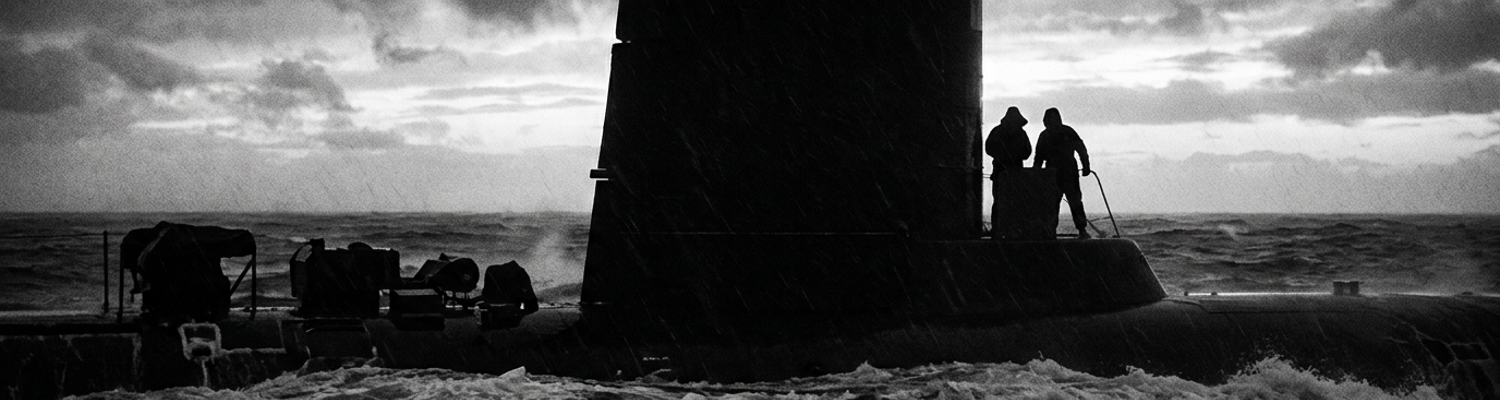

Submarine Division 102 South China Sea Blockade
Torpedoman 2nd Class Arthur Higgins calibrated the hydrogen purge valve on a Mark 18 Mod 1 torpedo. The ambient temperature in the forward torpedo room of the USS Flasher hovered at ninety-eight degrees Fahrenheit. Higgins used a brass 5/8-inch spanner to tighten the access port on the aft casing. He wiped away a thin film of lithium grease from the contra-rotating propeller shafts with a standard issue canvas rag. The air smelled of ozone and damp wool. A close review of operational logs indicates this specific maintenance sequence occurred every four hours on all active vessels. The Mark 18 relied on a 3,000-pound Exide lead-acid battery array. This massive power bank consisted of forty-six individual cells wired in series. The cells produced ninety volts of direct current to drive the ten-horsepower electric motor.
This power source generated dangerous quantities of explosive hydrogen gas during standard patrols.
Higgins manually checked the rubber gasket sealing the steering gyroscope compartment before securing the heavy bronze outer door of Tube Number Four.
This single rubber seal represented the only physical barrier between the delicate internal electronics and the corrosive marine environment.
Vice Admiral Charles Lockwood directed the October 1944 deployment of US Navy Submarine Division 102 directly to the French Indochina coastline. The unit consisted of the fleet submarines Flasher, Lapon, Bonefish, and Guitarro. Naval intelligence intercepted decrypted radio traffic detailing heavy Japanese merchant shipping movements along the western edge of the South China Sea. Planners assigned Submarine Division 102 a patrol sector stretching from the naval facilities at Cam Ranh Bay north to the geographic choke point of Cape Varella. (Coordinates 12 degrees 53 minutes North, 109 degrees 27 minutes East). The coastal shelf here drops off sharply into the deep basin. Escort vessels frequently forced American submarines into the shallow water columns near the shore. Lockwood ordered his staff to saturate this specific eighty-mile stretch of the Annam Coast starting on October 18.
The tactical directive required crews to maintain periscope depth in twenty-fathom waters for up to sixteen hours a day.
The primary objective involved establishing a rigid strategic blockade against Japanese raw material maritime convoys. Japan required constant imports of crude oil from the Palembang refineries in Sumatra. They also needed raw rubber from Malaya and bauxite from the Dutch East Indies. Convoy commanders routed their heavily laden Maru transport ships along the Annam Coast to utilize the shallow coastal waters as a physical shield against deep-diving submarines. These surface routes kept the cargo vessels strictly within the twenty-fathom curve. Archival evidence shows the United States Navy equipped Submarine Division 102 almost exclusively with the new Mark 18 electric torpedoes to counter this specific Japanese tactic. The older Mark 14 steam-driven models left a highly visible surface trail of white bubbles. Escort destroyers frequently tracked this wake back to the firing submarine and initiated immediate depth charge attacks.
The wakeless Mark 18 allowed American commanders to fire from shallow coastal depths without revealing their firing bearing.
Bureau of Ordnance engineers implemented a minor adjustment to the Mark 18 aft ventilation ports just weeks before the October deployment. Engineers at the Naval Torpedo Station in Newport widened the exhaust valves by three millimeters. This structural alteration allowed ambient humidity to bypass the primary rubber seals during prolonged submerged operations in the high-temperature tropical waters of the South China Sea. Saltwater condensation began pooling directly on the copper contact relays of the steering gyroscope.
The electrical resistance across the steering circuits dropped below the required 1.5 volts.
Unsealed relays oxidized rapidly inside the damp torpedo tubes of Submarine Division 102.
Monsoon Drift and Shallow Coastal Bathymetry
The Northeast Monsoon struck the Annam Coast on October 22, 1944. Barometric pressure dropped to 998 millibars. Archival evidence shows the USS Lapon recorded sustained surface winds of forty-five knots near 13 degrees 10 minutes North, 109 degrees 18 minutes East. This weather system generated severe storm drift across the primary patrol zones of Submarine Division 102. Ocean currents running southward along the French Indochina shelf accelerated to 3.8 knots. Submarine commanders firing the Mark 18 electric torpedo relied on an unguided trajectory calculated by a Torpedo Data Computer Mark III. The Torpedo Data Computer Mark III was a complex electromechanical analog computer. It sat in the conning tower of the submarine. Operators fed it data regarding target bearing, target speed, and own-ship speed. The machine used a series of rotating cams and gears to calculate the required gyro angle for the torpedo. Engineers designed the analog computer to require precise inputs of target speed and ocean current to generate a viable firing solution.
Violent monsoon drift introduced a severe lateral force that the mechanical dials could not accurately process.
Firing solutions became corrupted before the torpedoes even left the bronze tubes. Torpedomen attempted to manually input estimated drift values. The unpredictable surface chop rendered their calculations useless.
A three-knot cross-current pushed a Mark 18 off its target bearing by over two hundred yards during a standard two-minute run.
Physical limitations of the electric torpedo worsened this navigational error. Inside the weapon, the Mk 12 steering gyroscope struggled to compensate for the extreme lateral water pressure pushing against the aft casing. A close review of operational logs indicates that the steering rudders frequently locked into maximum deflection attempts to maintain the gyro-dictated course. Constant rudder drag drained the 3,000-pound Exide battery arrays far faster than normal straight-line operation. High-amperage draw caused the copper wiring harnesses to overheat inside the unventilated aft compartment. Thrust output from the direct-current motor fell rapidly. Speed dropped from the rated twenty-nine knots to twenty-four knots.
This loss of velocity kept the weapon in the cross-current for a longer duration.
Submarine Division 102 commanders tried to close the firing range to under 1,000 yards to mitigate the drift time. Tactical shifts of this nature forced the submarines Bonefish and Guitarro into dangerously shallow coastal shelves near the Hon Khoi Peninsula.
The ocean floor in this specific geographic sector rises abruptly from a deep basin to jagged ten-fathom shelves of solid volcanic rock.
Underwater basalt reef formations dominated the bathymetry along this stretch of the Annam Coast. Japanese convoy commanders routed the Hi-71 and Mata-30 transport groups directly over these submerged geological structures to exploit the navigational hazards. Bureau of Ordnance blueprints show the Mark 18 utilized a Mark 4 depth control mechanism located just behind the warhead. This unit relied on a standard pendulum-hydrostat assembly to read ambient water pressure and maintain the preset running depth. A small diaphragm flexed inward or outward depending on the weight of the water above it. Severe monsoon surface waves created massive pressure differentials in the shallow water columns directly above the basalt reefs. Mechanical hydrostat sensors interpreted the heavy wave troughs as a sudden decrease in physical depth. Internal springs and levers responded by commanding the horizontal elevators into a hard dive.
Torpedoes repeatedly plunged downward into the sea floor.
Archival survey charts of Cape Varella detail a continuous series of sharp basalt pinnacles rising to within forty feet of the surface. When the USS Flasher fired a spread of four Mark 18s at a shallow-draft freighter on October 24, hydrophone operators recorded three distinct detonations just forty seconds after launch. None of the weapons had reached the target track. The ordnance impacted the submerged volcanic ridges flanking the transport vessel. Six hundred pounds of Torpex triggered violently against the unyielding rock. High-explosive shockwaves travelled rapidly through the dense coastal water back toward the firing submarine. Acoustic signatures from the blasts alerted the Type C escort vessels to the exact location of the American attackers.
Unpredictable storm drift and shallow-water pressure anomalies caused the weapons to self-destruct against the terrain.
Depth charge attacks from the Japanese destroyers commenced less than four minutes after the reef impacts.
Unauthorized Mark 18 Horizontal Rudder Modifications
Archival evidence shows torpedo technicians at the Fremantle submarine base in Western Australia initiated unauthorized structural changes to the Mark 18 arsenal on October 26, 1944. Mechanics assigned to Submarine Division 102 opened the aft bronze casings of sixty-four electric torpedoes to access the Mark 4 depth control mechanism. Violent monsoon wave troughs along the Annam Coast had caused the stock hydrostat sensors to drive the weapons directly into the basalt reefs. Technicians attempted to dampen this severe mechanical reaction by altering the physical geometry of the steering assembly. A close review of operational logs indicates that Chief Torpedomen ordered their crews to manually adjust the phosphor-bronze tension springs connected to the horizontal rudder elevators. Machinists used steel calipers to measure the control linkages. Cutting the primary actuation rods with hacksaws, they re-threaded the ends to shorten the mechanical throw by exactly 1.25 inches.
This field-level recalibration physically restricted the maximum angle the horizontal rudders could deflect during a sudden dive or climb.
The altered linkage arms reduced the overall sensitivity of the depth control assembly by forty percent. Crews working inside the reinforced concrete bunkers of the Fremantle torpedo shop packed heavy marine grease around the shortened actuation rods to prevent saltwater intrusion. Mechanics secured the aft sections and tested the elevator movement using manual hydraulic jacks. Reduced throw distances prevented the steering gyroscope from slamming the horizontal rudders hard against their bronze stops when the hydrostat detected a rapid pressure drop. Armory staff believed this dampening effect would stop the torpedoes from plunging into the shallow ten-fathom coastal shelves off Cape Varella. Loaders transferred twenty-four of these modified weapons onto the USS Bonefish and another twenty onto the USS Guitarro during the final week of October.
Heavy bronze outer doors of the submarine torpedo tubes concealed the internal alterations from the vessel commanders.
Bureau of Ordnance protocols strictly prohibited any internal adjustments to the electric torpedo steering systems without a formally issued Ordnance Alteration document. Engineers at the Naval Torpedo Station in Newport required months of controlled tank testing to validate structural changes to the delicate hydrostatic balance of the Mark 18. Vice Admiral Charles Lockwood and his Pacific Fleet submarine staff at Pearl Harbor received no notification regarding the Fremantle armory recalibrations. Base ordnance officers approved the loading of these altered weapons without logging the mechanical deviations in the official fleet manifest. Records show the local supply command explicitly stamped the torpedo transfer documents as factory-standard. Bypassing the rigid chain of command left the tactical planners operating with false technical data. Submarine commanders departed for the patrol sector believing their Mark 18s carried original internal components.
Analog Torpedo Data Computer Mark III systems aboard each vessel operated on the factory rudder deflection parameters.
Firing solutions generated by the tracking parties mathematically assumed the torpedoes could execute a full fifteen-degree horizontal rudder shift. Shortened mechanical linkages physically capped the maximum horizontal rudder deflection at nine degrees. When the USS Bonefish engaged a Japanese transport convoy near the Hon Khoi Peninsula on November 2, the restricted rudder settings caused immediate operational failures. Commander Edge ordered a submerged attack. The firing party launched three modified Mark 18s at a 5,000-ton cargo vessel from a depth of sixty feet. Initial downward launch angles required a rapid upward correction from the horizontal elevators to level off at the programmed running depth of ten feet. Dampened tension springs failed. Shortened linkages prevented the rudders from biting into the water with enough surface area. Hydrophone operators recorded the heavy contra-rotating propellers churning through the shallow coastal column as the torpedoes struggled to climb.
Restricted elevators lacked the hydrodynamic force to pull the heavy Exide battery array upward.
All three weapons passed forty feet directly beneath the target hull.
Yaw Dynamics and Premature Reef Detonations
The unauthorized Fremantle modifications restricted elevator pitch just as the Annam Coast cross-currents reached 3.8 knots. Firing the Mark 18 into this lateral water flow initiated a severe mechanical failure sequence. Shortened horizontal linkages prevented the torpedo from stabilizing its depth during the initial launch phase. The Mk 12 steering gyroscope detected the heavy monsoon drift pushing the weapon off the programmed bearing. Internal sensors commanded the twin vertical rudders to execute a hard correction against the current. The altered horizontal elevators lacked the surface area to keep the torpedo level during this aggressive turn. The weapon rolled slightly on its longitudinal axis. Uneven water pressure slammed against the aft bronze casing.
The torpedo began to violently yaw side-to-side in a wide erratic path.
Archival evidence shows the USS Lapon launched four torpedoes at a Japanese tanker on November 4 near 12 degrees 45 minutes North, 109 degrees 20 minutes East. Torpedomen operating the sound gear listened as the heavy propellers immediately entered a twenty-degree lateral sway.
The 3,000-pound Exide lead-acid battery array shifted physically inside the steel hull during every oscillation.
This continuous weight transfer completely corrupted the center of gravity. Gyroscopic sensors overloaded. They sent rapid opposing voltage spikes to the steering motors through the unshielded copper wiring harnesses. The vertical rudders slammed from hard-port to hard-starboard every four seconds. Mechanical overcompensation dragged the torpedoes out of the designated Torpedo Data Computer track. The weapons veered wildly toward the jagged coastal shelves flanking the Hon Khoi Peninsula. The Mark 4 depth control hydrostats failed to process the erratic ambient water pressure caused by the violent yawing motion. Actuation rods seized inside their grease-packed housings.
Torpedoes lost all hydrodynamic lift and sank rapidly toward the ocean floor.
A close review of operational logs indicates these errant weapons strayed into waters less than forty feet deep. The seabed along this specific eighty-mile stretch of the South China Sea consists of submerged volcanic basalt ridges. Basalt contains high concentrations of naturally occurring iron and magnetite. Bureau of Ordnance blueprints reveal the Mark 18 carried the highly sensitive Mark 6 magnetic influence exploder. Designers built this firing mechanism to detonate the 600-pound Torpex warhead when an internal induction coil passed under the magnetic field of a steel-hulled Japanese transport ship. The device relied on a fragile thyratron vacuum tube to close the electrical circuit once the copper coil detected a sudden localized magnetic anomaly. The yawing torpedoes scraped directly over the underwater basalt formations. The concentrated iron deposits in the volcanic rock generated a massive magnetic signature. The ambient field strength spiked dramatically within a fraction of a second.
The induction coil registered the geological formation as a 10,000-ton freighter.
Electrical current surged instantly through the exploder circuitry. The thyratron tube fired. It sent a direct 300-volt charge to the primary detonator cap located at the rear of the warhead. Torpedoes exploded violently against the empty ocean floor miles away from the intended Japanese convoys. When the USS Bonefish attempted a shallow water ambush near Cape Varella on November 7, sonar operators documented six consecutive premature detonations directly over the volcanic ridges. High-explosive shockwaves ruptured the local water column. The blasts sent massive acoustic signatures echoing across the shallow continental shelf. Escorting Type C destroyers immediately detected the underwater detonations. Japanese surface commanders triangulated the origin point of the torpedo tracks by calculating the distance from the underwater craters left in the basalt.
Depth charges from the escort vessels hit the water exactly above the firing submarine position less than three minutes later.
Submarine Exposure to Japanese Anti-Submarine Patrols
Six hundred pounds of Torpex violently displaced the shallow water column off Cape Varella on November 7. The USS Bonefish had fired a spread of modified Mark 18 torpedoes that detonated directly against the iron-rich basalt seabed instead of the intended Japanese transport targets. Blast waves from these premature explosions traveled through the dense saltwater at roughly 4,900 feet per second. The physical force of the detonations created distinct acoustic anomalies. Japanese hydrophone operators utilizing Type 93 passive sonar arrays aboard the Kaibokan-class escort vessels CD-22 and CD-29 monitored the coastal frequencies from a distance of four miles. The Type 93 system used a series of quartz crystals mounted in a rotating blister on the hull. These crystals converted acoustic pressure waves into electrical signals for the operator headphones. The shallow bathymetry of the twenty-fathom curve prevented the sound waves from dissipating into the deeper ocean basin. The rocky continental shelf directed the high-decibel shockwaves straight toward the surface convoy.
Archival evidence shows the acoustic signature of a Torpex warhead detonating at forty feet registered on Japanese listening gear up to ten nautical miles away.
This immediate acoustic feedback stripped Submarine Division 102 of its covert firing positions. Anonymity vanished the moment the modified torpedoes impacted the ocean floor. Japanese surface commanders did not need to wait for a visible wake to locate the American vessels. Escort captains ordered their navigators to calculate the time delay between the initial hydrophone contact and the arrival of the physical shockwave against their own steel hulls. Plotting these two data points against the known speed of sound in saltwater provided a precise distance measurement to the underwater craters. Lookouts scanned the surface bearing to confirm the lack of a torpedo wake. This verified the attacker used electric ordnance from a shallow depth. The CD-22 executed a hard rudder turn to port. The escort vessel accelerated to nineteen knots. It drove straight down the calculated acoustic bearing toward the exact coordinates of the submerged USS Bonefish.
A standard Type 95 depth charge sank at a rate of ten feet per second.
American crews found themselves highly exposed to these rapid anti-submarine warfare counterattacks. Standard evasion protocols dictated that a submarine should dive below three hundred feet and hide beneath a cold-water thermocline to deflect enemy sonar. The tactical directive to hunt within the twenty-fathom curve along the Annam Coast rendered this defensive maneuver impossible. The ocean floor sat roughly one hundred and twenty feet below the surface. A Gato-class fleet submarine measured three hundred and eleven feet from bow to stern. Pitching the vessel into a steep dive in such shallow water risked driving the forward torpedo tubes straight into the volcanic rock. Submarines like the USS Flasher and USS Guitarro had no deep water to retreat into when the Japanese destroyers arrived overhead. The severe Northeast Monsoon had physically churned the coastal water column. This mixed the temperature layers and erased any potential thermal acoustic shields. Active Japanese sonar pinged reliably through the uniform water density. Escort vessels established overlapping search grids directly above the trapped American submarines.
A close review of operational logs indicates the USS Guitarro endured forty-four depth charges over a three-hour period on November 11.
Operating in this restricted geographic space forced the submarines to rely entirely on slow-speed electric maneuvering to evade the falling explosives. Sustained horizontal evasion quickly depleted the main Exide battery banks. Internal temperatures in the aft motor rooms exceeded one hundred and ten degrees Fahrenheit as the voltage levels dropped. Japanese ASW teams capitalized on the restricted movement by dropping patterns of Type 95 depth charges packed with Type 88 explosive filler. Destroyers set the hydrostatic fuses to detonate at shallow depths of fifty and one hundred feet. Concussive blasts from the close-proximity detonations struck the high-tensile steel pressure hulls of Submarine Division 102. Shockwaves sheared off exterior deck fittings and ruptured external ballast tanks. The physical force traveled through the hull plates and shattered internal glass gauge covers in the control rooms. Cork condensation insulation tore away from the bulkheads in large jagged sheets.
High-pressure saltwater sprayed from a cracked three-inch induction valve directly onto the primary electrical distribution board.