
Media Portrayals and Infrastructure Failures
The main hydraulic lift cylinder on the Clark 6000-pound rough-terrain forklift ruptured at exactly 0640 hours. High-pressure petroleum fluid sprayed across the engine block. The mast dropped immediately. Two pallets of 105mm high-explosive projectiles slammed into the knee-deep mud of the staging area. The operator slammed the transmission into reverse. He attempted to back away from the sinking ordnance. The torque converter had already ingested contaminated water. Planetary gears ground against themselves with a high-pitched shrieking sound. The primary drive shaft snapped.
A complete mechanical failure.
Archival evidence shows this isolated breakdown at Grid Coordinates XD 134 612 halted an entire company resupply cycle for three days. Popular media frequently depicts endless offensive infantry sweeps through Northern I Corps in late 1966. Film portrayals routinely present Marine riflemen engaged in constant forward movement through dense jungle canopies. These dramatized accounts suggest units like the 1st Battalion 3rd Marines spent their deployments executing highly mobile operations across the Demilitarized Zone. The visual narrative relies heavily on continuous helicopter insertions. Audiences are shown a highly kinetic war defined by fast-paced firefights. A close review of operational logs indicates this aggressive mobility was a complete fiction for the units stationed along Route 9.
Unit movement tracking charts from October show Alpha Company advancing less than four hundred yards over a two-week period.
The men of Alpha Company did not march into combat.
They sank into the staging areas.
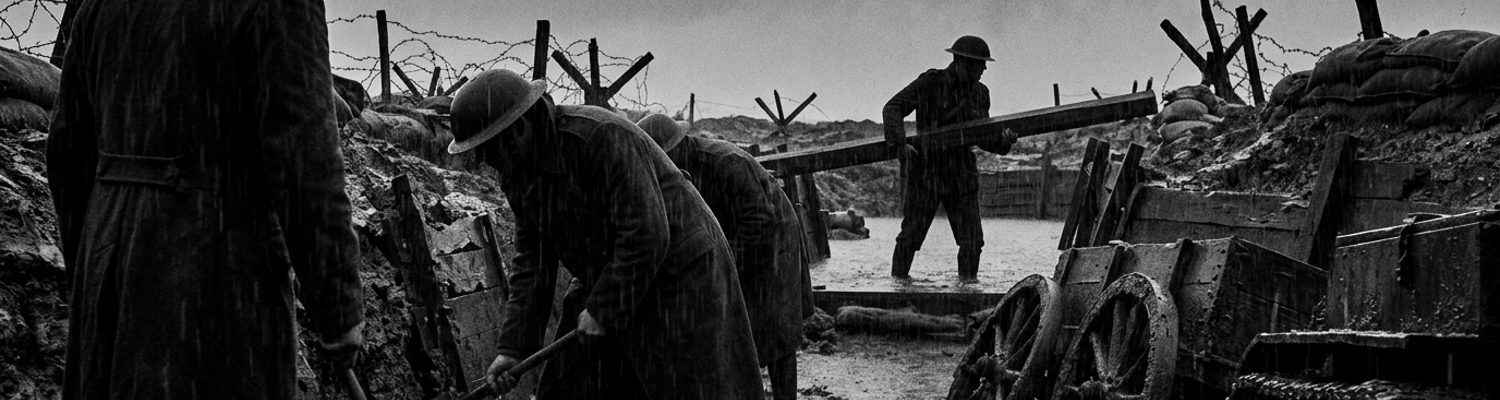
Official battalion records reveal troops were immobilized by severe infrastructure failures near Cam Lo. During the peak of the monsoon season in October 1966 the laterite clay soil characteristic of the Cam Lo River valley lost all structural integrity. When saturated the reddish earth turned into a heavy slurry that collapsed under its own weight. The 1st Battalion 3rd Marines had constructed a network of defensive fighting holes and communication trenches to a standard depth of forty-eight inches. Command logs from the first week of November document the simultaneous collapse of over sixty percent of these defensive earthworks within a forty-eight-hour window. Marine riflemen found themselves trapped waist-deep in collapsing mud walls. They were unable to physically extract their boots from the thick sediment.
Entire platoons abandoned offensive patrol schedules just to keep the perimeter from washing away.
Battalion Commander Lieutenant Colonel Peter A. Wickwire ordered all available personnel to shift from combat operations to emergency infrastructure repair. The focus shifted entirely to filling sandbags and reinforcing collapsing bunker roofs with scavenged pierced steel planking. Complete engineering breakdown occurred across the grid squares surrounding the artillery bases. Mud completely filled the M60 machine gun firing pits. Troops spent ten to fourteen hours a day strictly digging out the same trenches that had collapsed the previous night. Medical records from this period show a spike in immersion foot and severe fungal infections rather than combat-related trauma.
The 3rd Marine Division headquarters issued directives demanding increased patrol radiuses.
The local command simply ignored these orders.
Physical conditions made movement beyond the wire mathematically impossible given the sheer weight of saturated gear. A standard combat load weighed roughly forty-five pounds dry. Soaked canvas webbing pushed the individual burden past seventy pounds. Waterlogged flak jackets added another fifteen pounds. Mud-caked M14 rifles increased the weight further. Breaking the suction of the laterite slurry required an estimated sixty additional pounds of upward force for a single combat boot. Men suffered muscle tearing in their calves and lower backs attempting to walk ten yards from the command post to the latrine. Logbook entries from November 12 list thirty-four men functionally paralyzed by severe back spasms and physical exhaustion.
Monsoon Precipitation and Revetment Degradation
Meteorological records from the 1st Marine Aircraft Wing weather detachment indicate a stationary low-pressure trough stalled directly over the Cam Lo River valley on November 2 1966. Precipitation rates exceeded four inches per hour during peak squalls. The storm dumped a total of thirty-two inches of rain over a six-day period. This continuous deluge fundamentally altered the specific gravity of the surrounding terrain. Defensive revetments protecting the artillery firing positions at Grid XD 134 612 consisted of stacked burlap sandbags. These bags were supported by six-by-six inch timber framing and corrugated steel roofing. Saturated laterite soil weighs roughly one hundred and twenty pounds per cubic foot.
The monsoon rains liquefied the perimeter berms.
The resulting slurry exerted a lateral hydrostatic pressure that the timber retaining walls were never engineered to withstand. Archival evidence shows the untreated wood supports snapped at their base anchors under the strain. The steel bolts holding the joints together sheared completely off. Sandbags degraded rapidly under the environmental stress. Cheap burlap fabric rotted in the continuous moisture. The seams split open. Thousands of pounds of wet earth dumped directly into the primary communication trenches.
Entire squad-level fighting positions simply ceased to exist within a matter of minutes.
A close review of operational logs indicates that the 1st Battalion 3rd Marines immediately transitioned into a continuous cycle of emergency excavation just to maintain a defensible perimeter. Infantrymen discarded their standard-issue M1910 folding entrenching tools. The aluminum locking collars snapped when attempting to lever the heavy sediment. Supply officers requisitioned heavy-duty civilian-grade D-handle spades from the Da Nang depots. They flew them in via external helicopter sling loads. Men worked in rotating four-hour shifts to clear the collapsed bunkers. They stripped down to their olive drab undershirts in the pouring rain. Physical mechanics of this labor required Marines to stand fully exposed on the collapsing parapets. They lifted thirty-pound shovelfuls of liquid clay over their heads to dump outside the wire.
They fought the suction of the mud with every movement.
Daily caloric expenditure skyrocketed well beyond the standard combat requirement. Rations dwindled simultaneously due to halted convoy traffic along Route 9. Medical corpsmen recorded a sharp increase in muscle avulsions resulting directly from this endless repetitive lifting. Torn rotator cuffs became common. Inguinal hernias spiked across the rifle companies. Liquefied earth flowed back into the excavated trenches at a measured rate of two inches per hour.
This mandatory physical exposure created a severe tactical vulnerability across the entire battalion frontage. Elements of the North Vietnamese Army 324B Division occupied the dense high ground surrounding the Cam Lo basin. Enemy forward observers registered the Marine outposts. They initiated highly accurate harassing fire using 82mm Type 53 mortars. Standard infantry survival doctrine dictates seeking immediate subterranean cover during indirect fire attacks. Marines stationed at Cam Lo could not follow this procedure. Their primary bunkers were filled to the ceiling with collapsed mud.
Troops caught outside the wire with shovels had to drop flat into the open slurry.
High-explosive fragmentation shells detonated across the perimeter. Blast mechanics of an 82mm mortar round change significantly when impacting liquid mud rather than solid earth. Point-detonating fuses often buried themselves deep into the sediment before triggering the primary charge. This delayed explosion directed the cast-iron shrapnel upward in a tight vertical column rather than a wide horizontal spread. Concussive waves displaced tons of wet dirt. Massive craters formed and immediately filled with groundwater. Battalion casualty reports from November 14 list eleven Marines severely wounded by secondary projectiles. These projectiles consisted entirely of high-velocity rocks and compacted clay.
Company commanders faced a mathematical impossibility regarding force protection. Halting the excavation details during mortar barrages allowed the perimeter defenses to dissolve completely. This left the base open to a ground assault. They kept digging. Continuing the excavation guaranteed fragmentation casualties from the plunging indirect fire. Officers ordered sentries with binoculars to stand on ammunition crates. They scanned the tree line for the distinct muzzle flashes of the NVA mortar tubes. When a spotter yelled a warning the digging crews had exactly eighteen seconds to throw themselves face-down into the mud they were trying to excavate. Physical exhaustion reached a point where some Marines simply stopped reacting to the incoming whistles. They leaned against their shovels and watched the geysers of mud erupt around the mortar pits.
A direct hit on a flooded fighting hole completely vaporized the water inside. It left only a smoking dry crater.
M14 Rifle Corrosion and Mechanical Jamming
When examining the historical record from the second week of November 1966 ordnance inspection reports reveal a systemic breakdown of infantry firepower across the Cam Lo basin. The 1st Battalion 3rd Marines relied entirely on the M14 rifle as their primary service weapon. This 7.62x51mm platform utilized an exposed operating rod. The rotating bolt system was highly susceptible to particulate contamination. Pervasive mud and standing water degraded these organic small arms across the battalion within forty-eight hours of the initial monsoon downpour. The laterite clay at Grid XD 134 612 contained high levels of iron oxide and natural acidity.
This specific geological composition mixed with continuous rainwater.
It created a highly corrosive paste that stripped the protective parkerized finish directly off the carbon steel receivers. Infantrymen forced to dig trenches while wearing their gear completely submerged their weapons in this acidic slurry. Water seeped into the unprotected gas cylinders located beneath the barrels. The liquid clay bonded directly to the internal gas pistons.
A close review of operational logs indicates troops experienced widespread mechanical jamming and severe rust on these primary service weapons at an unprecedented rate. The M14 requires a precise volume of expanding propellant gas to cycle the action and chamber the next round. Mud packed tightly into the gas port restricted this pressure. When a Marine pulled the trigger the trapped moisture and clay absorbed the kinetic energy. The operating rod would travel only a fraction of its required rearward distance. This short-stroke malfunction caused the bolt to strip the fired brass casing halfway out of the chamber before slamming violently forward again. The weapon would lock solid.
Clearing this specific type of double-feed required a Marine to place the buttstock on the ground. He had to kick the operating rod handle with the heel of a combat boot.
Rust fused the metal components together before the morning patrols even crossed the perimeter wire. Battalion Commander Lieutenant Colonel Peter A. Wickwire issued a directive on November 10 mandating three separate weapons maintenance periods per day. Archival evidence shows this command decision failed entirely due to supply chain exhaustion. The standard issue Lubricant Semi-Fluid Automatic repelled water effectively under normal field conditions. Alpha Company depleted their entire monthly allocation of this lubricant in less than four days. Route 9 remained impassable to vehicular traffic due to localized flooding. This halted all scheduled resupply convoys from the Dong Ha logistics base.
Supply officers attempted to requisition specialized cleaning solvents and replacement extractor springs via helicopter sling loads. Low cloud ceilings and poor visibility grounded the 1st Marine Aircraft Wing resupply flights. Marines possessed no dry cloth patches to run through their bores. They tore strips from their cotton undershirts. The damp fabric simply pushed the abrasive sand deeper into the rifling grooves.
Infantrymen resorted to wiping down their bolt roller bearings with raw diesel fuel drained from flooded generator sets.
This unauthorized field expedient caused immediate secondary failures during defensive engagements. Diesel fuel lacks the viscosity to lubricate high-friction moving parts. It actively attracts airborne dirt. When elements of the North Vietnamese Army 324B Division probed the Alpha Company listening posts on the night of November 12 the mechanical degradation became a measurable tactical deficit. Fireteam leaders reported their weapons functioning as single-shot bolt-action rifles. The heat generated by firing a single 7.62mm cartridge instantly evaporated the thin coating of diesel fuel. Rapid thermal expansion caused the carbon steel chambers to grip the brass cartridge casings. The extractor claw ripped directly through the rim of the spent casing.
A brass cylinder remained permanently wedged in the chamber.
Armorers recorded ninety-four separate instances of M14 rifles requiring full depot-level barrel replacements. Standard cleaning rods shattered when Marines attempted to hammer the stuck casings out from the muzzle end. Ordnance personnel at the battalion aid station stripped down the recovered weapons. They documented heavy pitting on the bolt faces. Severe galvanic corrosion spread along the trigger housing assemblies. The sear springs lost all tensile strength due to continuous submersion in the acidic groundwater.
M59 Field Range Failures and Security Limits
The primary pressurization valve on the M59 Field Range burner unit sheared off at exactly 1615 hours. High-octane white gas flooded the preheating cup. It instantly ignited into a localized grease fire that melted the copper feed lines. The mess corporal cranked the manual air pump to regain combustion pressure. A blown rubber O-ring allowed the vaporized fuel to vent directly onto the muddy floorboards. The burner unit stalled on the raw liquid. It emitted a series of hollow popping noises before the internal combustion baffle cracked completely in half.
A close review of operational logs indicates this specific equipment failure at Grid XD 134 612 left an entire rifle company staring at fifty pounds of thawing ground beef in the middle of a monsoon.
Archival evidence shows that high-level logistics staff at the 3rd Marine Division headquarters mandated hot-meal field kitchen operations for all forward outposts along the Route 9 corridor. Rear-echelon commanders operating out of the Da Nang supply depots issued General Order 14-B in early November 1966. This directive required battalion supply officers to transition infantry units away from standard C-Rations. They were ordered to implement a daily cycle of fresh cooked food. Staff planners determined that serving hot A-Rations would immediately boost troop morale across the Cam Lo basin.
Establishing these forward mess facilities required the insertion of large M59 Field Ranges. Heavy insulated Marmite food carriers were flown in. Hundreds of gallons of highly volatile white gasoline arrived on pallets. Each infantry company suddenly had to dedicate an entire squad simply to hauling cast-iron skillets through waist-deep mud. Baking sheets and fifty-pound bags of flour sank into the staging areas. The M59 system weighed over one hundred and twenty pounds when fully assembled. Moving this equipment from the helicopter landing zones to the designated cooking areas forced Marines to abandon their defensive excavation duties. Men carried the bulky steel boxes on their shoulders while sinking up to their thighs in the laterite clay.
Cooks attempted to boil water in ten-gallon aluminum pots while the ground liquefied beneath their boots.
When examining the historical record it becomes clear that staff planners failed to account for severe perimeter security limits. Localized supply line disruptions were completely ignored. Elements of the NVA 324B Division held the high ground surrounding the Cam Lo basin. They utilized forward observers to track all Marine movements. An operational M59 field range generates a thick plume of white smoke. It produces a distinct high-pitched roaring sound audible from half a mile away. Setting up these canvas mess tents instantly provided enemy mortar teams with an exact stationary target.
The physical footprint of a standard company-level kitchen required clearing a twenty-by-twenty-foot square inside a defensive perimeter already collapsing from hydrostatic pressure. Engineers possessed no heavy earth-moving equipment to level the ground. Infantrymen used hand shovels to carve flat terraces out of the mud just to keep the boiling pots from sliding off the burners.
Stationary low-pressure troughs flooded the primary dirt supply roads. Route 9 became completely impassable.
Convoys carrying the mandated fresh produce and refrigerated meat stopped moving entirely at the Dong Ha bridge. Supply officers tried utilizing CH-46 Sea Knight helicopters to sling-load wooden pallets of perishable eggs and milk directly into the artillery bases. NVA anti-aircraft fire routinely severed the nylon cargo straps. Thousands of cracked eggs dropped directly into the flooded communication trenches. This combination of halted ground transport and targeted helicopter drops created a large-scale backlog of rotting food at the staging areas. Infantrymen possessed no refrigeration equipment capable of surviving the continuous rainfall. Sacks of potatoes turned into a foul-smelling paste within forty-eight hours of arriving at the Cam Lo airstrip.
The mandated field kitchens became a tactical liability.
Sentries spent their night watches defending stacks of spoiled cabbage from aggressive local rat populations instead of watching the tree line for enemy sappers. Mortar barrages frequently shredded the canvas mess tents. Jagged cast-iron shrapnel mixed with the thawing beef rations. Cooks abandoned their destroyed burner units. They distributed the raw contaminated ingredients directly to the rifle platoons. Medical personnel recorded one hundred and twelve cases of severe amoebic dysentery by November 18.
MOGAS Contamination and Water Purification
When examining the historical record from November 15 1966 supply manifests reveal a complete breakdown of the battalion food service capabilities at Grid XD 128 610. The 1st Battalion 3rd Marines relied on fifty-five-gallon steel drums of Motor Gasoline to power their M2A1 burner units. These unpainted fuel receptacles sat exposed in the open staging areas near the Cam Lo riverbank for three weeks during the continuous monsoon downpours. Rainwater pooled heavily on the flat tops of the drums.
The resulting hydrostatic pressure forced moisture directly through the threaded bunghole seals.
Water mixed with the leaded gasoline. Mess personnel pumped this contaminated slurry into the pressurized fuel tanks of the field stoves. The M2A1 burner requires a clean vaporized fuel stream to maintain a stable heating flame. Water droplets and rust flakes from the degrading drums bypassed the primary mesh filters. They packed tightly into the brass generator tubes. Intense heat from the pre-heating cups caused the trapped water to flash-boil into steam. The sudden expansion ruptured the copper fuel lines. It blew out the primary safety valves. Carbon buildup immediately choked the vaporizing manifolds.
Burner assemblies sputtered violently before extinguishing completely. Raw waterlogged gasoline leaked across the mud floors of the mess tents.
Battalion Commander Lieutenant Colonel Peter A. Wickwire authorized the immediate cannibalization of parts from Bravo Company stoves to keep Alpha Company units functional. Mechanics discarded the ruptured vaporizing manifolds directly into the flooded perimeter trenches after finding the internal threading stripped bare. Armorers logged forty-two completely inoperable M2A1 burner units within a single six-hour window. A close review of operational logs indicates forward elements abandoned all attempts at hot meal preparation. Battalion supply officers ordered a reversion to standard Meal Combat Individual rations. Pallets of these boxed meals had been dropped by CH-46 helicopters into flooded landing zones at Grid XD 131 615 a week prior.
The outer cardboard packaging dissolved entirely in the continuous rain.
This exposed the individual tin cans to the highly acidic laterite mud. Galvanic corrosion attacked the metal seams of the B-1 and B-2 units containing crackers and cheese spread. Factory vacuum seals failed completely. Contaminated groundwater seeped directly into the food components. Riflemen opening their daily allotments found thick layers of green and black mold growing across the wet biscuits. Troops used their P-38 can openers to puncture the swollen metal of the meat items. Pressurized pockets of putrid bacterial gas released into the air. Canned beef and spiced ham fermented rapidly inside their punctured tins. The metal lids swelled outward. Marines stationed along the Route 9 defensive perimeter ingested these contaminated components directly from the rusted tins.
Gastrointestinal infection rates spiked to sixty percent across the rifle platoons in less than two days.
Archival evidence shows the situation degraded further when the primary battalion water purification systems failed. The 11th Engineer Battalion operated two 600-gallon-per-hour ERDLator units drawing directly from the Cam Lo River at Grid XD 129 608. Flash flooding raised the river level by fourteen feet. This submerged the intake hoses in heavy agricultural runoff and raw sewage from upstream villages. Silt concentrations exceeded the maximum operational limits of the diatomaceous earth filters. The centrifugal pumps ingested thick mud and seized completely. Their internal steel drive shafts sheared in half. Aluminum impeller blades shattered against compacted gravel drawn through the unprotected intake valves.
Forward units lost all access to potable water deliveries.
Infantrymen resorted to filling their plastic two-quart canteens directly from flooded bomb craters and stagnant communication trenches. Standard-issue halazone water purification tablets proved chemically ineffective against the heavy particulate matter suspended in the slurry. The iodine compound bonded with the dissolved clay instead of neutralizing the biological pathogens. Medical corpsmen at the battalion aid station recorded an outbreak of giardiasis and bacterial dysentery directly linked to these compromised water sources. Logbook entries from November 19 document twenty-eight men requiring intravenous hydration due to severe fluid loss. The medical supply tent ran out of 500-milliliter saline bags at exactly 0930 hours.
Theater Directives and Infantry Immobilization
When examining the historical record from late November 1966 communications logs reveal a massive disconnect between theater-level strategy and physical capabilities at Grid XD 134 612. Staff officers operating from the III Marine Amphibious Force headquarters in Da Nang transmitted continuous directives requiring aggressive offensive action. These high-ranking commanders demanded daily squad and platoon-sized search-and-destroy patrols pushing north toward the Demilitarized Zone. The mandates dictated that the 1st Battalion 3rd Marines cross the Cam Lo River. They were ordered to actively hunt the North Vietnamese Army 324B Division through the triple-canopy jungle.
Planning documents specified a minimum forward advance of five thousand yards per day for all rifle companies.
Rear-echelon strategists calculated enemy attrition rates based entirely on the assumption of highly mobile continuous kinetic engagements. They expected Marine infantrymen to execute rapid flanking maneuvers and establish blocking positions along suspected NVA infiltration routes. The local commanders completely ignored the Da Nang directives. Severe environmental degradation at the Cam Lo staging areas rendered offensive infantry maneuvers mathematically impossible. Unit movement rosters from the third week of November show Alpha and Bravo companies dedicating ninety percent of their available manpower exclusively to infrastructure salvage.
The saturated laterite clay had completely liquefied the primary defensive berms protecting the artillery firing positions.
Logistics officers calculated a requirement of forty thousand new sandbags just to stabilize the northern sector. Riflemen scheduled to conduct long-range combat patrols instead spent their shifts waist-deep in the acidic slurry. They attempted to reconstruct collapsed fighting holes using scavenged pierced steel planking and empty 105mm artillery ammunition crates. The hydrostatic pressure of the wet earth snapped the replacement timber supports within hours of installation. Heavy equipment sank directly into the sediment. The continuous trench collapses buried primary crew-served weapon systems under hundreds of pounds of wet clay.
Infantrymen formed manual bucket brigades using their steel M1 helmets to scoop the liquid earth out of the flooded mortar pits.
They had to physically locate and extract their M60 machine guns before the acidic soil permanently corroded the carbon steel receivers. The trunnion pins on the tripod mounts bent under the sheer weight of the collapsing mud. Extracting a twenty-three-pound machine gun from the slurry required three men pulling simultaneously on the barrel and stock. Ordnance repair logs indicate battalion armorers spent eighteen hours a day disassembling these recovered weapons. Mechanics scraped hardened mud from the gas cylinders and feed trays using the tips of their M7 bayonets. Men officially assigned to conduct search-and-destroy sweeps near the DMZ were instead on their hands and knees inside the perimeter wire. They felt through the opaque freezing water for lost twenty-round magazines and submerged AN/PRC-25 radio handsets.
A single rifle squad spent three continuous days digging out a sunk M274 Mechanical Mule cargo vehicle.
Atmospheric interference from the stationary low-pressure trough frequently scrambled the high-frequency radio signals. When the transmissions cleared Division headquarters repeatedly requested contact reports and grid coordinate updates for the mandated offensive sweeps. Radio operators at the 3rd Marine Division command post utilized AN/PRC-47 transceivers to demand immediate casualty figures and enemy weapon capture tallies. Battalion Commander Lieutenant Colonel Peter A. Wickwire responded by transmitting lists of destroyed engineering assets. He formally requested emergency airlifts of heavy-duty civilian spades and replacement burlap. The teletype machines in Da Nang printed out continuous demands for NVA body counts.
The radio operators at Cam Lo transmitted requests for pierced steel planking to keep their command bunker from caving in on the battalion staff.
Staff planners a hundred miles away mapped out aggressive infantry flanking maneuvers on dry acetate overlays. Marines at Cam Lo tied themselves to the surviving timber posts with nylon ropes just to keep from being pulled into the collapsing mud walls during their sleep.
Command Chronology and Readiness Downgrades
When examining the historical record for November 1966 the official command chronology for the 1st Battalion 3rd Marines exposes a severe divergence between division-level planning and actual ground capabilities. Staff officers at the III Marine Amphibious Force headquarters in Da Nang drafted daily operational orders demanding aggressive infantry sweeps across the Cam Lo river basin. These typed directives mandated that rifle companies maintain a constant offensive posture to interdict North Vietnamese Army supply lines along Route 9. High-ranking planners expected coordinated multi-company flanking maneuvers. They drafted acetate map overlays showing sweeping advances toward the Demilitarized Zone.
The local command simply could not execute these orders.
S-3 operations logs from November 4 through November 12 detail exactly why these expectations failed. Planners sitting in dry offices seventy miles away assumed standard mobility metrics for foot patrols. They calculated that a fully equipped Marine squad could traverse three miles of jungle terrain per day. Archival evidence shows that Battalion Commander Lieutenant Colonel Peter A. Wickwire filed continuous daily situation reports rejecting these parameters. His radiomen transmitted encrypted messages back to division headquarters explaining that the laterite mud at Grid XD 134 612 had trapped his entire force inside their own defensive wire.
The official November 1966 command chronology documented a stark rift between staff expectations and field conditions.
Division staff responded by issuing General Order 41. This directive required Wickwire to deploy Alpha and Charlie companies on immediate long-range reconnaissance patrols. Wickwire filed a formal refusal based on physical impossibility. Formal reports detailed significant drops in combat readiness caused by equipment degradation and trench maintenance. Battalion S-4 logistics annexes recorded a sudden drop in the unit combat efficiency rating from C-1 directly down to C-4. This administrative downgrade designated the entire battalion as completely unfit for combat.
Continuous exposure to the acidic mud destroyed the primary communication network within five days.
Standard AN/PRC-25 manpack radios utilized an internal rubber gasket to protect the battery compartment from moisture. Saturated clay packed into the battery housings. Hardened sediment cracked the rubber seals. Rainwater flooded the internal circuitry. Electrical contacts corroded instantly in the high humidity. Armorers documented fifty-six separate PRC-25 units short-circuiting and catching fire on the operators backs. A close review of operational logs indicates that maintaining the defensive perimeter consumed every available man-hour. Platoon commanders officially logged infantrymen spending fourteen hours a day strictly digging out collapsed fighting positions.
Untreated burlap sandbags utilized to reinforce the trench walls rotted away in the standing water.
When the wet fabric split hundreds of pounds of liquefied earth dumped directly back into the freshly excavated holes. Riflemen had to discard their weapons and use their bare hands to scoop the heavy slurry over the parapets. Daily caloric expenditure doubled. Working continuously in waist-deep water drained the troops completely. Battalion surgeons recorded a massive spike in incapacitating physical injuries directly linked to this endless manual labor. Medical files show seventy-three cases of severe spinal compression and torn lumbar muscles by November 15. Thick suction tore the soles completely off standard-issue jungle boots.
Men collapsed in the mud with their shovels still in their hands.
Supply manifests from November 18 show the battalion requisitioned ten thousand replacement sandbags and five hundred civilian-grade spades from the Da Nang logistics depot. Attached requisition forms specifically noted that standard-issue M1910 entrenching tools were snapping at the folding joint under the weight of the wet clay. Quartermasters attempted to load these supplies onto CH-46 Sea Knight helicopters for emergency delivery. A stationary low-pressure weather system grounded all flights out of the Da Nang airfield for another forty-eight hours. Mechanics at the flight line drained water from the helicopter intake manifolds while the infantrymen at Cam Lo continued digging with their steel M1 helmets.
Mechanized Doctrine and Tropical Environment
When examining the historical record from November 1966 Department of Defense supply chain manifests expose a massive structural flaw in American military engineering. Pentagon planners had spent the previous two decades designing a supply apparatus explicitly engineered for a conventional conflict across the paved road networks and temperate climates of Western Europe. They optimized their entire distribution model for the Fulda Gap. Moving ammunition and rations relied heavily on the M35 2.5-ton cargo truck and standardized wooden pallets handled by internal combustion forklifts.
Archival evidence shows this specific mechanized doctrine collapsed completely upon contact with the tropical environment at Grid Coordinates XD 134 612.
The laterite clay of the Cam Lo river basin dissolved the foundational assumptions of early Cold War load-bearing mathematics. Fully loaded M35 trucks sank past their Rockwell axles the moment their bias-ply tires left the compacted gravel of Route 9. Differentials dragged directly through the acidic slurry. A close review of S-4 operational logs indicates that the 1st Battalion 3rd Marines watched their primary supply chain disintegrate within hours of the initial monsoon downpour. Standardized 46-by-48-inch wooden pallets designed for concrete NATO warehouse floors splintered under the suction of the heavy mud.
Forklifts attempting to lift 105mm artillery shells immediately snapped their hydraulic lines when the rear steering wheels sank into the uncompacted earth.
Rear-echelon commanders at the Dong Ha logistics base attempted to push convoys through the flooded terrain using tracked M76 Otter amphibious cargo carriers. The track links on these vehicles accumulated hundreds of pounds of wet clay inside the suspension bogies. Drive sprockets jammed solid against the compacted sediment. The air-cooled Continental AO-895 engines overheated and seized as drivers continuously redlined the RPMs trying to break the suction of the mud. Mechanics abandoned six burning M76 vehicles along a two-mile stretch of dirt road.
Historical documentation completely dismantles popular media narratives portraying unbroken tactical mobility during the early phases of the Vietnam War.
Film and television dramatizations routinely depict Marine infantry units executing rapid fluid helicopter insertions followed by fast-paced flanking maneuvers against North Vietnamese Army regulars. These visual accounts suggest troops operated with complete freedom of movement across the Demilitarized Zone relying on a continuous cycle of aerial resupply and mechanized infantry support. Combat tracking charts from the third week of November 1966 dictate a completely different physical situation. The 1st Battalion 3rd Marines possessed zero forward momentum. Heavy cloud cover and stationary low-pressure troughs grounded the UH-34D Seahorse resupply squadrons at Da Nang. Ground forces lost all access to vertical envelopment tactics.
Alpha Company spent nine continuous days confined entirely within a four-hundred-yard defensive perimeter.
They could not execute search-and-destroy patrols because the physical act of walking required extracting combat boots from seventy pounds of suction with every single step. Infantrymen became entirely static. Battalion Command Chronologies reveal that tactical mobility ceased to exist as a functional concept. Officers in Da Nang drafted daily directives demanding aggressive sweeps to the north. Radio operators at Cam Lo responded by transmitting lists of destroyed transport assets and requests for heavy-duty civilian spades. The entire rifle battalion transitioned from a mobile strike force into a stationary labor pool dedicated exclusively to moving supplies by hand.
Men carried individual 81mm mortar rounds on their shoulders through waist-deep water because the M274 mechanical mules had sunk into the staging areas.
Quartermasters recorded the exact weight of daily consumables required to keep the battalion alive. Moving three thousand pounds of boxed C-rations from the flooded landing zone to the forward trenches took an entire rifle platoon fourteen hours of continuous physical labor. Supply clerks logged thirty-two cases of spinal compression during this specific transport detail.