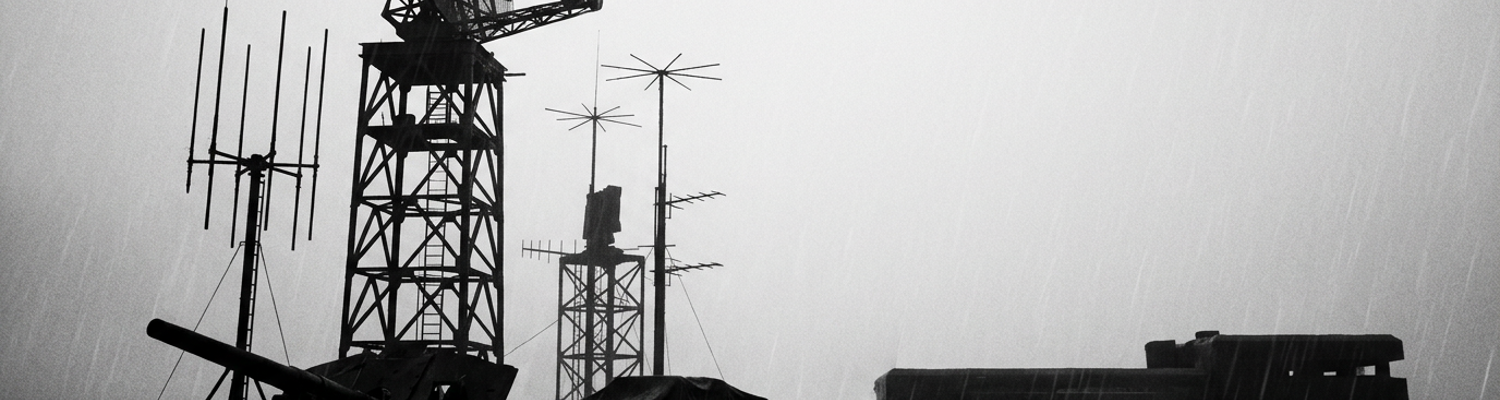

Pacific Northwest Coastal Barrier Directives
October 14, 1944. 0215 hours Pacific War Time. 48°23'N, 124°44'W.
Archival evidence shows Commander, Western Sea Frontier issued top-secret operational order 44-A exactly twelve minutes after a suspected acoustic contact near the Strait of Juan de Fuca. Vice Admiral David W. Bagley mandated an immediate continuous anti-submarine barrier stretching from the Canadian maritime border south to the Oregon coastline. The directive required an unbroken chain of surface patrols and overlapping shore-based radar coverage.
This order initiated the highest operational tempo seen on the domestic Pacific seaboard.
A close review of operational logs indicates COMWESTSEAFRON staff officers designed a rigid grid system across the coastal shelf. Destroyers, destroyer escorts, and 173-foot steel-hulled PC-class submarine chasers received orders to maintain constant underway patrols at twelve knots. The directive demanded active sonar pinging and continuous surface radar sweeps using the early Mark 3 and SC-2 radar sets. Planners in San Francisco divided the coastline into fifty-mile patrol boxes. Each box required at least one surface vessel on station twenty-four hours a day.
Shore stations at Cape Flattery, Tillamook, and Coos Bay synchronized their search sectors with the offshore fleet to create a continuous barrier of electromagnetic and acoustic energy.
COMWESTSEAFRON planners demanded these coastal sectors overlap by precisely three nautical miles to prevent any blind spots. Navigators relied on dead reckoning and early LORAN fixes to maintain these exact positions in heavy fog. The physical machinery began breaking down almost immediately. When examining the historical record of the 13th Naval District, the mechanical strain on the escort vessels becomes highly apparent. Submarine chasers like USS PC-802 and USS PC-815 operated their Fairbanks-Morse diesel engines for up to six hundred consecutive hours without the mandated maintenance overhauls.
Cylinder heads cracked under the constant thermal stress.
Lube oil filters clogged with metal shavings. The operational directives specifically forbade captains from returning to port for anything less than a catastrophic propulsion failure. Engineering logs from the destroyer escort USS Gilmore detail a complete failure of the port main reduction gear on December 12. The ship remained on station for another five days. Engineers attempted makeshift repairs using welding torches in sea states that pitched the hull violently.
Crews suffered under the exact same unyielding parameters.
Naval radar operators worked inside unventilated combat information centers aboard the small escort ships. The SC-2 radar consoles generated ambient temperatures exceeding ninety-five degrees Fahrenheit. Operators stared at the flickering green A-scopes for six-hour shifts. The human eye loses the ability to distinguish a faint blip from background sea clutter after roughly forty-five minutes of continuous focus. COMWESTSEAFRON regulations ignored this physiological limit.
Men consumed heavy doses of Benzedrine supplied by ship pharmacists to stay awake during the graveyard watches.
The unshielded cathode ray tubes emitted a high-pitched whine that caused chronic tinnitus among the crews. Seamen assigned to the combat information centers rarely saw daylight for weeks. The rate of psychiatric casualties accelerated rapidly. Medical logs from the naval hospital at Bremerton record a sharp spike in combat fatigue admissions from the coastal barrier units starting in November 1944 (Bureau of Medicine and Surgery File 44-91). Radarmen reported intense visual hallucinations.
Operators claimed to see distinct submarine periscopes or incoming aircraft formations on screens that only displayed localized rain squalls.
The constant low-frequency hum of the vacuum tubes and the rhythmic pulsing of the sonar transmitters induced severe sleep deprivation among the off-watch crews trying to rest in the forward berthing compartments. Aboard the destroyer escort USS Whitehurst, three separate radar technicians suffered nervous breakdowns within a two-week period. Commanding officers filed repeated requests for personnel rotation. Staff officers at the San Francisco headquarters denied all requests for relief. The barrier patrols continued at maximum intensity through the winter storm season.
High sea states off the Oregon coast routinely threw the small PC boats into forty-degree rolls.
Deck crews tied themselves to the lifelines just to chip ice off the forward 3-inch gun mounts. The unshielded magnetrons in the early surface-search radar antennas suffered catastrophic shorts from the constant saltwater intrusion. Maintenance technicians attempted to seal the waveguide connections with heavy layers of grease and canvas. The freezing temperatures caused the grease to solidify and fracture. Water seeped into the coaxial lines and caused high-voltage arcing inside the transmitter cabinets.
Signal Interference and Mendocino Equipment Failure
A close review of operational logs from the 12th Naval District reveals a localized equipment failure along the high cliffs of Cape Mendocino. Detachment 4 of the 11th Radar Battalion positioned SCR-270 surface-search installations between Shelter Cove and Eureka. These units began experiencing severe radio frequency interference during the first week of December 1944. Technicians recorded anomalous electromagnetic wave propagation bouncing off the steep mineral-rich coastal ridges.
High-powered commercial transmitters and the Point Arena naval radio station operated on adjacent frequency bands without adequate output shielding.
The physical proximity of these arrays caused heavy signal bleed into the local radar receivers. Operators watched their A-scope displays fill entirely with dense overlapping bands of electronic static. The unshielded magnetrons inside the radar housings overheated. Crews desperately cranked up the gain controls to punch through the interference. Cathode ray tubes burned out at three times the standard peacetime rate.
Archival evidence shows this localized electronic degradation directly accelerated the psychological collapse of the early warning crews.
Men assigned to the isolated Mendocino radar shacks worked twelve-hour shifts inside uninsulated wooden structures battered by fifty-knot Pacific gales. The continuous visual noise on the five-inch phosphor screens forced operators to strain their eyes trying to detect the faint temporary spikes indicating a surfaced Japanese submarine. Prolonged exposure to this raw flickering interference caused chronic optical migraines. Pharmacist mates dispensed heavy doses of aspirin and amphetamines. Fatigue toxins built up in the nervous systems of the radarmen.
Radar operators began reporting solid target tracks that did not exist.
Medical records from the naval dispensary at Eureka document fourteen separate cases of acute combat fatigue among radar personnel in a single month (Naval Medical Form 11-B). Technicians suffered full nervous breakdowns while staring at the corrupted visual data. The constant hum of the power generators combined with the visual chaos to produce severe sensory overload. The interference masked actual ship movements entirely. Uncoordinated High-Frequency Direction Finding intercepts created severe command and control breakdowns across the entire sector.
Shore-based HF DF stations operated Adcock antenna arrays at Trinidad Head, Point Reyes, and the Farallon Islands.
These isolated outposts intercepted brief encrypted shortwave radio bursts from offshore vessels transmitting on the 500-kilohertz distress frequencies. Operators physically rotated heavy brass goniometers to isolate the signal direction. Staff officers in San Francisco failed to establish a standardized calibration protocol for these highly sensitive receiver arrays. When a single unidentified radio transmission occurred, the three separate listening posts recorded slightly different bearings due to localized atmospheric ducting and uncalibrated antenna baselines.
Communications officers relayed these raw unfiltered intercepts directly to the mainland routing center over unsecured telephone lines.
Plotters drew intersecting lines that formed massive error triangles. WESTSEAFRON headquarters translated these uncoordinated bearings into confirmed enemy submarine contacts. Operations officers flooded the teletype networks with emergency intercept coordinates. Dispatchers ordered exhausted destroyer crews to alter course and hunt down these false radar returns. Radio rooms aboard the small patrol craft became overwhelmed with contradictory vector data. The USS PC-815 received four different target locations within a twenty-minute window.
The sheer volume of false alarms shattered the mental endurance of the combat information center teams.
Radiomen locked inside the steel compartments wept openly over their plotting tables. These operators tracked dozens of non-existent vessels generated entirely by misaligned shore antennas. The command structure in San Francisco continued issuing urgent deployment orders based on the flawed triangulation data. Captains on the escort vessels began ignoring the teletype printouts entirely. Vessel commanders refused to push their failing diesel engines to chase contacts that evaporated upon arrival. On December 18, the operations desk transmitted a priority intercept course to the destroyer escort USS Carlson. The directive ordered the ship to drop depth charges on a confirmed target located thirty miles inland from the Mendocino coast.
Erroneous Contacts and Fratricide Alarms
Archival evidence shows the 12th Naval District combat logs from late November 1944 contain a massive spike in unverified surface targets. Signal degradation across the SCR-270 coastal stations and shipboard SC-2 arrays generated continuous anomalous returns. Operators aboard the destroyer escort USS Fleming recorded fifty-two distinct enemy contacts over a four-day period. The ship was patrolling thirty nautical miles west of Cape Mendocino near 40°26'N, 124°24'W.
Saltwater intrusion severely compromised the coaxial cables linking the masthead antennas to the Combat Information Center below decks.
Moisture trapped inside the unsealed waveguide connections caused high-voltage arcing. Electrical interference presented on the A-scope displays as solid oscillating spikes indistinguishable from a Japanese I-400 class submarine conning tower. Radarmen working on seventy-two-hour alert cycles consumed heavy doses of Benzedrine to maintain focus on the phosphor screens. Fatigue completely impaired their cognitive processing. A close review of medical transfer files indicates the primary radar technician aboard the Fleming suffered an acute nervous breakdown on December 4.
He tracked a false radar track for six hours.
Master-at-arms personnel had to physically restrain the sailor. He attempted to smash the cathode ray tube with a brass sounding lead. Medical staff administered heavy intravenous sedatives before transferring him to a mainland psychiatric ward. San Francisco headquarters logged every single electronic anomaly as a confirmed hostile incursion. Operations officers at WESTSEAFRON routed intercept vectors back to the coastal patrol squadrons without verifying the targets.
Dispatchers transmitted priority action messages over the primary tactical radio circuits.
These orders directed surface vessels to converge on the erroneous coordinates. Heavy winter fog banks off the Northern California coast reduced visual range to less than fifty yards. Navigators relied exclusively on early LORAN fixes and dead reckoning to maneuver through the patrol boxes. Ships operating under strict emission control protocols ran completely blind. Saltwater corrosion that crippled the primary search radars also destroyed the early Mark III Identification Friend or Foe transponders.
Antenna connections on the IFF receiver units rusted entirely through.
Interrogation pulses sent to newly detected radar blips failed to return the coded friendly signal from the faulty transponders. Combat crews immediately locked their fire control directors onto the unidentified tracks. When examining the historical record of December 22, 1944, the structural failure of this compromised command network becomes fully exposed. At 0340 hours, the submarine chaser USS PC-786 received an urgent intercept course from the mainland routing center. Teletype operators directed the 173-foot vessel to a target five miles west of Eureka.
Surface-search radar aboard the patrol craft picked up a solid contact moving at twelve knots.
Interrogation pulses from the IFF system yielded no response. Captains on these small ships possessed wide latitude for engagement. The commanding officer ordered the forward 3-inch gun crew to load armor-piercing ammunition. Stern depth charge racks were primed for an immediate drop. This unidentified target was actually the Coast Guard Cutter Nemesis. The cutter operated on a classified anti-smuggling patrol outside the standard WESTSEAFRON communication loop.
Radar technicians on the Nemesis detected the PC-786 on their own degraded SC-2 array.
They similarly classified the incoming vessel as an enemy submarine running on the surface. Both crews stood at general quarters in freezing rain with weapons trained on each other. The PC-786 closed to within four hundred yards before the fog momentarily broke. A lookout visually identified the Coast Guard hull numbers just seconds before the gunnery officer closed the firing key. Three sailors aboard the PC-786 required immediate medical evacuation for acute shock following the near-miss incident.
Fratricide alarms multiplied rapidly across the entire Pacific seaboard.
Destroyers routinely dropped hundreds of Mark 9 depth charges on anomalous sonar returns. These returns turned out to be thermal layers or friendly patrol craft operating out of sector. Continuous expectation of imminent friendly fire destroyed the remaining morale of the coastal barrier units. Men refused to sleep in the forward berthing compartments. Crews preferred to wedge themselves between the diesel engine blocks rather than risk drowning in a torpedo strike initiated by their own sister ships. Medical officers across the 12th Naval District recorded a complete collapse in combat efficiency by the last week of December. Ship captains simply stopped reporting unverified radar contacts to the mainland.
Patrol Operations in Dense Coastal Fog
Archival evidence shows the geographic zone between Trinidad Head and Point Arena generated severe meteorological hazards for the WESTSEAFRON escort squadrons throughout late 1944. Cold upwelling currents from the Mendocino Escarpment collided with warmer offshore air masses to produce a permanent layer of thick advection fog. Visibility across the designated patrol boxes frequently dropped below fifteen yards for weeks at a time. Deck officers aboard the 173-foot steel-hulled submarine chasers operated completely blind while maintaining the mandated twelve-knot search speed.
Standard navigation equipment failed under the continuous environmental strain.
Saltwater condensation coated the internal glass elements of the Mark 6 binnacles. The moisture caused the magnetic compass cards to stick against their pivot points. Navigators attempted to rely on early LORAN-A receiver sets to establish their coordinates off the Northern California shelf. Heavy atmospheric interference bounced the low-frequency radio waves across the coastal mountains. This skywave effect produced overlapping signal pulses on the cathode ray tubes that rendered electronic triangulation impossible.
Ship commanders resorted to calculating their positions by dropping weighted brass sounding leads off the bow.
A close review of operational logs from December 1944 details the physical consequences of this blind coastal maneuvering. The destroyer escort USS Sanders lost all surface-search radar capability due to magnetron burnout near 39°52'N, 124°10'W. Command directives required the ship to maintain its barrier station despite the equipment casualty. The helmsman steered entirely by dead reckoning through a dense fog bank off Shelter Cove. Ocean currents pushed the vessel three miles east of its plotted course.
The port propeller struck a submerged granite pinnacle at fourteen knots.
The impact sheared off two bronze propeller blades and bent the main propulsion shaft twenty degrees out of alignment. Engineers sealed the aft bulkhead compartments to prevent flooding while the ship drifted helplessly in the zero-visibility conditions. The operational tempo required to maintain these blind patrols systematically destroyed the physical health of the crews. WESTSEAFRON headquarters issued standing orders requiring all coastal barrier units to maintain Condition II readiness at all times.
This directive forced half the ship company to stand watch while the other half performed maintenance or attempted to sleep.
Officers implemented a punishing schedule of four hours on duty followed by four hours off. Emergency alerts generated by the degraded radar networks routinely interrupted the rest periods. Men went up to seventy-two hours without sleep during the peak alert windows in November. Conditions inside the destroyer escorts exacerbated the extreme physical exhaustion. Ventilation blowers in the lower decks failed frequently due to saltwater corrosion on the electrical armatures.
Temperatures inside the forward engine rooms reached one hundred and ten degrees Fahrenheit.
Fairbanks-Morse diesel blocks leaked heavy exhaust fumes directly into the crew berthing spaces. Sailors vomited from the toxic air and continuous hull vibration. Medical records from the Mare Island Naval Dispensary track a rapid escalation in severe sleep deprivation cases among the offshore patrol squadrons. Pharmacist mates aboard the vessels distributed unregulated quantities of Benzedrine sulfate tablets to keep the radar operators and helmsmen awake. The amphetamines masked the immediate symptoms of fatigue but induced severe neurological side effects.
Enlisted men developed uncontrollable hand tremors.
Radiomen recorded auditory hallucinations. These operators heard non-existent Morse code transmissions bleeding through the background static of their headsets. Aboard the submarine chaser USS PC-598, the executive officer collapsed on the open bridge after standing watch for forty-eight consecutive hours in freezing fog. Medical personnel diagnosed him with acute physical exhaustion and severe malnutrition. He had lost eighteen pounds in less than three weeks. Command staff at the 12th Naval District refused the medical officer request to transfer the officer ashore. The ship doctor administered a saline infusion and ordered the officer back to the helm.
Conflicting Neutral and Hostile Traffic Directives
A close review of operational logs from the 12th Naval District indicates a severe breakdown in command communication regarding unidentified surface contacts. During the second week of December 1944, patrol captains began receiving entirely contradictory rules of engagement over their encrypted radio circuits. The Commander in Chief, Pacific Fleet issued general order 71 to all active combat sectors. This directive required all surface escorts to immediately engage any unlit vessel operating within the coastal defense zone.
San Francisco WESTSEAFRON headquarters simultaneously transmitted local operational order 44-C.
Staff officers in California mandated that escort commanders establish positive visual identification before opening fire on any radar contact. Communications officers aboard the high-speed transport USS Frament decoded both directives within a single four-hour watch on December 14. Cryptographers utilized the ECM Mark II cipher machine to translate the incoming encrypted radio bursts sent over the low-frequency channels. Resulting teletype printouts offered the bridge crew two mutually exclusive sets of instructions for handling night contacts.
Captains had to choose between facing a court-martial for insubordination or risking the destruction of their own vessels.
Command staff forced junior officers to navigate this bureaucratic conflict under combat conditions. Archival evidence shows the presence of Soviet maritime traffic off the Northern California coast turned these conflicting orders into a severe psychological hazard. The Soviet Union maintained strict neutrality in the Pacific War. Lend-Lease agreements required the United States to transfer hundreds of cargo vessels to the Soviet merchant fleet.
Modified Liberty ships loaded heavy industrial supplies and aviation fuel in Portland and Seattle before transiting south toward the Great Circle routes to Vladivostok.
Soviet captains routinely routed their deeply laden vessels directly through the WESTSEAFRON patrol boxes near 41°15'N, 125°30'W to shave hours off their transit times. Operating under total blackout conditions, these merchantmen attempted to avoid detection by Japanese submarines patrolling the eastern Pacific. This evasion tactic directly violated the illuminated transit protocols established by the San Francisco port authority. Escort radar operators detected these blacked-out hulls nightly on their SC-2 arrays.
Distinguishing between a neutral Soviet freighter and a hostile Japanese auxiliary cruiser in heavy advection fog generated extreme anxiety among the patrol crews.
Unshielded cathode ray tubes displayed both vessel types as identical oscillating green spikes. Gunnery officers stood on the open bridge wings with their hands resting on the firing keys for the forward 3-inch mounts. Firing on a neutral vessel risked triggering a severe diplomatic incident with the Soviet Union. Waiting to visually identify the target gave a potential Japanese submarine ample time to calculate a firing solution and launch a Type 95 torpedo.
Medical records from the naval hospital at Mare Island document a rapid increase in acute stress disorders among the deck officers holding these responsibilities.
Pharmacist mates recorded dangerously high blood pressure readings, chronic insomnia, and severe gastrointestinal bleeding in men assigned to the fire control directors. Combat fatigue symptoms escalated rapidly among the personnel tasked with manually rotating the heavy brass rangefinders. Processing these life-or-death decisions without clear command guidance broke the endurance of the bridge crews. Several lieutenants submitted formal requests for demotion to avoid standing another watch as the primary tactical evaluator.
On December 17, the destroyer escort USS Gilmore tracked an unidentified surface contact fifteen miles west of Cape Mendocino.
Operating without an Identification Friend or Foe signal, the target maintained a steady speed of ten knots. Orders rang out from the bridge sending the crew to general quarters. Seamen loaded armor-piercing shells into the breeches of the main battery. The Gilmore closed the distance to six hundred yards in zero-visibility conditions and prepared to engage. Choosing to violate the Pacific Fleet engagement directive, the commanding officer withheld fire until the fog momentarily cleared.
Lookouts activated a 24-inch carbon arc searchlight to illuminate the target.
Intense white light revealed the red hammer and sickle painted on the rusted funnel of the Soviet cargo ship Dalstroy. Deck crews aboard the freighter stood at their stations with 20mm defensive machine guns trained directly on the American destroyer escort. Minutes later, a priority teletype message from San Francisco arrived in the radio room demanding a status update on the radar contact. To avoid filing a report, the communications officer simply turned off the receiver unit and disconnected the primary antenna feed.
Psychological Attrition and Human Breaking Points
When examining the historical record of the 12th Naval District, medical intake logs from the Mare Island Naval Dispensary reveal a systemic collapse of personnel assigned to the coastal early warning grid. Sustained high-tension operations throughout late 1944 degraded the central nervous systems of the radar operators manning the offshore barrier. Technicians stationed inside the unventilated combat information centers of PC-class submarine chasers worked in ambient temperatures exceeding ninety-eight degrees Fahrenheit.
The unshielded SC-2 radar consoles leaked heavy exhaust fumes and emitted a continuous high-frequency whine from their power transformers.
Command directives out of San Francisco required these men to stare at flickering green A-scopes for uninterrupted twelve-hour rotations. Human optic nerves lose the capacity to differentiate solid target returns from background wave clutter after roughly forty-five minutes of fixed concentration. WESTSEAFRON staff officers completely disregarded this biological threshold. Pharmacist mates distributed heavy unregulated doses of Benzedrine sulfate just to keep the technicians upright in their canvas chairs.
The amphetamines masked the immediate physical exhaustion while rapidly accelerating widespread psychological breakdown.
Radarmen operating on seventy-two-hour alert cycles began experiencing severe auditory and visual hallucinations inside the cramped steel compartments. Technicians aboard the destroyer escort USS Whitehurst logged confirmed sightings of Japanese I-400 class submarines that were actually dense flocks of migrating seagulls reflecting off the surface-search arrays. The continuous pulsing of the magnetrons and the localized heat generated by the vacuum tubes induced chronic optical migraines. Operators wept over their plotting boards.
Men developed uncontrollable hand tremors that made it impossible to rotate the heavy brass tuning dials on their receiver units.
Medical officers recorded fourteen separate cases of acute combat fatigue within a single forty-eight-hour window. A close review of operational logs indicates the events of December 24, 1944, explicitly demonstrated the absolute limits of human endurance in these coastal defense networks. The incident centered on Detachment 4 of the 11th Radar Battalion. This unit was stationed at an isolated SCR-270 installation atop the sheer cliffs of Cape Mendocino near 40°26'N, 124°24'W.
Severe atmospheric ducting and localized radio frequency interference flooded their five-inch phosphor screens with dense bands of electronic static.
The isolated crew had been operating at Condition II readiness for twenty-one consecutive days while battered by sixty-knot Pacific gales. At 0215 hours, the primary radar operator suffered a complete psychological rupture. He tracked a massive swarm of anomalous sensor ghosts and classified them as a coordinated Japanese surface bombardment fleet. The technician physically barricaded himself inside the transmitter shack. Archival evidence shows the panic infected the entire detachment within minutes.
Exhausted off-watch personnel rushed into the freezing rain without their cold-weather gear.
The detachment commander cranked the hand-siren to signal a general quarters alarm based entirely on the corrupted visual data generated by the malfunctioning cathode ray tubes. Enlisted men loaded live ammunition into their .30 caliber defensive machine guns and fired over two thousand rounds blindly into the dense coastal fog bank. San Francisco headquarters received the frantic teletype intercepts and immediately diverted three destroyer escorts from their patrol boxes to intercept the non-existent enemy task force.
Military police units from Eureka had to drive thirty miles down washed-out logging roads to secure the facility.
Guards found the primary radarman curled under the main power generator with his hands clamped tightly over his ears. Naval doctors administered heavy intravenous sodium amytal before evacuating the entire seven-man crew to a locked psychiatric ward on the mainland. Sector command refused to acknowledge the environmental factors or the operational tempo that caused the breakdown. Dispatchers sent a replacement crew of fresh recruits to the Cape Mendocino cliffs less than four hours after the evacuation. These new operators received orders to power up the exact same damaged SCR-270 arrays and resume the twelve-hour watch rotations. A maintenance technician applied a fresh layer of canvas and grease over the cracked coaxial cables before the replacements sat down at the consoles.