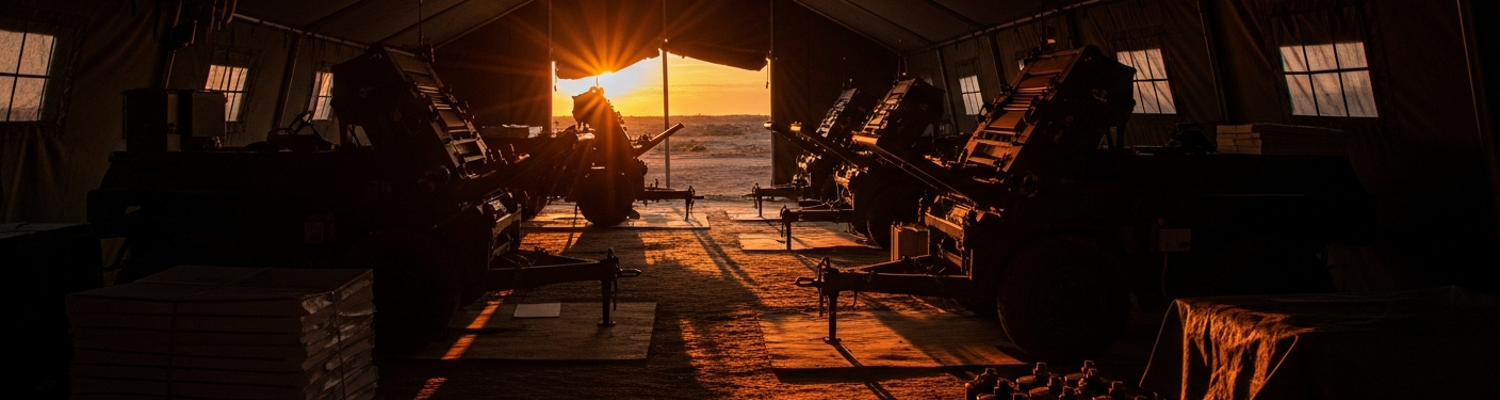

Command functions on information. The movement of armies, the coordination of fire, and the will to fight all depend on the timely delivery of accurate words and images. In the industrial conflicts of the 20th century, the United States Army learned that producing this information was itself an industrial process. It required not just writers and draftsmen, but soldier-printers operating complex machinery under extreme duress. The story of the Army’s field printing pioneers is one of recognizing the printed word as a weapon, a munition evolving from a makeshift necessity in World War I to a sophisticated, mobile, and indispensable arm of combat operations in World War II.
A Genesis in Trench Warfare
The American Expeditionary Forces (AEF) arrived in France in 1917 to find a war of static lines and unprecedented artillery concentrations. This new form of warfare demanded maps, millions of them, detailed to a degree previously unknown. Initial operations revealed a critical deficiency. The timely reproduction and distribution of topographical charts, operational orders, and intelligence summaries could not wait for civilian firms or distant depots. Information had to be produced at the speed of war, directly in the theater of operations. This necessity drove the establishment of specialized printing units within the AEF. The most prominent of these was the 29th Engineers, which organized a Base Printing Plant at Langres, France. This unit, along with smaller detachments assigned to various headquarters, had a clear mission: supply the vast quantities of printed material required by a modern army.
Their primary output was maps. These were not simple roadmaps but complex topographical and tactical documents, constantly updated with data from aerial reconnaissance and frontline patrols. They depicted enemy trench lines, machine gun nests, artillery positions, and barbed wire entanglements, forming the literal blueprint for every infantry assault and artillery barrage. The scale of this production was immense. For the Meuse-Argonne Offensive alone, AEF printers produced over 2.1 million maps, consuming more than 100 tons of paper. Without this torrent of printed material, the coordination of an army of over one million men would have been impossible. Beyond maps, the field printers produced the daily sinews of command. They printed thousands of copies of daily operational orders, intelligence bulletins summarizing enemy activity, and the endless administrative forms that keep an army functioning.
Operations functioned under grueling conditions. The presses, often heavy, cumbersome stone lithography or letterpress machines, were housed in makeshift shelters, requisitioned barns, or damp cellars, never far from the front. They were subject to the same mud, rain, and threat of long-range artillery fire as the combat troops they supported. The smell of ink and chemical solvents mixed with the stench of the battlefield. The success of these early units was measured in the effectiveness of the commands they enabled. The AEF executed complex operations because its commanders could rely on a steady flow of printed intelligence and orders. The primary failure was one of mobility. The equipment was heavy and difficult to move, a strategic lesson that heavily influenced the Army’s thinking in the years that followed.
Interwar Foresight and Mobile Mechanization
The interwar period saw a deliberate effort by the Army to address the shortcomings identified in France. Planners at the Engineer Reproduction Plant, located at the Army War College, recognized that future conflicts would be faster and more fluid. They needed a printing capability that could keep pace with mechanized headquarters. The solution appeared in the commercial sector’s development of smaller, more portable offset lithography presses. Machines like the Multilith Model 1250 and the Davidson Dual Duplicator, originally designed for office use, were identified for their military potential. Offset lithography was a significant technological leap. It used a flexible plate to transfer an image to a rubber blanket, which then printed onto paper. This process was faster, produced higher quality images, and the presses themselves were smaller, lighter, and more durable than their stone-based predecessors.
The Multilith 1250, for example, weighed around 1,200 pounds and could produce up to 6,000 impressions per hour. The Davidson Model 221 offered immense flexibility, able to print from both modern offset plates and traditional letterpress type. The Army invested in developing mobile platforms for this equipment, mounting entire print shops, complete with platemaking equipment and paper cutters, in the backs of 2.5-ton trucks. These mobile printing companies, typically organic to engineer topographic battalions, could be deployed anywhere in the world and become operational in a matter of hours. This developmental trajectory was a strategic success of foresight. The Army did not wait for war to begin. It anticipated the need for high-volume, mobile printing and adapted commercial technology to create a robust military capability. When war came again, the Army possessed a doctrine, equipment, and a growing pool of trained personnel ready to deploy.
The Paper Barrage of World War II
World War II saw the full-scale deployment of the Army’s mobile printing capability across every theater of war. The mission had expanded far beyond the maps and orders of WWI. Mobile printing companies now engaged in mass production for a global conflict, becoming a key element of information warfare. In the European Theater of Operations, United States Army (ETOUSA), massive printing services supported millions of soldiers. Before the Normandy landings, printing units in the United Kingdom worked around the clock producing millions of invasion maps, specialized currency for occupied France, and civil affairs proclamations to be distributed after liberation.
Maps remained essential, guiding amphibious landings from Normandy to Okinawa. But the presses were also weaponized for psychological warfare. The Psychological Warfare Branch (PWB), often working with the Office of Strategic Services (OSS), designed millions of leaflets intended to demoralize enemy soldiers and encourage surrender. In Italy, a single combat propaganda team could distribute over three million leaflets in a week, using specially designed artillery shells and fighter-bombers for delivery. These leaflets, often designated with codes like 'ZG' for German troops, included credible news of Axis defeats, warnings to civilians in targeted cities, and official-looking 'Safe Conduct' passes that surrendering soldiers could present. Interrogations of prisoners of war confirmed their effectiveness, with a high percentage of captured soldiers reporting they had seen and been influenced by the leaflets. Units also printed entire newspapers, like the 'Nachrichten für die Truppe', which were dropped on German lines to provide uncensored news.
Beyond psy-ops, the presses supplied the Army’s own information needs. They printed camp newspapers like 'Stars and Stripes', keeping soldiers connected and informed. They produced millions of technical manuals for new equipment, aircraft and vehicle recognition charts, and language guides. In the Pacific, where island-hopping campaigns presented unique challenges, printers produced materials tailored to specific operations. The intense humidity could ruin paper stock and swell press rollers, requiring constant maintenance. They churned out jungle warfare guides, Japanese-language surrender appeals, and even the new currency for the liberated Philippines. The sheer volume and impact of this output represent a clear strategic success. The Army could communicate with its own troops and directly with the enemy on an industrial scale. The primary shortcoming was the relentless pace. Keeping up with rapid advances, like Patton's Third Army racing across France, stretched the mobile units to their absolute limits.
The Unseen Supply Chain
The effectiveness of field printing hinged on a complex and precarious logistical chain. These operations were voracious consumers of paper, ink, photographic chemicals, and spare parts. A single engineer topographic battalion could easily consume 20 tons of paper per month. Supplying this tonnage from paper mills in the United States, through quartermaster depots in England, across the English Channel, and onto trucks headed for forward areas was a monumental undertaking managed by the Army Service Forces. The challenge was compounded by the need to protect these supplies from the elements. A single damp roll of paper or a frozen can of ink could render a press useless.
Equally critical was the supply of skilled personnel. Operating and maintaining offset presses required trained lithographers, platemakers, camera operators, and mechanics. The Army established its own training programs at the Engineer School at Fort Belvoir, Virginia, often drawing on soldiers who were printers in civilian life, but the demand for qualified operators always outstripped supply. These soldiers were not safe in the rear. Printing companies, such as the 660th Engineer Topographic Company, were attached to corps or army headquarters and moved with them. A standard mobile printing platoon operated out of several 2.5-ton trucks, working in canvas-sided shelters or whatever abandoned building was available. They often worked within range of enemy artillery, their makeshift shops offering little protection from shrapnel. Their work was vital, but frequently overlooked in the grand narrative of combat.
The contribution of these soldier-printers to combat effectiveness was immense. They were a genuine combat multiplier. An artillery battery without an accurate map is a danger to friendly troops. An infantry battalion without orders is a disorganized mob. A commander without updated intelligence is blind. World War II was won with bullets and bombs, but it was also a war of logistics and information. The ability to mass-produce and distribute that information was a fundamental component of American military power. The evolution from the AEF’s Base Printing Plant to the globe-spanning mobile printing companies of WWII marks a profound shift in military thought. It was the institutional recognition that ink and paper were as essential to modern warfare as fuel and ammunition. The legacy of the Army’s field printing pioneers is not found in statues. It exists in the millions of maps that guided soldiers, the leaflets that weakened an enemy’s resolve, and the orders that coordinated victorious armies. They were the men who put the ink on the front line, ensuring that information, the lifeblood of command, never ceased to flow.