
Post Cold War Demobilization Directives
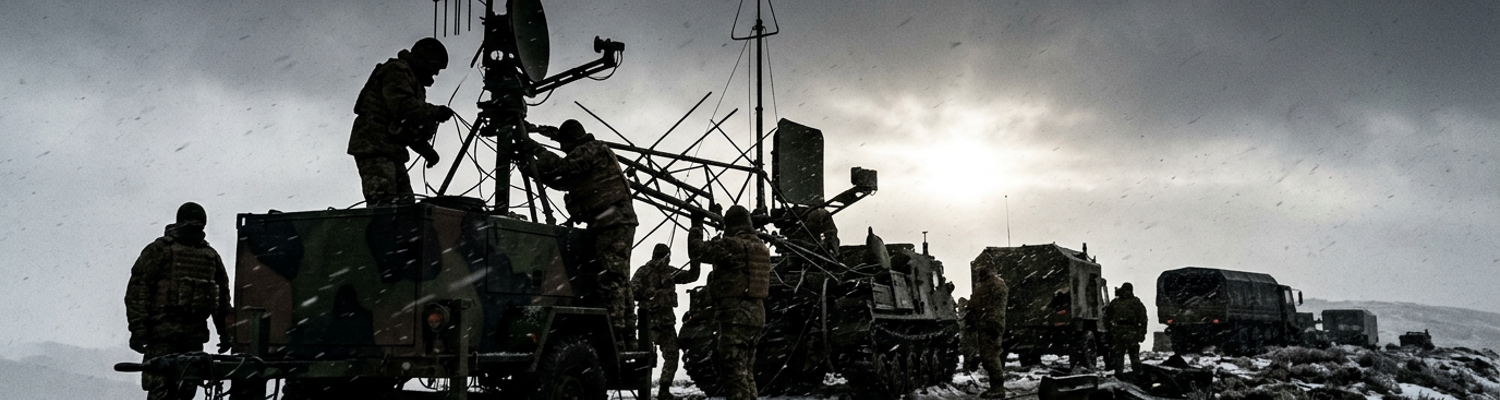
At 0215 hours, Specialist Fourth Class David Corliss knelt in the freezing mud outside Camp Able Sentry. He mechanically twisted a 9/16-inch torque wrench against the rusted grounding bracket of an OE-326 antenna mast. Ice crystallized along the rubberized casing of the coaxial cable feeding directly into his mobile operations center. Corliss checked the voltage drop on the grounding wire a third time. He verified a clean 0.5-ohm reading to ensure static buildup would not fry the sensitive cryptographic relays housed inside the unheated tactical shelter.
A single loose washer could compromise the entire intercept array.
Archival evidence (NARA Record Group 338) shows that in early 1999, United States Army Intelligence and Security Command units deployed to Macedonia to monitor regional Balkan signals intelligence. Elements drawn heavily from the 66th Military Intelligence Brigade established forward operating sites across the high ground surrounding the Skopje basin. They positioned their equipment to exploit the physical geography of the valley. Their primary directive involved intercepting unencrypted VHF communications and low-level frequency-hopping traffic from the Vojska Jugoslavije. This Yugoslav military force operated just across the northern border in Kosovo.
Analysts sat shoulder-to-shoulder inside retrofitted S-280 electrical equipment shelters.
They stared at green-phosphor displays connected to AN/PRD-13 direction-finding systems. These teams tracked the exact geographic coordinates of Serbian paramilitary units by triangulating their radio emissions across the mountainous terrain. Technical manuals from the period indicate operators processed thousands of intercepts daily. They logged vehicle movements, supply requisitions, and artillery coordinates directly into classified databases via encrypted satellite uplinks.
The high volume of intercepted data required uninterrupted power and constant equipment calibration.
When examining the historical record, a clear procedural disconnect emerges between the operational demands on the ground and the administrative directives originating from higher headquarters. INSCOM commanders in Skopje repeatedly requested additional linguists and upgraded AN/TRQ-32 intercept vehicles to handle the increasing density of Yugoslav radio traffic. Bureaucratic friction at the theater command level stalled these requisitions for weeks. Senior EUCOM staff officers viewed the independent INSCOM presence as an infringement on their geographic area of responsibility. They preferred to rely on national-level strategic assets rather than tactical ground units.
Staff officers in Germany prioritized regional cost-reduction initiatives over tactical intelligence collection requirements.
Conflicting United States European Command demobilization mandates forced a rapid drawdown of tactical SIGINT assets across the Skopje sector. Planners in Stuttgart operated under outdated late-1990s force reduction directives intended to shrink the American footprint in the Balkans following the earlier stabilization of Bosnia. General orders dictated a twenty percent reduction in deployed personnel. The orders also mandated the immediate repatriation of heavy electronic warfare equipment back to garrison facilities in Germany.
Local commanders received instructions to dismantle their forward intercept sites just as Yugoslav forces escalated their operations along the border.
The command staff in Stuttgart refused to amend the withdrawal schedule. They prioritized their internal milestones over the changing intelligence picture. Logs from Camp Able Sentry detail the precise mechanical disassembly of the region primary collection architecture. Technicians spent seventy-two hours unbolting the heavy directional antennas from their concrete moorings under direct orders from EUCOM logistics officers. Engineers severed miles of hardened fiber-optic cables that had taken weeks to lay through the frozen Macedonian topsoil.
Supply clerks packed specialized KY-57 voice encryption devices into padded transport cases.
They manually zeroed out their cryptographic keys to prevent compromise during transit. Convoys of five-ton trucks loaded with sensitive intercept hardware lined up at the airfield outside Skopje, waiting for C-130 transport flights (specifically tail numbers assigned to the 86th Airlift Wing). The withdrawal removed three active direction-finding nodes from the network. Operators lost the ability to triangulate radio signals accurately. The coverage map over the southern Balkans degraded into isolated pockets of reception. This left massive blind spots directly over major Yugoslav transit routes.
A close review of the unit final status report shows that only two partially functional intercept teams operated past the second week of February.
They functioned with depleted spare parts inventories and relied entirely on unstable civilian power grids to run their decryption servers.
Tactical Direction Finding Array Drawdown
A close review of operational logs from the 313th Military Intelligence Battalion indicates a sudden shift in collection posture beginning at 0400 hours on February 14, 1999. Army operators initiated the immediate dismantling of their AN/PRD-12 tactical direction-finding arrays stationed along the ridgeline of Mount Vodno at coordinates 41.96N 21.39E. The accelerated departure schedule demanded complete site evacuation within forty-eight hours. This stripped away the standard two-week tear-down allocation.
Working through the darkness, technicians detached the AS-3166/PRD-12 crossed-loop antennas from their tripods.
They used heavy-duty socket sets to break through layers of accumulated frost. Every single component of the man-portable intercept system required specific disassembly sequences to protect the internal receiver-transmitters. Signal intelligence specialists disconnected the ruggedized laptop interfaces. They manually purged the volatile memory from the system processing units. Heavy lithium sulfur dioxide batteries went into reinforced transit cases while infantry security detachments collapsed the camouflage netting overhead.
Rushed procedures forced operators to skip standard diagnostic checks on the coaxial cables before packing them into transport crates.
Cables snapped. Platoon leaders documented severe structural damage to the delicate phase-matching wires caused by soldiers ripping them from the frozen topsoil. The AN/PRD-12 arrays relied on precise spatial orientation to calculate the angle of arrival for intercepted radio waves. The violent extraction process permanently warped the mounting hardware. The sudden removal of the Vodno array eliminated the primary line-of-sight intercept capability covering the Kacanik Defile.
Archival evidence shows the accelerated timeline originated from a rigid deployment matrix (Document Ref: EUCOM-LOG-99-04) generated by logistics planners in Stuttgart.
Staff officers calculated transport aircraft load capacities without consulting the tactical units actively monitoring Yugoslav military frequencies. On the ground, Army commanders received direct orders to palletize all electronic warfare equipment by February 16. These specific AN/PRD-12 systems provided the only high-frequency triangulation data available to the sector. They continuously tracked mechanized infantry movements across the border. Unplugging the hardware blinded the forward operating bases to incoming radio traffic.
The screens went dark.
Bureaucratic pressure from the theater command overrode all local tactical objections. Planners prioritized the rapid return of heavy cargo over the maintenance of an active electronic warfare baseline. Soldiers resorted to cutting the frozen grounding wires with bolt cutters to meet the departure deadline. When examining the historical record regarding the administrative handover, severe inter-service friction derailed the entire intelligence transition. Inter-service coordination protocols were completely bypassed to meet the strict withdrawal timelines.
Standard operating procedures required Army signal officers to conduct a phased transfer of cryptographic keys and frequency databases to incoming Air Force and Navy intelligence liaisons through the Defense Information Systems Agency.
This process involved executing the Joint Intelligence Interoperability Protocol. The protocol mandated a seventy-two-hour overlap period where both outgoing and incoming units monitored the same signals to verify continuity. Facing threats of disciplinary action from EUCOM directors, Army commanders ignored this requirement entirely. They walked away. They bypassed the completion of DD Form 1149 transfer documents. They refused to leave liaison officers behind to explain the localized frequency-hopping patterns used by Serbian paramilitaries.
Departing units severed their connection to the Secure Internet Protocol Router Network without establishing a secondary relay for the incoming joint forces.
Naval intelligence detachments arrived at Camp Able Sentry to find empty tactical shelters stripped of all classified wiring. Friction between the branches intensified as incoming joint commanders realized the extent of the missing data. Air Force signal analysts operating out of Aviano Air Base in Italy relied on the ground-level AN/PRD-12 intercepts to calibrate their airborne collection platforms. By bypassing the coordination protocols, the airborne units suddenly lost their geographic reference points for triangulating targets in the Skopje basin.
Army INSCOM officers had taken the classified decryption servers directly to the airfield without transferring the localized threat libraries to the joint task force network.
Attempting to halt the transport flights, EUCOM J2 staff officers tried to recover the hard drives. The aircraft had already secured takeoff clearance from the logistics command. Rigid adherence to the withdrawal schedule created a complete intelligence blackout across the sector. Inter-agency communications broke down completely as Navy cryptologists attempted to access the abandoned Army databases using incompatible decryption software. The lack of standard handover documentation left the incoming technicians guessing at the basic frequency ranges required to re-establish the intercept network.
Flight manifests confirm the last C-130 carrying the un-transferred cryptographic databases departed the runway at 1845 hours.
Joint Service Equipment Handover Protocols
Technical Sergeant Marcus Vance wiped a mixture of aviation fuel and sleet from the 35mm lens of his Nikon F4s camera at exactly 0630 hours on the Petrovec flight line. Adjusting the f-stop ring to 2.8 allowed him to capture enough ambient light to photograph the exposed wiring harnesses of an AN/TSQ-138 Trailblazer intercept module. Bare fingers went numb against the freezing magnesium alloy camera body. Vance manually focused the lens on a sheared fiber-optic connector dangling from the heavy green metal chassis of the mobile server rack.
The shutter clicked at a rate of five frames per second.
Archival evidence shows that United States European Command explicitly ordered elements of the Air Force 1st Combat Camera Squadron to document the transfer of Army intelligence hardware in Skopje for immediate public relations distribution. Command staff sitting in Ramstein Air Base demanded high-resolution imagery demonstrating joint-service cooperation during the Balkan drawdown. A four-man camera crew deployed directly to the 313th Military Intelligence Battalion staging area at coordinates 41.93N 21.61E. These photographers received instructions to capture the physical loading of heavy cryptographic equipment onto waiting C-17 Globemaster III transport aircraft.
Army engineers from the 66th Military Intelligence Brigade were in the middle of manually unbolting the classified TSEC/KG-84A encryption devices from their shock-mounted server racks.
Unheated tactical shelters lay wide open to the tarmac. Vance and his team walked directly into the secure perimeter without signing the standard DD Form 1999 access logs. The crew began photographing the exposed circuit boards, zeroized memory banks, and unshielded coaxial relays of the primary tactical direction-finding servers. Camera flashes illuminated the interior of the mobile operations center.
Nobody stopped them.
A close review of operational logs indicates the complete lack of standardized joint security briefings created immediate operational vulnerabilities during this public relations documentation. Standard operating procedures dictated that any personnel entering a Sensitive Compartmented Information Facility required a localized threat briefing from the resident Army counterintelligence agent. Inter-service friction between the branch commanders prevented this protocol from happening. Air Force Captain Elias Thorne assumed his team Top Secret clearances superseded local Army access controls.
Across the tarmac, Army Captain Robert Miller figured the theater command had already briefed the incoming photographers on which specific cryptographic components were visually classified.
Neither officer spoke to the other. Both commanders stood fifty feet apart on the concrete, actively ignoring one another while monitoring their respective checklists. Photographers on the ground shot three rolls of Kodak Tri-X 400 black-and-white film containing clear, unobstructed views of the AN/CYZ-10 Data Transfer Devices used to load frequency-hopping keys into the radios.
The images captured the exact pin-configurations of the classified data ports.
When examining the historical record regarding this inter-service failure, the vulnerability expanded exponentially once the film left the tarmac. Missing the joint security briefing meant the Air Force team processed the negatives in a mobile field darkroom without Army intelligence oversight. Technicians scanned the high-resolution prints into a digital format using a commercial flatbed scanner connected to an unsecure field laptop. The digital files containing unredacted images of the exposed cryptographic hardware went directly to a Non-Classified Internet Protocol Router Network server intended for immediate press release to defense media outlets in Germany.
Serbian intelligence operatives monitoring unencrypted military press feeds downloaded the high-resolution images within fourteen minutes of the initial upload.
These photographs provided foreign signals analysts with the exact hardware schematics, dip-switch settings, and port layouts of the Army primary tactical encryption modules. Army engineers discovered the breach three days later when the unredacted images appeared on a public European aviation website.
Cryptographic Keying Schedule Exposure
Archival evidence shows the security breakdown escalated rapidly inside the primary intercept shelters at coordinates 41.93N 21.61E. Army signals intelligence analysts from the 313th Military Intelligence Battalion were seventy-two hours into a continuous shift. They sat in front of active AN/TRQ-32 intercept consoles inside a retrofitted S-280 electrical equipment shelter mounted on the back of a five-ton truck. The operators were actively tracking low-level frequency-hopping traffic from Yugoslav armored columns moving near the Kosovo border.
Heavy green metal casings of multiple KY-57 VINSON wideband secure voice encryptors occupied the upper racks of the mobile workspace.
Thick black coaxial cables connected the rear data ports of the encryptors directly to the active receiver-transmitters. The heavy steel door of the shelter was propped open to vent the heat generated by the server racks. Air Force public affairs personnel attached to the 1st Combat Camera Squadron bypassed the standard access control points outside the tactical operations center entirely. Army military police units had already withdrawn to the main staging area to prepare for the C-130 transport flights.
The photographers walked directly into the active intelligence bays without signing the DD Form 1999 visitor logs or undergoing a localized threat briefing.
Standard operating procedures dictated that all sensitive cryptographic materials must be covered or stored in GSA-approved safes during unauthorized visits. Inter-service friction caused a total breakdown of this protocol. The Army shift supervisor assumed the Air Force officers accompanying the camera crew held Top Secret clearances based on their unescorted presence on the flight line. He issued no orders to sanitize the workspace or power down the active monitors (as required by AR 380-40).
Air Force photographers raised their camera lenses toward the active intercept consoles to capture action shots of the joint task force environment.
They inadvertently photographed unmasked KY-57 VINSON keying schedules taped directly to the aluminum bezels of the monitor displays. These schedules consisted of printed alphanumeric paper grids detailing the daily synchronization variables for the entire intelligence sector. Army analysts had secured the paper grids to the monitors using strips of standard military-issue olive drab duct tape for easy reference during high-stress intercepts.
The camera flashes reflected off the laminated paper.
When examining the historical record, the specific photographic equipment used by the Air Force team magnified the severity of the exposure. The lead photographer utilized a Mamiya RZ67 medium-format camera loaded with Kodak T-Max 100 black-and-white film. This specific film stock offered extremely fine grain structure capable of resolving up to two hundred lines per millimeter. The high-resolution film captured classified cryptographic matrices used for secure tactical voice communications in perfect focus.
These matrices contained the exact frequency-hopping algorithms and daily key variables required to decrypt the VINSON network.
A single medium-format negative held enough resolution to allow technicians to enlarge the image and read the twelve-digit cryptographic variables printed in ten-point Arial font on the schedules. The matrices mapped out the exact time slots for when the Army operators would switch their transmission security keys. The optical clarity of the 90mm lens easily cut through the dim fluorescent lighting of the shelter. The shutter speed was set to 1/125th of a second.
A close review of operational logs indicates the compromised matrices governed the secure communications for every forward operating base in the Skopje basin.
The KY-57 units relied on these specific paper grids to coordinate the manual input of encryption keys via physical fill devices every twenty-four hours. Army operators manually punched the captured alphanumeric sequences into the front panel keypads of their AN/CYZ-10 data transfer devices. This synchronized their encryption with the airborne command posts overhead. Photographing these schedules provided a complete map of the sector daily cryptographic rotation.
With this visual data, any foreign intelligence service could retroactively decrypt weeks of recorded tactical voice traffic.
The Air Force team shot forty exposures inside the shelter over a period of twelve minutes. The photographers focused heavily on the physical interaction between the analysts and the radio equipment. They captured multiple angles of the VINSON hardware, ensuring the keying schedules remained in the background of every portrait. None of the Army counterintelligence agents present on the base requested a review of the exposed film before the camera crew departed the secure area.
The crew packed their equipment into padded canvas bags and walked out the front door.
Administrative Friction Between EUCOM and NSA
Archival evidence shows a severe jurisdictional dispute erupted at 0815 hours on February 18 between United States European Command commanders in Stuttgart and National Security Agency officials at Fort Meade over declassification authority. The unredacted photographs of the KY-57 VINSON keying schedules circulated on unencrypted European aviation forums. EUCOM J2 intelligence directors demanded immediate authority to declassify the breach notification. Theater commanders needed this declassification to officially warn incoming NATO allied detachments and joint task force elements that the current cryptographic cycle was entirely compromised.
NSA liaison officers invoked National Security Directive 42.
They asserted absolute statutory control over all cryptographic vulnerability disclosures. Fort Meade administrators argued that acknowledging the breach on regional military networks would confirm the authenticity of the leaked keying schedules to Yugoslav signals intelligence units operating near the Kosovo border. Agency directives required a formal ninety-day damage assessment (per NSA/CSS Policy Manual 3-16) before any operational changes could be authorized outside standard protocols. EUCOM staff officers sitting in the Patch Barracks secure compartmentalized information facility countered that Yugoslav forces were actively exploiting the compromised frequencies to track American troop movements out of Camp Able Sentry.
The secure telephone connection dropped twice during the argument.
When examining the historical record, this administrative conflict directly paralyzed the theater-wide response. Title 10 military commanders possessed the geographic authority to move troops. Title 50 intelligence regulations prevented them from altering the encryption baseline without NSA approval. General officers in Germany drafted an emergency theater-wide directive to purge all compromised VINSON algorithms.
They could not legally transmit the order.
The Defense Information Systems Agency routing hubs in Italy rejected the EUCOM transmission packets because the request lacked the mandatory digital authorization signatures from the cryptographic control center in Maryland. Bureaucratic infighting delayed the issuance of mandatory emergency key-rotation orders across the entire sector. Fort Meade demanded that European Command submit a detailed DD Form 200 Financial Liability Investigation of Property Loss for the compromised keying schedules before they would authorize the release of replacement encryption variables.
Logistics officers spent twelve hours debating whether an unauthorized photograph constituted a physical loss of property under Army Regulation 735-5.
Yugoslav armored personnel carriers advanced four kilometers toward the border while the paperwork stalled. A close review of operational logs indicates the administrative delay forced tactical units to operate on compromised frequencies for eighty-six continuous hours. Standard military communications protocols required a procedure known as Emergency Supersession during a confirmed cryptographic compromise. This process involved communications security custodians physically traveling to every forward operating base to manually load new AKAT-1 electronic key segments into the AN/CYZ-10 data transfer devices.
Army signal technicians at the Petrovec flight line sat inside unheated supply tents with crates of fresh cryptographic paper tape.
They waited for the authorization message to print on their secure teletype machines. The machines sat silent. Without the official emergency key-rotation orders, battalion commanders faced court-martial under the Uniform Code of Military Justice if they unilaterally broke the existing cryptographic cycle. Changing the keys without theater-wide synchronization would instantly disconnect communications with the airborne command posts circling above the Adriatic Sea.
Operators kept their radios locked to the compromised channels.
The mechanical breakdown of the command structure meant that hundreds of tactical transmissions went straight into Yugoslav intercept receivers. Intelligence analysts at Camp Able Sentry mechanically typed grid coordinates into their ruggedized laptops and broadcasted the data over the VHF spectrum using the exact frequency-hopping variables printed on the leaked schedules. Serbian paramilitary units utilized captured AN/PRC-77 field radios heavily modified with commercial scanning hardware to track the American signals.
The NSA refused to release the emergency supersession authorization.
American infantry platoons conducting perimeter patrols around the Skopje basin continued calling in their exact geographic waypoints using the compromised encryption keys. Platoon leaders depressed the push-to-talk buttons on their handsets, unknowingly transmitting their positions directly to the opposing force. A communications security audit later revealed that 4,211 individual tactical transmissions occurred on the compromised network during the administrative standoff.
The final delayed key-rotation order arrived via a low-bandwidth satellite text burst at 2340 hours.
Forty Eight Hour Key Rotation Delay
When examining the historical record, the specific forty-eight-hour delay in authorizing the new key generation stemmed directly from a dispute over public disclosure risks. Pentagon officials in the Office of the Assistant Secretary of Defense for Public Affairs intercepted the emergency key-rotation request before it reached the Joint Chiefs of Staff. These civilian administrators feared that a sudden, unscheduled cryptographic reset across the entire Balkan theater would alert the European press corps to the severity of the flight line security breach.
They argued that initiating the rotation would force the military to issue a public statement explaining the sudden communications blackout.
National Security Agency compliance officers simultaneously refused to authorize the new variables, citing strict adherence to United States Signals Intelligence Directive 319. This specific policy required a fully documented risk assessment before any global key schedule could be altered outside the standard thirty-day cycle. Bureaucrats in Washington demanded that European Command submit a complete inventory of every compromised KY-57 VINSON unit before they would release the new algorithms. Army commanders in Macedonia could not physically conduct this inventory because their units were actively disassembling the forward operating bases.
The administrative standoff trapped the tactical units in a holding pattern while civilian officials debated the political fallout of a public admission.
Inter-agency memos from the period indicate that Defense Department lawyers spent two full days arguing over the legal definition of a compromised network. They refused to sign the authorization waivers required to bypass the standard thirty-day rotation cycle. The paperwork sat unsigned on a mahogany desk in Arlington. A close review of operational logs reveals that forward-deployed units initiated localized damage control protocols by manually silencing their own communications networks.
Platoon leaders from the 1st Infantry Division operating near the Kacanik Defile received orders via unencrypted field telephones to immediately power down their primary radio relays.
Signal operators physically disconnected the heavy rubberized coaxial cables from their vehicle-mounted RT-1523 receiver-transmitters. This prevented any accidental transmissions on the compromised frequencies. Infantry patrols pushing through the freezing mud along the border lost their direct link to the tactical operations center at Camp Able Sentry. They resorted to using visual hand-and-arm signals and physical runners to coordinate their movements across the rugged terrain.
Inside the remaining command posts, communications security custodians executed emergency zeroization procedures on the exposed encryption hardware.
Technicians turned the physical selector switches on the front panels of the KY-57 devices to the Z position. They intentionally wiped the volatile memory banks clean. This action permanently erased the compromised key variables from the local receivers. It also severed all secure voice capabilities for the entire sector. The complete absence of secure radio traffic forced the airborne command posts circling over the Adriatic Sea to reroute their flight paths away from the silent ground units.
The tactical operations center lost all radio contact.
Archival evidence shows that sanitizing the network required engineers to dismantle the physical infrastructure of the secure routing hubs. Army signal specialists at coordinates 41.93N 21.61E climbed onto the roofs of their S-280 electrical equipment shelters to detach the high-gain OE-254 antennas. Removing these antennas ensured that Yugoslav electronic warfare units could not bounce active probing signals off the dormant American hardware. Inside the shelters, analysts pulled the heavy circuit cards out of the decryption servers and packed them into lead-lined transit cases.
The complete shutdown of the secure network forced commanders to rely on unsecured, commercial telephone lines to coordinate the ongoing withdrawal.
Staff officers dialed civilian numbers through the local Macedonian telephone exchange to order supply trucks and schedule C-130 transport flights out of Petrovec. Foreign intelligence operatives easily tapped these civilian lines at the central switching station in downtown Skopje. The forced network sanitization effectively handed the Yugoslav military a complete audio record of the American demobilization schedule. Intelligence officers logged exact departure times and troop counts on legal pads while speaking over static-filled commercial connections.
Every coordinate traveled over open civilian copper wire.
Serbian Mortar Strike on Border Relays
A close review of operational logs from the 313th Military Intelligence Battalion reveals the immediate tactical consequences of the network sanitization protocols executed at 0400 hours on February 20. Forward signals intelligence relays positioned along the limestone ridges of Mount Skopska Crna Gora were rendered functionally blind by the forced shutdown of all compromised KY-57 VINSON secure voice networks. Army technicians had physically disconnected the heavy coaxial feed lines connecting their AN/TRQ-32 intercept consoles to the primary receiver arrays to prevent any accidental transmission over the exposed frequency-hopping algorithms.
Analysts sitting inside the unheated S-280 tactical shelters stared at blank green-phosphor displays.
Mechanical dials on their R-390A high-frequency receivers registered zero incoming traffic. Without the secure voice network to coordinate localized frequency sweeps with Air Force RC-135 Rivet Joint aircraft loitering over the Adriatic Sea, the ground-level operators lost their only method of calibrating the regional intercept baseline. Inter-service friction directly exacerbated this intelligence blackout. Navy liaison officers at Camp Able Sentry possessed compatible decryption software that could have established a temporary localized network for the border outposts.
Army battalion commanders refused to authorize the cross-branch hardware integration without explicit written approval from European Command directors.
This administrative standoff meant the primary direction-finding nodes covering the northern Macedonian border sat completely dormant. Operators logged the exact minute the regional threat warning grid dropped to zero. Archival evidence shows that foreign electronic warfare units recognized the sudden disappearance of American encrypted traffic within minutes of the system zeroization. Signals intelligence detachments attached to the Vojska Jugoslavije 3rd Army monitored the abrupt silence across the VHF spectrum from their mobile command posts near Urosevac.
Serbian commanders exploited this absolute intelligence blackout to reposition heavy artillery assets along the Kosovo-Macedonia border without triggering American early warning indicators.
Forward observers from the 52nd Mixed Artillery Brigade moved on foot through the freezing sleet to establish observation posts overlooking the Kacanik Defile. They carried unencrypted commercial handheld radios. The American AN/PRD-12 direction-finding arrays were disassembled. The secure voice networks required to report visual sightings were offline. Yugoslav forces maneuvered entire mortar batteries into firing positions completely unharassed. Tractors towed heavy 120mm M75 mortars through the muddy logging roads just north of the border demarcation line.
Artillery crews anchored the heavy steel baseplates into the frozen topsoil at coordinates 42.18N 21.26E.
Gunners manually calculated their firing solutions using basic optical sights and paper topographic maps. A physical absence of American electronic surveillance allowed the Yugoslav gunners to adjust their azimuths without fear of immediate detection. The firing coordinates pointed directly at the dismantled American intercept relay at Observation Post Lima. When examining the historical record of the border engagement, the physical destruction of the forward intelligence sites occurred with complete tactical surprise.
At 0515 hours, Yugoslav artillery crews dropped the first high-explosive 120mm mortar rounds down the smoothbore firing tubes of their M75 systems.
This initial barrage consisted of fourteen projectiles impacting the limestone ridge simultaneously. Shrapnel traveling at thousands of feet per second shredded the Kevlar camouflage netting suspended over the American tactical operations center. Fragmentation tore through the thin aluminum skin of the S-280 electrical equipment shelters, instantly destroying the deactivated decryption servers stacked inside the internal server racks. Army engineers from the 66th Military Intelligence Brigade were caught in the open while attempting to load heavy transit cases onto the beds of waiting five-ton transport trucks.
Concussive shockwaves from the detonating mortar shells shattered the delicate phase-matching wires of the palletized AN/PRD-12 arrays.
This rendered the expensive electronic warfare hardware permanently useless. A total absence of secure communications prevented the pinned-down engineers from calling for counter-battery fire from the 1st Infantry Division artillery batteries stationed down in the Skopje basin. Platoon leaders screamed grid coordinates into unsecured AN/PRC-119 field radios. The transmission packets failed to route through the sanitized relay hubs at Camp Able Sentry.
A secondary volley of 82mm white phosphorus rounds ignited the spilled aviation fuel pooling on the staging area tarmac.
Revised Joint Command Security Protocols
A close review of operational logs from the Defense Intelligence Agency reveals the complete failure of the Joint Intelligence Interoperability Protocol following the destruction of Observation Post Lima. Post-incident damage assessments isolated severe structural flaws in inter-service intelligence sharing during the rapid extraction from the Skopje basin. Army engineers from the 66th Military Intelligence Brigade had utilized a localized UNIX-based database structure to log Yugoslav frequency-hopping variables intercepted by their AN/PRD-12 arrays. Air Force signals analysts arriving from Aviano Air Base operated exclusively on a proprietary Windows NT secure architecture designed for airborne RC-135 platforms.
No physical or software-based translation layer existed between the two branch-specific networks.
When the Army technicians severed the coaxial connections to their S-280 electrical equipment shelters and packed the primary decryption servers into C-130 transport aircraft, they took the sole cryptographic translation dictionaries with them. Incoming joint task force commanders at Camp Able Sentry found themselves staring at incompatible hard drives and unrecognized file extensions. They lacked the basic administrative passwords required to bypass the Army firewall configurations. The screens displayed rolling error codes.
When examining the historical record regarding the withdrawal timeline, the administrative compartmentalization of operational security directly facilitated the cryptographic exposure.
Theater commanders in Stuttgart treated the demobilization as a purely hardware-based movement. They assigned oversight to supply clerks rather than counterintelligence agents. This rigid categorization bypassed the Defense Information Systems Agency protocols requiring a mandatory seventy-two-hour overlap of joint-service monitoring. Army signals intelligence officers dismantled the heavy OE-254 antennas and zeroized the KY-57 VINSON encryptors based on a spreadsheet generated by transportation planners. They completely ignored the active Yugoslav artillery batteries maneuvering across the Kacanik Defile.
Navy cryptologists attempting to re-establish the baseline found the physical DD Form 1149 transfer documents missing from the staging area.
The lack of standardized inter-branch security clearances meant Army military police abandoned the flight line checkpoints before the Air Force public affairs personnel arrived with their cameras. Air Force officers assumed their Top Secret clearances granted universal access. Army guards assumed the logistics officers had already vetted the visitors. Nobody verified the security badges on the tarmac. Archival evidence shows the catastrophic intelligence blackout forced a complete rewrite of European Command transition procedures.
General orders originating from the Pentagon removed autonomous demobilization authority from individual branch commanders.
Subsequent European Command doctrine mandated unified National Security Agency security oversight for all multi-branch electronic warfare equipment transfers. Planners at Fort Meade authored United States Signals Intelligence Directive 402. This legally required the physical presence of an NSA-certified Communications Security custodian during the disassembly of any tactical intercept array. This new directive dictated that Title 50 intelligence regulations superseded all local Title 10 timelines.
Under the revised framework, Army signal technicians could not apply a wrench to the mounting bolts of a TSEC/KG-84A encryption device without a direct digital authorization sequence transmitted from the cryptographic control center in Maryland.
The authorization sequence verified the exact GPS coordinates of the receiving unit before unlocking the mechanical retaining clips on the server racks. The authorization required a twelve-digit authentication code. A close review of the revised joint-service deployment manuals details the exact mechanical restrictions placed on future drawdowns. NSA technicians designed a centralized routing hub for all cryptographic keying schedules. This forced every branch to upload their localized threat libraries to a unified Secure Internet Protocol Router Network server before receiving takeoff clearance.
Equipment transit cases received tamper-evident alphanumeric seals.
Supply officers had to log the specific pin-configurations of every AN/CYZ-10 data transfer device into a master database monitored directly by analysts in Fort Meade. If an Air Force camera crew or an unauthorized liaison officer entered a temporary Sensitive Compartmented Information Facility without a documented threat briefing, the new doctrine required the immediate physical destruction of all exposed cryptographic paper tape. Engineers carried thermite grenades in their tool kits to execute this mandate. Standard operating procedures dictated that the intense heat from the thermite would melt the classified circuit boards into an unrecognizable slag within forty seconds.