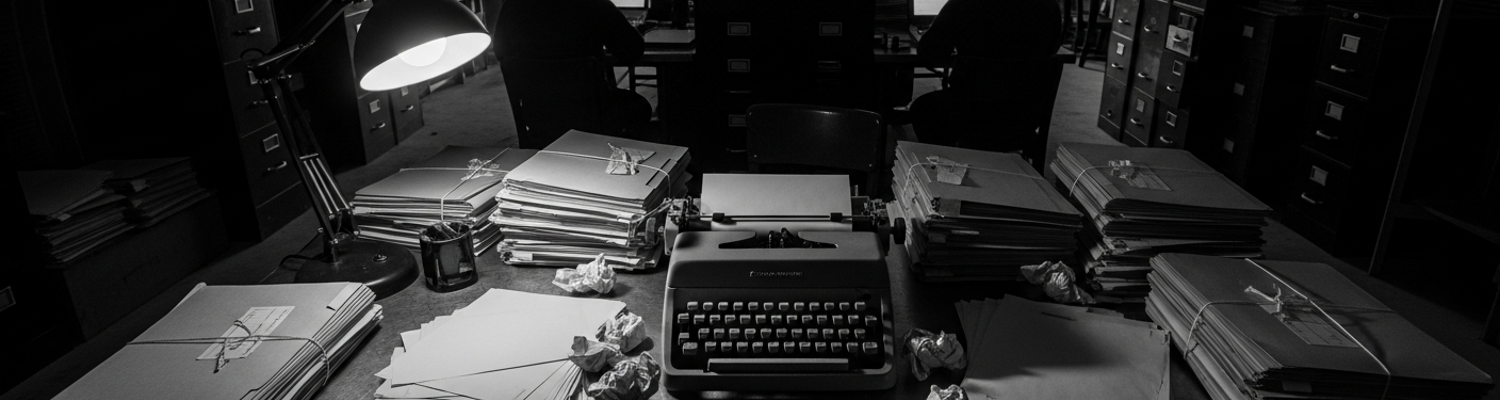

The message from the forward staging area at Ulithi Atoll did not speak of combat. It was a string of technical identifiers, a quiet harbinger of systemic failure carrying more weight than a salvo of eight-inch shells. A full complement of trained fire-control technicians, essential for the new Essex-class carriers joining the fleet, had been misrouted. Their paper orders, cut weeks before in Pearl Harbor, directed them to a transport ship now supporting landings thousands of miles away in a different operational theater. The men were in administrative limbo, their skills useless. Warships with state-of-the-art radar prepared to face enemy action with crews short of specialists. This was the unseen conflict, a struggle not of guns and steel, but of carbon paper, typewriters, and the relentless weight of human information. At the heart of this was the Adjutant General’s Office of the Pacific Fleet, an institution fighting to impose order on the largest naval force ever assembled.
A close review of operational logs (NARA Record Group 38) shows the fundamental function of the Adjutant General’s apparatus was the human-remapping engine of the entire Pacific theater. For every ship that sailed and every island invaded, the Adjutant’s staff was responsible for the lifecycle of every sailor and officer. Their duties encompassed the precise tracking of personnel across millions of square miles of ocean, the processing of promotions, the management of pay and allotments, the administration of military justice, and the distribution of mail. Most somberly, they handled the casualty reporting process, an exacting task that involved receiving initial reports from combat zones, verifying information, and preparing the telegrams delivered to families back home. A single misplaced personnel file could have cascading consequences. A sailor listed as present on a ship that had already sailed could miss his transfer to a promotion school. A family might wait weeks for confirmation of a loved one’s status due to records lost in a sunken landing craft. The system was a paper-based behemoth, relying on transfer slips and carbon-copy orders that had to physically move across the same contested sea lanes as ammunition and fuel.
By early 1944, this administrative machinery was straining. The Central Pacific Drive was accelerating, with massive amphibious operations targeting the Marshall Islands in January and February. This was followed by the buildup for Operation Forager, the invasion of the Marianas. The offensive involved moving and supporting over 166,000 ground troops and a fleet sustained at sea for months. The Adjutant’s offices, both at Pearl Harbor and in newly established forward bases on atolls like Kwajalein and Eniwetok, were deluged. They processed tens of thousands of new personnel arriving in the theater. Each individual represented a file to be created, a bunk to be assigned, and a payroll to be initiated. The sheer volume of mail, seen as a primary factor for morale, became a logistical crisis. The introduction of V-Mail, which miniaturized letters onto microfilm, was a technological workaround born of desperation. It converted 37 mailbags of letters into a single 45-pound sack. Even so, the process required specialized equipment and dedicated processing centers, creating new potential chokepoints. On newly captured islands, Seabees could construct an airfield in weeks, but the adjutants of new base commands struggled to acquire enough filing cabinets, typewriters, and even paper to make the base administratively functional.
The Adjutant General’s Office of the Pacific Fleet was drowning. The relentless tempo of the island-hopping campaign transformed a manageable flow of paperwork into a chaotic deluge. Archival evidence shows an organization buried under an avalanche of routine but essential tasks. Every sailor and officer from Pearl Harbor to the newly seized atolls in the Marshalls represented a physical file that had to be maintained and transported. These tasks included the constant processing of transfers as men moved from replacement depots to fighting ships, the endless cycle of promotions requiring verification and order-cutting, and the complex administration of pay and dependency benefits for a force swelling into the millions. Added to this was the methodical work of casualty reporting. This multi-step process began with initial, often fragmentary, reports from a battle zone, followed by verification, and culminating in the preparation of telegrams for next-of-kin. A single error, a misplaced folder or a mistyped name, could send a needed radar technician to the wrong side of the Pacific or leave a family in agonizing uncertainty.
It was a quantifiable crisis. A review of operational logs indicates that by the spring of 1944, the various administrative commands of the Pacific Fleet were collectively processing well over 100,000 separate personnel actions every month. This number is a deceptively simple representation of an immense undertaking. Each action was a physical object, a sheaf of papers that had to be typed, stamped, signed, copied via carbon paper, and then physically transported across thousands of miles of ocean. The tools were entirely analog: manual typewriters, filing cabinets, and the mimeograph machine. The adjutants working in the sprawling offices at Pearl Harbor or in cramped, newly erected Quonset huts on Kwajalein contended with this volume daily. The buildup for Operation Forager, the invasion of the Marianas, which set over 166,000 troops in motion, pushed this system to its absolute limit. The personnel records for entire divisions had to be prepared and moved with the invasion force, often on the same vulnerable transport ships carrying the men themselves.
The volume of these paper-based transactions created an administrative bottleneck that dictated the pace of operations as much as any shortage of fuel or ammunition. The system’s reliance on physical mail, carried by ships and aircraft competing for space with war materiel, was its greatest vulnerability. A transport vessel carrying the orders for a new squadron of pilots could be delayed by weeks due to shifting operational priorities, leaving the pilots stranded at a rear-area depot on Ulithi Atoll. Worse, if the ship was sunk, the records were lost completely, throwing the status of hundreds of men into chaos. There was no central, real-time database. A promotion board in Pearl Harbor might approve an officer’s advancement, but the paperwork might not catch up to him for months. By then, he may have been wounded or transferred to another command entirely. This lack of synchronization created constant friction, forcing command-level decisions to be made with incomplete or outdated personnel information. The system was simply overwhelmed by its own scale.
Operational logs for Task Force 58 in mid-1944 reveal a deep disconnect between perceived and actual combat readiness. On paper, a ship’s monthly personnel report might show its crew at 100 percent of authorized strength. This gave an admiral like Marc Mitscher the impression of a fully prepared carrier group. The records were an illusion, often weeks or months out of date. The administrative machinery buckled, creating a phantom workforce. An Essex-class carrier like the USS Hornet (CV-12) could be listed as having its full complement of highly trained fire-control technicians for its new advanced radar systems. In reality, a significant portion of those technicians might be recent arrivals from stateside training centers with zero operational experience. The seasoned specialists they were meant to replace were listed on the rolls but were physically located in a hospital at a rear base like Espiritu Santo. Or worse, they were in an administrative limbo at a replacement depot on Ulithi. Their transfer orders, cut weeks prior at Pearl Harbor, may have been lost when the transport ship carrying them was sunk or diverted. This created a fleet that was numerically strong but qualitatively weak in key areas, a brittleness completely obscured by the failing paper system. The adjutant’s bottleneck fed a false sense of security, making it nearly impossible for commanders to accurately assess risk before committing forces to a major engagement like the impending Battle of the Philippine Sea.
At the heart of the crisis were the core personnel actions that governed a sailor’s career: transfers, promotions, and new assignments. Each action was a physical process, prone to delay and error. A request for a dozen trained aviation metalsmiths, needed on the USS Bunker Hill (CV-17) after combat losses, would begin as a typed request at sea. This paper request would travel by mail pouch on a supply ship or courier aircraft thousands of miles back to the administrative hubs at Pearl Harbor. There, clerks in the Adjutant’s office had to manually identify qualified men from the rosters of incoming personnel at replacement depots, facilities often known by the dreary slang of repple-depples. Once identified, multi-page transfer orders were typed up using carbon copies and then placed back into the mail system, destined for a transport ship heading to the forward area where Task Force 58 was operating. If that transport was delayed, rerouted, or its mail cargo offloaded incorrectly at a chaotic forward base like the new anchorage at Majuro, the orders and the men they were meant for were effectively lost in the system for weeks. Promotions were similarly plagued. An officer recommended for promotion to Lieutenant Commander for actions during the Marshall Islands campaign might wait six to eight months for the paperwork to be processed and for the physical orders to reach him at sea. During this long interval, he was still paid at his old rank and could be passed over for a department head billet requiring the higher rank simply because his official status had not caught up to his battlefield accomplishments.
These accumulated delays had direct and severe consequences on the deployment schedules of entire combat formations. The formation of new escort carrier groups, essential for providing close air support in the planned invasions of the Palaus and the Philippines, was repeatedly pushed back. Archival records show that carrier divisions frequently had their departure dates from forward bases like Eniwetok or Ulithi postponed, with official logs citing personnel shortfalls. This was a paradox, as the replacement depots were often overflowing with thousands of sailors. The problem was not a lack of manpower in the theater, but the administrative inability to process and transport the correct sailor with the correct skills to the correct ship in a timely manner. A new Casablanca-class escort carrier could not be certified for combat operations if a quarter of its pilots and a third of its senior maintenance chiefs were administratively stranded across the Pacific. This paper jam directly impacted the strategic timetables dictated by CINCPAC, forcing planners to either delay operations or commit units to battle with crews that were dangerously undertrained or incomplete.
The journey of a wounded sailor did not end when he was lifted from the chaos of a battle-damaged ship. It began a second, administrative ordeal that was often just as perilous. The system for processing medical evacuation orders was a paper-choked labyrinth that introduced dangerous delays. When a man was wounded, a handwritten casualty tag was filled out, often under fire, with his name, service number, and a preliminary diagnosis. This tag was his identity. If it was lost, smudged by salt water, or contained a clerical error, the man effectively ceased to exist within the bureaucracy. Upon arrival at a hospital ship like the USS Solace (AH-5) or USS Comfort (AH-6), the process intensified. Adjutant’s clerks, themselves often overworked and operating in cramped spaces, had to translate these hasty battlefield notes into formal multi-page transfer orders.
Each set of transfer orders was a physical object that had to be typed, often with multiple carbon copies, signed by a medical officer, and then countersigned by a personnel officer. The destination was a rear-area base hospital on an island like Espiritu Santo or, for more severe cases, a facility in Pearl Harbor or the continental United States. The orders did not travel with the patient. They entered the same overburdened mail system used for everything from ammunition requisitions to personal letters, traveling by courier pouch on supply ships or infrequent aircraft. Archival evidence shows this created a constant state of desynchronization. A hospital ship could arrive at a forward base like Ulithi with hundreds of wounded men, but the official paperwork authorizing their transfer to the next stage of care might be weeks behind, sitting in a mailbag on a different vessel. Without these papers, the shore-based hospital could not officially accept the patient. The Adjutant General’s central records could not update the man’s status from assigned to combat unit to hospitalized. He was trapped in an administrative purgatory, physically occupying a hospital bed while on paper he was still listed as fit for duty on a ship that had already sailed back into combat.
The ripple effects radiated back to the fleet. The individual replacement system used by the Navy depended on a vacancy being officially reported before a new sailor could be requested. A gun crew on the USS Yorktown (CV-10) that lost a member during a raid on Truk could not get a replacement until the wounded man’s paperwork was fully processed, a procedure that could take months. The ship’s adjutant would file a personnel requisition, but it would be rejected by the bureaucracy at Pearl Harbor because, according to their records, no vacancy existed. This left the gun crew short-handed, increasing the workload and stress on the remaining sailors. This slow-motion attrition degraded combat effectiveness far more than the daily casualty reports suggested. A destroyer might be listed at 98 percent strength, but a significant portion of that number could be paper sailors, men physically in hospitals thousands of miles away but still on the ship’s books. The unit was forced to function with a depleted, overworked crew while the replacement depots were often full of trained sailors waiting for orders that could not be cut. The administrative lag in processing a single medical transfer created a chain reaction. The combat unit remained understrength, the replacement sailor remained idle, and the wounded man was stuck in a bureaucratic limbo that delayed his long-term care.
The entire system was clogged by its own procedural inefficiencies.
Survival was often contingent on paperwork. The journey of a severely wounded sailor from a carrier deck to definitive surgical care was a multi-stage administrative process, and a failure at any point could be fatal. This created a terrifying randomness. A man’s life did not depend solely on the skill of a corpsman or surgeon, but on the accurate typing of a casualty tag, the successful transfer of a manila folder, and the signature of an officer who might be hundreds of miles away. Aboard a hospital ship like the USS Solace (AH-5), which handled thousands of casualties from campaigns like Peleliu, the process began on the quarterdeck. Here, each incoming patient was supposed to arrive with a casualty tag detailing his identity and injuries. This tag was the foundational document. If it was lost in the chaos of abandoning a sinking ship, or rendered illegible by blood or saltwater, the patient became an administrative ghost. He was a body in a bed, receiving immediate care, but unable to proceed through the evacuation chain because he could not be formally identified and processed.
Critical treatment at specialized rear-area hospitals was often contingent on this administrative processing rather than combat urgency. Aboard a hospital ship or a specially designated Landing Ship, Tank (LST), surgeons could perform life-saving initial procedures, but they were not equipped for long-term or highly specialized care. A sailor with a complex abdominal wound or a severe head injury needed to be moved to a large, land-based hospital, such as those established on Guam or Espiritu Santo. This move required a formal multi-page transfer order. Aboard the USS Solace or USS Comfort, adjutant’s clerks worked in cramped spaces to translate the initial casualty tags into these official documents. Each set of orders had to be typed, signed by a medical officer, and then entered into the fleet mail system. The patient could not be moved until the receiving hospital had this paperwork. Archival records indicate this regularly created situations where a hospital ship would be filled to capacity with stabilized patients who were medically ready for transfer but administratively blocked. They occupied beds needed for new casualties arriving from active combat zones, creating a dangerous bottleneck in the evacuation chain.
The direct link between administrative processing speed and patient outcomes was stark. For severe injuries, any delay could be catastrophic. A sailor with a penetrating wound to the gut who survived initial surgery on an LST had a critical window before infection, or peritonitis, would set in. His survival depended on rapid transfer to a facility with advanced surgical capabilities and supplies of new drugs like penicillin. The medical evacuation plan for major operations like the invasion of Okinawa depended on a constant flow of patients from the front, through hospital ships, to rear-area bases. When paperwork was delayed, that flow stopped. A patient might wait for days or even weeks on a hospital ship, his condition deteriorating while his transfer orders traveled separately on a slow-moving supply vessel. For a man with a shattered femur needing orthopedic surgery, such a wait could mean the difference between walking again and amputation. For a burn victim, it could mean a fatal infection. This administrative friction, born of paper and procedure, was as deadly as any weapon.
Seventh Fleet after-action reports from 1944 expose a recurring pattern of failure within the medical support chain, a direct consequence of administrative missteps originating thousands of miles from the battlefield. The system for allocating specialized medical personnel was brittle and unresponsive. A request for a specific type of surgeon, such as a neurosurgeon needed for the flood of head-trauma cases anticipated during the Leyte landings, would originate from a fleet medical officer. This request, a simple piece of paper, began a slow journey back to the administrative hubs at Pearl Harbor or even San Francisco. There, clerks within the Adjutant General’s apparatus had to manually cross-reference the request with outdated rosters of available specialists. The records were often weeks, if not months, behind reality. A highly skilled orthopedic surgeon, listed as available at a replacement depot, might have already been temporarily assigned to a hospital ship to handle casualties from a previous engagement, a fact not yet reflected in the central files.
The result was a cascade of delays. Orders would be cut and sent for a surgeon who was no longer there, while the urgent need at the front went unfilled. For the amphibious assaults on heavily defended islands like Peleliu, this deficiency had direct tactical consequences. Landing Ship, Tanks modified for casualty care, designated LST(H), were equipped for initial damage-control surgery but lacked the personnel for complex procedures. A Marine with a severe penetrating abdominal wound could be stabilized, but his survival depended on rapid evacuation to a rear-area hospital with the right surgical team. When the Adjutant’s office failed to allocate those teams in advance based on accurate intelligence, the entire evacuation chain broke down. Hospital ships became clogged with patients who could not be moved, and LST(H)s were forced to hold critical casualties far longer than intended, degrading their ability to receive new wounded from the beach. The paper-based system, designed for a peacetime navy, could not operate at the speed of war, leaving commanders to conduct major operations with critical gaps in their medical readiness.
The failure extended beyond personnel to the lifeblood of wartime medicine: critical supplies. The mass production of penicillin and the development of whole blood preservation techniques were major medical advancements, but their delivery to the Pacific was a logistical nightmare dictated by paper trails. All restrictions on penicillin’s use were lifted in March 1944, but getting it to a field hospital on Saipan or a carrier sick bay was another matter entirely. A requisition for a batch of penicillin or refrigerated whole blood initiated a complex administrative process. The requisition form had to be correctly filled out, stamped, and routed through the same overburdened mail system as personnel orders and ammunition requests. A single clerical error, a mistyped unit designation or an incorrect priority code, could send a shipment of temperature-sensitive whole blood on a weeks-long detour to the wrong island chain. The first air shipment of blood only left San Francisco for the Pacific in November 1944; before that, logistics relied on sea transport and local sources.
This administrative friction was deadly. Archival evidence from medical units supporting the Marianas campaign shows repeated instances of supply shortages directly attributable to paperwork failures. A portable surgical hospital, whose equipment was carried on the backs of its staff, could be set up near the front lines but was useless without resupply. They depended on a steady stream of plasma, bandages, sulfa packets, and penicillin. When a supply clerk at a rear depot misread a requisition, or when a cargo manifest was lost in transit, front-line surgeons were forced to operate without the tools to prevent infection. The death rate among wounded soldiers in World War II was half that of World War I, largely due to these new supplies, but only if they reached the patient. The Adjutant General’s purview was to manage the human and material ledger of the war, but its analog methods created chokepoints that cost lives as surely as enemy fire. The system ensured that even when a life-saving drug was available in-theater, it often remained locked in a warehouse, stranded by a missing signature on a piece of paper.
The design of an Essex-class carrier in 1944 reveals a medical department built for routine ailments, not for the industrial-scale carnage of a mass casualty event. The ship’s sick bay was a compact, efficient space, but it was fundamentally a stabilization point. It was staffed by a small team of medical officers and hospital corpsmen equipped for damage control surgery: stopping bleeding, administering plasma, dressing burns, and preparing men for evacuation. They were not equipped, nor did they have the space, for the definitive, complex procedures required to save men with catastrophic internal injuries or extensive third-degree burns. When a kamikaze struck a ship like the USS Franklin (CV-13) in March 1945, or the USS Bunker Hill in May, the system was instantly overwhelmed. Hundreds of men were killed or wounded in seconds, turning the hangar and flight decks into an inferno of burning fuel and exploding ordnance. The medical team could not possibly triage and treat that volume of horrific injuries on site.
This created a desperate reliance on the medical evacuation chain. A wounded sailor’s best hope for survival was rapid transfer to a dedicated hospital ship, like the USS Solace (AH-5) or USS Comfort (AH-6), which were true floating hospitals with extensive operating rooms and specialized staff. However, this transfer initiated a second, administrative ordeal. A casualty’s journey was governed by a paper tag, often hastily filled out on a chaotic deck, which was his sole identity in the bureaucracy. Upon arrival at the hospital ship, this tag had to be converted into a multi-page transfer and casualty report by an Adjutant’s clerk. This paperwork was supposed to flow through the fleet mail system to rear-area commands, authorizing the patient’s next move to a land-based general hospital on Guam or back in Pearl Harbor. Archival records show this system was constantly failing. A hospital ship could be physically docked with a shore hospital, but hundreds of stabilized patients could not be moved because their paper orders were on a different ship, weeks behind schedule. This administrative lag left men trapped in a holding pattern, occupying critical beds while their condition potentially worsened. For a man with a penetrating abdominal wound, this delay could turn a survivable injury into a fatal case of peritonitis as he waited for a signature on a form thousands of miles away.
The administrative processes of the Adjutant General’s office also directly degraded the quality of medical care at the point of injury by mismanaging the deployment of triage personnel. The Navy’s Bureau of Medicine and Surgery had access to a growing pool of specialists, but the paper-based personnel management system could not track them effectively. A fleet medical officer preparing for a major offensive, like the invasion of Okinawa, would submit a request for additional surgeons and specially trained corpsmen. This paper request would travel back to Pearl Harbor, where clerks would consult rosters that were often months out of date. Orders would be cut for a surgeon listed as available, but who in reality had already been temporarily assigned to another task force. The result was that front-line carriers frequently entered battle with dangerous gaps in their medical teams. An Essex-class carrier might be forced to rely on general medical officers to perform complex trauma surgery for which they had little specific training. This shortage was not due to a lack of trained doctors in the Pacific, but to an administrative system that could not place them where they were needed.
This same logistical choke point starved front-line medical teams of critical supplies. The mass production of penicillin and the development of techniques for preserving whole blood were two of the most significant medical advances of the war. The availability of whole blood and penicillin dropped the mortality rate from abdominal wounds by a significant margin. Getting these supplies to a carrier operating off Japan, however, was an administrative nightmare. A requisition for refrigerated whole blood, which first began to be airlifted to the Pacific in late 1944, initiated a paper trail that competed with every other priority in the theater. A single clerical error on a form, a mistyped unit designation, could send a life-saving shipment of blood on a weeks-long detour to the wrong island group, rendering it useless. Medical logs from the period show surgeons on carriers and LSTs converted into hospital ships repeatedly facing the crisis of having the skills to save a man’s life but lacking the penicillin to stop infection or the whole blood to replace what was lost, all because a piece of paper was lost in transit.