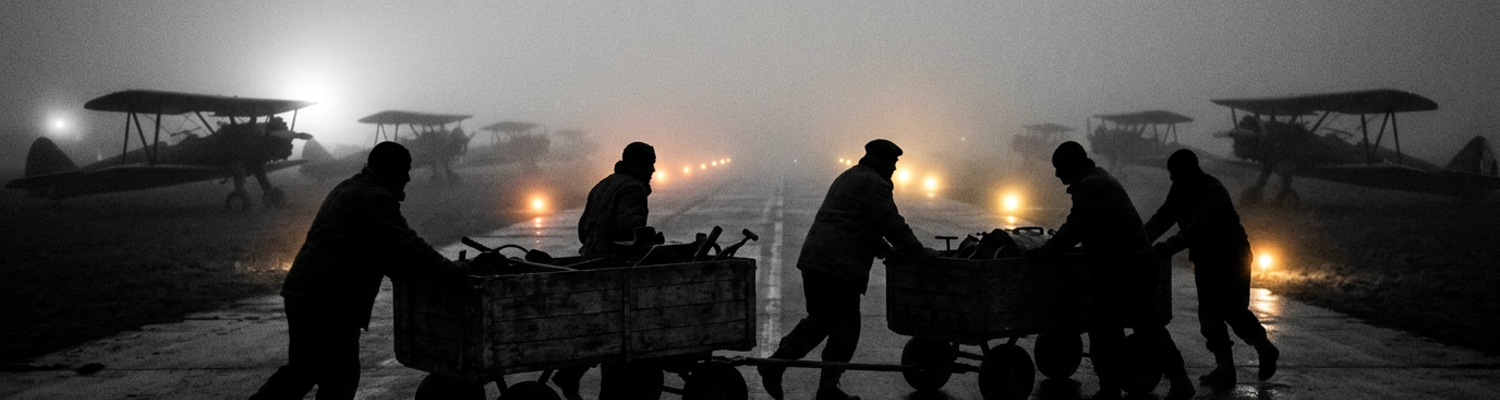

Unlimited National Emergency Mobilization at Cape May
Navy technical circulars outlined an orderly system of remote aviation. Precise radio transmitters were supposed to guide pilotless aircraft across open ocean with standard bench-calibrated efficiency. Flight line mechanics at Naval Air Station Cape May inherited a different situation entirely.
They received backfiring engines.
Acid-scorched battery compartments and frayed control cables vibrated under uncontrolled throttle spikes. Archival evidence shows this disconnect widened on May 27, 1941. President Franklin D. Roosevelt issued Proclamation 2487 on that date. The order declared an unlimited national emergency as German submarines expanded operations in the North Atlantic. That executive announcement triggered an immediate policy shift within the Bureau of Aeronautics. Naval planners were forced to accelerate Project Fox into an active weapons program.
Panic replaced peacetime trial pacing.
A close review of operational logs indicates the Bureau of Aeronautics rapidly pushed Project Fox out of laboratory development at the Naval Aircraft Factory in Philadelphia. Rear Admiral John H. Towers directed the immediate field deployment. Naval commanders demanded expendable radio-directed biplanes capable of delivering aerial torpedoes directly into hostile warships. They wanted this done without exposing pilots to anti-aircraft fire. Standard safety reviews were canceled. Long-term bench evaluations stopped immediately. Engineers scrambled to package fragile vacuum-tube circuits into unreinforced cockpits. Supply lines routed unfinished gear to Atlantic coastal stations. Aviation machinists and radio operators had to assemble these experimental control systems on damp hangar floors without standardized wiring schematics.
The theoretical promises of Washington bureau chiefs vanished on the flight line.
Documents confirm Naval Air Station Cape May took delivery of obsolete Great Lakes TG-2 aircraft designated specifically for pilotless trials (Bureau Number 13263). These open-cockpit biplanes arrived stripped bare to offset the heavy ballast of remote-control hardware. Enlisted mechanics used wrenches and tin snips to tear out defensive gun rings, forward observer stations, and secondary control linkages. Personnel bolted heavy steel trays directly to the internal framework behind the forward cockpit. These racks held five-channel radio receivers, motorized servo assemblies, and pneumatic pistons connected directly to rudder and elevator cables. Lead-acid storage batteries supplied unstable current to radio receivers.
The receivers drifted off frequency before the aircraft even reached takeoff speed.
Ground crews at Cape May fought constantly to keep the modified biplanes from careening off coastal runways during engine run-ups. Salt spray and damp coastal air blowing off Delaware Bay corroded exposed solenoid contacts. This caused the throttle servos to lock wide open while ground personnel held onto the wing struts. Radio signals sent from mobile control carts repeatedly triggered incorrect trim adjustments. The fabric-covered tail surfaces were thrown into violent oscillations. Early RCA television camera assemblies failed under excessive cylinder heat. Aviation machinist mates suffered burns and lacerations while attempting to secure jammed carburetor linkages between unscheduled test runs. Every engine start threatened ground crews with runaway propellers driven by unpredictable radio signals.
Remote-control aviation began as a series of violent unintended engine runaways.
Hangar Maintenance and Material Scarcity
Supply lines from the Fourth Naval District failed to deliver basic dry-cell power packs to Naval Air Station Cape May throughout the autumn of 1941. Ground control stations required steady twelve-volt and twenty-four-volt direct current.
This power ran the five-channel radio transmitters mounted on mobile wooden pushcarts.
Deprived of factory-fresh cells, enlisted aviation radiomen stripped cracked vulcanized-rubber battery casings out of derelict base support trucks. They also scavenged abandoned crash skiffs parked along the edge of Delaware Bay. Technicians scraped thick encrustations of white lead sulfate off buckled plates using wire brushes and dull putty knives. Working inside unventilated battery locker corners, personnel neutralized spilled electrolyte with baking soda. They boiled river water to replace lost distilled volume. Recovered sulfuric acid was poured through cheesecloth filters into repaired cells. Several mechanics suffered chemical burns across their forearms. Thermal expansion ruptured warped internal separators during recharge cycles on improvised copper busbars.
These refurbished power banks routinely boiled during sustained transmission runs.
Corrosive gas vented across nearby transmitter cabling while ground crews fought to maintain steady filament voltage.
Acid ate through work boots within days.
The physical assembly of television transmitting equipment proved just as punishing inside the unheated seaplane hangars. RCA supplied experimental iconoscope tubes to Cape May inside lightweight wooden crates. Enlisted flight crews had to integrate the thin-walled glass pickup tubes directly into the nose mountings of Great Lakes TG-2 biplanes. Sub-zero coastal drafts swept directly through open hangar doors. The concrete deck chilled rapidly. Technicians experienced severe hand tremors while manipulating hot soldering coppers. Ground crews warmed their tools over gasoline blowtorches. The base electrical grid experienced recurring dropouts whenever ground transmitters operated. Soldering delicate lead wires directly to the base pins of the iconoscope envelopes required exact thermal control.
Ambient conditions completely prevented this precision.
Cold drafts repeatedly cracked the glass necks of the vacuum tubes the instant hot molten solder met cold metal terminals. Weeks of specialized production from the RCA Camden plant were destroyed in seconds. Technicians wrapped woolen rags around their wrists to steady their fingers. They worked beneath dim drop cords while flux smoke drifted into the freezing hangar rafters.
Shattered glass envelopes accumulated along the drafty hangar bulkheads.
Base records disclose an absolute shortage of the quartz radio crystals required to govern receiver frequencies (NARA Record Group 72). The Bureau of Aeronautics delivered control apparatus without matched oscillator sets. The biplane receivers drifted across frequency bands during coastal temperature swings. Aviation radiomen slipped off base into Cape May town and Wildwood. They visited civilian radio repair shops and amateur operators. Navy coffee, lard, and surplus aviation gasoline were traded for raw unshielded quartz plates. These civilian broadcast crystals lacked military-grade anti-shock housing. Ground mechanics cut brass shims and soldered improvised copper foil casings directly around the raw mineral wafers. Enlisted personnel calibrated the ground-down crystals against borrowed commercial wavemeters on makeshift test benches.
They potted them in melted electrical wax.
Flight trials immediately tested these hand-ground quartz wafers. Airframe vibrations shook the unshielded crystals loose from their solder joints during takeoff runs. Carrier signals dropped.
The biplanes pitched into the surf.
Radio logs listed seven receiver crystal failures during ground-taxi tests in November alone.
Experimental RCA Television Guidance Payloads
Technician crews at Cape May encountered immediate structural failures when bolting experimental RCA television cameras directly into the forward engine firewalls of Great Lakes TG-2 biplanes. The civilian-derived Iconoscope assemblies weighed over fifty pounds. They were housed inside unpressurized sheet-aluminum canisters.
This shifted the biplane center of gravity forward by several inches.
Aviation radiomen cut away forward cowl panels to expose the glass lenses. Delicate optical windows and internal mosaic target plates were exposed to blast air. Unburned cylinder lubricants thrown back by the Pratt and Whitney R-1340 Wasp radial engines coated the glass. Flight tests over Delaware Bay required these nose-mounted pickup tubes to transmit low-resolution raster imagery. The signal traveled across an experimental high-frequency radio link back to shore receiving stations at the station perimeter. The scanned field consisted of an interlaced raster pattern delivering fewer than two hundred and fifty horizontal lines. It refreshed at erratic rates whenever the aircraft dynamotor surged. Every change in engine throttle altered filament voltage.
Horizontal tearing generated completely dissolved visual reference points into vibrating geometric bands across the shore monitors.
Engine vibrations shattered delicate internal tube filaments during full-power takeoff runs.
Signal transmission degraded rapidly as distance from the Cape May coastline increased. Television transmitter packages bolted into the rear fuselage bay generated excessive internal heat. Five-inch chassis components baked behind fabric fuselage skins. Radio telemetry units operating near one hundred megahertz depended on trailing wire antennas. These cables were slung between the TG-2 upper wing center section and the rudder post. Aerodynamic drag whipped the copper cables into violent circles when aircraft entered steep descent paths toward surface target barges. The horizontal sweep circuits inside the transmitter desynchronized. Cape May base mechanics attempted to damp this flutter by tying heavy lead plumb bobs to the antenna tips.
Propeller backwash repeatedly snapped the wires completely.
The transmission back to the naval air station collapsed into rolling bands of electrical noise without a stable sweep carrier. RCA field engineers sent from the Camden laboratory had to construct shielded coaxial bypass circuits on site. They soldered copper mesh over receiver chassis while salt spray drifted across open test benches.
Electrical backfires from coastal defense generators constantly drowned out weak incoming television signals.
Shore controllers struggled to interpret the incoming imagery inside makeshift wooden trailer stations rolled onto the sand spit near Sewell Point. Enlisted flight operators sat before crude green-tinted cathode-ray screens measuring five inches across. They fought severe static and image washout. This worsened as morning ground fog cleared into direct coastal sunlight. The unfiltered oceanic glare penetrated the unpainted pine walls and open doorways of the shore shacks. The phosphor image display washed out until target silhouettes became indistinguishable from water troughs. Ground personnel improvised viewing shrouds by sewing heavy rubberized blackout canvas into conical hoods. Controllers pressed their faces directly against hot vulcanized rubber bezels in unventilated shacks.
Interior temperatures exceeded one hundred degrees.
High-voltage power supplies humres loudly on the plank floors. Sharp ozone fumes were emitted while operators manipulated spring-loaded remote flight sticks. Sweat ran down operators foreheads and dripped across the glass faceplates. The low-resolution raster signal produced very little definition. Atmospheric static off Delaware Bay covered the screen in severe electrical interference whenever squall lines approached the coast.
Shore pilots were blinded thirty seconds before remote torpedo drops.
Atlantic Fog and Control Link Failures
Seasonal weather patterns off the southern New Jersey coast devastated Project Fox radio links throughout October and November of 1941. Ground crews operating mobile transmitter carts on the beaches near Two Mile Island encountered thick Atlantic sea fog rolling inland. Cold moisture-saturated air carried across the antenna arrays. The experimental radio equipment operated on narrow high-frequency bands between fifty and sixty megacycles. Rudimentary amplitude-modulated command tones were used to actuate the flight surfaces. Suspended saltwater droplets inside the low-hanging fog banks absorbed and scattered these radio waves within six hundred yards of the shoreline. Carrier signal power dropped precipitously on receiver input coils.
Signal strength indicators inside the cockpit receiving racks swung to zero without warning.
This occurred as the modified Great Lakes TG-2 biplanes crossed the coastal surf line. Enlisted radio operators stationed inside damp wooden observation shacks watched their milliammeters drop past operational thresholds. They were unable to push control pulses through the heavy thermal inversion layer. Radio pulses intended to adjust elevators flattened into background static before reaching the trailing wire antennas of the airborne biplanes.
Moisture smothered the transmitter frequencies before the drones completed their initial climbing turns.
The physical environment inside the transmitter trailers created immediate electrical hazards for ground operators. Navy technicians supplied power to the experimental radio transmitters using gasoline-driven generator sets. These stepped up direct current to over fifteen hundred volts across unshielded plate transformer coils. Salt spray drifting through open trailer windows coated exposed ceramic standoffs. Knife switches and open copper busbars were covered with conductive brine. The damp marine air caused sudden high-voltage line arc-overs across the open power terminals during active flight control runs. Brilliant blue-white electrical arcs flashed across the chassis faces with explosive reports.
Sparks were thrown into the cramped control compartments.
The flight operators at the joysticks were blinded. The instantaneous flash of the electrical discharge destroyed operators night vision. Nearby keying relays burned out. Copper contacts melted into solid slag. Technicians suffered retinal burns and disorientation while choking on dense ozone and vaporized insulation. They were left physically unable to read transmitter diagnostic dials. They could not see the directional sticks in front of them while drones were actively maneuvering aloft.
Exploding busbars left operators clutching their eyes while unguided aircraft banked out to sea.
Total radio command lockouts routinely doomed the pilotless TG-2 biplanes. The aircraft relied on spring-loaded pneumatic servos connected directly to the control surface cables. The flight systems possessed no automatic centering mechanism or failsafe return logic. The mechanical servos locked in their last commanded positions once signal attenuation or fried transmitter relays severed the radio carrier wave.
Biplanes banked into steep unrecoverable descents.
Heavy Pratt and Whitney radial engines dragged the fabric-covered airframes down toward the coastal salt marshes surrounding Jarvis Sound and Cape May Harbor. The drones slammed into tidal mudflats at full throttle. Spruce wing spars disintegrated. Doped linen shattered. Five-hundred-pound concrete ballast torpedoes buried deep into the black silt. Recovery details comprised of enlisted mechanics and aviation metalsmiths had to slog through waist-deep brackish water. They carried axes, block-and-tackle rigs, and wooden skiffs. Mangled empennages and crushed aluminum servo bodies were dragged back to the hangars before high tide submerged the wreckage.
Tactical Aftermath for Naval Drone Doctrine
Salvage details faced severe chemical contamination when recovering downed TG-2 airframes from the salt marshes west of Sewell Point. Enlisted work parties from Naval Air Station Cape May dragged flat-bottomed wooden skiffs across the freezing black silt of Jarvis Sound at low tide. They sank past their knees into sulfurous mud while searching for shattered fuselages. Sulfuric acid from split twenty-four-volt storage batteries pooled directly inside the crushed cockpit wells. This mixed with brackish marsh water to burn through the canvas dungarees and leather boots of the recovery crews.
Ratings stripped down to undershirts in December winds.
They heaved mangled fifty-pound RCA camera chassis and fractured lead-acid plates onto wooden sledges before the incoming tide flooded the channels. Aviation metalsmiths used hand saws to sever bent spruce spars. Bare copper wiring harnesses and shattered vacuum tube fragments were pried out of deep mud craters. Unexploded five-hundred-pound concrete dummy torpedoes settled deep into the marsh bed. Eight-man teams armed with tackle blocks and hemp ropes were required to extract the ballast blocks by hand. Several seamen required medical treatment at the station dispensary for acid burns and hypothermia. They spent six hours retrieving corroded radio relays submerged in caustic tidal sludge.
Acid burned through three layers of wool uniform.
Salvaged components underwent immediate technical autopsies inside the assembly shops at Cape May. Naval inspectors discovered ignition noise from the Pratt and Whitney radial engines had saturated the unshielded receiver circuits. Shore command tones were drowned out whenever ground operators pushed engine throttles past cruising speed. High-frequency RF interference jumped directly from unshielded spark plug leads into the five-channel command receivers. The antenna coils were bypassed entirely. Telemetry records recovered from the wreckage revealed alternating electrical fields generated by the aircraft dynamotors induced parasitic voltages inside the rudder servo control wires.
These induced currents jammed the servo relays open.
This happened when ground operators attempted to correct drift over Delaware Bay. The control cables snapped under continuous pneumatic pressure. Ground technicians spent nights disassembling bent chassis boxes on drafty test benches. Burnt wiring paths were traced across melted Bakelite terminal boards with commercial continuity meters. Every examined airframe revealed the same defect. Complete radio link saturation was caused by unshielded onboard electronics operating inside an uninsulated airframe.
Static blinded the flight computers before the biplanes crossed the bay.
Telemetry failures at Cape May forced the Bureau of Aeronautics to execute an emergency redesign of all command-link shielding. This occurred before shipping remote-control apparatus to the Pacific theater. Rear Admiral John H. Towers forwarded flight test failure data from Cape May directly to engineers at the Naval Aircraft Factory in Philadelphia. Complete electrical isolation was demanded for future production airframes. Civilian contractors and naval draftsmen spent early 1942 engineering heavy braided copper-mesh shielding around every electrical line. Servo control wires were enclosed within continuous aluminum conduits grounded directly to the main fuselage structure. Engine compartments were rebuilt to incorporate pressurized hermetically sealed magneto housings. Heavy spark plug suppression shielding was designed to block RF leakage across the fifty-megacycle band. The fragile civilian-grade receiver mountings used at Cape May were discarded. Heavy cast-aluminum junction boxes isolated by thick neoprene shock bushings replaced them. Engine vibration was stopped from fracturing quartz frequency crystals. These engineering modifications transformed the vulnerable experimental gear tested in New Jersey into rugged fully shielded control systems. These systems were later installed on Interstate TDR-1 assault drones assigned to Special Task Air Group One for operational deployment in the Solomon Islands.
Blueprints approved in Philadelphia added eighty-four pounds of copper braid and conduit to each airframe.