
Yellow Sea Naval Ordnance Supply Lines
19 September 1950. 0340 KST. 37 degrees 28 minutes North, 126 degrees 34 minutes East. The auxiliary ammunition ship USS Mount Katmai sat anchored five miles off the Inchon mudflats in the Flying Fish Channel. Steam winch drums shrieked under the weight of fifteen-ton pallet loads. Archival evidence shows Task Force 90 faced a severe supply bottleneck within seventy-two hours of the initial beach assaults. Rear Admiral James H. Doyle directed the amphibious assault force. He ordered immediate relief measures. Service Squadron 3 deployed specialized ammunition carriers directly into the thirty-foot tidal swings of the Yellow Sea. Deck crews operated around the clock. They executed urgent cargo transfers. Wooden pallets of fused 105mm high-explosive projectiles and propellant canisters swung directly into landing craft. These smaller vessels bounced violently alongside the massive ship hulls. Winch brake bands overheated from continuous seventy-two-hour cycles. They repeatedly glazed over and slipped. Machinist mates below deck fabricated replacement friction linings on shipboard lathes out of scrap brake stock. Gunners mates sorted through salt-damaged fuzes with wire brushes under blackout lanterns.
Every shell moving toward the Han River passed through these steel cables.
When examining the historical record of the drive inland toward Yongdungpo and Seoul, naval records establish that Service Squadron 3 ammunition ships carried out high-risk side-by-side transfers in open swells. Fleet tugs and fleet auxiliaries struggled against eight-knot currents. These currents threatened to snap three-inch manila mooring hawsers. LSTs running supply shuttles to Red Beach repeatedly grounded on exposed silt during extreme low tides. This stranded flat-bottomed hulls at severe angles. Navy cargo handling battalions and Marine ordnance detachments worked inside cargo holds tilted at thirty degrees. They manually manhandled nine-hundred-pound crates of 155mm howitzer ammunition when overhead steam cargo booms jammed on bent kingposts. Riggers spliced severed wire cables on freezing steel decks using cold chisels and hand marlinspikes. They bypassed factory electrical limit switches that had shorted out from continuous saltwater spray. Crane booms remained locked in place without these field repairs. This stopped the flow of munitions to the frontline batteries.
The fighting inland consumed steel faster than transport hulls could cross the bar.
A close review of operational logs indicates the supply network sustained the 1st Marine Division consumption of over ten thousand heavy artillery shells and mortar rounds daily during the clearance of the Seoul-Inchon corridor. Major General Oliver P. Smith pushed his infantry regiments across the Han River against entrenched North Korean People Army positions. He relied on around-the-clock bombardment to break concrete bunkers and reinforced roadblocks. Four battalions of the 11th Marines fired continuous defensive concentrations and preparatory barrages. They burned through pre-stocked division ammunition reserves in less than forty-eight hours. The regiment operated eighteen 155mm howitzers and fifty-four 105mm guns. These batteries required unbroken convoy runs directly from the Yellow Sea mudflats. Ordnance technicians at beach supply points used blowtorches to cut warped tailgates off two-and-a-half-ton GMC trucks. They loaded shells loose into cargo beds when wooden shipping crates ran out.
Mud clogged mechanical fuzes before loaders could ram them into smoking breeches.
By 23 September, Service Squadron 3 had transferred 14,000 tons of Class V combat expendables across the open anchorages of Task Force 90. Shore-party engineers used salvaged landing mats and rough-hewn timber balks to bridge tidal grease pits. This kept supply trucks moving north toward Hill 216. Naval ordnance teams cleared three jammed deck winches aboard the ammunition ship USS Great Sitkin at the exact same time.
Urban Entrenchment Along the Sejongno Axis
Archival evidence shows elements of the North Korean 25th Brigade systematically transformed the civic architecture flanking the broad Sejongno boulevard into a fortified defensive redoubt between 25 and 26 September. North Korean combat engineers utilized the reinforced concrete and thick granite stonework of colonial Japanese-era ministry complexes. This included the Ministry of Communications and the adjacent municipal offices. Defense details knocked firing slits directly through ground-level foundation stones using pneumatic drills and sledgehammers. This positioned their weapons just inches above the pavement. Sandbags filled with crushed rubble reinforced every interior corridor. This turned government office wings into compartmentalized bunkers capable of absorbing repeated hits from Marine 105mm artillery and 3.5-inch rocket launchers without structural collapse. Communication trenches dug through interior courtyards connected these ministry structures to deep subterranean sewer junctions. Defending infantry cycled fresh ammunition and relief squads between buildings completely concealed from aerial observation.
Granite masonry deflected direct high-explosive tank rounds into harmless clouds of gray dust.
When examining the historical record of the 1st Marine Division street-level advance, combat reports indicate North Korean commanders established an intricate network of interlocking machine-gun lanes and concealed 45mm anti-tank guns across the eighty-meter-wide Sejongno thoroughfare. Entrenched defenders anchored their defensive sectors behind chest-high barricades constructed from granite curbstones, overturned trolley cars, and oil drums packed with damp gravel. Soviet-built 45mm anti-tank guns fired armor-piercing solid shot and canister rounds from ground-level embrasures. They zeroed their sights directly on the asphalt intersections. Heavy Maxim 1910 and SG-43 machine guns laid grazing fire. This caught advancing squads of the 1st and 5th Marines whenever infantry stepped past building corners. Frontline rifle companies suffered immediate casualties the instant point men attempted to maneuver into the open street grid. The lethal density of this intersecting crossfire halted forward momentum. Marine infantry commanders called company-level halts while lead platoons sought covered passages through interior party walls.
Pavement became an absolute dead zone.
A close review of operational logs indicates combat engineers from the 1st Combat Engineer Battalion faced an immediate crisis when standard demolitions failed against the reinforced masonry. Dust from pulverized brick repeatedly jammed the spring-loaded firing pins inside M10 blasting cap crimpers. Demolition sergeants under fire used bayonet points and field pliers to seat non-electric blasting caps into twenty-pound satchel charges of Composition C-3. Lead teams crawled down open drainage ditches under grazing machine-gun fire. They manually spliced shredded detonating cord with friction tape when mechanical pull-igniters failed due to water contamination in the gutters. Combat engineers assembled improvised pole charges using telephone wire and scrap two-by-fours pulled from destroyed storefronts. They thrust fifty-pound blocks of high explosive directly into basement machine-gun embrasures to blow out the heavy internal barricades. Sledgehammer heads fractured against reinforced structural rebar. Engineers severed steel reinforcement rods using oxyacetylene torches scavenged from a nearby rail repair yard. Ordnance specialists ran copper firing wires through rain gutters to protect ignition circuits from machine-gun fire. They detonated sixty pounds of C-3 against the rear foundations of the communications ministry at 1420 hours.
First Combat Engineer Battalion Tactical Integration
Archival evidence shows Lieutenant Colonel John H. Partridge split the First Combat Engineer Battalion into company-sized attachments to embed technical specialists directly alongside rifle platoons of the 1st and 5th Marines. Field commanders abandoned defensive rear-echelon engineering doctrine on 24 September. They pushed four-man sapper squads past company command posts directly into the advancing infantry screen. Captain Nicholas A. Canzona assigned Company A squads to support the 5th Marines along the railroad cuts north of the Han River. Company B attached individual fire teams to the leading rifle companies of the 1st Marines pressing east through the Mapo sector. Sapper fire teams humped forty-pound haversacks loaded with Composition C-3 blocks, M1A1 Bangalore torpedoes, and heavy M2A1-7 flamethrowers directly behind frontline point scouts. Infantry company radios failed across the rubble. Engineer squad leaders communicated target priorities via arm-and-hand signals or SCR-536 handy-talkies. The dry-cell batteries of these radios rapidly corroded from Han River riverbank silt. Forward riflemen pinned down behind shattered storefronts. Dispersed engineer squads moved up to blast entry holes through masonry exterior walls. This cleared pathways for follow-on Marine assault elements.
Combat engineers took point in every city block.
A close review of operational logs indicates First Combat Engineer Battalion squads crawled forward under point-blank small-arms fire to detect improvised minefields laid across primary vehicle avenues. Standard SCR-625 mine detectors proved completely unusable along the streetcar tracks running toward the central railway station. Scattered shell fragments and electrified steel rails caused the detector search heads to emit continuous screeching audio tones. Sappers ditched their electronic gear. They crawled forward on their stomachs with M1905 bayonets to prod wet cobblestones at forty-five-degree angles. North Korean combat groups had buried Soviet-manufactured TMD-B wooden box mines and rigged unexploded 120mm mortar shells beneath asphalt chunks and streetcar cobblestones. They rigged them with pull-friction fuzes and taut steel tripwires tied to abandoned bicycles. Demolition technicians in Company B neutralized these devices under direct machine-gun fire. They sliced tension wires with insulated diagonal pliers before inserting field-bent telephone wire pins into rusty detonator assemblies. Pressure fuzes corroded and jammed inside wooden mine casings. Engineers bypassed standard removal procedures. They slid two-pound blocks of TNT against the casing sidewalls with fifteen-second safety fuses to clear vehicle channels.
Streetcar tracks concealed live Soviet high explosives.
When examining the historical record of the 5th Marines assault toward the government district, combat engineer squads operated exposed ahead of lead fire teams to breach reinforced road obstacles. North Korean engineers had anchored eight-foot-tall barricades across key avenues using streetcar bodies, steel rails driven three feet deep into macadam, and crates packed with crushed stone. Gun crews behind these obstacles zeroed 14.5mm PTRD anti-tank rifles and 7.62mm Maxim machine guns down the street corridors. This halted M4A3 Sherman tanks from Company A of the 1st Tank Battalion. Sapper squads advanced through drainage gutters. They pushed ten-foot sections of Bangalore torpedoes into the base timbers beneath continuous fire. Blasting caps repeatedly malfunctioned when fine dust from pulverized granite fouled the internal firing pins of M10 crimping tools. Noncommissioned officers crimped copper caps to detonating cord using wire cutters and dental pressure. Sappers lashed together twin satchel charges using scrap communications wire. They shoved thirty pounds of explosive into the chassis of overturned trolleys. They initiated dual-firing systems by hand using M2 match lighters after electric blasting machines failed from severed field wire.
The detonations tore twelve-foot gaps through the barricades at 1640 hours. Tank-infantry teams of the 5th Marines rolled directly onto the pavement of the Sejongno approaches.
Improvised Field Repairs of Armored Bulldozers
Archival evidence shows the 1st Combat Engineer Battalion committed modified Caterpillar D8 crawler tractors directly into the urban firing lines to smash North Korean roadblocks along the Mapo-ro boulevard and the Sejongno approaches. Ordnance detachments had welded half-inch boilerplate steel plates around the operator cabs and engine cowlings at the Inchon repair depot. The hydraulic lifting architecture was completely exposed to enemy fire. Heavy hydraulic cylinders mounted on both sides of the radiator grille routed high-pressure oil through thick wire-braided flexible rubber lines directly to the front-mounted earthmoving blade. Advancing toward barricades built of granite curbstones, dirt-filled drums, and buried rail ties, these tractors absorbed continuous small-arms impact, PTRD-41 14.5mm armor-piercing rounds, and mortar shrapnel. Fragments from exploding 82mm mortar rounds ripped through the unarmored lower hose connections. This punctured the external rubber jackets and sliced the high-pressure steel braided cores. Pressurized hydraulic fluid under seven hundred pounds per square inch sprayed across hot exhaust manifolds in dense clouds of white smoke. This caused catastrophic system decompression.
Pressurized oil sprayed out across the tracks.
A close review of operational logs indicates three D8 bulldozers lost all blade control within forty minutes of engaging the second major barricade near the central rail hub on 26 September. Hydraulic circuits suffered multiple fragment perforations. The heavy steel moldboard blades plummeted straight onto the macadam. They dug their cutting edges deep into the torn roadbed. The stalled earthmovers suddenly formed deadweight steel roadblocks themselves. This halted columns of M4A3 Sherman tanks and left rifle squads of the 1st Marines trapped in open crossfire zones. Machine-gun positions set up in the upper windows of the Seoul City Hall and surrounding brick warehouses raked the tractors with 7.62mm Maxim fire. They aimed directly at the engine bays. Retreat was impossible because the dropped thirteen-foot steel blades acted as anchors against the pavement. Marine tank commanders refused to ram the disabled bulldozers aside. Engineer squads had no choice except to climb into the bullet-swept street to restore hydraulic pressure under point-blank fire.
A dropped blade stopped the entire column cold.
When examining the historical record of these street-level engagements, sappers and battalion mechanics executed desperate mechanical interventions while lying flat beneath the bulldozer tracks and engine hulls. Combat engineers crawled out with field tool rolls. They carried heavy adjustable wrenches, hacksaws, and screwdrivers while rifle squads laid down suppressive fire with Browning automatic rifles. Mechanics cut out shredded sections of high-pressure hose using handheld hacksaws. They scavenged half-inch galvanized water pipes from the basements of blown-out municipal offices to bridge the severed lines. They clamped these rigid pipe sections over ruptured lines with salvage aircraft hose clamps, steel safety wire, and strips of vulcanized rubber cut from punctured truck tires. The teams fabricated temporary sleeves capable of holding line pressure. Replacement hydraulic fluid had run completely out in the forward ammo dumps. Engineers drained motor oil and transmission grease from abandoned civilian trucks and North Korean GAZ-51 transports. Sappers pumped this heavy oil mixture into the D8 reservoirs using hand grease guns and copper funnels to restore fluid volume.
Shrapnel peppered the tractor cabs while mechanics tightened pipe fittings.
Operational field records show Company B mechanics completed four separate line splices under continuous sniper fire along the Sejongno corridor between 1100 and 1330 hours. Threaded hydraulic pipe couplings split along their seams from residual line pressure. Sappers drove wooden plugs wrapped in friction tape into the outer return fittings. They wired the blade control levers directly to the winch drums using aircraft-grade winch cables. This crude mechanical bypass locked the heavy blades three inches above the road surface. The diesel engines shoved pulverized barricades clear without relying on the punctured hydraulic circuit. At 1405 hours, dozer teams cleared an eleven-foot-wide breach through the third granite roadblock. This opened an unbroken avenue for Company A Shermans to fire directly into the ground-floor embrasures of the Government General building.
Explosive Breaching of Reinforced Street Barricades
Archival evidence shows rifle companies of the 1st Marine Regiment ground to an absolute halt in front of chest-high barricades spanning the Chongno corridor on 26 September. North Korean engineering details constructed these from crushed granite curbstones, dirt-filled fifty-five-gallon drums, and overturned streetcars anchored by vertical rail ties. These composite fortifications absorbed incoming fire without shifting. Marine assault teams initially brought up 2.36-inch M9A1 rocket launchers and 3.5-inch M20 Super Bazookas. They fired M28A2 shaped-charge anti-tank rockets from distances under forty yards. The high-velocity copper plasma jets formed by the shaped charges punched pencil-thin holes through outer sheet-metal panels and brick veneer. The jets dispersed harmlessly inside the loose sand and gravel fill packed behind the walls. Marine gunners next deployed 75mm M20 recoilless rifles. They fired high-explosive anti-tank rounds straight into the barrier centers. Impact fuzes detonated shells on the outer rock face. This blew off superficial chunks of masonry while the heavy wooden timber frameworks and steel streetcar trucks stayed fully intact. Solid shot and hollow-charge munitions lacked the displaced blast energy required to topple tens of tons of reinforced stone.
Shaped-charge jets simply vented into internal dirt pockets.
When examining the historical record of Company B, 1st Combat Engineer Battalion, frontline records detail an immediate change in breaching tactics ordered by Lieutenant Colonel John H. Partridge. Conventional direct-fire kinetic ordnance could not widen lanes for Company A Shermans. Sapper fire teams had to approach the barricades on foot. Second Lieutenant fire-team leaders advanced through pulverized storefronts alongside infantry squads. They lugged thirty-pound M37 demolition kit bags into the exposed intersections. Enemy Maxim machine guns and 14.5mm PTRD anti-tank rifles maintained constant grazing fire along the gutters. This snapped telephone poles and chewed through concrete curbs inches above the crawling engineers. Sandbag bastions protected the North Korean gunners. This left no direct angles for small-arms suppression. The engineers carried no specialty breaching equipment. Squad leaders solved the structural problem using individual blocks of Composition C-3 plastic explosive stripped out of canvas carrying sleeves.
Machine-gun bursts kept the demolition squads pinned flat against the curb.
A close review of operational logs indicates combat engineers assembled and spliced improvised daisy chains of Composition C-3 satchel charges under continuous fire to break the impasse. Sappers crawled on their stomachs across the open roadway. They molded soft C-3 blocks by hand. They jammed eighty pounds of the high-velocity explosive directly into structural gaps between the trolley wheel bogies and granite curbstones. Demolition sergeants tied multiple eight-block charges together using continuous lengths of Primacord. They secured each junction with tight square knots wrapped in black friction tape. They ran this single detonating cord backbone across five separate explosive satchels placed three feet apart. The sappers eliminated uneven shockwaves. This guaranteed all five charges would initiate in a single microsecond window. Standard M10 crimpers fouled with pulverized brick. Engineers clamped non-electric blasting caps onto the detonating cord using pliers and copper safety wire. They ran dual safety fuses back to street drainage grates to ensure ignition if small-arms rounds severed an individual lead. The simultaneous blast sheared the internal steel rails. It pulverized the stone fill into fine dust. It blasted a clean, twelve-foot-wide opening through the roadblock.
Sherman tanks shoved the burning debris aside and rolled down the Chongno road at 1540 hours.
Subterranean and Mousehole Room Clearing Operations
Archival evidence shows rifle platoons of the 1st Marine Regiment abandoned hallway assaults after sustaining heavy casualties within the Ministry of Justice on the morning of 27 September. North Korean soldiers had fortified interior doorways with sandbags, desk frames, and interlocking PPSh-41 submachine gun lanes. This turned every corridor into an absolute death trap. Sapper teams from Company B, 1st Combat Engineer Battalion, responded by building linear demolition charges out of two-pound blocks of Composition C-3. Engineers pressed the malleable plastic explosive directly against interior brick and plaster partition walls. They rolled the compound into continuous six-foot snakes held in place with friction tape and wooden laths salvaged from smashed desks. Splicing runs of Primacord along the charge lengths ensured an instantaneous uniform detonation. This cleaved neat man-sized rectangular mouseholes through eighteen inches of colonial masonry. Marine assault fire teams threw Mk 2 grenades through the newly blasted gaps before storming the adjacent offices. This bypassed barricaded hallway portals entirely.
Open doorways meant instant death.
A close review of operational logs indicates sappers faced continuous mechanical problems while fabricating these linear wall charges under point-blank small-arms fire. Pulverized gypsum dust drifted through the blast zones. It settled into the crimping jaws of M10 tools and fouled the firing springs of M2 fuse lighters. Demolition sergeants improvised by biting blasting caps onto short safety fuse lengths with their back molars or pinching the copper sleeves using standard lineman pliers. Stocks of standard demolitions running wire ran low. Engineers scavenged Korean municipal telephone cables from baseboards to wire electric blasting caps back to ten-cap blasting machines positioned behind interior structural pillars. Riflemen from Company G fired sustained M1 Garand and Browning Automatic Rifle volleys through plaster ceilings. This suppressed North Korean counter-breach teams attempting to lob stick grenades through the widening masonry fractures. Once each linear charge blew, two-man clearing teams armed with Winchester Model 12 shotguns and M2A1-7 flamethrowers poured into the adjoining rooms. They incinerated barricaded machine-gun nests before defenders recovered from the concussive overpressure.
No artillery could reach the building foundations.
When examining the historical record of the 5th Marines operations near the Capitol complex, frontline commanders strictly banned artillery barrages, 4.2-inch mortar strikes, and 75mm recoilless rifle fire against building basements. Battalion fire control officers recognized heavy high-explosive detonations against lower load-bearing pillars would compromise the multi-story municipal architecture. This would collapse massive slabs of reinforced concrete and granite masonry directly onto friendly clearing elements operating inside. Marine squads were forced into subterranean boiler rooms, coal chutes, and interconnected utility tunnels armed only with small arms, trench knives, and handheld ordnance. Defending North Korean infantry from the 25th Brigade barricaded steam-pipe conduits and utility crawlways. They engaged Marine fire teams in zero-visibility subterranean firefights. Sound reverberations inside the low-ceilinged concrete cellars amplified gunshots to deafening decibels. This disoriented assault teams and made voice communication impossible. Point men taped brass right-angle flashlights to the stocks of M1 carbines. They crawled through coal dust and pooled wastewater beneath continuous fire from North Korean Type 50 submachine guns.
Radio signals died against reinforced sub-basement concrete.
Combat engineer detachments crawled along subterranean drainage channels with M3 Grease Guns and satchel charges. They cleared sandbagged basement revetments without the benefit of smoke rounds or white phosphorus. These chemical munitions rapidly depleted breathable oxygen inside unventilated tunnels. Gun teams engaged in point-blank hand-to-hand combat around cast-iron boiler jackets. They used bayonets and M1911A1 pistols to overcome North Korean machine gunners chained to water-pipe stanchions. Third Battalion secured the subterranean steam junctions below the municipal complex by 1630 hours on 27 September. They recovered sixty-eight discarded enemy carbines and four water-cooled Maxim machine guns from the flooded sub-floor.
Technical Lessons from Urban Breaching in Seoul
Archival evidence shows the 1st Combat Engineer Battalion exhausted forty days worth of Class V demolitions within ninety-six hours of crossing the Han River. Pre-invasion assault planning budgeted forty pounds of high explosives per rifle company each operational day. Clearing the granite roadblocks along the Mapo-ro boulevard and breaching Japanese-built ministry walls consumed over three hundred pounds per infantry platoon daily. Sappers burned through their entire divisional reserve of Composition C-3, Primacord, and copper blasting caps before securing the central rail terminal on 26 September. Heavy engineering plant machinery deteriorated at an identical rate. Caterpillar D8 crawler tractors stripped final drive sprockets against granite curb foundations. Pulverized masonry dust ground track pins down to the point of structural failure. Hydraulic pumps running at continuous maximum pressure blew internal shaft seals. This dumped scarce fluid supplies into street gutters. Marine Division G-4 logisticians under Colonel Francis M. McAlister discovered amphibious pack-up kits contained almost no heavy equipment replacement components.
Atoll assault manifests carried zero replacement tractor sprockets.
When examining the historical record of post-action evaluations submitted by Lieutenant Colonel John H. Partridge, the scale of this mechanical breakdown forced an immediate rewrite of Marine Corps urban supply doctrine. Partridge notified the G-4 section that future combat echelons entering built-up terrain required an immediate fourfold increase in pre-assembled satchel charges, electric detonators, and spooled Primacord. Logistics officers rewrote embarkation load orders. They placed mobile engineer machine shops directly aboard primary assault transports rather than deep in follow-on merchant holds. Standard divisional allowances were altered to mandate pre-packaged urban breaching kits containing malleable C-3, galvanized pipe unions, friction tape, and heavy hydraulic oil pallets stationed within two miles of frontline street intersections. Fleet Marine Force commanders formally discarded Pacific beachhead supply ratios. They replaced bulk TNT allowances with high-velocity flexible cutting explosives tailored for reinforced concrete.
Planning manuals shifted from sand revetments to municipal stone.
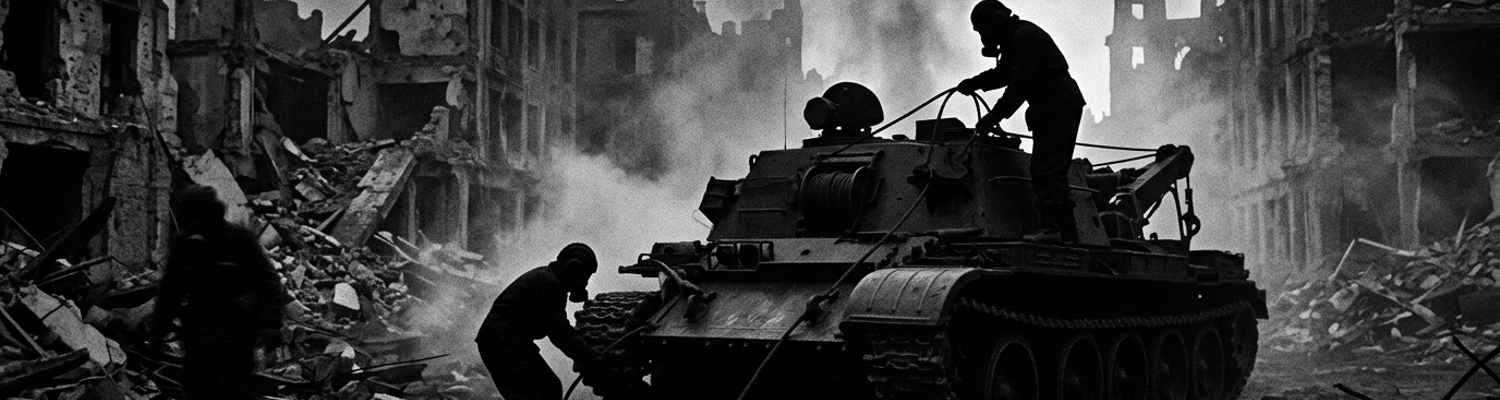
A close review of operational logs indicates the street battles around the Sejongno axis validated an urgent operational requirement for integral armored engineer recovery vehicles. Modified civilian bulldozers and open-topped M32 tank recovery vehicles repeatedly stalled under fire while attempting to clear smashed roadblocks near the South Gate. Enemy snipers in multi-story brick apartments zeroed in on exterior winch controls. PTRD-41 anti-tank rounds pierced unarmored boom cables and exterior oil reservoirs. Recovery crews dismounted under direct Maxim machine-gun fire to manually hook steel towing bridles. This resulted in heavy casualties among Company A mechanics. Winch drive chains snapped under the strain of dragging overturned streetcars. Crews lacked any onboard mechanical means to repair the assemblies without leaving armor protection. Marine tank-infantry columns remained halted behind immobilized tractors. The division possessed no vehicle capable of conducting armored winch recoveries while operating completely under hatch.
Winching operations stopped the moment an exterior cable severed.
Technical reports submitted to the Marine Corps Equipment Board at Quantico on 2 October 1950 detailed the specific design requirements for a dedicated urban recovery vehicle. Field mechanics demanded a fully enclosed tracked chassis with internal hydraulic routing. This eliminated the exposed external flexible lines that had failed across Seoul. Specifications called for twin recovery winches with internal dog clutches, reversible hydraulic motors, and armored self-recovery spools controlled entirely from the driver station. Engineers insisted future urban vehicles feature internal bypass valves to isolate punctured hydraulic circuits. They requested mechanical track tensioners serviceable through escape hatches in the lower hull plate. Mechanics had spent seventy-two hours splicing hydraulic lines with scavenged water pipes and bicycle tape. Future combat doctrine mandated integral recovery platforms equipped with internal tool bays, self-contained arc-welding leads, and factory-armored fluid conduits. Lieutenant Colonel Partridge forwarded these technical specifications to Headquarters Marine Corps. He included the operational recommendation that each combat engineer company receive three dedicated armored recovery vehicles before deployment into any future city campaign.