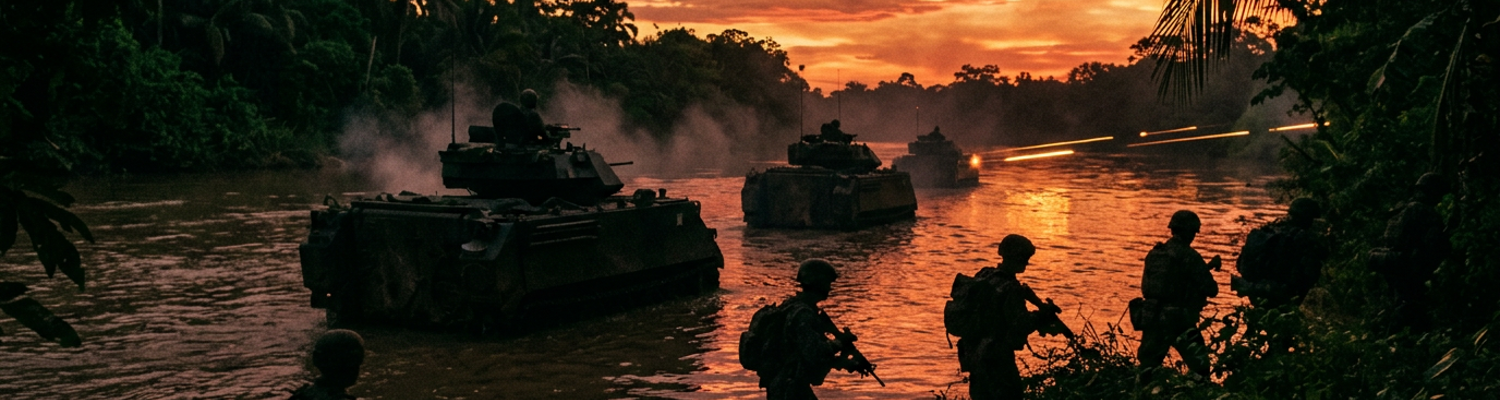

Deployment Along the Thi Tinh River
Specialist Four Robert Miller gripped the grease smeared copper toggle switches of an AN/VRC-12 radio set inside the cramped troop compartment of his M113 Armored Cavalry Assault Vehicle right as a massive explosion lifted the steel hull. The blast shattered the vehicle left drive sprocket and severed the main wiring harness, instantly killing his internal communication lines and cutting off voice contact with the platoon leader. Shockwaves from the command detonated artillery mine cracked the floorboards, tore loose equipment racks, and tossed heavy ammunition cans across the cargo deck into the suffocating tropical air. Miller rubbed sharp battery fumes and sweat from his face while inspecting the shredded copper leads, realizing that the disabled carrier was now completely deaf and immobile. Troop E of the 17th Cavalry had deployed this vehicle in January 1967 during the opening phase of Operations Niagara and Cedar Falls to block insurgent movement across the waterways of Binh Duong province. Drivers and gunners scrambled across the listing cargo deck to clear their weapons as the dead aluminum hull settled into the cratered mud of the riverbank.
Mud splashed against the aluminum side skirts as gunners opened fire with dual M60 machine guns from behind their steel gun shields to sweep the dense tree line where unseen snipers were raking the stranded vehicle. Troop E positioned modified M113 Armored Cavalry Assault Vehicles and recoilless rifle gun jeeps along the jungle flanks of the Thi Tinh River near Ben Cat to establish secure observation points along the waterway. Recoilless rifle teams mounted on the light quarter ton jeeps aligned their spotting rifles and pumped high explosive rounds directly into suspected bunker berms along the shoreline. Green tracer fire and automatic rifle rounds hammered the aluminum side skirts of the armored carriers, sending violent vibrations through the metal and kicking up geysers of river mud around the tracks. Vehicle commanders used hand signals and backup megaphone sirens to direct supporting tracks toward the disabled carrier to establish a protective base of fire.
Support vehicles pushed through thick bamboo stands to shield the damaged crew because Troop E served as the primary ground reconnaissance element establishing an interdiction cordon around the Viet Cong Iron Triangle stronghold. Cavalrymen maintained this continuous perimeter along the muddy river to isolate enemy main force units and prevent their escape while American infantry battalions assaulted the sprawling tunnel complexes deeper in the jungle. Tropical heat and sulfur smoke collected inside the closed compartments, pushing crew members to physical exhaustion as they loaded fresh belts into their blistering machine gun barrels. Scouts on the ground spotted enemy withdrawal movements across the open river sandbars and marked the tree lines with purple smoke canisters for immediate air support.
Air Force pilots circled the river bend in light observation planes, but conflicting target clearance protocols delayed their ordnance drops despite repeated urgent radio calls from the ground scouts. Controllers required exact boundary confirmations and visual verification of friendly positions before releasing napalm or high drag bombs so close to the twisting riverbank. Ground commanders shouted over their tactical radios, trying to reconcile their map coordinates with the aerial observers while enemy mortar shells began splashing into the muddy water around their tracks. Mechanics inside the cordon knelt in the swamp water with heavy wrenches and tow cables, struggling to hook the broken M113 to an operational recovery vehicle before enemy fire intensified.
Armor Strikes and Mechanical Immobilization
Cables rattled against the battered recovery eyes as mechanics realized that a command detonated heavy artillery mine had completely ruined the suspension. The charge had detonated directly beneath the lead M113 carrier, shattering the drive sprocket and track assembly into useless fragments of twisted metal. The violent blast concussed the crew inside the aluminum troop compartment, throwing soldiers against the bulkheads and leaving them dazed with bleeding ears. Severe floorboard buckling severed internal auxiliary lines, dumping hydraulic fluid and cutting electrical power throughout the hull. The loss of all drive controls left the vehicle completely immobilized in the Ben Cat riverine brush while brackish water seeped upward through sheared hull rivets.
Water flooded the lower bilges just as Viet Cong fighters in concealed positions initiated an ambush with directional claymore blasts and point blank RPG-2 volleys against the disabled hull. The directional mines threw thousands of steel ball bearings across the water, shredding external equipment packs, slicing through radio antennas, and forcing the mechanics to plunge underwater for cover. Rocket propelled grenades streaked out from camouflaged earthworks along the high bank only twenty yards away, detonating in bright flashes against the front glacis plate and gun shields. Acrid gray cordite smoke enveloped the crippled carrier as molten copper jets from the shaped charge warheads burned through the aluminum armor and sprayed hot metal fragments across the cargo deck. Surviving crewmen shook off the initial concussion, grabbed their personal weapons, and pulled themselves up toward the open cargo hatches to defend the dead vehicle.
Cavalrymen returned fire with their pintle mounted weapons, feeding fresh belts into the dual M60 machine guns to suppress the bunker openings along the riverbank. Spent brass casings cascaded across the cargo deck and splashed into the bilge water while the rapid discharge of the machine guns covered the shouts of wounded soldiers. Heavy automatic rifle fire slammed repeatedly into the exterior of the carrier, vibrating the entire aluminum hull and gouging deep trenches into the side armor. Heat inside the open troop compartment rose past one hundred degrees, combining with the fumes of burnt powder and smoldering paint to nauseate the crew. Soldiers took turns leaning around the steel gun shields to fire bursts from their rifles into the riverbank brush, keeping the enemy infantry from closing the distance with satchel charges.
Satchel charges detonated in the shallow water as recovery crews abandoned the severed tow cables and scrambled onto the rear ramp of a second armored vehicle that edged forward to provide physical cover. The relief vehicle turned its heavy fifty caliber machine gun directly into the ambush tree line, firing armor piercing rounds into the mud ramparts to suppress the rocket positions. Vehicle commanders coordinated their defensive sectors with hand signals and shouted orders, recognizing that the damaged carrier could not be hauled free under direct fire. Platoon leaders ordered the crew of the stricken track to strip out sensitive code sheets and spare ammunition drums before abandoning the submerged hull. Cavalrymen slung their rifles, lifted their concussed comrades through the rear hatch into the muddy water, and waded behind the armored flank of the supporting vehicle toward the main perimeter.
Radio Harnesses and Communications Gridlock
Perimeter scouts hoisted the casualties through the open cargo hatch of the supporting carrier while the crew scrambled to restore their broken communication network. The initial detonation had severed the wiring harness of the primary AN/VRC-12 tactical radio system, cutting immediate platoon net contact between the riverbank point element and squadron headquarters. An overwhelmed radio operator manipulated grease smeared copper toggle switches in an effort to establish emergency auxiliary battery connections beneath the buckled radio shelf. Interior crew members absorbed deafening vibrations from continuous small arms impact against the aluminum armor plating as unseen enemy riflemen concentrated their fire on the idling carrier. Sulfur fumes and battery acid stung the operator throat while he checked frayed coaxial connectors and switched the transceiver to manual power mode. Sparks jumped from the exposed copper leads against the vibrating hull, leaving the entire cavalry platoon unable to transmit tactical updates to the perimeter cordon.
Transmission cables surged with auxiliary current when the radio operator bypassed the shattered main relay and forced the transceiver onto an emergency channel. Scouts immediately transmitted coordinates to an orbiting Air Force forward air controller, demanding urgent cluster bomb and napalm strikes against the riverbank tree line. Air Force tactical air coordinators refused to clear the strikes because strict safety regulations required unmistakable visual identification of friendly boundaries before dropping ordnance near the river. Ground commanders shouted into their microphones, arguing that their men were pinned down by heavy automatic fire and could not deploy marking panels into the open clearing. Pilots circled high above the green canopy in light observation planes, demanding verified grid coordinates and radio authentication codes that the platoon operator could not locate among the scattered paperwork. Conflicting target clearance protocols between Army ground elements and Air Force flight leads paralyzed the delivery of close air support during the most vulnerable minutes of the ambush.
Jets circled in wide holding patterns north of the Thi Tinh River while enemy machine gunners intensified their crossfire against the stationary cavalry vehicles. Cavalrymen exposed themselves above the gun shields to pop violet smoke grenades, hoping the thick colored plumes would provide the aerial observers with sufficient target marking. Jungle canopy foliage and swirling river mist trapped the purple smoke along the muddy ground, preventing the high altitude jet pilots from distinguishing friendly vehicle hulls from enemy bunker roofs. Tactical air control officers maintained their refusal to authorize low level bombing runs, requiring the ground troops to pull back at least two hundred meters before release. Platoon leaders could not execute any tactical withdrawal because their primary recovery vehicle remained hooked to the dead carrier in the mud while taking steady armor piercing fire.
Fire hammered the stalled recovery vehicle, puncturing external fuel drums and shattering the periscope glass on the commander cupola. Vehicle commanders realized that aerial ordnance would not arrive in time to break the encirclement and ordered their remaining gunners to rely entirely on organic firepower. Gunners traversed their heavy fifty caliber barrels toward the tree line, pouring continuous bursts into the suspected mortar positions to suppress the incoming barrage. Troop E officers coordinated a local counterattack using hand signals and vehicle horns, abandoning all reliance on the jammed Air Force radio net. Drivers threw their transmissions into reverse, revving damaged diesel engines to drag the wounded crewmen out of the riverbank kill zone under their own protective fire.
Friction Between Ground Scouts and Air Controllers
Steel tracks churned through the riverbank silt as the reversing armored personnel carriers backed into a tight perimeter fifty yards from the burning lead vehicle. Target clearance protocols created procedural friction between Army ground cavalry scouts and Air Force tactical air coordinators circling above the tree line. Ground commanders needed immediate explosive strikes onto the fortified trenchline, but the tactical air coordinators followed strict safety regulations requiring standardized grid confirmations and established attack corridors. Army scouts operated on direct line of sight and urgent radio pleas, while the Air Force doctrine demanded deliberate coordinates that matched official operational maps before directing attack aircraft toward the jungle floor. Overlapping communication frequencies crackled with static as forward observers attempted to explain the shifting river coordinates to air liaison officers stationed miles away at the division tactical command post. Cavalrymen scrambled across vibrating hulls to unfurl bright orange recognition panels over the rear decks of the running carriers, trying to establish an unmistakable forward line of friendly troops.
Fabric panels failed to convince Air Force forward air controllers, who hesitated to authorize ordnance drops due to conflicting visual markers and the close proximity of friendly armored vehicles. Pilots in light observation spotter planes looked down through the dense jungle canopy and reported that drifting gray smoke from the burning mine crater obscured the bright orange fabric. Enemy fighters added to the confusion by firing green and violet signaling flares into the clearing, creating mixed visual cues that matched multiple smoke signals used by American ground forces. Troop E vehicles sat less than seventy five yards from the insurgent earthworks, placing the friendly cavalrymen well inside the mandatory safety radius for high explosive bombs and napalm canisters. Aerial coordinators refused to gamble on imprecise coordinates because low angle releases through the thick river fog could easily strike the cavalry platoon instead of the camouflaged bunkers. Flight leaders held their high speed jet bombers in wide holding patterns thousands of feet above the Thi Tinh River rather than release heavy ordnance near friendly tracks without positive visual separation. Platoon leaders realized that close air support would not drop before the enemy overran their flank and urgently routed fire missions to nearby field artillery batteries instead.
Artillery clearance disputes across overlapping operational boundaries delayed urgently needed high explosive fires on flanking enemy positions. Troop E sat directly on the boundary separating the American search and destroy zone from the territorial jurisdiction of South Vietnamese military forces and nearby district outposts. Fire direction centers at the artillery bases refused to pull lanyard on the heavy howitzers until liaison officers verified that no friendly patrols, civilian villages, or allied outposts occupied the projectile flight paths. Fire mission requests passed through multiple administrative echelons, requiring cross checks between brigade headquarters, South Vietnamese province chiefs, and river patrol commands. Tactical map overlays showed competing operational boundary lines drawn in grease pencil, with each command post claiming authority over different segments of the Thi Tinh riverbank. Battery commanders held their firing pins idle while telephone operators attempted to contact distant civil affairs teams to obtain target approvals for the contested grid squares.
Gunners on the remaining operational armored carriers abandoned the deadlocked fire support radio nets when mortar rounds began exploding along their retreat line. Cavalry crews hauled heavy green wooden crates of ammunition across the muddy cargo ramps to feed their weapons without outside help. Troop E scouts locked the mounting brackets of their vehicle mounted recoilless rifles, aiming the heavy steel barrels directly across the riverbank brush toward the flash of enemy muzzle blasts. Loaders slammed high explosive anti tank rounds and steel antipersonnel canister shells into the open breeches, ignoring the incoming rifle fire that ricocheted off the gun mantlets. Gun commanders fired the spotting rifles, adjusted their sights onto the log reinforced earthen bunkers, and squeezed the triggers of the primary weapons. Tremendous backblasts ripped through the river reeds, throwing shockwaves across the water as point blank canister fire shredded the ambushing bunker line and broke the enemy encirclement.
Defense Engagements in the Ben Cat Riverine Brush
Brush splinters and shredded reeds tumbled onto the muddy banks as surviving enemy riflemen surged from concealed spider holes to close the distance before the heavy weapons could reload. Troop E gunners manned dual M60 machine guns and the commander shielded caliber fifty machine gun to suppress close quarters assaults emerging from the dense riverine brush. Point blank small arms fire and fragmentation continuously pinged off the gun shields throughout the perimeter defense as insurgent squads attempted to overwhelm the outer tracks. Gun commanders traversed their heavy weapons toward the tree line, pouring sustained bursts into the thick brush while loaders struggled to hand up fresh ammunition boxes through the open cargo hatches. Cavalrymen braced their combat boots against the vibrating roof armor and fired steady five round bursts, tracking movement along the muddy slope where insurgent grenadiers attempted to align rocket propelled grenade launchers against the stationary hulls. Automatic rifle bullets and rocket shrapnel chipped the heavy steel armor plates, throwing hot sparks across the weapon mounts and forcing the vehicle loaders to duck beneath the hatch rims for cover.
Hull interiors offered little relief as engine exhaust and high ambient heat inside the buttoned up vehicle hulls accelerated physical exhaustion among the trapped crewmen. Ambient temperatures inside the cramped aluminum troop compartments climbed rapidly above one hundred and ten degrees, while the idling diesel power plants filled the enclosed space with dense petrochemical fumes. Sweat dripped into the eyes of the ammunition handlers as they hauled heavy metal cans across the vibrating aluminum floorboards to keep the machine guns fed. Scalding spent cartridge cases ejected from the roof guns rained downward through the open hatchways, bouncing off the crewmen steel helmets and collecting in hot piles around their combat boots. Dehydration and carbon monoxide made drivers and loaders dizzy, yet they continued dragging fresh belts of linked ammunition out of the storage racks despite muscle cramps, dry throats, and blurred vision. Drivers revved the roaring diesel engines to maintain electrical generator power for the cooling fans, but the circulation vents blew only superheated air and oily soot back onto the laboring soldiers.
Soldiers inside the hulls lifted linked belts of armor piercing ammunition directly through the hatches to keep the perimeter weapons firing without interruption. Cavalrymen on the roof decks snapped the metal belts into the feeder trays and opened fire at point blank range, sweeping the vegetation where enemy assault teams crawled through the mud. Point blank small arms fire and fragmentation continuously pinged off the gun shields throughout the perimeter defense, but the heavy steel plating held firm against repeated volleys of assault rifle fire. Vehicle commanders absorbed the violent mechanical vibrations through their gun shields, adjusting their aim to hammer log reinforced trenchworks and suppress secondary rocket positions along the water. The heavy defensive volume broke the remaining insurgent assault squads, striking riflemen in the river silt and forcing the survivors to crawl away into flooded drainage ditches. Platoon sergeants immediately redistributed remaining ammunition boxes among the surviving tracks and ordered their gunners to watch the smoky margins of the jungle, securing the defensive perimeter along the riverbank.
Bunker Breaches and Dismounted Assaults
Cavalrymen jumped from the lowered rear ramps of the idling carriers into the river silt to eliminate the enemy positions that perimeter gunners could not suppress from the tree line. Delayed tactical airstrikes forced dismounted cavalrymen to conduct self reliant breaches of fortified trench and bunker networks without aerial bomb support. Ground commanders recognized that waiting for flight clearances would allow surviving insurgent mortars to zero in on the stationary vehicles. Squad leaders organized three man fire teams equipped with canvas demolition bags, wire cutters, and automatic rifles to work through the dense tangle of tripwires and pointed bamboo stakes. Troop E riflemen crawled forward on their bellies through wet drainage gullies, using the continuous clatter of vehicle mounted machine guns to mask the sound of their approach toward the primary trenchline.
Gunners aimed vehicle mounted recoilless rifles directly at the camouflaged earth and log bunkers to tear away the protective layers of packed clay and teak logs for the approaching scouts. Scouts deployed satchel charges, fragmentation grenades, and direct recoilless rifle fire into camouflaged earth and log bunkers to crack the heavy timber overhead cover. Demolition specialists sprinted forward under the protective dust cloud, shoved eight pound blocks of composition explosive through the splintered firing apertures, and pulled the friction igniters before diving flat into the mud. Violent explosions collapsed the internal support timbers and extinguished machine gun fire from the frontal apertures, creating breached gaps through the protective log revetments. Assault teams hurled fragmentation grenades into the open communication trenches that connected the shattered bunkers, clearing out surviving riflemen with tight bursts from their carbines.
Cavalry teams systematically neutralized subterranean fighting positions protecting covert entry points to the Iron Triangle tunnel network as they pushed deeper into the trench maze. Soldiers found camouflaged trapdoors constructed from thick wooden planks and covered with fresh sod, concealed beneath the dirt floors of the destroyed bunkers. Insurgent defenders had constructed these subterranean fighting positions to provide escape routes and flanking fields of fire, allowing snipers to pop up behind American assault lines through disguised vertical shafts. Scouts dropped red smoke canisters and white phosphorus grenades down the vertical access holes to trace underground airflow and flush out hidden personnel. Demolition men tamped heavy explosive charges into the mouths of the shafts and stacked sandbags over the openings to direct blast pressure downward, collapsing the connecting tunnels and sealing the subterranean firing ports permanently.
Ammunition caches inside the severed tunnels cooked off beneath the surface, sending muffled shockwaves through the riverbank soil. Troop E scouts moved systematically down the length of the trench system, driving metal probe rods into the dirt walls to locate additional hidden trapdoors and booby trapped caches. Platoon sergeants flagged verified tunnel mouths with fluorescent engineer tape and posted security teams with shotguns and pistols to guard against counterattacks from undiscovered bypass passages. Support crews hauled captured weapons, regional transit documents, and rice bags out of the breached complex and stacked them beside the operational carriers for field processing. Vehicle commanders turned their armor back toward the riverbank to establish an expanded defensive perimeter, anchoring their tracks over the leveled bunker complex as dusk approached.
Transit Corridor Interdiction for Brigade Armor
Troop E maintained its riverside blocking positions to clear transit corridors for the 173rd Airborne Brigade, securing the perimeter over the leveled earthworks to establish interlocking arcs of fire. Gun crews loaded fresh cans of linked fifty caliber and millimeter ammunition onto their pintle mounts while drivers angled the front armor plates toward known crossing points along the Thi Tinh River. Vehicle commanders mapped out overlapping fields of fire across the water, using grease pencils on plastic map boards to assign defensive sectors for every operational carrier. Mechanics tightened loose track tensioners and repaired damaged exhaust shrouds in the fading light, keeping the idling diesel engines ready for instant movement if enemy squads tried to break past the riverbank cordon. Scouts manned the commander shields and high mounted searchlights, scanning the dark water and the muddy opposite bank where insurgent forces gathered to escape the widening American encirclement.
Sampans drifted out of hidden tributary creeks into the main current as guerrilla squads attempted to flee the targeted sector under cover of darkness. The cavalrymen sealed waterborne egress routes, preventing insurgent elements from crossing the Thi Tinh River into adjacent sanctuaries. Gun squads tracked the low profile boats with infrared searchlights, shattering the night silence with concentrated bursts of heavy machine gun fire that splintered the hulls and swamped the escape craft. Spotters identified enemy swimmers attempting to tow waterproofed equipment bundles across the channel, directing recoilless rifle canister rounds into the muddy shallows to break up the evacuation attempts. Spent brass casings clattered into the bottom of the troop compartments as gunners maintained a continuous cycle of observation and suppressive fire, denying the river as an escape route throughout the night.
Cavalry gunners poured automatic weapons fire into the river flats as morning broke, keeping concealed enemy heavy weapons positions pinned inside their earthen redoubts. Sustained interdiction fire enabled advancing airborne infantry and heavy armor battalions to maneuver securely into the contested zone. Paratroopers from the 173rd Airborne Brigade pushed through the cleared jungle corridors on foot, moving behind the suppressive fire of the cavalry vehicles without facing flanking fire from the water. Heavy M48 Patton tanks and mechanized infantry carriers rolled along the designated approach routes, their steel tracks churning through the cleared brush without striking ambushes from the previously contested riverbank. Cavalry vehicle commanders used hand arm signals and local radio nets to pass real time terrain intelligence to the oncoming armor columns, guiding the heavy tanks past deep mud traps and concealed drainage ravines.
Bulldozers and combat engineers followed directly behind the tank treads, widening the cleared pathways to accommodate logistics trucks and mobile command units. Troop E crews expanded their security screen farther north along the riverbank, keeping their machine guns aimed across the water to protect the construction teams from sniper fire. Drivers maneuvered their carriers onto high ground overlooking the river crossings, creating fixed observation points that dominated the cleared routes into the interior of the Iron Triangle. Platoon sergeants coordinated fuel and ammunition deliveries directly from the advancing support elements, restocking depleted cargo racks to sustain continuous vigilance over the secure river corridor. Gun teams locked fresh ammunition belts into the receiver trays and tracked the distant tree line, holding their defensive positions along the water as the combined brigade force established its forward operational base.
Combat Recognition and the Valorous Unit Award
Gunners wiped carbon fouling from hot barrel assemblies and stacked empty ammunition crates along the river embankment while securing the outer perimeter of the newly established base. Drivers kept diesel engines idling at low revolutions to power auxiliary bilge pumps, draining murky river water that seeped through hull seams punctured by rifle fire. Troop E scouts maintained these static riverbank outposts under constant mortar harassment, tracking suspicious currents and denying insurgent squads any escape into neighboring jungle sectors. The fierce multi day actions of Troop E proved decisive in maintaining the containment cordon during Operation Cedar Falls, cutting off vital communication corridors and pinning hostile regiments inside the Iron Triangle. Armored cavalry assault vehicles rotated between earthen revetments along the riverbank to replenish fuel tanks, replace burnt drive belts, and evacuate concussed crewmen back to forward aid stations. Field commanders recognized that without this continuous waterborne barrier, regular infantry battalions pushing into the interior would have faced devastating flank assaults from entrenched guerrilla companies.
Infantry battalions from the 173rd Airborne Brigade moved through the cleared river gaps and verified that cavalry squads had neutralized every fortified bunker complex along the approach routes. Scouts had repeatedly jumped from the lowered rear ramps of their tracked vehicles into deep swamp mud to charge log revetments without waiting for delayed artillery strikes. Dismounted riflemen used canvas satchel charges, fragmentation grenades, and point blank recoilless rifle fire to shatter heavy timber roofs and seal camouflaged tunnel shafts. These aggressive ground assaults eliminated concealed firing nests that had pinned down allied patrols, demonstrating that cavalry crews could operate as self reliant assault teams under intense point blank fire. The sustained heroism and independent breach actions of the dismounted cavalrymen earned Troop E the Valorous Unit Award, honoring their ability to destroy fortified enemy networks with organic weapons alone. Brigade commanders compiled written combat logs, physical casualty reports, and tallies of captured weapons to submit a formal recommendation for the unit decoration up through operational command channels.
Clerks at field headquarters assembled the eyewitness statements and casualty records, routing the formal award packet to the Pentagon for senior military review. Army evaluators examined the tactical records to verify how the troop had held its ground against superior numbers while isolated along the Thi Tinh River. Department of the Army General Orders officially confirmed the unit decoration in 1968 for gallantry displayed in the Iron Triangle, designating Troop E as a recipient of the valorous citation alongside its parent brigade units. The published military citation detailed the January combat actions, emphasizing that the cavalrymen maintained continuous pressure against hostile fortifications despite sustaining heavy vehicle damage and intense automatic weapons fire. Administrative officers recorded the citation into permanent military registers, authorizing each veteran who participated in the river battles to wear the gold framed red, white, and blue ribbon on their formal uniform.
Supply sergeants received the authorized ribbon bars and official battle streamers at division logistics depots, packing the items for delivery to active field units. Troop E leadership affixed the embroidered Valorous Unit Award streamer to the top of the cavalry guidon staff beside the national colors during an informal gathering behind the front lines. Veterans received their individual ribbon bars directly from platoon leaders before turning back to daily vehicle maintenance and defensive patrols in the surrounding rubber plantations. Mechanics used cutting torches and arc welders to attach salvaged armor plate over cracked sponsons, refitted fresh track shoes onto worn guide horns, and restocked internal ammunition racks with fifty caliber belts. Drivers cranked repaired diesel engines and guided their armored vehicles into defensive formation along the operational perimeter, preparing their tracked mounts for the next search and destroy mission across Binh Duong province.