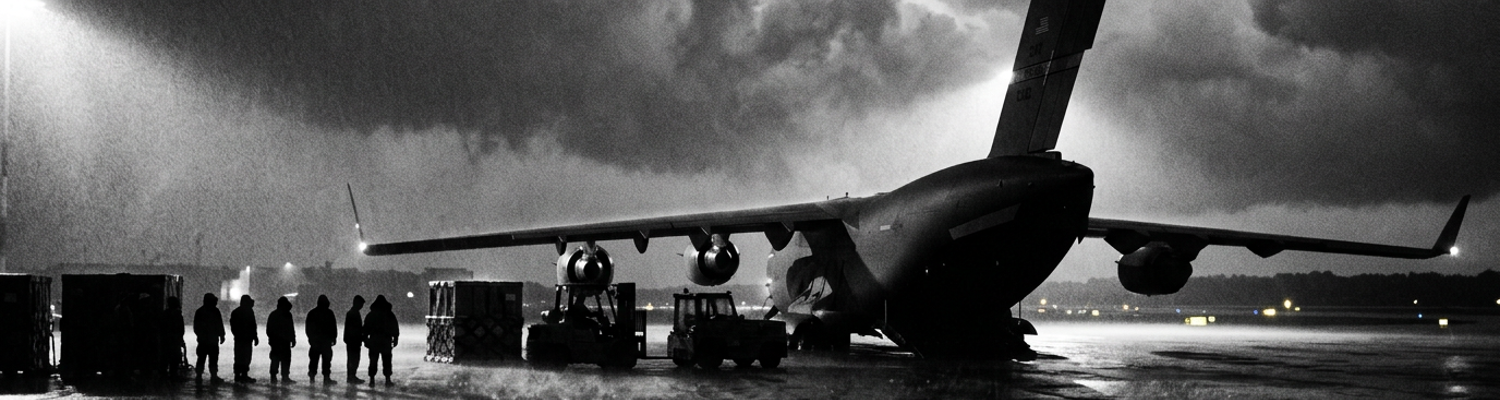

USS Redpoll and Classified Bermuda Trials
A rigid thirty-six-hour countdown was handed down to naval operations officers on the morning of March 12, 1956. Logistics staff had no leeway for ocean transport or standard air freight procedures. Archival evidence shows that Atlantic Fleet planners in Norfolk demanded experimental sound gear on site before an abrupt seasonal shift in ocean currents degraded deep-water acoustic conditions. Washington bureaucrats had authorized the test window without consulting regional air transport coordinators or local maintenance detachments. The clock ran down relentlessly on teletype machines across three distinct naval districts. Commanders scrambled to secure an operational heavy-lift transport.
Only forty-eight hours separated the task group from total cancellation.
A close review of operational logs indicates that coastal minesweeper USS Redpoll (MSCO-57) was already rolling in heavy Atlantic swells off the southern reefs of Bermuda. The ship held station near 32°14'N, 64°52'W. Built with a 144-foot wood hull and non-magnetic bronze fittings to reduce its magnetic signature, the vessel was stripped of conventional drag gear. The modification accommodated classified mine-countermeasure trials. Crew members lashed down deck winches and calibrated on-board power converters. They prepared to receive external acoustic monitoring equipment designed to track low-frequency signatures from simulated Soviet sea mines. Commander Mine Force Atlantic required empirical data on acoustic array sensitivity in the deep acoustic channels off Plantagenet Bank. Northern spring gales would soon shut down coastal operations. Redpoll could do nothing without its missing sensors. The small crew burned through auxiliary diesel fuel simply maintaining dynamic positioning against the Bermuda current. They awaited high-priority air cargo that had not yet cleared mainland packing facilities.
Commanders in Washington drafted deployment schedules on the assumption that fragile laboratory components behaved like standard crated munitions.
When examining the historical record at the Naval Ordnance Laboratory in White Oak, Maryland, technicians were racing against the same compressed timeline to finish experimental listening gear. The payload centered on newly molded barium-titanate hydrophones paired with custom-wired telemetry racks. The racks housed hundreds of miniature glass vacuum tubes. The circuits amplified ultra-low decibel shifts in seawater. Their hand-soldered bridge rectifiers and delicate glass filaments were never intended for rough air transport. Staff engineers worried that airframe vibration or an unpressurized cargo bay would fracture internal grids before the gear ever reached Bermudian waters. Communication between the laboratory, the Chief of Naval Operations, and the Military Air Transport Service broke down into detached bursts of priority-coded telex messages. Senior officers sat inside heated headquarters offices hundreds of miles removed from the flight lines. They demanded immediate liftoff while ignoring reports detailing the physical fragility of the NOL chassis (Bureau of Ordnance File 114-B). Air transport officers were told to accept the containers immediately at Dover Air Force Base without conducting structural impact tests.
No field commander had direct authority to halt the operation.
Teleprinter circuits between Norfolk and Kindley Air Force Base in Bermuda suffered recurring signal latency. Redpoll commanding officers interpreted fragmented instructions regarding cargo arrival times and rendezvous points. Headquarters planners assumed the transport run was routine point-to-point transit. They remained blind to the zero-visibility weather front gathering along the Mid-Atlantic flight corridor. Redpoll kept its diesel generators running at high idle through the night of March 13. The ship vented hot exhaust into the ocean spray. The crew waited for a MATS C-124 to lift off from Maryland carrying fragile electronics wrapped in horsehair padding and rubber shock cords.
Headquarters Isolation and Atlantic Fleet Directives
A close review of operational logs indicates that staff officers at Atlantic Fleet headquarters inside Building N-26 at Naval Station Norfolk managed the operation as an abstract scheduling chart. Operational planners under the Commander in Chief, Atlantic Fleet, had committed to a hard departure zero-hour of 2200 hours on March 13. They refused to adjust the maritime test calendar for ground operations taking place three states away. Staff officers operated under rigid deadlines imposed by the Chief of Naval Operations. Delays would force the cancellation of the joint acoustic evaluation before seasonal ocean temperature gradients shifted across the Bermuda Rise. Across the Virginia Capes, barometric pressure charts were already signaling trouble. Aerological reports from the Naval Air Station at Weeksville and coastal weather stations documented an intense polar front sliding east from the Ohio Valley. The front clashed with Gulf Stream moisture off Cape Hatteras. The collision spawned 45-knot surface gales and severe low-altitude icing along the direct overseas flight track toward Kindley Air Force Base. Fleet headquarters paid little attention to these regional forecasts. Operations officers repeatedly dispatched priority messages across the Navy teletype network. They ordered Dover Air Force Base to launch the transport on schedule regardless of local flight line conditions.
Paper directives moved faster than freezing cargo could be moved across asphalt.
When examining the historical record, strategic planners operated inside an administrative bubble that completely failed to account for the physical vulnerabilities of the experimental ordnance electronics coming out of the Naval Ordnance Laboratory at White Oak. Fleet desks had classified the payload as general priority freight. They assigned standard air transport codes that ignored the sensitive internal components engineered by civilian acousticians. Inside the wooden shipping crates sat custom-machined telemetry receivers containing hundreds of hand-wired 6AK5 miniature vacuum tubes, ceramic barium-titanate acoustic elements, and fragile solder joints. The joints were calibrated to detect fractional microvolt fluctuations in deep-water pressure waves. The components could not withstand standard military cargo handling. Air Force personnel from the 1607th Air Transport Wing at Dover were forced to manhandle the uncushioned crates onto metal roller conveyors using heavy diesel forklifts that lacked hydraulic dampening. Rough handling on the freezing ramp cracked internal shock mounts before the crates even approached the nose doors of the transport aircraft. Planners in Norfolk assumed that securing cargo simply meant ratcheting down canvas tie-down straps against the deck rings. The laboratory had specifically instructed that the chassis required constant temperature regulation above 40 degrees Fahrenheit and rubber isolation pads to prevent filament separation during transit. No heated staging bay or specialized suspension gear had been arranged at the airfield.
Not a single logistics officer in the Norfolk command bunker had read the laboratory handling manual.
Archival evidence shows that communication channels between Norfolk, the flight line at Dover, and Redpoll off Bermuda fractured under the strain of outdated message-handling protocols. Naval Communications Station Norfolk routed priority radio traffic through multiple manual encryption centers. Three-hour transmission delays left field officers working from expired orders. Flight dispatchers at Dover reported that freezing rain was coating the wings of the Military Air Transport Service C-124 Globemaster II. Runway crosswinds exceeded 35 knots. Headquarters responded with a curt confirmation of the original departure window. Fleet commanders refused to authorize alternate staging at Charleston or direct maritime surface transport. The staff viewed the experimental gear through the narrow lens of naval exercise timetables. They remained indifferent to the fact that transport crews were loading unpressurized, freezing aircraft bays with electronic systems that degraded with every dropped crate and sharp drop in ambient air temperature. Dover ground crews pushed the loading ramp closed against driving sleet at 2115 hours.
The transport taxied onto the active runway with unsecured ceramic transducers vibrating against their wooden packing frames.
Mobilization of the 1607th Air Transport Wing
A close review of operational logs indicates that the emergency call from the Military Air Transport Service reached the flight dispatch office at Dover Air Force Base at 1420 hours on March 13, 1956. The installation, located at 39°07'N, 75°27'W on the flat coastal plain of Delaware, housed the 1607th Air Transport Wing. Base operations had only six hours to muster aircrews, clear a runway slot, and prepare a long-range airframe for an unplanned oceanic flight path directly into incoming Atlantic squalls. MATS headquarters in Maryland had classified the mission as a top-priority special assignment. The classification bypassed normal cargo manifest reviews and threw the Dover maintenance line into disarray. Ground personnel were pulled from scheduled engine tear-downs on the ramp to prep transport equipment that had been parked down-wind in sleet. Flight engineers scrambled to inspect fuel lines and de-icing boots on short notice. Operations clerks attempted to decode fragmented weather alerts sent from naval aerologists in Virginia.
Command officers in Dover knew almost nothing about the cargo waiting on the dock.
Archival evidence shows that dispatchers designated the 1607th workhorse aircraft, the Douglas C-124 Globemaster II, to haul the crated telemetry units out of Delaware on an emergency nocturnal departure profile. The double-decked, four-engine C-124 was the only airframe in the inventory capable of swallowing the oversized acoustic monitoring apparatus whole through its forward clamshell doors. Mechanics hauled external combustion pre-heaters across the freezing tarmac to thaw the four Pratt and Whitney R-4360-20WA Wasp Major 28-cylinder radial engines. The engines routinely suffered fouled spark plugs and hydraulic valve sticking in sub-freezing coastal weather. Each engine required 44 gallons of oil to cycle properly. Freezing temperatures thickened the lubricant inside the dry-sump tanks, dragging pre-flight run-ups past 1800 hours. The flight crew, assembled from the 1st Air Transport Squadron, had to plot a non-standard direct overseas route to Kindley Air Force Base in Bermuda under blackout rules. They bypassed usual navigational checkpoints to save precious minutes.
Cold oil blew past radial seals as ground crews cranked the starters.
When examining the historical record, the technical friction between the aircraft and its sensitive payload was apparent hours before takeoff. Civilian engineers from the Naval Ordnance Laboratory had specified that the telemetry receivers could not endure low-frequency vibrations exceeding five cycles per second without suffering structural degradation. The receivers were built around brittle glass vacuum filaments and unbaked ceramic barium-titanate hydrophone sensors. The C-124 airframe subjected cargo to severe mechanical shocks throughout transit. Its unpressurized main cargo compartment measured 77 feet in length and lacked thermal insulation. Four massive propellers generated violent, low-frequency airframe resonance throughout climb and cruise. Ground personnel used high-tension canvas tie-down straps anchored to floor rings spaced at 20-inch intervals. They had no rubber isolation mats or temperature-controlled transit enclosures on hand. Sleet seeped through the rubber seals of the nose doors, freezing along the corrugated cargo deck as crews secured five tons of test equipment under portable floodlights.
No civilian technicians were permitted on the flight line to inspect the tie-downs.
Flight dispatchers cleared the C-124 for engine start at 2130 hours while freezing drizzle settled over Dover Runway 01. The pilot brought all four Wasp Major radials up to manifold pressure against the wheel brakes. The entire airframe shuddered violently as prop wash tore across the open Delaware marshes. Inside the cargo deck, the wooden crates containing the hydrophone amplifiers slid forward two inches against their canvas straps. The movement stressed the internal mounting brackets before the transport even broke ground. Tower controllers at Dover handed off the aircraft directly to the New York Oceanic Air Traffic Control center at 2154 hours. The laden Globemaster flew south-southeast into cloud cover over the Atlantic.
Nocturnal Transit Across Atlantic Squall Lines
A close review of operational logs indicates that the Douglas C-124 Globemaster II cleared Dover Air Force Base at 2158 hours. The aircraft banked immediately over the Delaware coastline into an opaque ceiling of freezing fog and driving sleet. Visibility had dropped below a quarter of a mile at ground level. Air traffic control logs confirm that the 1st Air Transport Squadron crew picked up an outbound vector along oceanic route Track Echo. They cut southeast into offshore corridors over the open Atlantic toward Kindley Air Force Base in Bermuda. Outer squall bands from a developing coastal depression greeted the transport forty miles off Cape May. Climbing heavily under a payload exceeding 18,000 pounds, the four Pratt and Whitney R-4360 engines could deliver only a sluggish rate of ascent. The transport became trapped at an unpressurized cruising altitude of 9,000 feet. At this level, the airframe plunged straight into an active squall line running northeast along the Gulf Stream boundary. Freezing cloud moisture accumulated on the leading edges of the wings faster than the pneumatic de-icer boots could cycle and crack the ice away.
Flight instruments offered the pilots their only visual reference against total blackness.
When examining the historical record, aerological tracking maps from Norfolk showed that command officers had directed the flight path directly across an occluded front. The front packed sustained 50-knot headwinds and violent vertical wind shears. Atlantic Fleet dispatchers had recorded the transit route as routine blue water navigation on their operations room display boards. They were ignorant of the atmospheric chaos offshore. Aircrews wrestled the dual flight controls as convective updrafts repeatedly knocked the 175,000-pound transport through sudden three-hundred-foot altitude drops. Sea spray mixed with sleet coated the forward cockpit windshields. Frozen wiper linkages forced the navigator to calculate drift entirely through dead reckoning and intermittent low-frequency radio homing signals out of Bermuda. Radio static generated by electrical activity within the squalls severed high-frequency voice contact with the overseas ground station at Kindley for nearly two hours. The crew flew completely isolated over the ocean shelf. They were bound to a course dictated by officers sitting in static shore offices hundreds of miles behind them.
Each downward drop slammed the cargo bay with violent force.
Archival evidence shows that intense turbulence over the Atlantic posed a constant threat of internal filament breakage within the delicate vacuum-tube telemetry cargo lashed to the cargo deck floor. Inside the wooden shipping crates, the Naval Ordnance Laboratory acoustic amplifiers relied on hundreds of miniature 6AK5 and 12AX7 vacuum tubes. Their tungsten heater filaments measured less than twenty microns in diameter. The hair-thin wires were suspended inside evacuated glass envelopes, held in place by fragile mica spacers and miniature spot welds. The welds could fracture under sudden shock loads exceeding three Gs. As the Globemaster hit continuous air pockets, the uninsulated main deck shuddered. The shuddering transferred abrupt kinetic energy straight through the canvas tie-downs into the aluminum chassis of the telemetry receivers. Ambient temperatures inside the unheated fuselage plummeted to fourteen degrees Fahrenheit. The ceramic barium-titanate hydrophone elements turned brittle. Cold drafts contracted the metal base pins of the tube assemblies. A single broken heater filament or warped grid frame would render an entire acoustic listening channel dead. The failure would turn months of naval sensor engineering into useless scrap before the trials off Plantagenet Bank could begin.
Flight engineers moved down the narrow catwalks of the lower deck with red-lensed flashlights every fifteen minutes. They checked the tension of every cable harness while the cargo deck twisted under structural loads. Sleet continued to penetrate the forward cargo clam-door rubber seals. The moisture coated the lower crates in a thin glaze of ice as the transport crossed 34°20'N, 67°10'W at 0215 hours.
Radioteletype Blackouts and Severed Communications
A close review of operational logs indicates that high-frequency atmospheric disturbances began severing primary radio links at 0240 hours. The C-124 pushed past the midpoint coordinates of 33°18'N, 66°45'W. Ionospheric turbulence generated by the coastal squall system collided with a localized geomagnetic storm over the Atlantic seaboard. The collision stripped away the reflective layers required for oceanic skywave propagation. Radio operators inside the 1607th Air Transport Wing communications van at Dover observed severe signal attenuation on assigned 5.6-megahertz and 8.9-megahertz air-to-ground frequencies. Transmissions routed through the airborne AN/ARC-21 high-frequency set degraded into continuous static. The static prevented the frequency-shift keying systems of the transport radioteletype gear from locking onto carrier signals. Teletype machines inside the naval communications center at Norfolk clattered out nonsensical strings of punctuation marks and garbled characters before carriage returns froze altogether. Ground monitoring stations at Naval Station Argentia and Fort Monroe confirmed total radio fadeouts across the entire maritime air route.
Atmospheric ionization had completely isolated the aircraft in mid-ocean flight.
When examining the historical record, this blackout severed all functional coordination between the flight crew and ground-based flight control centers for three continuous hours. Flight controllers at New York Oceanic Traffic Control tracked dead reckoning estimates on paper flight strips. They had lost radar contact past the 200-nautical-mile limit of mainland ground-controlled interception antennas. The Globemaster carried an AN/APN-70 long-range navigation receiver. Atmospheric electrical interference flooded the low-frequency pulses from coastal Loran-A chains with ambient hash. Flight personnel could neither confirm ground speed against heavy headwinds nor relay updated position reports back to continental tracking posts. Emergency radio frequencies remained dead. Dispatchers at Kindley Air Force Base in Bermuda periodically keyed their high-power coastal transmitters on 11.2 megahertz. They received only steady carrier hum and background squelch.
No operational channel connected the transport to any command bunker on the continent.
Archival evidence shows that headquarters duty officers inside Building N-26 at Naval Station Norfolk spent these silent hours operating in total ignorance of the aircraft physical flight status. Blue-suit watchstanders under Commander in Chief, Atlantic Fleet, could only stare at static plastic status boards where grease-pencil flight markers remained pinned at 0230 positions. Nobody in the Norfolk command bunker knew whether the four Pratt and Whitney R-4360 engines were burning through their 115/145-octane aviation gasoline reserves at rates exceeding standard planning figures while bucking 50-knot headwinds. Calculations indicated that holding patterns or engine power increases during low-altitude turbulence could deplete fuel supplies to emergency margins before Kindley runways came into radar view. Air Force flight dispatchers had calculated an endurance ceiling of eleven hours. Sustained low-altitude operation at 9,000 feet raised the hourly fuel burn to over 480 gallons per hour. The increased burn rate narrowed the reserve margin to zero without headquarters ever being notified.
Duty officers possessed zero intelligence regarding the structural condition of the classified acoustic hardware riding unsecured in the cargo bay. Hand-soldered vacuum-tube chassis and brittle barium-titanate hydrophone elements were subjected to unchecked kinetic impacts as the C-124 dropped through unforecasted downdrafts over the Gulf Stream. Voice and radioteletype traffic had ceased. Flight engineers could not report whether mounting frames had buckled or whether sub-freezing fuselage temperatures had cracked the glass envelopes of the experimental Naval Ordnance Laboratory receiver tubes. Fleet planners in Norfolk prepared deployment schedules for the USS Redpoll under the blind assumption that both the aircraft and its sensitive cargo would arrive undamaged at dawn. Kindley Air Force Base logged total teleprinter silence from the flight until a faint manual telegraph key click broke through coastal receivers at 0518 hours.
Improvised Airfield Staging at Kindley Air Force Base
A close review of operational logs indicates that the Douglas C-124 Globemaster II touched down on Runway 12 at Kindley Air Force Base at 0532 hours on March 14, 1956. The aircraft battled thirty-knot crosswinds off Castle Harbour. Heavy ocean rain swept across the tarmac at 32°21'N, 64°41'W. The downpour saturated the parking ramps of the 1604th Air Base Wing within minutes of the transport cutting its four radial engines. Flight quartermasters and tarmac staging crews immediately confronted severe structural staging hazards as they opened the forward clamshell doors to evaluate the payload. Standard tie-down configurations prescribed in Air Force cargo manuals proved useless on the flooded apron. Ambient gusts threatened to shift the five-ton crates containing delicate Naval Ordnance Laboratory telemetry units. Recessed deck tie-down rings built into the concrete were clogged with silt and standing water. The debris prevented ground personnel from locking standard MB-1 chain devices into place. Staging crews and flight quartermasters improvised non-standard tie-down configurations. They ran high-tension steel cables, cargo netting, and heavy adjustable turnbuckles in an asymmetric web anchored to the landing gear struts of adjacent aircraft and the frames of heavy Clark aircraft towing tractors. The cross-tensioned rigging prevented lateral shifting across the wet asphalt. It protected the brittle barium-titanate hydrophone sensors and internal glass vacuum tubes from structural shocks.
Standing water on the apron submerged standard grounding points under four inches of salt-laden rain.
When examining the historical record, tarmac technicians faced an acute equipment failure when power was first applied to test the staging heaters and diagnostic systems. Water intrusion into the main power junction box triggered an electrical surge. The surge immediately blew two primary step-down voltage transformers required to convert 220-volt island utility current down to the 115-volt, 400-cycle power demanded by the telemetry racks. Mainland authorities at the Bureau of Ships and the Naval Ordnance Laboratory in Maryland were completely unreachable due to oceanic radioteletype cutouts and high-frequency radio blackouts. Technical orders, circuit schematics, and operating manuals had been withheld from the flight manifest due to security classifications. Airfield crews operated with zero documentation. Tarmac technicians improvised field repairs directly on the rain-swept ramp without mainland guidance. Specialists stripped burned primary windings out of the transformer housings using hand pliers and pocket knives. They scavenged magnetic copper wire from a decommissioned AN/TPS-1D radar trailer parked near the perimeter fence. Crew members rewound the transformer cores by hand under canvas engine covers. They coated each layer with fast-drying electrical insulating varnish, liquid shellac, and heavy friction tape before checking winding resistance against bench meters.
Not a single schematic existed on the island for the experimental White Oak circuitry.
Archival evidence shows that ground crews worked under portable floodlights powered by a sputtering auxiliary diesel generator to install the rebuilt transformers into the staging circuit at 0715 hours. The improvised coils stabilized output at 116 volts. The stabilized voltage restored electric heating blankets around the wooden shipping crates just as internal cabinet temperatures dropped toward the critical freezing point of the ceramic hydrophone arrays. Flight quartermasters secured timber dunnage against the base of each pallet using six-inch spikes driven into wooden transit skids. The spikes locked the freight in place until mobile naval cranes arrived from the St. George staging basin. Base dispatchers recorded steady voltage across the telemetry power bus at 0742 hours. The reading occurred sixty-eight minutes before harbor lighters arrived to begin transfer to the USS Redpoll.
Technical Aftermath and Operational Lessons
A close review of operational logs indicates that harbor lighters transferred the wooden packing crates from Kindley Air Force Base to the awaiting deck of the USS Redpoll at 0850 hours on March 14, 1956. Working alongside civilian engineers from the Naval Ordnance Laboratory, the crew of the wooden-hulled minesweeper uncrated the telemetry racks. They mounted the barium-titanate hydrophones directly into the ship flooded well-deck wells. Technicians verified that sixty-two out of sixty-four miniature 6AK5 vacuum tubes had survived the nocturnal flight and subsequent transformer surge without open-filament faults. By 1130 hours, Redpoll cleared the reef passages off St. George and set a southwesterly course toward the deep drop-offs of Plantagenet Bank near 32°14'N, 64°52'W. Sea trials commenced at 1300 hours sharp. The launch occurred precisely five hours before the predicted northern gales and seasonal thermal gradient shifts destroyed the local deep-water sound channels. Over eighteen consecutive passes across calibrated acoustic fields, Redpoll deployed noise-canceling countermeasure generators against bottom-moored listening arrays simulating low-frequency Soviet acoustic sea mines. The telemetry package recorded clean multi-channel frequency responses across the 10-to-500-hertz spectrum. The clean data confirmed the effectiveness of the vessel degaussed hull and acoustic isolation mounts.
Every acoustic run met the deadline set by the Chief of Naval Operations.
Archival evidence shows that despite tactical completion off Bermuda, the operation exposed severe systemic deficiencies in centralized command oversight during emergency cold-weather airlift operations across maritime domains. Planners stationed inside the heated headquarters bunker of Building N-26 at Naval Station Norfolk had issued rigid launch ultimatums while possessing zero technical comprehension of how freezing weather compromised both airframes and experimental electronics. Commander in Chief, Atlantic Fleet staff officers treated the 1607th Air Transport Wing at Dover Air Force Base as an automated conveyor belt. They completely disregarded ground reports of freezing drizzle, sub-zero ramp temperatures, and thick engine oil in the Pratt and Whitney R-4360 powerplants. Centralized authorities had routed an unpressurized Douglas C-124 Globemaster II into an active Atlantic occluded front without coordinating cold-weather cargo packaging. Cargo bay temperatures plunged to fourteen degrees Fahrenheit. The extreme cold jeopardized the structural cohesion of the ceramic acoustic sensors and brittle solder joints. Staff officers had failed to arrange heated staging bays at intermediate points. They provided no shock-dampening transit cradles. They maintained no working protocol for cross-service cargo handling between naval laboratories and Air Force transport wings.
Strategic headquarters remained blind to every physical failure occurring along the flight route.
When examining the historical record, this centralized isolation created an operational vacuum where regional commanders were stripped of autonomy yet denied basic logistical intelligence. Fleet dispatchers in Virginia managed the flight through static scheduling boards. They were unaware that radio blackouts across the 5.6-megahertz band had severed high-frequency tracking for three consecutive hours. The command structure possessed no operational mechanism to account for the C-124 consuming aviation gasoline at four hundred eighty gallons per hour while bucking fifty-knot headwinds at an emergency cruising altitude of 9,000 feet. Had the transport run low on fuel or ditched into oceanic squalls off Cape Hatteras, search and rescue units under the Eastern Sea Frontier would have initiated search grids hundreds of miles behind the actual aircraft position. Naval authorities also neglected to transmit technical schematics or voltage conversion guidelines to Kindley Air Force Base. Island personnel rebuilt blown transformers using scrap wire scavenged from junked radar sets. Post-operation debriefs filed at the Bureau of Ships in April 1956 confirmed that centralized operational control had repeatedly endangered both the flight crew and the classified sensor program by substituting administrative assumptions for verifiable weather and engineering data.
Bureau records recorded zero structural modifications to Dover cargo handling procedures before winter exercises resumed in November 1956.