
Operation Limnes and the Urban Artillery Shelling
At 0230 hours on February 10, 1948, incoming fragmentation rounds severed the primary copper trunk cables running along the northern approaches. This instantly cut off the frontline outposts from headquarters. Field telephone switches in the III Army Corps basement command center went dead. Staff officers in central Thessaloniki stared at silent switchboards. Isolated sentries along the perimeter ridges faced the darkness without artillery support. They received no orders.
Commanders in the city center were trapped in total isolation.
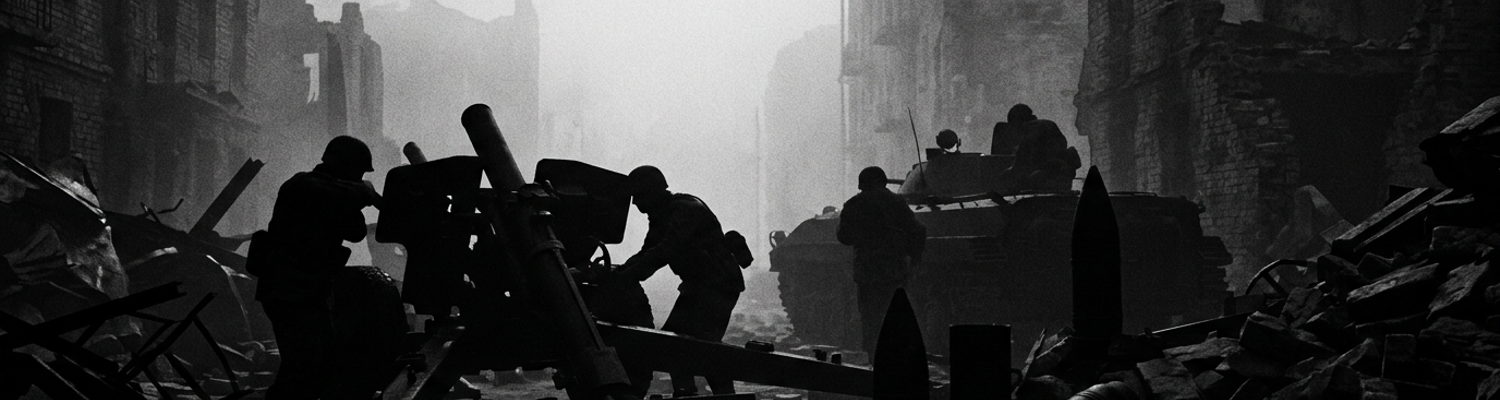
Archival evidence shows that elements of the Democratic Army of Greece operated under the tactical direction of Nikos Triantafyllou during Operation Limnes. These units hauled artillery pieces up the steep ridges of Mount Chortiatis overlooking the Thermaic Gulf. Insurgent gunners dragged captured 75mm Skoda mountain guns across frozen ravines. They moved heavy 81mm and 120mm mortars into concealed firing pits near Efkarpia. At 0245 hours, the batteries opened fire.
Gun crews pushed high-explosive shells into worn breeches. They elevated the barrels toward maximum angle to clear the intervening ridgelines and reach the urban center below. Propellant charges produced erratic muzzle velocities. These charges had been unevenly mixed after months of damp storage in cave caches. Shells cleared the peaks and fell toward the urban basin at velocities exceeding three hundred meters per second. Gun crews sustained rapid fire for over an hour. They expended their allotted ammunition before Greek National Army spotter aircraft could locate their flash signatures against the snow.
Forty-two artillery projectiles struck Thessaloniki before the insurgent crews broke down their weapons.
A close review of operational logs indicates that the dispersion pattern reveals erratic hits across civilian zones rather than concentrated strikes on military infrastructure. Projectiles hit the crowded tenements of Vardaris. They crashed through terracotta roof tiles near the waterfront and pierced apartment buildings around Agia Sofia. The architecture of these residential blocks failed to offer sufficient resistance to trigger standard mechanical graze fuses. These structures consisted of soft brick, timber joists, and unreinforced plaster. Many projectiles were fitted with aging percussion caps and degraded internal striker springs. These mechanisms jammed upon striking soft wooden rafters.
Rounds penetrated attic ceilings. They fell through bedroom floors and came to rest unexploded inside family living quarters. Unstable explosive filler sat lodged inside heated domestic rooms. This filler was compromised by moisture and temperature swings. Municipal authorities recorded dozens of live unexploded shells jutting out of ceiling laths and exterior masonry walls across twenty square blocks.
The sudden proliferation of unexploded munitions halted municipal services.
Police dispatches recorded blind shells resting on floorboards. Other reports noted munitions stuck inside chimney flues and lodged directly beneath wooden staircases. Each live fuse posed an immediate danger. The slightest vibration from collapsing ceilings or foot traffic threatened to release internal detents. Greek military ordnance disposal technicians entered compromised, multi-story buildings without blueprints. They used hand tools to unscrew base plates and neutralize unexploded shells by lantern light.
The headquarters staff in the central bunker remained completely uninformed of which city blocks were secure. Cut off from direct telephone contact, staff officers sent motorcycle messengers through the dark streets. These riders carried handwritten instructions to seal off the entire residential corridor along Egnatia Street.
Rear Command Isolation and Broken Communications
Staff officers at the regional Macedonian command enclave inside the III Army Corps compound found themselves cut off from the front lines. Severed wire networks and heavy coastal fog caused this isolation within minutes of the opening salvos. Dense thermal inversion layers drifting off the Thermaic Gulf settled across the waterfront avenues. This fog seeped inland toward the perimeter defenses and dropped horizontal visibility below thirty paces.
Overhead, thick sea vapor covered the northern transit corridors. This masked the physical rupture of the communications infrastructure.
Insurgent fragmentation barrages and deliberate saboteur cuts had severed the insulated field lines. These lines connected the corps switchboard to outposts near Asvestochori and Retziki. Copper signal conductors dangled from broken wooden utility poles along the Serres highway. Inside the subterranean plotting rooms, operators cranked magneto handles on standard EE-8 field telephones. They received no audible ring from any outlying station.
Wireless communication offered no remedy.
High atmospheric humidity and low-frequency static over the Thermaic basin saturated the airwaves. This caused crystal oscillators in Type 19 wireless sets to drift off frequency. Wet ground conditions absorbed low-power ground wave transmissions.
Every northern circuit failed completely. Not a single transmission passed through.
Headquarters personnel operated in an information vacuum. They were unable to verify ordnance casualty estimates or direct immediate tactical resources across the stricken municipal sectors. Greek National Army map tables displayed outdated company dispositions. These maps relied on afternoon situation reports from February 9. Dispatches trickling into the central bunker arrived solely via exhausted Gendarmerie runners on foot. Motorcycle couriers also arrived, though their carburetors repeatedly fouled in the frigid mist.
Hand-carried slips contained wild discrepancies.
Local police precincts in Vardaris reported fifty dead in collapsed tenement houses. Hospital intake clerks at the Hirsch pavilion logged twenty wounded from flying brick shrapnel. Unable to corroborate these conflicting totals, senior staff hesitated to deploy the corps general reserve. They refused to authorize counter-battery fire. Artillery batteries of 25-pounder field guns positioned near the Sedes perimeter sat silent in their revetments. Forward observation officers lacked the landlines required to feed target coordinates. Firing unobserved shells risked hitting residential neighborhoods hidden by the coastal inversion.
Ambulances stalled in gridlocked alleys.
When examining the historical record of the regional command response, the lack of verifiable data distorted administrative decisions made between 0300 and dawn. Staff officers had no means of confirming which thoroughfares were blocked by unexploded ordnance or cratered pavement. This left mechanical breakdown trucks and ordnance disposal squads stranded at their depots. Orders intended for the 2nd Field Ordnance Depot were dispatched to the wrong sector depots. Scribes worked from unconfirmed telephone hearsay.
Drivers attempting to haul recovery winches and fuse-extraction kits along Monastiriou Street encountered military police barricades. These barricades were erected without corps knowledge.
Regional commanders could not direct the municipal firefighting apparatus toward burning buildings on Saint Demetrios Street. Water pressure plummeted across the central district after a high-explosive round cracked a sub-pavement main near the railway depot. Municipal repair teams received no dispatch orders. The municipal engineering bureau could not reach the corps civil defense liaison.
Historical documentation confirms that III Army Corps commanders attempted to request immediate tactical air strikes. They contacted the Royal Hellenic Air Force 335th Squadron based at Sedes. Flight crews warmed up the Merlin engines of reconnaissance aircraft on the apron. Operations stayed grounded because the zero-visibility fog ceiling sat at eighty feet above the runway.
Air dispatchers refused to scramble aircraft into the blind mountain passes. They lacked telephone lines to transmit target coordinates or cloud-break reports from the Chortiatis crest. Operations officers back inside the Macedonian command center marked grease-pencil question marks across map quadrants. These quadrants extended from Efkarpia to the Thermaic waterfront. The corps had lost all tactical control over the five square kilometers where live artillery fuses rested beneath tons of civilian debris.
JUSMAPG Advisory Deployment and Equipment Shortages
The advance detachment of the Joint United States Military Advisory and Planning Group reached the III Army Corps compound on February 11. The American technical advisers carried clipboards rather than defusing gear. Major General William G. Livesay directed a mission in Greece focused strictly on counter-insurgency doctrine and infantry supply distribution. Municipal explosive ordnance disposal was not on the agenda.
Captain Arthur Vance and his small advisory cell from the technical section found their allocated tool shipments delayed at the Piraeus docks. Other crates were rerouted to central depots in Attica.
Standard M1 bomb disposal tool kits never reached northern Greece. Non-magnetic beryllium-copper wrenches and specialized chemical neutralizers were absent from the inventory. The advisory team disembarked from their transport aircraft at Sedes airfield with standard infantry entrenching tools. They carried field compasses and technical field manuals covering American aerial bombs rather than Central European artillery munitions.
Greek ordnance officers from the 2nd Field Ordnance Depot requested hydraulic jacks and lead-lined transport boxes. They received general-issue motor pool tool sets containing standard carbon-steel pliers and open-ended wrenches.
Supply manifests listed zero specialized bomb disposal kits in the entire Macedonian theater.
A close review of operational logs indicates that the complete lack of standard remote fuze extraction devices placed demolition teams in direct physical peril. These teams operated inside collapsed urban structures. Standard military safety protocol required technicians to clamp pneumatic fuze extractors or mechanical rocket wrenches onto projectile noses. This allowed them to clear the blast radius before applying counter-rotational torque through extended lanyard wires from behind protective sandbag mantlets.
No such equipment existed in northern Greece.
In the basements along Kassandrou Street, Greek military technicians and their American advisers confronted 75mm Skoda mountain gun projectiles. These rounds were embedded directly in load-bearing masonry walls. Specialists had to clamp standard industrial pipe wrenches onto damaged brass fuze casings. They tapped the iron handles with lead mallets to break the corroded threads.
If a fuze body had warped during impact, technicians applied heated kerosene or penetrating machine oils to dissolve hardened thread sealants. They waited in cramped, unventilated cellars while monitoring the metal casing for thermal expansion. Mechanics constructed crude lever clamps out of scrap angle iron salvaged from the railway depot. They welded threaded bolts onto steel collars to fashion manual unscrewing rigs.
One slip of a hardened carbon-steel jaw against the brass striker housing could generate a friction spark. This would ignite the unstable picric acid booster pellet sitting less than two inches beneath the threads.
Every extraction was conducted by hand at point-blank range.
The divide between command expectations and street-level execution widened with each operational report sent back to Athens. Inside the heated plotting rooms of the III Army Corps headquarters, staff officers drafted disposal directives. They assumed ordnance detachments possessed standard US Army ordnance demolition trailers equipped with steam-melt cavities and remote electric detonators.
Reports forwarded up the chain demanded the rapid clearance of municipal tram lines and water mains. These documents treated unexploded shells as minor structural impediments rather than unstable firing systems.
Greek demolition teams in the Vardaris district worked without blast blankets. They relied instead on dry sandbags carried by hand up wooden tenement staircases to muffle potential detonations. Technicians encountered a 120mm mortar round wedged into an unstable floor joist on Saint Demetrios Street on the morning of February 12. The advisory group could offer neither shaped hollow charges nor remote desensitization chemicals.
Technicians secured two lengths of braided telephone copper wire to the projectile base. They looped the strand through a window frame and pulled the casing loose from the street below using a requisitioned municipal flatbed truck. The impact of the shell dropping twenty feet onto the courtyard flagstones cracked the tail fin assembly. It did not detonate the internal black powder propellant ring.
Manual Fuze Neutralization in Tenement Housing
The floorboards groaned under every shifting boot.
Greek Army technical teams from the 2nd Field Ordnance Depot entered fractured five-story apartment blocks along Kassandrou Street. Wall fissures continued to widen around them. Shell penetrations from the Chortiatis bombardment had severed horizontal ceiling beams across the upper tiers. This left tons of unreinforced brickwork suspended directly over bedroom floors.
Evacuation protocols ordered by the III Army Corps command assumed technicians could systematically stabilize load-bearing walls prior to munition recovery. The collapsing plaster demanded instantaneous intervention before building settlement crushed live casings.
Sergeants and corporals crawled across pulverized floor joists. Half-cleared mortar projectiles hung suspended through ceiling laths. Working in complete darkness illuminated only by flickering carbide headlamps, teams braced splintered rafters with requisitioned structural timber. They knelt over cracked casings.
One technician held the shell casing steady with padded leather straps. A second operator engaged the fuze ring with an iron spanner. The slightest structural shift threatened to drop the remaining roof truss directly onto the exposed percussion elements. This would turn domestic apartments into enclosed detonation chambers.
A dropped wrench would trigger the booster charge.
Technicians confronted deformed impact and delay fuzes threaded into 81mm and 120mm mortar bombs. They worked without sandbag blast barriers or portable fragmentation shields. Weight limits on rotten timber floorboards precluded hauling three hundred pounds of defensive sand into domestic parlors. Disposal specialists knelt inches from live picric acid and trotyl cores with bare hands and standard mechanic pliers.
The rounds fired by the insurgent batteries had impacted at oblique angles through terracotta roof tiles. This warped fuze nose cones and sheared internal brass safety wires. The impacts drove spring-loaded striker pins halfway into sensitive primer caps.
Delays were compromised.
Humidity and friction caused the mechanical delay trains on several German-pattern impact fuzes to jam on their guide collars. This left firing pins cocked under residual spring pressure. Technicians applied penetrating fluid to frozen thread collars. They worked with hand vises to loosen corroded aluminum threads while feeling through their fingertips for sudden internal releases of the striker mechanism.
No body armor or portable blast mantlets existed to absorb an accidental initiation inside closed ten-by-twelve-foot rooms. An operational error would pulverize the technicians instantly.
Commanders five miles away demanded cleared telephone lines before midday.
Instructions dispatched from the subterranean III Army Corps bunker on February 12 ordered disposal crews to deploy remote steam-melt units. These units had never arrived in Thessaloniki. Captains stationed inside the headquarters plotting room marked the Vardaris sector as clear on regional maps. Demolition teams were still manually prying damaged percussion primers out of crushed mortar nose caps on the third floor of an apartment block on Saint Demetrios Street.
Technicians used thin wire probes to feel inside stripped fuze wells. They manually extracted damaged clockwork detent pins. They pulled out unexploded lead-azide detonators one thread rotation at a time.
The physical extraction of a distorted 120mm nose fuze required thirty minutes of continuous manual counter-rotation. Technicians monitored the casing temperature by hand during this process. They needed to confirm the internal black-powder booster had not begun to decompose under friction heat. At 1415 hours, disposal squads carried three neutralized mortar casings down the cracked exterior fire escapes. They loaded the munitions onto waiting open-bed Dodge trucks parked along the curb.
Civil Defense Strain and Triage Logistics
Panic overloaded the municipal telephone exchange by 0315 hours.
Municipal civil defense networks were inundated by hundreds of conflicting unexploded ordnance calls. These calls originated from panicking neighborhoods across the city basin. Frightened residents in Vardaris, Toumba, and Ano Poli flooded the central switchboard on Venizelou Street. They reported live artillery shells lying in parlors, attics, and open cisterns.
Municipal operators logged four hundred and twelve emergency calls between 0300 and 0600 hours.
Callers described standard soot-stained ceiling plaster as toxic chemical residue. They mistook broken structural timbers for unexploded aerial bombs. Civilian air-raid wardens lacked military ordnance training. They possessed no technical criteria to verify hazards from a distance. Reports from residential blocks near the Church of the Acheiropoietos claimed live 120mm mortar rounds hung suspended in wooden stairwells. Simultaneous calls from the waterfront reported submerged shells near Pier 1.
Untrained municipal volunteers marked every telephone claim as an active emergency. Staff at the municipal civil defense command post on Aristotelous Square pinned red markers indiscriminately across sector maps. This scattered the three available military reconnaissance teams across six square miles of dense urban housing.
Every false alarm drained disposal personnel away from genuine impact sites.
The administrative breakdown inside city hall left field teams operating without tactical prioritization. Civil defense supervisors compiled triage logs on handwritten paper slips. They organized calls strictly by municipal precinct rather than explosive threat characteristics. Senior municipal engineers lacked mechanical drawings of Central European artillery fuzes. They could not distinguish between a high-explosive 75mm Skoda projectile and an inert fragmentation casing.
A live delay-action round lodged inside a load-bearing wall on Kassandrou Street received the identical urgency rating as a shattered domestic sewer pipe on Egnatia Street.
By 0445 hours, civil defense directors had accumulated three hundred and ten uninspected incident reports across twelve administrative zones. Communications between city hall and the III Army Corps command post had collapsed. This prevented municipal officers from cross-referencing incoming civilian emergency reports with military radar or counter-battery azimuth data.
The city network had completely broken down.
Courier runners functioned as the sole relay mechanism to coordinate explosive clearing teams amidst the failure of telecommunications. Severed copper trunk lines and battery depletion in civilian switchboards eliminated direct contact between headquarters and the field. III Army Corps staff officers relied on foot messengers and Gendarmerie motorcycle riders. These men carried handwritten movement orders to isolated ordnance teams.
Runners from the 2nd Field Ordnance Depot navigated blacked-out streets. They carried grease-pencil route sheets inside canvas map cases. These dispatchers traversed bomb craters, fallen roof masonry, and flooded cobblestone alleys across Vardaris. They needed to locate roving disposal squads who possessed no portable radio transceivers.
Couriers arrived at target addresses only to discover that technical teams had already evacuated to secondary sites three blocks away.
Physical exhaustion and equipment breakdowns degraded the cycle. Gendarmerie couriers operating BSA 500cc motorcycles suffered blown tires from jagged shrapnel along Monastiriou Street. Riders abandoned their machines. They completed the delivery on foot through thick coastal fog. Each dispatch run between Aristotelous Square and disposal units in the upper districts required between forty-five and seventy minutes.
At 0640 hours on February 11, courier Christos Georgiou delivered order number 42 on foot to demolition squads at the railway depot on Promitheos Street. This occurred ninety minutes after its initial transcription.
Clearance Assessment and Subsequent EOD Reforms
Between February 11 and February 17, 1948, demolition squads from the 2nd Field Ordnance Depot conducted systematic grid searches. They covered sixty-eight municipal blocks to neutralize unexploded insurgent munitions. Search detachments divided the urban basin into three operational sectors. These sectors covered the upper citadel of Ano Poli, the rail corridors of Vardaris, and the harbor frontage along Nikis Avenue.
Soldiers cordoned off residential streets with barbed wire hurdles. Ordnance technicians swept tenement basements, communal washhouses, and commercial attics.
Forty-seven intact artillery projectiles and mortar bombs were pulled from interior structures during the first seventy-two hours alone. Teams located 75mm mountain gun projectiles embedded in load-bearing limestone footings beneath three-story masonry flats on Olympiados Street. Building weight continued to bear down on the distorted copper driving bands.
Technicians excavated masonry around the buried projectiles with cold chisels and hand mallets. They avoided electric percussion drills to prevent acoustic shock from tripping sensitive mechanical delay pellets. Each neutralized shell casing was slid onto padded burlap litters. Crews carried them down exterior fire ladders and loaded them onto trucks bedded with damp sawdust. The trucks transported the munitions to demolition pits near Sedes airfield for controlled disposal.
Thirty-six live fuzes were unscrewed by hand inside occupied apartment buildings.
The physical extraction of these munitions pushed Greek recovery teams to the threshold of physical collapse. Unexploded 120mm mortar bombs had punched through dual layers of roof slate in the congested quarters along Kassandrou Street. These rounds wedged behind structural brick chimneys. Stripped threads on impact fuzes prevented disposal specialists from threading standard pull-collars onto projectile noses.
Two-man squads applied heavy pipe wrenches directly to distorted aluminum bodies.
Crews applied penetrating whale oil to dissolve carbon fouling when threads jammed on impact. They worked for hours in unventilated crawlspaces beneath sagging timber laths. Several German-manufactured AZ 23 impact fuzes recovered near the railway depot displayed fractured internal guide pins. This left striker needles resting directly against mercury fulminate detonators. Demolition specialists neutralized these rounds by applying liquid plaster of Paris around the fuze bodies. This locked the cocked internal springs into rigid position before unscrewing the base charge.
Every recovered projectile was cataloged by caliber, lot number, and point of impact on corps engineering manifests.
The operational breakdown in Thessaloniki spurred JUSMAPG to formally revise ordnance disposal supply lines and field communication protocols in Greece. American advisory dispatches from late February 1948 confirmed that the failure of field units to defuse urban munitions exposed wide doctrinal gaps. These gaps existed between Athens depot planners and frontline Macedonian commands.
Staff reports compiled by Captain Arthur Vance confirmed that the isolation of disposal units resulted directly from equipment shortages and an over-reliance on civilian telephone switchboards.
General William G. Livesay acted on these reports. He dispatched revised ordnance allocation schedules directly to the Pentagon and the Greek General Staff on February 24. Standard M1 bomb disposal tool kits, non-sparking beryllium-copper wrenches, and portable steam-generating rigs stored in Piraeus warehouses were released from reserve storage. They were assigned directly to northern army field depots. Requisition priority shifted away from general infantry shovels toward specialized hydraulic jacks, lead-shielded bomb carriers, and mechanical cable-pull extractors. These extractors were capable of unscrewing fuzes from sixty yards away.
Field communications underwent an immediate technical overhaul.
JUSMAPG technical officers drafted new signal protocols to bypass municipal landline infrastructure entirely during future urban bombardments. Signal annexes appended to Third Army Corps operational guidelines established dedicated high-frequency radio channels for ordnance disposal squads. Each two-man clearance team received portable SCR-300 backpack transceivers operating on pre-set crystal frequencies.
Technicians were instructed to bypass civil defense switchboards. They reported unexploded munition coordinates directly to mobile field command trucks stationed on Aristotelous Square. Standardized courier routes were mapped with designated fallback rally points along Egnatia Street. These routes included motorcycle relays maintained under military police authority. Greek technical disposal crews completed mandatory retraining on remote rocket-wrench operations under American advisory supervision at the Sedes depot compound on March 15.