
National Intelligence Estimates on Soviet Entrenchment Doctrines
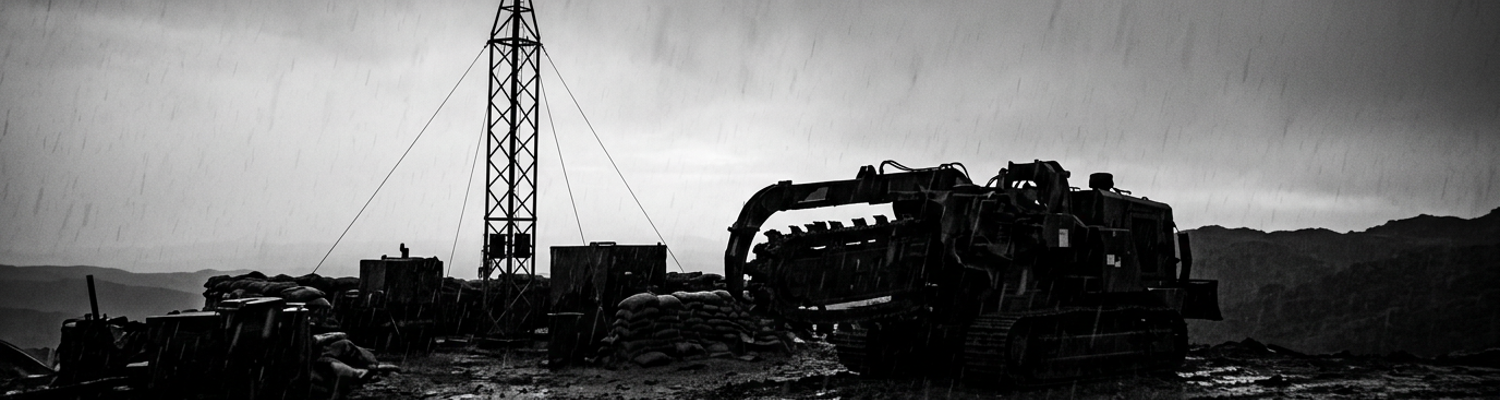
Supplying front-line engineering elements with accurate terrain data across the inner German border was a severe technical challenge. Archival evidence shows that the publication of National Intelligence Estimate 11-14-69 in December 1969 forced a complete reevaluation of Soviet motorized rifle division entrenchment doctrines. Analysts studying the 8th Guards Army and the 39th Guards Motor Rifle Division stationed near Ohrdruf discovered a sudden shift in defensive architecture. The standard hasty fighting positions were gone. Complex multi-tiered trench networks replaced them. Soviet engineering battalions deployed BTM-3 high-speed trenching machines. The BTM-3 utilized a massive rotary digging wheel mounted on a heavy AT-T artillery tractor chassis. These tracked vehicles excavated up to 800 meters of earth per hour in the dense clay of the Thuringian basin.
The revised doctrine dictated a primary defensive belt consisting of continuous fire trenches 1.5 meters deep.
A secondary echelon sat 2,000 meters to the rear. Soviet combat engineers reinforced these excavations with pre-cast reinforced concrete revetments rather than locally sourced timber. NATO intelligence relied heavily on RF-4C Phantom II reconnaissance flights out of Zweibrucken Air Base to track these developments. The reconnaissance squadrons immediately experienced severe chemical processing failures in their mobile darkrooms. A batch of defective heating coils in the Kodak Versamat film processors caused the developer chemicals to drop below the required 85 degrees Fahrenheit. The resulting aerial negatives were heavily underexposed. They were coated in a thick layer of unreacted silver halide. Technical specialists had to manually scrape the chemical residue from the acetate film bases using straight razors.
A close review of operational logs indicates that this darkroom hardware failure forced the 66th Military Intelligence Group into a state of improvised manual analysis.
Photo interpreters lacked the sharp contrast needed to measure the shadow lengths of the Soviet trench spoil. They resorted to using analog slide rules and stereoscopic loupes. Analysts estimated the depth of the revetments based on the width of the BTM-3 tracks left in the mud. The 11th Armored Cavalry Regiment engineers needed exact depth measurements. They had to calibrate their M728 Combat Engineer Vehicles for potential counter-mobility operations near the Fulda Gap. Incorrect depth estimates meant their 165mm demolition guns would fail to breach the concrete walls. Forward intelligence officers dispatched ground reconnaissance patrols to visually confirm the soil composition and revetment thickness at grid coordinates 32U NB 564 892.
The field teams carried manual soil augers.
They extracted 50-centimeter core samples from the saturated border zone. These ground patrols immediately encountered a heavily degraded electromagnetic environment. National Intelligence Estimate 11-14-69 detailed the expanding deployment of electronic warfare assets across East Germany. The Soviet 240th Independent Electronic Warfare Battalion established a network of R-330P Piramida jamming stations along the ridges overlooking the Werra River. SPR-1 mobile jammers were positioned near Leipzig and Magdeburg. These tracked vehicles emitted high-power broadband noise across the 30 to 75 MHz VHF spectrum. The jamming directly targeted the frequency modulation signals of the AN/PRC-77 manpack radios used by NATO forward observers and combat engineers.
Signal officers at the V Corps headquarters in Frankfurt noted a total loss of voice communications within a 15-kilometer radius of the border.
Field engineers had to abandon wireless transmissions entirely. They reverted to laying physical WD-1/TT communication wire through the dense pine forests. The mechanical DR-8 wire reels frequently seized on their axles. Heavy mud accumulation in the unsealed spindle bearings caused the jams. Linemen were forced to unspool the heavy copper-steel wire by hand. They pulled 500-meter sections while low-crawling through flooded drainage ditches to avoid visual detection from East German border guard watchtowers. The spliced wire connections required heavy application of rubber splicing tape to prevent short circuits in the wet terrain.
Hessian Border Surveillance and Warsaw Pact Fortifications
Capturing high-resolution optical intelligence of Soviet defensive belts from the Hessian hills during the winter of 1970 was a mechanical challenge. A close review of operational logs from the 501st Military Intelligence Battalion reveals severe hardware degradation. US Army combat photography detachments operating out of Hessian border outposts experienced constant equipment failure. These specialized units deployed to Observation Post Alpha near Rasdorf. They monitored the rapid buildup of Warsaw Pact forces across the valley in Geisa.
Temperatures along the Inner German Border dropped to minus fifteen degrees Celsius in early January.
The standard issue Nikon F 35mm camera bodies carried by the forward patrols failed almost immediately upon exposure to the freezing winds. Factory applied petroleum lubricants inside the focal plane shutters thickened into a heavy paste. This caused the titanium shutter curtains to drag. The Kodak Tri-X Pan film became heavily overexposed. Field technicians assigned to the detachment had to disassemble the camera bodies on folding tables inside unheated canvas tents. They scrubbed the factory grease from the internal gears using highly flammable naphtha lighter fluid. Technicians replaced it with dry graphite powder salvaged from motor pool supply depots.
The acetate base of the photographic film became brittle.
It snapped violently inside the camera transport spools. Combat photographers resorted to manually winding the film advance levers millimeter by millimeter to prevent the sprocket holes from tearing. Once the film was successfully exposed, the detachments faced immediate processing failures inside their mobile darkrooms. The units operated out of M109 shop vans parked behind earthen berms. This positioning avoided direct line of sight from East German watchtowers. Kodak D-76 chemical developer requires a strict ambient temperature of 68 degrees Fahrenheit. This temperature properly reduces the exposed silver halide crystals into visible metallic silver. Kodak D-76 requires a specific mixture of metol, hydroquinone, sodium sulfite, and borax to function correctly.
Electrical generators powering the M109 vans suffered from frequent voltage drops due to ice accumulation in the fuel lines.
These power fluctuations caused the portable immersion heaters inside the chemical tanks to short circuit. The primary wiring harnesses burned out. Technicians bypassed the ruined heating elements by sealing the stainless steel developing tanks in waterproof bags. They submerged them in buckets of water heated over Coleman camp stoves. They agitated the film reels blindly in the dark while monitoring the water temperature with analog meat thermometers. Archival evidence shows that these heavily burdened patrols focused entirely on documenting the newly constructed reinforced trench revetments. VII Corps command required exact structural dimensions of the Soviet 8th Guards Army entrenchments located at grid coordinates 32U NB 571 884.
Intelligence officers needed to determine if the East German engineering battalions were utilizing standard timber shoring or the new Type P-4b pre-cast concrete slabs.
Forward photography teams deployed with Questar 3.5-inch Maksutov-Cassegrain spotting scopes. They used heavy 1000mm catadioptric mirror lenses to capture the construction sites from a distance of 2,500 meters. The sheer weight of the telephoto rigs overwhelmed the standard issue O'Connor fluid head tripods. Hydraulic fluid inside the pan and tilt mechanisms leaked through the rubber O-rings. The seals had shrunk in the extreme Hessian cold. Photographers discarded the useless tripods. They stabilized the heavy lenses directly on frozen sandbags piled along the trench parapets.
Calculating the exact thickness of the Soviet concrete revetments required shooting at highly specific low angles.
This captured the shadows cast inside the trench lines. Patrols low-crawled through the snow-covered drainage ditches right up to the demarcated border markers. They established an unobstructed line of sight. They timed their exposures to coincide with the brief periods of high contrast midday sunlight breaking through the heavy winter overcast. Analysts at V Corps headquarters in Frankfurt used these specific shadows to run trigonometric calculations. They determined that the Soviet concrete retaining walls measured exactly 200 millimeters thick. This raw structural data dictated the ordnance requirements for the 11th Armored Cavalry Regiment. It proved that standard 105mm high-explosive plastic rounds would fail to penetrate the primary defensive belt. The undeveloped film canisters were packed into insulated ammunition cans. A daily courier jeep transported them down the icy mountain roads to the processing center in Fulda.
Electronic Spectrum Disruption of Reconnaissance Operations
Archival evidence shows that the Soviet 3rd Shock Army deployed specialized electronic warfare battalions directly opposite American border observation posts in the spring of 1971. Elements of the 224th Independent Electronic Warfare Regiment established fixed transmission sites along the high ground of the Harz Mountains near grid coordinates 32U PC 231 145. These units operated R-330P Piramida tracked jamming stations alongside heavy R-325 high-frequency disruption platforms. Soviet technicians powered these arrays using synchronized diesel generators. The equipment produced enough voltage to cast a permanent low-frequency hum across the valley.
Operators targeted the specific VHF bands utilized by the 11th Armored Cavalry Regiment stationed at Observation Post Romeo.
The Piramida systems blasted continuous 10-kilowatt broadband noise across the 30 to 75 megahertz spectrum. This deliberate electronic spectrum disruption blanketed the entire Fulda Gap with high-intensity radio frequency interference. Antenna arrays mounted on Ural-375D trucks projected directional jamming beams straight into the American defensive sectors. The raw output wattage completely overpowered the weak signals emitted by NATO border patrols operating in the dense pine forests below. The electromagnetic saturation instantly neutralized all standard border surveillance communications. Operational logs from the 501st Military Intelligence Battalion detail the complete failure of their primary AN/PRC-77 manpack radios.
The AN/PRC-77 operated on a 24-volt system.
The heavy broadband noise forced the internal squelch circuits of the American transceivers to remain permanently open. Radio operators wearing H-250 handsets experienced continuous static. The noise physically prevented them from monitoring their assigned frequencies. Signal officers attempted to swap out the standard three-foot tape antennas for ten-foot AT-271 whip antennas. They wanted to gain better reception. The increased antenna length only captured more of the Soviet jamming signal. This caused the internal RT-841 receiver-transmitters to draw excessive current from the BA-4386 magnesium batteries.
Power cells that normally lasted twenty-four hours drained completely in less than forty-five minutes.
Technicians opened the sealed radio casings. They found the audio frequency amplifier transistors heavily scorched from the constant signal overload. Forward intelligence patrols lost all wireless contact with the V Corps rear command post in Frankfurt. Continuous radio interference completely compromised the specialized photo-transmission equipment required to send time-sensitive reconnaissance imagery. Detachments operating out of reinforced bunkers relied on AN/TXC-1 facsimile sets. They transmitted developed 35mm negatives over amplitude-modulated radio links. The facsimile machines operated by wrapping a photographic print around a spinning metal cylinder. A precision photoelectric cell scanned the rotating image.
It converted the visual contrast of the photographs into analog audio tones.
Soviet jammers deployed frequency-shift keying interference that perfectly overlapped the American carrier signals. The jamming pulses injected random voltage spikes into the transmission frequency. The receiving AN/TXC-1 units at the Frankfurt analysis center printed out pages of distorted black lines instead of high-resolution trench schematics. The synchronization motors on the receiving drums lost their timing lock with the transmitting drums at the border. The heavy mechanical styluses gouged deep scratches into the electrosensitive recording paper. Engineering technicians at Observation Post Romeo had to physically disconnect the facsimile sets from their radio relays.
This prevented power surges from destroying the scanning equipment.
Field engineers initiated immediate manual troubleshooting to bypass the electronic blockade. Communications specialists scavenged heavy-gauge copper grounding wire from ruined diesel generator sets. They constructed improvised Yagi-Uda directional antennas. They stripped the thick rubber insulation using standard issue bayonets. The men lashed the bare copper elements to wooden tent poles with nylon parachute cord. These highly directional arrays were calculated to match the exact wavelength of the 51.0 megahertz frequency band. Engineers pointed the makeshift antennas directly up at the troposphere. They attempted to bounce a concentrated narrow beam transmission over the Soviet jamming line of sight. They calibrated the spacing between the copper director and reflector elements using plastic analog calipers. The raw copper elements oxidized heavily after just two hours of exposure to the freezing Hessian rain.
Field-Improvised Mechanical Darkroom Agitators
Maintaining strict thermal equilibrium in mobile chemical baths while under direct electronic attack was a severe technical challenge. A close review of operational logs from the 501st Military Intelligence Battalion reveals the sustained broadband noise emitted by Soviet R-330P Piramida jamming arrays did more than neutralize radio traffic. The high-intensity 10-kilowatt radio frequency interference physically degraded the electrical infrastructure inside the M109 shop vans stationed along the Fulda Gap near grid coordinates 32U NB 571 884. American field technicians powered their Kodak Versamat film processors using standard PU-294/G 5-kilowatt diesel generators. These generators were positioned in defilade behind earthen berms.
The unshielded heavy-gauge copper wiring harnesses connecting the generators to the darkroom vans ran directly across the saturated ground.
These cables acted as unintended receiving antennas for the Soviet frequency-shift keying signals blanketing the valley. This electromagnetic induction injected severe voltage spikes directly into the direct current power grids of the mobile darkrooms. The surges overwhelmed the internal 15-amp circuit breakers before the mechanical relays could trip. The breakers melted. The Watlow silicone rubber immersion heaters regulating the chemical tanks burned out within minutes. Archival evidence shows that this hardware destruction caused immediate chemical bath temperature instability across the entire forward reconnaissance line. Kodak D-76 developer requires a continuous exact ambient temperature of 68 degrees Fahrenheit.
This converts exposed silver halide crystals into visible metallic silver.
The ruined Watlow heating elements forced the chemical temperatures to plummet into the low fifties during the freezing Hessian nights. The baths went cold. The power fluctuations also caused the heavy-duty cooling compressors on the Versamat units to erratically engage during the midday hours. This unpredictable cycling pushed the developer temperatures past 85 degrees Fahrenheit. The resulting 35mm aerial negatives suffered from severe reticulation. The gelatin emulsion physically cracked and peeled away from the acetate base inside the chemical trays. Photo interpreters at V Corps headquarters in Frankfurt received degraded imagery. It was covered in heavy grain structure and localized fogging.
They could not accurately measure the structural shadows of the newly constructed Soviet Type P-4b pre-cast concrete revetments.
Command officers ordered immediate mechanical intervention. Field engineers attached to the 11th Armored Cavalry Regiment motor pool initiated a rapid salvage operation to bypass the ruined electrical processors. Consistent film development required exact timed agitation to prevent depleted chemical byproducts from settling on the negatives. This settling caused uneven density. Scavenging parts from sidelined M151A2 MUTT utility trucks parked at the Observation Post Romeo vehicle depot, technicians removed 24-volt windshield wiper motors. The 24-volt direct current motors drew exactly 2.5 amps under load. Oxyacetylene cutting torches were used to strip the heavy steel mounting brackets from the truck cowlings.
Mechanics welded these untreated steel brackets directly to the exterior of the stainless steel developing tanks inside the M109 darkroom vans.
Custom mechanical linkage arms took shape as engineers cut down heavy-duty speedometer cables. Slipping spent 50-caliber brass casings over the flexible cable connections allowed the engineers to crimp the joints tight with heavy pliers. Standard 12-volt lead-acid vehicle batteries arrayed in series on the steel floorboards provided direct power to the motors. The setup bypassed the generators entirely. The direct current power supply isolated the new agitators from the Soviet electromagnetic interference. When examining the historical record, the specific mechanics of this field-improvised darkroom agitator demonstrate a highly effective technical workaround.
The salvaged M151A2 wiper motors operated on a fixed rotary cam system.
This provided a continuous rhythmic oscillation of exactly sixty cycles per minute. The mechanical linkage arms connected directly to the central plastic spindles of the Paterson film reels submerged in the developer tanks. As the motors turned, they smoothly rotated the film spools back and forth through the D-76 chemicals. This automated mechanical rotation washed away the exhausted developer. It prevented bromide drag from ruining the high-contrast aerial exposures. Technicians monitored the battery draw using analog multimeters to ensure the oscillation speed remained entirely constant. They adjusted the rotation torque by manually tightening the tension springs on the wiper motor housings with standard half-inch field wrenches. The batteries required swapping every four hours. The acid boiled. Ground crews physically hauled the heavy lead-acid cells through the mud back to the motor pool for recharging.
Shielded Copper Relays for Tactical Intelligence Processing
Archival evidence shows that by May 1971, the high-intensity radio frequency interference blanketing the Hessian hills began physically destroying the solid-state electronics inside American mobile darkrooms. Operating from the high ground, the R-330P Piramida jammers of the Soviet 224th Independent Electronic Warfare Regiment induced continuous electromagnetic fields across the valley. Unshielded AN/TXC-1 facsimile sets at Observation Post Alpha absorbed these frequencies directly through their exposed external wiring harnesses. The AN/TXC-1 utilized a 110-volt alternating current synchronous motor to drive the scanning drum. Signal operators found that the standard unshielded patch cables acted as highly efficient receiving antennas for the Soviet broadband noise.
This ambient radio saturation translated into random high-voltage electrical spikes.
These spikes easily bypassed internal 5-amp glass fuses. Sudden power surges instantly fused the delicate germanium transistors inside the facsimile modulation circuits. Field technicians opened the steel equipment casings to find the primary circuit boards heavily scorched. They emitted thick white smoke. The internal wiring harnesses melted into the chassis. The photo-transmission equipment went completely dead. A close review of operational logs from the 501st Military Intelligence Battalion reveals a desperate scramble to construct shielded copper relays from scavenged materials. Signal operators attached to the forward observation posts recognized that standard rubber insulation offered zero protection against the 10-kilowatt broadband noise.
Initiating a total teardown of ruined PU-294/G diesel generator sets abandoned in the mud near grid coordinates 32U NB 568 890, the men worked in complete darkness to avoid detection.
Constant exposure to the freezing Hessian rain had already rusted the steel engine blocks. The thick copper wiring remained highly conductive. Technicians stripped the heavy 4-gauge copper grounding cables from the generator chassis using dull trenching tools and standard issue bayonets. Flattening the raw copper braids with ball-peen hammers against the steel bumpers of their M151A2 MUTT trucks took hours of manual labor. Operators then formed these flattened metal strips into custom electromagnetic shielding enclosures around the sensitive relay switches of the AN/TXC-1 facsimile machines. Systematically bending the copper sheets with heavy pliers, the engineers ensured every exposed circuit board was completely encased.
They soldered the seams tight using standard issue rosin-core solder and butane torches.
The lead solder pooled unevenly in the freezing rain. Field engineers grounded these improvised copper boxes directly to the bedrock using six-foot steel tent stakes driven deep through the saturated topsoil. Heavy-gauge wire connected the copper enclosures to the steel stakes. This created a low-resistance path to the ground. Solid copper boxes absorbed the incoming Soviet frequency-shift keying signals. They shunted the disruptive electrical energy harmlessly into the earth. Inside the shielded enclosures, the mechanical relays were finally isolated from the ambient electromagnetic radiation. Technicians routed the clean direct current power lines through narrow holes drilled in the copper casing.
Internal relay contacts stopped sparking and chattering as the direct current flowed unobstructed.
They sealed the entry points with heavy applications of silicone axle grease. This improvised signal shielding directly allowed the combat photography detachments to resume delivering actionable intelligence imagery to V Corps headquarters in Frankfurt. With the facsimile modulation circuits protected by the copper enclosures, the precision photoelectric cells could scan the developed 35mm negatives without random voltage interference. Analog audio tones representing the visual contrast of the Soviet entrenchments transmitted cleanly over the 51.0 megahertz frequency band without signal degradation. Analysts at the Frankfurt receiving station printed out high-resolution schematics of the newly constructed Type P-4b pre-cast concrete revetments located at the 8th Guards Army defensive line.
Intelligence officers used these exact structural dimensions to formulate immediate tactical adjustments for the border defense plans.
Forward commanders determined that the 11th Armored Cavalry Regiment would need to deploy specialized M728 Combat Engineer Vehicles. These vehicles were equipped with 165mm demolition guns to breach the 200-millimeter-thick concrete walls. The transmitted imagery proved that standard high-explosive plastic rounds fired from M60A1 Patton tanks would shatter harmlessly against the reinforced Soviet trenches. Photo interpreters identified exactly where the East German engineering battalions had interlocked the pre-cast concrete slabs. Analysts mapped these exact structural joints on acetate overlay boards. The raw structural data finalized the ordnance requisition forms.