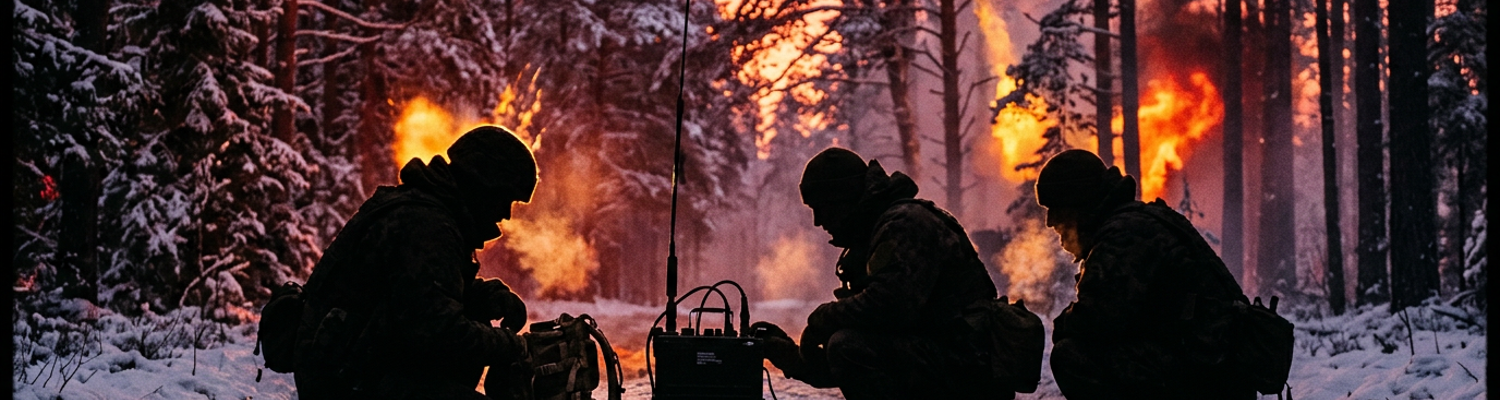

The Ghost Front and Ardennes Winter Posture
Rifle grease froze solid inside the receiver mechanisms of M1 Garand rifles as frontline troops endured subzero conditions along the Ardennes border. Wet canvas web gear stiffened in the persistent winter mist, locking cartridge belts and canteen covers into rigid flaps that resisted numbed fingers. Soldiers discovered that standard issue lubricants hardened into a waxy substance inside weapon actions, preventing firing pins from striking primer caps with enough force to detonate cartridges. Riflemen broke down their weapons in damp positions, stripping the congealed grease with gasoline before wiping the steel dry to keep the operating rods cycling freely. Heavy wool overcoats soaked up freezing moisture from low hanging clouds and doubled in weight, dragging down exhausted infantrymen who lacked dry socks and waterproof boots. Foxholes cut into the rocky forest floor filled with ice and slush, leaving frontline soldiers without dry shelter across the wooded slopes.
Infantrymen of the newly arrived 106th Infantry Division took over these wet positions in mid December 1944, relieving the veteran 2nd Infantry Division along an overextended twenty-one-mile sector of the Schnee Eifel ridge. Standard military doctrine assigned a division frontage of roughly five miles, but the untested 106th stretched its three regiments across four times that distance. Outgoing veterans handed over damp log bunkers and reinforced pillboxes along the German border fortifications, warning the green replacements that the quiet sector hid constant enemy movement. The 422nd and 423rd Infantry Regiments took up static positions on the high ground of the ridge, jutting forward into German territory in an exposed salient. Thick pine trees restricted visibility to less than fifty yards, hiding ravines where enemy combat patrols operated in the darkness. This dangerous deployment left the division with no tactical reserve troops and exposed an unanchored northern boundary where the high ground sloped downward into the Losheim Gap.
Troopers of the 14th Cavalry Group guarded this critical five-mile corridor of the Losheim Gap with widely dispersed village strongpoints rather than a continuous defensive line. Mechanized cavalry squadrons converted stone farmhouses and village basements into isolated fortresses in small settlements such as Roth, Kobscheid, and Krewinkel. Light M8 armored cars sat parked behind stone walls with canvas tarps thrown over their open turrets, immobilized by narrow snow-covered trails and hidden minefields. Deep gaps measuring more than a mile separated these scattered village garrisons, leaving wooded draws and farm roads completely open to foot movement. Reconnaissance patrols attempted to monitor these unobserved valleys, but subzero temperatures and thick fog prevented vehicle engines from turning over quickly and blurred binoculars. Infantry detachments from the neighboring 99th Infantry Division to the north failed to link their outpost positions to the cavalry lines, leaving the five-mile corridor tied together by nothing more than thin lines of communication.
Signalmen laid black field wire over the frozen snow to connect these scattered company command posts back to regimental headquarters. Constant freezing and thawing cycles cracked the rubber coatings of the telephone lines, grounding signals into the mud and filling voice traffic with deafening static. Line crews trudged through the dark timber with hand reels to locate wire breaks caused by falling pine branches or passing vehicle tracks. Frontline listening posts reported the rumbling sound of heavy German armor and bridge construction echoing across the Our River valley, but headquarters personnel dismissed these acoustic reports as regular rotation traffic. Soldiers on the ridge heard enemy tank engines warming up before sunrise, yet command echelons ordered no changes to defensive postures or artillery priority targets. Forward observers simply returned to their freezing foxholes, scraping ice off their weapon bolts while German assault divisions quietly moved heavy armor into attack positions along the valley floor.
Higher Headquarters Intelligence Filtering and Roer Assumptions
Telephone wires carried the acoustic warnings of those valley floor tank engines directly to rear command posts, where staff officers filed the mechanical noise away as routine troop rotations. SHAEF G-2 Major General Kenneth Strong and First Army G-2 Colonel Benjamin Dickson compiled daily intelligence and operations summaries that tracked enemy troop movements east of the Our River, plotting each sighting onto clean map overlays far behind the frontline mud. Colonel Dickson noted growing rail deliveries, bridge repair work, and truck convoys arriving in the Eifel hills and issued warnings of a counteroffensive, yet higher headquarters filtered this raw data through fixed expectations about German operational exhaustion. Major General Strong also raised alarms at Supreme Headquarters in Versailles, but army group commanders dismissed these warnings, interpreting the same supply movements as minor defensive adjustments made by battered units trying to rest in the woods. Both intelligence chiefs processed steady streams of patrol logs and aerial sightings, but higher operational echelons treated the thick German border fortifications as an impassable obstacle that stripped the enemy of any serious striking power. Staff officers routinely gathered these daily summaries into neat mimeographed folders that reassured corps and division commanders that no major enemy combat formation posed an immediate threat.
Commanders accepted these reassuring folders because their own operational planning focused entirely on cracking the German water defenses to the north. Theater intelligence officers dismissed frontline human intelligence patrols and acoustic observations, misinterpreting German armored buildups solely as counterattack reserves for Allied operations against the Roer River dams. Patrol scouts who slipped past German wire along the Our River reported newly built timber bridges, freshly dug tank hides, and heavy armored concentrations, but higher headquarters brushed off these physical ground sightings. Acoustic teams at forward listening posts tracked the nightly growl of high-displacement Maybach tank engines and recorded the sounds of steel treads clanking across pontoon bridges, yet senior analysts argued that sound traveled unpredictably in cold mountain fog and could not be verified. Senior officers insisted that any German panzers gathered in the Eifel forests existed only to counterattack American units once the offensive against the Roer dams got underway. Forward cavalrymen and infantry squads watched these formal dismissals trickle back down the chain of command, leaving their frontline foxholes without extra artillery support or armor reinforcements.
Infantrymen clutching frozen rifles in the Schnee Eifel received no new defensive orders because strategic assessments repeatedly overrode frontline tactical warnings by assuming the German rail transit and vehicular noise indicated defensive restructuring rather than offensive preparation. German supply trains rolling into rail terminals at Bitburg, Gerolstein, and Kyllburg unloaded fresh assault troops every night under strict radio silence. Staff intelligence officers studied these rail movement tables and concluded that the trains were merely replacing exhausted frontline divisions with secondary garrison troops to shore up the West Wall. Frontline observers reported massive convoys driving west with blackout slit lamps shining on icy forest trails, but theater assessments classified these nighttime convoys as administrative evacuations and normal supply adjustments. Commanders at First Army and SHAEF refused to alter troop deployments or reallocate ammunition stockpiles, convinced that the enemy lacked the industrial capacity to mount an offensive. Engineers and cavalry outposts along the Losheim Gap remained spread across twenty miles of broken ground, left to hold thin defensive lines with cracked telephone wire and frozen weapons.
Dismissed Human Intelligence and Acoustic Reconnaissance
Troopers of the 18th Cavalry Reconnaissance Squadron slipped beyond those thin defensive lines to patrol the unobserved ravines between the snowbound villages. Cavalry scouts moved through freezing fog and deep snowdrifts, probing German picket lines along the edge of the Westwall fortifications. Patrol leaders ambushed enemy movement along muddy logging trails, capturing several German soldiers who belonged to the newly arrived 18th Volksgrenadier Division. Interrogators at squadron command posts questioned the prisoners and uncovered detailed accounts describing impending offensive preparations across the entire sector. Captured infantrymen revealed that German field commanders had issued special cold-weather rations, distributed extra ammunition belts, and pulled assault companies together for combat training behind the bunkers. The prisoners stated openly that their units were staging for a major winter offensive designed to push directly through the thin American cavalry lines in the valley floor.
Observers at forward listening posts confirmed the captives statements within hours as darkness settled over the Schnee Eifel. Cavalry sentries dug into damp soil above the Our River valley reported persistent nighttime sounds of tracked vehicles, armored column bridging equipment, and heavy train marshaling east of the Westwall. Soldiers lying flat in frozen foxholes listened to the low mechanical hum of hundreds of tank and assault gun engines warming up in hidden forest positions. Heavy diesel tractors hauled long trailers loaded with steel treadways and timber bridging gear along gravel roads, signaling that German engineers were staging equipment to bridge antitank ditches and swollen mountain streams. Farther to the east, railway locomotives hissed and moved back and forth through the night, slamming strings of freight cars together as supply marshaling depots unloaded heavy armor and crated munitions near the front. Outpost teams compiled these acoustic sightings into urgent log entries, tracing an unmistakable pattern of offensive assembly taking place just beyond American visual range.
Officers at corps-level and army-level intelligence echelons reviewed these sound logs and immediately categorized the activity as routine defensive rotation, ignoring warnings of large-scale vehicular staging. Intelligence analysts at VIII Corps and First Army headquarters operated under the fixed belief that the German army was completely spent and incapable of launching an operational counteroffensive. Senior officers explained away the heavy vehicular noise by claiming that cold mountain air distorted acoustics, causing the movement of a few supply trucks to sound like massive armored columns. Staff summaries concluded that the trains and tracked vehicles simply represented normal relief operations where exhausted frontline infantry divisions rotated out of the bunkers to trade places with fresh garrison troops. Analysts treated the bridging equipment reports as defensive engineering work intended to repair damaged road networks rather than assault gear meant to carry heavy panzers across the American lines. Intelligence summaries sent back down to the frontline units insisted that no buildup was underway, dismissing the mechanical evidence gathered by the outposts as overanxious guesswork by inexperienced troops.
Commanders of the 14th Cavalry Group read these official rejections while their men continued to report engine noises echoing across the frozen ground. Squadron officers requested additional artillery concentrations, armor reinforcements, and permission to mine secondary roads, but higher headquarters denied the requests to avoid diverting resources from the planned offensive toward the Roer River. Cavalry troopers returned to their stone basements and forward foxholes along the five-mile Losheim Gap, unable to do anything more than patch cracked telephone lines and chip ice off weapon sights. Outpost sentries listened to the clanking of tank tracks echoing across the valley throughout the bitter night, knowing that hundreds of assault vehicles were running their engines in the dark woods just across the river. Men in the forward observation pits set their weapons on the parapets and waited in the freezing fog, isolated at the end of neglected field wires while enemy panzer divisions completed their final assembly.
Frontline Tactical Wire Systems and Dense Spruce Timber
EE-8 field telephone wire carried every message between those isolated observation positions and rear command posts, serving as the primary communications link across the Schnee Eifel. Tactical communication between battalion command posts and forward observation positions relied primarily on this wire strung across spruce branches. Signal teams ran W-110 twin-conductor wire from hand reels along muddy logging trails, lifting the strands overhead into the needles so passing jeeps and tracked half-tracks would not tear them apart. Heavy snow, fallen branches, and freezing moisture repeatedly grounded field lines and caused severe insulation leakage across the Schnee Eifel sector. Water seeped into tiny cracks along the weathered rubber and cotton braid jacketing, draining battery currents into damp bark and reducing voice signals to faint clicks. Observers spinning the magneto hand cranks on their field phones found their ring signals grounded by electrical shorts, leaving frontline outposts unable to report suspicious engine sounds to battalion switchboards.
Signal Corps linemen shouldered steel wire reels and headed into the freezing woods to locate the electrical breaks that had silenced those switchboards. These technicians operated under constant exposure to mortar fire, field-stripping wire splices with numb hands while tracking breaks in rough forest terrain. German mortar crews registered forest crossroads and trail gaps, regularly throwing fragmentation shells into the timber to sever the American wire networks and hit maintenance details in the open. Linemen flattened themselves into freezing snowdrifts during incoming barrages, waiting for shrapnel to stop slicing through the spruce canopy before standing up to inspect torn wire ends. Subzero temperatures numbed bare fingers within seconds, turning the chore of skinning rubber insulation with pocketknives into a painful struggle against frostbite. Linemen scraped the steel and copper conductors clean with dull blades, twisted the bare cores together, and covered the fresh splices with black friction tape that had lost its adhesive grip in the bitter cold.
Moisture seeped past those stiffened friction tape wraps as freezing fog settled over the ridges, driving electrical resistance higher across every repaired circuit. Switchboard operators working BD-71 switchboards inside stone village cellars could barely hear outpost sentries through the loud background hum of grounded wire. Operators cranked their phones repeatedly and shouted into carbon microphones, struggling to transcribe garbled reports about tracked vehicle movement across the Our River. Dry-cell batteries inside the EE-8 handsets lost power rapidly in the subzero chill, dropping operating voltage and crippling voice transmission across distances longer than two miles. Radio sets like the SCR-300 backpack units failed to bridge the communication gaps because dense timber and steep rock ridges blocked high-frequency signals, while strict radio silence orders forbade unauthorized transmissions. Battalion staff officers remained dependent on these vulnerable ground lines, monitoring switchboard indicator lamps that flickered and went dark as freezing winds swept across the forest.
Snow driven by those freezing winds accumulated on upper spruce boughs throughout the night, snapping timber and dragging freshly spliced wires into frozen mud. Linemen returned to the dark ravines without rest, feeling along suspended wires with gloved hands to detect breaks without exposing flashlight beams to German snipers. Technicians clamped field test handsets across raw wire pairs every few hundred yards, listening for the dial tone of a working switchboard before pushing farther into the trees. Company commanders along the forward ridge line sat beside silent telephones, testing hook switches and checking dry battery terminals while waiting for morning call ins that never came through. Frontline outposts remained tethered to broken lines strung through the dark timber, unable to alert rear switchboards as German assault battalions moved into their jump off trenches.
SCR-300 Transceiver Failures and Battery Degradation
SCR-300 backpack FM radios provided the only remaining method for frontline tactical units to bridge gaps where severed field telephone wire lines left company outposts isolated from battalion switchboards. Infantry radio operators hoisted the thirty-eight-pound steel cases onto their web harness straps, extending three-foot whip antennas into the freezing spruce branches above their foxholes. Crews spun the tuning knobs through preset tactical net channels, hoping the frequency-modulated signals could punch through the dense evergreen forest where grounded copper wires had failed. Dense timber and steep ridgelines along the Schnee Eifel swallowed the high-frequency line of sight waves, scattering transmissions into damp pine needles and dropping the effective broadcast range down to a few hundred yards. Operators pressing the rubber coated push-to-talk switches on TS-15 handsets heard only dead hiss and heavy static crackle instead of acknowledgments from regimental command posts.
BA-70 dry-cell batteries clamped into the lower compartment of each radio chassis caused this sudden loss of signal power by collapsing in the bitter cold. Subzero temperatures caused these power units to rapidly lose voltage, cutting operational life down to a fraction of normal capacity. The chemical electrolyte paste inside the zinc-carbon cells hardened into an inert solid, creating severe internal resistance that choked off electrical current before it reached the vacuum tubes. Batteries rated for twenty hours of continuous operation in temperate weather dropped below the minimum operating threshold of four and a half volts after less than two hours in the snow. Weakened power cells could still run the receiver circuits for short intervals, but keying the transmitter microphone pulled an immediate power surge that drained the remaining voltage and shut down the set entirely.
Radio operators improvised field fixes to restart those dead sets, warming dry cells under clothing and cleaning frozen terminal lugs. Soldiers unlatched the wing nuts on the battery box covers with numbed fingers, sliding the freezing BA-70 blocks out of the aluminum frames and tucking them directly beneath their wool sweaters and armpits. Body heat gradually thawed the chemical paste inside the paper casings, temporarily lowering internal resistance and restoring enough voltage for brief bursts of radio traffic. Linemen used pocketknife blades to scrape frost, grease, and corrosion off the exposed brass terminal lugs, ensuring clean metal contact before reattaching the power harnesses. Operators rotated two batteries constantly, keeping one brick pressed against bare skin inside their uniforms while the other supplied thirty or forty seconds of speech to an artillery fire direction center.
Scouts crouching in advanced pits along the Losheim Gap discovered that these brief thawed battery cycles were still too weak to maintain continuous contact across the ridges. Signalmen shouted coordinates into damp microphones as fast as their lips could move, only to have their transmitters click dead mid sentence when the BA-70 cells chilled again in the open air. Platoon leaders attempted to swap antennas and tighten binding posts, but the total lack of fresh supply crates forced frontline companies to ration all remaining radio calls. Cavalry outposts stationed in stone cellars along the border watched their transceiver indicator lamps fade into dark silence just as German pre-dawn artillery fire began tearing up the remaining logging trails. Battalion commanders along the Schnee Eifel lost their last electronic connection to the valley outposts, left clutching frozen handsets while enemy assault columns crossed the frozen streams into the Losheim Gap.
The Opening German Artillery Barrage and Command Severance
Artillery batteries from the German Sixth and Fifth Panzer Armies struck those isolated valley outposts and ridge positions at 0530 on December 16, 1944, unleashing a massive ninety-minute artillery barrage across an eighty-mile front. Over two thousand heavy howitzers, field guns, and multi-barrel rocket launchers fired continuously into the dark forest, ripping open the snowdrifts and shattering frozen spruce trunks into jagged splinters. Violent concussion waves tore through American foxholes and collapsed earth and log bunkers, crushing infantrymen beneath falling timber before frontline riflemen could identify any targets in the smoke. High-explosive fragmentation rounds detonated in the upper evergreen branches, spraying showers of hot steel shrapnel downward into exposed weapons pits where scouts huddled without overhead cover. Forward observers pressed their bodies into freezing mud and rock as deafening explosions threw geysers of dirt into the air, igniting brushfires and scattering jagged rock fragments across the slope. Ground tremors shook stone village basements across the valley floor, flattening outbuildings, shattering window glass, and sending thick plumes of black cordite smoke rolling into the freezing dawn.
Shellfire tearing through that smoky dawn severed primary EE-8 telephone lines and knocked out observation towers across the ridges, blinding forward regimental command posts across the Losheim Gap within the first fifteen minutes of the bombardment. Forward observers stationed in elevated wooden platforms plummeted into the snow as splintered timber beams collapsed under direct hits from German high-velocity cannon fire. Switchboard drops clattered down inside damp stone cellars, but signal operators spinning their magneto hand cranks heard only dead silence over field circuits stripped of their rubber insulation. Signal Corps wire crews attempting to trace the breaks stepped directly into incoming shell bursts, discovering that miles of copper and steel conductor wire had been shredded into useless fragments by tree bursts. Regimental commanders at their battle stations lost all contact with their forward rifle companies, unable to determine where enemy infantry and assault guns were penetrating the thin defensive perimeter. Outpost sentries in the forward border villages of Roth and Kobscheid found themselves cut off from all heavy artillery support as German assault columns advanced through the fog toward their isolated strongpoints.
VIII Corps headquarters in Bastogne possessed no clear information about the disaster unfolding at those village strongpoints, where delayed dissemination of theater-level intelligence reports left corps staff and 106th Division headquarters unaware of the scale of the coordinated assault. Staff officers at St. Vith assumed the heavy bombardment was only a local spoiling attack intended to disrupt Allied preparations along the Roer River rather than a major strategic offensive. Rear echelon map tables still displayed old intelligence overlays showing depleted enemy divisions resting in garrison behind the West Wall, reinforcing the belief that the German army lacked offensive striking power. Fragmented radio transmissions from cavalry troops reported German armor and white camouflaged infantry overrunning forward roadblocks, but division staff dismissed the urgent calls as exaggerated panic from untried soldiers. Major General Alan Jones withheld his division reserves in the rear, expecting the frontline cavalry outposts to reestablish wire contact once the morning artillery smoke cleared. Division and corps commanders refused to release armored reinforcements or authorize tactical retreats, leaving forward battalions isolated in their foxholes as German panzer columns broke through the Losheim Gap.
Combat Engineer Demolitions and Roadblock Defense
Engineers rushed directly into the path of those surging panzer columns with crates of high explosives, attempting to throw up immediate barriers where defensive lines had crumbled. Assigned combat engineers hurriedly detonated bridge culverts and felled timber abatis across narrow logging defiles to slow advancing German armored columns. Demolition squads packed blocks of Composition C-2 plastic explosive and heavy dynamite sticks into stone drainage conduits under the frozen valley roads, attempting to crater the narrow roadbeds and channel German tanks into swampy creek bottoms. Pioneers worked with crosscut saws, axes, and ring charges along the dense tree lines, cutting deep notches into spruce trunks so the massive evergreens crashed in crisscrossed layers over the logging trails. Heavy branches locked together in tangled barricades that blocked tracked transport vehicles and blinded tank drivers searching for bypasses in the deep snow. These improvised timber blockades snarled the leading German assault elements, forcing enemy grenadiers to dismount into the brush while American demolition teams scrambled backward to rig secondary charges at the next stream crossings.
Detonation cords and blasting caps rigged for those secondary charges suffered frequent misfires caused by freezing moisture and hasty preparation under intense small-arms fire. Freezing slush seeped directly into the open crimp sleeves of copper blasting caps, soaking the dry explosive compound and extinguishing the spark before it could trigger the main charges. Soldiers tried to clamp caps onto slick Primacord lines with stiff fingers and dull crimpers, but their shaking hands bent the soft metal and cracked the waterproof seals. Hostile riflemen and machine-gunners laid heavy fire along the road embankments, splintering nearby trees and forcing engineers to work flat on their stomachs in the freezing mud without time to tape their connections properly. Friction igniters pulled from wet canvas pouches failed to strike sparks against damp internal friction wires, leaving fuses dead in the freezing wind. Demolition crews crawled through icy ditches under direct machine gun fire to splice fresh lines into their unexploded charges, watching their primary firing systems fail repeatedly while German tanks rumbled onto the intact spans.
Engineer and cavalry detachments organized improvised roadblocks at key road junctions around Manderfeld and Buchholz Station to catch the German armor as it rolled across those intact crossings. Reconnaissance troopers and combat engineers backed heavy trucks, disabled half-tracks, and farm carts across the village intersections, shooting out their own tires and smashing engine blocks to anchor the barricades in place. Crews linked M1A1 antitank mines together with field wire across the snow-covered roadway, pulling the steel discs tight between stone foundations so passing tanks could not bulldoze through without detonating the explosives. Gun crews rolled light 37mm antitank guns into the ground floors of stone barns and aimed .50 caliber heavy machine guns down the railway tracks at Buchholz Station. Incoming German infantrymen rushed the barricades under mortar fire, attempting to dismantle the wire and mine belts by hand while American gunners fired point-blank into the charging skirmishers.
Machine-gunners firing into those skirmishers held these isolated junction points through the middle of the morning, forcing German armor columns into bottleneck traffic jams that stretched miles eastward into the forest. Panzer commanders halted their lead vehicles behind the disabled trucks at Manderfeld, unable to bypass the fortified village streets without bogging their tanks in the soft snow of the surrounding pastures. German assault guns eventually pulled forward through the timber to blast the barricades apart at point-blank range, crushing the stone walls and setting fire to the remaining wooden defensive positions. Outpost defenders burned their tactical maps, disabled their remaining vehicle radios with axes, and pulled back along western trails on foot to establish secondary firing lines closer to St. Vith.
Battalion Aid Station Triage in Sub-Zero Isolation
Litter teams carried wounded infantrymen away from those crumbling secondary firing lines, crowding forward medical posts set up in damp stone houses just behind the front. Overrun battalion aid stations triaged devastating shrapnel wounds, amputations, and blast trauma as casualties poured in from surrounded forward ridges. Battalion surgeons and enlisted technicians worked under flickering kerosene lanterns, sorting through dozens of bleeding men laid out across dirt floors. High-explosive tree bursts had sprayed jagged steel casing fragments through limbs and torsos, shearing through winter wool uniforms and driving contaminated cloth deep into open flesh wounds. Concussion blasts from heavy artillery shells had collapsed lungs, broken bones, and knocked soldiers unconscious without leaving external marks. Medical officers tied off severed arteries with hemostats and packed gaping abdominal cavities with sulfanilamide powder, struggling to stabilize sinking pulses as fresh casualties continued to arrive from the woods.
Plasma ampoules needed to restore those sinking pulses presented an immediate mechanical obstacle because the liquid and dried components froze solid in the subzero cold. Combat medics wrestled with frozen blood plasma ampoules that had to be thawed against human body heat before intravenous administration was possible. Standard medical kits contained cans of dried plasma alongside glass bottles of sterile distilled water, but the water expanded into solid blocks of ice inside uninsulated canvas satchels. Medics shoved the freezing glass containers inside their wool sweaters and under their armpits, holding the cold glass directly against their bare skin to melt the slush through their own body heat. Numb fingers fumbled with rubber tubing and dull needles while attempting to pierce frozen rubber stoppers on the thawed bottles. Once mixed, the chilly solution ran through narrow rubber hoses into collapsed veins, but needles frequently clogged or slipped out as patients convulsed with severe muscle tremors.
Stone cellars sheltered these convulsing casualties from falling artillery shells but offered no protection against the freezing air sinking into the foundations. Severely wounded casualties faced rapid hypothermia and irreversible shock within unheated stone cellars while awaiting evacuation routes that were already cut. Wet combat jackets, slush soaked trousers, and heavy snow boots remained saturated with freezing moisture, leeching core body heat out of motionless patients within minutes. Blood loss caused peripheral blood vessels to clamp shut, dropping arterial pressure and accelerating deep shock across the crowded rooms. Medics covered patients with damp wool blankets and laid stretchers across wooden crates to keep men off the frozen rock, but the supply of dry bedding ran out before midday. Casualties lapsed into cold-induced stupor while listening to the rumble of approaching German armor, unable to escape the basements as mortar rounds tore through the upper floors.
Ambulances and modified litter jeeps trying to reach those cellars ran directly into German armored spearheads, ending all regular medical evacuation across the sector. Advancing panzer columns severed the primary roadways between Bleialf, Schonberg, and the western transport depots, trapping medical detachments inside isolated village pockets. Drivers attempting to run the gauntlet with wounded men were shot up by machine gun fire or blocked by burning transport trucks at narrow creek crossings. Battalion doctors placed their remaining wounded onto basement floorboards, distributed final syrettes of morphine, and ordered walking wounded to hide in the timber before enemy infantry closed the ring. Aid station personnel stacked discarded stretchers against the stone stairwells, burned classified casualty logs, and hung improvised white flags over the cellar entryways as German assault troops reached the perimeter.