
A review of operational logs shows the destructive potential assembled in Alaska, a prelude to the electronic war of nerves that would define the theater. The territory was a designated launch point. Strategic Air Command bombers, loaded with high-yield thermonuclear weapons, sat on alert. The shortest flight path for a Soviet air attack on North America cut directly across the polar region. This transformed Alaska into the continent’s northernmost sentry post. This geographic fact dictated a massive military buildup. The primary threat was an airborne invasion, involving bombing and paratrooper drops targeting hubs like Nome, Fairbanks, and Anchorage. The region bristled with interceptor aircraft, anti-aircraft batteries, and the beginnings of a continental defense system designed to blunt a Soviet first strike. The entire strategy depended on one factor. Time. The ability to detect an incoming attack with enough warning to launch a counterattack was everything. This placed an unprecedented burden on the region’s primitive communications network, a system about to be tested by a harsh environment and the threat of nuclear war.
The foundational communications spine of the territory was the Washington-Alaska Military Cable and Telegraph System (WAMCATS). Congress authorized the network in 1900, and the U.S. Army Signal Corps built it. Initially constructed to connect isolated military posts and support civil administration after the Klondike gold rush, WAMCATS was a hybrid system from its inception. It comprised thousands of miles of undersea cables running from Seattle to Sitka, landlines strung on poles across the frozen interior, and some of the world’s first long-distance radio operations. By the dawn of the Cold War, this aging network, renamed the Alaska Communication System (ACS), was tasked with a dual mission. It had to continue providing essential telegraph and telephone services to the civilian population while simultaneously supporting a rapidly expanding, and highly secret, military intelligence apparatus. The 59th Signal Battalion, the “Voice of the Arctic,” found its legacy system of copper wire and early radio struggling to carry the load. The system, once a major federal investment, was now a vulnerability. Control passed from the Army to the Air Force in 1962, reflecting the shift in strategic priority from ground support to air defense, but the underlying problem remained. The network had to be both a public utility and a secure military channel, a contradiction that created constant operational friction and security risks.
This dual-use framework was the bedrock upon which Alaska’s Cold War intelligence-gathering capabilities were built. The ACS, for all its limitations, provided the essential connectivity for a vast array of listening posts and sensor networks. Its infrastructure was the conduit for data flowing from the Distant Early Warning (DEW) Line, a string of more than 60 radar installations stretching from northwestern Alaska across the Canadian Arctic to Greenland. Built beginning in 1954, the DEW Line’s purpose was to detect incoming Soviet bombers and missiles, providing the hours of warning needed for North American Air Defense Command (NORAD) to react. The ACS also handled radioteletype, radio telephone, and ship-to-shore frequencies, all monitored for communications intelligence. To supplement this electronic network, the U.S. government initiated clandestine programs like Operation Washtub. This joint FBI and Air Force project recruited and trained ordinary Alaskan civilians. Fishermen, trappers, pilots, and even a one-armed photographer were to act as stay-behind agents in the event of a Soviet invasion. These agents were to use hidden caches of radios and supplies to transmit intelligence on enemy movements, feeding their reports back into the military’s communication system.
The strategic importance of this Arctic infrastructure cannot be overstated.
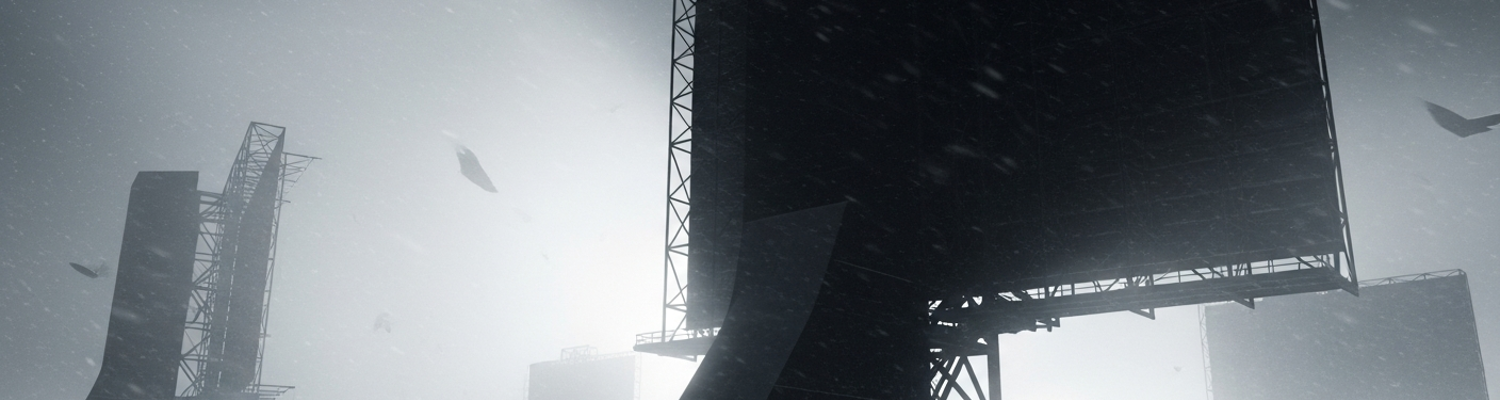
Control of the communication lines over the North Pole was central to the doctrine of nuclear deterrence. The Arctic was the primary theater for a potential nuclear exchange between the superpowers. The DEW Line and its supporting communication links were the tripwire. Later, this network was enhanced by the White Alice Communications System (WACS), an Air Force project initiated in 1955. WACS utilized a new technology, tropospheric scatter, which bounced radio signals off the troposphere to achieve over-the-horizon communication. This connected even the most remote radar sites. Characterized by its massive, billboard-like parabolic antennas, White Alice integrated the DEW Line, Ballistic Missile Early Warning System (BMEWS) sites, and other aircraft control facilities into a single, resilient network. This system provided the secure, multi-channel, and expandable communications that an initial AT&T survey had deemed essential. It formed the electronic backbone of NORAD’s forward defense, ensuring that any Soviet bomber offensive would be detected, tracked, and reported, activating the entire continental defense mechanism. The survival of the United States in the opening hours of a third world war depended directly on the reliability of these Alaskan circuits.
Engineering logs from the U.S. Army Signal Corps reveal the sheer physical struggle required to lay basic communications infrastructure across Alaska. The primary antagonist was the ground itself. Permafrost, the perennially frozen soil covering an estimated 85 percent of the territory, presented a unique and formidable construction challenge. It was a composite of soil, gravel, and solid ice with the consistency of concrete. Standard trenching equipment proved useless, its teeth shattering against the frozen mass. Signal Corps and later U.S. Army Corps of Engineers teams had to improvise. They developed a slow-moving process to bury armored cables. Crews often used high-pressure steam points to thaw a narrow path, a technique that was slow and energy-intensive. In other cases, they resorted to blasting with dynamite, a dangerous and imprecise method that left behind a cratered, unstable trench. The most effective method involved heavy D8 Caterpillar tractors fitted with massive rear-mounted rippers to score and fracture the top layers of frozen ground before bucket excavators could scoop out the debris. This entire effort was complicated by the active layer, the top few feet of ground that thawed each summer. Any cable buried in this zone would be crushed or severed by the forces of frost heave as the ground refroze and expanded the following winter. To ensure the line’s survival, trenches had to be dug deep into the stable, permanently frozen ground below, a task that multiplied the difficulty of every mile of cable laid.
The ground was only half the battle. Erecting the thousands of miles of overland telegraph lines for WAMCATS was an exercise in brute force against an unforgiving landscape. With fewer than 20 miles of wagon roads in the entire territory at the turn of the century, there was no way to transport supplies conventionally. The process began with survey crews hacking their way through dense wilderness, navigating by compass to plot a viable route. Following them were teams hauling 20-foot telegraph poles and coils of iron wire. Every piece of equipment was moved by dog sled, pack animal, or human strength. Setting the poles in permafrost was another engineering puzzle. Digging a deep hole was often impossible. Instead, crews sometimes had to build tripods or A-frame structures to hold the poles on the surface. In other locations, they used steam to melt a hole, quickly set the pole, and hoped the refreezing slurry of mud and ice would lock it in place before it fell over. Linemen then had to climb each of the 72,000 poles, often in extreme cold, to string the heavy gauge wire. The lines themselves became a problem. Heavy snow and ice accumulation could topple poles, while intense winter winds created galloping oscillations that could snap the wire or rip cross-arms from the poles.
These construction challenges were governed by the hostility of the Arctic environment. U.S. Army operational logs (NARA Record Group 338) document temperatures dropping below -50°F. This was a cold so intense that steel becomes brittle and fractures like glass, and lubricants in heavy machinery freeze solid. At these temperatures, human efficiency plummets as nearly all energy is spent simply surviving. Simple mechanical tasks became ordeals. A Signal Corps soldier attempting to tighten a bolt would have to do so with clumsy, thick mittens, risking instantaneous frostbite on any exposed skin. Beyond the cold, the weather was an active adversary. Sudden blizzards created blinding whiteout conditions, halting all work and threatening the lives of anyone caught away from shelter. The brief summer offered no real relief. It traded cold for a different kind of misery. The thawing active layer transformed the terrain into a vast, swampy bog known as muskeg, capable of swallowing men and equipment. This was accompanied by insect swarms so dense they were reported to suffocate animals. As a result, much of the heavy construction had to be scheduled for the dead of winter, when the frozen ground was solid enough to support equipment, forcing the men to face the worst of the cold to get the job done.
Declassified records from the U.S. Army Signal Corps reveal a clandestine intelligence apparatus built directly into the public-facing infrastructure of the ACS. Even before Pearl Harbor, the strategic value of the Alaskan territory prompted the formation of the Alaskan Defense Command in February 1941. With it came the quiet insertion of signals intelligence missions. This was an improvised effort grafted onto the existing network of undersea cables, landlines, and radiotelegraph stations. Units like the 2nd Signal Service Company, initially established to operate WAMCATS, found their roles expanding into the collection of communications intelligence. These early SIGINT teams were embedded within regular ACS facilities. Their true purpose was masked by the system’s dual-use nature of providing civilian services. This arrangement provided a necessary cover, allowing intelligence personnel to operate without drawing attention. The work was secret. The equipment was often standard ACS gear, re-tasked and pushed to its limits to scan the radio spectrum for transmissions of interest. This was a foundational effort that laid the technical and operational groundwork for the electronic war to come.
The primary target was the Imperial Japanese military. Following the Japanese bombing of Dutch Harbor in June 1942 and the subsequent occupation of Attu and Kiska islands, the Aleutian Campaign became the central focus of the Alaskan theater. This remote, fog-shrouded island chain became a battleground for radio operators. From hastily constructed listening posts on islands like Adak and Amchitka, U.S. Army and Navy intercept operators strained to copy Japanese communications. This was not high-level strategic code. The most valuable intelligence often came from low-level tactical transmissions. Operators listened for Japanese naval weather reports, which provided data for planning American bombing missions in a region notorious for unpredictable weather. They monitored air-to-ground chatter from Japanese pilots and the Kana morse code traffic between ships and island garrisons. This process allowed American commanders to build a detailed picture of Japanese patrol schedules, supply convoy movements, and force dispositions. The intelligence gathered by units like Colonel Lawrence Castner’s Alaska Scouts, a combat intelligence platoon of local outdoorsmen and natives, was supplemented and confirmed by the electronic intercepts from the ACS teams. This created a comprehensive intelligence picture essential for retaking the islands.
This trial-by-combat forged the core operational protocols for Alaskan SIGINT. The process was a direct, tactical feedback loop. An intercept of a Japanese supply convoy’s radio traffic could lead to the immediate dispatch of a US Navy blockade force, as demonstrated in the Battle of the Komandorski Islands in March 1943. Intelligence on troop strength, gathered from radio traffic analysis, directly informed the planning for the American invasion of Attu in May 1943. A command structure was established within the Alaskan Defense Command to process and act upon this intelligence. It moved information from the isolated listening posts in the Aleutians to the headquarters at Fort Richardson. This pipeline required specialized expertise. Soldiers became highly skilled in identifying specific Japanese radio operators by their unique sending styles, a technique known as Traffic Analysis. Others became experts in the rudimentary battlefield cryptology needed to make sense of low-level ciphers. This hard-won expertise, developed under extreme pressure in a difficult environment, created a cadre of experienced SIGINT personnel whose skills would prove invaluable as the focus of Alaskan intelligence shifted from the Japanese Empire to the new threat emerging across the Bering Strait.
The transition from World War II to the Cold War in Alaska was immediate. There was no stand-down. The experienced signals intelligence personnel of the Army Security Agency (ASA), who had honed their skills on Adak and Shemya, were not demobilized. Their mission was re-oriented northward. The entire intelligence apparatus, the intercept stations, the traffic analysts, the cryptographers, and the ACS infrastructure, pivoted to face the new adversary. This institutional expertise, hard-won in the Aleutian Campaign, became the foundational human capital for the electronic war against the Soviet Union. The target sets changed from Japanese naval convoys to Soviet bomber formations and military activity on the Chukotka Peninsula. The ASA detachment in Alaska, established in mid-1948 with headquarters at Fort Richardson, assumed command of all Army signals intelligence and communications security in the theater. It inherited the assets and personnel from the wartime Signal Security Agency. This created a direct command pipeline for the highly classified intelligence flowing from the remote island listening posts to strategic planners.
The Cold War was on.
The geography of the Arctic dictated an intense intelligence focus on the Soviet Far East. The shortest air route for a Soviet nuclear strike on North America was over the pole. This made the military installations on the Chukotka Peninsula the single most significant threat. Beginning in 1945, the Soviets began a rapid expansion of airfields and military facilities in this region, stationing long-range bombers like the Tupolev Tu-4 within striking distance of Alaskan and North American targets. U.S. intelligence identified major Soviet Air Force bases at Uel'kal', Provideniya, and Lavrentiya. These previously obscure locations became priority targets for American SIGINT. From listening posts in the Aleutians and newly established sites, ASA operators began the painstaking work of building a new electronic order of battle. They scanned the high-frequency spectrum, listening for the Cyrillic morse code of Soviet military units, air-to-ground communications from bomber crews on training exercises, and the telemetry from missile tests. Every transmission was intercepted, logged, and analyzed to piece together a picture of Soviet capabilities, readiness, and intent. This constant surveillance was the nation’s electronic tripwire, providing the earliest possible warning of a surprise attack.
Soviet awareness of Allied SIGINT capabilities during World War II led them to develop their own electronic warfare doctrine, which they termed Radio-Electronic Combat (REC). Archival evidence shows U.S. officials held deep concerns about Soviet capabilities to wage electro-magnetic warfare on a strategic level. They viewed it as a direct threat to global communications. In Alaska, this threat manifested as deliberate jamming. Soviet transmitters on the Chukotka Peninsula or aboard naval vessels in the Bering Sea would begin broadcasting high-powered noise on the same frequencies used by American radar and communications networks. These early jamming techniques were often brute-force, designed to overwhelm sensitive American receivers with raw power. For the ACS and the radar crews of the air defense network, the effect was immediate. Communications links would dissolve into static. Radar screens that were supposed to be watching for Soviet bombers would be whited-out with noise. This was not a hypothetical threat. It was a constant, grinding operational problem that required desperate and improvised technical solutions just to keep the system functioning. Engineers and technicians were forced into a frantic cat-and-mouse game, rapidly shifting frequencies, attempting to filter out the jamming signals, and physically re-routing traffic through less-affected landlines or the new White Alice tropospheric scatter system to maintain a coherent picture of the airspace.
Maintenance logs reveal the task facing technicians responsible for the ACS. The advanced tropospheric-scatter equipment of the White Alice network and the radar systems of the DEW Line were pushed to their limits by the mission and the environment. At a remote station, a technician facing a failing 10-kilowatt klystron tube, the heart of a troposcatter transmitter, could not simply order a replacement part. Supply flights were infrequent and often delayed by weather. An after-action report from one White Alice site detailed a recurring failure in the delicate magnetic coils used to focus the klystron’s electron beam. The extreme, rapid temperature shifts inside the uninsulated upper equipment camps caused microscopic cracks in the coil windings, leading to intermittent signal degradation. The official repair manual was useless. Technicians, often civilian contractors from RCA, were forced to improvise. They would painstakingly unwind the damaged coils, identify the break, and then, using soldering irons and salvaged copper wire from less critical systems, splice the connection back together. This was a temporary fix, a measure to keep the channel open until a proper replacement could be flown in, a process that could take weeks.
This was a war won in warehouses and workshops. The daily struggle for Army Signal Corps and Air Force maintainers was a battle against physics and weather. At a typical DEW Line auxiliary station, a small crew was responsible for keeping a complex array of radars, scatter dishes, and diesel generators operational. A single blizzard could snap a guy-wire on a sixty-foot parabolic antenna, causing the massive steel structure to shift just enough to throw the finely-tuned radio beam out of alignment. This necessitated a perilous outdoor repair. A two-man team, tethered together and clad in layers of clumsy gear, would have to climb the icy superstructure in high winds and blinding snow to re-secure the antenna. Any exposed skin would suffer frostbite in minutes. Metal tools, having lost their tensile strength in the extreme cold, could shatter. Dropping a wrench meant it was lost forever in the snow below. Inside, the work was less dramatic but equally demanding. The vacuum-tube technology of the era was a constant source of maintenance problems, requiring technicians to constantly tweak components back into specification. The work was tedious and isolating, punctuated by moments of high-stakes improvisation.
Maintaining the integrity of communications was a direct counter-intelligence operation. Soviet electronic warfare units on the Chukotka Peninsula actively worked to jam American communications. A technician at a listening post on St. Lawrence Island, only 56 miles from the Soviet coast, would see this interference appear on his spectrum analyzer as a sudden blast of white noise across frequencies. This was a deliberate attempt to blind the DEW Line. The response required immediate, coordinated action. The technician would use a secure, but slower, landline or a different frequency band to contact the regional control center at Elmendorf Air Force Base. An order would come down to execute a frequency shift across the entire sector. At a designated time, every station in the chain, from a main station at Cape Lisburne to an auxiliary site in the Aleutians, would simultaneously switch their transmitters and receivers to a pre-arranged alternate frequency. This delicate electronic dance, performed by dozens of isolated technicians in perfect sync, was the only way to restore the clear picture of the airspace that NORAD depended on for its early warning of a potential Soviet bomber attack. Their work ensured that the warning of a Soviet first strike would get through.
The long-term impact of this forced innovation extends far beyond the Cold War. The practical experience gained from building and maintaining these sprawling, high-technology networks in a permafrost environment created a new field of arctic engineering. Lessons learned by military and civilian engineers in the 1950s about the properties of frozen ground, the effects of extreme wind chill on machinery, and the logistics of supporting remote operations were directly applied to the next great Alaskan undertaking: the exploration for oil on the North Slope and the construction of the Trans-Alaska Pipeline. The culture of field-expedient repair and creative problem-solving became an institutional asset for the Department of Defense. The very presence of this massive military-industrial complex permanently altered Alaska’s trajectory, tripling its population between 1945 and 1970 and providing the infrastructure and economic stimulus that led directly to statehood in 1959. Though the White Alice sites themselves were eventually made obsolete by satellites and decommissioned by the 1980s, their legacy was cemented in the engineering practices for modern arctic construction and the statehood of Alaska itself.