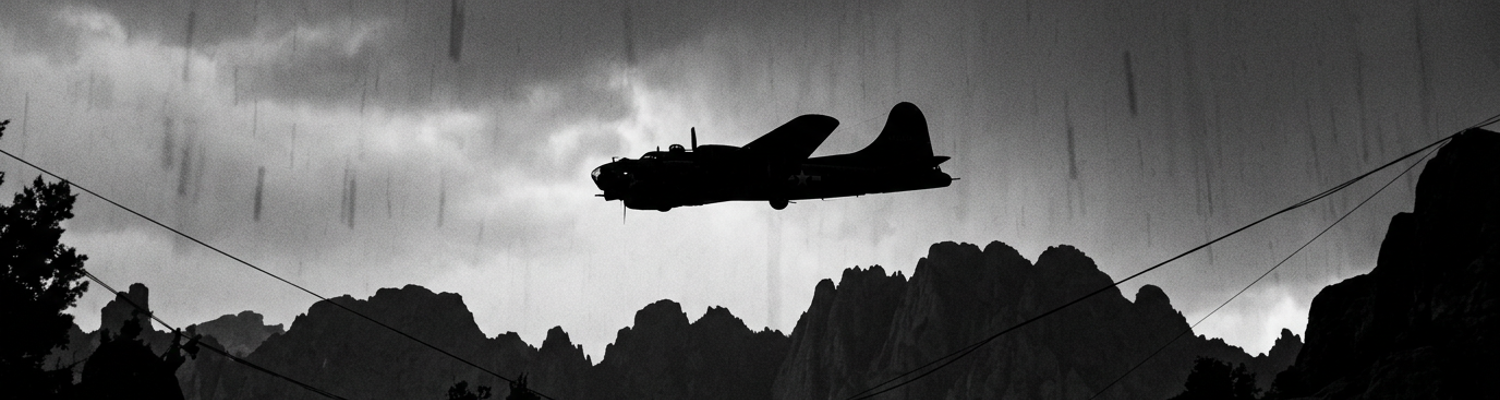

OSS Field Operations Along the Tenasserim Railway
Deep in the Bilauktaung ridges east of Ye. The jungle canopy holds complete silence at four in the morning. Insects cease clicking against the wet bark. Tropical mist clings to the rock cuts of the Burma-Siam line without a breeze. Two men lie prone in a mud crawlway twenty yards above the steel track. They wrapped their rifles in greased canvas to suppress any metallic ping. Every muscle aches from hours of forced immobility in the red clay. Sweat burns raw skin chafed by mildewed webbing. Neither operative dares blink away the stinging salt. A metallic shudder vibrates through the damp ballast below. The vibration transmits miles down the single narrow line before any engine noise registers in the humid air. That subsonic hum signals sixty tons of steel rolling directly into an engineered kill zone.
Sleep deprivation destroyed their cognitive reflexes within forty-eight hours.
Archival evidence shows that Office of Strategic Services Detachment 404 inserted small observation teams along the southern Burma theater beginning in late 1944. Operating under theater directives issued from Allied Southeast Asia Command headquarters in Kandy (NARA Record Group 226). These two-man and three-man reconnaissance cells infiltrated the Tenasserim mountain chain near the 15th parallel north. Their objective was to track southern supply corridors feeding the Japanese 28th and 33rd Armies. Sustained exposure to ninety-degree heat and ninety-eight percent humidity produced rapid psychological erosion. Men huddled in waterlogged drainage trenches for weeks. They developed severe fungal infections, dysentery, and uncontrollable tremors brought on by chronic sleep deficit. Tactical survival depended entirely on the AN/PRC-1 and SSTR-1 suitcase radio sets. Mechanical failures constantly pushed operators toward nervous collapse. Tropical moisture penetrated transformer coils. This stripped gears inside the GN-58 hand-crank generators and caused dry-battery seals to burst inside canvas rucksacks. An operator failing to raise the base relay station across the Bay of Bengal faced a grim certainty. The silence confirmed that discovery by local Imperial Japanese Army garrisons meant swift execution. Combat fatigue manifested as sudden auditory hallucinations. The hiss of steam vents along the tracks mimicked approaching search patrols. Field teams were pushed far past their physiological endurance limits. Forward planners ordered them to maintain round-the-clock watch rotations regardless of physical degradation.
Paranoia became an inescapable occupational condition.
A close review of operational logs indicates that spotters focused their field glasses on the narrow-gauge rail corridor connecting Thanbyuzayat to Ye. Stationed on razorback ridges overlooking timber trestles. Observers logged every C56 locomotive and freight consist assembled by the Japanese Imperial Army 5th Railway Regiment. Spotters counted flatcars loaded with crated aircraft engine parts and field guns. They tracked enclosed boxcars packed with infantry transfers moving south toward Tavoy. Staring through 7x50 M17 binoculars for eighteen consecutive hours brought on severe optical migraines and extreme sensory exhaustion. Observers had to memorize mechanical markers. They looked for improvised spark arresters fitted to wood-burning fireboxes and defective axle bearings shedding grease along the trackbed. Japanese Kempeitai counter-intelligence units frequently combed the adjacent hillsides with local tracker dogs. This forced the surveillance teams to stay buried under decaying leaf litter for days at a time without warm food or water replenishment. That unrelenting tension caused severe nervous exhaustion in spotters. They knew that a single dropped lens cap or unsuppressed cough would bring immediate mortar fire onto their grid coordinates. Data collected on locomotive engine numbers, train departure times from Thanbyuzayat, and tonnage estimates were ciphered onto one-time pads. Operators radioed this data directly to the 7th Bombardment Group of the Tenth Air Force at Pandaveswar Airfield. This set coordinates for B-24 Liberator bomb bays thirty-six hours before the trains cleared the jungle cuttings.
Technical Deployment of the SSTR-1 Transceiver
Archival evidence shows that the OSS Research and Development Branch finalized the design of the SSTR-1 suitcase transceiver in 1943. The goal was to solve severe weight and range constraints in deep-penetration territory. For Detachment 404 operatives holed up in concealed hillside redoubts six miles east of the Ye-Kanbauk supply route. The complete assembly weighed under fifteen pounds. Subdivided into three olive-drab metal canisters. These were the SST-1 transmitter, the SSR-1 receiver, and the SSP-1 power supply. The radio fit into standard rucksacks wrapped in vulcanized rubber sheathing. Radio operators assembled these components inside elevated bamboo lean-tos or wet rock fissures. Heavy foliage shielded them from low-altitude aerial observation. Deploying the system required stringing a hundred-foot phosphor-bronze wire antenna through the upper teak canopy under torrential rain. This effort continually exposed bare skin to leeches and caused fungal rot on wet hands. Output power fluctuated between fifteen and forty watts depending on battery drain and line voltage. That modest output had to pierce three hundred miles of dense jungle noise and equatorial static to establish contact with Allied base stations across the Indian Ocean.
Copper wire corroded within seventy-two hours of exposure.
When examining field reports from the Bilauktaung Range, signal operators faced constant hardware degradation inside the chassis. High humidity caused fungus to eat the insulation off paper capacitors. This resulted in continuous short circuits that fried step-up transformers in the power supply. Operatives had to carry two-pound soldering irons heated directly over hexamine fuel tablets. They breathed toxic rosin fumes inside damp caves while attempting to bypass scorched internal wiring. Physical exhaustion compounded the technical difficulty. Men who had gone without sleep for two days lacked the fine motor control required to adjust miniature trimmer capacitors without snapping fragile ceramic mountings. When wet storage cells depleted, technicians were forced to rely on GN-58 hand-crank generators. Turning the twin metal cranks for forty-five minutes produced intense lactic acidosis in already starving signalmen. Their erratic cranking speed caused voltage drops that knocked the transmitter offline mid-cipher.
Static filled the earphones until heads throbbed.
A close review of operational logs indicates that frequency instability represented the single greatest technical hurdle during monsoon operations. Standard military quartz crystals housed in phenolic FT-243 holders let in ambient dampness. This altered the physical mass of the quartz wafer and triggered immediate frequency drift. An operator tapping out coded groups on 8.5 megahertz would watch his base receiver lose the carrier wave completely as the oscillating plate shifted off-pitch. To prevent this operational drift in ninety-eight percent jungle humidity. The OSS Research and Development Branch manufactured specialized moisture-sealed crystal units. These were enclosed in soldered metal cases and synthetic neoprene gaskets (Signal Corps Technical Manual TM 11-487). These sealed oscillators isolated the quartz blanks from atmospheric pressure variations and liquid ingress. Signal teams inserted these pre-cut frequency units directly into the crystal socket on the SST-1 faceplate. This guaranteed that the carrier stayed locked to designated frequencies monitored by Tenth Air Force listening posts in Bengal.
A three-kilocycle drift was enough to kill a transmission.
Field procedures mandated strict transmission windows lasting no longer than two minutes to defeat Japanese ground-based direction-finding units. Imperial Japanese Army Special Branch tracking detachments operating out of Moulmein used mobile Type 93 loop antennas. They mounted these on four-wheel-drive trucks along the coastal highway. If an OSS operator spent thirty seconds re-peaking a damp antenna tuner or clearing a drifted frequency, Japanese intercept operators triangulated the signal azimuth before the target coordinates could clear the cipher box. Forward teams in the Tenasserim redoubts kept their sealed crystal sets submerged in sealed jars of dry rice between schedules. This stripped away residual moisture from the contact pins. The radio operator keyed five-letter code groups on a modified J-48 flame-proof hand key. He knew that the Tenth Air Force B-24 Liberator bomb run on the Ye river bridges depended entirely on the crystal staying stable within fifty cycles of the strike frequency.
Tenth Air Force B-24 Monsoon Penetration Missions
Archival evidence shows that Tenth Air Force flight commands assigned deep-interdiction strikes along the southern Burma rail system to the 7th Bombardment Group. They operated out of Pandaveswar and Tezgaon airfields across the Bengal sector of British India. Beginning in the mid-1944 monsoon cycle. Ground crews of the 9th, 436th, 492nd, and 493rd Bombardment Squadrons pushed four-engine Consolidated B-24 Liberators to maximum gross takeoff weights exceeding 64,000 pounds. Each aircraft took on over 2,800 gallons of 100-octane aviation fuel and up to 8,000 pounds of AN-M65 general-purpose demolition bombs or Azon radio-guided ordnance. Four Pratt and Whitney R-1830-65 Twin Wasp radial engines ran at continuous high manifold pressure across saturated, algae-slicked brick and macadam runways. Round-trip flights stretched across sixteen hours. This demanded two thousand miles of overwater transit across the Bay of Bengal before reaching the Tenasserim coastline. Ground planners scheduled takeoffs during pitch-black pre-dawn downpours to synchronize arrivals with target time windows radioed by OSS teams near Ye. Flight crews endured continuous cockpit vibrations and dense fuel vapors that sickened waist gunners before the bombers even cleared Indian airspace.
Gale-force crosswinds dragged fully fueled Liberators toward runway drainage ditches before the tires broke contact with the flooded tarmac.
When examining the historical record of these long-range sorties, pilots encountered violent equatorial weather systems that forced total reliance on blind instrument flying. Approaching the Burma coast along the 15th parallel north, flight formations ran into southwest monsoon squall lines. Vertical cloud masses climbed above 30,000 feet. Violent thermal updrafts and sudden downdrafts slammed airframes at vertical speeds exceeding three thousand feet per minute. This sheared external antenna wires and loosened structural rivets along the high-aspect-ratio Davis wing assemblies. Water driven at two hundred miles per hour overwhelmed the internal electric heating elements of the pitot-static tubes. This caused airspeed indicators to freeze or register erratically. Sperry gyroscopic artificial horizons routinely tumbled under forty-degree rolling oscillations. This stripped pilots of spatial orientation inside cloud layers where visibility dropped to zero yards. Hydraulic pressure inside the C-1 autopilot system dropped as mineral oil thinned under pressure fluctuations. The aircraft commander and co-pilot wrestled the dual control yokes side by side for three consecutive hours.
Physical fatigue set in so fast that flight officers suffered muscle cramps while holding level trim in heavy cloud turbulence.
A close review of operational logs indicates that descending through solid cloud over the Bilauktaung mountain chain pushed flight crews to acute nervous exhaustion. Navigators sat confined in dark nose compartments illuminated by amber bulbs. They calculated dead reckoning courses while equatorial static completely blanked out the radio compass and Loran signals. Reaching the Tenasserim target zone required plunging blindly through cloud ceilings resting as low as four hundred feet above the jagged jungle floor. Breaking below the cloud overcast exposed the aircraft to direct ground fire from Imperial Japanese Army automatic weapons positioned along the Ye River valley. Flight commanders held the Liberators steady at treetop altitude. They scanned rain-blurred cockpit glass for rail spurs, wood trestles, and depot sidings previously verified by Detachment 404 field reports. Cockpit crews operated in a state of high combat fatigue. They coped with pounding headaches from early-stage hypoxia and relentless adrenaline surges as granite ridgelines flashed past wingtips with less than one hundred feet of clearance. Bomb bays rolled open into ninety-mile-an-hour cross-shears. They released strings of instantaneous and delayed-fuse bombs across narrow-gauge track cuts before the pilots advanced all four throttles to full military power to climb back into zero-visibility squalls.
Two B-24 crews from the 492nd Squadron collided with uncharted ridge terrain east of Kanbauk without ever managing to transmit an emergency position signal.
High-Frequency Radio Vectoring for Blind Bombing
Thick cloud layers over the Bilauktaung Range completely hid the southern Burma rail network from the air.
Archival evidence shows that forward teams from OSS Detachment 404 established clandestine high-frequency radio vectoring positions along the coastal heights near Ye. This guided 7th Bombardment Group Liberators through the monsoon overcast. Stationed in mud-slick bivouacs. Operators rigged directional wire antennas between ironwood trees. They pointed them along designated ingress headings toward the Bay of Bengal. Technicians tuned their SST-1 transmitters to pre-arranged strike frequencies. They manually keyed continuous-wave homing vectors in short, repeating sequences. Inbound B-24 Liberators from the 492nd and 493rd Bombardment Squadrons used modified SCR-287 and BC-348 radio receivers linked to directional loop antennas to home in on these faint ground transmissions. The work drove signalmen toward nervous breakdowns. Operators sat motionless under poncho tarps in the pelting rain. They tracked chronometer intervals down to the second while Imperial Japanese Army direction-finding units swept the hills. Hand-cranked GN-58 generator slip rings fouled with carbon grit and rainwater. This dropped voltage and cut signal strength mid-sequence. A failure of the 6L6 output tube inside the damp transmitter chassis meant scrambling in near darkness with replacement components. They listened for the distant drone of Pratt and Whitney engines circling uselessly in the overcast.
A three-degree bearing error sent four-engine bombers into uncharted granite ridges.
When examining the historical record of Tenth Air Force strike logs, flight crews overcame total canopy concealment through radar-offset targeting methods. Timber bridges across the Ye River and camouflaged marshaling yards near Malwamyine produced zero radar return on the cathode ray tubes of the AN/APQ-13 microwave radar units mounted in the Liberators belly radomes. To bypass this limitation, mission planners designated prominent geographic reference points. Specifically the sharply defined coastal headland at Double Island and the high-contrast river mouth bend at the 15th parallel. This established radar-offset vectors (Target Information Sheet 44-B). Radar observers sat huddled in blackout compartments behind the flight deck. Their eyes locked to the green phosphor sweep of the indicator screen. Staring into the five-inch scope for hours amid violent airframe turbulence caused extreme eye strain, nausea, and disorientation. Operators aligned the electronic range markers over the land-water boundary on the scope. They tracked the precise mileage offset and calculated drift angle to the invisible rail yard six miles inland. Bomb bay doors slid open forty seconds before the computer cursor intersected the release mark. They dumped five-hundred-pound general-purpose ordnance through ten thousand feet of solid monsoon clouds onto the coordinates.
Fatigue degraded mechanical accuracy with every passing hour.
A close review of operational logs indicates that the human element broke down under the relentless operational tempo required by synchronized blind-bombing runs. Radar navigators in the 436th Bombardment Squadron logged eighteen-hour duty shifts. They wrestled with blown paper dielectric capacitors inside the radar synchronizer chassis while buffeted by updrafts that threw instruments off calibration. At the ground vectoring sites, Detachment 404 radio operators endured constant sleep starvation. They jumped at the snap of twigs in the undergrowth as Japanese patrols closed within rifle shot. The mental strain of knowing that a single skipped vector sequence or an incorrect offset calibration would scatter tons of high explosives into nearby civilian settlements or Allied prison camps near Thanbyuzayat caused acute anxiety tremors. Flight engineers in the Liberators hand-pumped hydraulic fluid into leaking bomb door actuators. Navigators cross-referenced timed offset tables against erratic ground speeds. On July 14, 1944, three Liberators from the 9th Squadron dropped their payloads on the Ye rail bridge using offset coordinates pulsed from an OSS hilltop team. They scored two direct hits on the western abutment before turning west toward Bengal with under sixty gallons of fuel remaining per tank.
Somatic Attrition and Toxic Jungle Exposure
Archival evidence shows that OSS Detachment 404 operatives stationed at forward observation posts along the Bilauktaung Range endured continuous tissue destruction from waterlogged uniforms. Severe tinea infections spread rapidly across the groin, armpits, and feet within five days of constant wet contact. Skin sloughed off in gray sheets whenever men pulled away sodden wool socks. This exposed raw subcutaneous flesh to secondary bacterial invasion. High humidity prevented sweat evaporation. This accelerated cutaneous ulcerations that left open, weeping lesions across the pelvic girdle and shoulder blades where canvas rucksack straps rubbed against bare bone.
Wet uniform fabric stripped away skin layers within ninety-six hours of field deployment.
A close review of operational logs indicates that recurrent Plasmodium falciparum malaria broke the operational capacity of these isolated surveillance teams by late 1944. Stationed inside mosquito-infested valleys along the Ye River basin. Spotters suffered shiver-inducing rigors and sudden temperature spikes reaching 105 degrees Fahrenheit. Standard field rations of quinacrine hydrochloride failed to control parasitemia once supply drops missed their coordinates in the dense canopy. During febrile peaks, operators lost motor coordination and suffered acute auditory disturbances. They misinterpreted atmospheric static in their headphones as enemy patrols closing on their hide site. Violent muscle tremors prevented men from gripping pencils or aligning five-letter cipher groups on water-damaged paper pads.
Fever delirium caused isolated spotters to mistake radio hiss for Japanese voices.
When examining the historical record of Detachment 404 field casualties, lead-acid storage batteries caused severe physical trauma. Operatives dragged forty-pound Willard and Exide wet-cell batteries across jagged granite boulder fields east of Kanbauk to power their SST-1 transmitters. Hard impacts cracked the vulcanized rubber battery cases. This dumped thirty-percent sulfuric acid electrolyte directly into the lower compartments of canvas A-3 rucksacks. Caustic liquid burned through cotton drill uniforms. It inflicted third-degree chemical burns across the lower lumbar region, buttocks, and upper thighs. Without sodium bicarbonate neutralization packets, men washed the affected tissue with muddy river water. This introduced foreign particulate matter deep into open chemical wounds.
Ruptured cases burned skin tissue down to the muscle fascia.
Technical evaluations compiled by Allied Southeast Asia Command revealed that charging these damaged accumulators inside concealed positions produced severe toxic hazards. Reconnaissance cells hid their battery banks inside sealed rock fissures and camouflaged earth dugouts to avoid detection by Japanese sound-ranging teams. Operating hand-cranked generators or small gasoline power units overcharged boiling, low-fluid cells. This released dense clouds of vaporized sulfuric acid mist and flammable hydrogen gas. Breathing the trapped fumes inside unventilated redoubts caused chemical bronchitis, uncontrollable retching, and severe corneal inflammation that impaired eyesight for days. On November 3, 1944, a three-man team east of Kanbauk collapsed inside their dugout after battery vapors induced acute respiratory failure. This terminated their vectoring transmission forty minutes before scheduled bomber arrival.
Combat Exhaustion and Psychological Breakdown
Archival evidence shows that by late 1944, relentless sweeps conducted by the Kempeitai and the Imperial Japanese Army 55th Division triggered acute combat neurosis among Detachment 404 reconnaissance cells along the Bilauktaung ridgelines. Mobile Japanese counter-intelligence units deployed trained tracker dogs and recruited local informants to comb the jungle gullies east of Ye. They maintained active pursuit lines for weeks without interruption. Teams were forced into ninety-six-hour cycles of continuous wakefulness. They crouched beneath rotted root systems while foot patrols passed within yards of their hide sites. Severe sleep deficit destroyed short-term memory and fine motor control. This left operatives unable to read cipher keys or align transmission schedules. Hyper-vigilance distorted sensory perception. It transformed ambient wind noise into approaching footsteps and mechanical insect calls into the dry clicks of Arisaka rifle bolts. Field operatives developed uncontrollable muscle tremors and persistent esophageal spasms. They survived entirely on dry emergency rations while clutching primed fragmentation grenades to prevent live capture and subsequent interrogation.
Constant evasion broke the nervous system down to raw survival reflex.
A close review of operational logs indicates that the psychological degradation among these ground spotters escalated every time a radio transmission ended. Japanese radio direction-finding trucks operating along the coastal Ye-Dawei corridor triangulated high-frequency pulses within three minutes. They immediately dispatched search parties to encircle the signal source. Operatives spent entire nights crawling through thorny underbrush in absolute darkness to escape these closing cordons. They tore their flesh on bamboo splinters and lost their field compasses in the muck. Knowing that the Kempeitai routinely tortured captured signalmen to extract Allied code parameters generated severe panic reactions. This caused men to vomit involuntarily whenever low-frequency patrol whistles sounded in the surrounding ravines. Two operatives attached to an observation post near the 15th parallel north suffered complete catatonic withdrawal. They lay motionless in their bivouac trenches and refused food while their radio operator attempted to burn cipher paper with wet matches.
Sleep deprivation turned ordinary jungle sounds into incoming mortar signatures.
When examining the historical record of Tenth Air Force operations, operational fatigue and psychological collapse simultaneously decimated B-24 flight crews of the 7th Bombardment Group based at Pandaveswar Airfield. Pilots, navigators, and gunners assigned to low-altitude strikes along the Tenasserim rail line flew sixteen-hour missions that culminated in violent treetop bombing runs at altitudes below two hundred feet. Flying Consolidated B-24 Liberators through narrow river valleys forced aircrews into point-blank range of Japanese Type 96 25mm twin-mount autocannons and Type 92 7.7mm machine guns mounted on reinforced flatcars. Cockpit crews endured severe acoustic shock from continuous engine noise and detonating flak bursts that shredded fuselage aluminum inches from their seats. The mental weight of knowing that an engine failure or a severed control cable at three hundred feet gave zero parachute escape margin triggered acute situational anxiety. Flight surgeons reported that veteran pilots experienced vegetative neurosis, profound insomnia, and sudden spatial disorientation where horizons blurred inside cockpit windshields coated with engine oil and monsoon rain.
Flight surgeons grounded dozens of aviators who could no longer hold a control yoke without violent hand tremors.
Operational reports from the 492nd and 493rd Bombardment Squadrons document crew members suffering uncontrollable weeping, stomach ulcers, and blinding migraines between combat rotations. Low-level runs across the Ye River bridges forced bombardiers to look directly into the faces of Japanese gunners while holding the Liberators straight and level through concentrated ground fire. Copilots froze at the flight controls during return flights over the Bay of Bengal. This required aircraft commanders to physically pull their hands from the throttle levers. In October 1944, medical officers at Tezgaon documented twenty-four separate instances of combat fatigue so severe that crewmen had to be carried from waist-gun stations after landing with clean uniforms soaked in cold sweat and urine. That same week, three B-24 crews from the 9th Bombardment Squadron refused to enter their aircraft for a scheduled low-altitude sweep over the Kanbauk rail yards. They cited a complete physical inability to coordinate rudder pedals during high-speed low-level evasion.