
An Unready Fleet for a New Ocean
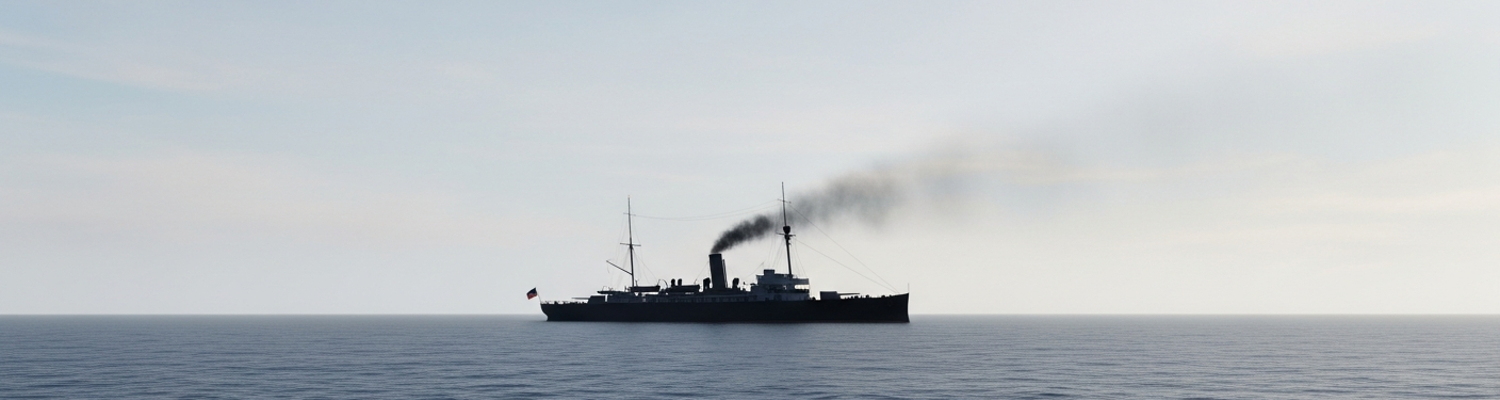
The United States Navy exited the American Civil War as a large, battle-tested force, but then it withered. National attention pivoted inward, focusing on reconstructing the South and pushing westward across the continent. By the late 1880s, the American fleet was a sorry collection of aging wooden steam-frigates and rotting ironclad monitors. These ships were unfit for projecting power beyond coastal defense. A strategic renaissance, however, began to take hold in Washington. Thinkers like Captain Alfred Thayer Mahan, in his seminal work "The Influence of Sea Power Upon History," argued for a new vision. He contended that national greatness depended on a modern, steel-hulled navy capable of commanding global sea lanes to protect commerce. This idea found fertile ground with leaders like Theodore Roosevelt and Senator Henry Cabot Lodge. Congress, responding to this new strategic current, passed a series of naval acts that funded the "New Steel Navy." Ships like the protected cruisers of the Atlanta-class and later the formidable Indiana-class battleships represented a technological leap. This shift in naval philosophy turned American eyes toward the vast expanse of the Pacific Ocean. The Gilded Age was an era of burgeoning industrial might and global trade. For the United States, the Pacific represented both a massive commercial opportunity and a daunting strategic challenge.
The primary obstacle was distance, measured not just in miles but in tons of coal. A warship of the 1890s, such as a protected cruiser, was a creature of its fuel supply. A ship like the USS Olympia burned over one hundred tons of coal per day at a moderate cruising speed. Its operational range was dictated by the capacity of its coal bunkers, around 1,700 tons, and the availability of friendly ports to replenish them. The Pacific, in this era before the Panama Canal, was a logistical desert for the U.S. Navy. The journey from San Francisco to Manila spanned 7,000 nautical miles of open water. Without a network of reliable coaling stations, any sustained naval operation in the Western Pacific was a logistical fantasy. This reality dominated planning at the Naval War College, which consistently highlighted the need to secure advance bases to support a fleet in any potential conflict. The theoretical became brutally practical with the approach of war with Spain in 1898.
Dewey's Gamble at Manila Bay
As tensions with Spain escalated over Cuba, a key decision altered the course of American history in the Pacific. On February 25, 1898, Assistant Secretary of the Navy Theodore Roosevelt, acting while his superior John D. Long was away, cabled Commodore George Dewey. Dewey commanded the U.S. Asiatic Squadron in Hong Kong. The orders were direct. In the event of war, Dewey was to ensure the Spanish squadron did not leave the Asiatic coast and then begin offensive operations in the Philippine Islands. This was a bold, preemptive move. It reflected Roosevelt's expansive view of American power and his understanding that the coming conflict would be global. When war was declared in April, Secretary Long made the order official. Dewey was to proceed to the Philippines to capture or destroy Admiral Patricio Montojo's Spanish Pacific Squadron.
Dewey's squadron consisted of the protected cruisers USS Olympia, Baltimore, Raleigh, and Boston, the gunboats Petrel and Concord, and the revenue cutter McCulloch. This was not an overwhelming force on paper, but it was composed of modern steel ships with well-trained crews and, critically, rapid-firing 5-inch and heavy 8-inch guns. Admiral Montojo's fleet was a collection of older, often obsolete vessels with slower-firing armament. His flagship, the Reina Cristina, was an unarmored cruiser with a wooden hull. Montojo, an experienced officer, knew his force was outmatched. He initially planned to fight in the defensible Subic Bay, but logistical failures meant the shore batteries protecting the bay were not installed in time. He moved his fleet to the shallow waters off Cavite, under the guns of shore fortifications. He hoped the shallow depth would prevent his ships from being completely sunk and allow crews to escape.
On the night of April 30, Dewey led his squadron into Manila Bay. He guided his ships past the Spanish harbor defenses under the cover of darkness, a calculated risk against potential minefields and shore batteries. At 5:41 AM on May 1, 1898, from the bridge of the Olympia, Dewey gave the order to Captain Charles Gridley, "You may fire when you are ready, Gridley." The American squadron commenced a series of five looping passes, firing systematic broadsides into the anchored Spanish fleet. The American gunnery, faster and more accurate, was superior. The Spanish ships were systematically destroyed. Montojo's Reina Cristina made a hopeless charge and was shot to pieces. By 12:30 PM, the battle was over. The entire Spanish squadron was sunk or scuttled. American casualties were minimal, with only nine wounded and one death from heatstroke. The Spanish suffered hundreds of killed and wounded.
The victory was absolute. In a single morning, Dewey had annihilated Spanish naval power in the Pacific and established American naval supremacy in the region. He now controlled Manila Bay, but his small force could not take the city itself. He cabled Washington, reporting his victory and requesting 5,000 ground troops to seize Manila. This naval action instantly transformed the United States into a Pacific power. It also opened the door to the long and complex challenge of the Philippine-American War that would follow.
Guam A Bloodless Strategic Prize
Dewey's victory created an urgent logistical problem. The U.S. now had a fleet and a strategic commitment 7,000 miles from its nearest major base in California. The lifeline to the Philippines needed to be secured. The key was establishing a mid-ocean coaling station. The Spanish-owned island of Guam, largest of the Mariana Islands, sat almost perfectly on the transit route from Hawaii to the Philippines. On May 10, 1898, Secretary of the Navy John D. Long issued sealed orders to Captain Henry Glass, commander of the protected cruiser USS Charleston. Glass was escorting three transports carrying the first army expeditionary forces to Manila. His orders, opened at sea after leaving Honolulu, were to stop at Guam and "use such force as may be necessary to capture the port."
The capture of Guam on June 21, 1898, unfolded as one of the more unusual episodes of the war. As the USS Charleston entered Agaña Bay on June 20, Captain Glass ordered the ship to clear for action. He anticipated a fight with a rumored Spanish gunboat and shore batteries. He ordered a bombardment of Fort Santa Cruz. There was no return fire. Instead, a boat carrying Spanish officials rowed out to the Charleston. To Captain Glass's surprise, the officials apologized for not being able to return the "salute," as they were out of gunpowder. The Spanish garrison, under Governor Juan Marina, had not received a message from Spain since April. The garrison was completely unaware that their country was at war with the United States.
Glass promptly informed them of the state of war and that they were now prisoners. The next day, after brief formalities, Governor Marina surrendered the island and its garrison of 54 Spanish soldiers without a single shot fired in anger. Captain Glass, having fulfilled his orders, appointed a local American citizen as temporary governor, took the Spanish prisoners aboard, and continued his voyage to Manila on June 22. The bloodless capture of Guam was a footnote in the larger conflict, but its strategic impact was profound. The United States now possessed a vital, secure coaling station and communications hub in the middle of the Pacific. This single act directly enabled the projection and sustainment of naval and military power into the Western Pacific, making the long-term occupation of the Philippines feasible.
The War Against Coal and Sickness
The guns of Manila Bay and the flag-raising on Guam were only the opening acts. The true, grinding challenge for the U.S. Navy in the Gilded Age Pacific was the war against distance and disease. Projecting power across the world's largest ocean in the pre-Panama Canal, pre-oil-fired-boiler era was a monumental undertaking. Ships required mountains of coal, and the logistical train to deliver that coal to far-flung stations was itself a massive effort. Assistant Secretary Roosevelt had to personally organize a logistical chain to get ammunition to Dewey, as commercial shippers refused to carry it. Dewey himself had to purchase the steamers Nanshan and Zafiro to serve as a collier and a tender because the Navy's organic support structure was insufficient for a fleet operating so far from home.
The human cost of this projection was steep. While battle casualties in the naval war were low, the toll from disease was not. Sailors and marines were thrust into tropical environments for which they had little immunity. Manila and Cavite were described as filthy. Tainted food and water were constant threats, leading to outbreaks of dysentery, typhoid, and cholera. Malaria was endemic. The Army's infamous "embalmed beef" scandal, involving tainted canned meat, highlighted the systemic failures in military logistics that affected all services. For every soldier or sailor killed by enemy action in the Philippines, many more were incapacitated or died from disease. The U.S. military, arriving in 1898, found that more personnel were lost to sickness than to combat. Venereal disease was also rampant, with high infection rates recorded among troops before they even departed the United States, a problem that exploded upon arrival in the Philippines.
These logistical and health challenges profoundly shaped strategic decisions. The readiness of the fleet was a constant concern. Ship maintenance, difficult in established navy yards, became a desperate struggle in the tropical humidity of the Philippines. Hull fouling from marine growth could reduce a ship's speed by several knots, a critical tactical disadvantage. The constant moisture caused rapid corrosion, far from proper drydock facilities. The health of the crews directly impacted the operational availability of warships. The decisions of commanders like Dewey and Glass were not made in a vacuum. They were made under the immense pressure of maintaining a force at the end of a fragile and incredibly long supply line. The early Pacific strategy of the United States was therefore a story of bold leadership, but it was equally a story of coal, clean water, and quinine. The victories of 1898 set the stage for America's rise as a global power, but the hard-learned lessons in logistics and health laid the true foundation for the U.S. Navy's century of Pacific dominance.