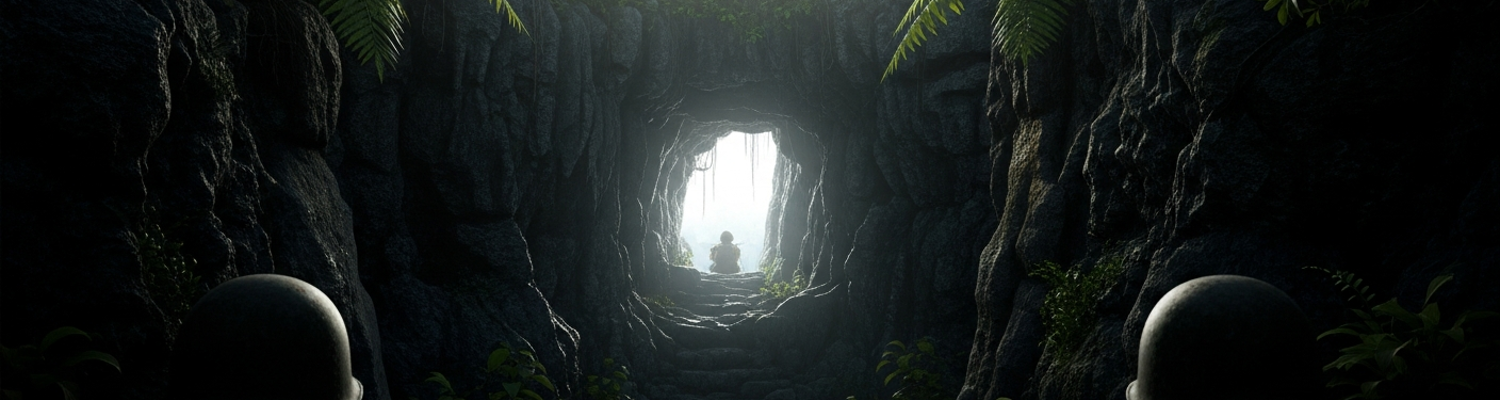

The Three-Day Fiction
Pressure from General MacArthur’s impending return to the Philippines set an unforgiving clock on Operation STALEMATE II. The seizure of Peleliu and its airfield was a prerequisite, a stepping stone that planners demanded be taken with haste. The 1st Marine Division’s commander, Major General William Rupertus, projected confidence, forecasting a battle duration of three, perhaps four, days. This estimate, informed by previous island campaigns against less sophisticated Japanese defenses, would prove to be a catastrophic miscalculation. The gears of the operation were already in motion, driven by a fundamental and lethal underestimation of the enemy.
The three-day timeline was a fiction.
American intelligence assessments were based on a pattern of Japanese island defense that was, by September 1944, entirely obsolete. Planners anticipated massed banzai charges against the beachheads, a tactic that had previously led to the swift annihilation of Japanese garrisons. They failed to appreciate that the Japanese commander on Peleliu, Colonel Kunio Nakagawa, had instituted a radical doctrinal shift. He expressly forbade wasteful banzai charges. His strategy was attrition. He planned to bleed the American forces, making them pay for every inch of coral rock and turning the island into a protracted slaughterhouse. The objective was no longer victory, but to inflict such a high number of casualties that it might erode the American public’s will to continue the war. Nakagawa would cede the beaches, sacrificing a battalion to create the illusion of a conventional defense, before drawing the Marines into the island’s interior where the true battle would be fought.
The real nature of Peleliu’s defenses lay hidden from aerial reconnaissance photographs. What planners saw as gentle, jungle-covered hills was the Umurbrogol, a hellish spine of razor-sharp coral limestone ridges. A post-battle survey (NARA Record Group 127) confirmed that Japanese engineers, supplemented by forced Korean and Okinawan labor, had transformed this natural feature into a subterranean defensive system of profound complexity. Over 500 caves, many of them expansions of old phosphate mine shafts, were interconnected by a labyrinth of tunnels. This created a honeycomb of mutually supporting positions. Heavy artillery pieces were concealed behind massive steel blast doors, designed to be rolled out to fire and then quickly retracted. Machine gun nests and mortar pits were cut into the coral with interlocking fields of fire. The entire network was designed so that an attack on any single point would draw fire from multiple, unseen angles. This defense-in-depth was virtually invisible to pre-invasion analysis and impervious to the naval bombardment meant to neutralize it.
The pre-landing bombardment was extensive. In reality, the shelling was largely ineffective. High-explosive rounds either bounced off the hard coral ridges or cratered the surface, leaving Colonel Nakagawa’s subterranean fortress and the majority of his 11,000-man garrison almost completely unscathed. When the first waves of the 1st Marine Division hit the beaches, they were not met by a dazed and broken enemy. They were met by disciplined, accurate fire from positions that, according to their intelligence reports, should have been destroyed. The Japanese defenders held their fire with unusual discipline until the landing craft were close, maximizing the carnage and giving the first clear indication that the three-day estimate was a deadly fantasy.
The Landing on Orange Beach
At 08:30 on September 15, 1944, the first waves of the 1st Marine Division began their run toward the southwestern shore of Peleliu. The assault force was organized into three regimental combat teams. On the far left, designated for White Beaches 1 and 2, was the 1st Marine Regiment under Colonel Lewis B. "Chesty" Puller. In the center, aimed at Orange Beaches 1 and 2, was the 5th Marine Regiment. On the right flank, the 7th Marine Regiment, under Colonel Herman H. Hanneken, was assigned to land on Orange Beach 3 and secure the southern portion of the island. The assault waves were composed of Landing Vehicles, Tracked (LVTs), the only craft capable of navigating the 700-yard coral reef separating the open sea from the beach. Divisional logs show a severe shortage of these vehicles; only 48 of the 248 authorized were available a month prior, forcing planners to substitute DUKW amphibious trucks as personnel carriers in later waves.
The approach was deceptively quiet. For the first few minutes after crossing the line of departure, the LVTs churned toward the island against a backdrop of smoke, meeting no return fire. This silence was a direct result of Colonel Nakagawa’s new doctrine. The Japanese defenders waited. They held their fire until the first waves of amtracs were struggling over the jagged coral reef, a natural barrier that slowed the vehicles and forced them into predictable channels. Then, a coordinated and overwhelming barrage erupted from the high ground.
The plan disintegrated. A storm of pre-sighted artillery and mortar fire descended. Heavy 150mm guns, concealed in the Umurbrogol ridges, joined anti-boat guns and rapid-fire cannons hidden in concrete blockhouses that had survived the naval shelling. After-action reports confirm the fire did not come from the beaches, but from elevated, reverse-slope positions shielded from naval guns. The effect on the approaching Marines was immediate. High-explosive shells struck the LVTs. The vehicles were blown apart. Others, disabled by machine-gun fire, foundered on the reef, forcing their occupants to disembark into chest-deep water and wade ashore under continuous fire. Communication lines were severed almost instantly. On the northern flank, Puller’s 1st Marines were caught in a crossfire from a coral peninsula later nicknamed "the Point." Within the first hour, Kilo Company of the 3rd Battalion, 1st Marines, was reduced to the size of a single platoon. The 5th and 7th Marines were hit with a dense curtain of mortar and artillery rounds that turned the Orange beaches into a chaotic killing zone. By the end of D-Day, the 1st Marine Regiment alone had sustained 1,749 casualties.
The Environment of Death Valley
After the initial landings and the fight to secure the airfield, the operational focus shifted. Colonel Herman H. Hanneken’s 7th Marine Regiment, after securing the southern tip of the island, was redirected north. Their new axis of advance took them towards the western flank of the Umurbrogol mountain spine. They entered a long, narrow corridor running north-south, flanked by sheer coral cliffs and ridges. This terrain feature, an unassuming line on a map, would soon be named "Death Valley." The 7th Marines’ push into this sector represented a new phase of the battle, moving from the open expanse of the airfield into a compressed, vertical battlespace where the enemy was largely invisible and the environment itself was a weapon.
The physical conditions were debilitating.
Temperatures consistently exceeded 110 degrees Fahrenheit, compounded by tropical humidity. The valley floor, composed of jagged, razor-sharp coral karst, offered no soil for digging foxholes, leaving Marines exposed. This coralline limestone shredded heavy leather boots and tore through herringbone twill utility uniforms, causing cuts that quickly became infected. Water, already in critically short supply, became the single most important commodity. Canteens were often drained within hours, and resupply was perilous. The water that did arrive was often tainted with salt or fuel from being transported in repurposed drums, sickening the men. Unit medical logs from this period (File 7-3.5) indicate a severe spike in non-battle casualties; heat prostration and dehydration incapacitated hundreds of Marines, in some units rivaling the number lost to enemy fire.
This environment was a direct enabler of Colonel Nakagawa’s strategy. The primary tactical problem for the 7th Marines was locating an enemy that had seemingly vanished. The Japanese had transformed the natural limestone caves into a fortress. From the floor of Death Valley, these positions were almost impossible to spot. Japanese engineers had constructed openings flush with the rock face, camouflaged with vegetation, and sometimes protected by heavy steel blast doors. A single Marine squad moving through the valley would suddenly draw fire from three or four different points. A machine gun from a cave partway up a cliff. A mortar from a reverse-slope pit on a ridge above. Rifle fire from spider holes just yards away. The interlocking fields of fire meant that any attempt to assault one position would draw a crossfire from several others. The process of finding these strongpoints became a deadly form of reconnaissance by fire, where Marine units would deliberately expose themselves to draw a response, hoping to pinpoint the source of the attack.
The Five-Minute Ambush
By September 17, 1944, the 7th Marine Regiment was being redirected north. Its axis of advance now pointed directly into the western shadows of the Umurbrogol. A review of operational logs from the 3rd Battalion, 7th Marines shows units entering the northern extension of Death Valley. The attack was a slow, grinding affair against an unseen enemy. Squads moved forward under the oppressive heat, probing the coral walls that flanked them. The landscape was a chaotic mess of shattered trees and razor-sharp rock, all of it blasted by naval gunfire that had done little to affect the core of the defensive system. For a squad of Marines from the 3rd Battalion, the mission was simple: advance and clear any resistance.
The enemy had to be drawn out.
A small fire team, moving cautiously along the base of a coral ridge, halted. One of the men had spotted an anomaly. It was a patch of jungle vegetation that seemed out of place against the uniform grayness of the limestone cliff face. Closer inspection revealed it was a crude but effective piece of camouflage, a screen of leaves and vines draped over a dark opening. Archival analysis of Japanese defensive doctrine on Peleliu confirms the extensive use of such techniques. Entrances were not just covered; they were meticulously concealed using a mixture of coral dust and cement to blend construction with the natural rock, and then obscured by transplanted foliage. This particular opening was no larger than a manhole, a black void offering no clue to the system to which it was connected. It was a perfect expression of the defense-in-depth strategy.
A single point man moved to investigate. As the lead Marine crept toward the dark opening, the tactical reality of the Umurbrogol revealed itself in a fraction of a second. A section of the rock face, no more than six inches wide and just a few feet from the main cave entrance, slid sideways. It was a perfectly counterweighted, concealed firing port, carved from the coral itself and designed to be indistinguishable from the surrounding ridge. Behind it sat a single Japanese soldier with a Type 99 light machine gun. The weapon fired a short, accurate burst. The rounds struck the point man. He fell without a sound. The rest of the squad was instantly pinned down, taking fire from a position they could not see. The ambush was a lesson in Japanese engineering and discipline. The port was not just hidden; it was placed to provide a flanking field of fire on the approach to the main cave. This single, localized action, lasting less than a minute, brought the American advance in that sector to a complete halt.
Ad Hoc Clearance Actions
The subterranean defenses of the Umurbrogol rendered standard infantry doctrine obsolete. After-action reports from the 1st, 5th, and 7th Marine Regiments reveal a consistent pattern of failure when applying established tactics. Grenades tossed into cave mouths were defeated by the baffled, multi-chambered construction of the tunnels. A single grenade could not produce enough blast pressure to neutralize a position that snaked deep into the coral. The standard-issue M2 flamethrower, while terrifying, had severe limitations. Weighing nearly 70 pounds when full, it contained only enough fuel for roughly seven seconds of continuous burn time and its effective range was often less than 40 meters. This forced the operator, an obvious and highly vulnerable target, to approach dangerously close to a fortified entrance that was likely covered by multiple, unseen firing ports. Initial attempts to suppress and destroy these positions with rifle and machine-gun fire were ineffective against entrances fortified with steel doors or openings that were mere slits in the rock.
The situation demanded immediate, localized solutions created under fire. Tactical necessity gave birth to battlefield innovation, driven by the initiative of junior officers and non-commissioned officers. With established procedures failing, Marine squads developed their own methods out of desperation. The most effective of these became known as the "blowtorch and corkscrew" tactic. This was not a formal doctrine handed down from high command but a ground-level solution. A fire team, the "corkscrew," would lay down a heavy volume of suppressive fire with Browning Automatic Rifles and M1 Garands on a suspected cave opening, forcing the defenders to keep their heads down. Under this covering fire, a second team carrying an M2 flamethrower, the "blowtorch," would crawl into position. They would douse the entrance with a short burst of napalm, followed by a demolition satchel charge or white phosphorus grenade to ignite the fuel and consume the oxygen within the tunnel's initial chambers. Variations on this theme emerged across the battlefield. Some squads used flamethrower tanks where the terrain permitted, or even doused a cave with unlit napalm first, allowing the vapors to permeate the tunnels before igniting the entire complex with a single grenade.
The Logic of Entombment
Sealing a cave became more important than clearing it. The defining feature of Colonel Nakagawa’s defense was the interconnected nature of the fortified positions. Caves were not isolated strongpoints; they were nodes in a subterranean network that allowed Japanese soldiers to move troops, ammunition, and supplies completely shielded from American fire. A cave that had been assaulted and seemingly cleared by a Marine squad in the morning could be reoccupied that afternoon by a fresh squad that had moved through a hidden connecting tunnel. A post-battle analysis of Japanese cave systems confirmed this doctrine, showing how defenders could fire on an American unit, withdraw deep into the mountain, and emerge from a different opening hundreds of yards away to attack the same unit from the rear or flank. This prevented the establishment of any secure frontline and turned every gain into a potential trap.
The only permanent solution was total obliteration of the entrance.
This ad-hoc response evolved from assault to siege. After neutralizing the immediate defenders with flamethrowers and explosives, engineer units, when available, were brought forward with bulldozers. These machines would pile tons of coral rock and debris over cave mouths, physically burying them. When bulldozers could not reach the high, cliff-face positions, combat engineers would place massive demolition charges to collapse the entrances, entombing any remaining defenders. More importantly, this severed that position’s connection to the larger network. This was not about killing. It was about breaking the defensive system one link at a time to prevent a full-scale subterranean counter-assault that could have emerged from anywhere, at any time.
The Seventy-Four Day War
The prediction of a four-day battle disintegrated within hours of the landing. The full extent of this miscalculation became undeniable as the fighting shifted from the airfield to the Umurbrogol mountain massif. The battle, which began on September 15, 1944, would not conclude until November 27, a 74-day campaign of attrition. This extension of the timeline was a direct consequence of Colonel Nakagawa’s defensive strategy. His forces abandoned the shoreline, drawing the 1st Marine Division into a prepared killing ground. The fighting devolved into a slow, yard-by-yard siege. The 1st Marine Division, bled white, was eventually relieved in mid-October by the U.S. Army’s 81st Infantry Division, which would spend another month extinguishing the last pockets of resistance.
The high casualty rate was a product of the terrain and the enemy’s tactics. The 1st Marine Division suffered over 6,500 casualties, more than a third of its total strength, in its month of fighting on the island. After its relief, the 81st Infantry Division would suffer an additional 3,300 casualties to secure the island. A close review of unit reports shows that the 1st Marine Regiment, which bore the brunt of the assault on the Umurbrogol, known as Bloody Nose Ridge, sustained a casualty rate exceeding 70 percent. The primary driver of these losses was the nature of the Japanese defense. From hidden, mutually supporting positions, Nakagawa’s men directed accurate mortar and machine-gun fire on the exposed Marines, who could not dig into the hard coral rock for cover. An attack on any single cave would draw fire from multiple unseen angles, turning every advance into a costly affair.
It quickly became apparent that even successful assaults were temporary. The interconnected nature of the cave system meant that a position cleared in the morning could be reoccupied by afternoon. The objective shifted from clearing caves to sealing them permanently. Where the terrain allowed, armored bulldozers were brought in to pile tons of coral rock and debris over cave mouths. For positions on high cliffs, combat engineers would place demolition charges to collapse the entrances, severing that node from the rest of the defensive network. This systematic destruction was the only way to break Nakagawa’s fortress, one sealed cave at a time. The battle for Peleliu officially ended on November 27, when Colonel Nakagawa burned his regimental colors and committed ritual suicide. His body was found in a command cave that had been sealed by explosives.