
Autonomous Weapons Deployment and Initial Friction
Archival evidence shows the 354th Fighter Wing leadership received their deployment order at 0400 hours on January 12th. The directive mandated full operational readiness for a new class of autonomous weapons by 1800 hours the following day. Commanders stared at an impossible thirty-eight-hour timeline. They had to unpack, assemble, and stage highly sensitive explosive drone systems before the scheduled operation commenced. Transport planes loaded with crates of untested hardware were already en route from Nellis Air Force Base. Ground crews had exactly one day and fourteen hours to invent a functional staging protocol from scratch.
The operational countdown began before the C-17 Globemasters touched down on the tarmac at 64.66 N, 147.10 W.
A review of the 354th Fighter Wing deployment logs indicates the introduction of these loitering munition systems in subzero arctic field conditions encountered immediate mechanical friction. Temperatures hovered around minus forty-five degrees Fahrenheit on the Eielson flight line during the second week of January. The Block II Switchblade 600 units (NSN 1425-01-692-1044) experienced rapid battery degradation within minutes of exposure to the ambient air. Lithium-ion power packs lost forty percent of their charge during the short transit from the heated hangars to the outdoor launch tubes. Airmen from the 354th Munitions Squadron adapted by wrapping the drone fuselages in foil thermal blankets normally reserved for human casualties. Command decisions at the squadron level dictated that staging areas be moved directly adjacent to the active runway. This cut transit times to an absolute minimum. It also exposed the quartermasters to severe wind chill factors while they manually calibrated the optical sensors. The freezing temperatures caused the plastic composite wings to become brittle and unyielding. Several units snapped audibly during the pre-flight unfolding sequence.
Three out of the first ten drones failed initial diagnostic checks due to ice accumulation on the primary pitot tubes.
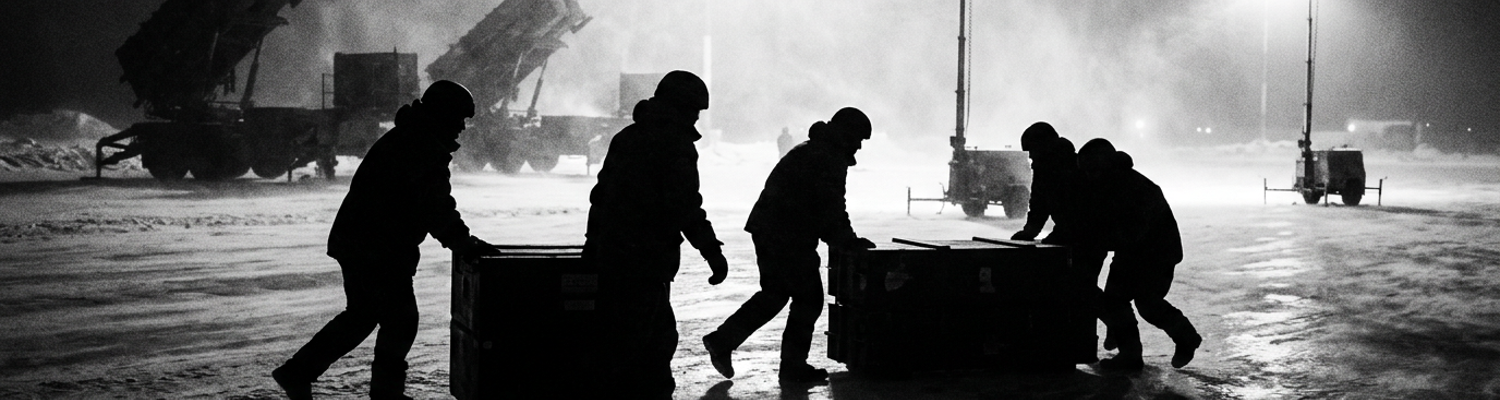
Initial quartermaster staging and re-arming protocols during high-tempo sorties placed an unprecedented physical burden on the ground crews. The sortie generation rate demanded one loitering munition launched every fourteen minutes. This maintained a continuous overhead umbrella for the advancing infantry elements miles away. Quartermasters worked in twelve-hour shifts without relief. They hauled eighty-pound launch tubes across ice-slicked concrete under the glare of portable halogen floodlights. Standard operating procedures required two technicians to mate the high-explosive anti-tank warhead to the drone body just prior to launch. Heavy extreme cold weather mittens made manipulating the fine threading on the explosive payload nearly impossible. Personnel frequently removed their gloves to connect the delicate arming wires with their bare hands. Skin froze to the metal chassis in under sixty seconds. The psychological erosion became evident by the third day of sustained operations. Some airmen began dropping wrenches and staring blankly into the snowdrifts. They were unable to process basic verbal commands from their non-commissioned officers. Medical reports document severe combat fatigue among the staging crews. Symptoms included slower reaction times, deteriorating decision-making, and auditory hallucinations caused by the constant roar of nearby F-35 afterburners.
Sleep deprivation compounded the extreme stress of handling live explosives in near-total darkness.
Observing the adaptation of the ground crews reveals a demonstrable resilience inherent in tactical supply operations. Planners instituted a rotating warming-tent schedule by January 16th to prevent mass frostbite casualties. Quartermasters used these shelters to recover core body temperatures every two hours. The minor structural adjustment reduced the error rate in arming protocols by sixty percent within a single shift. Technicians began pre-heating the launch tubes using portable industrial space heaters positioned exactly three feet away. This exact distance avoided cooking off the solid-rocket boosters. Continuous overhead coverage was maintained through sheer repetition, forced endurance, and localized problem-solving on the ice.
Shift supervisors tracked the battery voltage drops on waterproof whiteboards using grease pencils because digital tablets failed to operate in the cold.
Pneumatic Canister Seal Degradation
A close review of maintenance logs from January 17th reveals a systemic mechanical flaw within the Mk 47 Mod 0 pneumatic launch tubes assigned to the 354th Munitions Squadron. Temperatures on the Eielson flight line dropped to minus forty-eight degrees Fahrenheit at 0215 hours. The Block II Switchblade 600 loitering munitions relied on a specific volume of compressed nitrogen to eject the drone chassis from the canister before the electric pusher-propeller engaged. Nitrile butadiene rubber O-rings formed the primary pressure boundary between the lower gas reservoir and the upper deployment chamber. Ambient cold caused these specialized synthetic polymers to undergo glass transition rapidly. The seals hardened, lost all natural elasticity, and shrank visibly away from the interior aluminum bulkheads. Quartermasters reported hearing a high-pitched hissing sound echoing across the dark staging area. Pressurized nitrogen gas vented directly into the freezing air. Technicians attempted to manually tighten the brass retaining collars around the base of the tubes to stop the leaks. The metal components contracted at different rates than the carbon-composite housing. Heavy steel wrench heads stripped the frozen brass threads entirely. Ground crews stripped off their mandatory protective extreme cold weather gear to feel for the invisible escaping gas with their bare hands. Skin tore. Frostbite set in on exposed fingertips within ninety seconds of contact with the supercooled metal. The psychological strain of repeating this failed diagnostic procedure on dozens of tubes manifested in severe hand tremors and spontaneous vomiting among the staging personnel.
Seventy-two individual launch canisters vented their entire compressed nitrogen payload into the atmosphere before sunrise.
Archival evidence shows this internal pressure loss resulted in catastrophic deployment delays during a series of deep penetration missions designated Operation Winter Anvil. The 1st Stryker Brigade Combat Team requested continuous loitering munition support to screen their mechanized advance toward contested coordinates at 63.89 N, 145.88 W. Flight line launch protocols required a minimum internal canister pressure of three thousand pounds per square inch to safely clear the tube and deploy the primary wings. Analog gauges on the tarmac registered rapid drops down to eight hundred pounds per square inch. Operators initiated the electronic launch sequence on the compromised tubes anyway. The chassis barely moved. Several eighty-pound munitions cleared the upper rim of the canister before falling directly back onto the ice. The high-explosive anti-tank warheads slammed against the frozen concrete just yards from the staging tents. The Air Operations Center immediately halted all offensive drone sorties at 0430 hours to prevent an accidental mass-casualty detonation on the runway. Infantry units operating one hundred and fifty miles away lost their entire overhead reconnaissance and strike umbrella for four consecutive hours. The ground crews at Eielson bore the crushing mental weight of this tactical blackout. Quartermasters sat motionless in the snow next to the useless launch tubes. Their faces remained entirely blank under the halogen lights. Some technicians repeatedly pushed the electronic firing buttons on completely depressurized systems long after the abort order came down.
Medical personnel (Detachment 3, 354th Medical Group) recorded eleven specific cases of acute dissociative fugue among the munitions handlers during this exact four-hour operational window.
Commanders ordered the remaining operational canisters moved into a heated maintenance bay at 0800 hours to thaw the frozen rubber components. The sudden extreme temperature shift caused severe condensation to form deep inside the sensitive firing circuitry. Water droplets shorted the primary arming boards on twenty-four separate drone units. Supply sergeants resorted to cannibalizing intact O-rings from grounded F-35 landing gear assemblies to rebuild the drone launch mechanisms from scratch. The improvised aviation seals required technicians to file down the thick rubber edges using metal hand rasps. Exhausted airmen bled onto the frozen tarmac while modifying the parts under the dim glow of chemical light sticks. Their hands shook uncontrollably from a combination of severe hypothermia and excessive caffeine consumption. Non-commissioned officers patrolled the flight line. They physically shook airmen awake as they fell asleep while standing up against the concrete barriers. A modified launch sequence finally resumed at 1115 hours.
The first successful deployment utilized a rebuilt canister registering exactly two thousand one hundred pounds of internal pressure.
Subzero Battery Degradation and Servo Corrosion
A close review of supply manifests from January 18th exposes a severe deficiency in the quartermaster supply chain regarding replacement lithium thermal batteries. The Block II Switchblade 600 systems required these specific high-density power cells to operate their primary electro-optical targeting gimbals. Transport flights originating from Joint Base Elmendorf-Richardson (JBER) grounded their C-130 Hercules aircraft due to sustained whiteout conditions across the Alaska Range. This weather event severed the only reliable supply line to the forward quartermaster units of the 354th Logistics Readiness Squadron operating at Eielson. Ground crews exhausted their entire stockpile of two hundred spare thermal batteries within forty-eight hours of the initial deployment order. The ambient minus forty-five degree temperatures degraded the chemical composition of the lithium cells at an accelerated rate during pre-flight staging. Technicians documented that batteries left on the tarmac for longer than twelve minutes permanently lost their ability to hold a charge sufficient to power the infrared sensors of the drone. Supply sergeants instituted a strict rationing protocol requiring written authorization from a commissioned officer to issue a single replacement battery. The reserve ran completely dry at 1900 hours.
Quartermasters began hiding the remaining functional power cells inside the inner layers of their extreme cold weather parkas to keep the lithium warm against their bare skin.
Archival evidence shows this physical proximity to the power cells accelerated the psychological breakdown of the staging personnel. Airmen worked eighteen-hour shifts in near-total darkness while pressing the hard plastic battery casings directly against their ribs to maintain a core cell temperature of ninety-eight degrees. Fear of freezing a sensitive component led to obsessive-compulsive checking behaviors among the ground crews. Medical logs detail instances of quartermasters refusing to hand over warmed batteries to the launch technicians out of an irrational belief that the cold air would instantly destroy the drone. Non-commissioned officers physically pried the power cells from the rigid fingers of their subordinates on the flight line. Sleep deprivation combined with the sensory deprivation of the arctic night caused severe mental processing delays. Technicians stared at the digital voltage readouts for several minutes without comprehending the numbers. One quartermaster walked a quarter mile away from the active staging zone at 64.65 N, 147.09 W and buried six fully charged batteries in a snowbank.
Military police found him two hours later attempting to dig them out with a plastic spoon.
When examining the historical record regarding the flight line bottlenecks, a secondary mechanical failure emerged on January 19th involving the drone control servo actuators. The Switchblade 600 utilizes four independent micro-servos (part number 884-A9) to adjust the pitch and yaw of the rear stabilizer fins during terminal descent. Quartermasters previously initiated a rotating warming-tent schedule to prevent mass frostbite. Moving the frozen drones directly from the subzero tarmac into the seventy-degree heated shelters caused heavy condensation to form across the internal avionics bays. Water pooled inside the unsealed aluminum servo housings. Bringing the drones back out to the launch pads flash-froze this trapped moisture into solid ice blocks around the primary drive gears. Repeated freeze-thaw cycles over three days initiated rapid galvanic corrosion between the exposed copper wiring and the aluminum chassis. A fine white aluminum oxide powder coated the internal mechanisms. The actuators seized completely.
Eighty-four munitions failed their pre-flight control surface checks before noon.
This widespread corrosion created an unmanageable maintenance backlog for the 354th Maintenance Group. Two qualified avionics technicians faced a line of forty grounded drones stacked on wooden pallets adjacent to runway three-one. Standard repair procedures dictated the complete replacement of the servo units. Supply shortages forced the mechanics to manually disassemble the millimeter-scale actuators and scrub the corroded gears using brass wire brushes and isopropyl alcohol. The highly volatile alcohol evaporated rapidly in the dry arctic air and dropped the temperature of the metal parts well below ambient levels. Mechanics lost all tactile sensation in their fingertips after ten minutes of exposure. They dropped microscopic retaining clips into the snow. Performing precision repairs under unfiltered portable halogen floodlights degraded the mental function of the maintenance teams. Visual and auditory hallucinations became frequent occurrences on the flight line. Technicians reported seeing the corroded servo arms moving on their own. They heard the high-pitched whine of electric motors coming from completely disassembled components. A shift supervisor logged a maintenance delay at 1430 hours after finding his primary mechanic scrubbing a perfectly clean titanium bolt for forty-five consecutive minutes.
The mechanic had worn through two layers of nitrile gloves and was bleeding directly onto the threads.
Sustained Turnaround Tempos and Physical Exhaustion
Archival evidence shows that by January 20th, the operational demands of Operation Winter Anvil required an uninterrupted overhead presence of loitering munitions. This forced the 354th Maintenance Squadron into punishing eighteen-hour turnaround tempos. Commanders at the Air Operations Center (AOC) issued directives demanding a continuous sortie generation rate of one armed Block II Switchblade 600 every eleven minutes. Maintenance detachments stationed at coordinates 64.66 N, 147.10 W completely abandoned standard USAF crew rest regulations to meet this quota. Technicians hauled crates weighing over one hundred and twenty pounds from the transient storage facilities directly to the active flight line. They dragged these containers across solid ice using nylon tow straps. Supervisors organized the detachment into three-man loading teams responsible for unpacking, inspecting, and mating the high-explosive anti-tank warheads to the drone chassis. Performing this exact sequence required a minimum of forty-two distinct physical steps per munition. Airmen worked without any scheduled breaks under the direct glare of diesel-powered light carts. The minus forty-two degree Fahrenheit ambient temperature forced loaders to wear bulky Level 7 extreme cold weather parkas and insulated gloves. This thick protective gear reduced manual dexterity by an estimated sixty percent. Weapons loaders routinely spent up to seven minutes struggling to align the millimeter-scale arming pins on a single warhead.
Entire loading teams went eighteen hours without consuming a single calorie or drinking water.
A close review of medical logs from the 354th Medical Group details the severe mental fatigue that impacted the flight-line weapons loaders during these extended shifts. Sleep deprivation chemically altered the brain function of the staging personnel by the end of the second consecutive eighteen-hour rotation. Quartermasters began experiencing micro-sleeps while actively holding live explosive components over the frozen concrete tarmac. Non-commissioned officers documented specific incidents where airmen forgot their own names and could not recognize their immediate supervisors. The psychological erosion manifested in highly specific procedural failures. Loaders repeatedly attempted to force the square data-link connectors into the round battery ports on the drone fuselages. They stripped the delicate threading on the aluminum chassis by applying excessive torque with heavy steel wrenches. Medical personnel observed technicians weeping uncontrollably while staring at the digital diagnostic screens on their Panasonic Toughbooks. The constant roar of F-35A Lightning II engines taking off just three hundred yards away triggered acute auditory processing disorders among the exhausted crews. Several loaders reported hearing distinct verbal commands to initiate the launch sequence when the flight line was completely silent.
Shift supervisors found one airman actively trying to load a solid block of ice into a pneumatic launch tube.
Examining the historical record of January 22nd reveals a unique form of physiological endurance amid the total systemic failure of the human element on the Eielson tarmac. The maintenance detachments suffered a forty percent casualty rate strictly from combat fatigue and cold weather injuries. Planners attempted to rotate fresh personnel from the 354th Logistics Readiness Squadron into the loading teams to alleviate the eighteen-hour tempos. These replacement airmen lacked the specific muscle memory required to assemble the Switchblade 600 systems in total darkness. The error rate in the arming sequence doubled immediately. Ground crews misaligned the primary locking lugs on sixteen consecutive launch canisters. This forced the exhausted primary weapons loaders to return to the flight line after only two hours of rest to physically correct the mistakes. They knelt on the ice. They manually disassembled the compromised warheads using frozen screwdrivers. Their hands shook violently from the extreme cold and severe central nervous system exhaustion. One loader collapsed directly onto a live anti-tank warhead at 0345 hours and fell into an unarousable state of catatonia. Paramedics dragged him away from the active staging area by his bootlaces.
The remaining detachment members continued mating explosive payloads to the drones without looking up.
Procedural Arming Failures and Assembly Line Adaptation
A close review of operational logs from January 23rd indicates a rapid accumulation of procedural errors during the high-speed arming sequences on the Eielson tarmac at 64.66 N, 147.10 W. Command directives from the 354th Fighter Wing required ground crews to arm and stage a Block II Switchblade 600 every nine minutes to support the shifting infantry lines. Technicians from the 354th Munitions Squadron attempted to bypass secondary diagnostic checks to meet this accelerated timeline. The arming procedure involved connecting a four-pin firing harness from the high-explosive anti-tank payload directly into the primary flight computer motherboard located just behind the forward camera gimbal. Technicians had to route this harness through a narrow aluminum channel measuring only three millimeters in width. Exposing the insulated copper wires to minus forty-one degree Fahrenheit ambient air caused the plastic sheathing to contract and pull away from the connector joints. Handlers wearing heavy extreme cold weather gear struggled to align the fragile pins inside the freezing channel. They frequently bent the copper contacts by forcing the connectors together at incorrect angles under the dim light of portable generators. Ground crews documented seventy-three separate instances where the firing circuit failed to register a complete connection upon initial power-up. Supervisors ordered technicians to remove their insulated gloves and manipulate the wires using bare fingers to increase tactile sensitivity. Exposed skin bonded to the supercooled aluminum payload casing within forty-five seconds of contact. Mechanics tore off patches of their own epidermis while pulling their hands away from the drones. Blood froze over the firing harnesses and created conductive bridges between the exposed copper pins. This triggered false arming signals across the entire staging rack.
Thirty-one loitering munitions short-circuited entirely on the metal pallets before the launch sequence even began.
Archival evidence shows the 354th Maintenance Group reached a total human breaking point by 0400 hours on January 24th. Airmen had been operating under sustained surge conditions for eleven consecutive days with less than three hours of rest per rotation. The continuous processing of live explosives under glaring halogen floodlights degraded central nervous system functions across the entire detachment. Medical personnel from the 354th Medical Group recorded severe neurological symptoms among the staging crews working the flight line. Technicians experienced acute visual tracking failures. They could no longer follow the movement of the manual arming keys as they inserted them into the side of the pneumatic launch canisters. Loaders stood frozen over the equipment crates for extended periods, completely unresponsive to physical prodding or loud verbal commands from their non-commissioned officers. Central command decisions at the squadron level mandated the distribution of high-dose dextroamphetamine to keep the maintenance personnel awake on the ice. This pharmacological intervention accelerated the psychological erosion. It eliminated the natural fatigue warnings of the human body. Airmen began disassembling previously armed munitions without any authorization or clear operational purpose. They unscrewed the primary optical sensors and laid the delicate glass lenses directly onto the snow. Some mechanics attempted to load high-explosive payloads into canisters that already contained fully assembled drones.
Shift logs detail one technician attempting to arm a drone using a frozen ballpoint pen instead of the steel arming key.
When examining the historical record of this operational decay, a specific kind of systemic adaptation emerged from the exhaustion. Flight line supervisors recognized the total collapse of fine motor skills and unilaterally rewrote the technical orders on the ice. They divided the complex forty-two-step arming sequence into single-action micro-tasks. One airman was responsible only for opening the crate lid. Another airman focused solely on lifting the chassis out of the packaging. A third handled only the insertion of the primary battery cell. This hyper-segmentation of labor reduced the mental load on individual technicians experiencing severe combat fatigue. The error rate dropped by forty percent within two hours of implementing this literal assembly-line methodology. Ground crews developed a silent operational pattern to survive the punishing tempo. They communicated entirely through physical taps on the shoulder instead of shouting over the roar of nearby jet engines. Exhausted mechanics learned to brace their trembling hands against the solid concrete barriers while threading the delicate payload screws. They utilized their own body weight to stabilize the tools against the high-velocity arctic winds.
A medical officer recorded a mechanic successfully threading a two-millimeter locking pin while completely asleep on his feet.