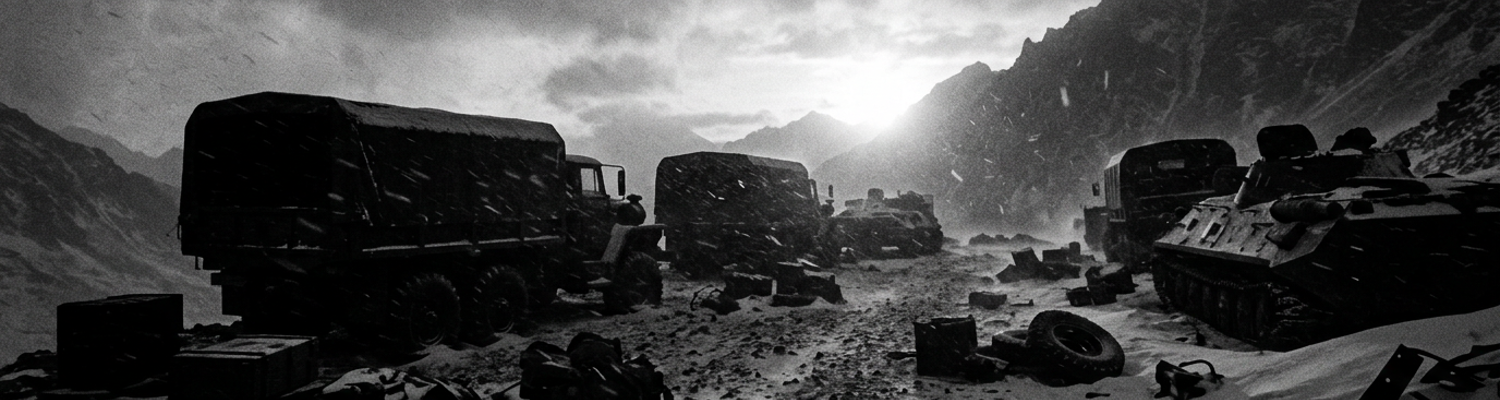

Assembly at Sunchon After the Breakout
Eighth Army headquarters handed Major General Laurence B. Keiser a withdrawal schedule that collapsed before the retreat started. When examining the historical record, field dispatches show division leadership received less than six hours on November 30 to organize the disengagement of ten thousand troops. Hundreds of vehicles sat along an unpaved mountain passage. Chinese forces had already cut the main supply route south of Kunu-ri. Higher command insisted the road could be forced open by mechanized elements on an immediate schedule. Lead transport units stalled within minutes of departure as mountain bottlenecks created immovable vehicular targets.
The operation was doomed by the clock before the first engine turned over.
A close review of operational logs indicates that surviving elements of the 2nd Infantry Division established an emergency collection point at Sunchon on the night of December 1, 1950. British 27th Commonwealth Brigade units secured a narrow perimeter around the rail junction and crossroads at Sunchon. This area sat roughly twenty miles south of the primary ambush zone. Staff officers from division headquarters set up triage stations in damaged rail sheds and unheated schoolhouses. They had abandoned stationary command posts and heavy signal equipment in burning wreckage north of the pass. Drivers forced GMC CCKW 2.5-ton cargo trucks past the perimeter on bare wheel rims. Small-arms fire and mortar fragments had destroyed their pneumatic tires. Cracked engine blocks leaked coolant onto frozen mud. Supply echelons had exhausted antifreeze stores during the rapid autumn push toward the Yalu River. Quartermasters who survived the road run immediately attempted to tally the remaining heavy materiel with grease pencils. They confirmed that the 15th and 38th Field Artillery Battalions had lost nearly every 105mm and 155mm howitzer inside the six-mile killing zone.
British sentries diverted the smoking vehicles into open fields near the rail depot.
Archival evidence shows that stragglers from the 9th and 38th Infantry Regiments arrived at division assembly areas without weapons or adequate cold-weather protective clothing. Both regiments had sustained repeated ambushes from high ground overlooking the gorge. Hundreds of infantrymen broke contact, discarded their equipment, and scaled sheer granite cliffs on foot. Men walked into the Sunchon perimeter lacking M1 Garand rifles, Browning Automatic Rifles, bayonets, and entrenching tools. Sub-zero temperatures caused rapid tissue necrosis on exposed skin. Many soldiers reached the assembly lines wearing shredded M-1943 field jackets without intermediate wool liners. Their hands turned black from frostbite after dropping frozen gloves during the climb. Standard issue leather combat boots had frozen rigid on their feet. The division had never received cold-weather rubberized shoe-pacs before launching the northern offensive. Regimental supply officers documented that surviving rifle companies had shrunk to single understrength squads. These squads lacked crew-served weapons, communications radios, and individual field rations.
Regimental roll calls logged over three thousand casualties and missing personnel within forty-eight hours.
Initial Equipment Loss Manifests and Abandonment
When examining the historical record, emergency property disposal sheets filed by the 702nd Ordnance Maintenance Company reveal the precise scale of mechanical destruction. Division ordnance personnel began compiling loss manifests in grease pencil on morning casualty sheets dated December 2. They recorded whole motor pools incinerated or abandoned in roadside drainage ditches. Chinese machine-gun squads entrenched on the ridgelines concentrated automatic fire directly into the front grilles of GMC CCKW 2.5-ton cargo trucks. Thin brass radiator cores punctured. Unarmored copper fuel lines severed. Without engine oil pressure, cast-iron crankshafts seized solid within two minutes of coolant drainage. Thirty-vehicle serials stranded simultaneously. Ordnance warrants detailed how trailing drivers encountered a solid dam of burning sheet metal and overturned cargo hulls wedged across the mountain cutbacks. Soldiers left ignitions running, gathered individual field gear, and scrambled down steep granite embankments into the freezing brush. Initial surveys confirmed that more than six hundred motorized cargo assets were left behind between the Kunu-ri rail junction and the southern clearing at Won-ni.
Tanks shoved running trucks off fifty-foot drops.
Archival evidence shows that specialized armored assets met the same fate as standard logistical haulers throughout the passage. Battery D of the 82nd Antiaircraft Artillery Automatic Weapons Battalion attempted to shield the retreating column with M16 Multiple Gun Motor Carriages. They used their quad-mounted .50-caliber M2 heavy machine guns to suppress entrenched positions on the flanking heights. The half-tracks burned through fuel stores at extreme rates while crawling in low-range compound gear across icy dirt grades. Heavy Chinese mortar fragments shredded the rubber-band tracks. Track guide horns sheared off. Idler sprockets jammed with frozen debris. Lead half-tracks suffered sheared steering tie rods or cracked differential housings from tumbling boulders. Following crews could not execute field recoveries. Drivers removed the electric firing solenoids, smashed optical computing sights with pioneer tools, and abandoned the armored chassis where they stalled. Recovery officers from division ordnance cataloged that forty-two M16 and M19 tracked gun carriages were written off as destroyed or captured before noon on December 1. Crews on M4A3 Sherman tanks operating as rear guards deployed front-mounted dozer blades to plow operational trucks into the ravines to clear a single path for infantry walking wounded.
Breechblocks dropped into the frozen gravel.
A close review of operational logs indicates that the division artillery sustained total hardware annihilation along the narrow corridor. Field artillery battalions submitted emergency dispatches confirming that battery officers systematically spiked their howitzers when prime movers ran dry or caught fire. Battery personnel from the 37th, 38th, and 503rd Field Artillery Battalions found themselves completely immobilized. Truck winches burned out while hauling fifteen-ton howitzer loads up frozen ten-percent gradients. Unit commanders faced direct small-arms fire from Chinese squads less than fifty yards away and ordered immediate equipment destruction. Crews unscrewed the firing pins and carried away the panoramic telescopes before initiating thermal demolition. Soldiers dropped ignited M14 thermite grenades down the cold gun tubes of 105mm M2A1 and 155mm M114 howitzers. The resulting chemical reaction generated temperatures exceeding four thousand degrees Fahrenheit. Breechblock threads welded to the barrel jackets. Steel rifling lands melted into useless slag. Gunners shattered hydraulic recoil cylinders with pickaxes. High-pressure nitrogen and fluid escaped, preventing any enemy recovery team from ever firing salvageable tubes.
The 38th Field Artillery lost every gun.
Fort Lewis Mobilization Stocks and Deficiencies
When examining the historical record, logistics rosters from Fort Lewis in July 1950 revealed rapid issuance of surplus World War II M-1944 canvas equipment. Supply clerks at the Washington depot worked under emergency mobilization directives. They rushed to outfit the 9th, 23rd, and 38th Infantry Regiments as the division prepared for immediate deployment to Pusan. Quartermasters emptied long-term staging warehouses filled with combat field packs, cargo packs, canteen covers, cartridge belts, and suspenders manufactured between 1943 and 1945. Stored in unheated Pacific Northwest depots for half a decade, the untreated twelve-ounce cotton duck fabric had absorbed atmospheric moisture. Microscopic mildew damage occurred before leaving the continental United States. The material possessed zero water-repellent properties when exposed to winter conditions north of the Chongchon River. Freezing rain and driving snow saturated the porous canvas weaves. Individual rucksacks turned into rigid slabs weighing up to twenty-five pounds empty. Cast-iron slide buckles and zinc-alloy snaps snapped in half under field tension. Soldiers attempting to adjust stiff webbing with heavy wool mittens stripped blackened brass grommets directly out of rotted seams.
Depot clerks emptied obsolete warehouse stock directly onto combat personnel.
Archival evidence shows that logistics commands compounded these equipment failures during initial staging by distributing footwear engineered for completely different climatic requirements. Troops received uninsulated rubber shoepacs during initial staging. These boots trapped moisture and caused catastrophic cold-weather injuries in sub-zero mountain environments. The M-1944 twelve-inch shoepac combined a vulcanized rubber foot shell with an unlined leather upper. This design was strictly for wet-cold temperate conditions between thirty and forty degrees Fahrenheit. Army distribution points at Fort Lewis and the Seattle Port of Embarkation issued these boots with only two pairs of compressed felt insoles and three pairs of wool cushion-sole socks per soldier. Tactical movement across rugged ridgelines produced heavy perspiration inside the completely non-porous rubber bases. That sweat had nowhere to evaporate. Within three hours of active movement, felt inserts became waterlogged sponges. They flattened under soldier body weight, losing all thermal resistance against frozen soil.
Trapped perspiration crystallized against bare skin the moment marching columns halted.
A close review of operational logs indicates that nighttime temperatures around Kunu-ri plummeted to twenty-five degrees below zero Fahrenheit during the retreat. Rifle companies paused in roadside ditches or manned hasty defensive perimeters. Water pooled inside the rubber boots solidified into ice casings around toes and heels. Restricted blood circulation accelerated deep tissue necrosis across thousands of infantrymen. Company commanders observed soldiers stumbling down mountain trails because their feet had gone completely numb. They lost their balance on ice-coated granite paths. Regimental aid stations established by the 2nd Medical Battalion logged catastrophic cold injury rates across all frontline battalions. Wool socks froze to peeling epidermal tissue. Medical corpsmen sliced the rubber boots off swollen feet using surgical knives. Surviving medical tallies from the 9th Infantry Regiment recorded over four hundred severe trench foot and deep frostbite cases requiring bilateral foot or digit amputations.
The 2nd Infantry Division entered the sub-zero mountains wearing equipment designed for European rains.
Division quartermasters recorded that winter vapor-barrier boots remained locked inside supply depots in Japan until mid-December.
Ordnance Failure Reports on Small Arms
When examining the historical record, maintenance logs filed by the 702nd Ordnance Maintenance Company and regimental armorers at Sunchon recorded severe mechanical stoppages. M1 Garand rifles and Browning Automatic Rifles failed due to congealed standard-issue lubricants. Ordnance specialists stationed in open rail depot sheds evaluated hundreds of infantry small arms retrieved from the 9th and 38th Infantry Regiments between December 1 and December 3. Frontline units had entered the northern mountains carrying weapons coated with Lubriplate 130A rifle grease and medium-weight preservative lubricating oil. These mixtures were engineered strictly for temperate European or Pacific operations. Temperatures dropping below minus twenty degrees Fahrenheit hardened these petroleum compounds into a stiff paste inside the internal mechanisms. The congealed residue blocked operating rod handles, jammed bolt lugs, and filled receiver channels. The M1 Garand failed to cycle after discharging a round. Automatic rifle teams from Company E of the 9th Infantry reported identical stoppages. Slide assemblies seized solidly within Browning Automatic Rifle receivers, preventing automatic weapons from firing during ambushes along the road cut.
Infantrymen cleared stuck casings by kicking charging handles back with their boot heels.
Archival evidence shows that supply depots in Pusan had failed to issue authorized sub-zero weapon lubricants prior to the advance toward the Yalu River. Division circulars authorized armorers to completely degrease small arms down to bare metal. Frontline units received no chemical solvent tanks or vapor-degreasing gear in the field. Technicians in Sunchon siphoned raw gasoline and aviation kerosene from abandoned two-and-a-half-ton trucks to strip the waxy grease from seized actions. Unlubricated steel surfaces experienced direct friction galling along receiver rails under rapid firing schedules. Fine carbon fouling from .30-06 ammunition mixed with windborne granite dust to form an abrasive residue. This grit jammed Garand follower slides and magazine follower springs. Inspection rosters confirmed that unlubricated Browning Automatic Rifles suffered gas piston seizure inside cylinder tubes after firing bursts of fewer than five rounds. Weapon cycling stalled entirely.
Boiling water drained from truck radiators was the only solvent frontline squads possessed to melt frozen grease in fighting positions.
A close review of operational logs indicates that sub-zero temperatures caused firing pins to fracture and bolt mechanisms to freeze during sustained firefights. Severe thermal differentials between sub-zero ambient air and rapid-fire internal combustion subjected small-arms steel to extreme metallurgical shock. High-carbon firing pins in M1 Garand rifles became critically brittle when soaked in twenty-five-below-zero cold across the exposed ridgelines. Hammer strikes against frozen primer caps sheared the slender firing pin tangs flush with the bolt face. Weapons disabled without warning in the middle of Chinese bugle charges. Browning Automatic Rifle firing pins sustained identical fractures along their forward positioning collars. Squad automatic fire stopped during nighttime defensive actions south of Kunu-ri. Regimental armorers recovering abandoned arms at Sunchon cataloged dozens of intact bolts containing sheared striker tips wedged solidly inside internal firing pin channels.
Cold metal snapped cleanly across factory machine lines under normal hammer drops.
Dispatches from the 23rd Infantry Regiment detailed how rapid firing generated condensation that paralyzed weapon bolts during lulls between defensive stands. Hot powder gases bleeding through gas ports melted snow accumulations on weapon receivers. This produced liquid water that ran directly into the bolt raceways and trigger housings. Within sixty seconds of cease-fire orders, this moisture solidified into ice sheets. Rotating bolt lugs locked firmly inside receiver recesses. Soldiers broke cleaning rods and bent operating handles using field rocks to hammer frozen actions open along perimeter ditch lines. Emergency reclamation tallies at Sunchon documented that armorers condemned over eight hundred M1 Garands and Browning Automatic Rifles for bent operating rods, cracked bolt bodies, and fractured firing mechanisms on December 2 alone.
Emergency Triage and Cold Weather Casualties
When examining the historical record, triage logs from Company A and Company B of the 2nd Medical Battalion at the Sunchon railhead reveal a sudden collapse in medical handling capacity between December 1 and December 3, 1950. Medical officers set up canvas tents and commandeered damaged boxcars as ambient temperatures dropped past twenty degrees below zero Fahrenheit. Division medical clearing stations documented widespread third-degree frostbite caused by inadequate footwear and wet sock liners. Infantrymen had marched forty miles across frozen mountain terrain while wearing standard issue M-1944 rubber shoepacs. The non-porous vulcanized rubber lowers retained all foot perspiration during the grueling climb away from the Chongchon River. Without dry replacement cushion-sole socks or extra felt insoles, moisture saturated the single pair of wool sock liners soldiers wore inside the boots. Once forward movement stopped at roadblock perimeters, this trapped liquid rapidly froze. Capillary beds constricted completely, depriving peripheral tissue of oxygenated blood. Battalion surgeons recorded hundreds of cases where epidermal layers had turned black and hard to the touch. Necrosis extended directly into subcutaneous fat and muscle tissue. Medical orderlies used heavy bandage shears to slice stiffened rubber boots down the seam. They frequently peeled away dead skin and toenails that had fused solid to the frozen wool weave.
Surgical teams amputated dead toes without localized anesthesia because novocaine supplies had frozen solid inside their glass ampoules.
Archival evidence shows that tactical decisions directly accelerated the rate of cold-weather tissue destruction during the southern withdrawal. Regimental commanders in the 9th and 38th Infantry Regiments eliminated scheduled warming breaks and mandatory foot inspections along the mountain trail network. Soldiers walked continuously for thirty-six hours without changing saturated socks. In open aid stations set up in abandoned schoolhouses around Sunchon, medical clearing teams classified whole platoons as third-degree cold casualties upon initial inspection. Exposure to sub-zero winds stripped body heat from troops whose M-1943 field jackets lacked intermediate wool pile linings. Plasma units brought forward from rear depots at Pyongyang were completely unusable. Whole blood turned to slush within minutes of leaving Coleman field stoves. Doctors abandoned intravenous fluid resuscitation for hypothermic troops. Litter bearers stacked unconscious soldiers on bare truck beds where wind chill pushed effective temperatures past forty below zero.
Unheated cargo trucks served as temporary morgues when cardiac arrest from deep hypothermia outpaced ballistic trauma deaths.
A close review of operational logs indicates that division combat power eroded primarily through environmental destruction rather than direct enemy fire. Over one-third of surviving front-line riflemen were designated non-effective due to combined exposure and severe cold injury. Regimental morning reports processed on December 2 showed that rifle companies entering the Kunu-ri gorge with one hundred and sixty men assembled at Sunchon with fewer than forty walking effectives. In the 23rd Infantry Regiment, company commanders logged dozens of riflemen who could not squeeze M1 Garand triggers because their fingers had frozen into rigid claws. Walking wounded who escaped Chinese machine-gun ambushes collapsed into roadside ditches. Their core body temperatures dropped below eighty-five degrees Fahrenheit before recovery teams could locate them. Field medical personnel filled out emergency evacuation tags designating these soldiers as combat non-effective. They routed over two thousand men by open flatcar directly toward base hospitals in Taejon and Pusan.
Open rail cars rolled south carrying more men paralyzed by the weather than men struck by bullets.
Jettisoned Supply Trains in the Perimeter
When examining the historical record, after-action debriefs filed by the 2nd Quartermaster Company documented the deliberate sacrifice of regimental supply columns across the six-mile corridor between Kunu-ri and Somin-dong. Service companies attached to the 9th and 38th Infantry Regiments were caught along the exposed dirt roadbed as Chinese 38th Army elements established interlocking heavy machine gun nests on surrounding limestone crests. Maxim machine gun crews raked the soft-skinned 2.5-ton trucks with continuous enfilade fire. Windshield glass shattered. Canvas cargo covers ripped open. Quartermaster officers noted that five-gallon Jerry cans strapped to running boards burst into flames within seconds of entering the kill zone. Following serials became trapped in blinding clouds of black smoke. Drivers attempting to keep their vehicles moving through deep frozen ruts found their mechanical steering linkages bound by dead bodies and discarded gear. Both shoulders of the road plunged into steep culverts. Quartermaster personnel received direct field instructions to turn off ignitions, leave remaining ammunition loads in the beds, and withdraw south on foot alongside dispersed rifle platoons.
Convoy drivers abandoned three hundred loaded transport beds into Chinese crosshairs.
Archival evidence shows that logistical officers at the division collection point later logged the precise failure points of the supply trains pinned along the narrow right-of-way. Rations, cold-weather uniforms, and small-arms cartridges filled the wooden beds of trucks belonging to the 2nd Infantry Division organic support elements. Moving these stocks became physically impossible once the lead wreck blocked the route. Mortar fire exploded among the stationary columns, puncturing air brake lines and cutting fuel hoses on Dodge three-quarter-ton utility vehicles. Quartermaster mechanics tried to tow disabled transports with heavy recovery wreckers. Towing cables snapped under the strain of pulling vehicles with frozen locked differentials. Enfilade rifle fire from high ground less than one hundred yards east prevented recovery crews from rigging replacement winches or changing shredded tires. Supply clerks took their carbines, scrambled over tailgates, and fell back through frozen rice paddies beneath the road grade. Complete regimental maintenance chests and bulk ammunition stores sat intact on the road.
A six-mile line of operational machinery became an immovable junkyard in less than three hours.
A close review of operational logs indicates that tactical commanders ordered the wholesale burning of these stalled vehicles to clear the blocked artery and deny munitions to pursuing enemy battalions. Officers from the 9th Infantry and the 38th Infantry directed field teams to ignite fuel tanks using thermite grenades and matches dropped directly into gas tanks. Trucks carrying wooden crates of 105mm artillery rounds and 60mm mortar shells caught fire. Commanders used .50-caliber machine guns on surviving halftracks to shoot up engine compartments, ensuring engine blocks cracked beyond repair. Lead M4A3 Sherman tanks from the 72nd Tank Battalion pushed through the burning convoy. They used their steel dozer blades to shove flaming 2.5-ton trucks over sixty-foot embankments into the dry creek bed below. The detonations of cooking ammunition stocks blew metal shrapnel across the mountain cuts. Walking wounded crawled beneath burning chassis to escape the concussions. Destroying the equipment eliminated the barricades that trapped the division column while denying the Chinese tens of thousands of rounds of small-arms ammunition.
Records from the 702nd Ordnance Company verified that sixty-two ammunition haulers were destroyed by American incendiaries before dusk on November 30.
Regimental Strength Assessments for the Infantry
When examining the historical record, morning rosters logged by Adjutant General clerks at Sunchon revealed that the 9th Infantry Regiment recorded combat readiness reductions exceeding sixty percent of authorized personnel following the breakout. Colonel Charles C. Sloane Jr. commanded the regiment. They entered the northern movement holding a full complement of three thousand seven hundred and seventy-four authorized officers and enlisted men. Roll calls finished near the Sunchon rail yards on December 2. Only one thousand four hundred and three soldiers answered the company muster. The 2nd and 3rd Battalions had absorbed the heaviest blows while attempting to break out south through the six-mile bottleneck along the narrow secondary dirt trail between Kunu-ri and Somin-dong. Trapped beneath granite cliffs held by the Chinese 113th Division, rifle companies broke apart under concentrated mortar barrages and plunging machine-gun fire. Muster logs showed Company E down to twelve ambulatory soldiers. Company F recorded eighteen. Company commanders noted in after-action logs that two thousand three hundred and seventy-one personnel were confirmed dead, captured, or missing in the frozen ravines. Field aid stations classified an additional five hundred and forty survivors as combat-ineffective due to severe frostbite, broken limbs, and blast concussions.
Rifle companies held fewer men than standard peacetime platoons.
Archival evidence shows that the 38th Infantry Regiment logged critical deficits in crew-served machine guns, tactical radios, and organic transport vehicles. Colonel George B. Peploe ordered ordnance officers to conduct an emergency inventory on the depot sidings. They discovered that the regiment had lost ninety-four Browning M1917A1 water-cooled and M1919A4 air-cooled .30-caliber machine guns during the withdrawal from Won-ni. Heavy weapon companies abandoned their M2 .50-caliber machine guns when water jackets ruptured in twenty-below-zero cold. Tripod pintles snapped under transit vibrations. The regiment organic signal sections reported absolute equipment destruction. They lost eighty-six SCR-300 backpack radios and seventy-two SCR-536 handie-talkies. Chinese crossfire had cut through vacuum tube casings and smashed Bakelite housings along the road cut. Dead lead-acid batteries froze solid in their compartments. This severed all radio link between battalion command posts and surviving rifle squads. Regimental transport suffered identical mechanical erasure. Out of two hundred and eighty-six authorized motor vehicles, drivers abandoned or burned two hundred and twenty-three GMC CCKW two-and-a-half-ton cargo haulers, three-quarter-ton weapons carriers, and quarter-ton Willys jeeps. Piston connecting rods punched through crankcase blocks after frozen oil pumps starved engines. Following drivers rammed wrecked hulls down sixty-foot roadside shoulders to maintain forward momentum.
Signalmen relied on runner networks because not a single tactical radio battery survived the sub-zero descent.
A close review of operational logs indicates that the physical reduction of both regiments paralyzed Eighth Army ability to anchor a continuous defensive line north of Pyongyang. Division staff completed tallying equipment shortages on the evening of December 2. The 9th and 38th Infantry Regiments together possessed fewer than twenty operational machine guns to cover a multi-mile sector. Surviving battalion leaders in Sloane command reported that infantrymen had discarded their heavy 81mm and 60mm mortar baseplates in roadside gullies to carry frostbitten comrades across broken hills. Ammunition carriers abandoned heavy wooden crates of .30-06 ball cartridges along the frozen river bed. Remaining riflemen carried an average of twenty rounds per man in web bandoliers. Peploe organized provisional security detachments using dismounted truck drivers and cooks equipped only with M1 carbines. Intact automatic rifles were distributed exclusively to perimeter outposts along the rail embankments. Ordnance teams at Sunchon tagged forty remaining 2.5-ton trucks for immediate evacuation duty. The two infantry regiments possessed zero organic haulage to retrieve stockpiled rations, winter clothing, or repair components.
Field clerks at the Sunchon rail spur stamped both regimental muster sheets combat-ineffective before nightfall on December 3.
Field Modifications and Army Supply Directives
When examining the historical record, emergency priority dispatches transmitted by 702nd Ordnance Maintenance Company officers from the Sunchon rail spur to Eighth Army G-4 at Pyongyang revealed a desperate scramble for specialized arctic inventory. Ordnance personnel drafted urgent requisitions on December 2 demanding the airlift of synthetic sub-zero weapon lubricants to halt complete small-arms failure across the front. Standard petroleum-based preservative oils and Lubriplate 130A grease had solidified into thick waxy solids at twenty-five degrees below zero. Operating rods, extractor springs, and bolt raceways inside M1 Garands and M1918A2 Browning Automatic Rifles became immobilized. Division armorers requested immediate air drops of experimental low-pour-point synthetic oils containing branched-chain hydrocarbons. These were designed to retain fluidity down to forty degrees below zero. These field requisitions bypassed standard depot channels to request the immediate release of newly developed insulated rubber vapor-barrier boots held in logistical reserves in Japan. Ordnance officers warned Eighth Army staff that standard leather boots and uninsulated M-1944 shoepacs had already incapacitated over two thousand soldiers through moisture condensation and subsequent freezing. Frontline units were incapable of mounting foot patrols without suffering ninety percent frostbite casualties within six hours.
Supply clerks marked the requisitions with the highest tactical priority code.
Archival evidence shows that Eighth Army logistics echelons in Taegu and Yokohama were unprepared to fulfill these emergency cold-weather demands on an immediate operational timeline. Depots across southern Japan held fewer than four thousand pairs of sealed vapor-barrier boots. Production runs were still spooling up at manufacturing plants in Rhode Island and Massachusetts. Supply officers attempting to locate bulk drums of sub-zero synthetic gun oil discovered that Quartermaster distribution hubs in Pusan held only standard temperate-grade lubricants. Ordnance teams mixed mineral spirits and white kerosene directly into seized crankcase oils as a field expedient. Division signal logs show that ordnance officers sent three separate teletype inquiries between December 2 and December 4 tracking inbound C-119 Flying Boxcar transports. Incoming cargo manifests contained artillery ammunition, combat rations, and spare tires rather than specialized polar gear. Armorers working in the freezing rail yards of Sunchon boiled seized bolts in discarded motor fuel cans over open wood fires to strip out frozen paraffin.
Not a single synthetic oil barrel reached the division line before the retreat resumed.
A close review of operational logs indicates that division headquarters responded to these supply failures by issuing immediate tactical field circulars mandating sweeping modifications to soldier equipment. Combat directives distributed to surviving battalion commanders in the 9th, 23rd, and 38th Infantry Regiments ordered infantrymen to strip away all heavy canvas equipment. This included M-1944 combat field packs, haversacks, and canvas tool carriers. Field officers observed that unproofed cotton duck fabric had absorbed moisture from frozen fog and sweating soldiers. The fabric froze into thirty-pound ice plates that restricted upper body movement and accelerated hypothermia. The directives instructed soldiers to slice up olive drab M-1934 wool blankets into field-expedient torso vests, kidney wraps, and foot swathes. Troops wedged these between their sock layers to absorb sweat before it contacted outer boot rubber. Frontline leaders authorized squads to strip quilted cotton winter garments and fur-lined earflap caps from deceased Chinese soldiers along perimeter outposts. Infantrymen slit the legs off captured padded cotton trousers to make insulated sleeve liners. They stitched sections of shelter-half canvas around their shoe toes using discarded signal wire to form crude windbreaks against sub-zero mountain gales.
Battalion sergeants inspected perimeter rifle pits to ensure men had discarded every ounce of wet canvas.