
Staging and Quartermaster Failures at California Depots
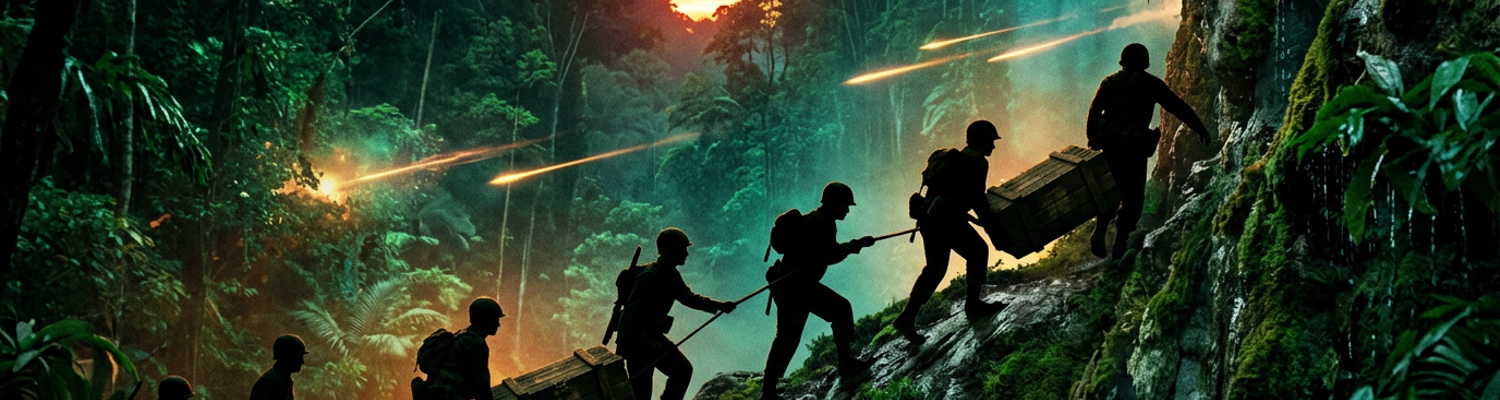
Locomotives hauled long strings of wooden boxcars into California rail sidings, unloading thousands of tons of heavy military equipment that the 1st Filipino Infantry Regiment had to sort, pack, and transport before shipping out to the Pacific. Company A assembled alongside sister battalions at Camp Beale, where newly mustered Filipino farmhands, cannery workers, and college students stepped off passenger cars to begin intensive infantry staging. Supply sergeants worked without pause in the dust and heat to issue basic field gear, assemble motor pools, and distribute rifles to men who had never fired military weapons. Regimental convoys then dragged howitzers, trucks, and field kitchens across hundreds of miles of public highway to the Hunter Liggett Military Reservation for combined maneuvers. Field exercises across the rocky ravines and dry scrub of Hunter Liggett wore down vehicles, snapped suspension springs, and stripped tread off transport tires under punishing field conditions. Mechanized units ran out of spare parts within weeks, forcing regimental mechanics to weld cracked frames and cannibalize broken trucks just to keep the training battalions moving.
Mechanics submitted emergency requisitions for replacement parts and durable field gear, but depot quartermasters responded by dumping defective equipment and substandard rations from regional packaging warehouses onto the staging docks. Supply personnel opened wooden packing crates to discover that standard canvas webbing for cartridge belts, canteen pouches, and haversacks had been assembled from loose, unsealed cotton fibers that frayed instantly when pulled tight. Fabric seams tore loose under the weight of full ammunition loads, and metal eyelets ripped free from harness straps before the riflemen even boarded their troop transports. Tropical rations delivered to the unit arrived in an even worse state, packed in thin cardboard cartons that had sat exposed in damp coastal staging sheds until moisture soaked the outer wrapping. Rations inside these wet containers showed visible signs of spoilage, with swollen cans of tinned pork leaking foul grease and salt-cured crackers softening into useless paste under the California sun. Soldiers watched supply clerks sweep broken tins off the loading platforms, yet depot inspectors signed the inspection manifests and forced Company A to load the damaged food straight into their unit stores.
Stores of rotting food and tearing canvas prompted Colonel Robert Offley to protest directly to the Western Defense Command, demanding modern waterproofing compounds, reinforced field webbing, and edible rations for his regiment. Administrative officers at the Western Defense Command dismissed these protests immediately because military headquarters in Washington directed all first-tier shipping, modern radios, and prime food allocations across the Atlantic to support armies fighting in Europe. Western Defense Command staff classified the 1st Filipino Infantry Regiment as an auxiliary Pacific unit that could manage with surplus inventories, refusing to divert factory-fresh gear away from European staging lines. Staff officers in San Francisco rejected repeated emergency requisitions for tropical gear, telling regimental supply officers to accept second-rate warehouse overstock or sail without equipment. Company A received no replacement webbing and no fresh rations, leaving frontline riflemen with gear that would rot within weeks of landing in wet Pacific jungles. Stevedores swung cargo nets loaded with rotted rations and frayed canvas into the dark holds of the staging ships, sealing defective supplies into the operational lifeline of the regiment before it ever touched enemy soil.
Deployment Schedules and Eighth Army Pacific Logistics
Cargo holds slammed shut over the stacked crates as naval transports carried Company A across the Pacific Ocean toward the Southwest Pacific Area under conflicting Eighth Army operational timetables. Eighth Army headquarters repeatedly pushed combat deadlines forward to speed up the clearance of the central Philippine islands, forcing troopships to bypass planned intermediate staging depots where regimental supply officers had scheduled equipment trades. Junior officers, including Lieutenant Robert L. Keys, climbed down steel ladders into the hot, humid cargo bays during the long ocean passage to uncrate field supplies and inspect combat packs. Lieutenant Keys pulled back water-damaged cardboard covers to find thousands of bloated, corroded C-ration tins leaking cloudy brine and spoiled meat fat across the deck plates. Platoon leaders sorted through supply bins and discovered that half of the canvas field packs had missing shoulder straps, jungle boots lacked protective composite soles, and water purification tablets had crumbled into useless damp chalk inside poorly sealed glass bottles. Keys carried written equipment discrepancy reports directly to the shipmaster and the convoy quartermaster, but naval officers refused to alter course, condemned no cargo, and ordered the troops to preserve all issued rations for shore operations.
Shore operations at staging harbors in New Guinea and the central Philippines offered no relief once the transports dropped anchor, because systemic theater-level supply diversions routed all fresh rations, standard replacement radios, and factory-new uniforms directly to primary American corps. General headquarters in the Southwest Pacific Area designated the detached Filipino companies as secondary rear-area security forces, relegating them to the lowest procurement tier behind full American divisions. Island base quartermasters routinely confiscated high-priority supply manifests, diverting crates of carbines, tropical dry rations, and waterproof radio components to staging areas for larger upcoming invasions. Company A supply personnel stood on crowded docks watching warehouse cranes transfer dry B-rations, field wire, and reinforced leather footwear straight to mainline infantry units. Supply clerks rejected emergency requisitions signed by Filipino unit commanders on the spot, citing theater distribution orders that denied detached companies access to depot stock and left them to depend on whatever salvageable gear remained in their transport holds.
Transport holds became staging areas where Lieutenant Robert L. Keys and the company platoon leaders gathered to redistribute the surviving gear before Eighth Army command thrust the unit into active combat. Soldiers dragged spoiled ration cartons to the railings and threw dozens of rotten tins into the sea, leaving every rifleman with barely two days of edible food to sustain long reconnaissance missions through dense interior terrain. Unit mechanics salvaged copper wire from damaged vehicle harnesses and scavenged worn dry-cell batteries from naval dumpsters to assemble makeshift power connections for battered SCR-284 radio sets that had arrived without spare vacuum tubes or rubber gaskets. Infantrymen braided scrap rope from cargo nets to lash broken rucksacks onto their shoulders and cut strips of salvage canvas to pad the bottoms of ill-fitting boots. Transport winches lowered the men of Company A into shallow-draft landing craft under urgent Eighth Army movement orders, sending the under-equipped riflemen toward the shoreline of Samar with damp matches, broken radios, and rotting field rations.
Tactical Infiltration and Partisan Linkups Across Samar
Steel ramps slammed into the surf along the Samar coast, dumping Company A riflemen waist-deep into the breakers with their waterlogged equipment and rotting field rations. Lieutenant Robert L. Keys directed his platoons past the shoreline immediately, pushing the men straight into the dense foothills of the mountainous interior on urgent combat reconnaissance sweeps in early 1945. Footpaths disappeared within two miles of the coast, forcing the soldiers to hack through tangled vines and slippery limestone gullies under heavy downpours that dissolved their paper ration cartons into gray pulp. Soldiers carried their corroded rifles high above the mud, finding that the damp matches ruined back in the ship holds left them unable to boil dirty river water or light signal fires. Heavy rain and thick cloud cover sealed off the mountain ridges, hiding the company from coastal observation posts and leaving the platoons completely out of touch with Eighth Army command.
Isolation forced the unit to rely entirely on Filipino partisan scouts who stepped out of the dripping jungle undergrowth to make contact with Keys and his advance point men. Local guerrilla commanders shared tactical sketches drawn on scrap paper and led Company A along hidden hunting trails to track bypassed Imperial Japanese Army holdouts hiding in high limestone caverns. Guerrilla fighters warned Keys that hungry, well-armed Japanese detachments had fortified the interior ridges after retreating from coastal defeats, setting ambushes along the major river crossings. Company A platoons worked side by side with the partisans to set up blocking positions, shadowing enemy patrols and marking hidden Japanese strongpoints across the trackless central range. Partisan couriers guided American squads through treacherous mountain ravines, but the joint force could move only as fast as their dwindling physical strength permitted.
Limestone ridges drained that physical strength as the rock formations trapped the advance squads in deep, humid valleys where the dense jungle canopy shut out all view of the sky and blocked aerial resupply. Purification tablets had already dissolved into damp chalk inside cracked glass bottles during transport, forcing riflemen to scoop brownish water directly from stagnant jungle creeks. Parasites and dysentery swept through the squads within days, incapacitating dozens of men who had to be carried on makeshift bamboo litters by local partisans. Company A ran entirely out of drinkable water while dragging sick soldiers up steep muddy slopes, with canteens remaining empty for hours under stifling tropical heat. Sweat-soaked uniform fabric tore open on thorn bushes, leaving open sores across the skin of riflemen who had no fresh clothing or antiseptic bandages to dress their wounds.
Riflemen ignored their wounds and dropped into the mud when Japanese infantry opened fire from concealed ridge positions as Company A pushed deeper into the central mountains, pinning down the lead platoon in rocky creek beds. Platoon gunners squeezed their triggers in short bursts to save their remaining machine-gun belts, facing severe shortages of suppressive ammunition that made prolonged fire superiority impossible. Lieutenant Keys ordered his men to hold their rifle fire until targets came within point-blank range because depot quartermasters had issued barely two basic loads per man before departure. Partisan fighters crept through the brush with machetes and captured Arisaka rifles to flank the Japanese holdouts, compensating for the lack of heavy American mortar rounds and machine-gun fire. Company A riflemen collected spent brass casings and salvaged abandoned enemy ammunition pouches to feed their own weapons while digging defensive perimeters into the muddy mountain soil. Soldiers settled into their foxholes with dry canteens and empty cartridge belts, bracing for night counterattacks in total isolation from the Eighth Army rear.
Signal Breakdowns and Failed Aerial Resupply Drops
Radio operators twisted the frequency dials of their SCR-300 manpack sets to break that isolation from the rear and call for emergency ammunition, but water damage silenced the equipment. Torrential monsoon rains poured through the mountain canopy and seeped past unsealed rubber gaskets, soaking the delicate vacuum tubes and shorting out internal battery terminals inside the metal housings. Dense interior jungle foliage and towering limestone cliffs absorbed what little transmitter power remained, blocking frequency-modulated signals before the waves could clear the surrounding ridgelines. Moisture condensed inside the aluminum chassis until wiring harness connections corroded into green residue, rendering the thirty-eight-pound backpacks entirely useless for tactical communication. Company communicators disassembled the receivers on canvas ponchos, cleaned corroded contact pins with knife blades, and tried to dry damp battery cells over canned heat without restoring a single operational channel. Soldiers laid bright fabric identification panels across a muddy clearing at dawn so that aerial observers could locate the company and direct a supply drop by sight.
Fabric strips laid for sight shifted across the slick mud under fresh rainstorms, blurring the panel layout and distorting the assigned code symbols into illegible orange streaks. Fifth Air Force C-47 Skytrain transports arrived over the central mountain range an hour later, flying low through turbulent cloud layers to find the drop zone. Pilots struggled to match the distorted panel markings below with outdated map coordinates, misreading their flight charts by several hundred yards over the rugged terrain. Loadmasters pushed cargo bundles out the open side doors on the pilots whistle, believing they were releasing the gear over friendly lines. Shifting mountain drafts caught the silk cargo parachutes, carrying dozens of wooden crates away from the cleared knoll and over the sheer edges of the adjacent canyon. Parachute canopies collapsed into the treetops of deep, enemy-held ravines, dropping critical ammunition canisters, dry rations, and medical cartons directly into territory controlled by entrenched Japanese garrisons.
Enemy soldiers from those garrisons converged on the impact points with axes and crowbars, shouting to one another as they dragged American supply boxes into limestone cave entrances. Lieutenant Robert L. Keys assembled volunteer recovery patrols from the least exhausted riflemen in Company A, intending to descend into the ravines and reclaim the lost gear before the enemy emptied the crates. Riflemen secured frayed utility ropes around bamboo stumps and slid down eighty feet of slick, moss-covered limestone, keeping their empty carbines slung across their backs. Hostile snipers concealed in the high branches of banyan trees opened fire with smokeless powder as soon as the point scouts touched the ravine floor. Rifle bullets spattered against the limestone walls, showering the men with sharp rock splinters and pinning the recovery squads in open creek beds.
Creek beds offered no cover as Lieutenant Keys crawled through the muddy gravel under direct sniper fire, signaling his scouts to lay down suppressing fire with their few remaining rounds. Keys reached a crushed plywood cargo container, cut away tangled shroud lines with his trench knife, and rolled two heavy zinc-lined ammunition boxes into the shelter of a limestone ledge. Patrol members advanced from boulder to boulder, trading rifle shots with concealed Japanese marksmen while dragging canvas supply sacks away from the brush. Keys hoisted a wounded rifleman onto his shoulders after a sniper round pierced the soldiers arm, carrying him back toward the climbing ropes while squad members covered the withdrawal. Soldiers hauled three recovered crates of small-arms ammunition and two battered boxes of field rations up the cliff face, leaving the rest of the drop behind as Japanese machine guns opened up along the ravine.
Tropical Disease and Combat Attrition in Samar
Riflemen dragged the five salvaged wooden crates out of the ravine and over the cliff edge into the perimeter, prying open the splintered lids to divide handfuls of dry biscuits among forty starving scouts. Sharp limestone karst formations sliced through worn canvas boots, gouging deep cuts into the feet and ankles of Company A infantrymen as they traversed razor-sharp ridges. Deep ravines and sheer rock pinnacles made aerial rescue impossible, while the complete absence of forward landing strips or road networks left the company entirely without field medical evacuation support. Squad leaders lashed together fresh bamboo saplings to fashion two-man stretchers, forcing exhausted riflemen to haul litter cases up steep limestone inclines under torrential downpours. Stretcher-bearers slipped repeatedly against slick moss and sharp rock faces, dropping to their knees while gripping the rough poles to keep wounded scouts from sliding into deep sinkholes. Incapacitated soldiers collapsed along the narrow trails, shaking violently with high fevers as untreated infections poisoned their blood.
Blood infections worsened as mosquito swarms descended on the sweating riflemen at dusk, spreading virulent strains of malaria that quickly incapacitated over half the active combat strength of Company A. Supply crates dropped by Eighth Army planes had contained no atabrine tablets, leaving medics without the standard yellow synthetic antimalarial medication required to suppress recurring chills and debilitating fevers. Stagnant creek water brewed deadly bacillary dysentery, causing violent cramps, bloody diarrhea, and severe dehydration among soldiers whose purification chemicals had been ruined during naval transport. Moisture trapped inside rotting leather boots produced severe jungle rot, stripping away layers of skin from sodden feet because California supply depots had failed to issue extra pairs of clean dry socks. Riflemen peeled away blackened wool threads that had fused directly into raw, ulcerated flesh, leaving their bare soles open to soil-borne fungus and crippling bacterial rot.
Infection and starvation forced supply sergeants to initiate desperate scrounging operations to sustain forward reconnaissance elements and keep the walking wounded alive in their foxholes. Sergeants organized foraging parties with local Filipino partisans, tapping into native trail networks to haul baskets of wild yams, raw cassava roots, and fresh river snails up into the ridgeline perimeters. Scouts located abandoned Imperial Japanese Army cave shelters along the limestone bluffs, prying open damp wooden bins to confiscate sacks of polished rice, tins of pickled radish, and dried fish rations left behind by retreating garrisons. Sergeants boiled the captured enemy rice in five-gallon metal fuel cans over smokeless bamboo embers, distributing hot porridge to soldiers who had gone without solid food for days. Company quartermasters collected Japanese field medical kits from overrun bivouacs, salvaging vials of Japanese quinine powder and paper-wrapped antiseptic bandages to replace the non-existent American field dressings.
Field dressings and captured Japanese provisions moved along cliff paths in woven baskets shouldered by partisan couriers, maintaining an unbroken human logistics chain to sustain forward reconnaissance elements on the outer ridges. Lieutenant Robert L. Keys rotated his fever-ridden riflemen in four-hour observation shifts, using the salvaged food and medicine to maintain a thin screen of outpost positions overlooking the interior valley. Soldiers wrapped their disintegrating boots with woven hemp fiber and strips of Japanese shelter canvas, planting their carbines into the mud to steady their trembling limbs as they scanned the brush for enemy counterattacks. Keys checked each mans remaining Arisaka and Garand rounds, marking operational coordinates on water-stained maps to guide partisan scouts toward the next Japanese defensive position.
The Rescission Act of 1946 and Political Disenfranchisement
Runners carried those marked field charts through mountain brush to direct final mortar fire onto bypassed Japanese bunkers, clearing the last enemy strongpoints across Samar just as Pacific combat operations came to an end. Company A riflemen gathered their remaining ammunition, turned over regional security to territorial scouts, and watched allied Filipino Commonwealth soldiers prepare to claim their promised American veteran status. Filipino infantrymen had entered the war under direct presidential orders from Franklin D. Roosevelt, who had pledged that Commonwealth troops fighting under American officers would receive full military pay, veterans benefits, and United States naturalization privileges. Soldiers who had shared moldy C-rations and salvaged Arisaka cartridges expected the United States government to honor those wartime pledges once combat units demobilized. Budget analysts in Washington reviewed the projected post-war military expenditures and began looking for legislative methods to reduce national expenditures. Bureaucrats calculated that providing regular pensions, medical coverage, and educational stipends to overseas allied soldiers would drain billions of dollars from the federal treasury that political leaders wanted to direct toward domestic recovery.
Funds for domestic recovery required massive capital, prompting lawmakers in the United States Congress to draft budget rescission measures that removed overseas liabilities before allied soldiers could submit formal claims to the Veterans Administration. Congress enacted the First Supplemental Surplus Appropriation Rescission Act of 1946 in February, inserting an administrative rider that directly targeted Philippine veterans. This rider declared that service in the Commonwealth military forces and recognized partisan resistance groups would not count as active federal service for the purposes of veteran pensions and educational aid, retroactively stripping over 66,000 Commonwealth troops and guerrillas of GI Bill benefits and naturalization privileges. Congress reinforced that statutory exclusion three months later by passing the Second Supplemental Surplus Appropriation Rescission Act of 1946, which maintained the denial of full veteran status and restricted overseas combatants to limited disability payouts calculated at half the standard American rate. President Harry S. Truman signed both measures into law at the White House, approving the fiscal cuts while acknowledging in formal statements that Commonwealth soldiers had fought with extraordinary courage under American command.
Logistics failures under American command on Samar created a stark policy contradiction between Company As frontline wartime sacrifices and post-war fiscal calculations in Washington. Company A soldiers had relied entirely on Filipino Commonwealth scouts and partisans to survive starvation and disease in the Samar interior, fighting in the same foxholes against the same Japanese garrisons. American budget officials treated those same Philippine veterans as foreign nationals, denying them admission to military hospitals even as thousands suffered from permanent combat disabilities and chronic malaria contracted during joint reconnaissance sweeps. Allied veterans who brought their discharge certificates to federal offices in Manila found that their wartime service records no longer qualified them for American citizenship or GI Bill college tuition. Clerks behind government desks stamped denial notices across pending benefit applications, informing disabled partisan fighters that federal statutes had terminated their legal status as American veterans.
Veterans clutching stamped denial forms organized street demonstrations outside government buildings across Manila, demanding that Congress restore their earned military benefits. Lieutenant Robert L. Keys gathered copies of the new rescission laws while processing post-combat administrative records for his company, reading the statutory language that disenfranchised the partisan scouts who had saved his trapped platoons. Keys compiled company supply receipts, casualty rosters, and Samar field maps to document how local Filipino fighters had fed and guarded American soldiers when regular army logistics collapsed. Supply sergeants packed surviving regimental documents and damaged field radios into heavy wooden transit crates for shipment back to California depots. Keys locked his personal combat journals and equipment deficiency logs into an olive-drab footlocker, intending to present the physical evidence of Company As operational ordeal directly to political leaders in Washington.
Lieutenant Robert Keys and Truman Postwar Correspondence
Politicians in Washington ignored the initial reports, prompting Lieutenant Robert L. Keys to unpack those water-damaged journals from his footlocker years later to initiate blunt post-presidential correspondence with Harry S. Truman. Keys typed extensive memorandums citing rotten C-ration shipments, defective SCR-300 radios, missing atabrine antimalarial tablets, and botched air-drop coordinates that had left Company A riflemen starving on jagged limestone cliffs. Letters from the former lieutenant accused military authorities of willful logistics abandonment and condemned the federal government for stripping Allied Filipino guerrillas of their military benefits under the 1946 Rescission Acts. Keys reminded the former president that without the food, intelligence, and blood shed by Filipino partisans, Company A would have been wiped out before reaching the coast. These pointed letters reached Trumans desk at his presidential library in Independence, prompting the former president to compose direct personal defenses of his White House administration.
Administration policies heavily influenced President Trumans defense of his signature on the rescission statutes, outlining the massive fiscal constraints and legislative restructuring that gripped Washington immediately after the surrender of Japan. Typewritten replies from the former president explained that runaway military spending and national debt forced the executive branch to make painful administrative compromises with an aggressive, budget-cutting Congress. Truman maintained that federal lawmakers refused to fund open-ended entitlement programs for foreign soldiers while millions of returning American service members flooded the domestic job market. The former president argued that his executive approval of the budget cuts had secured vital alternative rehabilitation funds for the Philippine government, asserting that macro-level fiscal stability took precedence over individual wartime promises. Truman emphasized that postwar budget reductions were unavoidable political realities, but his pragmatic explanations failed to satisfy Keys and the surviving veterans of the 1st Filipino Infantry Regiment.
Veterans from the regiment joined surviving officers alongside Keys to launch an unyielding, decades long campaign for full federal recognition and military equity. Aging soldiers organized advocacy groups, gathered sworn statements from platoon commanders, and traveled to congressional hearing rooms in Washington to display their combat scars and discharge papers. Filipino veterans marched in uniform through capital corridors year after year, demanding that lawmakers overturn the 1946 Rescission Acts and grant equal pension rights, disability compensation, and medical access through the Department of Veterans Affairs. Keys contributed his personal Samar patrol logs and quartermaster receipts as formal documentary evidence, proving to congressional committees that Filipino troops had operated under direct American command during every interior engagement. Decades of legislative stonewalling gradually eroded under continuous pressure from these veteran coalitions, leading Congress to pass incremental naturalization provisions in the Immigration Act of 1990.
Advocates utilized those citizenship victories to intensify pressure on federal agencies for complete financial restitution and official acknowledgment of wartime service. Congress eventually approved the Filipino Veterans Equity Compensation Fund in 2009, authorizing one-time lump-sum payments to surviving Commonwealth fighters who had spent six decades fighting for federal acknowledgment. Surviving riflemen traveled to the United States Capitol in 2017 to receive the Congressional Gold Medal, the highest civilian award bestowed by the nation, honoring the 1st Filipino Infantry Regiment and its Allied partisans. Company A veterans accepted the bronze medals in front of national lawmakers, finally entering their wartime operational logs into the permanent public record of the United States.