
Imjin River Clearance Catastrophe Post-Mortem
The inventory manifests for the spring clearance operation recorded 14,200 M15 anti-tank mines, 28,000 M16 bounding fragmentation mines, 4,500 blocks of Composition C-4 explosive, and 800 bangalore torpedoes. Combat engineers unloaded 120 tons of Bailey bridge steel panels, 400 spools of detonating cord, and fifty-two armored D7 bulldozers directly onto the staging grounds at Camp Casey via the single-track rail line from Incheon. Supply officers logged an additional 15,000 sandbags, 600 miles of barbed wire, and two dozen M4T6 floating bridge pontoons. This accumulated payload represented the highest concentration of localized destructive and structural engineering potential assembled in the theater since the armistice.
A close review of operational logs indicates the entire stockpile degraded into inert scrap within three weeks.
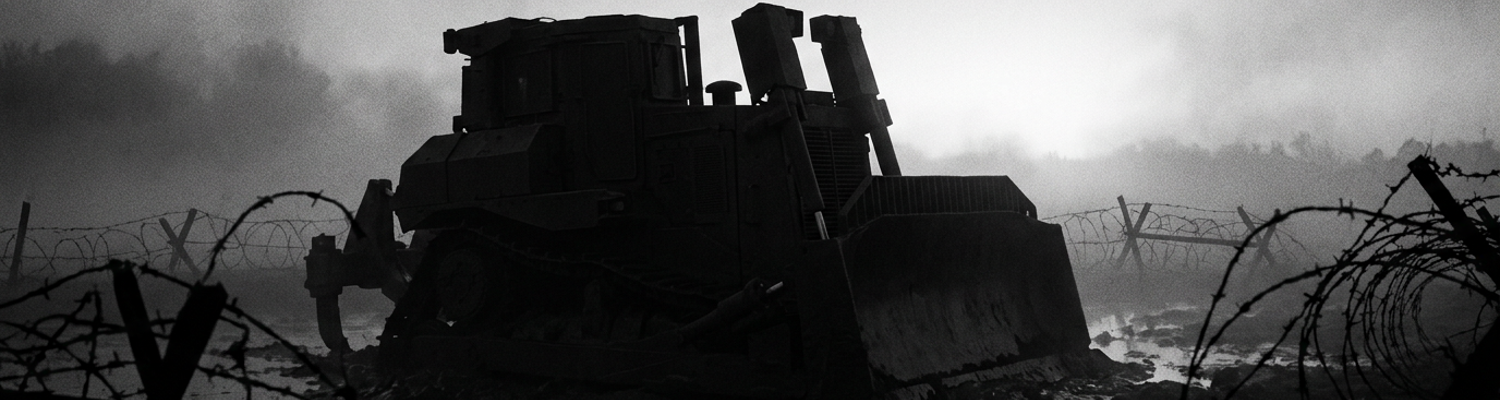
When examining the historical record of the 1957 failure of the 76th Engineer Combat Battalion along the Imjin River sector, the mechanical breakdown of the clearance effort reveals a precise sequence of tactical errors. Battalion Commander Lieutenant Colonel Thomas Vance ordered Company B and Company C to initiate a rapid demining and defoliation sweep across a four-mile stretch of the northern embankment on April 12. Unseasonal monsoon rains had already saturated the floodplain. The silty loam turned into a high-viscosity slurry. Heavy equipment operators drove fourteen armored D7 bulldozers into the primary marshland sector at grid coordinate 38.012, 126.854.
The vehicles immediately sank up to their exhaust stacks in the alluvium.
Mud infiltrated the exposed sprocket assemblies. Primary drive chains on six different tractors snapped within the first hour of deployment. Standard recovery protocols required M88 Recovery Vehicles to winch the trapped bulldozers backward onto solid ground. The battalion lacked adequate one-inch steel tow cables. Crews used substandard three-quarter-inch chains that ruptured under the 40-ton drag weight. Shifting topsoil caused previously mapped enemy minefields to migrate downward toward the riverbank. Infantry units assigned to screen the engineers found themselves bogged down in waist-deep water while attempting to manually probe for displaced unexploded ordnance with brass rods. The river rapidly crested its banks on April 15. The primary staging area flooded. The forward motor pool completely submerged under six feet of fast-moving brown water.
Commanders at the Eighth Army headquarters formally aborted the primary clearance mandate at 0630 hours the following morning.
Flooding immediately collapsed the compromised supply corridors leading to isolated frontline outposts. Main Supply Route 1 washed out in seven distinct locations between April 16 and April 18. This graded dirt artery was carved directly through the central valley. Engineers attempted to lay timber corduroy roads over the breaches using felled pine trees. The saturated soil swallowed the logs under the weight of the first loaded M35 cargo trucks attempting the crossing. Axles snapped as the heavy vehicles dropped into hidden subsurface voids. Forward operating bases lost all overland supply support. Outpost 412 and Outpost 281 sat directly along the immediate buffer zone boundary. Medical evacuation protocols failed entirely. Grounded H-19 Chickasaw helicopters sat idle on the tarmac at Seoul Air Base due to severe cloud cover and visibility dropping below fifty feet. Garrison commanders at Outpost 412 placed their 140 infantrymen on half-rations by April 19. Cooks substituted standard hot meals with aging stocks of canned meat and beans. The supply clerks at Outpost 281 reported their diesel generator fuel stores dropped below ten gallons. The communications tent operated strictly on auxiliary battery power.
Quartermaster records show the 1st Platoon at Outpost 412 expended their final crate of 81mm illumination mortar rounds on the night of April 20.
Political Restrictions and Heavy Armor Bans
Archival evidence shows the G-3 Operations branch at Eighth Army headquarters in Seoul issued Directive 77-A on March 28, 1957. This classified order explicitly prohibited the deployment of tracked heavy armored earthmovers within 2,500 yards of the Military Boundary Line. The bureaucratic ban directly targeted the 76th Engineer Combat Battalion and their primary clearance assets. These assets included M48 Patton tank-dozers and twenty-four heavily up-armored Caterpillar D7 tractors. Eighth Army staff officers concluded the visual silhouette of a tank chassis equipped with a three-ton M1 dozer blade appeared excessively aggressive to North Korean observation posts positioned on Hill 155. Battalion mechanics at Camp Casey received written instructions to systematically strip the 1.5-inch hardened steel plating from the D7 cabins before transit to the Imjin riverbank. Maintenance platoons spent forty-eight consecutive hours unbolting the protective shrouds over the engine blocks, radiator grilles, and hydraulic winch assemblies. Operators lost all ballistic protection against 7.62mm sniper fire and shrapnel from bounding anti-personnel mines. The modifications reduced the tractor weight by 4,200 pounds. The delicate internal combustion components were exposed to environmental contamination and enemy fire.
The combat engineers drove naked tractors into active minefields.
Political escalation fears fundamentally degraded the tactical engineering protocols along the northern riverbank. Records from the United Nations Command Military Armistice Commission meetings at Panmunjom detail repeated North Korean protests throughout February and March. Communist delegates formally accused the United States of massing offensive mechanized divisions under the guise of spring flood control projects. State Department liaisons in Seoul transmitted urgent memorandums to Eighth Army commanders warning that any localized border skirmish or misidentified explosion could collapse the fragile 1953 ceasefire agreement. This diplomatic anxiety translated into crippling operational limitations for Company B at grid coordinate 38.018, 126.859. Battalion staff completely prohibited the use of M1A1 Bangalore torpedoes and explosive mine-clearing line charges to breach the dense concertina wire and subterranean mine belts. Standard combat doctrine dictated firing a rocket-propelled line of Composition C-4 explosive across a suspected minefield to detonate buried ordnance through massive overpressure. The resulting acoustic signature and blast shockwave perfectly simulated a heavy 155mm artillery strike. Commanders feared North Korean artillery batteries on the opposing ridge would interpret the clearance blasts as a preemptive mechanized assault and initiate a retaliatory counter-barrage against the exposed engineers.
All explosive breach tactics ceased immediately.
The restrictions extended beyond explosives to encompass basic acoustic discipline. General Order 144 mandated a strict noise ceiling for all motorized operations within the buffer zone. The Eighth Army chief of staff signed this document on April 2. Diesel engines operating above 1,500 RPMs generated a low-frequency rumble that carried across the river valley. This noise prompted erratic small-arms fire from nervous North Korean sentries. To comply with the noise abatement directive, the 76th Engineer Combat Battalion restricted their remaining unarmored D7 bulldozers to first-gear operations. This drastically reduced the torque required to push waterlogged soil and uproot embedded obstacles. The tractors stalled repeatedly when attempting to clear the dense thickets of black locust trees lining the riverbank. Operators had to constantly restart the massive diesel engines. This drained the primary starter batteries and burned out the auxiliary pony motors. Mechanics lacked replacement electrical components in the forward supply dumps. Three more bulldozers were grounded by April 13.
A close review of the April 14 morning reports reveals the exact cost of these political restrictions on the ground.
Stripped of their armored earthmovers and explosive breaching charges, the engineers of Company C reverted to manual clearance methods across a 400-yard stretch of saturated floodplain. Infantry screeners and combat engineers crawled through the high-viscosity mud on their stomachs under a low overcast sky. They probed the silty loam for M15 anti-tank mines using standard-issue 12-inch brass rods and folding entrenching tools. Progress slowed to less than fifty feet per hour. A single modified D7 bulldozer attempting to grade a safe path struck an undiscovered M14 blast mine at 0915 hours. The directional explosion shattered the exposed cast-iron oil pan and severed the primary hydraulic lines. Highly flammable fluid sprayed across the superheated exhaust manifold. The resulting engine fire destroyed the tractor in four minutes. Recovery teams could not deploy an M88 armored recovery vehicle to retrieve the burned chassis due to the strict tonnage limits and visual profile restrictions imposed by Directive 77-A.
The charred hull sank into the rising alluvium over the next three days.
Improvised Demountable Explosive Rig Development
Archival evidence shows that by April 16, the complete loss of heavy armored bulldozers forced the 76th Engineer Combat Battalion into unauthorized equipment fabrication. Battalion maintenance logs from the forward motor pool at grid coordinate 38.015, 126.850 detail the rapid construction of light demountable explosive breaching rigs. Mechanics from Company B scavenged hollow aluminum framing from discarded M4T6 floating bridge pontoons to build skeletal A-frame chassis. They bolted surplus quarter-inch plywood boards to the base of these frames using half-inch lag screws to act as flat mud skids. Combat engineers then wired tight clusters of 2.5-pound Composition C-4 blocks directly to the aluminum struts using standard WD-1/TT communications wire. The modular design allowed a four-man infantry team to carry the disassembled components through the waist-deep alluvium. Troops would reassemble the rig at the edge of a suspected minefield and manually push the sled over the saturated topsoil. Platoon commanders intended these rigs to generate highly localized, low-acoustic overpressure blasts. The tactical objective required triggering buried M15 anti-tank mines without violating the strict Eighth Army noise abatement directives.
The quartermaster at Outpost 412 recorded the issue of forty-two of these field-expedient sleds over a 72-hour period.
A close review of operational logs indicates these unarmored rigs immediately introduced severe technical limitations on the riverbank. The thin aluminum pontoon struts possessed zero ballistic deflection capability. North Korean sentries on Hill 155 frequently fired blind 7.62mm suppression bursts into the river valley fog using heavy DP-28 machine guns. A single stray tracer round striking the exposed C-4 bundles would trigger a catastrophic sympathetic detonation. The structural integrity of the plywood skids degraded rapidly in the high-viscosity slurry. Water logged the untreated wood within minutes of deployment. This fluid absorption increased the drag weight of the sleds from eighty pounds to over two hundred pounds. Infantry teams strained to push the heavy rigs through the dense black locust thickets. The physical exertion frequently snapped the crude steel bolts holding the A-frames together. Mechanics lacking welding equipment in the forward trenches resorted to lashing the broken aluminum joints with canvas heavy-duty cargo straps.
The abrasive mud stripped the rubber insulation from the electrical blasting caps.
The explosive hazards of these unarmored field-expedient systems culminated during a clearance sweep on April 18 at grid coordinate 38.022, 126.858. Engineers from the 3rd Platoon attempted to deploy a fully loaded demountable rig across a submerged gravel bar. Standard operating procedure required operators to trail a hundred-foot length of copper firing wire behind the sled to a hand-cranked M34 blasting machine. The unseasonal monsoon rains had completely saturated the exposed firing circuits. Galvanic corrosion formed rapidly along the spliced wire joints where mechanics had previously stripped the protective casing with M2 crimping tools. Moisture penetrated the non-waterproofed M60 fuse igniters wired into the primary explosive clusters. As the four-man team pushed the rig over a submerged tree root, the mechanical friction shifted the poorly secured C-4 blocks against the wet aluminum framing. The canvas straps holding the explosive payload failed under the sudden torsion.
A static electrical charge arced across the wet chassis and bypassed the primary safety switch entirely.
The resulting premature detonation instantly vaporized the sled and shattered the surrounding black locust trees. Shrapnel from the fragmented aluminum struts tore through the unarmored clearance team at a velocity of 3,000 feet per second. The blast wave collapsed the adjacent section of the undercut riverbank directly into the main channel. Saturated topsoil buried the blast crater under four feet of moving mud within sixty seconds.
Search teams located the brass M34 blasting machine handle seventy yards downstream in the reeds.
Operational Hazards and Atmospheric Interference
Meteorological records detail how weather patterns directly degraded the night operations of Company B near grid coordinate 38.025, 126.862. A specific atmospheric condition known as radiation fog rolled off the Imjin River surface every evening at exactly 1900 hours between April 19 and April 23. This dense particulate suspension dropped ambient visibility to less than thirty-six inches across the primary staging ground. Rapid temperature decreases from sixty degrees to thirty-four degrees Fahrenheit caused heavy condensation to pool on all exposed metal surfaces. Engineers attempting to manually probe the silty loam for M16 bounding fragmentation mines found their 12-inch brass rods slipping constantly through cold, wet fingers. The high-moisture environment completely neutralized standard depth perception along the riverbank. Forward spotters could not distinguish between the low-hanging branches of black locust trees and the thin steel tripwires attached to suspended enemy ordnance.
Maintenance reports show the moisture short-circuited the primary copper firing lines on three separate hand-cranked blasting machines within forty-eight hours.
The atmospheric interference forced the 76th Engineer Combat Battalion to rely entirely on tactile navigation through the submerged gravel bars. Platoon commanders ordered infantry screeners to tie themselves together using fifty-foot lengths of standard WD-1/TT communications wire. This physical tethering system prevented soldiers from wandering off the narrow, cleared paths and stepping into the uncleared flanks of the alluvium. Progress slowed to a crawl of ten feet per hour. Mud infiltrated the heavy canvas boots of the clearance teams, dropping core body temperatures and severely reducing manual dexterity. Technicians attempting to unscrew the base plates of discovered M15 anti-tank mines to remove the primary fuses frequently dropped their specialized steel wrenches into the fast-moving brown water. Acoustic distortion within the thick fog bank completely masked the audible metallic click of armed pressure plates depressing underfoot.
Recovery teams rarely found the dropped tools in the dark.
A close review of operational logs indicates Eighth Army headquarters issued General Order 192 on April 20. This document imposed a total operational blackout across the entire northern embankment. Staff officers in Seoul feared any white light signature would provide North Korean heavy mortar batteries on Hill 155 with exact targeting azimuths. The directive explicitly banned the firing of 81mm illumination flares and the use of standard-issue vehicle headlights within 1,500 yards of the buffer zone. Battalion mechanics permanently disabled the electrical lighting circuits on all remaining unarmored M35 cargo trucks by severing the alternator belts. Forward commanders forced the combat engineers to tape over the glass lenses of their TL-122 angle-head flashlights, leaving only a quarter-inch slit for map reading. This severe light restriction entirely blinded the teams attempting to clear the dense concertina wire belts at grid coordinate 38.028, 126.865. Demining teams had to feel for the specific tension of tripwires using the bare backs of their hands.
The engineers lacked early-generation infrared viewing devices.
Lack of artificial illumination led directly to an increase in localized friendly fire and accidental detonations. Infantrymen assigned to guard the perimeter could not visually identify the engineers returning from the forward trenches. Nervous sentries frequently fired blind bursts from their .30 caliber M1 Garand rifles into the thick fog whenever they heard the sound of snapping twigs or sloshing mud. Blackout conditions prevented the clearance teams from reading the stamped numerical coordinates on their tactical maps. Platoon leaders attempted to navigate the shifting sandbars using standard M-1950 lensatic magnetic compasses. Buried steel Bailey bridge panels and discarded 105mm artillery shell casings scattered beneath the mud caused massive magnetic deviations. Erratic compass needles led the 2nd Platoon forty yards off their designated safe corridor and directly into a submerged cluster of M14 blast mines on the night of April 22.
Two engineers lost their right legs below the knee before the squad realized they had left the cleared path.
The compounding effects of zero visibility and absolute light discipline caused the total collapse of the forward medical evacuation chain. When the 2nd Platoon struck the mine cluster, the initial blast ruptured the eardrums of the surviving squad members, eliminating their ability to call out for stretcher-bearers in the dark. Medics stationed at Outpost 412 heard the muffled underwater detonation but could not visually locate the blast crater through the dense radiation fog. Standard operating procedure required firing a red star cluster flare to mark the casualty collection point. Compliance with General Order 192 strictly forbade the use of emergency pyrotechnics under threat of court-martial. The wounded engineers bled into the freezing mud for three hours while blind rescue teams probed the alluvium on their hands and knees.
Search parties found the missing men only after tracking the scent of vaporized C-4 explosive through the wet air.
Severed Communications and Tactical Isolation
A close review of signal corps logs from April 15 reveals the exact mechanism behind the sudden cut in landline wire communications. The 76th Engineer Combat Battalion relied on a single continuous loop of WD-1/TT field wire to connect the forward clearance teams at grid coordinate 38.016, 126.852 directly to the command tent at Outpost 412. Crews had spooled out three miles of the twin-lead, copper-and-steel wire directly across the saturated floodplain. Unseasonal monsoon flooding submerged the cable under three feet of fast-moving silty loam. At 1315 hours, the sheer volume of water dislodged a previously abandoned armored D7 bulldozer submerged upstream. Massive steel tracks slid thirty yards down the embankment and rolled directly over the main communications trunk line. This sudden weight pinned the wire against a bedrock outcropping. As the tractor settled deeper into the alluvium, the mechanical tension on the WD-1/TT cable exceeded its 200-pound tensile strength limit.
The wire snapped cleanly at the splice joint.
This physical break instantly isolated seventy-two combat engineers from Company B operating deep within the black locust thickets. Standard operating procedure required platoon leaders to immediately switch to AN/PRC-10 backpack radios for backup contact. Atmospheric conditions along the Imjin River rapidly degraded these secondary electronic systems. High-moisture radiation fog infiltrated the unsealed battery compartments of the radio units within minutes of exposure. Internal BA-279/U dry cell batteries short-circuited as condensation pooled across the exposed copper contact points. Radio operators repeatedly depressed their push-to-talk switches and broadcasted into dead static. Dense wet foliage further attenuated the low-band VHF signals, restricting the transmission range to less than one hundred yards.
Forward observers lost their electronic link to the rear echelons.
Archival evidence shows this complete loss of real-time command line coordination mechanically altered the mine clearing operations on the ground. Without direct voice contact with Lieutenant Colonel Vance at the command post, forward platoon leaders lacked the authorization to halt their advance. Combat engineers continued probing for M16 bounding fragmentation mines near grid coordinate 38.019, 126.855 in total isolation. Tactical doctrine dictated that any discovered ordnance required immediate radio verification with battalion intelligence to cross-reference known enemy minefield maps. Stripped of this verification channel, the clearance teams had to guess the specific layout of the subterranean mine belts. Squads could no longer coordinate with the heavy mortar batteries on Hill 155 to request covering smoke screens. When a 3rd Platoon engineer uncovered a cluster of five interconnected pressure plates, the squad leader had no method to request specialized explosive ordnance disposal technicians.
The squad attempted to manually disarm the cluster using standard steel pliers.
Total absence of live command coordination generated severe physical delays across the entire northern embankment. Platoon commanders resorted to writing handwritten situation reports on waterproof paper. They handed these notes to infantry runners who had to sprint two miles back through waist-deep mud to reach the nearest functioning field telephone at Outpost 281. This manual relay system expanded the communication loop from thirty seconds to over four hours. An engineer from Company C triggered an M14 blast mine at 1530 hours, severing his femoral artery. A frontline medic applied a tourniquet and screamed for an evacuation helicopter, entirely unaware that the radio operator transmission was failing to reach the medical dispatcher. This injured soldier lay on a canvas stretcher in the rain while the squad waited for a medical dust-off that no one had actually ordered.
He bled to death in the mud at 1645 hours.
Improvised Perimeter Defense and Hostile Probes
A close review of operational logs indicates the engineers of Company B faced nightly incursions from North Korean reconnaissance patrols descending from Hill 155 starting on April 23. Conventional defensive materials sank completely into the high-viscosity alluvium along the primary trench lines at grid coordinate 38.026, 126.864. Standard U-shaped steel pickets designed to anchor barbed wire barriers slid without resistance into the saturated silty loam. Mechanics cut apart ruined M4T6 aluminum floating bridge pontoons using hand hacksaws to fashion wider, flat-bottomed anchor stakes. They drove these improvised posts three feet deep into the mud using heavy wooden mallets. The engineers constructed a dense triple-concertina fence, stacking two heavy rolls of razor wire on the bottom and securing a third roll across the top. Troops lashed the metal joints together with stripped copper firing lines salvaged from the failed demountable explosive rigs.
The abrasive river silt dulled the steel hacksaw blades within twenty minutes of active use.
Archival evidence shows enemy infantry units actively tested these forward defenses between 0100 and 0300 hours. Hostile probes consisted of four-man teams crawling on their stomachs through the black locust thickets to manually cut the lower wire strands. The 76th Engineer Combat Battalion attached empty 105mm brass artillery shell casings to the bottom tier of the improvised barriers to act as crude acoustic alarms. Small river stones placed inside the brass casings rattled loudly whenever a North Korean wire-cutter applied physical pressure to the fencing. Sentries from the 1st Platoon responded to the metallic clatter by throwing M26 fragmentation grenades directly into the fog bank. The explosive shockwaves frequently severed the copper lashing wires, requiring combat engineers to crawl into the active kill zone at dawn to manually re-tie the barriers under sporadic small-arms fire.
High-velocity shrapnel easily penetrated the soft aluminum anchor posts.
When examining the historical record regarding the total collapse of field telephones and PRC-10 radios, the reliance on visual lantern relays emerges as a highly significant tactical adaptation. Platoon commanders requisitioned forty Dietz No. 80 Blizzard kerosene lanterns from the quartermaster surplus at Camp Casey to establish an emergency short-range signaling network. Soldiers positioned these lamps inside deep, sandbag-lined fighting holes spaced exactly thirty yards apart along the entire forward perimeter. To communicate under the strict noise abatement directives, engineers manually passed signals using a rudimentary color-coded system based on railroad switchyard equipment. Supply clerks issued thick red and green glass lenses to the frontline sentries. A spotter detecting movement in the wire would pull the clear glass globe from his lantern and slide the red glass filter over the open flame. The adjacent soldier thirty yards down the trench would see the red glow through the heavy radiation fog and immediately swap his own lens to match the color.
This optical relay system transmitted a silent warning across a half-mile perimeter in under forty seconds.
Environmental hazards rapidly degraded this fragile signaling network along the riverbank. The kerosene lamps required constant refueling from heavy five-gallon jerrycans dragged manually through the waist-deep water by infantry runners. Dropping temperatures at night increased the viscosity of the fuel, causing the cotton wicks to burn unevenly and produce thick black smoke that coated the colored lenses in opaque soot. Soldiers had to constantly wipe the hot glass clean with their bare hands to maintain visibility. The steady glow of the lanterns provided distinct aiming points for North Korean snipers equipped with Mosin-Nagant rifles on the opposing ridge. Enemy marksmen fired 7.62x54mm rounds through the dense fog bank by aiming directly at the diffused halos of light. A sniper bullet shattered the glass globe of the primary relay lantern at Outpost 281 at 2315 hours on April 24. Burning kerosene sprayed across the muddy floorboards, instantly igniting the untreated wooden support beams holding up the trench wall.
The sentry abandoned the burning position without signaling the adjacent fighting hole.
Structural Lessons from the Clearance Collapse
Archival evidence shows the complete loss of the 76th Engineer Combat Battalion heavy equipment fleet forced an immediate high-level review of all buffer zone operating procedures. Eighth Army Commander General Isaac D. White convened the Joint Engineering Review Board at the Yongsan Garrison in Seoul on May 4, 1957. Staff officers analyzed the recovered burned chassis of the modified Caterpillar D7 tractors abandoned near grid coordinate 38.012, 126.854. The physical destruction of these machines directly correlated with the mandated removal of their 1.5-inch hardened steel plating under Directive 77-A. Board inspectors noted that 7.62x54mm sniper fire and low-yield shrapnel from M14 blast mines easily penetrated the exposed cast-iron engine blocks. Fragments severed unshielded braided-steel hydraulic lines running to the front blade lift cylinders. The strict noise abatement rules had also forced operators to run diesel engines at critically low RPMs. This low-torque operation caused heavy carbon buildup inside the exhaust manifolds and complete primary starter motor failures across the remaining fleet. General White signed Special Order 401 on May 12, permanently canceling the visual silhouette and acoustic restrictions for all border engineering operations. The new mandate required all earthmoving equipment deployed within 3,000 yards of the Military Boundary Line to carry factory-installed ballistic shrouds. Mechanics at Camp Casey immediately began welding surplus M48 Patton tank armor directly onto the cabs of twenty replacement tractors.
The unauthorized field modification added 5,500 pounds of dead weight to each bulldozer chassis.
When examining the historical record of United States Army combat engineer doctrine, the Imjin River failure mechanically altered how the military approached contested obstacle clearance. Analysts at the United States Army Engineer School at Fort Belvoir received the classified Yongsan board findings in the first week of June 1957. Training commanders entirely scrapped the manual stealth probing protocols previously outlined in Chapter 4 of Field Manual 5-15. The tactical requirement for engineers to crawl through saturated alluvium with 12-inch brass rods was permanently removed from the standard combat curriculum. Doctrine writers shifted the operational focus toward mechanized brute force and high-yield explosive overpressure. Platoon leaders were newly authorized to deploy rocket-propelled mine-clearing line charges without requiring prior approval from division-level intelligence officers. The resulting field manual updates dictated that suspected subterranean mine belts must be breached using continuous 300-foot chains of Composition C-4 detonated simultaneously. This specific procedural change guaranteed the sympathetic detonation of buried M15 anti-tank mines regardless of waterlogged soil conditions or shifting topography along the riverbank. Forward units received orders to requisition large-scale stockpiles of M1A1 Bangalore torpedoes for immediate deployment.
Acoustic discipline was permanently abandoned in favor of localized blast superiority.
A close review of operational logs from the 1958 training cycle indicates a fundamental reorganization of frontline engineer platoons. The structural inability to recover bogged bulldozers from the Imjin floodplain without heavy winches drove Fort Belvoir to integrate M88 Armored Recovery Vehicles directly into forward combat engineer companies. Previously, these 50-ton tracked vehicles remained pooled in rear-echelon maintenance depots under the control of the quartermaster corps. The new organizational chart attached one M88 equipped with a 140,000-pound capacity main winch to every four active bulldozers on the line. Forward mechanics received specialized training on attaching one-inch steel tow cables to submerged equipment under direct hostile fire. The Army Ordnance Corps also initiated the rapid development of the M728 Combat Engineer Vehicle. Designers mounted an A-frame crane and a heavy hydraulic dozer blade directly onto a heavily armored M60 tank hull. Engineers operating this new platform possessed a 165mm short-barreled M135 demolition gun. The low-velocity weapon was designed specifically to shatter reinforced concrete bunkers and tree-lined abatis from a standoff distance of 900 yards.
The first production models of the M728 rolled off the Detroit Arsenal assembly line with three inches of frontal steel armor.