
Tactical Paralysis at the Matanikau Sandspit
Division tactical planners faced an impossible forty-eight-hour operational window. They needed to survey the Matanikau River sector before incoming Japanese transports could land heavy artillery west of Point Cruz. Orders required First Marine Division reconnaissance units to advance across the narrow coastal bar. High tide would inundate the river mouth at dusk. This left commanders fewer than ninety minutes to probe the western bank and establish a blocking position. That rigid schedule failed the moment the assault force hit the far shore. Japanese riflemen and Type 92 heavy machine gunners from the 4th Infantry Regiment pinned the lead assault teams against the western river embankment. Forward movement stopped within ten minutes of contact. Daylight faded. The advance ground to a tactical standstill. The assault elements could neither advance into the coconut groves nor pull back across the open bar under direct observed fire.
All forward movement stopped at the water line.
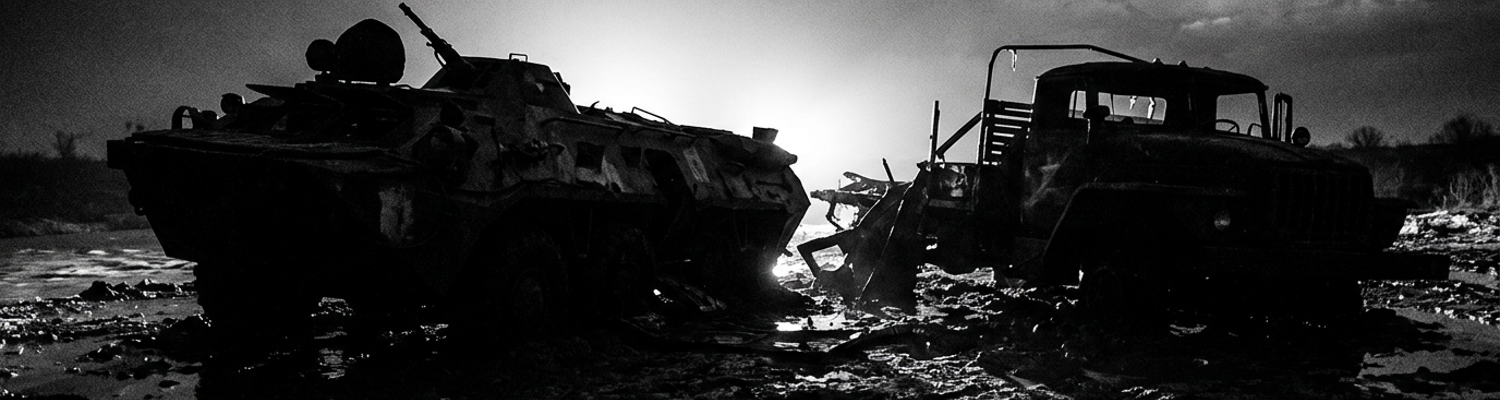
A close review of operational logs indicates that the four-wheel-drive systems of the White M3A1 scout cars proved completely unsuited for the littoral ground of northern Guadalcanal. Weighing over four tons each, the armored vehicles rolled off the firm coral aggregate of the eastern approach. They plunged into saturated estuarine silt mixed with volcanic sediment. Hercules JXD six-cylinder engines strained at maximum throttle. Drivers engaged the front-wheel-drive transfer cases. The non-directional military tread tires quickly dug deep troughs into the tidal mud flats. Marine drivers attempted to rock the armored hulls free using low gear ratios. Thick gray mire rose past the wheel rims and packed around the differential casings. Saltwater seeped into the unsealed electrical harnesses and low-slung exhaust ports. The ignition systems stalled out one vehicle at a time. Japanese 37 mm anti-tank ordnance and Type 89 knee mortars zeroed in on the stationary targets. These projectiles pierced the quarter-inch face-hardened armor plates and severed the steering knuckles. Crew members scrambled out of open-topped fighting compartments directly into waist-deep brine. They abandoned the four-ton machines where they sank.
Archival evidence shows that the resulting stalemate along the river mouth trapped the Marine force in an exposed interlocking field of fire. Across the ninety-yard gap between banks, Japanese defenders occupied fortified revetments built from coconut logs and packed coral sand. These masked their positions along the tree line west of the sandspit. Heavy machine-gun fire swept the exposed sandbar at grazing height. This prevented any coordinated extraction of the wounded or the vehicles. Division commanders at the Lunga perimeter lacked direct radio communication with the forward scouts. The vehicular SCR-245 radio sets had shorted out inside the flooded scout cars. Field telephone wire strung during the initial push had been severed within minutes by mortar fragmentation. Marine forward observers on the eastern bank could not call in 75 mm pack howitzer fire. Doing so would endanger their own men huddled behind the river berm only yards from the Japanese trenches. Both sides traded sporadic rifle fire until night fell. The Japanese guns ceased firing to conserve ammunition. The sandspit went quiet as the tide rose.
Darkness severed all tactical control.
When examining the historical record of the 1st Marine Division, the quiet hours past midnight exposed the immediate human and material cost of the crossing attempt. Surviving reconnaissance scouts dragged their wounded through the brackish backwaters of the Matanikau. They crawled past the submerged bumpers of their abandoned M3A1s toward the eastern perimeter line. Men stripped off waterlogged utility jackets and scraped river mud out of their M1903 Springfield actions. Squad leaders compiled handwritten casualty reports by flashlight under poncho tents. Company commanders logged exact details on mechanical failures. They emphasized that heavy wheeled reconnaissance vehicles could not operate on tidal estuaries without tracked recovery assets. Operational logs recorded thirty-eight casualties and two dead vehicles left abandoned in the mud flats south of the spit. Marine armor officers completed their notes at 0400. They listed the sandspit crossing as impassable for wheeled armored fighting vehicles. The field reports were folded into dispatch pouches for division headquarters.
Waterlogged Ignitions and Mechanical Failure
A close review of operational logs indicates that torrential equatorial downpours sweeping across northern Guadalcanal at midnight completely dismantled the electrical reliability of the M3A1 scout cars. Each vehicle ran on a commercial-grade Hercules JXD 320-cubic-inch flathead engine. These engines were equipped with an unsealed Delco-Remy 6-volt distributor cap mounted low on the right side of the engine block. Tropical cloudbursts forced rainwater past the ill-fitting louvered engine hoods. Moisture funneled directly onto the unshielded ignition harnesses. Water rapidly pooled inside the spark plug wells. It seeped past the loose rubber boots enclosing the plug wires. Mechanics working in pitch darkness noted that the moisture caused immediate high-voltage arcing across the distributor terminals. This burnt carbon tracks into the Bakelite caps and shorted out the spark delivery to all six cylinders. Drivers stepped on starter pedals only to hear the dull grinding of starter motors drawing down drained wet-cell batteries. Moisture saturated the cloth-braided primary wiring. The ignition coils grounded out. The stalled combustion chambers flooded with unburned fuel.
Every engine on the far bank failed simultaneously.
When examining the historical record of the 1st Marine Division, the fundamental design flaws of the four-ton wheeled chassis became obvious. This happened the moment vehicles attempted to traverse the saturated jungle soils west of the Matanikau. Standard military non-directional tires packed full of thick volcanic loam within two revolutions. The tread turned into smooth bands of packed clay incapable of gripping the muck. Drivers engaged the front axle and shifted into compound low gear. The spinning wheels only excavated deep ruts until the front and rear Timken split-type differential housings dragged directly on the ground. The smooth steel belly pans and frame rails rested flat against the raised center hummocks of coastal mud. This completely unloaded the suspension springs. High-centering turned the scout cars into stationary vehicles with all four wheels spinning freely in watery slush. Scouts attempted to shove coconut logs and felled palm fronds beneath the bogging tires. The weight of the four-ton armor plate forced the timber down into the subsoil without yielding any forward traction.
The four-ton armored hulls sat anchored in deep silt.
Archival evidence shows that standard Marine motor transport recovery equipment could not budge the submerged vehicles from the coastal mud wallows. Division reconnaissance units carried five-ton manual ratchet winches, block-and-tackle gear, and three-quarter-inch wire ropes. None of this generated sufficient mechanical advantage against the vacuum created by saturated coastal clay. Recovery teams sank timber deadmen into the tidal mud to serve as winch anchors. The soft soil tore free under tension. Entire logs pulled through the mire. Steel tow cables snapped at their swaged eyes when hitched to secondary trucks straining from the firmer eastern sandspit. Tracked recovery vehicles capable of exerting continuous drawbar pull did not exist on the island. Maintenance personnel had no means to overcome the suction gripping the buried axles and undercarriages. Marine mechanics stripped the .50-caliber M2 and .30-caliber machine guns from the skate rails. They dumped dry sand into the crankcases. Sledgehammers were used to destroy the water-filled distributor housings before withdrawing on foot across the river.
Motor transport officers confirmed both four-ton scout cars were irrecoverable losses at 0430.
Sendai Division Anti-Tank Engagements
A close review of operational logs indicates that gun crews from the Sendai Division 2nd Anti-Tank Gun Company held their fire. They waited until the bogged M3A1 scout cars sat dead in the mud fifty yards from the jungle fringe. Concealed behind layers of hand-sawn palm trunks and damp foliage along the western ridgeline, two Type 94 37 mm anti-tank guns opened up from revetments near the mouth of the Matanikau. High-velocity semi-automatic fire targeted the immobilized vehicles at point-blank range. Japanese gunners cycled up to thirty rounds per minute through their hydro-spring recoil mechanisms. Gun captains bypassed standard range estimation procedures because the physical distance was negligible. Flat-trajectory steel projectiles went straight into the Marine radiator grilles and front axle assemblies. APHE shells struck the cast-steel steering knuckles. The impact cracked them in half and drove fractured ball bearings through the wheel hubs. Marine drivers sitting behind the dashboard watched their instrument panels explode outward under continuous fire. Solid-shot rounds punctured the cast-iron cylinder heads and instantly drained the engine cooling jackets.
Direct anti-tank fire tore through the forward engine bulkheads without resistance.
Archival evidence shows that the quarter-inch face-hardened armor plate wrapping the M3A1 hull failed mechanically against direct ballistic impact. Designed to deflect small-arms rifle ammunition, the thin alloy steel fractured violently. This occurred whenever Japanese 37 mm solid shot struck the plating at over two thousand feet per second. High shockwaves raced through the brittle surface metal. Extensive interior spalling detached razor-sharp iron flakes from the back face of the armor sheets without requiring complete shell perforation. These fragments ricocheted across the tight fighting compartments at lethal velocities. Shrapnel severed the unarmored hydraulic brake lines behind the dashboard. Flammable fluid dumped across the floorboards while shearing off control cables, steering linkages, and transmission rods. Crew members crouching inside the hull caught clusters of secondary fragments in their limbs and faces. Their cotton utility uniforms offered no barrier against hot steel traveling at sonic speeds. Rivet heads snapped off under the extreme mechanical stress. They turned into secondary projectiles that punched through internal battery casings and set fire to stored rubber spare parts.
The light plating transformed incoming kinetic energy into a deadly shower of internal shrapnel.
When examining the historical record of the 1st Marine Division, Japanese infantry mortars compounded the ballistic destruction. They saturated the narrow coastal track running between the riverbank and the dense palm trees. Mortar teams from the 4th Infantry Regiment brought Type 97 81 mm infantry mortars and Type 89 50 mm grenade dischargers into action. They utilized pre-surveyed firing stakes to drop high-explosive ordnance along the exposed track. Plunging trajectories allowed these fin-stabilized mortar shells to clear the overhanging jungle canopy. They plunged directly into the exposed, roofless passenger compartments of the scout cars. High-explosive detonations struck the perimeter skate rails. Pintle mounts ripped out of their welded brackets. Linked belts of .50-caliber ammunition coiled inside metal ammunition trays detonated. Fragment clouds shredded maps, severed battery leads, and eliminated the vehicle gunners attempting to man the remaining Browning machine guns against the tree line. Trapped in a narrow corridor bordered by deep sand on one side and mangrove roots on the other, the scout cars could neither maneuver nor deploy canvas shelters. Their crews had no protection from the continuous rain of descending iron.
Japanese mortar rounds continued detonating inside the abandoned fighting wells until 0515.
Combat Fatigue and Immersion Trauma
Aid station logbooks recorded the psychological ruin of the surviving crews before the morning mist lifted off the Matanikau.
A close review of operational logs indicates that battalion surgeons from the 1st Medical Battalion encountered acute combat fatigue. They treated the evacuated M3A1 crews and found seasoned reconnaissance drivers totally unresponsive. Company corpsmen noted that eighty hours of continuous exposure under direct fire depleted vehicle crews of basic physiological reserves. Water canteens had run dry on the first afternoon of the crossing attempt. Men were forced to swallow brackish river runoff mixed with engine oil and industrial grease. This induced violent vomiting, rapid sodium loss, and debilitating abdominal spasms. Medical officers categorized over twenty men as acute neurosis cases on triage tags. They documented persistent body tremors, non-reactive dilated pupils, and catatonic stupors. Soldiers stared blankly at tent canvas without registering spoken commands. Field surgeons noted that severe dehydration exacerbated systemic shock. Blood pressures plummeted. Muscular tetany precipitated in crewmen who had spent days clenching vehicle controls under continuous anti-tank impact. Corpsmen administered intravenous saline drips. They entered serial numbers directly onto clinical casualty forms beside notations of nervous exhaustion.
Men could not hold field rations without their hands shaking violently.
Archival evidence shows that vehicle personnel forced to abandon their flooded scout cars survived by digging shallow slit trenches into the tidal mudflats. They lay submerged to their clavicles for up to seventy-two hours. Saltwater and mud seeped into open skin abrasions. This produced septic tropical ulcers and severe immersion foot that stripped epidermal tissue down to the subcutaneous layer. The foxholes filled with standing groundwater saturated by black volcanic silt, decaying palm fronds, and rotting mangrove root clumps. These generated thick pockets of hydrogen sulfide gas. Japanese snipers tied into banyan trees thirty yards away shot anything breaking the surface of the mud. The trapped crews had to press their faces into the putrid water to avoid head wounds. Decomposing Japanese corpses from earlier skirmishes drifted into the stagnant estuarine backwaters. They settled against the edges of the Marine holes, drawing swarms of blowflies and accelerating skin infections among the pinned scouts. Marines urinated and defecated directly into the mud beneath their stomachs. They were unable to lift their hips above the level of the river berm until extraction squads arrived under cover of darkness.
The stench of the river basin clung to their utility dungarees for weeks.
When examining the historical record of the 1st Marine Division, surviving crews exhibited profound cognitive disorientation and acoustic trauma. This was generated by sustained explosive concussions along the coastal strip. Japanese 150 mm Type 96 howitzers firing from hills west of the river alternated with midnight bombardments from Imperial Navy destroyers operating offshore. Heavy high-explosive ordnance landed directly into the sandspit. Blast waves traveling through the dense sea-level air shattered the tympanic membranes of vehicle crews trapped near the steel hulls. This produced bilateral ear canal hemorrhage and instant auditory failure. Marine 75 mm pack howitzers from the 11th Marines returned fire in rapid battery concentrations. The river mouth was enveloped in continuous sonic overpressure that prevented inner-ear fluids from stabilizing. Regimental aid stations documented complete vestibular dysfunction among the survivors. They exhibited violent vertigo, spontaneous nystagmus, and an inability to maintain upright balance even on flat ground. Disoriented drivers crawled across aid station floors on hands and knees. They were unable to determine their spatial orientation amid the ongoing percussive shockwaves.
Field medical records listed sixty-two men unfit for further combat duty due to blast concussion and vestibular trauma before noon on October 9.
Emergency Debriefs and Intelligence Gathering
When examining the historical record of the 1st Marine Division, division intelligence personnel from the D-2 section met returning vehicle crews at an improvised casualty clearing post. This was located behind the eastern ridge of the Matanikau. Intelligence officers pulled mud-caked scouts aside while corpsmen bandaged shell dressings over shrapnel wounds. They recorded raw, handwritten statements directly into waterproof field notebooks. Flashlights shielded under green poncho hoods illuminated grease pencil sketches of Japanese defensive emplacements along the river mouth. Survivors from the scout car crews identified concealed Type 94 37 mm anti-tank gun pits positioned four hundred yards west of the sandbar. They pinpointed camouflaged log bunkers that had escaped earlier aerial reconnaissance photographs. D-2 interrogators logged verbatim accounts of Japanese infantry movements. They recorded how Imperial Army gunners held their fire until the lead M3A1 had bogged to its axles in estuarine sand. Every mechanical refusal, fuel starvation incident, and machine gun jam was recorded in graphite on damp ledger paper. Men were then loaded onto Dodge half-ton ambulances bound for the field hospital.
Lead points snapped repeatedly against the rain-soaked notebook leaves.
A close review of operational logs indicates that staff officers completed these initial operational assessments while 11th Marine Regiment artillery batteries fired sustained counter-battery missions over the intelligence tents. Detonations from Japanese 150 mm Type 96 howitzers concealed in the jungle ravines south of Kokumbona shook the dirt floor of the division command dugout. Carbon-ribbon Underwood typewriters were showered with dry soil and coral dust. Intelligence officers ignored the concussions to type immediate tactical summaries. They documented the complete collapse of wheeled armored reconnaissance doctrine in coastal mangrove terrain. The field reports bypassed usual administrative filters. They warned that four-wheel-drive scout cars lacked the low ground pressure necessary to operate across littoral silt channels. Tactical clerks recorded that the failure to deploy tracked LVTs or pioneer bridge engineers ahead of armored cars had handed Japanese anti-tank gunners static targets trapped in exposed defiles. These field notes condemned the plan to advance four-ton vehicles across unreconnoitered sandbars without indirect smoke screening.
Incoming rounds sheared branches through the coconut canopy three hundred yards away.
Archival evidence shows that division motor transport officers compiled frantic technical diagnostics on the M3A1 ignition assemblies. This occurred before senior commanders wrote off the abandoned vehicles as complete combat losses. Maintenance mechanics from the 1st Service Battalion documented that the civilian-derived Hercules JXD engines carried unsealed 6-volt Delco-Remy distributors. These flooded instantly upon entering twenty inches of brackish surf. Capillary action drew saltwater up uninsulated spark plug cables. The electrical charge grounded across the cylinder heads before combustion could occur. Motor transport captains drafted emergency mechanical bulletins for remaining division transports. They called for spark plug wells to be packed with heavy chassis grease and distributor caps sealed with shellac compound. Ordnance clerks completed the survey papers under kerosene lamps at 0545. They certified that the two stranded scout cars could not be recovered by available winch gear before rising tides submerged the engine blocks.
Supply sergeants struck registration numbers W-2054911 and W-2054916 off the division property register. Both scout cars were marked as destroyed materiel left within Japanese-controlled lines.
Doctrinal Repudiation of Wheeled Reconnaissance
The M3A1 scout car ceased to exist as a frontline combat asset for the 1st Marine Division before dawn on October 10.
When examining the historical record of the 1st Marine Division, division staff officers formally acknowledged that doctrine adapted from European highway networks failed completely against equatorial soil. Pre-war Marine procurement had prioritized wheeled armored cars based on high road speeds and operational range across hard-packed terrain. They assumed combat forces could exploit paved routes between littoral landing zones. The Matanikau sandbar and interior footpaths around Mount Austen contained no crushed aggregate base. This exposed the physics of high ground pressure where eight-ton gross vehicle loads concentrated down into four narrow tire patches. Deep axle ruts formed within yards of leaving the beach line. Vehicles stranded as heavy differential housings bottomed out against coral shelves and volcanic clay hummocks. Division operations officer Lieutenant Colonel Gerald C. Thomas drafted an immediate tactical memorandum. He specified that four-wheeled scout cars possessed zero tactical mobility off unimproved island pathways. Technical evaluations submitted to the Division Command Post listed the M3A1 as an operational liability along unpaved river corridors. All remaining wheeled armored assets were reassigned strictly to rear-perimeter airstrip security around Henderson Field.
Wheeled reconnaissance along the Matanikau ended permanently in the river mud.
Archival evidence shows that division leadership executed an immediate tactical transition by transferring all forward reconnaissance duties to dismounted infantry teams. Major General Alexander Vandegrift issued verbal directives ordering frontline infantry battalions from the 5th Marines and 1st Raider Battalion to conduct all future sector probes on foot. Marine scouts abandoned vehicular roads entirely. They moved in four-man fire teams equipped with Reising Model 50 submachine guns, M1918A2 Browning Automatic Rifles, and heavy 18-inch Collins machetes. Patrol leaders plotted clandestine compass azimuths through virgin rain forest canopy south of the Japanese river garrisons. They waded chest-deep through crocodile-infested tributaries rather than risking detection along exposed coastal tracks. Dismounted scouts identified enemy machine gun bunkers by sound and smell. They located camouflaged Type 92 weapon pits without alerting Japanese outposts. These infantry patrols crossed the upper Matanikau at water crossings miles upstream from the sandspit. They transmitted raw topographic notes and enemy trench locations over man-portable SCR-536 handie-talkie radios directly to division field commanders.
Treads replaced tires in every operational requisition dispatched to Pearl Harbor.
A close review of operational logs indicates that division motor transport officers and amphibious planners sent urgent dispatch cables to the Bureau of Ships demanding tracked amphibians for frontline reconnaissance. Fleet Marine Force commanders identified the unarmored LVT-1 Alligator as the single mechanical platform capable of crossing the saturated estuarine barriers of northern Guadalcanal. Originally restricted to moving bulk rations and artillery ammunition across barrier reefs to littoral beaches, the LVT exerted less than three pounds per square inch of ground pressure on its continuous paddle-tread cleat tracks. Marine logistics officers requested immediate priority shipments of tracked chassis outfitted with factory-installed armor shielding over the driver compartments and forward gun mounts. Field engineers recommended stripping non-essential cargo winches from incoming LVT hulls to install forward-firing .50-caliber machine guns and high-frequency naval reconnaissance radios. Division dispatches warned that future assaults across the Matanikau, Point Cruz, and Kokumbona would require continuous tracked amphibious thrusts. These vehicles had to traverse liquid swamp silt, bypass open ocean surf, and climb steep river embankments under direct fire.
The era of the wheeled scout car in the Pacific theater was over.
Material Scuttling and Perimeter Realignment
A close review of operational logs indicates that scuttling parties received definitive orders to disable all immobilized M3A1 scout cars before crossing the river at 0530. Sergeants smashed the delicate quartz crystal oscillators and glass vacuum tubes of the vehicular SCR-245 radio transmitters using M1903 Springfield rifle butts. Japanese signal intelligence units could not extract operating frequencies or tactical encryption keys. Classified frequency code cards and cryptographic charts were burned using matches inside steel ration tins. Dismounting from the open fighting compartments, gunners stripped the heavy Browning M2 .50-caliber and M1919A4 .30-caliber machine guns from the continuous skate rails. They uncoupled the barrel jackets, removed the bolt assemblies, and buried the stripped firing mechanisms in deep tidal silt. Mechanics took eight-pound sledgehammers to the cast-iron transfer cases, front axle knuckles, and steering pitman arms. Marine riflemen fired multiple .30-06 armor-piercing rounds directly into the cast-iron cylinder heads and water jackets of the Hercules JXD engines. This cracked the blocks and drained all remaining coolant into the sand.
Nothing useful remained on the western bank.
When examining the historical record of the 1st Marine Division, the tactical recoil across the sandspit unfolded as a crawling disengagement under pre-dawn artillery coverage from the 11th Marines. Assault teams from Company A, 1st Battalion, 5th Marines pulled back through the brackish shallows fifty yards north of the river bridge site. They kept their heads below the sandy embankment to evade Japanese snipers perched in palm trees along the western rim. Platoons re-formed on the high coral bluffs along the eastern shore of the Matanikau. They abandoned all exposed riverbed listening posts. Marine engineers threw up concertina wire entanglements along the eastern sandbar approaches. They dug sandbagged machine-gun emplacements into the dense coconut groves four hundred yards inland. Fire lanes were cleared across the eighty-yard river defile using machetes and explosive charges. This ensured overlapping fields of fire for water-cooled M1917A1 machine guns. By 0645, forward observers established hardened visual posts on the high eastern ridge. They registered battery concentrations on the western sandspit to turn the abandoned crossing corridor into a pre-sighted artillery kill zone.
The eastern bank became an unyielding trench line.
Archival evidence shows that division headquarters wasted no time reorganizing the surviving motorized personnel whose four-ton vehicles had been destroyed in the riverbed. Stripped of their vehicle driver ratings, thirty-four surviving scouts, mechanics, and machine gunners from the motorized reconnaissance detachment reported directly to the Division Adjutant at the Lunga Point coconut plantation. Division personnel officers reclassified these technical specialists as provisional riflemen. They issued them reconditioned M1903 Springfield rifles, canvas bandoliers holding sixty rounds of .30-06 ammunition, and two Mark II fragmentation grenades apiece. The dismounted crews were trucked southeast to the jungle fringe defending the southern perimeter of Henderson Field. They slotted directly into defensive sectors maintained by the 1st Pioneer Battalion. Marine officers placed the former vehicle drivers into two-man fighting holes spaced fifteen yards apart along the tree line fronting Fighter One runway. They were tasked with night listening posts and barbed-wire maintenance against anticipated night assaults from the Japanese 29th Infantry Regiment.
Morning casualty rosters cataloged the complete elimination of the mechanized scout detachment as an operational maneuver unit before 0800 on October 8.