
Forward Ordnance Depletion During Operation Hickory
When examining the historical record of the mid-May 1967 offensive along the Ben Hai River (NARA Record Group 338, Box 44), the physical degradation of the gunners stands out immediately. Men assigned to the forward gun emplacements had not slept more than three consecutive hours across five days. Marching columns from the 9th and 26th Marine Regiments had pushed north from Cam Lo. They moved through knee-deep mud and sharp elephant grass under suffocating 105-degree heat. Their combat boots rotted off their feet. Their rations dropped down to cold canned pork. Dysentery swept through the staging areas. Incoming 130mm artillery shells fired from North Vietnamese Army positions forced troops into flooded trenches every twenty minutes. Dawn on May 18 arrived with the artillerymen already physically shattered before the primary push began. Sweating cannoneers assigned to lift ninety-five-pound 155mm projectiles struggled to maintain footing on slick red clay revetments.
Artillerymen collapsed over their breechblocks between fire missions.
Archival evidence shows that the simultaneous launching of Operation Hickory and Operation Beau Charger instantly overwhelmed forward supply lines. The 11th Marine Regiment directed batteries positioned at Alpha-2 near Gio Linh, Alpha-4 near Con Thien, and the rear base at Dong Ha. These units faced unmanageable volumes of fire requests from the opening minutes. Forward observers embedded with 1st Battalion, 9th Marines and 1st Battalion, 3rd Marines engaged dug-in regiments of the 324B and 325C NVA Divisions. They called for uninterrupted barrage fire. Tubes fired continuously at maximum powder charges. Battery commanders burned through basic field allowances of high-explosive, illuminating, and variable-time fuze shells to keep enemy heavy mortar pits suppressed. Inside the first twenty-four hours of combat, artillery units deployed between Gio Linh and the South China Sea expended more than ten thousand rounds. Recoil cylinders overheated. Hydraulic packings disintegrated. Firing pins fractured under the thermal load. Daily consumption from these dual operations immediately outpaced the replenishment tonnage scheduled by logistics coordinators in Da Nang.
Every gun pit in northern Quang Tri Province was running out of shells.
A close review of operational logs indicates that batteries supporting infantry along the Demilitarized Zone fell below emergency reserve levels within forty-eight hours of sustained fire missions. Standard operational doctrine (Bureau of Ordnance Instruction 44.2) required each battery to maintain a mandatory three-day reserve of fire in protected revetments. This rule existed to prevent enemy ground overruns. By the thirty-sixth hour of unbroken counter-battery duels, gun positions at Gio Linh held fewer than thirty high-explosive shells per weapon. Direct-support calls to extract pinned rifle platoons near the Cam Lo River rapidly exhausted supplies of white phosphorus and anti-personnel canister ordnance. Gun chiefs scavenged loose propellent powder bags. They swapped remaining stocks across fragmented radio nets. Heavy rainstorms combined with accurate enemy artillery fire along Route 9 severed truck transit from Ammunition Supply Point 1 at Dong Ha.
At 1600 hours on May 20, Battery C had only six rounds of armed 105mm ammunition left in its revetments.
Hazardous Seventh Fleet Nighttime Lighterage Operations
When examining the historical record of Task Group 76.5 operations during the third week of May 1967, naval commanders aboard the amphibious transport dock USS Duluth and dock landing ship USS Point Defiance received urgent flash-precedence messages. These messages demanded five hundred tons of high-explosive ordnance at the Cua Viet staging area. Dense advection fog rolled across the Gulf of Tonkin. Ambient visibility at the mouth of the river dropped to under twenty yards. Doctrine barred unilluminated beach runs across unfamiliar river deltas. The depleted state of the 11th Marines compelled Seventh Fleet officers to waive standard operating safety thresholds. Deck crews lowered diesel-powered Landing Craft Mediums directly into heavy black swells five miles offshore. These were primarily fifty-six-foot LCM-6s and seventy-four-foot LCM-8s. Coxswains took the helm with compass boards wrapped in wet canvas. They steered heavily laden craft loaded with wooden pallets of 105mm high-explosive shells, propelling charges, and point-detonating fuzes into total blackness. Sea spray coated the helm glass. Cross-currents running southward at four knots dragged each displacement hull off course toward unmapped shoals.
Water swept across the open well decks.
This threatened to submerge the wooden ordnance crates before craft even reached the surf line.
A close review of operational logs (Task Group 76.5 Deck Log, May 21) indicates that electronic guidance systems failed almost immediately under the severe coastal conditions. Primary AN/SPS-10 surface-search radars mounted on the fleet amphibious flagships could not distinguish low-profile utility boats from heavy wave chop. This happened once the landing craft entered the wave-break zone two miles off the coast. Down inside the wheelhouses of the approaching LCMs, small commercial-pattern Raytheon Pathfinder radar indicators suffered catastrophic sea-clutter saturation. This blinded operators to the shifting contours of the sandbars guarding the Cua Viet inlet. High humidity and corrosive salt penetration shorted cathode-ray sweep circuits. Auxiliary diesel generators on board the craft threw continuous voltage surges. These surges blew transmitter fuses. Blinded by equipment failures, navigation crews turned off their radar scopes entirely. They relied on magnetic compasses offset by engine vibration and lead-line soundings dropped by hand over the bow.
Sandbars at the river mouth had shifted more than two hundred yards south following heavy monsoon squalls earlier that week.
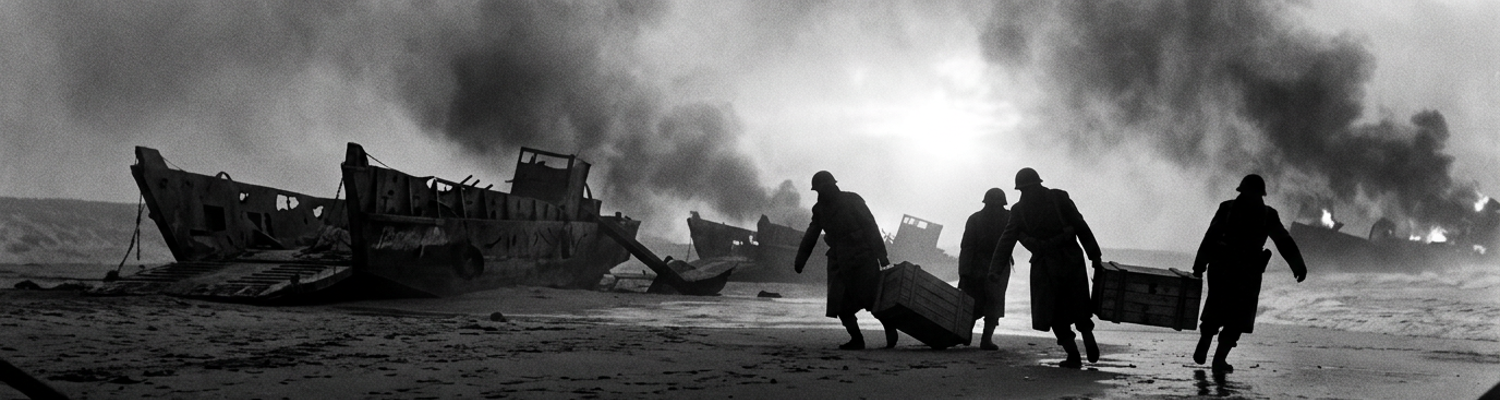
Archival evidence shows the physical collision between these heavy craft and the submerged seabed. Landing craft struck the exterior sandbar at speeds exceeding eight knots. Brass propeller blades sheared off. Drive shafts bent against hard-packed sediment. Out of nine lighterage craft dispatched in the first wave on the night of May 21, four grounded hard on the offshore bar at coordinates YD 355 675. Coxswains threw twin Detroit 6-71 diesel engines into emergency reverse. This action stripped reduction gears and burned out clutches. Surf broke over the aft engine compartments. Salt water mixed with battery acid in flooded bilges. Crews had to hand-crank manual bilge pumps while balancing atop hundreds of live artillery rounds. Craft stuck on the sandbar listed thirty degrees to port. Their crews could not launch distress flares without drawing direct fire from North Vietnamese 85mm shore batteries positioned north of the Ben Hai River.
By 0330 hours, three disabled LCM-8 hulls sat impounded on the shoals.
Eighty-four tons of 155mm powder charges were stranded in four feet of breaking surf.
Communications Blackout and Amphibious Groundings Off Cua Viet
A close review of operational logs indicates that by 0415 hours on May 22, tactical command nets linking offshore lighterage with the beachhead broke down completely. AN/PRC-25 backpack transceivers operated by 3rd Shore Party Battalion logistics teams on the Cua Viet spit lost carrier signals with inbound craft. This signal loss occurred once the landing boats crossed the three-fathom line. Atmospheric ducting, dense sea fog, and high humidity saturated the receiver circuits. This caused rapid crystal frequency drift across the primary 38.30 MHz VHF-FM control net (Frequency Allocation Protocol 9A). Salt spray encrusted rubber whip antennas. This created severe dielectric leakage. Radio-frequency energy grounded straight into steel hull plating. Aboard the approach craft, diesel engine alternators generated continuous electrical interference. This noise drowned out incoming voice traffic from the beachmaster. Coxswains shifted to secondary AN/VRC-46 vehicular rigs strapped down on cargo decks. Damp wiring harnesses shorted directly across their magnesium chassis blocks. Logistic officers standing on the sand spit could see silhouettes of fully laden utility craft drifting into breaking water. They were unable to transmit steering corrections or abort commands.
No orders reached the helmsmen through the static.
Archival evidence shows that severed communications destroyed the staging schedule established by Task Group 76.5. Deprived of radio guidance, individual boat crews maneuvered blindly through the darkness toward misidentified reference fires lit along the southern dunes. Signalmen on the beach attempted to relay visual directions using red signal lamps. Heavy ocean swell periodically dropped the low-slung craft into wave troughs. This concealed the light beams behind six-foot walls of foaming water. Inside the river delta, logistics coordinators at the primary offload ramps had prepared fork trucks and mobile cranes to receive 155mm projectile pallets from arriving LCM-8s. Those craft sat trapped outside the inlet. They circled aimlessly through the littoral surf zone while consuming the final reserves of their diesel fuel. Battery commanders inland at Gio Linh sent priority couriers on motorcycles down Route 561. They needed to find out why the promised artillery munitions had failed to land.
Every supply boat was operating completely alone.
When examining the historical record of the salvage operations that morning, worsening sea conditions turned navigation errors into physical destruction. Six-to-eight-foot breakers driven by sustained twenty-five-knot coastal winds crashed across the submerged outer bar at coordinates YD 364 682. Two loaded LCM-8 craft, designated Mike-1 and Mike-4, struck the bar hard at full throttle. Their steel keels embedded into packed sand. They carried over one hundred tons of boxed 105mm high-explosive rounds. Salvage crews rigged two-inch high-tension steel towing hawsers from an offshore utility boat to pull them free. They applied full engine power against the incoming breakers. The extreme mechanical strain proved catastrophic. Surging wave crests repeatedly slammed the sterns of the grounded craft upward. The towboat pitched downward into deep troughs. This generated shock loads far exceeding the breaking strength of the gear. Both steel towing lines snapped within twelve minutes of engagement.
The cables whipped through the air with enough force to shear stanchions off the deck plates.
They dropped dead into the surf.
Without tow lines to keep their bows pointed into the sea, the immobilized lighterage broached immediately. Broadside waves rolled the flat-bottomed craft sixty degrees onto their beams. Pallets of point-detonating artillery fuzes dumped directly into the churning sand. Water poured over the lowered bow ramps. Engine compartments flooded. Thirty tons of bagged propelling charges submerged under four feet of brine. By 0600 hours, three craft lay completely waterlogged and impounded across the southern shoal. Their exposed hulls took direct impact from the surf line.
Scattered across four hundred yards of surf, two hundred tons of live artillery ammunition lay locked against the sand.
North Vietnamese Artillery Strikes on Coastal Sandbars
When examining the historical record of May 22, 1967, enemy artillery observation teams positioned north of the Ben Hai River had direct, unobstructed lines of sight onto the Cua Viet sandspits. Concrete-reinforced bunkers along the coastal bluffs of Cap Lay at coordinates YD 215 880 housed forward observers. These teams were equipped with Soviet-supplied PAB-2 artillery aiming circles (GRAU index 1A12) and high-magnification trench periscopes. These spotters identified the immobilized silhouettes of Mike-1 and Mike-4 broached across the outer shoals at coordinates YD 364 682 under clear morning light. Battery commanders from the North Vietnamese Army 84A Artillery Regiment dug into hardened cave complexes near Vinh Linh. They received target coordinates by buried field telephone wire at 0620 hours. Long-range 130mm M-46 field guns and 152mm D-20 howitzers opened fire from camouflaged revetments eighteen kilometers to the northwest. Initial ranging rounds fell into the surf fifty yards seaward. Gun crews then walked high-explosive salvos straight across the grounded hulls using ten-round battery volleys.
Heavy fragmentation shells began striking the sandbar at three-minute intervals.
Archival evidence shows that incoming 130mm high-explosive projectiles carried over seven pounds of cast TNT inside thick fragmentation casings. These casings were engineered to shear upon detonation into thousands of high-velocity steel shards. The quarter-inch mild steel plating on the hulls of the grounded LCM-8s provided zero ballistic protection against splinters traveling at four thousand feet per second. High-velocity shrapnel tore through the exposed engine bulkheads. Hydraulic steering conduits were severed. Auxiliary diesel day-tanks were punctured. Dense clouds of burning fuel leaked across the cargo decks. Hundreds of unarmored wooden pallets of 105mm M1 high-explosive shells sat stacked two tiers high in these areas. Red-hot steel fragments ripped through outer wooden packaging. They penetrated sheet-metal propellant canisters. Multi-perforated nitrocellulose powder bags ignited. Chemical propellant fires produced intense thermal updrafts. These updrafts ignited neighboring pallets along the waterline. Direct fragment strikes on point-detonating M557 fuzes initiated catastrophic sympathetic detonations. These blasts blew eight-foot craters into the submerged sand beneath the hull keels.
Secondary detonations tore through forty tons of forward artillery ordnance within twelve minutes.
A close review of operational logs indicates that logistics teams from the 3rd Shore Party Battalion attempted to salvage the remaining unexploded cargo while under direct plunging fire. Beachmasters ordered rough-terrain forklifts and tracked LVTH-6 amphibious tractors to push earthen ramps toward the broached lighterage. They intended to winch exposed pallets clear of the encroaching propellant fires. Soviet-manufactured 152mm rounds detonating in the low surf threw walls of wet sand and jagged metal across the recovery vehicles. Shrapnel severed hydraulic lift cylinders on two forklifts. This disabled their front carriages. Pallets of M107 155mm projectiles were left stranded directly in the surf zone. Navy corpsmen and Marine beach engineers dragged blast casualties into flooded shell holes along the southern dune line. They packed gaping puncture wounds with field dressings. Sea water washed through compression bandages. By 0745 hours, Mike-1 sat submerged up to its gunwales in liquefied sand. Its forward cargo hold was gutted.
Thirty-two tons of artillery projectiles burned beneath four feet of breaking surf.
Ordnance Explosions and Trauma Triage Under Fire
A close review of operational logs indicates that at 0810 hours, two 130mm high-explosive artillery projectiles scored direct hits on an offload pad seventy yards south of the primary boat ramp at Cua Viet. Staged across this strip of hard-packed sand were forty-eight wooden pallets. These contained over eleven hundred 105mm high-explosive rounds and three hundred M60 white phosphorus canisters destined for forward batteries at Gio Linh. Incoming impacts breached the crated white phosphorus. This chemical auto-ignited upon exposure to atmospheric oxygen at temperatures exceeding twenty-seven hundred degrees Celsius. Choking, caustic phosphorus pentoxide smoke rolled across the low-water revetments in blinding white sheets. This smoke dissolved the rubber seals of protective M17 gas masks. It seared the moist lung tissue of exposed beach parties. Multiple 105mm rounds cooked off as internal casing temperatures passed the four-hundred-degree threshold of their Composition B explosive fill (RDX/TNT mixture). Secondary explosions threw twenty-pound fragmentation shards across the shoreline. These blasts detonated adjacent fuel bladders. Burning chemical phosphorus scattered over an area measuring two hundred meters wide.
Phosphorus clung to wet utility uniforms.
It burned through flesh straight down to the periosteum.
Archival evidence shows that the resulting chain reaction shattered the forward logistical perimeter within twenty minutes. Uncontrolled cook-offs of M107 propelling charges threw superheated brass casings and unexploded 105mm projectile bodies directly through the sandbag bulkheads of the makeshift battalion aid station. Secondary blasts triggered sympathetic detonations across four neighboring supply dumps. Three forklift vehicles were destroyed. The firm sand was cratered into liquefied pits of saltwater and burning chemical slag. Shockwaves from eighty-pound high-explosive blasts ruptured eardrums. They caused blast-lung contusions. Jagged wood splinters from shattered shipping crates were driven deep into the soft tissue of beach engineers attempting to establish containment dikes. Heavy coastal winds drove the acid smoke inland across Route 561. Visibility was cut to three paces. Shore Party mechanics were forced to abandon their tracked recovery vehicles. Burning white phosphorus droplets ate directly through engine rubber fuel lines.
Shrapnel from cooking-off howitzer shells sheared communication wires clean off the aid station bunker roof.
When examining the historical record of casualty handling during the bombardment, Navy hospital corpsmen attached to the 3rd Shore Party Battalion and Force Logistic Support Group Bravo worked inside open sand trenches less than thirty yards from the primary detonation zone. Chemical inhalation casualties arrived with severe supraglottic edema. Their airways snapped shut from inhaled phosphorus smoke and pulverized coral dust. Without functioning suction machines or sterile operating rooms, corpsmen performed emergency field tracheostomies and needle cricothyroidotomies on choking Marines. They used scalpel blades, curved Mayo scissors, and cut sections of rubber intravenous tubing. Medical personnel drove large-bore fourteen-gauge needles directly through the cricothyroid membranes of suffocating cannoneers to restore an open passage for oxygen. Shell splinters from secondary blasts repeatedly perforated canvas stretchers. Corpsmen covered patients with their own flak jackets. They wiped burning chemical particles off exposed skin using muddy sand and saturated salt-water compresses.
Trauma teams were forced into immediate surgical interventions.
They had to free cannoneers pinned beneath collapsed cargo beams and burning LCM-8 ramp assemblies.
Archival evidence shows that field surgeons and senior corpsmen performed urgent guillotine amputations directly in the sand. They utilized manual wire Gigli saws and surgical bone shears to sever mangled, unsalvageable limbs before creeping chemical fires could incinerate trapped personnel. Men suffering from massive traumatic avulsions of the lower extremities received rapid applications of canvas tourniquets. These were torqued down with wooden dowels to stem femoral arterial bleeding. Corpsmen administered intravenous dextran and albumin plasma expanders through needles held in place with friction tape. They worked without general anesthesia. Incoming 152mm rounds continued to strike within fifty yards of their slit trenches. Contaminated sand ground into open stump wounds as medics dragged newly amputated casualties through drainage ditches. This was done to protect them from flying ordnance fragments.
By 1015 hours, corpsmen had exhausted their entire supply of sixty-milligram morphine syrettes.
Seventy-four wounded men lay lined shoulder to shoulder along the water line awaiting offshore evacuation.
Combat Engineering Interventions and DMZ Resupply Reforms
A close review of operational logs indicates that by 1100 hours on May 22, the survival of the Cua Viet staging area depended entirely on heavy plant equipment from Company A, 3rd Engineer Battalion. Operators climbed into Caterpillar D7E crawler tractors (Federal Stock Number 3805-275-8128). These machines were fitted with improvised three-quarter-inch steel armor plates bolted across the engine cowlings and driver cabs. Direct heat from cooking-off 105mm artillery rounds registered above nine hundred degrees Fahrenheit across the offload pads. This heat melted rubber hydraulic lines and vaporized windshield glass. Under orders to prevent mass sympathetic detonation of sixty tons of boxed high explosives, engineer tractor drivers dropped their twelve-foot heavy dozer blades flush against the sand. These tracked machines plunged straight into burning revetments. They shoved smoldering wooden pallets, detonating propellant cans, and live 155mm howitzer rounds directly into the incoming ocean surf. Waves crashing over the dozer tracks rapidly quenched the heat-stressed metal casings before internal temperatures could trigger secondary fragmentation detonations.
Boiling seawater hissed against superheated steel blades.
Dozer tracks ground through live artillery fuses.
When examining the historical record of these clearance actions, mechanical failures compounded the risk for the engineer crews. The corrosive mix of salt brine and pulverized beach sand clogged radiator cooling fins. Tractor diesel engines overheated within twenty minutes of continuous heavy pushing. Shrapnel from bursting 130mm counter-battery rounds severed external hydraulic lift rams on one bulldozer. The heavy blade dropped into the sand. The vehicle was immobilized twenty yards from an exploding white phosphorus cache. Mechanics sprinted through incoming shellfire carrying hand tools. They worked under continuous fragmentation barrages to re-pin severed control linkages. They spliced hydraulic lines using field-expedient steel sleeves. Each pass into the surf pushed hundreds of volatile M107 projectiles past the low-tide mark at coordinates YD 365 678. Ocean currents dragged the submerged ordnance away from the vulnerable fuel depots and boat ramps.
Saltwater immersion smothered three separate propellant chain reactions before the ammunition could disintegrate the beachhead.
Archival evidence shows that the catastrophe at the river mouth forced Third Marine Amphibious Force commanders in Da Nang to scrap their coastal supply doctrine within seventy-two hours of the incident. Senior planners recognized that relying on unarmored, open-beach lighterage directly exposed to North Vietnamese artillery across the Ben Hai River invited complete tactical failure. General Lew Walt ordered the 30th Naval Construction Regiment to abandon daylight surf landings. They were instructed to dredge the interior channel of the Song Thach Han. Naval Mobile Construction Battalion 10 moved in heavy suction dredges to carve a twelve-foot deep, protected waterway. This enabled Landing Craft Utility and flat-bottomed YFU vessels to bypass the treacherous outer sandbars entirely. On the southern bank of the river mouth, engineers threw up high timber-and-earth revetments. These were reinforced with steel Marston matting and sand-filled Conex shipping containers to house all incoming ordnance. Doctrine was rewritten to ban all open-air storage of Class V munitions along the DMZ. The permanent, bunker-protected Cua Viet Combat Base was established. It was equipped with overhead concrete fragmentation shields and dedicated LST berthing ramps.
By June 15, all artillery munitions moved exclusively through hardened concrete river cells under cover of darkness.