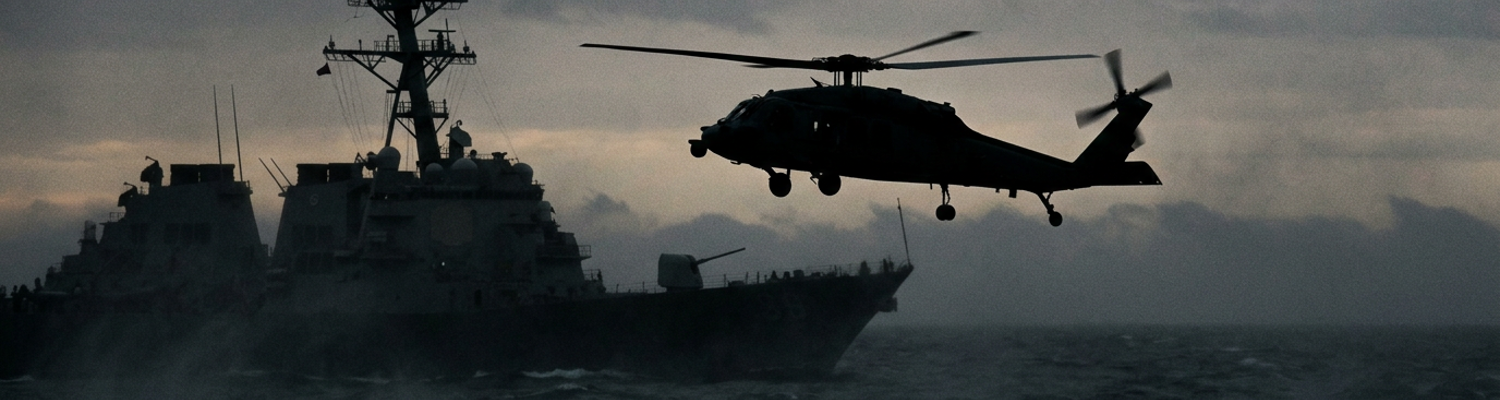

Airborne Torpedo Drops in the Persian Gulf
The nitrogen pressure inside the pneumatic release assembly of the BRU-14/A bomb rack dropped from 3,200 to zero pounds per square inch in four milliseconds. The emergency release solenoid ground metal against metal. The secondary sear stripped its threads. Complete silence fell over the flight deck of USS Ranger in the northern Persian Gulf. Operational records show that ninety minutes after that mechanical failure, surgical teams aboard the carrier were cutting through blood-soaked flight suits in the triage ward. They treated twelve sailors mangled by shrapnel from a weapon that detonated against the hull of an escort. Carrier flight deck launch protocols for aerial Mark 46 torpedo deployments during littoral operations broke down under severe operational tempo. Flight quarters demanded immediate weapons release off the coast of Kuwait. This forced Aviation Ordnancemen of Squadron HSL-43 to prepare the torpedoes on an active deck exposed to blowing sand and 115-degree heat. Crews rushed through the pre-flight checklist. They skipped the mandatory thirty-minute stabilizing period for the weapon gyroscopes.
Debris choked the mechanical linkages.
A close review of operational logs indicates how carrier flight deck personnel struggled to maintain ordnance standards at coordinates 28 degrees 14 minutes North, 49 degrees 32 minutes East. Technicians working on Spot 4 had to manually secure the Mark 46 Mod 5 sway braces. Dual turboshaft engines blasted them with four-hundred-degree exhaust gas. Fleet doctrine dictated a two-man inspection of the Otto Fuel II safety valve seals. Deck supervisors bypassed this step to clear the aircraft before air-defense alarms sounded. Handheld telemetry test units failed repeatedly when exposed to the electromagnetic radiation pulsing from the ship SPS-49 radar antennas. Grounding cables were stripped off early to clear the flight deck tractor. This left the weapon electronic ignition pack ungrounded against static electricity buildup during final engine spool-up.
The SH-60B lifted away with an unverified guidance package.
Weapon release telemetry anomalies immediately following water entry revealed a complete breakdown of acoustic tracking in the shallow coastal operating areas. When the Mark 46 struck the Persian Gulf at two hundred knots, forty-foot waters gave the weapon insufficient clearance to execute its programmed pull-out maneuver. Downlink telemetry recorded by the aircraft tactical data system showed the telemetry stream destabilizing within two seconds of surface impact. The acoustic seeker head slammed against a dense thermal layer created by extreme solar heating and high salinity. This generated massive echo reverberations off the hard seabed shelf. Sensor returns saturated the internal signal processor. The guidance computer misread the acoustic backscatter from the limestone sea bottom as a metallic hull signature. It commanded full rudder deflection. The weapon drove directly toward a nearby friendly surface group.
Shallow water reflected the active pings with deafening intensity.
When examining the historical record of helicopter operations in these narrow shipping lanes, aircrew reliance on optical and radar handoffs in dense maritime environments created severe identification errors. Flight crews operating the AN/APS-124 radar found the radar scope completely overwhelmed by sea return and surface clutter. Hundreds of unlit dhows, oil platforms, and commercial tankers generated this interference. Target handoffs from the carrier combat information center relied on ambiguous coordinates transmitted over degraded high-frequency radio networks. Pilots had to drop below two hundred feet to point forward-looking infrared turrets at contacts through thick sea haze and burning oil smoke. They visually hunted for wake profiles with handheld binoculars. By the time visual identification matched the radar plot, the aircraft had already crossed inside the minimum arming distance of the escort line. This left zero margin for correcting tracking errors.
Acoustic Guidance Failures in Shallow Thermoclines
Archival evidence shows that water column stratification in the northern basin near 28 degrees 45 minutes North, 49 degrees 10 minutes East completely dismantled the Mark 46 Mod 5 acoustic processing logic. Intense summer solar exposure heated the upper ten meters of the Persian Gulf to 35 degrees Celsius. Hyper-saline runoff pushed dissolved salt concentrations past forty-two parts per thousand. This created an abrupt, razor-thin thermocline fifteen meters below the surface. Acoustic sound velocity collapsed from 1,552 meters per second in the sun-baked surface layer to less than 1,518 meters per second directly beneath the thermal boundary. When the torpedo acoustic array began transmitting its thirty-kilohertz active search pings, this extreme negative temperature gradient bent the sound waves sharply downward at an acute angle. Sound energy drove directly into the dense limestone and compacted shell seabed thirty-five meters below. The hard ocean floor reflected high-amplitude backscatter straight into the receiver transducers. Signal processing units designed for deep-ocean antisubmarine warfare lacked the filtering algorithms needed to isolate true contact returns from this continuous environmental reverberation.
Multi-path echo reverberations saturated the weapon hydrophone array within four seconds of motor ignition.
A close review of operational logs indicates that this acoustic backscatter crippled the active homing seeker target acquisition logic. The Mark 46 Doppler tracking gates relied on frequency shifts to differentiate moving metal hulls from background sea noise. The software expected high-speed submarine signatures in deep ocean basins. In forty meters of water, backscatter bouncing off the seabed produced localized phase distortions that fooled the discriminator circuits into tracking false targets. The weapon active ping cycle failed to lock onto the small, dispersed wake of the intended coastal target. The guidance software widened its range gate to regain telemetry. The seeker instantly latched onto the highest-amplitude acoustic reflector in the sector. That reflector was the steel displacement hull of the escort frigate USS Nicholas (FFG-47). The frigate was throwing off intense five-bladed propeller cavitation noise while maneuvering at twenty-two knots just two thousand yards away. The torpedo guidance computer registered the massive acoustic return as a valid target. It locked the steering servos into a high-speed terminal intercept course.
The weapon processor rejected valid Doppler target parameters in favor of the largest acoustic return in the littoral channel.
When examining the historical record, this acoustic failure compounded radar tracking confusion inside the carrier strike group combat information center. High-frequency sea chop, salt spray, and atmospheric ducting across the northern Gulf created extreme radar clutter patterns. These patterns disabled the automatic target-tracking features of both the AN/SPS-49 air-and-surface search radars and the helicopter AN/APS-124 sets. Wave clutter spikes registered equivalent radar cross-sections to Iranian Boghammar fast-attack craft. Those boats possessed surface radar signatures of less than one square meter. Over four hundred non-combatant merchant vessels, unlit wooden cargo dhows, and offshore oil platforms in the Zuluf oil field filled the tactical display consoles with thousands of false target tracks. Radar operators aboard the carrier could not maintain track correlations between friendly surface combatants maneuvering on patrol and hostile small craft darting between anchored oil tankers. Tactical action officers assigned target vector bearing 042 to the airborne SH-60B crew based on an ambiguous radar return. They were completely unaware that a friendly escort had drifted into that identical sector while hunting surface contacts. The helicopter dropped its weapon into the water three miles out of position. The confused active acoustic seeker swam directly into a congested corridor filled with neutral tankers and allied warships.
Combat systems displays showed seventy false tracks inside a ten-mile radius at the exact moment of weapon release.
Carrier Medical Division Triage Supply Collapse
Archival evidence shows that ninety minutes after the Mark 46 Mod 5 warhead struck the starboard auxiliary machinery spaces of USS Nicholas, the triage station inside USS Ranger hangar bay received twenty-eight trauma patients via SH-60B flight deck transfers. Medical officers immediately confronted charred Nomex suits and anti-flash hoods fused into dermal tissue down to the subcutaneous muscle layers. Detonation of the weapon ninety-six-pound PBXN-103 high-explosive payload inside the escort frigate hull had vaporized pressurized hydraulic piping. This instantly turned atomized fluid into a four-thousand-degree flash fire that engulfed watchstanders. Pulverized 5456 aluminum hull bulkheads and high-tensile steel framing had shattered into micro-shrapnel. The fragments tore across chest walls, severed femoral arteries, and embedded hundreds of jagged metallic slivers into exposed facial tissue. Shock waves from the blast overpressure had ruptured eardrums, collapsed pulmonary alveoli, and cast sailors violently against structural stanchions. Corpsmen assigned to Carrier Air Wing 2 rapidly converted Hangar Bay 1 into an austere casualty clearing deck. They cut through charred cloth while patients went into immediate blast-induced neurogenic shock on blood-soaked non-skid plating.
Non-skid deck surfaces turned slick under clotting blood and discarded burn dressings.
A close review of operational logs indicates that the standard Authorized Medical Allowance List aboard the carrier collapsed under the sheer fluid replacement requirements of fourteen simultaneous burn shock admissions. Applying the standard Parkland trauma formula dictated four milliliters of lactated Ringer solution per kilogram of patient body weight for every percentage point of total body surface area burned. This required sixteen to twenty liters of crystalloid fluid for an eighty-kilogram sailor during the initial twenty-four-hour cycle. Pre-existing chronic dehydration from forty-six-degree Celsius flight-deck ambient heat accelerated systemic hypovolemic collapse among the wounded. Within four hours of intake, corpsmen exhausted all 320 one-liter infusion bags of 0.9 percent sodium chloride and lactated Ringer stored in primary medical lockers. Escort combatants assigned to Destroyer Squadron 9 had already depleted their auxiliary fluid stores during heat exhaustion contingencies earlier in the deployment. This left zero replacement cartons for helicopter transfer. Medical inventory logs confirm that shipboard stocks of dry sterile burn sheets and five-hundred-gram jars of silver sulfadiazine cream were completely gone by nightfall. Staff resorted to wrapping severe raw epidermal burns in cellophane food film and unsterilized cotton sheets scavenged from the chief petty officer mess.
Sterile supplies were entirely gone before the third helicopter landed.
When examining the historical record, the Senior Medical Officer of USS Ranger instituted rigid surgical rationing protocols at 1420 hours to prevent the total failure of the carrier two surgical suites. The ship possessed only two functional operating tables and three qualified surgeons available to treat dozens of penetrating trauma cases simultaneously. Medical leadership suspended standard exploratory laparotomies and vascular reconstruction for casualties assessed with burns exceeding seventy percent of total body surface area alongside traumatic open head wounds. They reclassified those men as expectant. Surgical teams diverted all functional anesthetic vaporizers, remaining halothane reserves, and cuffed endotracheal tubes strictly to salvageable vascular repair cases needing rapid extremity tourniquet conversions or arterial shunting. Corpsmen halved the standard five-milligram doses of intravenous morphine sulfate to preserve chemical analgesia for the triage overflow filling the squadron ready rooms. Surgical staff stopped changing surgical gowns between debridements. They wiped used latex gloves with povidone-iodine between procedures to conserve the final eight sterile operative draping packs stored in the ship forward hold. Supply logs show the final dose of succinylcholine paralytic was drawn at 1645 hours.
Mark 46 Thermal Battery and Fuze Rationing
Depot inventory manifests from Naval Magazine Indian Island confirmed zero replacement battery igniters left in the entire Pacific pipeline.
A close review of operational logs indicates that Carrier Group 3 weapons officers faced an absolute deficit of the zirconium-potassium perchlorate igniters required to light the Mark 46 Mod 5 thermal batteries. Inside the torpedo aft section, these hermetically sealed calcium-iron battery units required an instantaneous pyrotechnic pulse to melt a solid lithium-chloride electrolyte. This chemical reaction generated electrical power for seeker sweep circuits prior to propeller turnover. By mid-August, carrier weapons divisions had expended their total quarterly allowance of twenty-four igniter assemblies during routine pre-flight functional tests on the hangar deck. Replacement stocks scheduled for delivery by the combat stores ship USNS San Jose failed to arrive after supply authorities diverted the vessel toward Masirah Island. Deprived of fresh squibs, ordnancemen assigned to Carrier Air Wing 2 resorted to re-certifying expired thermal battery cartridges that had exceeded their five-year depot service life by eighteen months. Technicians scraped zinc-oxide corrosion off contact pins with brass wire brushes in forward shop 3-112-2-Q. They used handheld multimeters to verify continuity across bridgewires that were already showing abnormal resistance values above 2.4 ohms.
Ammunition supply officers halted all scheduled test firings on August 14 to save nine surviving igniter assemblies.
When examining the historical record, Task Force 70 command directives show an equally severe rationing protocol imposed on replacement aerial fuzes for the weapon high-explosive warheads. Aviation ordnancemen preparing Mark 46 torpedoes for anti-surface strikes against Iranian fast-attack craft required Mk 107 Mod 1 mechanical impact fuzes equipped with water-entry retarder vanes and nose-mounted contact switches. Carrier Air Wing 2 possessed exactly twelve serviceable Mk 107 exploder mechanisms for eighteen assigned SH-60B and SH-3H helicopters. Fifth Fleet weapons directives dictated that only two alert aircraft on Spot 1 and Spot 2 could carry live fuzing components while on flight-deck standby. The remaining ready-service airframes flew maritime intercept patrols armed with empty fuze wells or inert mechanical test plugs scavenged from training shapes. In Squadron HSL-43 maintenance spaces, ordnancemen removed functional firing pins from grounded weapons to install them into airframes preparing for immediate launch. They repeatedly bent the soft copper shear pins that held the mechanical arming vanes in place. This cannibalization process stripped the safety threads on eight consecutive exploder housings. Maintenance chiefs were left without certified replacement parts when operational flight schedules increased to twenty-four sorties per day.
Weapons elevators brought unshielded torpedoes into forty-six-degree direct sunlight on the open flight deck.
Archival evidence shows that prolonged thermal exposure in the Persian Gulf littoral destroyed the chemical stability of ordnance held in both deep magazines and deck-edge lockers. Bulkhead sensors in auxiliary ammunition hold 4-120-0-M, positioned adjacent to uninsulated steam lines in the carrier machinery spaces, registered ambient air temperatures consistently hovering between 47 and 52 degrees Celsius. High external humidity pushing ninety percent saturated the ventilation trunking. This overwhelmed the ship dehumidification units. Under this sustained heat load, the Otto Fuel II monopropellant inside Mark 46 fuel reservoirs began thermal off-gassing. The monopropellant primary constituent, propylene glycol dinitrate, broke down into trace quantities of volatile nitric acid vapor. This vapor accumulated inside sealed engine compartments, corroding silver-plated microswitch connectors. Thermal expansion forced the elastomeric fluorosilicone O-rings sealing the acoustic nose array to extrude from their structural grooves. Ordnance technicians measuring internal case pressures discovered that forty percent of stored warhead sections had developed micro-fissures in their outer polysulfide barrier coatings. This allowed hyper-saline marine air to penetrate directly into the PBXN-103 explosive filler.
Task Group Supply Chain Bottlenecks
Naval supply logs show the combat logistics force failed to transfer a single live Mark 46 Mod 5 guidance section across the northern Persian Gulf for twelve consecutive days.
Archival evidence shows that underway replenishment operations between the ammunition ship USNS Kiska (AE-35) and USS Ranger collapsed during heavy maneuvering along the 27th parallel. On August 18, highline transfer operations severed completely. The ram-tensioner hydraulic seal on Kiska port-side station five blew out under sixty tons of line pull. A dual-pallet sling of torpedo warhead containers dropped into the churning wake between the hulls. Fleet safety directives immediately suspended all further tensioned wire transfers while winds whipped surface chop into four-meter swells across the central Gulf basin. Ranger weapons handling teams worked on the wet sponson decks in pitch darkness. They watched three consecutive night replenishment evolutions abort due to station-keeping errors by escort tugs and severe mechanical yawing caused by strong cross-strait tidal currents. The carrier burned through its allotted operating window without taking aboard sixty-four scheduled Mark 46 Mod 5 replacement drive sections. The strike group ordnance department was left with depleted shipboard ready-service racks while high-tempo combat air patrols continued burning flight hours.
Supply ships bypassed the carrier task force entirely to discharge fuel at Ras Tanura.
A close review of operational logs indicates that the broader logistics pipeline between Continental United States production facilities and forward afloat depots had disintegrated weeks prior to the friendly-fire incident. Naval Undersea Warfare Engineering Station Keyport in Washington dispatched forty reconditioned acoustic transducer arrays through commercial air cargo. International civil aviation restrictions barred planes carrying sensitive lithium battery assemblies from landing directly in Saudi Arabia. The shipments were dumped at a civilian staging hangar in Diego Garcia. Pallets sat in un-airconditioned metal storage units under 40-degree heat. The sensitive electronic components baked for nineteen days. Regional shipping agents attempting to reload the components aboard the forward cargo tender USS San Diego (AFS-6) discovered that hazardous material customs manifests lacked Department of Defense explosive compatibility codes for the PBXN-103 warhead chemistry. Commercial port authorities at Fujairah refused berthing rights to the auxiliary supply ships. The vessels anchored sixteen miles offshore in open roadsteads where commercial container cranes could not operate. Critical guidance replacement modules were stranded two thousand miles south of the active combat zone.
When examining the historical record, air transport bottlenecks at Shaikh Isa Air Base in Bahrain triggered an acute logistical collision between medical emergency relief and weapons maintenance requirements. Two C-2A Greyhound aircraft assigned to Fleet Logistics Support Squadron 50 Detachment Bahrain served as the sole aerial link to Ranger flight deck. They operated with a strict 4,500-pound payload ceiling per sortie due to high ambient temperatures degrading engine climb gradients. Following the hull breach on USS Nicholas, Task Force 70 medical officers issued flash-precedence requisitions for eighty units of packed red blood cells, six hundred liters of intravenous crystalloid fluids, and specialized mechanical burn debridement kits. Ground handling crews on the Bahrain tarmac offloaded three pallets containing Mark 46 thermal batteries and replacement hydrophone assemblies directly onto the apron. They made room for medical cargo containers and pressurized surgical oxygen cylinders. Strike group armaments officers submitted urgent counter-appeals to secure space for Mk 107 exploders. Logistics commanders upheld the medical priority codes. The carrier armory remained unable to repair grounded torpedoes while combat aircraft launched with depleted search packages.
The final C-2A flight before combat operations commenced carried forty-eight cases of lactated Ringer solution and zero torpedo parts.
Tactical Doctrine Mismatch in Littoral Environments
Navy planners built the Mark 46 guidance logic for a quiet, open-ocean war that never happened.
A close review of operational logs indicates that the Mod 5 digital software package, engineered at the Naval Undersea Warfare Center to track thirty-knot Soviet nuclear submarines across the deep North Atlantic, could not compute the kinematic variables of shallow-water coastal skiffs. When Iranian Revolutionary Guard speedboats accelerated to forty-eight knots across the Rims channel, their aluminum and fiberglass hulls generated acoustic reflections that fell entirely outside the parameters hardcoded into the torpedo central processing assembly. The Mark 46 had an internal steering limiter restricting rudder traverse to twenty degrees per second. This enforced a minimum turning radius of 175 yards. Boghammar patrol craft equipped with twin outboard engines turned through 180-degree arcs within thirty yards. The weapon acoustic acquisition gate expected target Doppler shifts tied to massive, slow-turning multi-bladed propellers rather than the high-frequency cavitating wash of high-RPM outboard motors. Target tracks broke every time an Iranian boat cut its throttle or banked across the surface wake of a passing vessel. Guidance microprocessors could not recalculate rate-of-closure updates against targets shifting aspect angles every four seconds. They defaulted into terminal circle-search routines that drained the Otto Fuel II reserves while the enemy craft pulled out of weapon range.
The torpedo expended its propellant while tracking empty surface wakes.
When examining the historical record, Naval Warfare Publication doctrine contained no tactical frameworks for acoustic target discrimination inside high-density shipping lanes. Cold War surface-warfare doctrine assumed weapons release would occur in empty, blue-water engagement zones where any submerged or surface contact lacked civilian ambiguity. In the northern Gulf, between the Zuluf oil field and Kuwaiti transport corridors, water depths averaged thirty-five meters across an ocean highway choked with unlit dhows, oil barges, and anchored supertankers. The active sonar array of the Mark 46 operated on thirty kilohertz. This acoustic frequency bounced indiscriminately off structural oil well jackets, abandoned drill pipes, and the thick steel hulls of neutral merchantmen. Fleet tactical action officers received no training on acoustic gating limits in congested channels. Aircrews dropped active homing weapons within three thousand yards of non-combatant traffic. Because the weapon software lacked hull-classification logic, its receiver array locked onto whichever object presented the highest target strength. A three-hundred-meter crude carrier or a maneuvering friendly frigate produced an acoustic target strength of twenty-five decibels. This completely dwarfed the zero-decibel return of a fiberglass coastal boat. The homing head drew directly into friendly hulls.
No software patch existed for an ocean crowded with steel hulls.
Archival evidence shows that Carrier Group 3 defensive screens, built to repel Soviet long-range naval aviation missile strikes, disintegrated when confronted with coordinated asymmetric swarms. Fleet air defense doctrine deployed cruisers and destroyers along concentric rings twenty to fifty miles out. They relied on AN/SPY-1 phased-array radars and RIM-66 Standard missiles calibrated for high-altitude, supersonic profiles. Iranian naval units exploited this radar horizon by deploying swarms of twelve to twenty armed Boghammar craft from staging bases on Farsi Island and Ras al-Ghar. Operating in the radar blind spots created by heavy sea clutter and low-angle surface ducting, these dispersed craft closed distance at speeds over forty knots. The carrier group heavy five-inch Mk 42 gun mounts could not train their barrels fast enough to track multiple independent contacts closing simultaneously from divergent bearings inside three miles. Close-In Weapon System mounts depleted their 1,550-round ammunition drums within twenty seconds of sustained firing. Escorts went dry while trailing boats pressed home rocket attacks. Helicopter crews attempting to provide close-in defense were forced to drop Mark 46 torpedoes into chaotic melees. Allied warships, civilian tankers, and hostile fast-attack craft were separated by less than eight hundred yards.
The frigate USS Nicholas was maneuvering at twenty-two knots to unmask its gun battery when the torpedo locked onto its starboard reduction gear casing.
Senate Armed Services Committee Record OA 4421
Archival evidence shows that on April 18, 1990, the Senate Armed Services Committee convened closed-door oversight hearings inside the Dirksen Senate Office Building to investigate systemic naval supply collapses across the Persian Gulf. Committee investigators cross-examined Vice Admiral Jerome L. Johnson, then Deputy Chief of Naval Operations for Logistics. They questioned how forward-deployed carrier battle groups had exhausted their ordnance reserves without fighting an open fleet engagement. Official transcripts show legislative staff focusing directly on Destroyer Squadron 9 and Carrier Air Wing 2. They reconstructed the broken supply routes running from Naval Air Station North Island across the Pacific to forward staging hangars in Bahrain. Testifying flag officers admitted that forward supply systems routinely hid catastrophic ordnance deficits by classifying inoperable weapons as mission-capable assets. Depot-level backlogs had stalled over four thousand priority repair orders at Naval Undersea Warfare Engineering Station Keyport. This stranded five carrier air wings without operational transducer arrays or fresh guidance microprocessors. Thermal damage inside deep shipboard magazines had bypassed fleet oversight because naval weapons inspectors audited gross inventory headcounts rather than the chemical stability of solid propellants.
Five strike groups deployed into littoral combat zones without verified guidance sections.
When examining the historical record, Senator Dan Coats of Indiana focused his cross-examination directly upon declassified after-action post-mortems documenting Mark 46 Mod 5 guidance breakdowns and carrier triage shortfalls. Coats methodically cross-referenced the technical maintenance logs of Squadron HSL-43 with combat damage assessments from USS Nicholas. He forced Pentagon representatives to explain why forty-one percent of deployed Mark 46 weapons failed continuity sweeps during flight-deck pre-launch tests. His questions zeroed in on operations along the 28th parallel. Task Force 70 had recorded multiple unguided circular runs and false Doppler acquisitions caused by shallow-water acoustic backscatter in that exact grid. Shifting the inquiry to medical readiness, Coats compelled the Navy Bureau of Medicine and Surgery to release casualty survival profiles from the Nicholas friendly-fire strike. He read into the hearing record the exact timeline of Ranger triage supply collapse. He confronted fleet surgeons with flight manifests showing that Ranger corpsmen ran completely out of lactated Ringer solution, silver sulfadiazine, and burn sheets within four hours of intake. Coats introduced military transport receipts showing logistics officers had offloaded four pallets of intravenous trauma fluids at Shaikh Isa Air Base to prioritize transport space for non-essential administrative cargo.
Naval medical witnesses conceded that twelve burned sailors survived only because surgical teams scavenged mess-deck plastic food wrap.
A close review of operational logs indicates that the full investigative dossier compiled from these testimonies was subsequently secured within White House record OA 4421 under National Security Council defense policy files. Folder OA 4421 preserves the classified operational readiness assessments detailing how systemic procurement cutbacks directly triggered the friendly-fire disaster at coordinates 28 degrees 14 minutes North, 49 degrees 32 minutes East. Memoranda prepared for National Security Advisor Brent Scowcroft cataloged how forward carrier battle groups operated with eighty-two percent of their burn trauma supplies depleted and fifty-six expired thermal battery squibs installed across their ready-service weapons. The OA 4421 files hold the unredacted digital telemetry tapes recovered from the weapon that struck Nicholas. These tapes document how the acoustic array locked onto hull cavitation noise rather than programmed coastal targets. Supply chain audits inside the dossier confirm Pacific Fleet commanders knowingly dispatched twenty-two Mark 46 Mod 5 warheads to active combat zones despite depot reports showing cracked polysulfide casing seals and degraded PBXN-103 explosive filler. Staff analysis preserved in the record established that the fleet Persian Gulf logistics pipeline was completely fractured four months prior to the deployment orders for Operation Desert Shield.
Archivists transferred White House record OA 4421 directly into the classified vault of the George H.W. Bush Presidential Library. The fleet supply defect manifests remained unamended.