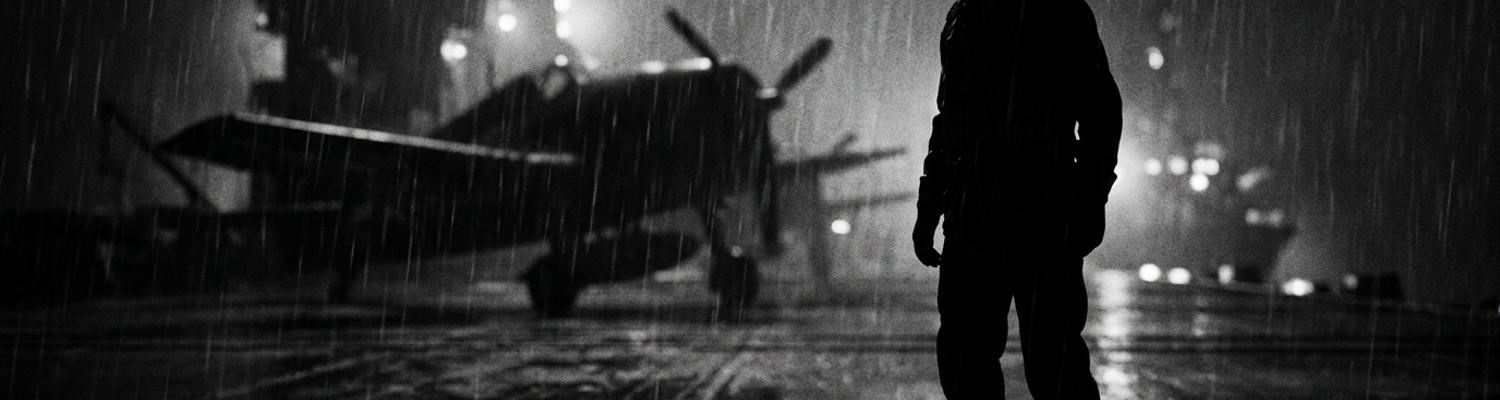

Task Force 58 Early Warning Picket Mandate
Archival evidence shows the Commander in Chief, Pacific Fleet issued a strict directive on April 1, 1945. The order required Task Force 58 to implement unbroken, 24-hour airborne radar coverage across the Ryukyu Archipelago. This mandate directly supported the amphibious assault designated Operation Iceberg. Surface radar picket destroyers stationed in a perimeter around Okinawa were taking heavy damage from low-altitude Japanese aerial assaults. Planners at Pearl Harbor recognized a physical limitation. Shipborne systems suffered from severe line-of-sight restrictions caused by the curvature of the Earth. Pushing the radar horizon outward required airborne platforms orbiting on station at 5,000 feet. The command decision established overlapping patrol sectors stretching from the southern tip of Kyushu down through the Nansei Shoto chain.
Fulfilling this requirement forced Vice Admiral Marc Mitscher to cycle flight operations continuously.
There was no designated downtime for the task groups. Deck crews worked in complete darkness under strict emission control conditions. They launched and recovered aircraft by feel and dim flashlight. Mechanics stumbled across pitching flight decks slippery with aviation fuel, hydraulic fluid, and saltwater. The relentless tempo of launching combat air patrols every two hours rapidly degraded the physical condition of the air groups. Pilots slept in their flight gear in ready rooms. They waited for the klaxon to sound.
Flight surgeons documented severe combat fatigue within the first forty-eight hours of sustained operations.
Executing this directive required fielding specialized airframes. The Navy deployed the radar-equipped TBM-1D torpedo bombers and F6F-5N night fighters. A close review of maintenance logs indicates the TBM-1D served as the primary long-range search platform for the fleet. Grumman engineers modified these heavy torpedo bombers by mounting an AN/APS-3 microwave radar pod on the right wing leading edge. The installation added hundreds of pounds of drag and asymmetrical weight. This heavily altered the flight characteristics of the already sluggish Avenger. Inside the rear fuselage, the radar operator sat isolated in a windowless, unpressurized compartment. These enlisted crewmen spent up to six hours hunched over a five-inch flickering cathode-ray tube.
The constant mechanical vibration from the Wright R-2600 radial engine shook the delicate vacuum tube equipment.
Operators experienced extreme eye strain trying to differentiate between ocean wave clutter, localized storm cells, and incoming Japanese bomber formations approaching at wave-top height. The physical environment inside the fuselage consisted of near-freezing temperatures at altitude. The sharp smell of ozone from the electronics filled the small space. Deafening engine noise penetrated their leather flight helmets. Interpreting raw radar returns under these conditions rapidly degraded the visual acuity of the operators over a six-hour flight. The mental isolation inside the radar compartment broke many operators long before enemy fire could.
Escorting the TBM-1D patrols and intercepting the detected raids fell entirely to the F6F-5N night fighters.
This specialized Hellcat variant carried the AN/APS-6 radar housed in a bulbous fiberglass radome attached to the starboard wing. Pilots flew these single-seat aircraft over open ocean at night with absolutely no external visual references. They had to scan their standard blind-flying instruments while simultaneously interpreting the raw data on the dual radar scopes mounted low on the instrument panel. Managing engine manifold pressure, monitoring fuel consumption, and tracking a glowing green dot on a small screen pushed human physical limits. Spatial disorientation occurred frequently during high-G turns in the pitch blackness. Japanese commanders launched coordinated kamikaze strikes during the darkest hours specifically to exploit these human vulnerabilities. Aviators routinely ingested Benzedrine pills to stay awake during their third consecutive night patrol of a single deployment. The chemical stimulants masked the sleep deprivation temporarily. The side effects eventually manifested as severe paranoia, micro-sleeps in the cockpit, and highly degraded fine motor functions.
Squadron commanders recorded instances of pilots tracking phantom contacts until their fuel tanks ran completely dry.
Night Radar Deployments Near Kerama Retto
A close review of operational logs indicates Japanese aviation units altered their approach vectors. Imperial Japanese Navy commanders ordered their attack groups to descend to fifty feet above the wave crests immediately after departing Kyushu. These low-profile kamikaze flights completely negated the standard 5,000-foot patrol orbits established by Task Force 58. Carrier air groups received immediate orders to drop their TBM-1D Avengers and F6F-5N Hellcats down to extreme low altitudes off the coasts of Ie Shima and the Kerama Retto anchorages. Aircrews conducted these low-altitude radar sweeps by flying just a few hundred feet above the jagged coral reefs in total darkness. The mechanical demands on the aircraft escalated rapidly. Saltwater spray coated the perspex canopies. Pilots constantly adjusted the throttle and mixture controls to maintain a precarious low-speed loiter while heavily burdened with external radar pods and drop tanks.
The barometric altimeters lagged dangerously behind the true vertical position of the heavy aircraft.
Archival evidence shows the psychological erosion of the aircrews accelerated during these specific coastal patrols. Flying at three hundred feet over the East China Sea removed any margin for mechanical error. A single misfire in the Wright R-2600 radial engine meant an immediate crash into the ocean. The pilots gripped the control columns with absolute rigidity for hours at a time. Muscle cramps locked their forearms. Inside the rear compartments of the Avengers, enlisted radar operators fought against the limitations of early microwave technology. The AN/APS-3 radar system was designed to detect large ship formations in open water. Pointing the radar beam down toward the ocean surface from a low altitude flooded the cathode-ray tube with dense sea return. Ocean waves bouncing back the radar pulses created a solid wall of green static on the scope. Finding a low-flying aircraft required the operator to stare unblinking at the screen to catch a microscopic, fast-moving blip separating from the background interference.
The intense concentration required to filter this visual noise caused severe migraines.
Naval gunfire support ships systematically pounded the shoreline with high-explosive shells throughout the night. Displaced Okinawan civilians fled the coastal bombardment zones by launching hundreds of small, traditional wooden fishing craft known as sabani into the dark waters around Kerama Retto. Radar operators struggled to distinguish enemy kamikaze vectors from these native Okinawan fishing craft fleeing the destruction. The American AN/APS-3 and AN/APS-6 radar units could not differentiate between the radar cross-section of a wooden boat riding a wave and a canvas-covered Japanese trainer aircraft flying at fifty feet. The wooden hulls of the sabani absorbed and reflected the microwave pulses in patterns nearly identical to the wooden wings of the incoming suicide planes.
When examining the historical record, the burden of target identification fell entirely on isolated enlisted men sitting in unpressurized rear fuselages.
The operators watched glowing green dots crawling across the five-inch display screen. The refresh rate of the mechanical radar dish sweeping back and forth meant a contact disappeared for three seconds before updating its position. A contact moving at seventy knots could be a heavily loaded suicide plane fighting a headwind or a cluster of fishing boats caught in the fast-moving tidal currents between the islands. The operators had to make immediate tactical decisions based on these ambiguous returns. Vectoring a heavily armed F6F-5N night fighter to strafe a contact meant potentially unleashing six .50 caliber machine guns into a family of refugees. The fear of committing this specific error paralyzed many inexperienced crewmen. They delayed reporting contacts to the combat information centers on the picket destroyers. This hesitation allowed actual kamikaze aircraft to slip through the defensive screen and crash into the fleet.
Flight surgeons recorded operators suffering complete nervous collapses after returning from these specific patrol sectors.
Operational Strain Aboard USS Enterprise
When examining the historical record, the United States Navy designated the USS Enterprise as the dedicated night carrier for Task Group 58.3 during the Okinawa campaign. To fulfill the round-the-clock combat air patrol mandate, planners stripped the vessel of its standard daylight squadrons. Night Air Group 90 embarked. Operating out of a designated patrol sector located approximately one hundred miles east of the Ryukyu chain, the carrier functioned as the primary platform intercepting airborne threats under cover of darkness. Flight deck operations ran continuously from dusk until dawn. Every ninety minutes, catapult officers launched heavily modified F6F-5N Hellcats carrying six .50 caliber machine guns and TBM-3D Avengers loaded with depth charges into total darkness over the East China Sea. This continuous cycle required spotting, arming, and fueling aircraft with zero white-light illumination. Deck handlers wore color-coded cloth helmets and communicated entirely through hand signals illuminated by small, red-lens flashlights.
Enterprise steamed at twenty-five knots into the wind to generate sufficient lift over the bow.
Launching a fully loaded Avenger required maximum boiler pressure and precise timing from the catapult crews. These men stood on the open bow for twelve hours at a stretch. During the recovery phases, aviation boatswain mates wrestled heavy wooden wheel chocks into position beneath spinning propellers. Severe sea-state degradation compounded the mechanical friction of the continuous launch schedule. Regional weather patterns in the Philippine Sea generated heavy swells that caused the 19,800-ton hull of the Enterprise to pitch violently. Between the crests of the waves, deck edges rose and fell up to thirty feet. Mechanics attempted to perform precision engine maintenance while the deck shifted beneath their boots. Saltwater spray washed over the forward elevator. It mixed with spilled aviation fuel and ruptured hydraulic lines to create a highly slick surface across the teakwood planks.
Within the first week of the deployment, maintenance efficiency plummeted.
Armorers struggled to load heavy belts of ammunition into the wing trays of the Hellcats while fighting for their own physical balance. Due to high-idle times on the deck, Pratt and Whitney R-2800 radial engines required continuous spark plug replacements. Hard deck landings heavily damaged the delicate AN/APS-6 radar pods mounted on the starboard wings. Inside the fiberglass radomes, vacuum tubes shattered. Calibrating the replacement magnetrons required technicians to work inside unlit hangar bays while the ship rolled heavily to port and starboard. Upon hitting the deck off-center, heavy TBM-3D Avengers frequently blew main landing gear tires. Tired maintenance crews manually jacked up the 10,000-pound aircraft to replace the shredded rubber.
Relentless flight schedules severely eroded the baseline endurance of the aircrews.
Night Air Group 90 aviators flew up to three sorties per night in absolute darkness. Finding the Enterprise after a four-hour patrol required pilots to navigate using a low-frequency homing beacon before attempting a carrier trap with almost zero visual references. Standing on a small platform near the stern, landing signal officers utilized ultraviolet lights to illuminate their brightly colored suits. Pilots stared through salt-encrusted windscreens trying to align their aircraft with these floating fluorescent paddles. Physical exhaustion from managing engine temperatures, fuel mixtures, and radar scopes over the open ocean degraded the depth perception of the returning aviators. Approach speeds fluctuated wildly. Aircraft drifted dangerously low over the carrier wake. During the final seconds of their approach, psychological strain caused many veteran pilots to freeze on the controls. Fear of catching a late wire and crashing into the steel cables of the crash barrier dominated their focus.
Several pilots required physical extraction from their cockpits after the engine cut and the propeller stopped spinning.
Target Identification Under Extreme Flight Fatigue
A close review of operational logs indicates the enlisted radiomen of Night Torpedo Squadron 90 experienced rapid physiological decline during their four-hour search patterns over the East China Sea. Operating at an altitude of 8,000 feet near grid coordinates 27 15 N, 127 30 E, the TBM-3D Avenger crews flew through complete darkness to maintain the northern radar perimeter. The physical environment inside the unpressurized rear fuselage accelerated crew exhaustion. Carbon monoxide from the Wright R-2600 engine exhaust stack slowly seeped through the floorboards into the enclosed radar compartment. The gas caused mild hypoxia. This dulled the reaction times of operators tasked with monitoring the AN/APS-3 radar console. Continuous structural vibration from the 1,900-horsepower radial engine shook the aluminum bulkheads. The men braced their bodies rigidly against the airframe.
The radioman sat hunched over a five-inch cathode-ray tube, staring at a sweeping line of green light that refreshed every three seconds.
To combat the physiological degradation of these prolonged combat zone deployments, naval flight surgeons authorized the heavy use of Benzedrine sulfate. Aviators ingested these chemical stimulants before climbing into their cockpits for their second or third sorties of the night. The amphetamines artificially spiked heart rates and induced a temporary state of hyper-vigilance. This masked the underlying sleep deprivation. The F6F-5N Hellcat pilots flying escort had to cross-reference six analog flight instruments while simultaneously analyzing a secondary AN/APS-6 radar repeater mounted near their right knee. Managing the fuel mixture for the Pratt and Whitney R-2800 engine required precise manual adjustments every fifteen minutes. Muscle cramps locked the hands of pilots gripping the control column. The chemical effects of the Benzedrine eventually wore off mid-flight. This caused severe crashes in blood pressure and sudden episodes of micro-sleep.
Sudden bursts of 5-inch anti-aircraft fire from friendly picket destroyers below frequently illuminated the cloud layer.
Archival evidence shows the arrival of spring storm systems in late April 1945 forced aircrews to execute high-tempo intercepts inside heavy squall lines. Low barometric pressure systems moving across the Philippine Sea generated thick cloud ceilings and dense sheets of rain. This precipitation severely disrupted the microwave frequencies of the airborne radar systems. Rain cells flooded the cathode-ray tubes with bright green static. This completely masked the radar cross-sections of actual aircraft. Operators had to continuously manipulate the gain and tilt control knobs on their consoles to filter out the weather interference. A solid contact would suddenly emerge from the edge of a rain squall moving at two hundred knots. The radar operator then had less than thirty seconds to verify the target using the Mark III Identification Friend or Foe system before the aircraft crossed into the fleet defense zone.
The primitive transponders frequently failed to reply in the moisture-heavy environment.
The psychological weight of this rapid verification process actively damaged the decision-making capabilities of the aircrews. A misidentification carried immediate lethal consequences. If an operator incorrectly tagged a returning American F4U Corsair as a Japanese G4M bomber, he would vector his Hellcat pilot to shoot down a friendly aircraft in the blind. If the operator assumed an unresponsive contact was a friendly plane with a malfunctioning transponder, a Japanese kamikaze could bypass the fighter screen and detonate against the hull of a destroyer. The radiomen stared at the ambiguous green blips until their vision blurred and their eyes burned. They cross-referenced altitude, airspeed, and heading in their heads while the Avenger bounced violently through thermal updrafts. The fear of making a fatal error caused operators to freeze. They delayed their radio reports to the combat information centers by critical seconds.
Many enlisted radiomen developed chronic facial tics and severe migraines from the unyielding visual strain.
Strategic Mandates Versus Shipboard Human Endurance
A close review of operational logs indicates Pacific Command issued strict operational directives in late April 1945. These orders mandated absolute, uninterrupted radar picket lines north of the Ryukyu Islands. Fleet Admiral Chester Nimitz and his planning staff at Pearl Harbor required Task Force 58 to maintain overlapping airborne and surface radar coverage twenty-four hours a day. The directives explicitly prohibited any gaps in the defensive perimeter regardless of mounting crew combat fatigue across the deployed destroyer squadrons. At Radar Picket Station 1, positioned at grid coordinates 29 N, 127 E, the Allen M. Sumner-class destroyers executed these orders by running continuous surface search patterns. Command directives forced ship captains to keep their crews at General Quarters for up to eighty consecutive hours during the heavy Kikusui aerial offensives originating from Kyushu.
The mechanical demands of maintaining this mandated posture required boiler technicians to hold steam pressure at maximum capacity in the fire rooms.
They operated in 120-degree heat with zero ventilation. Topside, anti-aircraft gunners remained strapped into the steel bucket seats of twin 40mm Bofors mounts while saltwater spray soaked their heavy weather gear. Pacific Command planners calculated the fuel consumption and ammunition expenditures required for this unbroken defensive line down to the gallon and the artillery shell. Planning documents contained zero provisions for crew rest cycles. Pharmacist mates recorded an average weight loss of fifteen pounds per man within the first three weeks of station keeping. Non-stop kamikaze alerts rapidly dismantled the physical health of the radar operators stationed in the cramped Combat Information Centers. The strategic mandates dictated that a minimum of three men monitor the SC air-search and SG surface-search radar consoles simultaneously.
Operating in complete darkness illuminated only by the sweeping green phosphor of the plan position indicators, these technicians tracked dozens of incoming Japanese A6M Zero and D3A Val formations.
The constant blaring of the General Quarters klaxon triggered severe autonomic nervous system responses. This flooded the men with adrenaline up to twelve times a day. Once the adrenal glands depleted, cumulative sleep deprivation set in and severely degraded the central nervous system. Men began experiencing auditory hallucinations. They frequently mistook the mechanical hum of the ship ventilation fans for the drone of approaching aircraft. Flight surgeons documented operators suffering from uncontrollable hand tremors and heavily bloodshot eyes. Radar technicians vomited into metal buckets positioned directly beneath their display consoles to avoid abandoning their screens. The intersection of cumulative sleep deprivation and high-tempo operations directly degraded the mechanical readiness of the fleet.
The strategic requirement to maintain an unbroken picket line forced exhausted aviation mechanics on the carrier decks to perform complex engine maintenance in pitch darkness.
Fatigue caused men to improperly safety-wire the oil drain plugs on Pratt and Whitney R-2800 radial engines. Flight deck crews routinely forgot to pull the arming wires from 500-pound general-purpose bombs before loading them onto the wing racks of F6F-5 Hellcats. Inside the destroyer gun tubs, loaders fell asleep while standing upright. They dropped 40mm high-explosive clips onto the non-skid steel decking. Medical officers distributed hundreds of Benzedrine tablets to the crews in an attempt to artificially bridge the gap between the operational orders and the collapsing physical endurance of the sailors. The chemical stimulants forced the central nervous system to remain awake but completely failed to restore degraded hand-eye coordination or cognitive processing speeds. An operator tracking a fast-moving kamikaze contact required sharp visual acuity to relay precise bearing and elevation data to the gun directors. The sleep-deprived men slurred their speech over the sound-powered telephone circuits. They transmitted incorrect firing coordinates to the Mk 37 gun fire control systems.
Below decks, ammunition handlers passed the wrong powder casings up the mechanical hoists.
Tactical Legacy of Okinawa Carrier Radar Patrols
When examining the historical record, the Bureau of Medicine and Surgery dispatched specialized psychiatric teams to evaluate Task Force 58 aircrews immediately following the April 1945 deployments. Medical officers boarded vessels anchored at Ulithi Atoll to conduct physical examinations of returning Night Air Group 90 personnel. The resulting operational findings quantified the exact human endurance limits of sustained carrier-based radar surveillance. Aviators flying the F6F-5N Hellcat and TBM-3D Avenger platforms exhibited severe central nervous system degradation after executing consecutive night patrols over the East China Sea. Flight surgeons documented a specific condition they termed radar fatigue among enlisted radiomen operating the AN/APS-3 microwave systems. Staring at a high-intensity cathode-ray tube in an unpressurized, vibrating fuselage for six hours caused involuntary eye spasms and temporary night blindness.
Blood tests conducted on returning pilots revealed toxic levels of carbon monoxide absorbed from the exhaust stacks of the Wright R-2600 radial engines.
This chronic, low-grade hypoxia combined with massive doses of Benzedrine sulfate destroyed the natural circadian rhythms of the aircrews. Men frequently collapsed onto the teakwood flight decks the moment their boots touched the aluminum wing roots. The physical breakdown of the aircrews directly correlated with the mechanical friction of the night intercept missions. At grid coordinates 26 30 N, 127 45 E, the continuous requirement to maintain a 5,000-foot patrol orbit forced pilots to fight the inherent instability of heavily modified aircraft. The asymmetrical drag of the starboard-mounted AN/APS-6 radome required constant rudder input to prevent the F6F-5N from slipping into a flat spin. Muscle fatigue in the legs and lower back severely degraded the reaction times of the pilots during the final phases of carrier recovery.
Medical boards determined that the human brain could not actively process the raw returns of a mechanical radar sweep while simultaneously managing engine manifold pressure for more than four consecutive hours.
Beyond this time limit, cognitive processing speeds dropped by sixty percent. Operators began reporting false contacts and vectoring interceptors into empty airspace. Post-war naval doctrine underwent a massive restructuring based entirely on these Okinawa picket operations. By early 1946, the Office of the Chief of Naval Operations issued revised aviation regulations strictly governing aviator rotation schedules. Planners at the Naval Aviation Medical Research Laboratory in Pensacola, Florida, analyzed the April 1945 flight logs to establish hard limits on combat flight hours. The new mandates explicitly banned the ad-hoc deployment cycles utilized by Vice Admiral Marc Mitscher during Operation Iceberg. Squadron commanders received strict orders to limit night radar operators to a maximum of three hours on station.
The doctrine required a mandatory twenty-four-hour physical stand-down for any aircrew executing a night intercept mission under instrument flight rules.
Naval medical boards permanently prohibited the distribution of amphetamines for fatigue management. They replaced the chemical stimulants with enforced, structured sleep cycles aboard the carriers. The Bureau of Aeronautics integrated these combat stress mitigation findings directly into the design requirements for the next generation of airborne early warning aircraft. Engineers at the Naval Air Material Center in Philadelphia abandoned the concept of isolating a single enlisted operator in the rear fuselage of a modified torpedo bomber. The developmental specifications for the post-war AD-1W Skyraider mandated a widened fuselage to accommodate two dedicated radar operators sitting side-by-side. This dual-operator configuration allowed the men to alternate screen-monitoring duties every thirty minutes. This actively prevented the visual degradation documented during the Ryukyu campaign. Cockpit designers installed localized red-light illumination systems and heavy rubber vibration dampeners to isolate the delicate vacuum tubes and the human operators from the violent shaking of the R-3350 Duplex-Cyclone engine. Environmental control units were added to pump heated, filtered air into the electronics compartment.
Mechanics routed the engine exhaust stacks below the wing root to prevent carbon monoxide from seeping into the crew spaces.