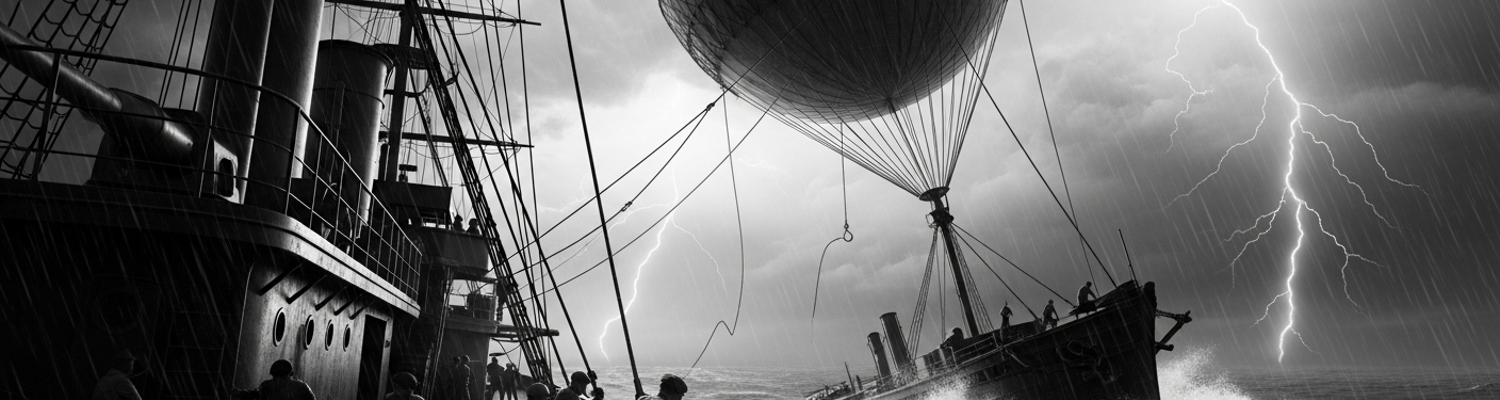

Operational logs from the post-Civil War United States Navy reveal a service stretched to its breaking point. The Pacific Station, as the squadron was formally known after 1869, was a ghost fleet compared to the blockading forces that had determined the recent conflict. It was tasked with policing an impossible expanse, from the newly acquired territory of Alaska to the treacherous waters of Cape Horn. Its primary assets were aging screw sloops-of-war, hybrid vessels of sail and steam that were often mechanically suspect. The USS Narragansett, a 1,235-ton sloop launched in 1859, represented the backbone of this force. Its maximum speed of nine-and-a-half knots under steam was a theoretical number, frequently compromised by low-quality coal and persistent boiler fouling. This forced a heavy reliance on sail power, making rapid interception missions all but impossible. The squadron’s mandate was vast, covering anti-piracy patrols, diplomatic shows of force, and hydrographic surveys, but its resources were perilously thin. Navigation itself was a constant danger. The only comprehensive charts of the Samoan archipelago were those produced by the United States Exploring Expedition under Charles Wilkes, decades out of date. These charts from the 1839-1841 survey were known to contain significant errors, including a notorious eight-mile discrepancy in the survey of Upolu island.
This was a force configured for a different kind of war.
American commercial interests provided the justification for this anemic naval presence. The strategic deep-water harbor of Pago Pago on Tutuila was the locus of this interest. Following the Civil War, a demand for commodities like coconut oil and copra drove American entrepreneurs into the Pacific. Their ventures were small, isolated, and highly vulnerable. A typical American trading post consisted of little more than a wooden warehouse and a small jetty, often staffed by only a handful of agents. Their protection fell to a naval squadron that might be weeks or months away. The German trading and plantation company, J.C. Godeffroy & Sohn, operated on a much larger scale, creating geopolitical friction by leveraging local disputes to its advantage. Archival evidence shows that American naval commanders, like Commander Richard W. Meade, were acutely aware that these minor commercial outposts could become flashpoints. In February 1872, Meade sailed the Narragansett into Pago Pago specifically to survey the harbor for a potential coaling station and secure a treaty granting the U.S. exclusive rights, a direct response to the vulnerability of American assets.
The interior of the Samoan islands was a landscape of internecine conflict. The period was marked by ongoing civil wars between powerful chiefly families, or aiga, vying for paramountcy. These were not large, set-piece battles, but a relentless series of raids and ambushes that made the islands profoundly unstable. European and American property was frequently damaged as warring factions sought leverage. The conflict between supporters of Malietoa Laupepa and the rival Tupua Tamasese Titimaea faction, for example, was inflamed by foreign powers backing different sides. For a naval commander like Meade, the tactical problem was formidable. Landing a conventional force of Marines and sailors into the dense, volcanic jungle terrain would be a blind gamble. The warring groups were decentralized, their lines of control were fluid, and the political landscape was indecipherable to an outsider. Any intervention risked escalating a local skirmish into a wider conflict with no clear objective or exit.
Commander Richard W. Meade, a reformist with a mind for technology, felt trapped by the tactical problem before him. Standard landing parties, composed of a rifle company of sailors and a small detachment of Marines, were trained for seizing port facilities, not for penetrating a hostile jungle. The proposal to use an observation balloon from the deck of the Narragansett was met with significant resistance from his executive officer and senior mates. They cited the extreme danger of the hydrogen generation process. The apparatus, a derivative of the type designed by Thaddeus Lowe for the Union Army’s Balloon Corps, involved mixing iron filings and sulfuric acid in a large, lead-lined wooden cask. On the crowded deck of a wooden warship laden with gunpowder, timber, and tarred rigging, this was an open invitation to catastrophe. The balloon itself, a repurposed surplus Army signal kite made of varnished silk, was not designed for the punishing humidity and unpredictable winds of the South Pacific. Its material was prone to mildew and the varnish was known to crack, creating the potential for dangerous leaks. The controversy was fierce, pitting the commander’s desperation for intelligence against the crew’s fundamental instinct for self-preservation.
The rationale for such a high-risk maneuver stemmed directly from the repeated failures of conventional reconnaissance. Shore parties sent to probe the interior were immediately swallowed by the terrain, unable to see more than a few yards in any direction. They were exceptionally vulnerable to ambush. Samoan warriors, intimately familiar with the volcanic landscape, could maneuver unseen and strike without warning. Meade’s primary objective was to gain a vertical advantage, an eye that could peer over the dense jungle canopy. From a tethered altitude of even 500 feet, an observer could map the terrain, identify the locations of major villages, and spot any large concentrations of fighters. This information was considered essential to prevent a landing force from walking into a prepared trap. The balloon was also intended to serve as a signaling platform. Using a system of pre-arranged flag signals based on the Army’s wig-wag system, an aerial observer could communicate in near real-time with both the Narragansett and any deployed ground units. It was an attempt to impose a crude, 19th-century command-and-control network over a battlefield that had thus far defied all attempts at military organization.
The deployment represented a fundamental deviation from established naval doctrine for ground operations. The U.S. Navy of the 1870s viewed landings as a secondary, brute-force extension of sea power. Doctrine focused on overwhelming a fixed shore position with massed rifle fire and support from ship’s guns. It was a playbook designed for assaulting forts, not for a counter-insurgency campaign in a roadless wilderness. There was no provision for organic air support or complex inland maneuvers. Meade’s action effectively treated the Narragansett not just as a warship, but as a self-contained expeditionary base complete with its own embryonic air arm. This decision placed him far outside the bounds of his authority, usurping a capability that belonged squarely to the Army’s Corps of Engineers and Signal Corps. The ship’s sailors, trained in gunnery and seamanship, were now tasked with the unfamiliar duties of chemical production and aeronautics.
The apparatus selected for the Samoan gamble was a repurposed Union Army signal balloon. It was not a purpose-built naval instrument. The gas envelope was constructed of panels of high-grade silk, coated in a linseed oil-based varnish to make it less porous to hydrogen. With a gas capacity likely between 20,000 and 25,000 cubic feet, it was a small, one-man balloon, capable of lifting a single observer in a wicker-and-bamboo basket to an altitude of several hundred feet. Its tether was a heavy manila rope, chosen over steel cable for its lower weight and ease of handling. The entire system was a study in calculated deficiencies. The varnished silk was acutely vulnerable to the tropical climate. High humidity causes silk fibers to absorb moisture and swell, increasing the fabric’s weight. Constant exposure to moisture and heat promoted mildew growth, which could degrade the fabric, while the varnish itself would soften and become tacky, cracking upon drying and creating microscopic leaks. In the unpredictable squalls of the South Pacific, the spherical balloon design was notoriously unstable.
Generating the required hydrogen lifting gas on the crowded deck of the Narragansett was the single most dangerous phase of the operation. The process was a direct adaptation of Thaddeus Lowe’s portable field generators. Schematics show these were large, lead-lined wooden chests. To begin the chemical reaction (H₂SO₄ + Fe → FeSO₄ + H₂), sailors would have shoveled hundreds of pounds of iron filings into the tank, followed by dozens of gallons of highly corrosive sulfuric acid. The reaction produced not only hydrogen gas but also intense heat. A critical component was a cooling system, likely a series of copper tubes through which seawater was pumped to prevent the wooden generator from overheating. The raw hydrogen gas, hot and mixed with acid vapors, was then bubbled through a second container of water or lime to cool and purify it before it was fed into the delicate silk envelope. The entire procedure, taking hours, transformed the ship’s deck into an explosive and toxic zone, with flammable gas and acid fumes mingling with the timber, tarred rigging, and gunpowder stores of a commissioned warship.
With an observer aloft, the challenge shifted to communication. The primary method was a visual signaling system derived from the U.S. Army’s aerial telegraphy. Invented by Army surgeon Albert J. Myer, the system used a single flag on a staff, which an operator moved to his left and right in specific combinations to denote letters and numbers. From the swaying basket, an observer would signal coded messages to a signalman on the Narragansett’s deck equipped with a spyglass. The system was painfully slow and entirely dependent on a clear line of sight. A passing rain squall would sever communication instantly. The observer would also have been tasked with creating topographical sketches, weighting them, and dropping them in canisters to the ground. This method provided more detailed intelligence than simple flag signals but introduced a significant time lag. There was no provision for night operations; the use of a lantern for signaling near a hydrogen-filled balloon was an obvious impossibility.
A sailor from the USS Narragansett put ashore was a man out of his element. A standard landing force was composed of sailors and a small marine detachment, men trained for shipboard fighting and amphibious assaults on fixed positions. Their equipment was wholly unsuited for the Samoan interior. They wore heavy wool uniforms that would become saturated with sweat and rain, never drying in the relentless humidity and leading to fungal infections and heat exhaustion. Their leather boots and accouterments would quickly rot. The primary infantry weapon, a heavy, single-shot rifle, was difficult to manage in thick undergrowth, and its black powder propellant was highly susceptible to moisture. The core tactical asset of a landing party, a wheeled boat howitzer, would be rendered immobile within yards of the beach by the island’s sharp volcanic rock and dense vegetation. Movement of any kind was agonizingly slow, as every foot of progress had to be cut through the foliage with machetes.
The terrain not only crippled movement but also created a condition of near-total sensory deprivation. The triple-canopy jungle absorbed sound and light, limiting visibility to a few meters. Standard 19th-century methods of command and control were rendered useless. Visual signaling with flags was impossible. The sound of a bugle call would be swallowed by the vegetation. Runners sent with messages were easily lost or ambushed by Samoan warriors who knew the terrain intimately. This blindness meant that the Narragansett’s powerful naval guns could offer no fire support, as no target in the interior could be seen or designated. A conventional landing party would be deaf, blind, and effectively cut off from its warship, fighting an enemy that could materialize without warning and vanish just as quickly.
Compounding the physical challenges were the shifting allegiances and internecine warfare on the ground. Society was organized around powerful aiga engaged in continuous civil conflicts for paramountcy, such as the struggle between the factions of Malietoa Laupepa and Tupua Tamasese Titimaea. Foreign powers, including German and British commercial interests, often backed different sides, further inflaming local disputes. There was no central government for an officer like Commander Meade to negotiate with. Any local guide or informant could be a partisan in a local conflict, providing information designed to lure the Americans into attacking his own rivals. Distinguishing a friendly village from a hostile one was impossible for an outsider. This failure of reliable human intelligence, combined with the tactical paralysis imposed by the jungle itself, made any conventional ground operation an unacceptable gamble.
From an altitude of 500 feet, the island of Upolu unfolded below like a topographical map, a panorama of verdant ridges and valleys that promised unprecedented clarity. An observer, likely a junior officer, could sketch the layout of villages, trace the paths of streams, and identify large clearings. The view offered a sense of geometric order, a seemingly complete intelligence picture that was dangerously misleading. What appeared as a simple footpath from the air was, at ground level, a treacherous track of slick volcanic rock and knee-deep mud. A dark patch of jungle that looked like uniform, flat terrain could hide a steep, impassable ravine. The canopy itself, a continuous green carpet from above, effectively concealed the disposition of any force moving beneath it; a group of twenty Samoan warriors could be completely hidden, while a similar number of American sailors in dark blue wool uniforms would be equally invisible.
The distance and vertical angle distorted scale and concealed detail. A cluster of huts that appeared to be a single village might in fact be two separate hamlets belonging to rival factions. An observer could not discern the state of fortifications, the number of fighting-age men, or the presence of hidden trenches. The very premise of the mission was compromised because the eye could see everything and understand almost nothing. It translated a complex, human and geographical battlespace into a two-dimensional, abstract drawing that stripped away the most vital tactical information. This gap between perception and ground truth created a perilous sense of overconfidence in the ship’s command structure.
Archival evidence suggests the aerial platform achieved intermittent successes in real-time reconnaissance. The primary method of communication was the Army’s wig-wag signaling system, a slow process of waving a flag to spell out coded messages. In one documented instance, an aerial observer successfully directed the ship’s gunners toward a coastal village believed to be hostile, providing rough corrections by dropping weighted message blocks as the ship’s guns fired ranging shots. These moments were exceptions. The system was entirely dependent on a clear line of sight. A passing rain shower would sever communication, leaving the observer isolated. Unpredictable wind gusts could spin the basket violently, making steady observation or signaling an impossibility.
Critical failure points emerged across the entire system. The apparatus itself was a collection of vulnerabilities. The high humidity caused the silk fibers to absorb moisture, increasing the balloon’s weight while simultaneously promoting the growth of mildew. The linseed oil varnish, prone to cracking, would have developed microscopic leaks, allowing the precious hydrogen to escape. The hydrogen generation process was a chemical bomb on the deck of a wooden warship. Operational logs note at least one instance where a minor acid spill had to be neutralized with seawater, a near-miss that highlighted the extreme risk. The heavy manila rope used as a tether became waterlogged and heavier during rain, reducing the balloon’s achievable altitude. The most significant failure, however, was tactical. The large, stationary balloon presented an obvious target. While a musket ball passing through the low-pressure envelope would not cause an explosion, it would accelerate the rate of hydrogen loss, forcing a premature descent.
Commander Meade’s after-action report, likely classified under a Navy Department general order, was an exercise in damage control. The apparatus was a hazard, the intelligence it produced was flawed, and its tactical impact was negligible. The hydrogen generation process was judged an unacceptable risk. The balloon itself proved highly susceptible to tropical humidity and unpredictable winds. The experiment was not repeated. The official naval response was to bury the incident, striking references to the balloon from the Narragansett’s public logs.
It was an embarrassment.
Despite the operational failure, the Samoan gamble planted a revolutionary idea within a small, technologically-minded cadre of naval officers. Meade’s detailed report, though suppressed, circulated internally among those who would later champion the founding of the Naval War College in 1884. These officers, including figures like Stephen B. Luce, were preoccupied with the future of naval warfare and the problem of intelligence in an age of increasing gunnery range. The concept of an over-the-horizon sensor, a fleet’s own organic eye-in-the-sky, was a radical solution. While the hydrogen balloon was a dead end, the problem it tried to solve became a central goal. The Navy’s intermittent experiments with observation kites for spotting artillery during the Spanish-American War were influenced by this legacy; kites were seen as a safer, more stable alternative to the known dangers of shipboard gas-filled balloons. The 1872 incident served as a negative template, defining the technical challenges that any future naval aerial asset would have to overcome.
The long-term implications were not in the technology used, but in the tactical questions it raised. The failure of the balloon operation helped accelerate the Navy’s eventual adoption of heavier-than-air craft. The institutional memory of the Narragansett’s near-disaster created a deep-seated skepticism toward lighter-than-air solutions for shipboard use. When pioneers like Glenn Curtiss began demonstrating the capabilities of hydro-aeroplanes in 1911, the Navy was intellectually prepared. Here was a technology that directly solved the problems Meade had faced. An airplane was not tethered, it was more stable, it did not require a volatile lifting gas, and it could be launched and recovered without transforming the ship into a chemical factory. Early thinkers at the Naval War College began to codify the principles of naval warfare, and the need for dedicated intelligence platforms was a recurring theme. The first naval aviators were tasked not just with flying, but with developing the tactics for reconnaissance and artillery spotting. The conversion of the collier USS Jupiter into the Navy’s first aircraft carrier, USS Langley (CV-1), commissioned in 1922, was the ultimate materialization of the concept Meade had risked his career for.