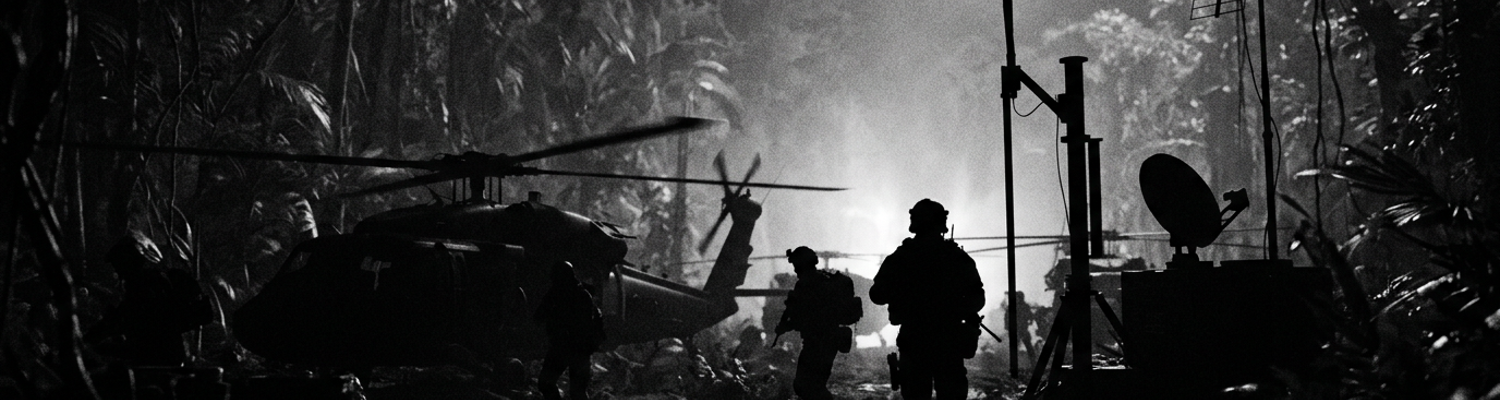

XXIV Corps Staging Operations at Khe Sanh Base
By the official conclusion of Operation Lam Son 719, allied forces had lost 108 American helicopters destroyed. Another 618 airframes sustained heavy damage. Over 9,000 South Vietnamese soldiers were wounded, captured, or killed across the Laotian borderlands. U.S. XXIV Corps records document 215 American military personnel dead within Quang Tri Province during the operation. Congressional legislation legally barred American ground units from crossing into Laos.
Khe Sanh was never intended to be reoccupied.
Archival evidence shows that in late January 1971, Lieutenant General James W. Sutherland pushed the XXIV Corps forward tactical operations center directly into the rusted red clay of the abandoned marine redoubt at coordinates XD854585. Combat engineers from the 18th Engineer Brigade spent seven days clearing three years of elephant grass. They removed collapsed concertina wire before laying down thousands of square feet of interlocking aluminum AM-2 matting to resurrect the 3,900-foot runway. Heavy laterite dust repeatedly clogged the intake manifolds of earthmovers and soil compactors. Mechanical seizures occurred throughout the staging area. Below ground level, signal teams excavated a hardened tactical operations bunker. They reinforced it with double-layered eight-by-eight-inch timber headers, perforated steel plating, and crushed-rock sandbags. Staff officers processed tactical airstrike approvals. They managed heavy artillery clearance for the 108th Artillery Group and flight scheduling for hundreds of UH-1 and CH-47 sorties tasked with inserting the Army of the Republic of Vietnam into Laos.
North Vietnamese spotters watched this construction without obstruction.
They sat on the high peaks of the Co Roc massif, elevated 840 meters just across the border. Soviet-built 122mm rockets and 130mm field guns began cratering the landing strip within seventy-two hours of the first C-130 transport arrival.
Interception equipment had to operate under incoming artillery fire.
A close review of operational logs indicates that to decipher enemy movements, the 407th Radio Research Detachment established signal interception posts along the western runway perimeter. This Army Security Agency unit was attached to the 1st Brigade of the 5th Infantry Division. Technical personnel worked out of modified cargo containers and sandbagged timber bunkers. They operated AN/PRD-1 directional finding sets alongside AN/URR-35 VHF and AN/GRR-5 HF radio receivers (NARA Record Group 338, Box 42). The AN/PRD-1 required operators to manually rotate a loop antenna to find the null point of an incoming signal. This process took up to two minutes per transmission. High-frequency radio chatter from the North Vietnamese Army B-5 Front and the 70B Corps flooded their headsets. Local atmospheric distortion complicated the reception. Extreme radio-frequency interference generated by nearby American radar units caused frequent signal drops. Vibrations from nearby M107 175mm self-propelled gun batteries repeatedly shook delicate vacuum tubes loose from their chassis mounts. Carbon monoxide fumes from unshielded five-kilowatt gasoline generators accumulated in the semi-buried vans. Operators traded half-hour shifts while recording Morse code and voice transmissions from the advancing NVA 304th and 308th Divisions.
Antenna masts were constantly cut down by shrapnel from incoming mortar rounds.
Wiremen sprinted into the open to splice coaxial cables.
Every bearing fix required immediate manual cross-referencing.
When examining the historical record of XXIV Corps intelligence logs, cryptologists translated manual goniometric cuts into six-digit Universal Transverse Mercator coordinates. They used paper plotting boards and grease pencils. Couriers ran these target coordinates eighty yards across exposed mud to the forward tactical operations center. Staff officers matched the radio hits against aerial reconnaissance film flown by OV-1 Mohawks. They attempted to direct arc-light strikes from Guam-based B-52s before North Vietnamese mobile transmitters relocated. North Vietnamese signal units maintained a strict radio-operating schedule. They kept transmissions under ninety seconds to evade triangulation. The 407th Detachment logged thirty-eight distinct command frequencies for the North Vietnamese 24B Regiment in a single six-hour window on February 8, 1971.
KY-38 Nestor Secure Voice Equipment Removal
TSEC/KY-38 secure voice equipment weighed thirty-five pounds on paper.
Flight crews measured its real cost in fuel, ammunition, and lift capacity.
Archival evidence shows that aviation maintenance officers inside the 101st Aviation Group and the 223rd Combat Aviation Battalion confronted severe aerodynamic deficits before the opening air assaults into Savannakhet Province on February 8, 1971. Ambient temperatures rising over eighty degrees Fahrenheit coupled with the rugged limestone karst elevations of the Annamite mountains reduced air density. Many peaks exceeded 3,500 feet around Landing Zone Ranger North and Landing Zone Hotel. This thin air crippled the single Lycoming T53-L-13 turboshaft engine of the UH-1H Iroquois. The engine had a maximum rated output of 1,400 shaft horsepower. A slick carrying four fully equipped ARVN infantrymen, two American door gunners, thousands of rounds of 7.62mm linked ammunition for twin M60 machine guns, and ninety gallons of JP-4 fuel operated near its absolute maximum gross weight of 9,500 pounds. Hovering out of ground effect over ridge-line clearings stripped of vegetation by napalm was aerodynamically impossible under those parameters.
Crew chiefs and avionics technicians systematically detached the thirty-five-pound TSEC/KY-38 processor boxes.
The TSEC/KY-38 was part of the NESTOR family of cryptographic equipment. It utilized a wideband voice encryption method that digitized speech before transmitting it over standard frequency modulation radios. Technicians removed the shock-mount assemblies and heavy interconnecting wiring harnesses from the center electronics consoles beneath cockpit instrument panels. Removing the cipher chassis allowed maintenance teams to squeeze out margins for an extra box of machine-gun ammunition, three mortar shells, or several gallons of fuel.
Weight reduction kept overloaded airframes from dropping out of the sky into tree canopies during vertical descents.
A close review of operational logs indicates that stripping the hardware forced aviators and tactical air control parties to abandon cryptographically protected communications across the entire border operational area. Crews operating AH-1G Cobra attack helicopters from the 2nd Squadron of the 17th Cavalry Regiment joined UH-1 slick formations in switching back to standard AN/ARC-131 and AN/ARC-54 VHF-FM transceivers. Transmissions traveled in the clear over tactical frequencies between 30.00 and 75.95 megahertz. Air mission commanders broadcast landing zone coordinates, approach airspeeds, inbound vectors, and touchdown times without cryptographic delay. Routine transmissions revealed which aircraft carried critical casualties. Pilots announced which gunships were exhausting 2.75-inch rocket pods. They reported which clearings faced heavy fire from 12.7mm and 23mm anti-aircraft batteries positioned along Route 9. Ground forward air controllers in O-2A Skymaster aircraft coordinated clear-voice airstrikes directly over the same open nets utilized by ARVN regimental command posts.
Every North Vietnamese listening post within thirty miles heard the air armada.
When examining the historical record of North Vietnamese military intelligence, Soviet-built R-323 radio intercept receivers and captured AN/PRC-25 sets operated by the NVA 70B Corps logged American traffic within minutes of liftoff from staging pads at Khe Sanh and Lang Vei. Specialized listening teams compiled American radio call signs, assigned frequencies, and daily authentication codes within forty-eight hours of the initial border crossing. Anti-aircraft crews firing Soviet 37mm and 57mm towed weapons along the Sepon River valley did not need fire-control radar to acquire incoming targets. Gunners leveled their barrels toward coordinates spoken aloud over open frequencies five minutes prior to touchdown. Flight records show aircraft taking zero-range direct hits at the exact second their skids reached treetop level at LZ 31 and LZ Lolo.
North Vietnamese Radio Interception and Tactical Tracking
Eavesdroppers sat in damp earthen bunkers six miles inside Laos with grease pencils and standard-issue notebooks.
Archival evidence shows that the North Vietnamese Army 47th Technical Reconnaissance Battalion maintained twenty-four-hour monitoring stations along the ridgelines overlooking Route 9 and the Xe Pon River valley. Vietnamese radio intercept technicians sat with Soviet R-323 receivers and modified commercial audio monitors. The R-323 receivers were ruggedized, man-portable units capable of scanning frequencies from 20.0 to 100.0 megahertz. They ran on heavy silver-zinc batteries recharged by pedal-driven generators. Operators patched output jacks straight into reel-to-reel tape recorders. Every unencrypted transmission from XXIV Corps aircraft gave away the operational blueprint in clear English. Aviators from the 101st Airborne Division and 1st Cavalry Division repeatedly spoke landing zone coordinates aloud over tactical VHF-FM nets instead of using slow map grid look-up tables. Flight leads called out magnetic headings, airspeed variations, and altitude breaks thirty minutes before crossing the border.
Medevac pilots operating with the 498th Medical Company broadcast their exact inbound vectors.
They announced the number of hoist litters required, casualty triage categories, and the specific colored smoke grenades marking perimeter boundaries. If a slick pilot reported engine RPM fluctuations or radioed an LZ was hot, North Vietnamese monitoring officers immediately warned regional antiaircraft coordinators over field telephone lines.
Clear-voice radio made surprise impossible.
A close review of operational logs indicates that the North Vietnamese 367th Air Defense Division used this constant flow of intercept data to convert expected flight corridors into prepared target boxes. Regiment 241 and Regiment 284 hauled twin-barrel 37mm M1939 antiaircraft cannons and heavy 12.7mm DShK machine guns up steep limestone terrain. They anchored the mounts along ridgelines that directly flanked the inbound approach axes to LZ Ranger North, LZ 31, and LZ Lolo. Gun crews did not search the sky blindly. When American flight leaders broadcast their descent plans to specific six-digit grid coordinates, Vietnamese battery commanders calculated the precise clearing approach window ten to fifteen minutes before the first rotor blade became audible. Gunners locked their manual optical fire-control sights onto the narrow terrain gaps helicopters had to transit to avoid ridge turbulence.
Interlocking fields of fire crossed directly over the touchdown points at altitudes between one hundred and five hundred feet above ground level.
Soviet-built 37mm guns loaded five-round clips of high-explosive fragmentation shells. They calibrated the fuses to detonate directly in the flight paths of arriving UH-1 formations. Weapons crews held their lanyards ready before American lift formations dropped below the treeline.
Flight records from the 158th Aviation Battalion show that ninety-two aircraft took weapons fire while attempting to extract wounded infantrymen from LZ Lolo alone.
When examining the historical record of the 2nd Brigade, 1st Cavalry Division, medevac calls acted as direct range cards for Vietnamese gunners. A single urgent radio transmission requesting a hoist extraction for an abdominal wound near coordinates XD725368 reliably brought four 12.7mm positions to bear on the precise hovering altitude needed to deploy a jungle penetrator. Heavy 37mm guns hidden in revetments under dense triple-canopy foliage withheld fire on initial scout ships. They saved ammunition until troop-laden slicks or unarmed medevac Hueys entered a dead hover twenty feet above the bamboo. Ground fire tore through floorboards, severed tail-rotor drive shafts, and shattered Plexiglas windshields within seconds of engine decelerations. North Vietnamese fire direction centers tracked the entire allied air fleet using open-frequency radio reports, battery-powered receivers, and four-digit coordinate tables copied directly from American flight nets.
Coordinated Antiaircraft Ambushes at Northern Landing Zones
Flight corridors into Savannakhet Province became predictable engagement areas.
Archival evidence shows that by late February 1971, the North Vietnamese 367th Air Defense Division had surrounded Landing Zone Ranger North and Landing Zone Lolo with concentric rings of camouflaged automatic weapons. At Ranger North, occupied by the South Vietnamese 39th Ranger Battalion on a barren ridgeline, the 102nd Regiment of the NVA 308th Division emplaced 12.7mm DShK heavy machine guns and twin-barrel 23mm ZU-23 autocannons inside reinforced log bunkers along neighboring high ground. Inbound UH-1H slicks from the 101st Airborne Division were forced to fly through predictable approach corridors defined by narrow karst saddles. Flight logs from February 19 demonstrate that incoming air cavalry elements lost visual contact with touchdown clearings due to blinding dust and artillery smoke. They slowed down to hover speed directly within pre-sighted fields of fire. Soviet-made 37mm shells sliced through cabin bulkheads, severed hydraulic lines, and shattered tail-rotor drive shafts before the aircraft could discharge ARVN reinforcements. The 37mm M1939 antiaircraft cannons required a crew of eight men to operate efficiently. They could fire up to 160 rounds per minute at a maximum effective vertical range of 3,000 meters.
Landing Zone Lolo saw equal devastation during insertion sorties by the 158th Aviation Battalion on March 3.
Eleven helicopters were shot down and forty-four suffered major structural damage in a single twelve-hour period when gunners from the NVA 241st Antiaircraft Regiment opened fire from masked defilade positions 600 meters from the perimeter.
No helicopter entered the clearing without taking fire.
When examining the historical record of the border push, navigational confusion and unmasked communications proved fatal for allied command flights. On the morning of February 10, 1971, a South Vietnamese Air Force UH-1D assigned to the 223rd Aviation Squadron lifted off from the forward base at Khe Sanh. It flew west across the Laotian frontier with four prominent combat photojournalists aboard. Larry Burrows of Life magazine, Henri Huet of the Associated Press, Kent Potter of United Press International, and Keisaburo Shimamoto on assignment for Newsweek occupied the rear cabin. Accompanied by three other helicopters, the command flight carried Colonel Nguyen Trong Luat, commander of ARVN Task Force 1, to inspect frontline positions along Route 9. Heavy cloud cover forced the flight lead to drop below 2,500 feet. The formation entered the tactical engagement envelope of North Vietnamese air defense battalions operating along the Xe Pon valley. Unencrypted VHF radio traffic between the escorting aircraft and ground forward air controllers tipped off tracking stations from the NVA 47th Technical Reconnaissance Battalion.
The formation drifted miles off course toward North Vietnamese logistics staging areas.
The trail UH-1D entered the interlocking engagement sector of a concealed 37mm antiaircraft battery. A high-explosive fragmentation shell detonated directly against the main transmission housing beneath the rotor mast. The main rotor separated in midair. The airframe rolled inverted before it struck the limestone jungle canopy and exploded on impact. All eleven crew members and passengers died instantly.
Recovery teams could not reach the wreckage.
A close review of operational logs indicates that the destruction of extraction flights created a cascading crisis across the entire northern blocking line. At LZ Ranger North, ground commanders cancelled scheduled ammunition and water drops after three consecutive CH-47 Chinooks sustained catastrophic structural hits to their forward rotor heads and turbine housings. The crews jettisoned cargo slings into ravines. ARVN defenders ran dry of 60mm mortar ammunition and 5.56mm rifle cartridges while listening to clear-voice radio reports of American gunship formations being turned back by massed 37mm flak barrages at five thousand feet. Ground elements of the NVA 308th Division overran the outer perimeter trenches forty-eight hours later. The surviving Rangers broke out on foot through surrounding mountain draws. Downed aircrews sat stranded beside burning wreckage on exposed hilltops because rescue slicks lacked armor to survive hovering over clearings zeroed by enemy gunners.
Vietnamization Collapse and Public Relations Crises
Network television camera crews waited along the pierced-steel planking at Khe Sanh as damaged American helicopters returned with blood smeared across their aluminum landing skids.
Archival evidence shows that during the chaotic second phase of the retreat from Savannakhet Province in late March 1971, aircrews from the 101st Airborne Division and the 223rd Combat Aviation Battalion encountered swarms of panicked South Vietnamese soldiers breaking through perimeter wire at extraction clearings. Desperate to escape encircling North Vietnamese infantry, ARVN troops threw away rifles, helmets, and field gear to grab any external surface of departing UH-1H Hueys. Men wrapped arms and web gear around skid tubes, cargo hook release cables, and rocket launcher mounts on AH-1G Cobras. Overloaded aircraft struggled out of ground effect. They were forced to fly eastward at treetop level toward the border. Some American crew chiefs applied heavy lubricating grease directly to the tubular skid assemblies before takeoff to prevent people from weighing down the airframes (MACV Command History, 1971, Vol. II). Other crews watched men lose their grip at two thousand feet and drop into the canopy below. Network correspondents from CBS and ABC stood beside the Khe Sanh landing strip with portable 16mm film cameras. They captured high-resolution images of aircraft touching down with exhausted, wounded soldiers frozen to the landing gear. Their fingers were locked around cold metal.
Film canisters flown out through Da Nang reached evening broadcast studios in New York within forty-eight hours.
When examining the historical record of congressional proceedings, these broadcasts dismantled official claims coming from the White House and Military Assistance Command, Vietnam. President Richard Nixon and Defense Secretary Melvin Laird had described the incursion as tangible proof that ARVN units could fight independently under the Vietnamization doctrine. The visual evidence told a conflicting story. In closed-door sessions and public hearings before the Senate Foreign Relations Committee, Chairman J. William Fulbright used the skid-clinging footage and equipment loss figures to challenge the administration. Lawmakers focused on the destruction of over one hundred American helicopters and the rout of elite South Vietnamese airborne and armored units along Route 9. Senator George McGovern and Senator Stuart Symington pressed Pentagon officials on whether South Vietnamese forces had actually achieved their tactical objectives or merely survived an uncoordinated retreat. Antiwar legislators seized on the operational collapse to accelerate debates over the McGovern-Hatfield Amendment. Officially known as the Amendment to End the War, this legislation was first introduced in 1970. It gained renewed traction following the public release of the Khe Sanh footage. They pushed to set a firm statutory deadline of December 31, 1971, for the complete withdrawal of all American armed forces from Indochina.
Pentagon spokesmen could not reconcile public statements of success with empty revetments and burned-out helicopter hulks.
A close review of operational logs indicates that the physical destruction suffered by the XXIV Corps aviation fleet forced immediate reductions in air mobility missions across Military Region 1. General Creighton Abrams faced aggressive questioning from congressional committees regarding compliance with the Cooper-Church Amendment. This legislation barred American ground troops and military advisors from crossing the border. Field reports confirmed that American aviators had flown thousands of attack and resupply sorties inside Laos without forward air control coordination from American ground observers. This exposed severe friction in allied operational architecture. In Capitol Hill hearing rooms, military planners conceded that ARVN combat effectiveness remained entirely dependent on American rotary-wing aviation and heavy ordnance. Stripping the thirty-five-pound cipher boxes to gain lift had exposed the air armada to radarless flak traps. This triggered the chaotic retreats that forced the Nixon administration on April 7, 1971, to announce an accelerated withdrawal schedule of 100,000 additional American troops by December.