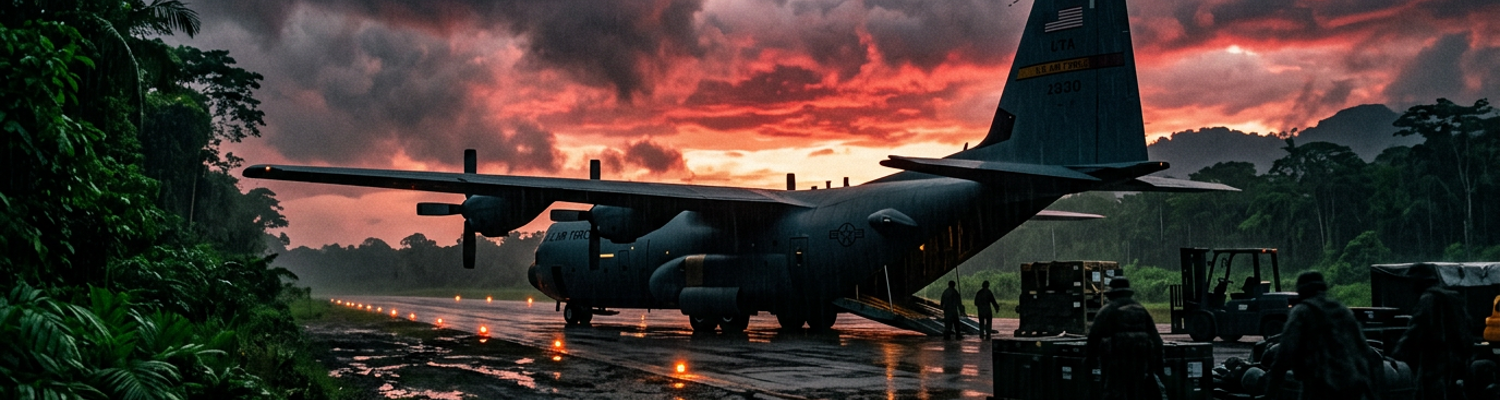

AFWESPAC Operations in Post-Liberation Manila Ruins
Rubble piles, pulverized concrete, and severed water mains blocked every major intersection across the administrative district when Army Forces Western Pacific established its War Crimes Branch during autumn 1945. Intense artillery bombardments and retreating Japanese demolition squads had destroyed more than three quarters of downtown Manila, leaving municipal buildings without roofs, intact windows, or functioning sanitation systems. Army legal officers and enlisted investigators moved into the cracked shell of the damaged government complex, stepping over piles of charred timber and unexploded artillery shells to stake out workspaces. Heavy monsoonal rains beat against the exposed concrete rooms every day, creating standing pools of dirty water that ruined floors and soaked through temporary canvas partitions. Officers pushed broken desks together, strung wire for field telephones, and stacked wooden ration crates along perimeter walls to keep damp outdoor air away from their work surfaces.
Work surfaces remained vulnerable as water seeped around these wooden ration crates and pooled across the floors, threatening thousands of captured Japanese military documents that field units trucked into the city from battlefields across Luzon. Collapsed municipal power grids left the entire district without electricity, depriving investigators of the fans, heaters, and light bulbs necessary to dry out the soaked paper. Supply sergeants searched wrecked motor pools for portable gasoline generators, but contaminated fuel and cracked cylinder heads repeatedly knocked these auxiliary units out of service. Investigators had to work inside humid, windowless vaults lit only by smoking kerosene lamps while handling brittle diaries, personnel rosters, and operational orders that fell apart in their hands. Enlisted clerks stretched lengths of telephone wire between concrete pillars, hung damp papers with wooden clothespins, and positioned portable gasoline cooking burners beneath the lines to evaporate the moisture before mold destroyed the handwriting.
Handwriting survived only because paper evidence dried over field stoves piled up on folding tables, as General Headquarters Supreme Commander for the Allied Powers in Tokyo demanded immediate results without understanding the physical paralysis in Manila. Legal sections in Tokyo sent urgent radio messages pressing for completed investigation files, yet they failed to coordinate with theater logistical authorities to ship basic office equipment into the devastated port. Manila supply depots faced enormous backlogs on the shattered waterfront, where army stevedores gave priority to troops boarding transports for home rather than unloading replacement typewriters, waterproof document pouches, and filing cabinets. Supply officers in Manila repeatedly notified their counterparts in Tokyo that local warehouses lacked metal safes and dry storage lockers, but the headquarters staff in Japan continued to set aggressive trial deadlines that assumed normal peacetime office conditions. Branch personnel in Manila scavenged scrap sheet metal from wrecked hangars and hammered out crude tin boxes to keep clean deposition files separate from rain-soaked evidence piles.
Evidence piles threatened to consume the workspace until tin boxes and wooden crates filled with completed investigation files sat on airfield aprons for days, delayed because air transport commands allocated cargo space according to conflicting theater directives. Officers from General Headquarters Supreme Commander for the Allied Powers expected couriers to arrive in Tokyo on regular schedules, but Manila airfields operated with broken runway lighting, limited aviation gasoline, and damaged cargo planes. Theater logistical authorities in the Philippines routinely bumped crates of war crimes paperwork off northbound transport flights to make room for wounded soldiers, critical aircraft engines, and demobilization records. Legal teams in Manila had to send armed couriers to sleep directly on the cargo pallets at Nichols Field to prevent ground crews from offloading court records in favor of higher priority freight. Investigators maintained this round-the-clock physical guard over the crated documents until flight crews finally lashed the boxes into the cargo holds of twin-engine transport planes bound for Japan.
Photostat Equipment and Chemical Supply Deficits
Planes flew those crated documents northward as single, unreproduced files because Army Forces Western Pacific suffered chronic shortages of photostat reproduction apparatus, developing chemicals, and sensitized bromide paper across the Philippine theater. Logistical planners in Washington had assigned priority shipping codes to weapons, bridge timbers, and field rations, leaving legal documentation units without heavy copy cameras or standardized darkroom gear. Technicians searching the ruined commercial districts found only smashed retail photo studios and burned-out print shops stripped bare by retreating naval defense forces. Quartermaster supply officers at the Manila docks repeatedly marked requisition slips for reproduction machinery as unfulfilled, directing investigators to manage their daily case loads with whatever field equipment remained in local unit footlockers. Signal Corps detachments possessed a handful of portable photostat machines, but repair teams lacked replacement glass prisms, focus bellows, and drive gears to keep the delicate mechanisms running in tropical heat.
Heat and humidity destroyed the chemicals needed to develop paper prints, posing an equally severe obstacle whenever technicians coaxed a damaged camera back into operation. Metal drums containing powdered fixing salts and developing agents frequently split open inside damp cargo holds, turning the dry compounds into hard, useless blocks of calcified stone. Bromide paper stocks shipped from Pacific coast depots deteriorated rapidly during weeks of exposure to humid air inside metal shipping containers. High temperatures fogged the light-sensitive emulsion on the paper rolls before clerks could even open the sealed packaging inside Manila workrooms. Darkroom personnel wasted hours attempting to wash cloudy prints in buckets of brackish well water, only to watch the chemical emulsions slide off the pulp backing in the sweltering indoor humidity.
Humidity ruined these wet print runs, leaving staff unable to duplicate captured Japanese operational logs, translated press dispatches, and affidavits for multi-agency distribution. Demands for evidence mounted daily as the International Prosecution Section in Tokyo, Australian war crimes detachments, and local American trial commissions each required identical case binders for upcoming proceedings. Japanese operational logs gathered from battlegrounds in the Sierra Madre Mountains sat locked inside headquarters footlockers because investigators could not distribute copies without risking the loss of the single surviving original. Translated press dispatches and civilian survivor affidavits circulated through a slow routing system where one legal officer had to finish his line-by-line review before releasing the document to the next investigative team. Officers in Manila routinely rejected urgent telegram requests from headquarters in Tokyo because releasing single-copy affidavits to courier flights left local prosecutors with empty case dockets.
Case dockets forced typists to operate in round-the-clock pools, generating the requisite multi-copy case files with worn carbon sheets out of sheer operational necessity. Clerks loaded manual typewriters with stacks of onionskin paper separated by these ink-coated leaves, hammering the keys with exaggerated force to drive the metal lettering through five or six layers at once. Worn carbon sheets quickly shed their dark wax coatings in the humid air, leaving the bottom duplicates so faint and streaked that legal officers had to decipher words using magnifying lenses. Typists discarded piles of ruined pages whenever a jammed key bar ripped through the thin onionskin paper, forcing operators to reload a fresh pack of carbon leaves and retype whole affidavits from the first line. Proofreaders checked each completed carbon page against the original Japanese translation, initialing every paragraph in grease pencil before clerks hand-carried the collated bundles into the courtroom filing room.
Bedside Forensic Depositions in Field Hospitals
Shelves inside the courtroom filing room held thousands of captured administrative sheets but lacked direct, sworn eyewitness accounts from living American and Filipino prisoners. Army Forces Western Pacific solved this evidence deficit by detailing special investigation teams to military medical centers operating across greater Manila. Headquarters dispatched Army legal clerks and medical personnel directly to the 44th General Hospital near Quezon City and the 120th General Hospital in the southern suburbs to record formal depositions. Enlisted clerks packed portable Corona typewriters, reams of manifold paper, and wooden clipboards into canvas musette bags, riding out to the hospital compounds in open quarter-ton trucks through ruined city streets. Hospital administrators cleared space in humid hospital wards, setting up temporary transcription desks directly next to rows of recovery cots so legal officers could interview patients without moving them from their beds.
Beds held emaciated Bataan and Fort Santiago survivors, prompting surgeons to accompany these legal teams along the ward aisles to conduct systematic forensic triage. Doctors examined dozens of rescued personnel who suffered from advanced wet beriberi that bloated their legs with fluid, chronic amoebic dysentery that left them dangerously dehydrated, and necrotic tropical ulcers that exposed leg bones through open flesh. Medical personnel tested each patient for mental clarity, pulse stability, and vocal strength before allowing legal officers to administer the oath. Doctors repeatedly halted proposed interviews when fever spikes or extreme weakness threatened patient survival, creating strict ward rosters that ranked witnesses by their immediate medical fragility. Ward nurses warned the legal clerks that cardiac failure from beriberi or septic shock from infected ulcers could kill a key witness within hours, making every bedside deposition a race against the physical collapse of the patient.
Patients faced physical collapse while clerks performed urgent legal transcription at each bedside, typing sworn testimony verbatim before physical deterioration halted statements entirely. Enlisted stenographers balanced manual typewriters on upended ration crates, striking the keys in short bursts while listening to survivors whisper accounts of starvation, beatings, and executions. Medical attendants stood over the cots throughout these sessions, monitoring shallow pulses, wiping sweat from feverish foreheads, and injecting saline solution into collapsed veins to keep witnesses conscious. Interviews often stopped abruptly when a survivor began coughing up blood, drifted into sudden delirium, or lost consciousness from sheer exhaustion after speaking only a few sentences. Clerks marked the exact point of interruption on their onionskin pages, noting the time and the medical intervention before waiting for the ward physician to clear the next round of questions.
Physicians authorized patients to speak only after vital signs stabilized, allowing clerks to finalize the written affidavits before nightfall. Survivors who lacked the hand strength to hold a fountain pen pressed ink-coated thumbs directly onto the signature lines of the completed carbon sheets. Attending medical officers signed adjacent certification blocks on each document, swearing under military law that the patient was lucid and rational at the moment of signing. Legal officers placed the damp, thumbprinted affidavits inside waterproof rubberized pouches to protect the fresh ink from sweat and tropical rain. Armed couriers carried these sealed pouches out to waiting transport jeeps, driving the sworn statements directly back to the central war crimes registry in downtown Manila.
Translation Bottlenecks and Field Document Cataloging
Manila registry clerks unsealed those rubberized pouches inside the central office, stacking the new affidavits directly next to hundreds of wooden crates containing captured enemy paperwork. Army Forces Western Pacific faced an acute deficit of qualified Allied Translator and Interpreter Section linguists assigned to review this expanding mountain of Japanese military records. General Headquarters in Tokyo had requisitioned the majority of experienced Japanese American linguists for high-priority occupation duties in Japan, leaving the war crimes staff in Manila with only a tiny handful of language specialists to process tons of documents collected from combat zones. Soldiers from salvage detachments and infantry units continuously carried fresh armloads of captured paper into the ruined administrative headquarters, cramming footlockers and cardboard ration boxes into every available hallway. Linguists worked twelve-hour shifts under bare electric bulbs powered by sputtering gasoline generators, but their small numbers meant that individual translators had to scan through hundreds of pages of unfamiliar handwriting each day just to locate actionable criminal evidence.
Evidence crates filled with Imperial Japanese Army field orders, signal logs, and personal diaries piled up against the cracked plaster walls faster than the small translation pool could read them. Retreating Japanese combat units across the mountains of northern Luzon had abandoned thousands of handwritten operational directives, daily unit maps, and radio signal logs inside flooded cave complexes and ruined command dugouts. Personal diaries taken from dead or captured soldiers added thousands of additional pages to the mounting clerical backlog, with each notebook containing unique brush script, regional dialects, and compressed military abbreviations that slowed translation work to a crawl. Legal officers demanded immediate English summaries of specific tactical orders to substantiate command responsibility charges against senior Japanese generals, but translators needed full working days to decipher even a single multi-page operational log. Investigators routinely set aside entire boxes of captured diaries as unreviewed, shoving the personal accounts into damp corner storage piles while they concentrated their limited language staff on immediate trial exhibits.
Trial exhibits gathered dust in these damp corner piles for weeks, leaving prosecutors completely blind to critical admissions and officer signatures buried inside the unprocessed volumes. Investigators attempted to control these unprocessed volumes through makeshift cataloging systems, assigning handwritten index numbers to each incoming batch of enemy records. Manila paper evidence tags tied with thin cotton twine served as the primary physical tracking method for every captured notebook, map case, and sheaf of signal decrypts brought in from the combat zones. Monsoonal humidity and persistent roof leaks soon turned these paper evidence tags soft and pulpy, causing the handwritten pencil notations and purple ink stamps to smear into unreadable blurs.
Blurs replaced critical serial numbers as rotted cotton strings snapped whenever warehouse workers shifted heavy crates to reach newer arrivals, scattering tagless Japanese notebooks and loose operational sheets across the wet concrete floor. Floor scatter escalated chain of custody complications rapidly across the war crimes prosecution section because military commission rules required clear proof of where, when, and by whom each piece of captured evidence had been recovered. Legal officers had to halt active trial preparations and dispatch investigators back to frontline unit depots to locate the original combat soldiers who had seized the untagged records from battlefield bunkers. Investigators boarded Douglas C-47 Skytrain transport planes to trace these frontline combat witnesses and recover missing evidence across outer island detachments in Leyte, Panay, and Mindanao. Air Transport Command operated these island-hopping courier runs along irregular military routes that lacked fixed schedules, navigational beacons, or modern ground maintenance crews, tossing canvas courier pouches filled with sworn depositions, captured field diaries, and fingerprint cards directly onto open metal cargo floors alongside grease drums, mailbags, and replacement jeep engines.
Typhoon Weather Disruptions and Aerial Couriers
Jeep engines and courier pouches faced constant delays when overloaded transports developed mechanical failures, diverted to secondary grass airfields, or made unscheduled stops to offload priority cargo. Aerial couriers escorting these packets traveling northward on long flights between Manila and General Headquarters in Tokyo suffered equal vulnerability, often sitting unattended on open tarmac staging aprons when flights were canceled or rerouted through intermediate staging bases in Okinawa. Document bags frequently split open when rough handling by cargo crews ripped through paper packaging, exposing raw carbon affidavits to engine oil, salt spray, and tropical rain. Airstrips across northern Luzon, Leyte, and Okinawa flooded with thick mud as severe seasonal typhoons battered forward staging bases throughout the Western Pacific. High-velocity winds and blinding rain squalls forced regional flight control centers to ground every cargo transport plane, trapping flight crews and their legal courier packets at isolated air terminals.
Air terminals held wooden crates and waterproof canvas sacks containing time-sensitive investigative files stranded under dripping tarpaulins on open steel landing mats or inside unheated cargo holds. Ground officers refused to clear flights for takeoff into the zero-visibility cloud banks and severe atmospheric turbulence that raged along the main air corridors between Tokyo and Manila. Investigators escorting critical affidavits from prisoner of war camps in Japan or outer Philippine garrisons remained stuck in remote barracks, powerless to move their locked document chests while winds tore through airfield hangars and shredded communications wiring. Water seeped through canvas seams and soaked into unsealed paper envelopes during these prolonged groundings, threatening to wash away purple ink stamps and pencil notations before the files could ever reach a courtroom.
Courtrooms in downtown Manila descended into administrative gridlock whenever these stranded courier packets failed to arrive before scheduled preliminary hearings. Military commission judges took their seats on elevated wooden benches expecting completed charge sheets, verified witness depositions, and chain of custody receipts, only to find the prosecution tables empty of required trial exhibits. Prosecutors could not enter formal indictments or introduce captured command orders against high-ranking defendants, including General Tomoyuki Yamashita, while the physical original records sat trapped on distant island runways hundreds of miles away. Defense attorneys immediately lodged procedural motions to dismiss or delay charges, arguing that their clients could not be arraigned without the right to examine the prosecution evidence in open court. Gavel strikes echoed through the ruined administrative chambers as commission presidents repeatedly granted formal continuances, pushing docket schedules back by days and weeks while clerks scrambled to determine where transport planes had made forced landings.
Landings at alternate airfields forced court stenographers to mark their official journals with notices of adjournment, filing empty case jackets back into metal cabinets while judicial officers waited for the weather over the sea routes to clear. Officers from the War Crimes Branch rushed out to Nichols Field and Clark Field the instant transport planes began landing from the reopened sea routes. Enlisted runners climbed into idling cargo holds before the propellers stopped spinning, sorting through mail sacks and baggage piles to seize stamped legal pouches addressed to theater headquarters. Couriers loaded these damp envelopes into open quarter-ton trucks, speeding through flooded city avenues to deliver the belated evidence directly to the courtroom door. Clerks grabbed the recovered witness statements and captured Japanese orders straight from courier hands, drying the damp pages with electric fans and stamping accession numbers onto the margins while judges waited on the bench.
Accelerated Trial Timelines and Improvised Case Bundles
Judges waited on the bench until prosecutors distributed the newly arrived copies to defense tables, finally allowing the commission to swear in witnesses and proceed with the delayed arraignments. General Douglas MacArthur seized upon these preliminary arraignments to enforce an unrelenting trial calendar, mandating that military commissions bring General Tomoyuki Yamashita and General Masaharu Homma to final judgment without procedural delays. Orders radioed from General Headquarters in Tokyo gave prosecution and defense sections barely three weeks to prepare complex cases that covered hundreds of separate atrocities across the Philippine archipelago. Staff judge advocates objected that investigating military operations stretching from the Bataan Death March of 1942 to the brutal destruction of Manila in 1945 required months of field work, but theater directives permitted no continuances. MacArthur wanted swift commissions to demonstrate Allied control and project firm authority across occupied Asia before the international press corps gathered in the devastated capital, demanding trial sections produce multi-volume evidentiary dossiers, exhibit lists, and formal charge sheets for five appointed commission generals who expected complete case binders on their desks before the opening gavel struck each morning.
Desks required complete case binders, forcing clerks to assemble these formal evidentiary bundles inside sweltering basement offices using salvaged mimeograph stencils and degraded carbon paper to satisfy the court deadlines. Supply sergeants scavenged wrecked commercial print shops and bombed government warehouses for leftover wax stencils, scraping dried dirt from torn backing sheets and patching perforated borders with gummed paper tape. Typists fed these fragile sheets into hand-cranked rotary duplicators, turning the cylinders until viscous ink seeped through thinning stencil fibers and threatened to blur Japanese command logs into unreadable smudges. Legal assistants smoothed out discarded carbon leaves with the flat edges of bayonets when fresh manifold paper ran out, forcing faint fourth and fifth copies onto cheap onionskin sheets to reproduce affidavits, casualty rosters, and captured maps. Commission rules required separate, complete bundles for the judges, prosecutors, defense counsel, defendants, and court reporters, creating tall stacks of smudged documentation that runners tied with telephone wire and carried up concrete stairwells minutes before the proceedings began.
Proceedings began, but paper bundles alone could not establish guilt under cross examination, igniting a bitter procedural conflict between commission trial teams and theater logistics officers over air transit prioritization for subpoenaed witnesses. Prosecutors and defense attorneys needed dozens of surviving American officers, liberated civilian internees, and Filipino provincial officials flown into Manila from Leyte, Mindanao, Australia, and military hospitals in the United States to give sworn testimony. Theater logistics officers managing the Air Transport Command refused to yield passenger seats on crowded Douglas C-47 and C-54 transport planes, reserving flight space for redeploying combat veterans, replacement aircraft engines, and high-priority medical supplies. Legal officers marched into flight operations huts at Nichols Field waving subpoena forms signed under theater command authority, arguing that the trials would collapse if flight dispatchers bumped key eyewitnesses from flight manifests. Airfield dispatchers pushed back with regional transport regulations, refusing to bump wounded soldiers or critical freight for civilian witnesses and threatening to remove legal vehicles that blocked passenger loading ramps.
Ramps remained blocked until commission attorneys broke the logistical stalemate by sending armed military police directly to airfield aprons. Military police intercepted incoming transport planes on the tarmac to pull subpoenaed witnesses off the cargo decks and rush them straight to the courtroom witness stand. Guards escorted these key survivors through the ruined streets of Manila in open jeeps, bypassing the clogged supply depots and shattered waterfronts that had paralyzed the evidence chain for months. Witnesses stepped directly from these vehicles into the humid administrative chambers, taking their seats beneath the cracked concrete ceilings to deliver their final sworn testimony against the Japanese command.