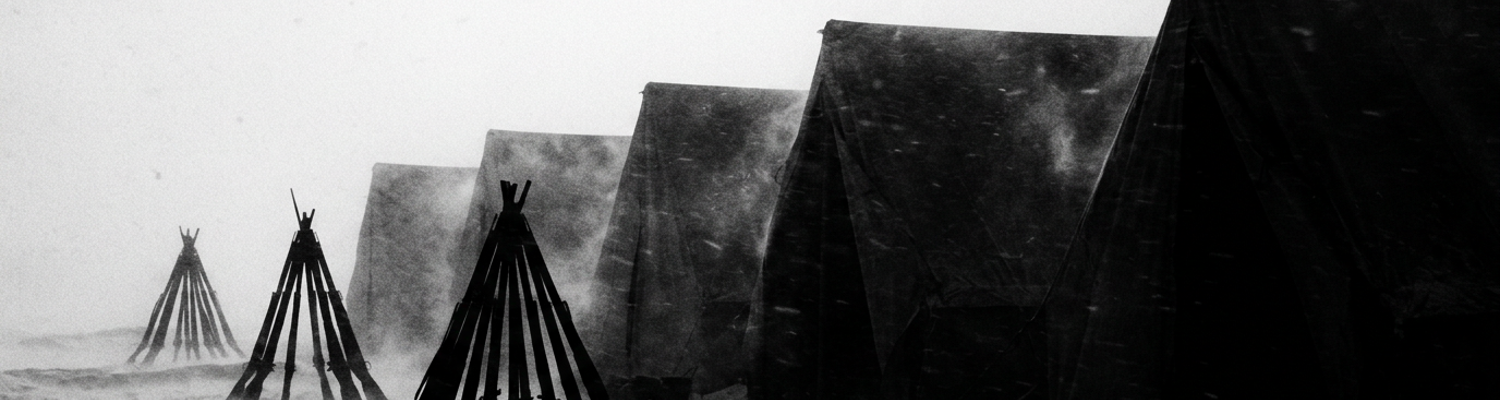

Tensions and the Federal March to Utah
The final courier riding east from the vanguard of the 10th Infantry Regiment vanished near the South Platte River crossing in late August 1857. This disappearance severed all communication between the forward marching columns and the War Department. Archival evidence shows President James Buchanan ordered exactly 2,500 federal troops to march into Utah Territory earlier that spring. The deployment consisted of the 5th Infantry, the 10th Infantry, the 2nd Dragoons, and Phelps Battery of the 4th Artillery. Buchanan directed these regular army units to physically remove Brigham Young from his position as territorial governor. The executive order installed a federally appointed successor named Alfred Cumming. War Department planners mapped a 1,200-mile route originating at Fort Leavenworth. The columns pushed across the Great Plains and through the high-altitude passes of the Rocky Mountains. Colonel Albert Sidney Johnston assumed overall command of the expedition after General William S. Harney was reassigned to handle unrest in Kansas.
Johnston inherited an expedition already in motion.
Severe delays caused by late spring storms, disease outbreaks among the draft horses, and administrative bottlenecks plagued the staging grounds. Soldiers marched out in staggered detachments rather than a single unified force. They carried Model 1842 smoothbore muskets and limited basic combat loads (Ordnance Department File 44-A). The survival of this force depended entirely on overextended military supply lines managed by civilian contractors. The War Department awarded the primary freight contract to the firm of Russell, Majors and Waddell. This company assembled dozens of separate civilian supply trains to follow the army across the plains. Each train consisted of twenty-six heavy Murphy wagons manufactured in St. Louis. Six yokes of oxen pulled every individual wagon across the rough terrain. The wooden axles and iron tires bore loads exceeding 6,000 pounds of bacon, flour, coffee, hardtack, and black powder.
Civilian drivers moved the oxen at a maximum speed of two miles per hour.
Washington politicians watched the slow progress with high anxiety. A failure in the supply chain would cause a complete collapse of federal authority in the western territories. Foreign diplomats in Washington sent dispatches to London and Paris tracking the progress of the expedition. They calculated whether the United States government could project force across its own claimed landmass without fracturing. The supply trains operated days behind the main infantry columns. This spacing left large undefended gaps in the marching order. Forward military units consumed their carried rations quickly. They expected the civilian wagons to arrive at pre-designated checkpoints near South Pass and the Green River basin. The physical mechanics of the freight operation required constant repairs to wagon wheels, canvas covers, and wooden yokes. Blacksmiths traveling with the civilian outfits stopped daily to replace broken iron hardware. They tended to oxen suffering from hoof rot and exhaustion. The wagon masters directed their trains toward a crossing at the Sandy Creek ford. They carried 300,000 pounds of unescorted military cargo.
The Simpson Hollow Wagon Train Ambush
Major Lot Smith led a detachment of forty-four mounted territorial militia members into the Green River basin during the early hours of October 4, 1857. These riders intercepted the trailing elements of the federal civilian supply chain near a geographical depression called Simpson Hollow. Brigham Young had issued specific written directives instructing the militia to burn grass, fell trees, and destroy cargo. He ordered them to avoid direct casualties. Smith executed a bloodless tactical envelopment under the cover of darkness. He utilized the uneven terrain and dry riverbeds to mask the approach of his cavalry.
The militia targeted these specific trains because they operated miles behind the main infantry columns.
Militiamen surrounded the encampment of Captain John Simpson and his wagon train. They drew their Colt revolvers and leveled them at the sleeping civilian bullwhackers. Operational logs indicate the teamsters surrendered without firing a single shot from their personal sidearms. Raiders ordered the federal contractors to step away from their twenty-six heavy Murphy wagons. The teamsters abandoned their draft animals. Smith and his cavalrymen repeated this exact procedure hours later at a second encampment nearby. They captured an additional twenty-six wagons managed by a contractor named Lewis Dawson. This coordinated maneuver placed a total of fifty-two federal supply wagons under complete militia control by the morning of October 5.
Militia members systematically applied torches to the canvas covers of the captive vehicles.
Fire burned the wooden axles, iron-banded wheels, and heavy cargo beds within minutes. Quartermaster reports confirm the blaze destroyed over 300,000 pounds of federal property in a single morning. Destroyed inventory included seventy-four tons of flour, thirty-five tons of bacon, and thousands of pounds of coffee, sugar, and hardtack. Black powder kegs stored inside the wagons detonated periodically. The explosions scattered burning debris across the dry prairie grass. Intense heat warped the iron wheel tires and melted the structural brackets. The vehicles were rendered unrepairable. Nauvoo Legion riders departed from the smoldering wreckage. They left the civilian teamsters unharmed but entirely stripped of their freight.
Physical destruction of these specific fifty-two wagons stranded exactly 2,500 United States army personnel in the Rocky Mountains without adequate winter sustenance. Colonel Albert Sidney Johnston received the news while pushing his infantry columns through heavy early-season blizzards near South Pass. Losing the Simpson Hollow trains deleted the primary food reserve for the 5th Infantry, the 10th Infantry, and the 2nd Dragoons. Field commanders ordered an immediate halt to the expedition. They established a makeshift winter cantonment named Camp Scott near the burned ruins of Fort Bridger. Quartermasters slashed daily caloric allotments to a fraction of standard military regulations. Soldiers subsisted on fifteen ounces of flour and a small piece of salt pork per day. Geographic isolation in the Green River basin offered no natural resources to replace the lost rations. Draft animals lacked forage in the deep snow. They began dying from starvation by the hundreds. Enlisted men butchered the frozen carcasses of mules and oxen to prevent mass starvation within the ranks. Medical officers recorded rising cases of scurvy and frostbite.
European diplomats stationed in Washington transmitted detailed assessments of this operational failure to their respective capitals. British and French military attaches calculated that the American federal government could not sustain a modest 2,500-man expedition within its own borders. President Buchanan faced a severe political crisis. Domestic newspapers published accounts of regular army troops freezing in ragged canvas tents. Congressional leaders debated the fiscal competence of the War Department. They demanded investigations into the planning of the expedition. War Department clerks scrambled to organize a spring relief column. The stranded soldiers lacked the physical energy to advance into the Salt Lake Valley or retreat to Fort Laramie. Tactical loss of the wagons escalated into a strategic embarrassment for the executive branch. Foreign observers viewed the Simpson Hollow ambush as evidence of deep internal fragmentation within the United States.
Camp Scott Isolation and Equipment Failures
Colonel Albert Sidney Johnston issued general orders on November 16, 1857. He halted the westward advance of the 5th Infantry, 10th Infantry, and 2nd Dragoons. Field commanders established a winter cantonment named Camp Scott along the banks of Blacks Fork in the Green River basin. Surveyors plotted the encampment exactly two miles south of Fort Bridger. Territorial militia units had already burned the fort to the ground to deny its use to federal troops. The chosen site sat at an elevation of 6,800 feet. It was surrounded by barren bluffs and exposed to constant high-velocity wind patterns channeling through the mountain passes.
Quartermasters issued Sibley tents to the enlisted men.
The troops pitched the canvas structures directly on top of thirty inches of accumulated snow. Johnston trapped 2,500 regular army personnel in a geographical bottleneck located 115 miles short of their objective in the Salt Lake Valley. Dispatches detailing this forced encampment took over a month to reach the War Department via civilian courier. Foreign diplomats stationed in Washington intercepted these status reports. They forwarded the intelligence to European capitals. British military attaches calculated that the United States government lacked the transport infrastructure to rescue its own standing army. The Buchanan administration faced immediate congressional inquiries regarding the strategic viability of projecting federal power across the North American interior.
Ordnance logs from Camp Scott reveal a mechanical failure of standard-issue infantry weaponry in these high-altitude winter conditions. The War Department had recently equipped elements of the 10th Infantry with the new Model 1855 rifle-musket. These weapons were manufactured at the Harpers Ferry and Springfield armories. This specific .58 caliber firearm relied on the Maynard tape primer system to ignite the main black powder charge in the barrel. The mechanism utilized a coiled strip of paper loaded with evenly spaced pellets of fulminate of mercury. This tape was housed inside a small compartment milled directly into the lock plate. A delicate iron feed pawl connected by tiny internal springs to the hammer. It was designed to advance the paper tape upward by exactly one pellet every time a soldier cocked the weapon.
Condensation from the freezing mountain air penetrated the unsealed primer compartments during morning guard mounts along the camp perimeter.
The paper tape absorbed this moisture and froze into a solid block of ice within the magazine chamber. Ice locked the iron primer doors permanently shut. Soldiers attempting morning firing drills found their weapons completely inoperable. The fragile iron feed pawls rusted rapidly in the damp sub-zero environment. Temperatures regularly dropped to twenty-five degrees below zero. When an infantryman pulled the hammer back, the corroded internal springs snapped under the tension. They failed to advance the frozen tape. The hammer would then fall on a wet piece of paper. This resulted in a misfire that left the loaded Minie ball trapped inside the frozen barrel.
Regimental armorers lacked the specialized miniature files and replacement springs necessary to repair the intricate Maynard locks in the field. A close review of operational logs indicates that misfire rates among the 10th Infantry exceeded eighty percent during the month of December. The standard United States military infantryman was functionally disarmed by the ambient weather conditions of the Rocky Mountains. French military observers in Washington analyzed leaked ordnance failure reports from the expedition. These foreign analysts concluded that the American defense industrial base had fielded a flawed infantry rifle unsuitable for continental warfare. European war ministries updated their threat assessments. They noted that any opposing force equipped with traditional brass percussion cap muskets could easily overrun American infantry units operating in winter environments. The mechanical failure of the Model 1855 at Camp Scott signaled a severe vulnerability in American military procurement. Regimental commanders at the encampment ordered troops to manually extract the ruined paper tape from their weapons. They attempted to source standard brass percussion caps from surviving quartermaster stores. The primary supply wagons containing the reserve brass caps had burned weeks earlier at Simpson Hollow.
Communication Breakdown and Friendly Fire Incidents
A lone rider from the 2nd Dragoons spurred his horse eastward through the mouth of Echo Canyon on November 4, 1857. He carried the final dispatch from Colonel Albert Sidney Johnston before heavy snowfall obscured the trail entirely. A severe low-pressure system stalled directly over the Wasatch Mountain range that afternoon. Ambient temperatures dropped to twelve degrees Fahrenheit. Snow fell at a sustained rate exceeding three inches per hour. This specific blizzard physically severed the United States government from its forward deployed military force.
Dispatch riders attempting to navigate the 7,400-foot elevation of Big Mountain Pass encountered solid snowdrifts measuring fourteen feet deep.
The cavalry horses sank to their chests in the powder. They snapped their leather harnesses and fractured their legs in concealed rocky ravines. Visibility on the tactical perimeter collapsed to less than fifteen feet. High-velocity winds whipping through the narrow canyons at forty miles per hour drowned out all verbal commands. Johnston ordered the courier relays to halt after three consecutive riders failed to return to the command tent. The War Department received absolutely no intelligence from the Utah expedition for the next seventy-two days.
This sudden silence triggered immediate panic within the highest levels of the James Buchanan administration. Secretary of War John B. Floyd monitored silent telegraph receivers in Washington. He was entirely ignorant of whether his 2,500 troops were alive, captured, or frozen to death. Foreign diplomats stationed in the capital quickly noted this absolute loss of command and control. British military attaches drafted reports to London detailing how the American federal government could not maintain basic communications with an army operating inside its own legal borders. The communications blackout exposed a severe vulnerability in the American continental transport network to international observers. European war ministries concluded the United States lacked the infrastructure to coordinate a multi-regiment deployment across the Rocky Mountains.
Command cohesion at the encampment disintegrated in the whiteout conditions.
The combination of zero visibility and conflicting operational directives resulted in fatal friendly fire engagements along the isolated picket lines. Colonel Johnston issued standing orders for perimeter guards to shoot any unidentified figures moving through the snow. He assumed territorial militia members were probing the camp. Subordinate company commanders of the 10th Infantry simultaneously dispatched unannounced forward scouting parties to search for the missing couriers. These scouts wore heavy buffalo robes over their standard blue wool uniforms to survive the sub-zero temperatures. The animal hides completely obscured their military insignia.
A returning scout detachment approached the southern perimeter of Camp Scott near Blacks Fork at 11:45 PM on November 18.
High-velocity wind patterns blocked the acoustic frequency of the standard recognition bugle calls. Sentries from Company B of the 10th Infantry detected movement in the snow at a distance of twenty yards. The guards yelled the daily countersign into the wind. The returning scouts never heard the challenge over the howling gale. Sentry logs confirm the perimeter guards leveled their Model 1842 smoothbore muskets and fired a volley directly into the approaching figures. A .69 caliber lead ball struck a dragoon scout in the chest. He died instantly. Three other soldiers sustained severe gunshot wounds to their extremities before the opposing groups recognized each other. Reports of this fatal internal engagement eventually reached the East Coast press months later. Congressional oversight committees seized on the friendly fire incident as proof of gross tactical incompetence. French attaches in Washington transmitted the leaked casualty reports directly to Paris. European generals read these translated accounts and questioned the structural discipline of the United States regular army. They calculated that a force incapable of managing its own pickets posed zero threat on the global stage. The regimental surgeon amputated two shattered legs using a bone saw inside a freezing canvas tent.
Congressional Audits and War Department Scrutiny
The first telegraphic dispatches detailing the Simpson Hollow destruction reached the War Department at 17th Street and Pennsylvania Avenue on December 15, 1857. Civilian operators at the Fort Leavenworth terminus tapped out the Morse code translation of the frontier courier reports. They confirmed that fifty-two heavy Murphy wagons and 300,000 pounds of federal property were entirely destroyed. President James Buchanan convened an emergency cabinet meeting the following morning upon learning that the 5th Infantry, 10th Infantry, and 2nd Dragoons were trapped at an elevation of 6,800 feet without winter rations. News of the administrative failure spread rapidly across the capital. It drew the immediate attention of foreign diplomats monitoring the physical capabilities of the American military.
British Minister Lord Napier and French Minister Comte de Sartiges drafted dispatches to London and Paris outlining the complete collapse of the United States supply chain.
European war ministries analyzed these reports. They concluded that the federal government lacked the transport infrastructure to sustain a standard brigade-sized deployment within its own territorial borders. Political opponents of the Buchanan administration seized upon these leaked foreign assessments to launch a direct assault on the executive branch. The executive branch possessed no contingency plan to feed its isolated army.
The loss of the supply trains forced an immediate financial crisis inside the Capitol building that winter. The House Committee on Military Affairs initiated aggressive audits into the exact procurement methods utilized by Secretary of War John B. Floyd. Congressional investigators demanded the original civilian freight contracts from the quartermaster general. The ledgers revealed that Floyd awarded a complete monopoly to the firm of Russell, Majors and Waddell without conducting any competitive bidding process. The War Department agreed to pay the civilian contractors a premium rate of $1.25 to $4.50 per hundred pounds of freight for every hundred miles traveled. Senators calculated that the destruction of the seventy-four tons of flour and thirty-five tons of bacon at Simpson Hollow represented a massive unrecoverable financial loss for the federal treasury. Buchanan had ordered the 2,500 troops to march westward in May without securing a baseline congressional appropriation for the expedition.
Clerks carried stacks of unvouchered quartermaster receipts directly onto the Senate floor.
Congressional hearings focused heavily on the structural absence of military escorts for the destroyed civilian freighters. Lawmakers interrogated army planners regarding the specific tactical deployment of the 2nd Dragoons. The audit exposed that the War Department held the cavalry regiments back in Kansas Territory to police local civilian elections instead of guarding the 6,000-pound cargo loads crossing the Great Plains. Investigators documented that the unescorted civilian wagon masters possessed absolutely no defensive training. This made the 300,000 pounds of cargo an unprotected target for the territorial militia. Republican politicians labeled the entire operation a gross abuse of executive power. They demanded a full accounting of the projected relief costs. Secretary Floyd submitted an emergency deficiency bill requesting an additional $1.5 million just to prevent the mass starvation of the enlisted men trapped at Camp Scott. The price of replacement flour in the western territories spiked to thirty dollars per hundredweight following the destruction of the federal reserves.
Federal accountants realized replacing the destroyed bacon would cost the treasury six times the original purchase price.
Foreign observers attended the open congressional hearings to document the internal political fractures dividing the American government. The audit revealed that Secretary Floyd lacked the hard currency to fund a spring relief column. The War Department authorized a new contract for 3,000 additional draft mules and 500 new transport wagons to carry replacement supplies to the Green River basin. Floyd bypassed the depleted treasury entirely by issuing millions of dollars in unbacked acceptances to the civilian freight contractors. These paper promissory notes obligated the United States government to pay the bearers at a future date. This created an unregulated shadow debt that completely bypassed congressional funding mechanisms. The House of Representatives launched a secondary investigation into this specific financial maneuver. They accused the Secretary of War of violating the Constitution by independently financing a military campaign. The quartermaster bureau simultaneously submitted a formal request for three new volunteer regiments to reinforce the trapped regulars.
Geopolitical Aftermath of the Utah Expedition
President James Buchanan fundamentally altered his military strategy in February 1858 after reviewing the casualty and supply reports from Camp Scott. White House planners recognized that launching a spring offensive to rescue the 5th Infantry and 10th Infantry would require mobilizing thousands of additional volunteers. It would also extend vulnerable supply lines another thousand miles across the Great Plains. The executive branch authorized a civilian mediator named Thomas L. Kane to bypass the frozen mountain passes entirely. He traveled via steamship from New York to Panama, and then north to the California coast. Kane rode horseback from San Bernardino directly into the Salt Lake Valley under the pseudonym A. Osborne to initiate direct back-channel negotiations with Brigham Young.
The territorial governor agreed to surrender his executive title to the federally appointed Alfred Cumming.
This agreement rested on the strict condition that Johnstons army would not occupy the civilian settlements. Buchanan subsequently dispatched two official peace commissioners. Former Kentucky Governor Lazarus W. Powell and Texas Ranger Ben McCulloch carried a blanket executive pardon for all territorial residents who submitted to federal law. The commissioners rode into the territorial capital on June 7, 1858. This diplomatic intervention directly canceled the War Departments pending orders for a massive spring reinforcement column. Powell and McCulloch presented the written pardon to local militia leaders during a series of tense meetings inside the municipal council house in Salt Lake City. Territorial forces agreed to unblock the fortified canyons. This allowed Colonel Albert Sidney Johnston to march his surviving regulars out of their winter cantonment without facing defensive rifle fire from the high ground. The federal troops bypassed the civilian centers entirely. They marched through empty streets as residents temporarily evacuated southward to Provo. Johnston moved his regiments forty miles to the southwest and established a permanent garrison named Camp Floyd in Cedar Valley. Army engineers constructed adobe barracks for the 2,500 troops using local clay and timber.
The Buchanan administration accumulated over fourteen million dollars in unbudgeted military expenditures during the six-month standoff.
The destruction of the Simpson Hollow wagon trains triggered a cascading fiscal collapse that paralyzed United States defense spending for the next three years. Secretary of War John B. Floyd had attempted to hide the cost of replacing the destroyed supplies by issuing millions of dollars in unbacked paper acceptances to the freight firm of Russell, Majors and Waddell. These civilian contractors used the fraudulent government paper as collateral to purchase 40,000 replacement draft oxen and 3,500 new Murphy wagons. Eastern financial institutions began demanding hard specie for these notes by late 1859. This exposed the shadow financing scheme to the House Committee on Military Affairs. Congressional investigators discovered that the Utah deployment consumed nearly forty percent of the entire federal budget for the fiscal year. Lawmakers responded to the executive overreach by completely freezing regular army appropriations.
The House of Representatives refused to pass the annual army funding bill in the summer of 1859.
Federal accountants systematically dismantled the expansion plans drafted by the quartermaster bureau to offset the massive deficit. Congress capped the standing army at just under 16,000 enlisted men. They actively blocked the formation of new cavalry regiments intended to secure the western transit routes from Texas to California. The War Department was forced to auction off thousands of surplus mules and cancel manufacturing contracts for the new Model 1855 rifle-muskets to service the debt incurred by the stranded Utah expedition. Ordnance officers at the Springfield Armory halted production lines due to the severe lack of operational funds. This reduced the output of small arms by sixty percent. The federal government entered the secession crisis of 1860 with a financially crippled military apparatus entirely stripped of its strategic reserve capital. Department commanders across the eastern seaboard abandoned planned coastal fortification upgrades to conserve dwindling cash reserves. Quartermasters in Washington recorded a remaining balance of exactly $3.6 million in the defense treasury.