
Operation Double Eagle and Chu Lai Environmental Challenges
Days of uninterrupted motion across the coastal marshlands stripped the force of its physical reserves. Contact with the enemy had not yet occurred. Men moved under seventy-pound rucksacks through saturated mud and soft dune fields. Their skin ulcerated from saltwater exposure and foot rot. They ate cold rations from tin cans for three consecutive days.
Forty-eight hours without restorative sleep left infantry squads swaying on their feet during brief halts along the coastal trail.
Packs tore raw grooves into collarbones. Dehydration set in despite the constant drizzle. A dull ache of chronic dysentery contracted from tainted perimeter water supplies accompanied the exhaustion. Front-line rifle companies hollowed out long before the first mortar landed.
Archival evidence shows that Operation Double Eagle launched along the coastal dunes of Quang Ngai Province in early February 1966. Task Force Delta committed elements of the 3rd Marine Division and 1st Marine Division to this sector. Planners directed five infantry battalions into an amphibious assault twenty miles south of the Chu Lai enclave. Operational planners designated the coastal plains around Duc Pho as the primary battle space. They aimed to trap the 2nd Division of the People's Army of Vietnam alongside the regional 2nd Viet Cong Regiment.
Landing craft deposited rifle companies onto exposed beaches against heavy surf. Troops waded directly into deep sand flats cut by tidal inlets. Company commanders pushed platoons inland across grid coordinates BS 7035 toward the railway line. The men struggled to advance through trackless dune terrain. Tracked vehicles sank up to their sponsons. Field units recorded immediate delays in weapons staging. Wheeled tactical trailers bogged down to their axles. Continuous manual recovery under rising wind conditions became standard procedure.
The weather deteriorated within twelve hours of landing.
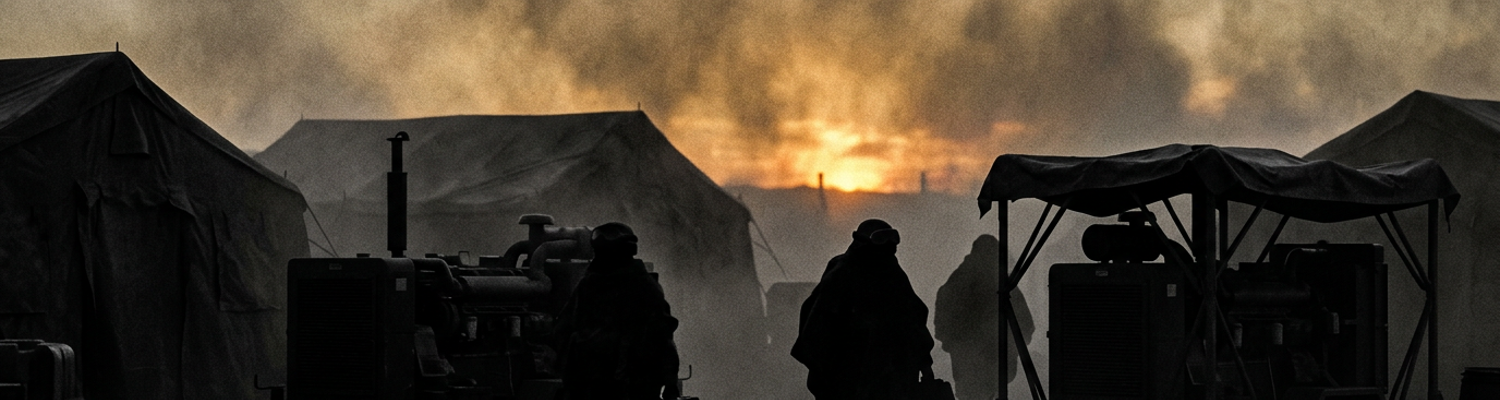
Coastal gale-force sandstorms generated severe haboob conditions. These storms choked mechanical equipment across the Chu Lai amphibious enclave. A close review of operational logs indicates that sustained forty-knot winds swept unanchored silica off the coastal shelf. Walls of abrasive dust drove straight into air intakes, open engine bays, and medical staging tents. Fine quartz particles penetrated the dry air filters of M35 six-by-six cargo trucks. The grit scoured cylinder walls and caused instantaneous engine seize-ups across primary supply routes.
Aviation units faced immediate degradation.
The exposed radial engines of Sikorsky UH-34D helicopters ingested airborne grit. Early turbine assemblies of Boeing Vertol CH-46 Sea Knights suffered the same fate. Compressor stalls followed. Rotor blade leading edges degraded rapidly. At perimeter facilities, 60-hertz diesel generators stalled as intake manifolds clogged with white dust. These generators powered communications vans and surgical sterilization autoclaves.
Sand infiltrated every mechanical tolerance down to fractions of millimeters.
When examining the historical record of motor transport maintenance units, technicians faced a complete breakdown of factory-standard operating procedures. Grease fittings transformed into grinding compounds within minutes of lubrication. Motor pool mechanics stripped vehicle differentials dry. They operated the machinery without protective packing. Combat engineers improvised dust traps. They cut open oil-soaked canvas tarps and bound them over generator carburetors with standard issue safety wire.
Corpsmen at the airfield medical station scraped grit from surgical instrument packs using medical-grade isopropyl alcohol. They continuously wrapped sensitive blood storage refrigeration coils in dampened bedsheets. This prevented overheat shutoffs. Mobile radio sets of the AN/PRC-25 series suffered cracked volume potentiometers and fouled battery connectors. Signalmen cleaned individual brass contact prongs with dental picks.
By midday on February 3, the Chu Lai airstrip suspended fixed-wing resupply sorties. Visibility collapsed below two hundred yards.
Mechanical Casualties of Company A Surgical Facilities
Archival evidence shows that Company A of the 3rd Medical Battalion operated its primary surgical clearing station on the exposed sandy flatlands bordering the Chu Lai airfield perimeter. Helicopters from Marine Aircraft Group 36 ferried wounded infantrymen north from the contact zones around Duc Pho. Waves of urgent trauma cases arrived in the triage zone.
Powering that surgical care required trailer-mounted diesel generator units.
Crews positioned these generators fifty yards behind the operating complex. The units supplied alternating current to lamps, blood bank refrigeration, and suction pumps. Airborne quartz grains bypassed the standard perimeter baffles within two hours of the storm onset. Blowers sucked dense clouds of fine particulate directly into the generator louver assemblies. The sand compacted against external radiator fins and oil-cooler tubes. Airflow dropped below manufacturer thresholds.
Every cooling system failed under the dust.
Company A suffered mechanical casualties when wind-driven sand clogged cooling intakes on primary surgical generators. Internal cylinder head temperatures climbed past three hundred degrees Fahrenheit on the 30-kilowatt power units. Safety shutoffs triggered. Sudden blackouts swept across the triage pads.
Bathed in driving grit, mechanics from the battalion motor transport detachment stripped off their flak jackets. They pulled emergency maintenance using compressed nitrogen cylinders and scrapers. The men dug impacted mineral sediment out of the radiator cores. Sand entered the oil baths of the engine air cleaners. Clean lubricant turned into an abrasive paste. This paste scoured intake valves and degraded piston rings within three operating cycles.
Faced with repeated mechanical shutdowns, the battalion maintenance officer ordered technicians to bypass automatic thermal circuit breakers. The generators would run hot rather than cut surgical lights mid-procedure. Corpsmen kept essential autoclave sterilizers running by jury-rigging secondary 15-kilowatt utility plants with lengths of field telephone wire. Burnt drive belts filled the utility pits with black smoke.
Inside the surgical shelters, containment collapsed entirely.
Particulate penetration breached sealed field operating tents. Sterile operating theaters suffered contamination during incoming casualty surges. Sustained forty-knot gusts hammered the structural frames of the standard canvas surgical shelters. Stitched fabric seams stretched. Heavy wooden tie-down stakes pulled clean out of loose beach dunes.
Quartz dust pushed directly through the zippered ventilation baffles and entrance airlocks. It settled onto instrument trays and prep tables in a continuous mineral film. Surgeons working on deep fragment wounds and penetrating abdominal trauma looked on as airborne dust settled onto freshly exposed fascia and muscle tissue. Bleeders remained unclamped.
Naval corpsmen hung damp surgical towels over the operating tables to prevent rampant bacterial infection across the surgical line. They soaked lint-free lap sponges in sterile saline. They held them as physical barriers directly over open wounds. Staff discarded three out of every five opened instrument packs. Coarse sediment accumulated on hemostats, scalpel blades, and retractors before doctors could complete their initial cuts.
When examining the historical record, maintenance logs reveal that Company A exhausted five cases of olive-drab pressure-sensitive tape in thirty-six hours. They attempted to seal structural seams from the inside. Field doctors relied on battery-operated headlamps when power dropped. They squinted through goggles smeared with sweat and blown quartz.
Corpsmen worked around the clock with wash buckets. They flushed abrasive sediment off rubber floor tarps. Post-operative reports recorded sand particles embedded in seventy percent of debrided tissue specimens forwarded to Da Nang for laboratory analysis.
Telemetry Failures and Drone Reconnaissance Troubleshooting
Offshore destroyers lost visual and electronic contact with their unmanned aircraft within minutes of launching toward the coast.
A close review of operational logs indicates that atmospheric static from airborne sand degraded radio control telemetry links. Shipboard QH-50 DASH reconnaissance drones operated in the littoral airspace off Chu Lai. Naval destroyers assigned to gunfire support along the Quang Ngai surf line deployed these coaxial-rotor Gyrodyne drones. They needed to spot artillery impacts behind the coastal dune ridges.
High winds pushed suspension clouds of silica out over the water. Friction between dry mineral grains generated an intense electrostatic field across the low-altitude flight paths.
This particle-induced static blanketed the drone 400-megahertz FM radio receiver antennas. Continuous electromagnetic interference flooded the channels. Signal-to-noise ratios plunged. Shipboard drone controllers stationed on flight decks watched control needles oscillate erratically. Pitch and roll commands suffered packet drops.
Inside the fiberglass nose cones, sensitive electrical servos governed throttle actuators and collective pitch linkages. These servos received corrupted control pulses. The aircraft pitched wildly above the waves. Maintenance crews documented three separate airframes entering uncommanded descents toward the water. Carrier-wave interrupters engaged automatic ditch sequences.
Technicians stripped the control consoles bare on rolling decks.
Electronics technicians on destroyer tender repair teams improvised emergency grounding measures. They needed to stabilize the erratic command uplinks. Working under grease-smeared deck awnings, avionics crews replaced standard factory whip antennas. They installed heavy-gauge copper wiring run through grounded braided shielding. Technicians swabbed the drone receiver bays with pure ethyl alcohol. This stripped away conductive dust layers that bridged printed circuit board leads.
Combat systems officers adjusted ground station directional transmitters. They overrode standard signal output limits to push raw wattage through the atmospheric interference. Barometric pressure sensors fouled from microscopic sand grains jammed into pitot tubes. Mechanics reamed the static ports with fine steel safety wire. They locked rotor controls into preset manual trim settings. This kept the drones airborne without automated stability augmentation.
Archival evidence shows that high-altitude Ryan Model 147 surveillance runs over Quang Ngai dunes experienced severe signal attenuation. Particle-induced static caused the interference. Modified DC-130 motherships holding position offshore launched these turbojet-powered reconnaissance drones. The drones traversed the southern edge of the operational zone at twelve thousand feet. They photographed suspected supply corridors.
Even at high altitudes, the haboob lifted fine quartz particulate into the upper air columns. The grit scoured the external fuselage surfaces. Friction generated thousands of volts of static charge along the drone composite wing panels. Continuous corona discharges produced arcing around trailing-edge antennas.
Downlink telemetry channels broadcasting on S-band frequencies degraded rapidly. Payload sensor data and camera activation confirmation signals failed to reach ground tracking vans at Da Nang. Microwave transponders failed to return clean tracking pulses to AN/MSQ-77 radar stations. Tracking personnel lost plot lines for up to twelve minutes per operational run.
Inflight navigation computers drifted off course without radio corrections.
When examining the historical record, signals intelligence detachments and contractor field engineers resolved the signal attenuation. They physically modified the drone guidance packages between combat sorties. Specialists working inside mobile maintenance vans at Da Nang Air Base fabricated field-expedient static discharge wicks. They used braided aircraft control cables. They riveted them directly to the drone wingtips and horizontal stabilizers. This bled off triboelectric charge into the engine slipstream.
Ground technicians altered radio receiver sensitivity switches. They hardwired lower telemetry bands and bypassed high-gain preamplifiers. Those preamplifiers saturated under broadband electrostatic noise. Camera control technicians reprogrammed internal mechanical timers. They triggered optical shutter sequences on fixed dead-reckoning intervals. This entirely bypassed the jammed remote telemetry link.
Maintenance logs confirm that modified Ryan Model 147 drones completed two photo-reconnaissance passes over the Duc Pho sand flats on February 4. They landed by parachute in the surf with their internal photographic magazines intact.
Improvised Grounding Solutions Under Combat Fire
Static voltage across the aluminum shelter skins jumped past thirty thousand volts.
Archival evidence shows that dry silica particles propelled by forty-knot coastal gales stripped electrons from the exterior paneling of tactical communications shelters. This occurred across the Chu Lai command perimeter. Radio operators inside the AN/MRC-83 and AN/TSC-15 shelter vans felt physical electrical arcs. The current leaped from metal chassis panels directly into their headsets. It blistered their ears and shorted out vacuum tube filaments.
Marine ordnance technicians worked alongside 1st Radio Battalion signals personnel. They recognized that this triboelectric accumulation threatened adjacent ammunition staging pits. Stray sparks could ignite exposed powder charges for 81mm mortars.
Standard factory grounding pigtails snapped. They proved totally incapable of shedding the kilovolt surges building up across the composite skin panels. Specialists scavenged hundreds of feet of heavy-gauge copper wiring. They took copper antenna lead-ins and barbed-wire binding wire stripped from perimeter defensive barriers.
Technicians stripped the insulation with combat knives. They twisted the bare multi-strand conductors into braided spider-web grounding arrays. They bolted these webbed loops across exterior structural corner castings. Engineers bonded the arrays directly to the shelter chassis frames using cadmium-plated self-tapping screws and lock washers. This created a continuous low-resistance dissipation loop. It bled high-potential electrostatic charges off the housing before current could leap into crypto gear or radio transceivers.
The dry sand refused to take the current.
When examining the historical record, maintenance teams found that driving standard six-foot copper-clad steel ground rods into the dunes did nothing to dissipate the charge. Pure quartz sand along the coastal shelf registered electrical resistance values exceeding five thousand ohms. This effectively insulated the ground rods from any conductive earth.
Grounding crews from the 7th Engineer Battalion and communication platoons had to reach the saline water table. That table sat buried twelve to fifteen feet beneath the shifting dune ridges. Mechanics improvised extended ground rods. They cut ten-foot lengths of galvanized steel conduit pipe. They threaded the ends together with plumber couplings and beveled the base tips with hacksaws.
Two-man teams stood fully upright on wooden ammo crates. They drove the pipes downward using twelve-pound sledgehammers.
Viet Cong mortar crews concealed in the treelines west of the perimeter tracked the noise and silhouette of these crews. They lobbed sporadic 82mm mortar rounds into the comms wire perimeter. Snipers fired 7.62mm rounds from tree stands across the drainage swales. Technicians took shrapnel hits to their extremities as they swung their hammers. They refused to abandon the pipes until the metal penetrated the dense sub-sand clay layer.
A close review of operational logs indicates that even fifteen-foot rods failed until crews reduced the ground resistance artificially. Signalmen poured gallons of saline solution, discarded battery acid, and seawater bucketed directly from the surf down the hollow conduit shafts. This saturated the surrounding sand pack.
Mortar fragmentation severed two of the improvised wire runs at 1420 hours. High-voltage feedback threw into an AN/TRC-24 radio relay van. Three power transformers burned out instantly.
Working under direct sniper fire that kicked up sand plumes around their boots, technicians crawled out into the open wire corridors with wire strippers. They spliced the severed copper lines with Western Union twists. They bound the splices in waterproofing tape. Resistance dropped below twenty-five ohms across the communications perimeter. This neutralized the electrostatic charge before incoming medevac coordination frequencies suffered permanent loss.
Supply Chain Bypasses and Component Salvage
Standard requisition forms could not outrun a sandstorm.
Archival evidence shows that standard Military Assistance Command, Vietnam supply channels imposed a fourteen-to-twenty-one-day processing cycle on emergency Class VIII medical expendables and heavy-duty filtration units. At Chu Lai, Company A of the 3rd Medical Battalion burned through dry air filters on primary utility engines every twelve hours. Waiting three weeks meant total electrical collapse.
Supply officers stationed at the coastal enclave teamed with rear-echelon logisticians at the 1st Force Service Regiment depot in Da Nang. They circumvented the automated Military Standard Requisitioning and Issue Procedures. Bypassing the rigid DD Form 1348 requisitions that languished in Saigon supply queues, naval supply corpsmen instituted an unrecorded courier pipeline.
Battalion expediters commandeered cargo floor space on twin-engine Douglas R4D-8 transport flights. These flights shuttled daily between Da Nang Air Base and the Chu Lai tactical strip. They traded captured SKS carbines, spare entrenching tools, and prioritized medical morphine ampoules to naval construction battalion storekeepers. In exchange, they received commercial fiberglass air-conditioning filter rolls, industrial spun-polypropylene mesh, and bulk wire screening.
Motor transport sergeants hauled these unauthorized materials straight to field triage sites in three-quarter-ton M37 utility trucks. They did not log receipts into MACV property books.
Paperwork stopped at the flight line.
When examining the historical record, battalion technicians faced an immediate deficit of elastomeric seals capable of withstanding forty-knot sand blasts. Fine quartz grains shredded every standard factory rubber grommet, cork gasket, and duct clamp across the hospital complex. Abrasive dust flooded surgical autoclave vents and blood-plasma cooling compressors.
Maintenance crews turned directly to the Chu Lai airfield salvage revetments. Marine Aircraft Group 12 maintained a boneyard of combat-damaged Douglas A-4E Skyhawks and Sikorsky UH-34D helicopters there. Antiaircraft fire over Quang Ngai Province had struck these airframes. Armed with sheet-metal shears, utility knives, and ball-peen hammers, 3rd Medical Battalion repair specialists picked through twisted aluminum fuselages along the edge of the SATS runway.
Mechanics stripped high-grade synthetic neoprene from punctured self-sealing fuel bladders. They sliced away shrapnel-scorched sections to recover pliable, vulcanized sheet rubber. Scavenging parties extracted resilient Buna-N hydraulic line O-rings. They pulled silicone canopy-edge pressure stripping and heat-resistant fluoroelastomer firewall gaskets from ruined Pratt & Whitney J52 jet engine compartments.
Combat aircraft carcasses supplied what depots refused to prioritize.
A close review of operational logs indicates that technicians brought these scavenged materials back to field workbenches. They hand-fabricated airtight seals for Company A surgical facilities. Machinists used bench punches to cut the harvested A-4 fuel-bladder neoprene into circular flange gaskets. They bolted them directly between generator intake blowers and the improvised fiberglass filter boxes.
Technicians seated the salvaged aircraft-grade hydraulic O-rings inside the high-pressure steam valves of Castle autoclave sterilizers. This halted the continuous pressure drops that had threatened surgical tool sterilization cycles since the onset of the gale. Signal corpsmen took scavenged cockpit canopy seals and bonded them along the aluminum access doors of the central blood-storage refrigerator using aircraft structural adhesive.
Pressure checks logged at 1800 hours on February 4 confirmed the fix. The hand-cut aviation seals maintained positive atmospheric pressure across three operating suites. Internal particulate counts held below thirty grains per cubic foot while outdoor winds clocked forty-five knots.
Field Fabrication and Cold Chain Preservation
A single whole blood unit deteriorated past forty-two degrees Fahrenheit became lethal poison to a hemorrhaging Marine.
Archival evidence shows that by the evening of February 4, fine coastal silica penetrated the reciprocating compressor housings of the two commercial-pattern mechanical refrigerators serving Company A primary blood storage bunker. Ambient temperatures inside the sandbagged medical revetments at Chu Lai spiked above ninety degrees. Driving forty-knot winds forced abrasive grains through factory crankcase breathers and drive-shaft seals.
Once inside, quartz particles ground the cast-iron refrigeration pistons down to bare metal. Immediate pressure drops occurred across the Freon-12 coolant loops. Internal cabinet temperatures pushed toward the upper six-degree Celsius safety limit.
Logisticians and corpsmen fabricated improvised dust gaskets from surgical tubing and salvaged neoprene. They needed to protect blood refrigeration compressors before the entire supply spoiled. Master sergeants from the battalion maintenance shop stripped fifty feet of amber latex tubing directly from chest-drainage inventories inside the surgical supply cache.
Laying the tubing along wooden packing crates, corpsmen sliced the elastomeric cylinders lengthwise with surgical scalpels. This formed flat, high-density rubber strips. Technicians paired these strips with three-millimeter vulcanized neoprene panels cut from salvaged Douglas A-4E Skyhawk wing bladders retrieved from the airfield dump.
Using gasket punches and solvent cement, they bonded the layered materials into custom O-rings and perimeter seals. They bolted them directly over the exposed compressor drive shafts, oil-filler ports, and electrical junction boxes.
The improvised seals held the vacuum.
A close review of operational logs indicates that keeping the sealed compressors running required continuous cooling airflow without sucking in the surrounding haboob. Zero-visibility conditions enveloped the Chu Lai pad at 2100 hours. Incoming Sikorsky UH-34D helicopters touched down blindly by instrument guidance. They unloaded twenty-two severely wounded infantrymen from the 2nd Battalion, 4th Marines. These men had taken heavy fire along the sand flats of grid BS 7238.
Trauma surgeons inside the triage shelter demanded immediate access to dozens of whole blood units to treat blast trauma and arterial hemorrhaging. Outside the shelter wall, blowing quartz dust reduced horizontal sightlines to less than ten feet. Thousands of pounds of airborne mineral grit battered intake blowers.
Battalion technicians countered the environmental assault by constructing multi-stage filtration baffles around the external condenser units. They framed wooden ammunition boxes with fine-mesh wire screens. They packed the internal channels with surgical gauze soaked in lightweight engine oil.
Air drawn into the cooling radiators was forced through an S-shaped labyrinth of oil-dampened baffles. This knocked mineral particulates out of suspension before the airflow contacted the hot condensing fins. These field-engineered filtration baffles maintained viable cold chain storage for whole blood units during mass-casualty triage in near-zero visibility. Core interior temperatures of both refrigeration cabinets held steady at four degrees Celsius throughout the eight-hour casualty influx.
Not a single blood bag spoiled.
When examining the historical record, surgical logs from Company A reveal that eighty-six units of type-O whole blood passed through the improvised cooling circuit between midnight and dawn on February 5. Corpsmen transported individual units thirty yards through blinding sand clouds inside insulated aluminum field chests lined with frozen ice cans. They moved from the revetted refrigeration shelter straight to surgical prep tables.
Dust outside stripped paint off vehicle doors. Post-operation maintenance inspections noted zero sand contamination inside the modified compressor sumps. Laboratory cross-matching checks run at 0630 confirmed plasma hemolysis levels remained below standard rejection thresholds across all eighty-six transfused units. The 3rd Medical Battalion packed up the modified refrigerators on February 12. They loaded the scarred, neoprene-patched units onto departing transport planes, leaving the Chu Lai sand flats exactly as they found them.