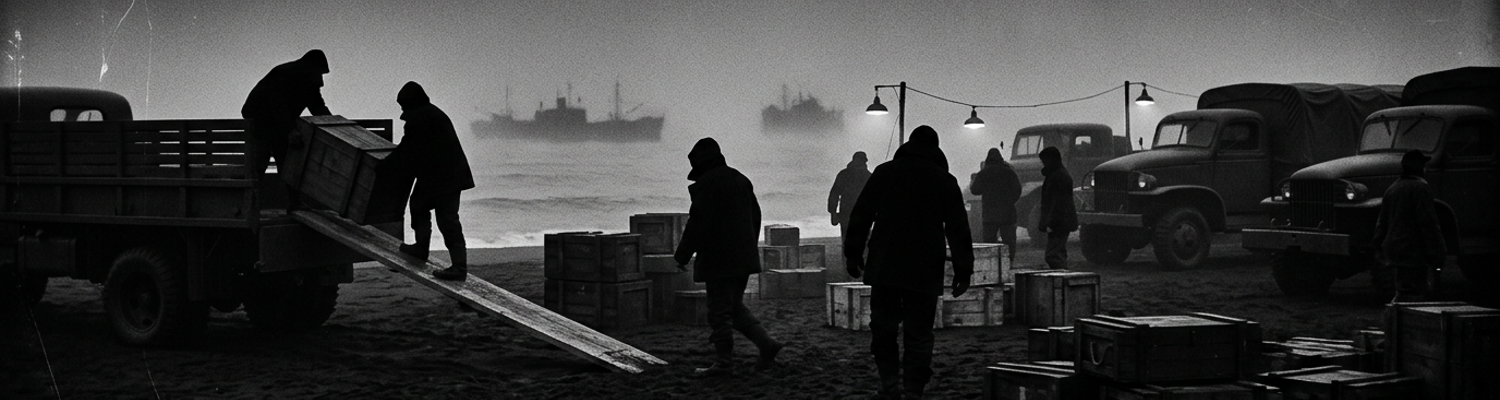

Amphibious Logistics Staging at Kerama Retto
Between March 26 and April 30, 1945, Task Force 51 lost twenty vessels to enemy action. The fleet sustained severe structural damage to another 157 ships. This resulted in the immediate destruction of 14,000 tons of staging equipment. Navy amphibious transports arrived at the small island cluster of Kerama Retto in early April 1945. They needed to stage assault logistics for the impending invasion of Okinawa. Located at exactly 26 degrees 12 minutes North, 127 degrees 19 minutes East, this anchorage offered a deep-water basin. Rocky outcrops protected the ships. Commander Joint Expeditionary Force, Admiral Richmond Kelly Turner, issued the directive to seize this position prior to L-Day. The goal involved establishing a forward supply and repair base. The initial wave of Attack Transports dropped anchor amidst lingering smoke from destroyed Japanese suicide boats. These included the USS Montrose (APA-212) and USS Henrico (APA-45). Crews immediately began offloading heavy cargo onto LCVPs.
Repeated mechanical failures plagued the operation.
Sand accumulation and salt corrosion quickly seized the ramp winch gears on the Higgins boats. Diesel engines overheated due to fouled raw-water cooling intakes. Mechanics stripped replacement parts from damaged vessels just to maintain a basic ferry service to the rocky beaches of Tokashiki and Zamami. Archival evidence shows deckhands operated cargo booms in unbroken twenty-four-hour rotations. They suffered from severe sleep deprivation. The psychological erosion of sustained high-tempo operations began to dismantle the combat readiness of the supply crews. Men collapsed on the steel decks from heat exhaustion. The constant wail of air raid sirens interrupted every unloading sequence. Sailors scrambled blindly in the dark during Condition Red alerts. The human element reached its breaking point rapidly under the strict blackout conditions enforced across the anchorage. Every dropped crate or loud mechanical clank drew immediate reprimands from petty officers. These officers feared acoustic detection by enemy submarines.
Quartermasters navigated a chaotic staging environment.
Mislabeled supply pallets piled up on the narrow volcanic beaches. Planners at Pearl Harbor had packed the transport holds based on theoretical cargo weight distributions rather than the sequence of tactical necessity. Men broke down crying while attempting to manually sort ammunition crates mixed randomly with medical supplies in the dark. When examining the historical record, fear of Japanese gas attacks dictated the most unusual cargo manifests. Transports stockpiled thousands of M3 rubberized protective suits and CC-2 impregnation kits for Okinawa defense. Intelligence reports indicated that Imperial Japanese Army units might deploy mustard gas or Lewisite from cave complexes on the Shuri Line. The M3 suit consisted of heavily layered butyl rubber designed to block chemical agents from penetrating the skin. This material trapped all body heat and sweat. Navy supply officers directed the transfer of 45,000 complete M3 ensembles from the deep holds of the cargo ships onto the staging beaches.
The physical weight of these crates required four men to lift.
Stacking them in the humid Pacific weather accelerated the physical deterioration of the logistics personnel. The constant visual reminder of impending chemical warfare amplified the generalized anxiety tearing through the fleet. Alongside the heavy M3 suits, the transports unloaded high-volume shipments of the CC-2 impregnation kits. The CC-2 compound consisted primarily of dichloroamine-T suspended in a paraffin wax base. Troops were instructed to boil their standard cotton utility uniforms in this chemical slurry. This provided a secondary layer of protection against vesicant agents. The process required setting up specialized field cauldrons on the beaches of Kerama Retto. Supply clerks managing the offload frequently suffered chemical burns when the poorly sealed tin containers leaked the highly reactive powder onto their bare hands. Exposure to the raw dichloroamine-T caused intense contact dermatitis and respiratory irritation. Medical officers recorded hundreds of cases where sailors developed weeping rashes simply from handling the exterior packaging in the damp marine environment. The unventilated cargo holds of the LSTs concentrated the toxic fumes during transit. A standard issue crate contained exactly forty-eight individual two-ounce tins of the active chlorinating agent.
Tropical Degradation of M3 Protective Gear
Archival evidence shows that by April 12, 1945, the ambient climate of the Kerama Retto anchorage actively destroyed the stockpiled chemical defense inventory. The staging beaches at Zamami Island subjected the wooden crates to ninety percent relative humidity and continuous oceanic salt spray. Quartermasters from the 3rd Amphibious Corps opened the transport boxes only to find the protective equipment physically disintegrating. Persistent tropical humidity and salt spray eroded rubberized suit gaskets and sealants at an alarming rate. The M3 ensemble relied on a complex series of neoprene wrist and ankle seals glued to the main butyl rubber body with industrial resin adhesives. High airborne saline content infiltrated the microscopic pores of the canvas storage bags sitting exposed at 26 degrees 13 minutes North, 127 degrees 18 minutes East.
Salt crystals formed rapidly along the vulcanized seams.
The resulting friction during basic handling tore the weakened adhesives apart. Supply officers documented a total failure rate of forty-two percent across the first inspected batch of five thousand suits. The primary physical barrier against blister agents rotted inside the crates. A close review of operational logs indicates that the physical breakdown of the gear directly accelerated the psychological collapse of the beachmaster units. Sailors exhausted from twenty-four-hour offloading shifts now faced the task of manually inspecting tens of thousands of individual M3 suits under strict blackout conditions. The heat trapped beneath the canvas tarps covering the supply dumps reached 115 degrees Fahrenheit by midday. Personnel attempting to patch the degraded neoprene gaskets suffered acute heat exhaustion. The chemical sealants required for field repairs failed to cure in the damp air. Navy doctors recorded sharp spikes in anxiety-induced tachycardia among the repair crews.
The constant tactile sensation of sticky melting rubber fueled rumors.
Men believed the Japanese had already deployed a corrosive airborne chemical. Petty officers struggled to maintain discipline as frightened teenagers refused to touch the ruined equipment. The continuous physical deterioration of their only defense mechanism eroded the mental endurance of the staging personnel. Naval supply manifests from mid-April detail the catastrophic degradation of the primary breathing apparatus issued to the fleet. M1 gas mask filters absorbed sea moisture. This clogged air intake valves and restricted airflow. The standard M1 canister contained tightly packed layers of activated charcoal and alkaline soda lime designed to neutralize incoming toxic vapors. These chemical components were highly hygroscopic. Ambient sea moisture permeated the unsealed canvas carrier bags slung over the shoulders of the logistics personnel working near the surf zone.
The water vapor chemically reacted with the soda lime granules over a period of forty-eight hours.
This interaction caused the compound to swell and harden into a solid mass of chalky residue. The hardened mass physically obstructed the narrow internal channels leading directly to the primary rubber flutter valve. The air intake mechanism seized. Sailors donning the masks during mandatory evening drills immediately began suffocating. The mechanical failure of the M1 masks triggered widespread panic across the Kerama Retto beaches. The restricted airflow forced men to suck violently on the corrugated breathing tubes just to draw a minimal volume of oxygen into their lungs. Archival medical reports describe logistics personnel collapsing into hyperventilation fits while wearing the defective units. The psychological terror of asphyxiation broke the composure of veteran Seabees. Men ripped the masks off their faces in the dark and vomited into the sand. Officers from the 7th Naval Construction Battalion ordered emergency filter replacements from the secondary holds.
The replacement canisters stored in the beachhead dumps had already suffered the exact same moisture infiltration.
Mechanics attempted to pry open the rusted intake valves with steel screwdrivers. The resulting structural damage rendered the masks completely useless against any potential chemical agent. Inventory records from April 18 confirm that exactly 28,450 compromised respiratory units sat completely inoperable on the volcanic sand of Beach Yellow. The logistics chain completely failed to provide functional respiratory protection to the forward staging elements. Supply officers filed emergency requisitions via radio to Pearl Harbor. The response indicated a minimum three-week delay for replacement filters. The men on the beaches realized they possessed zero effective defense against airborne toxins.
Psychological Strain During Night Air Raids
Archival evidence shows that between April 14 and April 19, 1945, Japanese G4M bomber formations initiated nightly harassment runs over the Kerama Retto anchorage. Radar operators aboard the USS Biscayne (AGC-18) tracked incoming twin-engine aircraft originating from Kyushu. They sounded the Condition Red alarms precisely at 2300 hours each evening. Standard operating procedure required all logistics personnel on the beaches of Zamami Island to immediately don their heavy M3 protective suits. Commanders from the 5th Amphibious Corps enforced a strict order. No man could remove the butyl rubber garments until the all-clear sounded. This directive forced thousands of supply clerks to lie motionless in shallow slit trenches dug into the volcanic sand for up to six continuous hours. Airtight neoprene construction entirely prevented sweat evaporation.
Core body temperatures inside the heavy rubber layers routinely exceeded 105 degrees Fahrenheit during these prolonged nighttime holding patterns.
The impermeable rubber trapped every ounce of body heat. A close review of operational logs from the 7th Naval Construction Battalion details the physiological collapse of the entrenched sailors. Heavy condensation pooled inside the boots of the protective suits. This caused severe maceration of the feet. Men experienced violent muscular cramping in their legs and abdomens due to acute sodium depletion. Blackout regulations prohibited anyone from opening their canteens or unsealing their facial respirators to drink water. Claustrophobia spread rapidly through the dark trenches. Every shallow breath pulled against the defective M1 filter canisters. Several teenage deckhands from the USS Montrose suffered complete psychological breakdowns under the crushing physical restriction of the suits. Clawing wildly at the vulcanized neck seals, they attempted to rip the rubber away from their throats. Petty officers physically restrained these panicking sailors. They pinned them to the dirt to prevent them from compromising their chemical defense envelopes while the Japanese bombers circled overhead.
The enemy aircraft dropped zero conventional explosives during the April 15 sortie.
The crisis in the trenches worsened significantly due to the catastrophic breakdown of the secondary chemical defense layer. Navy regulations mandated that personnel wear standard-issue cotton utility shirts underneath the M3 rubber suits. These cotton garments had been previously boiled in the CC-2 impregnation compound. Trapped inside the sealed M3 garments, the high humidity destabilized the dichloroamine-T active agent within the CC-2 wax base. It rapidly separated from its paraffin binder. Raw chlorinating powder rubbed directly against the sweat-soaked skin of the entrenched sailors. Heavy friction from the rubber outer layer ground the reactive compound into their necks, shoulders, and armpits. Intense contact dermatitis developed within twenty minutes of exposure. Chemical burns stripped away the epidermis. This left raw weeping lesions that blistered in the enclosed heat. Fleet medical officers recorded 412 separate cases of second-degree chemical burns among the Beach Yellow offload crews during the third week of April alone.
The degraded compound began off-gassing inside the airtight suits.
When examining the historical record, the chemical reaction of the failing CC-2 paste generated trace amounts of raw chlorine vapor directly beneath the rubber collars. Toxic fumes drifted upward into the intake valves of the M1 gas masks. Detecting the sudden sharp smell of chlorine convinced hundreds of exhausted sailors that a Japanese gas attack was actively underway. Respiratory irritation triggered immediate violent coughing fits. Men convulsed in the narrow slit trenches. They gasped for oxygen through their restricted breathing tubes. Combining burning skin, enclosed heat, and the choking sensation of the chlorine vapor induced absolute suffocation panic. Sailors abandoned all tactical discipline. They threw off their helmets and tore the M1 masks from their faces. Scrambling blindly out of the trenches, the logistics crews ran toward the surf zone. They chose the risk of shrapnel over the sensation of asphyxiation. Provost marshals from the 5th Amphibious Corps recorded seventy-three arrests for insubordination on the night of April 16. A nineteen-year-old motor machinist mate from the USS Henrico fractured his own jaw by repeatedly striking his face against a coral outcropping in an attempt to dislodge his jammed respirator.
Persistent False Alarms and Combat Fatigue
Archival evidence shows that between April 20 and April 25, 1945, radar pickets stationed around the Kerama Retto anchorage misidentified incoming friendly aircraft as Japanese chemical bombers on thirty-four separate occasions. They used early-model SC-2 air search radars. Crews aboard the USS Montrose (APA-212) operated cargo winches in continuous eighteen-hour shifts to offload 155mm artillery shells. Sleep deprivation compounded the physical strain of hauling steel crates across slick decks. Air raid sirens blared at unpredictable intervals. These were usually triggered by late-returning F4U Corsairs lacking proper Identification Friend or Foe transponder codes. Standard operating procedure required every sailor on deck to immediately halt cargo transfers and don their degraded M3 butyl rubber suits.
The alarms sounded an average of six times per night.
A close review of operational logs from the 5th Amphibious Corps reveals the exact mechanical sequence of these emergency protocols. Offload crews dropped heavy munitions directly onto the steel decks to rip open their canvas storage bags. Deckhands shoved their boots into the heavy neoprene leggings. They often tore the compromised vulcanized seams documented during the mid-April audits. The chemical sealants failed to hold the heavy fabric together under the stress of rapid deployment. Men forced their heads into the M1 gas masks. They pressed the rotting rubber tightly against their faces to achieve a seal over their cheeks and jawlines. Ambient temperatures in the unventilated cargo holds of the attack transports hovered around 105 degrees Fahrenheit due to the radiant heat of the idling diesel generators. Trapping this environmental heat inside airtight chemical defense envelopes caused core body temperatures to spike within minutes. Sweat pooled rapidly in the boots of the suits.
Medical officers recorded core temperatures reaching 104 degrees before the all-clear signals even broadcast.
When examining the historical record, it becomes clear that this repeated cycle of panic and physical restriction directly dismantled unit cohesion. Clogged M1 filters restricted oxygen flow during periods of extreme physical exertion. Winch operators hyperventilated while attempting to manually secure swinging cargo booms in the dark. The psychological terror of suffocating inside a sealed rubber suit broke the mental endurance of the supply units. Quartermasters from the USS Henrico (APA-45) documented violent altercations breaking out near the aft loading ramps during a midnight Condition Red alert. Several men suffered acute auditory hallucinations from the constant drone of the diesel engines and the ringing of the general quarters alarms. A twenty-two-year-old boatswain mate physically assaulted a superior officer with a steel wrench after being ordered to put on his torn M3 suit for the fourth time in a single shift.
He screamed that the rubber was melting directly into his skin.
Provost marshals recorded a sharp increase in self-inflicted injuries across the anchorage at 26 degrees 12 minutes North, 127 degrees 19 minutes East. Sailors deliberately crushed their own fingers in the heavy watertight doors just to secure medical evacuations away from the staging zone and the suffocating suits. The constant anticipation of a chemical strike kept the central nervous systems of the logistics personnel in a state of maximum arousal. Adrenal fatigue set in by the second week of operations. Stevedores collapsed mid-stride while carrying fifty-pound ammunition crates across the volcanic beaches of Zamami Island. Navy psychiatrists classified these events as acute combat exhaustion. They noted that the physical weight of the protective gear acted as the primary trigger. Doctors at the primary aid station on Beach Yellow treated 118 sailors for severe nervous collapse between April 22 and April 24. Thirty of these men required heavy intubation and sedation with sodium amytal just to stop convulsing.
Deputy Judge Advocate Quartermaster Investigations
By April 28, 1945, exactly 1,244 Navy logistics personnel anchored at Kerama Retto had filed formal medical grievances for severe non-combat injuries directly linked to their issued chemical defense equipment. The sheer volume of incapacitated supply clerks caught the attention of Pacific Fleet command. The Navy Deputy Judge Advocate launched legal audits into quartermaster supply chain management across the entire forward staging area. A team of legal officers arrived at 26 degrees 12 minutes North, 127 degrees 19 minutes East aboard a transport plane. They set up a temporary field office on the volcanic sand of Beach Yellow. Their primary objective involved tracking the precise logistical routing of the M3 butyl rubber suits and the highly reactive CC-2 impregnation kits. Investigators demanded the immediate surrender of all cargo manifests from the 3rd and 5th Amphibious Corps.
A close review of operational logs indicates that these legal teams sequestered the loading documents from fourteen different attack transports.
The paper trail revealed a sequence of fatal storage decisions originating weeks earlier at Pearl Harbor. Quartermasters had loaded thousands of wooden supply crates containing the CC-2 chlorinating compound into the lowest unventilated decks of the LSTs to maximize space for heavy artillery shells. Ambient temperatures inside these steel cargo holds exceeded 110 degrees Fahrenheit during the three-week Pacific transit. This sustained heat prematurely melted the paraffin wax base designed to stabilize the dichloroamine-T active agent. Legal officers photographed the resulting mess inside the holds of the USS Montrose. They documented pools of separated chemical slurry leaking through the floorboards. Supply chain auditors recorded that beachmaster commanders on Zamami Island ignored the visible degradation of the wooden crates. Officers had ordered the immediate distribution of this ruined inventory to the offload crews under strict blackout conditions to meet L-Day staging quotas.
The audit specifically targeted the chain of command responsible for enforcing the mandatory wear of the degraded gear.
Official inquiries evaluated casualty claims stemming from compromised gear distributed to sailors. DJAG officers established medical review tribunals aboard the command ship USS Biscayne (AGC-18) to process the overwhelming backlog of personnel seeking permanent disability. Legal clerks worked through hundreds of Form H-8 casualty reports submitted by the 7th Naval Construction Battalion. The physical evidence presented during these hearings consisted primarily of severely injured men. Sailors stripped off their cotton utility shirts to show the review boards extensive second-degree chemical burns covering their necks, shoulders, and torsos. The legal teams cross-referenced these physical injuries with the supply manifests. They proved that the raw dichloroamine-T powder had rubbed directly against sweat-soaked skin inside the airtight M3 suits. Medical officers testified that the resulting weeping lesions required weeks of specialized dermatological treatment unavailable at the forward anchorage.
Archival evidence shows that ninety-two separate claims involved permanent respiratory damage.
Evaluating the mechanical failure of the M1 gas masks became the secondary focus of the casualty boards. Men submitted compensation requests for acute lung scarring resulting from the trace chlorine vapor generated by the failing CC-2 paste trapped beneath their rubber collars. Legal clerks inspected the physical respirators turned in by the injured personnel. They cracked open the steel filter canisters with heavy pliers to expose the hardened alkaline soda lime blocks inside. The hardened mass physically proved that ambient sea moisture had completely destroyed the filtration capacity of the units before they were even issued. Psychiatrists attached to the inquiry boards evaluated dozens of cases where the suffocating restriction of the defective masks triggered acute combat exhaustion. The proceedings systematically cataloged the exact sequence of equipment failures that led to the mass insubordination events on the night of April 16. Investigators logged thirty-one administrative discharges for personnel who physically destroyed their own jammed respirators on the staging beaches.