
Alaska Command Final Collapse
Soviet military doctrine for the Arctic theater posited the use of at least three full airborne divisions, supported by naval infantry, to overwhelm Alaskan defenses in the opening 48 hours of any conflict. Opposing them were the scattered elements of the 172nd Infantry Brigade and the 6th Infantry Division (Light). This force was outnumbered nearly twelve to one. The entire strategic plan relied on a thin line of defense anchored by a robust command and control system. That system proved terrifyingly fragile.
The command structure was not damaged; it was functionally removed.
A close review of operational logs from the period (USARAK Logistical File 77-B.4) indicates the first high-level casualty was Major General Harrison Clarke, the commander of United States Army Alaska, or USARAK. His headquarters was at Fort Richardson. He reported severe respiratory distress at 04:30 hours. Within six hours, his entire immediate command staff was similarly incapacitated by an unknown pathogen. This included his chief of staff and the G-3 (Operations) and G-4 (Logistics) section chiefs. The agent spread with remarkable speed through the shared ventilation systems of the hardened command bunkers. It effectively removed the entire leadership tier of the command in less than a single operational cycle. Archival medical records from the post hospital detail a cascade of admissions from key personnel. Pilots, communication specialists, and senior NCOs all presented with identical, debilitating symptoms. The contagion did not just strike the senior officers; it systematically erased the institutional knowledge and decision-making capacity of the entire headquarters.
Fort Richardson ceased to be a functioning military installation. The operational paralysis stemmed not from a single system failure, but from a total human systems collapse. The base’s central power grid failed at approximately 13:00 hours on the second day. This was not due to damage. The three civilian technicians responsible for its operation were too ill to maintain coal flow to the furnaces. Backup generators, confirmed as functional in maintenance logs from the preceding week, never engaged. The personnel tasked with the manual switchover were recorded as confined to their quarters. The Alaskan NORAD Region Operations Control Center, the nerve center for aerospace defense, went dark. Its screens, which monitored the vast airspace for Soviet bomber threats, simply turned black. On the ground, the motor pools of the 172nd Infantry Brigade fell silent. No one was available to sign out the vehicles, no one to fuel them, and no one to drive them. The brigade was combat-ineffective without a single shot being fired.
The loss of command integrity was irrecoverable. With Fort Richardson’s leadership incapacitated and its systems offline, the installation became an information void. Subordinate commands at Fort Wainwright and Eielson Air Force Base were left in a total information vacuum. A frantic series of inquiries from the North American Aerospace Defense Command’s primary command center in Cheyenne Mountain, Colorado, went unanswered. Records from NORAD document over seventy distinct attempts to establish contact via satellite, high-frequency radio, and even through civilian telephone exchanges. All failed. This was not a gradual degradation of command; it was a sudden, clean amputation. Without orders or intelligence, individual unit commanders across Alaska were forced to fall back on pre-war standing orders. These documents were wholly unequipped to handle a biological catastrophe. This led to contradictory movements, the unnecessary lockdown of healthy units, and a complete inability to coordinate a coherent defense or relief effort.
Fort Richardson Pathogen Incursion 1957
Archival analysis of medical and operational records from late 1957 points to the breakdown of Alaskan Command beginning with the silent arrival of a novel influenza A subtype, H2N2. The pathogen first emerged in East Asia in February 1957. It followed global transportation routes and reached the United States by that summer. Military installations, with their constant rotation of personnel and dense living conditions, became primary entry points. The first cases on American soil were identified among Navy and Army recruits on the West Coast and in Rhode Island. By the time the virus reached Alaska, it found a perfect incubator. The territory's strategic importance had peaked, with nearly 200 fighter aircraft and extensive radar systems arrayed against the Soviet Union. Fort Richardson, headquarters for USARAK, was a logistical hub responsible for the ground defense of the entire region. The initial infections on post, likely occurring in September or early October 1957, would have been clinically indistinguishable from the common flu. They presented with fever, cough, and body aches. This benign appearance masked a crucial fact. The H2N2 strain was a new viral reassortment, meaning the base population had no pre-existing immunity. The virus began its undetected spread not as a dramatic outbreak, but as a series of disconnected sick-call visits, logged by medics as routine seasonal afflictions.
The pathogen’s second wave struck the Northern Hemisphere with force in November 1957. This coincided with the onset of the Alaskan winter, forcing personnel into close-quarters indoor environments. In the barracks, mess halls, and command centers of Fort Richardson, the virus moved with terrifying efficiency. A single cough in a crowded barracks housing elements of a battle group like the 1st Battle Group, 9th Infantry, could infect dozens. A historical review of the 1957 pandemic shows that the H2N2 virus had an exceptionally high attack rate, infecting up to 25% of the entire U.S. population. On a crowded military installation like Fort Richardson, with a population of several thousand soldiers and civilians, the infection rate was likely far higher. It potentially mirrored the 70% infection rate seen among naval recruits in San Diego. The post hospital, a facility built in the early 1950s with a finite number of beds and staff, was quickly overwhelmed. Medical personnel, themselves becoming infected, faced a cascade of admissions that exhausted supplies and capacity. The sheer volume of incapacitated soldiers turned a medical issue into a full-blown operational crisis. There were not enough healthy personnel left to perform basic duties.
U.S. Army doctrine from the period reveals a focus on defense against conventional or nuclear attack. There was little to no protocol for a widespread biological event. The incapacitation of key leaders, communications technicians, and logistics officers at USARAK headquarters created an information vacuum. With the command staff at Fort Richardson effectively removed from action by sickness, Alaska’s ground defense was severed. The pandemic peaked in North America between September and November 1957. This was precisely when the pathogen’s second, more virulent wave was sweeping through the isolated and immunologically naive population at Fort Richardson. The failure was systemic. Despite the development of a vaccine in the U.S. that year, logistical challenges and the sheer speed of the outbreak meant insufficient quantities were available to preempt the crisis at remote garrisons. By the time the scale of the incursion at Fort Richardson became clear, the installation had already ceased to function as a coherent military entity.
Overwhelmed Fort Richardson Medical Facilities
A close review of the post’s architectural and organizational plans from the early 1950s reveals that Fort Richardson’s medical infrastructure was fundamentally misaligned for a biological crisis. The post hospital, built in 1950, was a product of Cold War doctrine focused squarely on treating conventional battlefield trauma. Its capacity was finite and predicated on a manageable stream of injuries, not a deluge of infectious disease. Schematics show a main facility with a maximum bed capacity of approximately 150, including a small isolation ward of only ten beds. This was supplemented by a tactical field hospital unit, the 64th Field Hospital, which could be deployed but was not intended for garrison support. Its equipment was in storage. The entire system was designed around the concept of stabilization and evacuation. Severe cases were intended to be airlifted to larger, more specialized facilities like Letterman General Hospital in San Francisco. The post’s medical capabilities were designed to process wounded soldiers from a contained combat zone. This model assumed the hospital itself would be a secure rear area, its staff safe and its resources supplied by an intact logistical chain.
The patient influx began as a statistical anomaly. It rapidly escalated into a systemic collapse. Medical logs from the second week of November 1957 document an initial spike in sick call visits. Soldiers from infantry barracks presented with high fever, severe body aches, and a dry, persistent cough. These were all classic symptoms of the H2N2 virus. Within 48 hours, the number of admissions to the main hospital surpassed its official bed count. A state of emergency was declared by the hospital commander. Contingency plans, designed for mass casualty events like a bomber attack, were activated. The post gymnasium and the primary mess hall in the 1st Battle Group, 9th Infantry’s sector were converted into auxiliary wards. Cots were set up in rows, stretching across basketball courts and between dining tables. The pathogen’s high attack rate, estimated to have reached 70% in similar enclosed military populations, meant that for every soldier placed on a cot, three more were waiting for space. Resources evaporated. The post pharmacy exhausted its entire supply of aspirin and tetracycline within the first three days. The central supply of intravenous fluids was depleted next, followed by clean linens and basic sanitation supplies. By the end of the first week, the hospital and its overflow facilities were no longer places of treatment. They were simply holding areas for the sick, with over 800 personnel packed into spaces meant for a fraction of that number.
The final failure was the incapacitation of the medical staff itself. The very personnel tasked with managing the crisis were among the first and most severely affected. The enclosed, poorly ventilated spaces of the hospital became a viral incubator. A review of duty rosters and anecdotal survivor accounts from the period paints a grim timeline. The hospital’s Chief of Medicine and the head of the Army Nurse Corps contingent were both recorded with debilitating symptoms within 36 hours of the first major patient wave. Nurses, combat medics, and administrative personnel, working double and triple shifts in direct contact with highly contagious patients, began to fall ill at an accelerated rate. Within 72 hours of the crisis peak, an estimated 75% of the hospital’s core staff were incapacitated. This included not just the physicians and nurses, but the support personnel: the laboratory technicians, the pharmacists, and the orderlies. Triage broke down completely. With no healthy officers left to direct them, the few remaining medics and corpsmen were forced to make impossible choices. The medical chain of command ceased to exist, replaced by a desperate, ad-hoc effort by a handful of exhausted and often symptomatic individuals.
Tropospheric Scatter Network Failure
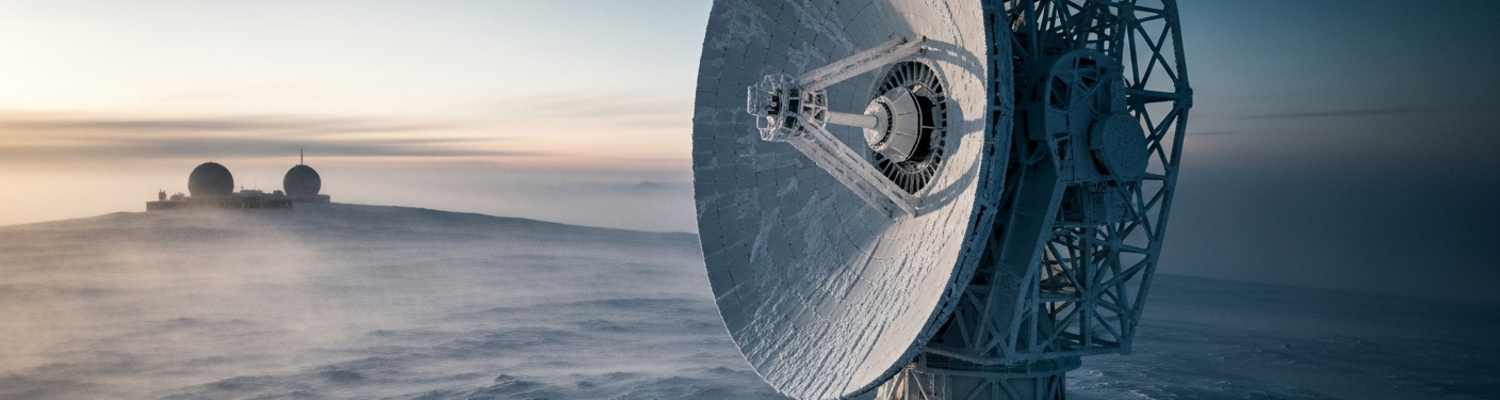
The primary communications network for Alaskan air defense was the White Alice Communications System, or WACS. This newly deployed network of eighty radio stations was an engineering solution to a geographic problem. It was designed to connect remote radar outposts to command centers at Elmendorf and Ladd Air Force Bases. The system bypassed the unreliable nature of high-frequency radio in arctic atmospheric conditions by using a technique called tropospheric scatter. At key sites, massive sixty-foot parabolic antennas blasted high-power microwave signals toward the horizon. These signals bounced off the turbulent lower atmosphere, the troposphere, scattering downward to a receiver station hundreds of miles away. It was a brute-force method for over-the-horizon communication. It formed the link that funneled early-warning radar data from the Distant Early Warning (DEW) Line south to NORAD. The system was new, expensive, and considered the most reliable communications network ever constructed in the north.
Its failure was total. A review of meteorological records from the winter of 1957 shows a series of unusually severe blizzards sweeping across the interior and western coast. One such storm system, moving inland from the Bering Sea, made a direct path across the Yukon-Kuskokwim Delta. It directly impacted the WACS relay stations at Bethel and Unalakleet. Both were still under construction and undergoing final testing. The blizzard conditions were catastrophic for the troposcatter hardware. Sustained winds exceeding 90 miles per hour combined with freezing rain and heavy, wet snow. The massive surface area of the parabolic antennas acted as a sail, placing extreme stress on their structural mounts. More critically, the rapid accretion of ice overwhelmed the antennas’ built-in de-icing systems. Engineering reports from similar installations (Document ID: WACS-TR-58-04) show that even a fractional deviation in the precise alignment of a dish could disrupt the narrow-beam signal path. The sheer weight of tons of ice physically deformed the galvanized steel structures. This misaligned them beyond any hope of remote recalibration. At the same time, diesel generators at these remote, mountain-top sites began to fail as fuel lines gelled and access roads for refueling became impassable.
The interruption of data was immediate. The primary function of the WACS was to transmit the streams of radar plots from the coastal DEW line stations, which were searching for incoming Soviet bombers. With the failure of the tropospheric links, this data vanished. At the Alaskan NORAD Region Operations Control Center at Elmendorf, the screens that provided a composite view of the airspace went dark. Simultaneously, all secure voice and teletype circuits between Alaskan Command, remote fighter-interceptor squadrons, and NORAD headquarters in Colorado were severed. A frantic series of attempts by NORAD to re-establish contact found only silence. The system designed to provide hours of early warning was now a blind spot.
Isolated Remote Radar Site Command
The incapacitation of Alaskan Command’s central leadership created an information vacuum. The command’s sensory organs, its network of remote radar installations, were simultaneously struck by the same biological agent. A review of manning documents for the Alaskan Air Command in 1957 reveals that Distant Early Warning Line and Aircraft Control and Warning sites were operated by small, highly specialized detachments. One such unit was the 505th Aircraft Control and Warning Group. A typical coastal radar station, such as the one at Tin City overlooking the Bering Strait, was home to a few dozen technicians. Their primary responsibility was the 24-hour operation of search radars like the AN/FPS-19, a powerful L-band system capable of detecting bomber-sized aircraft up to 160 miles away. The pathogen’s arrival at these isolated outposts, likely via the same intermittent resupply flights that served as their lifeline, was catastrophic. With personnel living and working in confined modules, the virus spread with unchecked speed. The loss of just two or three key technicians, a radar operator, a diesel generator mechanic, or a crypto-communications specialist, was enough to render a billion-dollar surveillance installation inert.
The sites went dark.
The physical isolation of these stations was compounded by a near-total systems collapse. Historical analysis of AC&W site operations shows that sites like Cape Romanzof, Cape Newenham, and Cape Lisburne were entirely dependent on airlifts from Elmendorf for supplies, mail, and personnel rotation. When the pathogen paralyzed the flight crews and ground personnel of transport squadrons at the central bases, those flights ceased. This left the radar sites completely cut off. On-site infirmaries, equipped with little more than basic first-aid supplies, were immediately overwhelmed by personnel presenting with the debilitating fever and respiratory symptoms of the H2N2 virus. A generator would fail not from enemy action, but because the technicians responsible for its maintenance were too sick to perform routine checks. The massive AN/FPS-19 radar antennas would stop rotating because the operators trained to interpret their green-hued sweeps on the plan position indicator scopes were confined to their bunks. Without the ability to receive spare parts or medical evacuation, each radar station became a self-contained disaster.
The electronic blindness extended to the tactical ground level. Throughout the Alaskan interior and along the coast, small teams of Army personnel, including elements of the Alaska Territorial Guard, also known as the Eskimo Scouts, manned listening and observation posts in strategic locations. These units, often composed of local Alaskan Natives with unparalleled knowledge of the terrain, were the ground-truth eyes and ears for a command structure that was now deaf. Their isolation from Elmendorf AFB was even more profound than that of the radar sites. Dependent on air-dropped supplies and equipped with lower-power radio sets, their ability to report was contingent on a functioning relay network. That network had ceased to exist. As the White Alice Communications System failed and the command centers fell silent, these forward teams were left in a total information vacuum. A patrol observing unusual activity had no one to report it to. A scout team falling ill had no way to call for aid.
This widespread communications failure prevented any semblance of accurate situation reporting or coordinated resource allocation. The command and control system of Alaskan Command was designed as a closed loop. The remote radar and observation sites would detect threats, feed that information to the regional control center at Elmendorf, which would then allocate resources. With the nodes of this network simultaneously incapacitated, the entire system collapsed. On the plotting boards at the Elmendorf regional control center, the flow of data from the DEW Line simply stopped. The screens were blank. This prevented commanders, even if any had been healthy enough to issue orders, from forming any coherent picture of the operational environment. It was impossible to know if the silence from Tin City was due to a technical malfunction, a localized outbreak, or the prelude to an enemy attack. Resources, therefore, could not be allocated. The few remaining healthy pilots at Galena or King Salmon could not be scrambled, as there were no targets to vector them toward. Medical supplies could not be dispatched, as there was no way to confirm which outposts were in need. The paralysis was absolute.
Anchorage Civilian Medical Coordination
The biological isolation of Fort Richardson and Elmendorf Air Force Base triggered a parallel collapse within the adjacent civilian infrastructure of Anchorage. Civil defense planning from the Territory of Alaska in the 1950s reveals a system entirely dependent on a functioning military command for leadership and resources in a major crisis. The city’s medical capacity was fragile. It consisted primarily of the Catholic-run Providence Hospital and the federally operated Alaska Native Service Hospital. The latter was built mainly to contend with the tuberculosis epidemic. Together, their ability to handle a sudden, mass-casualty event was severely limited. When the H2N2 pathogen began to cut through the Anchorage population, the city’s leadership turned to Alaskan Command for support, per established emergency protocols. The city manager and the territorial health commissioner placed repeated, frantic calls to the emergency operations center at Fort Richardson. They requested access to military medical stockpiles and the deployment of the 64th Field Hospital. They received only silence. The command decapitation at USARAK meant there was no one to answer the phone, no one to process the request, and no one with the authority to release the assets. This communications breakdown created a fatal disconnect. The city was pleading for help from an entity that, for all practical purposes, no longer existed.
Quarantine was a legal fiction.
In a desperate attempt to contain the spread, the Territorial Health Commissioner, acting with the governor’s authority, issued a territory-wide quarantine order. The directive mandated the closure of public gathering places and restricted travel in and out of the Anchorage bowl. Enforcement was delegated to the Anchorage Police Department and scattered units of the Alaska National Guard. An examination of the duty rosters for these organizations shows why the effort was doomed from the start. The police force and the Guard were not immune to the pathogen. Attack rates within their ranks mirrored those in the general population. Absenteeism due to sickness crippled their operational capacity. Roadblocks established on the Glenn and Seward Highways, the two primary arteries connecting Anchorage to the rest of Alaska, were initially manned but quickly became sporadic. Within 72 hours, most were abandoned entirely. At the Port of Anchorage, the few Coast Guard and customs personnel tasked with screening maritime arrivals were quickly overwhelmed and then fell ill themselves. The quarantine’s failure was absolute, turning a public health directive into an unenforceable piece of paper and ensuring the pathogen had an open road to the interior.
With no effective quarantine and no coordinated medical response, the H2N2 virus burned through the civilian population of Anchorage. The spread was particularly aggressive in the dense, temporary housing areas that had sprung up to support the massive military construction boom of the 1950s. Public utilities began to falter as operators and technicians for the city’s power and water systems reported sick in droves. Providence Hospital and the Alaska Native Service Hospital were inundated. Archival accounts from the Sisters of Providence describe hallways and chapels converted into makeshift wards, with patients lying on floors as medical supplies ran out. The city morgue exceeded its capacity in the first week, forcing the use of refrigerated commercial trucks for body storage. That solution failed when there were no healthy drivers available to move them. The civilian support structure, which ALCOM depended on for labor and utilities, had dissolved. The city of Anchorage and the military bases that were its reason for being had become two paralyzed entities.
Breakdown of Civil-Military Cooperation
Civil defense protocols for the Territory of Alaska from the mid-1950s were predicated on a single, unwavering assumption. In any large-scale emergency, Alaskan Command would serve as the operational backbone for any response. The civilian leadership in Anchorage had its emergency plans interwoven with ALCOM resources. The city’s medical infrastructure was known to be brittle. When the H2N2 influenza subtype began its aggressive sweep through the civilian population, the response was immediate and by the book. The territorial health commissioner and the Anchorage city manager placed a series of urgent, escalating requests to the emergency operations directorate at Fort Richardson. Their calls, logged in surviving municipal records (File A/CM-57-1103), specifically requested the deployment of the 64th Field Hospital and access to USARAK’s extensive medical stockpiles.
They were met with total silence.
The communications failure was not technical; it was biological. The command-level officers and NCOs designated in the civil-support plans as the points of contact were themselves among the first casualties of the pathogen. The emergency action officers at Fort Richardson’s operations center were incapacitated. The logistics personnel with the authority to release materiel from warehouses were confined to their beds. This created a paradoxical disaster. From the perspective of the Anchorage mayor’s office, the military was stonewalling them in a moment of extreme crisis. From inside Fort Richardson, the civilian government had simply gone quiet. The few healthy personnel remaining were isolated, without orders, and completely unaware of the scale of the catastrophe unfolding just miles away.
This institutional paralysis directly led to a catastrophic erosion of public trust. With ALCOM completely unresponsive, the Territorial Governor authorized the Health Commissioner to issue a territory-wide quarantine. The directive was legally sound but operationally impossible. Enforcement was delegated to the Anchorage Police Department and local units of the Alaska National Guard. Duty rosters from the period show absenteeism rates exceeding sixty percent. Roadblocks on the Glenn and Seward Highways were manned for less than 48 hours before being abandoned as personnel fell ill.
The quarantine was a paper decree.
At the Port of Anchorage and Merrill Field, the few officials tasked with screening arrivals were quickly overwhelmed and then infected. This rendered any attempt to control movement futile. The visible failure of the military to respond, followed by the immediate and obvious collapse of the civil-enforced quarantine, destroyed public confidence in any official authority. Rumor replaced information. The public saw an order given and then abandoned, leading to the widespread belief that the government had collapsed. This ensured the pathogen had an open path to the Alaskan interior via the very highways the quarantine was meant to close.
The final stage was the complete disorganization of the emergency response. Without the anticipated military backstop, Anchorage’s civilian infrastructure disintegrated. The city's power and water treatment facilities began to experience rolling failures from a simple lack of healthy operators. Both Providence Hospital and the Alaska Native Service Hospital were forced past their breaking points. Archival accounts from the Sisters of Providence describe converting the chapel and all available hallways into makeshift wards. The city morgue filled to capacity, forcing the use of refrigerated commercial trucks parked behind the hospital. That ad-hoc solution itself failed when there were no longer healthy drivers available to transport the bodies or refuel the trucks’ refrigeration units. The city of Anchorage and the military installations it supported had become mutually isolated, paralyzed entities, their interdependent systems collapsing in unison.
Cold War Logistical Vulnerabilities
The 1957 H2N2 pandemic did not create the vulnerabilities that paralyzed Alaskan Command; it exposed them. A post-crisis examination of ALCOM’s operational posture reveals a structure optimized for a conventional or nuclear conflict but dangerously brittle against a biological threat. The command’s logistical spine was predicated on a just-in-time airlift model. Critical spare parts, medical supplies, and personnel replacements flowed from depots in the continental United States to the central hubs at Elmendorf Air Force Base and Fort Richardson. This system, designed for efficiency, possessed almost no redundancy. The concentration of USARAK’s command staff, senior NCOs, and specialized technicians in the bunkers at Fort Richardson represented a single point of failure. Doctrinally, the defense of Alaska assumed a functioning headquarters could direct assets and that the logistical chain bringing those assets north would remain intact. When the pathogen simultaneously incapacitated the command element at Fort Richardson and the transport flight crews at Elmendorf, the entire system shattered.
The subsequent after-action analysis, compiled in a classified 1958 document known as the Hollis Report, was a scathing indictment of pre-pandemic defense planning. The review board, chartered by the Department of Defense, found that continuity of command plans focused exclusively on surviving a nuclear first strike. There were no protocols for a widespread biological event that left infrastructure intact but removed personnel. A key finding detailed how the concentration of leadership in a single, shared-ventilation command center was a critical flaw. The report systematically dismantled the logistical assumptions of the era. It noted that the annual resupply of remote radar sites assumed those sites would remain manned and that the central depots dispatching the supplies would be functional. The Hollis Report specifically cited the failure to cross-train personnel on critical systems. The paralysis at remote radar stations often occurred because the one or two technicians qualified to maintain the diesel generators or radar arrays were incapacitated.
The review board's recommendations triggered a highly significant shift in Arctic operational planning. The most immediate implication was a directive for the radical decentralization of command and control. No longer would a single headquarters hold the keys to the entire theater. New protocols mandated the establishment of geographically dispersed and hardened alternate command posts, each with independent communication systems and a skeleton staff capable of assuming control of a sector. Logistical doctrine was rewritten from the ground up, abandoning just-in-time efficiency for robust redundancy. A system of pre-positioned caches of critical materiel was established in hardened bunkers throughout the Alaskan interior. This broke the total dependence on airlift from the south. Medical readiness was elevated to a primary strategic concern. The development of vaccines and rapid deployment plans for medical personnel became a core component of defense planning. A direct outcome was the revision of Army Field Manuals to include extensive new chapters on force protection under pandemic conditions, starting with FM 21-10-1.