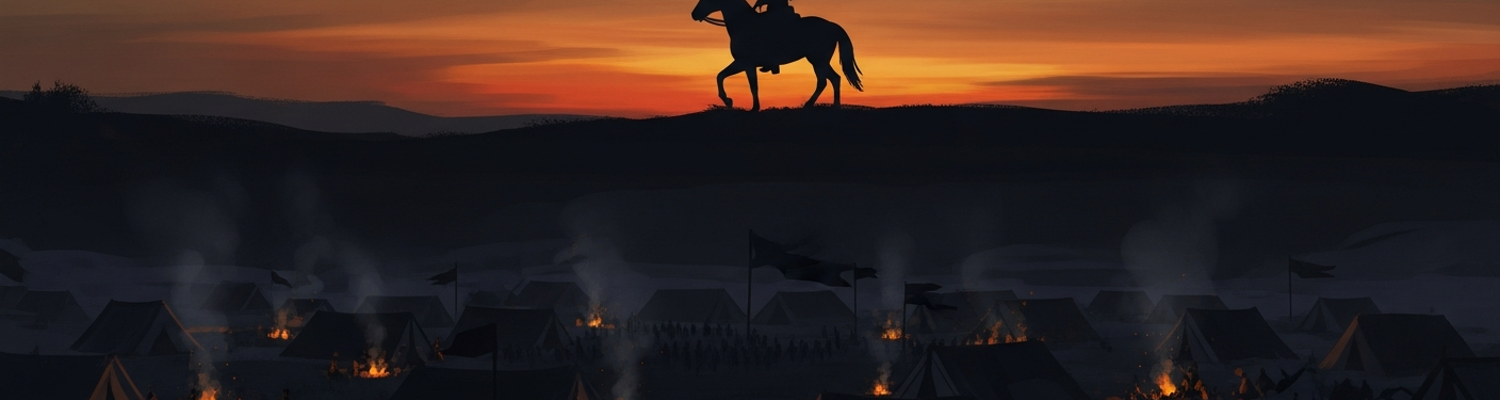

A nascent army teeters on the edge of dissolution. This was the reality for General George Washington’s Continental Army. Before 1778, the force was a fragile entity, plagued by internal decay that rivaled the threat of British muskets. Soldiers, disillusioned by broken promises of pay and inadequate supply from a weak Continental Congress, deserted at alarming rates. Entire regiments withered on the vine. Those who remained often preyed upon the very civilian populace they were sworn to protect, stealing food and supplies simply to survive. This breakdown of order was not a simple matter of misconduct. It was an existential threat to the entire revolutionary project. An army that cannot police itself, that cannot maintain internal cohesion, is an army already defeated. Washington understood this with stark clarity. His prior attempts to instill discipline through rotating regimental guards, drawn from the line units themselves, proved utterly insufficient. A temporary, ad-hoc solution could not solve a systemic problem of institutional rot. A new instrument was required, one forged for the specific and brutal task of imposing order. This instrument would be the Provost Guards, a force designed to fight the war within the war.
Washington's Mandate for Order
The brutal winter at Valley Forge from 1777 to 1778, for all its legendary hardship, forced a critical reorganization of the army. On January 29, 1778, Washington formally declared the need for a permanent provost corps as part of a sweeping army reform. This was not merely a suggestion but a demand born of desperation. The Continental Congress, having witnessed the army’s struggles firsthand, authorized the formation of the Marechaussee Corps on May 20, 1778. The French term was deliberate, reflecting the influence of European military structures and the direct advice of foreign officers like Baron von Steuben, who were instrumental in professionalizing the American forces. Steuben’s own experience in the highly disciplined Prussian army underscored the absolute necessity of a dedicated military police force, a concept still alien to the American republican ideal of the citizen-soldier.
To command this new unit, Washington appointed Captain Bartholomew von Heer on June 1, 1778. Von Heer, a Pennsylvanian of German extraction, was a veteran officer with prior service in the armies of Prussia and France. His background was not an accident. He had written to Washington in 1777, outlining the necessity and structure for just such a military police force, demonstrating a professional understanding of the problem. His experience made him the logical choice to build this corps from the ground up. The unit was to be a corps of light dragoons, mounted for mobility, and composed largely of German-speaking Pennsylvanians recruited from areas like Reading and Lancaster. This recruitment strategy was also intentional. Using German-speaking troops created a social and linguistic barrier between the provosts and the English-speaking rank and file, reducing the potential for fraternization and collusion. They were uniformed as cavalry, with distinctive blue coats, yellow facings, and leather helmets, equipped to move swiftly and decisively.
Their mandate was unambiguous. Washington’s own orders to von Heer in October 1778 specified their duties with chilling precision. They were to patrol the camp and its surroundings to apprehend deserters, marauders, drunkards, and rioters. They were to secure all soldiers who straggled on the march and prevent the plundering of civilian property, a crime that was destroying public support for the war. In battle, their post was behind the main lines, a physical barrier to prevent panicked flight and to secure fugitives. Their operational charter even included four executioners, a grim acknowledgment of their ultimate function. This was not a popular mission. It was the hard, unglamorous work of enforcing rules upon men already suffering immense privation. Washington hoped the corps would operate more by preventing crimes than by punishing them, but he was creating a force with the teeth to do both.
A Dual Operational Spectrum
The Marechaussee operated across a unique spectrum, blending internal law enforcement with battlefield utility. Their primary function was policing the army itself. Provost patrols were a constant, unwelcome presence, tasked with enforcing the Articles of War. This meant confronting fellow soldiers attempting to slip away from camp, investigating thefts of precious supplies, and breaking up illegal gambling or brawls that could easily escalate into riots. They guarded Washington's headquarters, a critical security mission, escorted high-value prisoners, and oversaw the grim spectacle of military punishments. When a soldier was sentenced by court-martial to a flogging, it was the Provost Guard who formed the cordon and ensured the sentence was carried out. Their mobility as light dragoons made them ruthlessly effective at their core mission: rounding up stragglers on the march. A marching army sheds soldiers, and von Heer’s men were the net that swept behind the columns, gathering those who fell behind through fatigue, mischief, or intent to desert.
This policing duty inherently placed them in a position of conflict with the army’s rank and file. They were the enforcers of a harsh military code that many soldiers, who had enlisted to fight for liberty, found oppressive. While line infantry faced the British, the Provost Guards often faced their own comrades, a thankless and dangerous task that bred deep resentment. Yet, they were not confined to the rear. Washington and his commanders quickly recognized the value of a disciplined, mounted unit that could be trusted. Beginning in 1779, the Marechaussee’s role expanded. They were called upon to perform reconnaissance, act as couriers for vital dispatches, and serve as an emergency cavalry force for the main army. Their operational flexibility saw them attached to commanders like Anthony Wayne and the Marquis de Lafayette, serving as their personal guards and quick-reaction force.
This combat utility was demonstrated at the Battle of Monmouth on June 28, 1778, shortly after the corps’ formation. Serving with the vanguard under the erratic Major General Charles Lee, the Provost Guards functioned as scouts and a flank guard in the blistering summer heat. When Lee’s advance fell into a confused retreat, Washington rode forward to rally the troops and salvage the situation. In this chaotic environment, mounted units like the Marechaussee were essential for relaying orders through the din of battle, screening the army's disorganized movements, and providing the command with a clearer picture of the fluid battlefield. Their presence at Monmouth, and later in screening actions like Lafayette's escape at Barren Hill, showed they were more than just military police. They were soldiers capable of contributing directly to the fight, occupying that critical space between a policing force and light combat cavalry.
The Unpopular Necessity
The Provost Guards were indispensable to the survival of the Continental Army. Their function, however, guaranteed their unpopularity. To the common soldier, often hungry, poorly clothed, and unpaid for months, the well-equipped and well-mounted Marechaussee could appear as an alien occupying force within their own army. They were the ones who stopped a man from selling his bayonet for food, who arrested a soldier for foraging from a local farm, and who stood guard while a comrade received lashes for insubordination. This created a deep and lasting resentment. Officers and men who felt they were sacrificing everything for the cause of liberty could see the provosts as a direct contradiction to that ideal, a tool of coercion in an army of volunteers. The fact that many were German-speakers only amplified this sense of alienation.
This very unpopularity was a metric of their effectiveness. The army’s relationship with the civilian population was a center of gravity for the revolution. Widespread looting and depredations by soldiers would have shattered the fragile support from the local populace, turning them against the army and the cause. The Provost Guards, by enforcing Washington’s strict prohibitions against plundering, acted as a crucial buffer. They ensured the army, as much as possible, remained a disciplined force rather than a roving band of armed men. Their actions directly impacted the army’s internal cohesion. Desertion was a constant drain on manpower, threatening to bleed regiments into nonexistence. The fear of capture by a Marechaussee patrol was a tangible deterrent. By actively hunting deserters and making an example of those they caught, the provosts helped keep men in the ranks. This was a brutal but necessary calculus in a war of attrition.
The army’s overall morale was a complex issue, but the stability provided by the Provost Guards cannot be discounted. By curbing the worst excesses of indiscipline, they helped maintain a baseline of order that allowed the army to function, even in the darkest of times during mutinies of the Pennsylvania and New Jersey Lines. The tension between their necessary function and the resentment they generated highlights a fundamental truth of military operations: order is not a natural state. It must be imposed, often by a dedicated and unpopular few. The existence of the Provost Guards is a stark lesson from the revolutionary-war-era. An army’s most dangerous enemy can often be itself. Internal decay, lax discipline, and a breakdown of order are insidious threats that can destroy a fighting force from within. The Marechaussee, though small and often disliked, provided the hard edge of discipline that Washington needed to forge the Continental Army into a professional force capable of winning independence. Their legacy is a potent warning that the mechanisms of internal enforcement are not a luxury for a military force. They are a precondition for its survival and ultimate success. The corps was one of the last units to be furloughed in November 1783, their presence required to maintain order until the very end, a final proof of their thankless, vital mission.