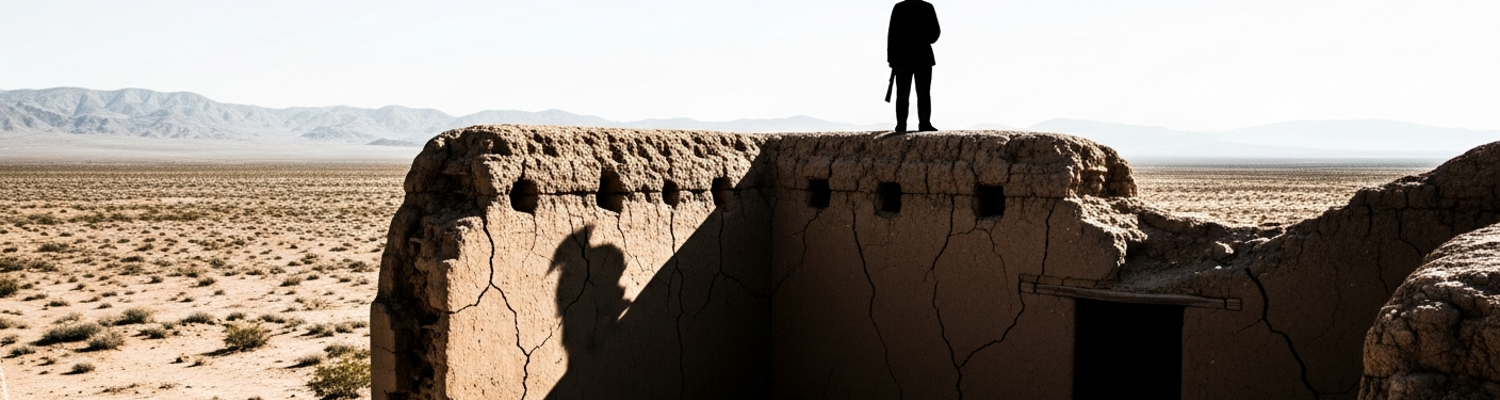

A New War in a New West
The surrender at Appomattox did not end the war for everyone. For the United States Colored Troops, victory brought not demobilization, but new orders. A political calculation was made within the War Department. The large, politically potent white volunteer regiments were to be sent home. The difficult, unglamorous, and dangerous task of occupying the vast, unstable western territories would fall to the black soldiers of the USCT. It was a mission born of racial prejudice and administrative convenience. Among the units selected for this duty were the 57th and 125th United States Colored Infantry.
The men of the 57th USCT were primarily recruited from Arkansas, former slaves who had taken up arms against their old masters. The 125th USCT drew its ranks from Kentucky, a state where slavery had persisted even within the Union. Both regiments had performed garrison and logistical duties, proving their mettle away from the major battlefields. In the summer of 1865, they were redirected. Their new destination was the Department of New Mexico, a territory thousands of miles away that was, for them, an alien world.
The journey itself was the first trial. It began with transport by riverboat and rail to the edge of the frontier at Fort Leavenworth, Kansas. There, they were outfitted for the great overland march. The route was the Santa Fe Trail, a 900-mile track across the plains that was a test of pure physical endurance. For men accustomed to the humid woodlands of the Mississippi Valley, the environment was a physical shock. The Great Plains gave way to the high desert, a landscape of punishing heat, scarce water, and relentless alkali dust that chafed the skin and lungs.
They marched on foot. Each soldier carried his Springfield rifle, ammunition, and a pack containing little more than hardtack, salt pork, and a bedroll. The standard-issue dark blue wool uniforms, designed for Virginia winters, became instruments of torment, absorbing the sun and hastening dehydration. Water discipline was absolute. A miscalculation or a dry well could cripple a company in hours. This was not a victory parade. It was a forced march into a new kind of war, one for which they were entirely unprepared.
Constabulary Duty at the Edge of Empire
Upon arrival, the regiments were broken apart. Companies were scattered across a network of isolated adobe forts, lonely outposts in a vast and hostile territory. The 57th USCT found itself stationed at places like Fort Union, the main supply depot, and the infamous Fort Sumner, site of the Bosque Redondo reservation. The 125th USCT was assigned to garrisons in the southern part of the territory, including Fort Selden and Fort Bliss. Their mission was not conquest, but containment.
At Fort Sumner, the soldiers of the 57th became jailers. Their duty was to guard the thousands of starving and displaced Navajo people confined to the Bosque Redondo, a catastrophic and failing federal experiment in forced relocation. The soldiers, themselves recently liberated from bondage, were now enforcing the subjugation of another people. They stood between the desperate Navajo and the local Hispanic populations who competed for the same scarce water and grazing lands. It was a morally corrosive and thankless task.
This was a land of many conflicts. The soldiers were the sole representatives of federal authority in a region defined by deep-seated animosities. They were thrust into the volatile space between Anglo settlers, established Pueblo communities, Hispanic landowners, and the mobile bands of Mescalero Apache. Patrols from Fort Selden were not seeking decisive battles. They were attempting to project force and secure lines of communication, particularly the dangerous route through San Augustine Pass, a known ambush point for Apache raiders.
These infantry units were at a severe disadvantage against their primary military adversary. The Mescalero Apache were light, horse-mounted warriors with an intimate knowledge of the terrain. They employed hit-and-run tactics, striking at supply wagons or isolated pickets before disappearing back into the mountains. For the foot soldiers of the USCT, this created a state of constant, grinding tension. The threat was everywhere, but the enemy was a ghost, rarely seen until the moment of violent contact. Success was not measured in victories, but in the prevention of incidents. It was an unending police action with no clear objective and no end in sight.
The Burden of Racial Hostility
The hardships of frontier service were compounded by a pervasive racial hostility that isolated the USCT soldiers from everyone around them. Their very deployment was a product of it. The social environment in New Mexico was a layered crucible of prejudice. Inside the military posts, they were segregated from the few white regular army troops and the New Mexico Volunteers. They were quartered separately and excluded from the social lives of their white counterparts.
This internal military segregation was mirrored by their relationships with the civilian population. The Hispanic majority in the Mesilla and Rio Grande valleys, with their own complex racial hierarchy, often viewed the armed, uniformed black soldiers with suspicion and fear. Anglo settlers, many of whom were ex-Confederates who had migrated west after the war, treated the USCT soldiers with open contempt and hostility. Encounters were fraught with the potential for violence.
Even their relationship with Native Americans was defined by their mission. They were antagonists to the Apache and guards to the Navajo. They were outsiders to every faction, a federal presence that no local group supported or identified with. This created a condition of profound psychological isolation.
Command decisions were frequently shaped by the racial biases of the all-white officer corps. While some officers were principled men, many held the common view of black soldiers as being better suited for manual labor than for combat. Archival evidence from post records (found in NARA Record Group 94 and 393) shows that USCT units were disproportionately assigned fatigue duties. On top of their grueling patrol schedules, the men were tasked with the back-breaking work of constructing and maintaining fort buildings, hauling supplies, and digging irrigation ditches under the desert sun. This reinforced their feeling of being treated not as combat veterans, but as a government labor force. The indignity of this daily prejudice, combined with the constant danger and physical hardship, created a deep crisis of morale. They had fought for their own freedom, only to be exiled to a hostile desert where they were denied the basic respect they had earned.
The War Within: Psychological Attrition
The tactical environment in New Mexico was engineered for psychological breakdown. The mission was an indefinite constabulary action with no metric for victory. This imposed a severe mental toll rooted in sustained, high-tempo operations that offered no resolution. The required hypervigilance against a phantom enemy disrupted sleep and corroded mental reserves. Every patrol was a physically draining march into a landscape where an attack could come from any direction, at any time.
Physical depletion accelerated the mental decline. The men were worn down by endless marching, poor and monotonous rations that led to scurvy and other nutritional deficiencies, and chronic thirst from often contaminated water sources. The combination of physical exhaustion, sleep deprivation, and the unending psychological tension of a low-intensity war created the perfect conditions for what later generations would call combat fatigue. This was a war of attrition fought not on a battlefield, but inside the minds of the soldiers.
Under this accumulation of chronic stress, the human element began to fracture. Post records from frontier forts of the era reveal a consistent pattern of deteriorating discipline and morale under such conditions. For the men of the 57th and 125th USCT, this was magnified by their complete social and racial isolation. With no supportive community to buffer the psychological impacts of their duty, the men turned inward or lashed out.
Symptoms of this breakdown included rising rates of insubordination, desertion, and violence within the ranks. Alcoholism became a common escape from the monotony and anxiety of frontier life. The command climate, often tainted by racial prejudice, could easily misinterpret the symptoms of severe mental exhaustion as simple insolence. This led to harsh punishments, such as flogging or hard labor, which only accelerated the psychological decline. A destructive cycle was created: as unit cohesion and morale broke down, operational effectiveness suffered, leading to greater risk and higher casualties, which in turn deepened the despair of the survivors. The regiments were not being defeated by the Apache. They were being ground down by the mission itself.
Mustered Out, Miles From Home
In late 1866 and into 1867, the orders finally came to muster out. For the soldiers of the 57th and 125th USCT, this was not a simple journey home. They were discharged in New Mexico, thousands of miles from their homes in Arkansas and Kentucky. They were often paid late and provided with no organized transportation for the return journey. As individuals or in small groups, they had to make their way back east on foot, traversing the same dangerous territory they had recently patrolled, but now without the structure or protection of the army.
For those who made it home, the fight for recognition began. The process of applying for a veteran's pension was a bureaucratic ordeal, but it was uniquely challenging for these men. The Pension Bureau was an institution rife with the same racial biases as the rest of the country. To receive a pension for injuries or disability, a veteran had to provide extensive documentation of his service and medical condition. This was a difficult task for largely illiterate, formerly enslaved men.
Claims were routinely rejected. The bureau demanded documents that did not exist or dismissed claims based on the testimony of prejudiced medical examiners. The invisible wounds of their service, the chronic physical ailments from malnutrition and contaminated water, and the deep psychological scars of constant anxiety, were dismissed. Many men abandoned their claims in frustration or were taken advantage of by predatory pension agents. They were left to live with the consequences of their service without the support they had earned.
This forgotten chapter of USCT service was a critical bridge. The hard lessons learned from deploying these volunteer black infantry units in the west directly informed the Army Reorganization Act of 1866. That act authorized the formation of the permanent, segregated regular army regiments: the 9th and 10th Cavalry and the 24th and 25th Infantry. These units, who would become known as the Buffalo Soldiers, would carry the legacy of African American frontier service for the next three decades, building upon the bitter foundation laid by the forgotten men of the 57th and 125th USCT.