
Hemorrhagic Shock in the Roer Mud Trenches
Between November 16 and December 15, 1944, the United States First and Ninth Armies recorded 57,000 casualties along a twenty-five-mile front approaching the Roer River. Infantry battalions lost a man every forty-five seconds. Archival evidence shows combat surgeons in forward sectors near Düren and Jülich documented high mortality rates among soldiers in deep hemorrhagic shock. Trauma cases involving rapid arterial blood loss terminated in circulatory collapse before frontline personnel could initiate field triage intervention. Resuscitation efforts in these forward zones failed. Blood volume expansion without red blood cells could not reverse cellular oxygen deprivation.
Severely wounded men bled out within minutes.
German artillery bombardment collapsed aid stations placed inside captured Westwall fortifications. Medical detachments from the 84th and 102nd Infantry Divisions dragged casualties into waterlogged German Regelbau concrete bunkers. They hastily excavated earthen dugouts along the Siegfried Line. Heavy 150-millimeter and 210-millimeter high-explosive rounds struck the exterior revetments day and night. The blasts caved in earthen trench walls and filled treatment bays with liquid mud. Drainage sumps backed up under relentless rain and rising subsoil water levels. Contaminated runoff submerged litter stands beneath several inches of water. Lacking interior space and clean horizontal surfaces, medical officers designated collapsed bunkers as temporary mortuaries. Orderlies stacked dead soldiers against concrete blast baffles to clear floor space for patients clinging to fading pulses.
Continuous incoming salvos buried communication trenches under five feet of displaced wet clay.
Transport paralysis cut these forward positions off from rear supply echelons. A close review of operational logs indicates that corduroy roads disintegrated under the combined weight of M4 Sherman tanks and constant rainfall. Army engineers constructed these routes by laying felled pine logs over churned Rhenish subsoil. When German engineers opened the discharge valves of the upstream Urft and Schwammenauel dams, the resulting floodwaters washed away entire log-road networks between Baesweiler and the river bank. Standard two-and-a-half-ton cargo trucks loaded with whole blood supplies sank to their axles in gray slurry four miles behind the fighting. Tracked M29 Weasels frequently threw their rubber tracks in the heavy morass. This mechanical failure left insulated wooden boxes of blood bottles stranded at divisional clearing stations. Litter squads wading through knee-deep water inside collapsed trenches took up to six hours to move a single casualty across eight hundred yards.
When examining the historical record of frontline surgical logs, the total absence of fresh whole blood at the battalion level proved lethal. Medics carried standard dried plasma kits. Plasma contained no hemoglobin to oxygenate starved organs. Infusing saline-diluted albumin into soldiers with transected femoral arteries expanded vascular volume while diluting what few red blood cells remained in circulation. Combat surgeons recorded high mortality rates among hemorrhagic shock patients. These men expired on bare duckboards before secondary triage or arterial clamping could take place. Logbooks from the 48th Armored Medical Battalion near Jülich recorded twenty-eight consecutive shock fatalities during one eighteen-hour operational cycle. The shift ended with zero whole blood transfusions administered.
Depletion of European Theater Blood Plasma Reserves
Archival evidence shows that between October 14 and December 30, 1944, Adjutant General casualty ledgers documented over 47,000 battle casualties across the European Theater. Unprecedented rates of trench foot compounded the crisis. Inside the sodden woods of the Hürtgen Forest and along the flooded approaches to the Roer, First Army field hospitals ran out of surgical capacity. Artillery bursts detonating in the pine canopy sent wood splinters and steel fragments slicing through canvas tents. The shrapnel severed arteries and shattered limb bones. Daily casualty returns from the 28th and 4th Infantry Divisions logged hundreds of men entering clearing stations with body temperatures hovering near ninety degrees Fahrenheit. Submersion in stagnant trench water for days without dry socks produced thousands of peripheral vascular injuries. This exposure caused soft-tissue necrosis requiring surgical debridement alongside major laparotomies. Evacuation routes dissolved into axle-deep mud. Field medical units exhausted their pre-stocked resuscitation reserves days ahead of projected supply schedules. Depots in Paris and Antwerp could not keep pace with the depletion rate.
Whole battalions lost men faster than replacement blood arrived from the channel ports.
When examining the historical record of frontline surgery, standard dried blood plasma proved clinically insufficient. It could not reverse severe hemorrhagic shock without red blood cell oxygen-carrying capacity. The military medical service had deployed millions of vacuum-sealed lyophilized plasma kits across western Europe. Planners believed colloidal volume expansion alone would sustain life until soldiers reached rear-echelon surgical hospitals. Reconstituted with distilled water in glass bottles, the amber fluid restored intravascular hydrostatic pressure. This prevented peripheral veins from collapsing. It brought no red blood cells. Combat trauma surgeons operating in canvas aid tents near Gressnich and Schevenhütte noted a disturbing physiological trend. Patients receiving four to six units of plasma retained measurable radial pulses. Their arterial blood grew watery and pale pink. Hemoglobin counts plummeted to fatal thresholds below four grams per deciliter. Diluting the vascular system without supplying erythrocytes caused widespread tissue hypoxia. This drove terminal lactic acidosis in patients whose organs failed from lack of cellular oxygen.
Volume expansion without hemoglobin could not preserve cellular life.
Recognizing this physiological failure, the War Department mandated an emergency transatlantic whole-blood resupply protocol. The operation drew directly on continental United States donor pools. Earlier supply networks had depended entirely on blood drawn from rear-echelon military personnel stationed in the United Kingdom. That donor pool was exhausted by late autumn as thousands of support troops received combat reassignments. Under directives issued by the Office of the Surgeon General, the American Red Cross established dedicated civilian collection centers across Boston, New York, and Washington. They drew only group O whole blood from universal donors. Technicians mixed each 500-cubic-centimeter draw with acid citrate dextrose preservative solution. Workers packed the glass vacuum bottles into pre-chilled insulated plywood transport chests. Air Transport Command assigned four-engine Douglas C-54 Skymasters to fly continuous round-the-clock sorties over the North Atlantic. Aircraft routed from Presque Isle through Newfoundland and the Azores to Prestwick. Ground crews at transshipment points re-iced each crate every eighteen hours. This manual labor held interior temperatures between four and ten degrees Celsius.
On December 12, Air Transport Command planes delivered 1,200 bottles of group O whole blood to Orly airfield. Supply trucks immediately rushed the crates to the 2nd Evacuation Hospital outside Brand.
American Red Cross Vacuum-Insulated Flask Logistics
Archival evidence shows the American Red Cross established an industrial-scale procurement pipeline across metropolitan centers in Boston, New York, Philadelphia, and Baltimore. Medical officers rejected mixed donor panels. They accepted only universal group O donors to eliminate the need for cross-matching under combat conditions. Donors passed through screening desks where phlebotomists verified anti-A and anti-B isoagglutinin titers below a ratio of 1 to 64. This screening blocked blood containing high agglutinin concentrations that could trigger hemolytic transfusion reactions in non-group-O recipients. Inside collection rooms, civilian donors lay on rows of folding cots. Technicians inserted twelve-gauge needles into antecubital veins. Gravity fed five hundred cubic centimeters of venous blood through sterile rubber tubing directly into sealed glass bottles. Pre-filled into each bottle were one hundred twenty cubic centimeters of acid citrate dextrose solution. This formula contained trisodium citrate, citric acid, and dextrose dissolved in pyrogen-free distilled water. The specific reagent arrested the clotting cascade by binding ionized calcium. It simultaneously nourished donor erythrocytes with glucose. This chemical intervention extended red cell viability from seven days to twenty-one days.
Unpreserved blood degraded into toxic cell fragments within a week.
When examining the historical record of military packaging engineering, preserving red blood cells across four thousand miles required a dedicated thermal container. Technicians transported the filled glass flasks directly to packaging lines. They seated them inside specialized vacuum-insulated container boxes designed by Army Medical Department engineers (Specification No. 39-1). The square transit chest featured a double-walled plywood outer casing. Compressed rock wool and fiberglas insulated the void spaces. An inner galvanized-iron liner protected the core. At the center of the crate, crews installed a cylindrical metal wire basket filled with eleven pounds of crushed wet ice. Workers slotted sixteen glass bottles vertically into peripheral wire racks encircling this frozen central core. Rubber gaskets around bottle necks absorbed mechanical vibration during flight. Wet ice provided an exact physical safeguard. Its latent heat of fusion held the internal storage chamber between four and six degrees Celsius for up to forty-eight hours under extreme ambient temperatures. Dry ice could not be used. Sub-zero contact caused cell membrane rupture and immediate hemolysis.
Ruptured red cells released lethal potassium and free hemoglobin directly into the recipient bloodstream.
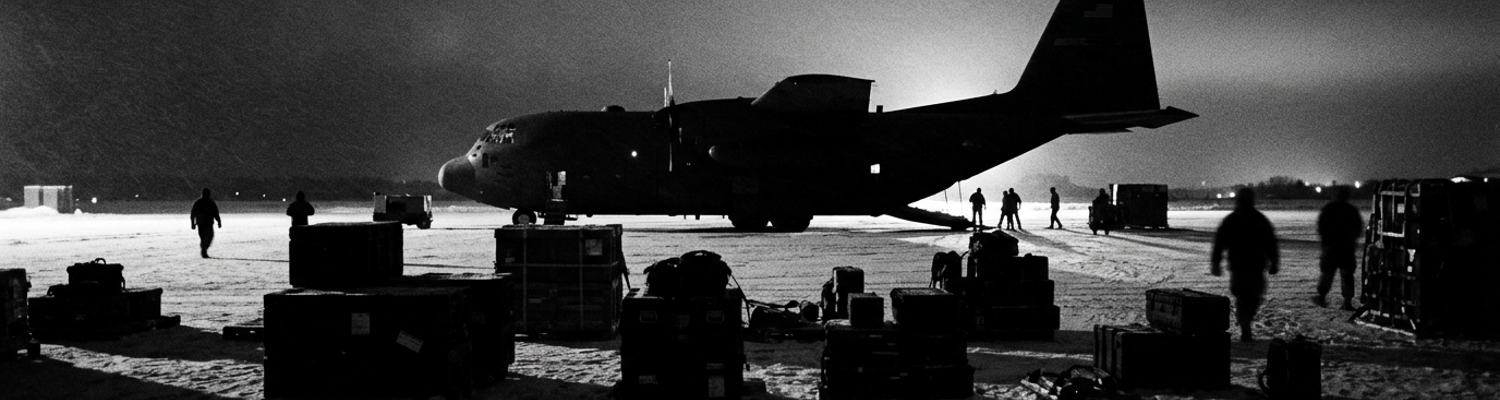
A close review of operational logs indicates the final domestic leg relied on continuous round-the-clock road runs. Fleets of insulated refrigerated trucks moved batches from East Coast civilian centers to waiting air transports without intermediate warehouse staging. Loadmasters received the initial resupply shipments directly on the tarmac at Washington National Airport. Drivers backed two-and-a-half-ton trucks up to the cargo doors of Douglas C-54 Skymasters operated by the Air Transport Command. Further north, relay trucks hauled crates along Maine Route 1. They delivered shipments onto the snow-covered runway apron at Presque Isle Army Airfield. Flight crews worked in sub-zero winter temperatures. They lashed the thirty-pound insulated boxes to cargo tie-down rings on bare cabin floors using manila rope and canvas cargo nets. Cargo handlers inspected drain plugs beneath the galvanized liners. Melted ice had to escape through belly drainage ports without soaking aircraft floorboards or freezing control cables. Ground personnel signed flight manifests thirty minutes before departure. The aircraft went airborne over the North Atlantic route toward Stephenville.
Flight manifests listed four hundred crates of whole blood aboard each departure from Presque Isle.
Air Transport Command C-54 Skymaster Winter Airlifts
Archival evidence shows the European transport corridor failed during winter operations until the North Atlantic Division of Air Transport Command committed forty-two modified Douglas C-54 Skymasters to continuous round-the-clock runs. Operations spanned a 3,800-mile transoceanic chain. The route connected staging points at Presque Isle and Stephenville directly to Lajes Field on Terceira Island in the Azores. Command engineers adapted the C-54A and C-54B airframes. Mechanics stripped troop bucket seats and reinforced fuselage deck stringers. They installed four auxiliary cabin fuel tanks carrying 1,800 gallons of high-octane avgas. Pratt and Whitney R-2000-7 radial engines burned through fifty gallons of oil per flight. Lubricant frequently leaked across nacelle cowlings as crews maintained continuous twelve-hour throttle settings. Ground crews at Lajes serviced the inbound transports on a thirty-minute turnaround schedule. Fuelers pumped avgas from coastal storage tanks. Mobile maintenance crews replaced fouled spark plugs and drained bilge water from cabin sumps. Transports took off overloaded by two tons. Pilots cleared the volcanic cliffs at the island edge before banking toward the European mainland.
Forty-eight spark plugs kept each transport airborne over the Atlantic.
A close review of operational logs indicates that December 1944 brought the most severe North Atlantic gales recorded in thirty years. Sustained sixty-knot crosswinds slammed directly against incoming flight vectors. Flying at altitudes between eight and twelve thousand feet, flight crews contended with severe clear-air turbulence. Ambient temperatures plunged past thirty-five degrees below zero Fahrenheit. Ice accumulation repeatedly jammed wing de-icing boots. Frozen moisture choked carburetor air scoops. Pilots had to drop altitude into driving sleet to melt wing leading-edge buildup. The physical preservation of the whole blood cargo depended on holding the interior storage chests between four and ten degrees Celsius. Uninsulated cargo bays turned into sub-zero freezers within forty minutes of takeoff. This threatened to freeze the glass flasks and rupture red blood cell membranes through crystallization. Crew chiefs redirected engine exhaust shroud heat into the cargo deck through flexible canvas ducting. Flight engineers opened crate inspection plugs every twenty minutes to insert dial thermometers into the ice packs. When cabin temperatures spiked, handlers shoveled fresh crushed ice across the crate tops. They balanced thermal gradients by hand against the drafty hull skin.
Frozen blood destroyed human kidneys.
When examining the historical record of continental approach routes, German anti-aircraft and fighter positions forced Air Transport Command to abandon direct flight paths over the Bay of Biscay. German garrisons besieged in the Atlantic pockets at Saint-Nazaire and Lorient maintained heavy concentrations of 88-millimeter and 105-millimeter anti-aircraft guns. These batteries were slaved to Würzburg-D radar sets. Long-range Ju 88 and Me 410 night fighters operated from remaining Luftwaffe staging bases in western Germany. They ambushed unarmed cargo transports attempting to use established coastal radio transmitters. Allied flight planners routed the C-54s on wide southern doglegs around the Iberian coast. Navigators threaded aircraft through a narrow air corridor between neutral Spanish airspace and the German flak envelopes along the Gironde estuary. Flight navigators relied strictly on dead reckoning and drift-meter readings over open water. They avoided drifting into the kill zones of German shore batteries. Once across the French coast near Bordeaux, the transports followed the liberated rail corridor north toward Orly Airfield outside Paris. Crews maintained strict blackout conditions with cockpit instruments dimmed beneath red canvas shrouds.
The transport landing at Orly on December 14 carried four blown tire casings and eighty-six cracked vacuum flasks.
Continental Airhead Transfers and Rail Corridor Failures
Archival evidence shows that when Douglas C-54 Skymasters touched down on the patched concrete at Orly Field outside Paris, ground crews met them with ice-crushing gear mounted on two-and-a-half-ton trucks. Transshipment protocols required cargo handlers to strip the lashing ropes within twelve minutes of wheel stop. Cargo manifests routed priority crates directly toward forward advanced landing grounds. These included strip A-78 at Florennes and A-92 at Saint-Trond in eastern Belgium. Ninth Air Force C-47s deposited loads onto frozen pierced steel planking. Personnel from the 1st Cold Storage Company broke open the outer plywood casings to access the internal galvanized cylinders. Handheld dial thermometers registered internal crate temperatures creeping toward nine degrees Celsius. Drafts during low-altitude European transit legs pushed the heat upward. Enlisted quartermasters shoveled blocks of commercial ice through hand-cranked crushers. They repacked eleven pounds of fresh ice into the inner wire baskets around the glass bottles before red cell glycolysis exhausted the dextrose preservative.
Meltwater poured out of the container belly drains onto freezing mud ramps.
When examining the historical record of Communications Zone rail movements, earlier aerial interdiction and German demolition charges had severed the main rail arteries along the Meuse River valley. Wrecked marshalling yards at Namur and Liège lay buried under twisted steel rails and charred locomotive boilers. This physical destruction prevented the French and Belgian rail systems from routing specialized insulated boxcars forward. Military Railway Service dispatchers assigned all functioning steam engines to ammunition trains. These trains hauled 105-millimeter and 155-millimeter artillery shells for First Army bombardment batteries. Medical supply officers attempted to transfer the whole blood shipments into convoys of insulated two-and-a-half-ton reefer trucks. Extreme motor fuel shortages paralyzed the loading yards. Communications Zone petroleum officers hoarded eighty-octane motor gasoline for frontline armored units preparing to breach the Roer. Quartermaster trucking detachments fell to the bottom of the fuel priority ladder. Convoys assigned to haul blood north toward supply points near Verviers sat stranded at Parisian depot gates for up to twenty hours. Drivers waited for fuel allotments to fill their empty tanks.
Refrigerated truck compressors sputtered out along highway shoulders when fuel tanks emptied completely.
A close review of operational logs indicates that the final thirty miles between rear depots and forward division clearing stations along the Roer collapsed into impassable mud tracks. Relentless winter rainfall combined with the heavy steel tracks of M4 Sherman tanks and M12 gun motor carriages pulverized Route Nationale 3. Connecting dirt lanes near Stolberg and Eschweiler turned into liquid gray slurry. Standard GMC six-by-six cargo haulers carrying the insulated chests sank to their differentials. Drive shafts snapped. Clutch plates burned out as drivers attempted to force vehicles through flooded bomb craters. Forward clearing stations attached to the 104th and 84th Infantry Divisions faced severe supply gaps lasting forty-eight hours. Casualty counts escalated along the line of departure. Field surgeons attempting to treat soldiers bleeding out from severed femoral arteries found their thermal transit chests completely empty. Whole blood consignments either lay shattered inside overturned trucks along the road ditches or spoiled. Internal chest temperatures climbed past fifteen degrees Celsius during prolonged convoy gridlock.
Corps medical officers dumped dozens of hemolyzed blood bottles into drainage ditches behind the aid tents.
Logistical Autopsy of Forward Military Transfusion Systems
When examining the historical record of the European Theater medical services, post-battle analyses conducted by the Office of the Surgeon General revealed a specific failure point. Rapid transoceanic air delivery was completely neutralized by the breakdown of final-mile tactical transport systems. Flight crews from Air Transport Command crossed four thousand miles of ocean in thirty-six hours. Delivery times across the final six miles between division clearing stations and forward aid stations stretched past eighteen hours. Soft-skinned Dodge WC-54 ambulances and standard quartermaster two-and-a-half-ton trucks bogged down to their axles along unpaved cart tracks between Gressnich and the approaches to Düren. Violent mechanical jarring over rutted corduroy logs shattered internal glass flasks inside transport chests. In dozens of instances, the wet ice cores inside plywood shipping boxes melted during protracted transit delays. This pushed internal cargo temperatures beyond twelve degrees Celsius. Irreversible hemolysis followed. Litter squads from the 1st and 9th Infantry Divisions had to haul thirty-pound blood chests on foot across saturated clay fields raked by German 81-millimeter mortar fire. Transoceanic speed counted for nothing when forward litter bearers required eight hours to advance eight hundred yards.
Thousands of cubic centimeters of universal donor blood degraded into useless sludge before reaching the aid stations.
A close review of operational logs indicates the War Department concluded that frontline whole-blood availability required decentralized theater blood depots rather than sole reliance on long-range airlift. Transport planners recognized that weather-grounded flights at Stephenville instantly starved forward clearing stations of red blood cells. Directives issued in early 1945 by Communications Zone commander Lieutenant General John C. H. Lee mandated the immediate construction of regional blood collection and storage facilities across western Europe. Theater quartermasters established fixed blood processing depots at Namur, Liège, and Nancy. Engineers utilized modified commercial dairy cold-storage plants fitted with diesel-driven ammonia compressors. Rather than draining civilian donor pools in Boston and New York, medical detachments drew hundreds of pints daily from non-combat communications personnel. Ordnance depots and base section troops stationed behind the lines provided the volume. These theater depots stored up to five thousand units of group O blood at an uninterrupted four degrees Celsius. Dispatchers organized localized refrigerated truck relays that could reach active corps collecting stations within three hours of an emergency requisition.
Rear-echelon troops became the living reservoirs for forward shock wards.
Archival evidence shows the failure along the Roer drove permanent doctrine changes regarding cold-chain logistics and specialized armored battlefield medical evacuation. Field evaluations compiled by the First Army Medical Section in January 1945 revealed that unarmored wheeled ambulances could not survive frontline artillery fire. They could not traverse churned European subsoil. The Army Ground Forces responded by field-modifying M5A1 half-tracks and tracked M29C Water Weasels into specialized armored medical evacuation vehicles. Mechanics welded internal litter brackets and armor plating directly over patient compartments to protect shock cases during transit. Simultaneously, the Medical Department abandoned the fragile ice-dependent plywood transit chest in favor of front-line mechanical cold-chain equipment. Engineers developed portable mechanical refrigerators operating on six-volt vehicle batteries. They introduced rigid aluminum transfer cases insulated with cellular rubber that maintained thermal limits for seventy-two hours without wet ice re-packing. Revised field manuals made two-hour temperature logging mandatory across every transfer echelon from depot to trench.
The 120th Medical Battalion recorded its first operational delivery using armored tracked carriers on February 23, 1945. Personnel offloaded forty undamaged glass flasks directly into a bunker basement outside Jülich.