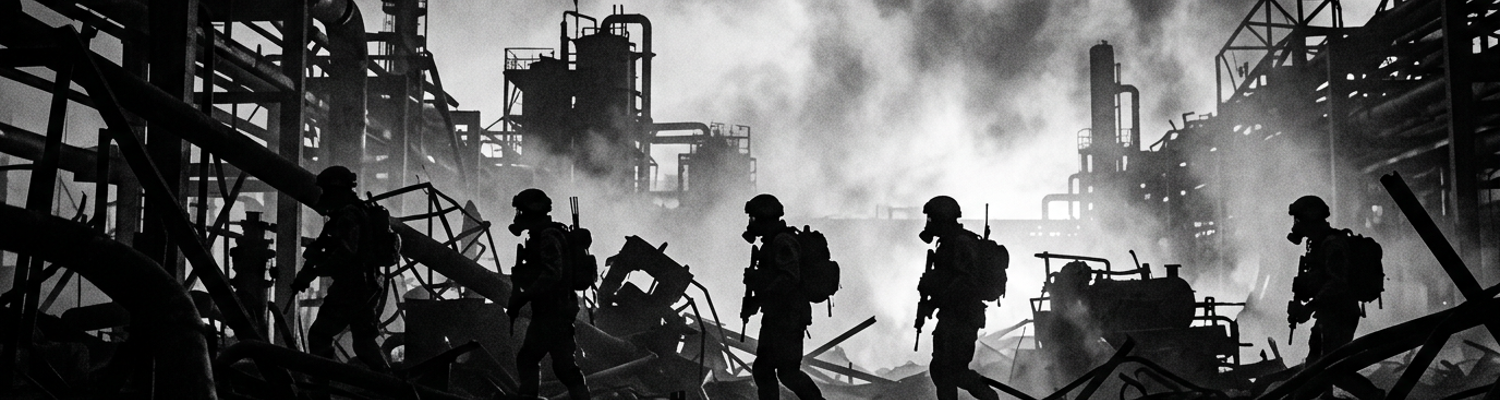

Immediate Seizure of the Ludwigshafen-Oppau Complex
March 24, 1945. Radio contact between Seventh Army forward tactical command and the advancing spearhead detachment failed at 0614 hours. Incoming shrapnel severed the primary field telephone wire outside Mundenheim. Combat elements of the 282nd Engineer Combat Battalion pushed directly through the breached perimeter of the I.G. Farben Ludwigshafen-Oppau chemical complex along the west bank of the Rhine. Attached civilian specialists from the United States Strategic Bombing Survey followed immediately behind the lead infantry squads. Operation Undertake had shattered the final German defensive lines west of the river forty-eight hours earlier. The one-thousand-acre synthetic industrial zone sat blanketed in drifting coal dust and raw ammonia vapor.
The facility generated no mechanical noise.
Demolition specialists advanced yard by yard across wrecked rail switches. They defused explosive charges rigged to valve headers. Ordnance disposal teams cleared paths through tangled pipe racks. Unexploded five-hundred-pound general-purpose bombs lay embedded in bent steel deck plating. Archival evidence shows that civilian survey engineers operated shoulder-to-shoulder with mine-clearing squads. These technicians carried blueprint folios and pressure gauges across an industrial facility where twelve thousand tons of allied aerial ordnance had severed coal feed conveyors. Blast waves had crushed gasometers and cracked primary water intakes.
Technical audit teams rushed into the Oppau sector to examine the intact Haber-Bosch synthesis towers. Climbing iron staging ladders, investigators scraped soot from external chrome-vanadium structural shells to determine if shockwaves had compromised the high-pressure seams. Operating pressures inside these synthesis columns routinely exceeded two hundred atmospheres at temperatures above five hundred degrees Celsius. Any hairline fracture caused by blast concussion would have triggered instantaneous failure during production runs. US specialists recorded physical measurements of the reciprocating circulating compressors. They checked valve seat degradation and inventoried the status of the internal promoted-iron reaction beds.
USSBS Munitions and Oil Division Field Operations
A close review of operational logs indicates that civilian petroleum chemists and metallurgical analysts from the USSBS Munitions and Oil Division commenced point-of-impact structural surveys at Ludwigshafen on the morning of March 25, 1945. Technical staff from Seventh Army Ordnance bomb disposal squads escorted these teams. Clad in unmarked wool service overcoats, these civilian specialists climbed across ruptured structural trusses. They calculated the direct blast radius of delayed-action general-purpose bombs that had penetrated deep into subterranean service vaults. Ordnance officers utilized precision calipers and steel survey tapes to record crater diameters inside the synthetic gas generator halls.
Inspectors checked whether concussion waves had cracked the heavy foundation plinths supporting thirty-foot water-gas generation towers.
Chemical analysts scraped carbonized grease from high-pressure piping flanges. They documented how fragments from 1000-pound AN-M65 aerial bombs punctured half-inch alloy steel tubes without detonating volatile hydrogen gas trapped in dead legs of the piping system. Mechanical stress patterns confirmed that direct bomb hits on external high-pressure steam distribution headers caused automatic shutoff valves to trip. This starved the primary reaction loops. The resulting pressure drop halted production far more effectively than blast waves directed against reinforced concrete revetments.
Detonation shockwaves had sheared every auxiliary steam valve along the southern pipe rack.
Field specialists focused their initial recovery sweep on securing chemical output registers. They specifically targeted synthetic nitrogen production figures and technical recipes for aviation fuel additives. Working inside the waterlogged basement vaults beneath the Bau 40 technical administration block, teams retrieved water-damaged binders. These documents (cataloged under NARA Record Group 338) listed daily output metrics from the Oppau synthetic ammonia synthesis loops and high-pressure coal-tar hydrogenation units. Intelligence officers sorted hundreds of classified chemical formulations. They isolated process run sheets for iso-octane production and alkylate blending stocks used to enrich aviation gasoline for frontline Luftwaffe fighters. Detailed synthesis protocols for tetraethyl lead and synthetic aromatic blending agents were pulled from heavy iron filing cabinets. Personnel cataloged these files on field carbon paper and stowed