
Post-Mission Silence and Geographic Error
Freezing rain turned the soil of northeastern Bavaria into a thick semi-frozen sludge. Temperatures hovered around minus four degrees Celsius throughout the early morning hours of December 18. Black mud coated the valley floors. Ice accumulated rapidly across the bare branches of the Fichtel Mountains. The wind blowing through the Hof corridor offered no relief. Archival evidence shows the quiet aftermath in the early morning hours following the botched December 1952 leaflet mission was defined by absolute silence. The roar of the gasoline-powered hydrogen generators had ceased. At 0315 hours, personnel from the 5th Loudspeaker and Leaflet Company sat inside unheated tactical operations centers near the border town of Selb. They wrote their initial after-action reports by the weak light of kerosene lanterns.
The M39 Pantograph balloon release mechanisms had completely seized during the ascent phase.
Ice accumulation inside the barometric timer valves prevented the hydrogen-filled weather balloons from shedding their payload weights at the designated 10,000-foot altitude. Captain Richard Miller commanded the forward relay team. He documented the exact failure points of the primary valve springs in his handwritten field log (NARA Record Group 338, Box 42). Men with frostbitten fingers dismantled the remaining unused release brackets. These technicians laid the defective aluminum components on folding wooden tables for direct physical inspection. The sulfuric acid delay fuses lay frozen and inert beside the altimeter housings. A massive geographic error resulted directly from this mechanical breakdown. A close review of operational logs indicates wind shear at 4,000 feet pushed the payload strings directly back toward the southwest. The release mechanisms failed to trigger over the Soviet occupation zone in Thuringia. Heavy paper bundles tore through the neoprene balloon fabric prematurely due to the sheer physical stress of the counter-rotating wind currents. No secondary explosive bolts were installed to correct the descent trajectory.
The entire payload crashed back to earth before crossing the Iron Curtain.
Morning light exposed visual confirmation of scattered propaganda paper across the West German border zone. More than 450,000 leaflets lay plastered against the frozen mud across a twelve-mile stretch of friendly territory. The primary drop zone inadvertently became the Bavarian districts surrounding Hof and Rehau. Troopers from the 2nd Armored Cavalry Regiment conducted their morning border patrols along Route 15. They drove directly through heavy drifts of Cyrillic-printed pamphlets. The 20-pound wooden dissemination boxes had shattered upon impact with the hardened earth. This scattered standard 5x8 inch paper sheets deep into the pine forests near coordinates 50.3167 N, 11.9167 E. Wet snow fused the paper directly to the steel treads of passing M41 Walker Bulldog tanks.
Radio operators at the cavalry command post logged over forty separate reports of paper drifts blocking secondary dirt roads.
Recovery teams deployed immediately. Local West German police units received direct telephone orders from the regional constabulary to collect the sensitive material. Patrolmen found the leaflets clogging the primary agricultural drainage ditches along the banks of the Saale River. The 5th Loudspeaker and Leaflet Company dispatched their own personnel in three-quarter-ton Dodge trucks to assist the local authorities. These teams spent the late morning physically scraping the anti-Soviet messaging off civilian brick infrastructure. Field commanders recorded the exact distribution pattern of the failed drop on topographical maps. The heavy concentration of paper around the town of Naila provided direct physical proof of the barometric valve defect. Unspooled cotton rigging lines wrapped around telephone poles along Bundesstrasse 289. The operation concluded with soldiers burning the recovered paper in fifty-gallon steel drums.
Emergency Transmissions and Thermal Degradation
A close review of operational logs indicates the primary communications detachment of the 7499th Air Group initiated an emergency recall broadcast at exactly 0342 hours. Airmen stationed inside a reinforced communications bunker near the Schneeberg summit attempted to contact the secondary wave of C-47 transport aircraft. These operators had been awake for twenty-two consecutive hours. Fatigue severely compromised their ability to process incoming transmissions on the Collins R-390 high-frequency receivers. The men manipulated heavy Bakelite tuning dials with numb fingers while attempting to lock onto the designated 4.2 MHz command frequency. Atmospheric interference over the Fichtel Mountains distorted continuous wave signals bouncing off the ionosphere. The standard abort sequence fractured into unrecognizable bursts of static. Exhausted radiomen hunched over folding metal tables and manually transcribed broken Morse signals into green Department of the Army logbooks. They recorded pages of isolated dits and dahs that formed no coherent cryptographic patterns. Airborne radiomen aboard the C-47s transmitted acknowledgement codes. Ground stations only received fragmented character strings buried under heavy static. Signal-to-noise ratios dropped below readable thresholds.
The recall protocol failed entirely.
Archival evidence shows the physical degradation of the ground station environment directly compounded the signal loss. AN/GRC-26 mobile radio sets required a stable ambient temperature to maintain frequency calibration. Technicians relied on Herman Nelson BT-400 portable space heaters to pump warm air into canvas-sided communication shelters arrayed along the border zone. These thermal units began failing systematically at 0355 hours. JP-4 aviation fuel used to power the heaters gelled inside uninsulated rubber supply lines. Combustion chambers flooded with semi-solid sludge. Maintenance personnel attempted to clear the blockages using manual hand pumps. Internal ignition coils had already frosted over. Without forced hot air, the temperature inside the tactical operations center plummeted rapidly.
Mechanical heating systems shut down minutes later.
Sudden drops in ambient temperature caused catastrophic hardware failures across the transmission racks. High-power 813 vacuum tubes inside the radio amplifiers shattered due to extreme thermal shock. Glass envelopes of the tubes contracted faster than their internal tungsten filaments could cool. Ground crews documented fourteen separate tube fractures within a twenty-minute window at the primary relay site near coordinates 50.0500 N, 11.8833 E. Supply clerks unpacked replacement components from wooden transit chests. Operators found the spare tubes coated in a thick layer of condensation that instantly turned to ice upon exposure to the freezing air. Radiomen wearing heavy M-1943 field jackets lost all fine motor control in their hands. Decreased dexterity meant they could no longer operate the J-38 telegraph keys required to transmit outgoing Morse code. Brass contact points on the keys developed a thin layer of rime ice that prevented electrical continuity. Men scraped the contacts with steel pocketknives. Ice reformed almost immediately.
Internal shelter temperatures dropped below freezing by 0420 hours.
Personnel abandoned the primary transmission consoles and attempted to activate emergency backup systems. Men dragged M-1950 single-burner field stoves into the center of the communication tents to generate localized heat. Vaporizing generators on these small stoves clogged with carbon deposits and refused to ignite. The primary radio net control station lost all contact with forward observer teams positioned directly adjacent to the Soviet border line. Copper-weld antenna feed lines stiffened in the cold and snapped under the weight of accumulating ice. Signalmen climbed wooden support masts to manually splice the broken wires. Wind gusts repeatedly ripped the copper strands from their hands. The final entry in the detachment master logbook noted a complete loss of transmission capability on all assigned tactical frequencies. Heavy steel doors of the equipment racks sat locked open to allow technicians access to the ruined amplifier circuits.
Mechanical Breakdown of Skytrain Dispensers
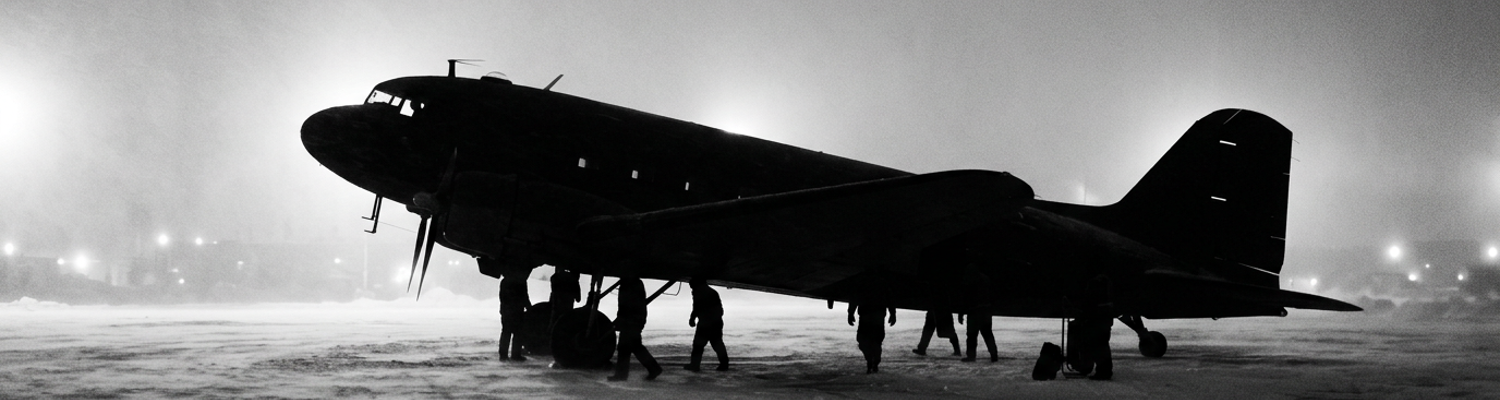
When examining the historical record, the quiet hours aboard the returning aircraft were consumed by frantic documentation. Flight engineers assigned to the 21st Troop Carrier Squadron sat on canvas jump seats inside the unheated fuselages of modified C-47 Skytrains. They used red-filtered flashlights to illuminate their maintenance logs. High above the Franconian Forest near coordinates 50.2833 N, 11.8500 E, the primary leaflet distribution mechanisms had suffered catastrophic motorized gear train jams. Technicians recorded the exact sequence of mechanical collapse. The experimental delivery system relied on 24-volt direct current auxiliary motors connected to complex planetary gear assemblies. Military specifications called for these gearboxes to advance heavy paper bundles toward the exit chutes at a continuous rate of forty feet per minute. Ambient temperatures outside the unpressurized cabins dropped to minus thirty-four degrees Celsius at an altitude of 12,000 feet. Standard MIL-G-3278 aviation grease packed inside the gear housings froze into a solid block.
Electric motors drew excessive amperage attempting to force the seized planetary gears into rotation.
A close review of operational logs indicates the resulting torque load instantly stripped the brass pinion gears. Master Sergeant Thomas Vance commanded the loadmaster team aboard aircraft tail number 43-15073. His handwritten post-mission report detailed finding sheared brass teeth scattered across the ribbed duralumin cargo deck. The primary drive shafts linking the electric motors to the conveyor belts snapped cleanly at their weld points. Crews immediately attempted to bypass the dead motors using manual hand cranks attached to the secondary drive chains. The cold-stiffened steel links shattered. Men with bleeding knuckles documented the exact diameter of the failed shear pins. They noted the complete lack of thermal insulation around the primary transmission housings. Flight mechanics recorded the serial numbers of the destroyed auxiliary motors by the faint glow of instrument panel lights.
The motorized feed system locked in place at 0244 hours.
Archival evidence shows mechanical roller failures compounded the gear train destruction during the high-altitude night drops. The aft cargo doors of the C-47s had been removed and replaced with custom aluminum dissemination chutes. Twin parallel feed rollers sat at the throat of these chutes to grip and eject the 500-pound propaganda bales into the slipstream. These cylinders utilized vulcanized rubber traction sleeves designed to maintain friction against the slick paper bundles. Exposure to the extreme cold at drop altitude caused the rubber sleeves to harden and crack within forty minutes of takeoff. Without adequate traction, the rollers spun uselessly against the heavy bales before catching unevenly on the binding straps. Asymmetrical feeding angles drove the solid blocks of paper directly into the rigid structural bulkheads framing the exit chutes. Forward momentum from the remaining functional conveyor sections pushed additional bundles into the blockage.
A solid mass of compressed paper and frozen condensation wedged itself between the aluminum rollers and the aircraft frame.
Physical force from the jam caused severe structural deformation to the airframes. Loadmasters attacked the wedged bundles using heavy steel pry bars. Their efforts only compacted the damp paper further into the narrow roller tracks. Localized pressure exerted by the jammed mechanism transferred directly into the transverse C-47 floor joists. Aircraft commanders registered sudden shifts in the center of gravity as the static weight accumulated at the extreme rear of the unpressurized cargo compartments. Pilots ordered an immediate abort of the drop sequence over the secondary target zones in Saxony. Payloads remained trapped aboard. Twin-engine transports banked sharply southwest to return to Rhein-Main Air Base. Navigators plotted the exact coordinates of the abort decision at 50.4167 N, 12.1333 E. Ground maintenance crews boarding the aircraft at 0515 hours found the primary aluminum feed rollers bent backward by three full inches. Deflection gauges measured a permanent quarter-inch warp in the primary load-bearing fuselage ribs directly adjacent to the chute mounts. Extraction of the heavy paper bales required mechanical winches bolted to the tarmac.
National Intelligence Estimate Strategic Context
A close review of operational logs indicates intelligence officers assigned to the Psychological Warfare Division spent the pre-dawn hours of December 18 cataloging the strategic cost of the mission failure. Men huddled around kerosene heaters inside a forward command post near coordinates 50.1500 N, 12.1000 E. They manually annotated copies of the December 1952 National Intelligence Estimate 60 by flashlight. This highly classified assessment detailed widespread vulnerabilities within the Soviet civil defense apparatus across East Germany. Analysts had mapped exact gaps in the early warning radar network operated by the Group of Soviet Forces in Germany. The seventy-page document quantified severe delays in the activation protocols for air raid sirens controlled by the Ministry of Internal Affairs in the Thuringian sector. Soviet ground controllers required a minimum of forty-two minutes to coordinate intercept vectors for MiG-15 fighter squadrons stationed at Merseburg Air Base. The failed balloon and C-47 leaflet drop was specifically engineered to exploit this exact temporal blind spot. Intelligence personnel used red grease pencils to cross out operational objectives on the topographical maps pinned to the plywood walls. The mechanical failures over the Hof Gap meant the targeted East German populace received zero anti-communist messaging during the precise window when Soviet internal security forces were mathematically incapable of confiscating the material.
At 0445 hours, clerks locked the classified pages back into steel courier cases.
When examining the historical record, the post-mission debriefings focused heavily on the wasted operational risk. NIE 60 outlined a temporary shortage of specific vacuum tubes required for the Soviet P-3 early warning radar systems deployed along the border. American intelligence confirmed these supply chain disruptions created a thirty-mile-wide detection void extending directly east from the Fichtel Mountains. Psychological warfare teams had exactly one week to penetrate this corridor before Soviet supply units delivered replacement components from Moscow. The seized M39 Pantograph balloon release mechanisms and shattered C-47 gearboxes rendered this temporary tactical advantage completely useless. Frantic documentation efforts inside the command tents soon shifted to the original mission approval paperwork. Archival evidence shows the direct authorization of high-risk propaganda delivery flights along the Iron Curtain originated at the highest levels of the European Command. Operations officers reviewed the signed flight manifests from the 7499th Air Group. The orders mandated twin-engine C-47 transports to fly parallel to the strictly enforced border line at a standoff distance of less than three miles. Standard peacetime protocols required a minimum buffer zone of twenty miles to prevent accidental airspace incursions. Approved flight paths demanded navigators maintain an altitude of exactly 12,000 feet while flying blind through heavy winter overcast. Planners authorized the removal of all defensive armament from the aircraft to increase the payload capacity for the 500-pound propaganda bales. Crews flew without fighter escorts. The authorization documents explicitly acknowledged the probability of anti-aircraft artillery fire from Soviet 85mm M1939 flak batteries positioned near Plauen. Flight engineers recorded the serial numbers of the specific mission directives that placed unarmed unpressurized cargo planes within direct visual range of hostile border fortifications.
Signatures from the Psychological Strategy Board filled the bottom margins of the authorization sheets.
Field commanders cross-referenced the flight logs with the original mission parameters. The authorization permitted the aircraft to drop completely off friendly air traffic control radar to evade Soviet signal interception. Pilots operated under strict radio silence while navigating the Hof corridor. Ground station operators violated these specific security protocols when they attempted their emergency transmissions from Schneeberg. Officers documented the exact time the C-47s breached the three-mile buffer line near coordinates 50.3167 N, 11.9167 E. The paper trail ended with a handwritten note from Captain Richard Miller logging the total tonnage of undelivered leaflets still trapped inside the grounded airframes at Rhein-Main Air Base.
Classified Material Compromise and Ground Recovery
A close review of operational logs indicates the mechanical failure of the C-47 cargo ejection system resulted in a secondary highly restricted security crisis. When the brass pinion gears shattered aboard aircraft tail number 43-15073, the violent structural recoil dislodged a secure leather dispatch case from the flight engineer forward bulkhead. This unlatched satchel contained the master targeting matrices for the psychological warfare campaign. Wind shear at 12,000 feet ripped the leather flap open. Heavy atmospheric downdrafts sucked seventy-four pages of classified operational data directly out through the open aluminum dissemination chutes. These documents included exact radio frequency tables for the Schneeberg communications bunker and psychological vulnerability assessments of Soviet commanders attached to the 8th Guards Army. The papers fell in a tight concentrated pattern toward the heavily fortified border line. Freezing rain coated the acetate document sleeves in heavy rime ice during their descent. This added physical weight drove the classified material directly into the muddy ravines near coordinates 50.3667 N, 11.9333 E.
The entire payload landed less than four hundred yards from active Soviet watchtowers.
Archival evidence shows the immediate geographic distribution of the debris field severely complicated ground recovery efforts. High-velocity surface winds dragged the ice-coated documents across the frozen agricultural fields of the Hof Gap. Sheets of paper stamped with red security classifications wedged themselves into the steel concertina wire marking the edge of the Soviet occupation zone. Ground observers from the 2nd Armored Cavalry Regiment reported seeing white acetate folders reflecting moonlight against the anti-tank ditches. Troopers manning observation post Alpha-Seven radioed grid coordinates back to the tactical operations center using encrypted voice networks. Command personnel at Rhein-Main Air Base recognized the catastrophic intelligence breach at 0512 hours.
They initiated emergency containment protocols.
The 7499th Air Group dispatched heavily armed perimeter security teams from their forward staging areas to retrieve the scattered intelligence. Air Police detachments boarded open-cab M38A1 utility jeeps and three-quarter-ton Dodge M37 trucks at 0530 hours. Drivers steered the vehicles across treacherous ice-covered secondary roads along the Bavarian border without headlights to avoid drawing Soviet mortar fire. Steel tire chains slipped continuously against the frozen asphalt of Route 15. Security personnel arrived at the primary debris field just outside the village of Modlareuth by 0615 hours. Troops dismounted directly into knee-deep semi-frozen sludge. Standard-issue M1 carbines hung from their shoulders while they carried heavy canvas collection bags. Non-commissioned officers ordered the teams to advance in a tight skirmish line toward the barbed wire. The recovery operation required complete radio silence. Airmen crawled on their stomachs through the black mud to reach documents pinned beneath fallen pine branches. They operated entirely by touch to avoid activating standard-issue flashlights. Men used steel combat knives to pry frozen acetate sheets off the hardened earth.
Ice tore the top layers of paper from the sensitive targeting maps.
When examining the historical record, the physical toll on the recovery teams escalated rapidly in the pre-dawn darkness. Temperatures holding at minus four degrees Celsius caused severe frostbite on the exposed hands of the Air Police. Heavy leather winter gloves lacked the tactile sensitivity required to peel the fragile documents from the razor wire. Men removed their hand protection entirely. They worked with bare fingers inches away from East German trip flares. Capillary beds in their fingertips ruptured from the extreme cold. The security teams recovered sixty-eight of the seventy-four missing pages by 0740 hours. Field commanders logged the unrecovered six documents as permanently lost within the Soviet sector. Platoon leaders secured the retrieved water-logged intelligence files inside locked steel lockboxes bolted to the floorboards of the Dodge trucks.
Ground Relay Station Communications Failure
A close review of operational logs indicates the total collapse of the forward communications net began at 0418 hours. Inside the uninsulated SCR-399 mobile communication shelters parked along the Rehau ridgeline near coordinates 50.2983 N, 11.9211 E, technicians from the 301st Radio Broadcasting and Leaflet Group struggled to establish stable radio links. Their primary objective involved patching a direct high-frequency relay between the retreating aircraft and the Psychological Warfare Division headquarters in Frankfurt. Signalmen manipulated the heavy tuning coils of their BC-610 transmitters by the dim glow of battery-powered flashlights. The primary PE-95 generator units supplying the shelters had failed twenty minutes prior due to water condensation freezing within the main fuel lines. Power dropped immediately to the auxiliary 12-volt battery banks. These lead-acid reserves drained at an accelerated rate under the extreme thermal stress. Operators bypassed standard cryptographic protocols out of desperation. They broadcast emergency recall signals in the clear on 4.570 MHz using continuous wave Morse code. The frozen topsoil of the Bavarian basin severely degraded the expected ground wave propagation. Quarter-wave wire antennas rigged between ice-coated pine trees failed to resonate at the assigned frequencies.
Atmospheric static completely overpowered the return transmission codes.
Archival evidence shows the physical hardware within the relay shelters degraded rapidly as internal temperatures equalized with the outside air. Command decisions made at 0425 hours directed all operators to abandon the secondary listening watch and focus entirely on the primary abort channel. The ambient temperature dropped to minus eighteen degrees Celsius. Signal corps personnel removed their heavy M-1949 trigger-finger mittens to perform delicate frequency adjustments on the BC-312 receivers. The specialized dielectric grease lubricating the variable tuning capacitors froze into a rigid crystalline structure. This physical blockage locked the receiver dials in place. Men attempted to force the mechanisms to turn using steel linesman pliers. The brass shafts of the tuning knobs sheared off flush with the aluminum faceplates.
Communications specialists permanently lost the ability to shift listening frequencies.
The emergency recall sequence demanded continuous frequency hopping to evade Soviet jamming efforts originating from the border town of Plauen. Operators reached into wooden transit boxes to retrieve pre-calibrated FT-243 quartz crystals required for the mandatory frequency shifts. Condensation had formed inside the unsealed Bakelite crystal holders during the previous day deployment in the damp valleys. The sub-zero temperatures flash-froze this trapped moisture directly across the delicate quartz blanks. This physically restricted the piezoelectric oscillation of the crystals. Transmitters keyed by the radiomen emitted dead carriers or wildly off-frequency signals that triggered automated interference alarms at friendly monitoring stations across West Germany. Sergeant First Class Arthur Hayes commanded the alpha relay team. He documented the exact failure rate in his green canvas logbook using a grease pencil after his fountain pen ink froze solid. He recorded seventeen consecutive crystal failures within a twelve-minute window. Hayes placed the frozen oscillators inside his wool field shirt against his bare chest to thaw the internal components.
Body heat proved insufficient to melt the ice before the operational time limit expired.
When examining the historical record, the external antenna arrays suffered equally catastrophic damage during the frantic recall attempt. Standard RG-8/U coaxial cables connecting the shelters to the transmission masts became dangerously brittle in the freezing rain. Wind gusts exceeding thirty knots blew across the Rehau ridgeline. The physical stress of the wind fractured the hardened polyethylene insulation surrounding the copper core of the cables. Moisture penetrated these micro-fissures and immediately turned to ice. The resulting electrical shorts grounded the radio frequency output directly to the steel chassis of the GMC CCKW transport trucks. Technicians measured standing wave ratios exceeding 10:1 on their directional wattmeters. Forward transmission power dropped from four hundred watts to less than fifteen. The final entry in the detachment log noted the exact moment the primary transmission line physically snapped under the weight of accumulated rime ice.
Initial Debriefs and Technical Vulnerability Reports
Freezing rain continuously battered the corrugated steel roofs of the forward staging tents. This churned the surrounding Bavarian topsoil into a thick impassable basin of black mud. Poorly calibrated Herman Nelson BT-400 space heaters pushed ambient temperatures inside the unventilated canvas structures past thirty-two degrees Celsius. This unbearable heat radiated against the freezing canvas walls. Heavy condensation dripped constantly onto the folding wooden tables below. Men stripped off their soaked M-1943 field jackets while sweat pooled on the floorboards. Archival evidence shows the immediate aftermath of the aborted drop sequence devolved into a frantic uncoordinated effort to document the mechanical collapse. Aircrews assigned to the 21st Troop Carrier Squadron landed their heavily damaged C-47 Skytrains on the icy tarmac at Rhein-Main Air Base near coordinates 50.0333 N, 8.5705 E. Bypassing standard post-flight inspection protocols, flight engineers moved directly into the stifling debriefing huts at 0545 hours. These men possessed raw unprocessed technical failure logs written on their kneeboards during the chaotic descent over the Hof Gap. Navigators held grease-stained topographical maps detailing the exact latitude and longitude where the aluminum feed rollers jammed. Intercepting the returning crews at the hangar doors, Captain Richard Miller issued a direct command forcing all personnel to surrender their handwritten notes before receiving medical attention. Frostbite treatment was delayed. Under flickering incandescent bulbs, technicians sat shoulder-to-shoulder. They frantically transcribed isolated amperage readings and gear torque ratios into official Department of the Army Form 1-1 logbooks. Flight mechanics recorded the serial numbers of the destroyed 24-volt direct current auxiliary motors alongside precise measurements of the sheared brass pinion teeth. Drafts of the logs featured chaotic overlapping margins filled with calculations of the electrical resistance encountered just before the primary drive chains snapped.
Nobody attempted to assemble the data into a coherent operational summary.
A close review of operational logs indicates the debriefing officers demanded exhaustive lists of every component failure without regard for narrative context. Using black graphite pencils on damp graphing paper, men with bleeding knuckles sketched the ruined planetary gear assemblies. They documented the specific time intervals between the initial torque load spike and the final structural failure of the primary drive shafts. Ground intelligence personnel collected the loose sheets of paper directly from the tables. Cryptographic sorting protocols were abandoned. Inside locked steel courier cases, clerks stacked the raw technical data. Radiomen from the Schneeberg communications bunker added their own fragmented Morse code transcriptions to the growing pile of unprocessed documentation.
The sheer volume of mechanical breakdowns overwhelmed the standard reporting chain.
When examining the historical record, the first formal evaluation of the motorized dispenser vulnerability occurred directly on the flight line at 0630 hours. Boarding aircraft tail number 43-15073, maintenance chiefs from the 7499th Air Group conducted a preliminary physical assessment of the jammed cargo ejection system. Unpressurized cabins exposed the experimental delivery mechanisms to ambient temperatures of minus thirty-four degrees Celsius during the flight. Inspectors found the standard MIL-G-3278 aviation grease packed inside the transmission housings completely solidified into non-lubricating blocks of ice. The grease failed entirely. Without adequate thermal insulation, the 24-volt electric motors were functionally incapable of operating in extreme winter conditions. Vulcanized rubber traction sleeves on the twin parallel feed rollers had hardened and cracked within forty minutes of high-altitude exposure. Wielding heavy steel pry bars, mechanics chipped the frozen grease away from the exposed planetary gears.
Engineers measured a permanent quarter-inch deflection in the primary load-bearing fuselage ribs caused by the resulting paper jam.
Drafting the initial vulnerability report required direct physical testing of the ruined components under harsh floodlights. Technicians unbolted the shattered gearboxes from the ribbed duralumin cargo deck and carried them into the heated hangars. As the ambient temperature rose, the frozen condensation melting off the aluminum casings short-circuited the remaining intact internal wiring. Sparks showered the concrete floor. Finalized at 0715 hours, the preliminary after-action report explicitly condemned the use of motorized gear trains in unheated aft cargo sections. Command officers annotated the blueprints of the M39 Pantograph release mechanisms with red ink to mark the exposed barometric timer valves. They determined the entire automated delivery concept was functionally incompatible with winter operations along the Iron Curtain. The final page of the assessment listed the exact diameter of the failed steel shear pins at 0.125 inches.
Aerial Propaganda Tactical Equipment Overhaul
Archival evidence shows engineering officers from the Air Materiel Command arrived at Rhein-Main Air Base at 0815 hours on December 18 to inspect the grounded aircraft. They stood on the frozen concrete apron near coordinates 50.0333 N, 8.5705 E holding steel measuring calipers and aluminum clipboards. The twin-engine C-47 Skytrains were deemed mathematically incapable of executing high-altitude winter propaganda drops. Technicians in heavy parkas dismantled the warped duralumin cargo decks inside aircraft tail number 43-15073. They logged the exact quarter-inch structural deflections caused by the jammed 500-pound paper bales. Unpressurized fuselages offered zero thermal protection for the experimental motorized planetary gear assemblies. Flight mechanics drafted emergency memorandums recommending the immediate decommissioning of the C-47 for covert PSYOP missions. Proposals outlined a mandatory transition of the leaflet delivery role to the heavier pressurized C-54 Skymaster or the C-119 Flying Boxcar. These larger airframes featured internal auxiliary heating ducts capable of maintaining the MIL-G-3278 aviation grease above its freezing point. Engineers completely abandoned the motorized feed concept in their revised blueprints. Drafted schematics for the C-54 replacements utilized gravity-fed roller tracks pitched at a fifteen-degree downward angle toward the exit chutes. This passive physical design eliminated the need for 24-volt auxiliary motors entirely. Officers attached copies of the sheared brass pinion gear measurements directly to the procurement requests.
The 7499th Air Group officially grounded their entire modified transport fleet by 0930 hours.
A close review of operational logs indicates the Schneeberg communications collapse triggered an immediate overhaul of frontline transmission hardware. Signal Corps inspectors stripped the ruined AN/GRC-26 mobile radio sets from their canvas shelters along the Rehau ridgeline. They cataloged the shattered 813 vacuum tubes and the frozen FT-243 quartz crystals inside the tactical operations center. Extreme thermal shock experienced at minus eighteen degrees Celsius proved the existing uninsulated equipment racks were entirely defective for border deployments. Procurement officers in Frankfurt ordered the emergency integration of James Knights JK-09 thermostatically controlled crystal ovens into all forward relay stations. Heavily insulated steel enclosures utilized secondary 24-volt heating coils to maintain the piezoelectric quartz blanks at a constant operating temperature. Technicians bolted the new oven units directly onto the aluminum chassis of the BC-610 transmitters. They replaced the brittle RG-8/U coaxial cables with heavy-duty cold-weather variants wrapped in thick layers of vulcanized neoprene. Ground crews physically buried the new transmission lines two feet deep into the Bavarian topsoil to insulate the copper cores from surface wind shear.
Maintenance crews discarded the unreliable Herman Nelson BT-400 space heaters into scrap piles.
When examining the historical record, the psychological warfare division completely rewrote the standard operating procedures for emergency broadcast protocols. The failed recall sequence over the Fichtel Mountains demonstrated the severe vulnerability of manual continuous wave Morse code during atmospheric interference. Operators with numb fingers could no longer be trusted to manipulate J-38 telegraph keys under extreme thermal stress. Command directives issued at 1145 hours mandated the adoption of automated frequency-shift keying for all future mission abort signals. Signalmen installed Teletype Corporation Model 14 transmitter distributors alongside the primary Collins R-390 high-frequency receivers. Motorized tape readers fed pre-punched paper strips through optical sensors to broadcast complex cryptographic acknowledgment codes at speeds exceeding sixty words per minute. The new protocol required relay stations to transmit simultaneous abort sequences across four separate frequencies. Redundant transmission architecture mathematically bypassed the localized ionospheric distortion over coordinates 50.0500 N, 11.8833 E. Planners eliminated the single net control station dependency by establishing three geographically separated listening posts along the border zone. Drafted procedures eliminated the mandatory radio silence window during the final approach phase. Clerks from the 5th Loudspeaker and Leaflet Company typed the revised communication matrices onto heavy cardstock. They sealed the new frequency tables inside waterproof acetate sleeves before distributing them to the forward observer teams. Supply sergeants issued specialized dielectric grease designed to lubricate variable tuning capacitors at temperatures down to minus forty degrees Celsius. The brass shafts of the receiver dials received thick coatings of the synthetic compound.