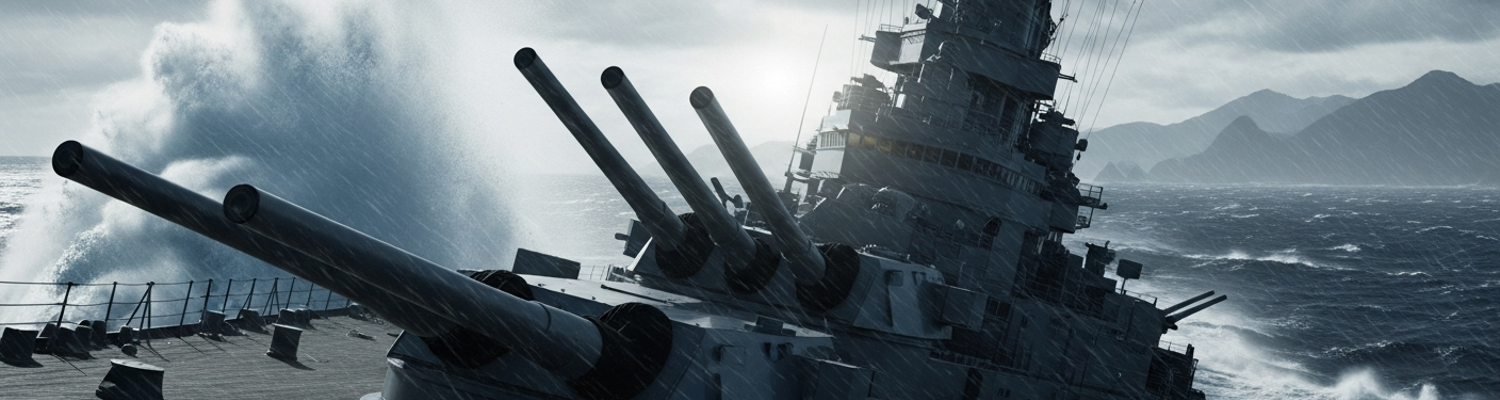

Inside the number two turret of the USS Nevada, a gunner’s mate worked a wrench on a leaking hydraulic line. A fine, pinkish mist of fluid coated his face and the polished brass shell casings waiting in the hoist. This was the third time in an hour the loading system had lost pressure, rendering the left-most 14-inch gun inert during the height of the naval bombardment of Objective Gull. The ship was meant to neutralize concrete and steel artillery casemates, but the sustained rate of fire demanded by the pre-invasion plan was systematically breaking down the machinery. The gunner’s mate tightened the fitting as the turret shuddered from the recoil of the other two guns. His isolated repair efforts were a microcosm of failures occurring up and down the bombardment line, issues that would soon fill the pages of after-action reports with unprocessed data.
The formal name for these documents was the 2t report, a standardized form completed by commanding officers in the immediate aftermath of an action. These were not public-facing summaries; they were confidential, internal analyses intended for rapid dissemination to the fleet’s tactical and ordnance commands (per BuOrd Directive 44-7). Their purpose was operational honesty, a mechanism for the Navy to learn from its own mistakes without the filter of public relations. Archival evidence shows the 2t reports were structured with sections for ammunition expenditure, observed results, enemy opposition, and a detailed log of equipment performance and unforeseen difficulties. It was in this final section, often filled out in pencil on a rolling ship, that the raw lessons of Operation Coastal Fury were first recorded.
Operational logs from the destroyer screen, specifically DESRON 2, revealed a consistent and dangerous flaw. Their 5-inch/38 caliber gun mounts, lauded for their dual-purpose flexibility, suffered severe vibration issues. The shock from near-misses by shore-based 155mm batteries was causing the delicate gyroscopes within their Mk 37 Gun Fire Control Systems to tumble, losing their vertical reference and feeding chaotic, incorrect firing solutions to the guns. Multiple destroyers reported firing entire salvos that landed hundreds of yards wide of their designated targets because their fire-control computers were processing faulty data. On the capital ships, the problems were heavier. The 2t reports from the battleships Nevada and Pennsylvania both noted that their main battery hydraulic rammers, responsible for seating the 1,500-pound shells, were overheating and seizing. Peacetime drills had never simulated the heat and strain of firing at maximum rate for over ninety minutes. This forced gun crews, operating inside turrets where temperatures exceeded 110 degrees, to resort to slower, auxiliary loading systems, drastically reducing their rate of fire.
Command and control issues were just as prevalent. The initial fire plan for Coastal Fury was a rigid, timetable-based system that allocated a specific number of shells to pre-plotted grid squares. This methodical approach proved shockingly inefficient against a prepared defender. The 2t report from the USS Tennessee included a handwritten addendum from its gunnery officer stating that shore batteries would cease firing and absorb the shelling, only to re-engage the moment the bombardment shifted to the next grid coordinate. Spotter planes flying overhead had a clear view of these tactics but lacked the authority to dynamically retarget the fleet’s guns. This friction between rigid, top-down planning and the fluid reality of combat was a central theme. The reports also highlighted the difficulty of battle damage assessment from the sea; smoke and dust from the shell impacts often obscured targets for ten to fifteen minutes, leading ships to waste ammunition on fortifications that had already been destroyed.
Gunnery reports 2t.2 and 2t.3, filed by the heavy cruisers USS Astoria and USS Minneapolis, detail the sudden impact of an unforeseen weather event. At approximately 14:30 hours, a severe squall line descended upon the fire support sector designated Green. The reports note a rapid degradation of conditions. Within minutes, wind speeds accelerated from 15 knots to gusts exceeding 50 knots, whipping the ocean surface into a chaotic state. Visibility dropped to less than 500 yards as a nearly solid wall of rain slammed into the flotilla. The world outside the armored conning towers dissolved into a mess of gray water and white foam. This was a tactical crisis that rendered the meticulously calculated fire plan obsolete.
The primary effect of the squall was the total obscuration of all designated targets. Batteries Vulture and Condor, two hardened 155mm gun positions that had been actively engaging the fleet, vanished behind the impenetrable curtain of rain. Spotter aircraft were forced to abort their missions, effectively blinding the fleet’s gunners. The reports from Astoria and Minneapolis both describe a period of approximately twenty minutes where salvos were fired into the gray, using the last known coordinates and hoping for a lucky hit. This was an act of tactical desperation. Without visual or aerial spotting, there was no way to assess damage or correct for range and deflection errors. The gunnery officer of the Minneapolis noted the frustration of having fully operational eight-inch guns but no verifiable target upon which to train them.
The violent weather also crippled the mechanics of aiming. The increased and erratic ship motion, with both cruisers experiencing severe rolling and pitching, rendered their primary optical rangefinders ineffective. These complex instruments relied on a human operator to visually align two separate images of a target to triangulate its distance. In the violent motion caused by the squall, achieving the delicate alignment needed for an accurate range reading was a physical impossibility. Operators reported the images in their eyepieces smearing and jumping wildly. Spray and rain constantly fogged the external lenses of the rangefinders, requiring crewmen to expose themselves to the storm to wipe them clean. Even if a target had been visible, the ship’s violent motion would have overwhelmed the gyroscopic stabilization mechanisms of the fire control directors, feeding incorrect elevation data to the analog computers. This complete failure of the optical systems forced a cessation of all effective fire until the squall passed.
Reports 2t.4 and 2t.5, submitted by the destroyer USS Porter and the light cruiser USS Savannah, reveal the fundamental impossibility of the task assigned to the bombardment group. The designated target area, a stretch of coastline identified as Objective Viper, was characterized in pre-operation intelligence as having rolling hills. The reality was a chaotic landscape of jagged volcanic rock, deep ravines, and a triple-canopy jungle so dense it absorbed sunlight. This irregular, heavily forested terrain completely defeated the fleet’s optical fire control methods. From the sea, the coastline presented a uniform, unbroken wall of green. Concrete bunkers and steel gun casemates were built into the folds of the land and shrouded by the jungle canopy. Their firing apertures were disguised with elaborate camouflage netting interwoven with native vegetation, rendering them invisible to the Mk. 51 stereoscopic rangefinders aboard the ships. Observers reported an inability to find any discernible reference points.
This natural concealment was amplified when the squall hit. The combination of torrential rain and dense foliage created a dual-layered obscuration that was practically absolute. Report 2t.5 from the Savannah notes that its fire control teams attempted to engage Battery Cobra, a known 155mm gun position, by firing at its last known map coordinates. The squall’s violent crosswinds pushed the shells hundreds of yards off their intended trajectory. The rain was so thick that the ship’s own aerial spotter plane, a Vought OS2U Kingfisher, was nearly lost just trying to remain airborne and could provide no useful information. The tactical choice became a grim one: cease fire and allow the enemy to operate, or fire blindly into the maelstrom.
Fire correction against these concealed positions failed completely. The doctrine of naval gunfire was built on the principle of observing the fall of shot and adjusting aim. A gunnery officer would fire a salvo, spot the shell splashes or dust clouds, and then walk the fire onto the target. In the terrain of Objective Viper, this was impossible. Heavy caliber shells that missed their mark and plunged into the jungle floor were swallowed whole by the soft, muddy earth and thick vegetation. There were no geysers of dirt. There was no smoke. The dense canopy of the forest absorbed the blast and contained the debris, leaving no visible trace of the shell’s impact point. Gunnery officers could not tell if their salvos were landing long, short, left, or right of the unseen target. Report 2t.4 from the Porter contains a frustrated, handwritten entry detailing how its 5-inch guns fired for twenty straight minutes at the suspected location of a machine gun nest, only to see tracer rounds emerge from the exact same spot the moment the shelling ceased.
After-action summaries compiled by the V Amphibious Corps reveal a failure to neutralize enemy defenses on the landing beaches of Objective Viper. The pre-landing bombardment had left the most critical threats almost completely intact. These were not the large coastal artillery batteries, but hundreds of small, interlocking machine gun nests and mortar pits dug deep into the volcanic rock and concealed by the jungle canopy. For the men of the 2nd Battalion, 4th Marines, hitting the beach at 15:00 hours, they were a wall of interlocking fire. Pinned down on the black sand with no cover, the lead companies were dismantled. The rigid fire plan had expended thousands of shells on pre-plotted map coordinates, but the enemy positions were not where the maps said they would be. They were tucked into reverse slopes and ravines, shielded from the flat trajectory of naval guns.
Desperate calls for emergency fire support flooded the radio nets. The destroyers of the fire support screen, including the USS Porter, moved dangerously close to shore to provide direct aid. This is where the operational chaos tipped into fratricide. The smoke from the ongoing bombardment, the thick rain of the squall, and the sheer panic of combat made distinguishing friend from foe nearly impossible. From the rolling deck of a destroyer, one group of green-clad soldiers firing from a tree line looked exactly like another. Forward observers with the marine companies were being targeted and killed, severing the communication link that guided the guns. Without a clear, designated target, destroyer gun crews were forced to rely on frantic radio messages giving vague coordinates, often for positions just yards ahead of the pinned-down marines.
The consequences are detailed with cold precision in Reports 2t.4 and 2t.5. The gunnery officer of the USS Porter filed Report 2t.4, which contains a log of a fire mission requested at 15:22 hours against enemy infantry massing in a ravine at grid 8-Baker-Tango. The Porter’s 5-inch/38 caliber guns fired three salvos of high-explosive shells at the coordinates provided. What the gunners could not see was that the ravine was actually a shallow depression where the remnants of Company F were attempting to regroup. The shells, their trajectory altered by the ship’s violent roll, landed squarely among them. Report 2t.5, from the cruiser USS Savannah, corroborates the command confusion, noting a complete breakdown in radio discipline as multiple units broadcast over one another, making target verification impossible. The report from the Porter concludes with a stark recommendation: that no fire mission be approved within 400 yards of friendly lines unless the target is positively marked by colored smoke and confirmed by a designated naval liaison officer.
Summary after-action logs, specifically Reports 2t.6 and 2t.7, present a conclusive judgment on the fleet’s gunnery capabilities. These documents, which compiled data from every vessel involved in Operation Coastal Fury, stated in unambiguous terms that optical fire control had failed. The entire gunnery doctrine, built upon the foundation of a human observer looking through a lens, was rendered ineffective by the operational environment. Report 2t.6 tabulated the failures: morning mist, solar glare, self-generated smoke, jungle canopy, and finally, the impenetrable rain of a 50-knot squall. Each factor individually degraded performance; combined, they created a state of functional blindness. The stereoscopic rangefinders and high-powered spotting glasses were defeated.
The core finding of Report 2t.7 was that a non-visual means of targeting and spotting was a fundamental necessity for future operations. The reliance on aerial spotters had proven to be a critical vulnerability, with aircraft grounded by weather and their observations obstructed by smoke. The report detailed how the Mk 37 Gun Fire Control Systems on the destroyers and the larger directors on the battleships, for all their mechanical sophistication, were still dependent on a clear line of sight which the enemy and the environment could deny at will. The final recommendation was stark: the fleet required a method to place shells on a target it could not see.
Post-action analyses produced an urgent requirement for greatly enhanced meteorological intelligence. The squall was a tactical event that completely invalidated the fire plan. Future doctrine demanded that weather cease to be a passive condition and become an active variable within the fire control problem. This meant a system that could provide real-time, localized atmospheric data directly to the firing ships. Anemometers on the ships could supply constant updates on wind and pressure at sea level, but the challenge lay in predicting the conditions along the shell’s high-arcing trajectory. A 14-inch shell could be in the air for nearly a minute, and a 50-knot crosswind could push it hundreds of yards off course. The new requirement called for deployable weather reconnaissance assets and a method to feed their data on wind speed and direction at various altitudes directly into the analog fire control computers, such as the Mark 8 Rangekeeper, allowing for a more accurate windage correction.
This led to the immediate demand for improved all-weather gunnery systems. The findings of the 2t reports accelerated the fleet-wide integration of radar into the fire control loop. Specifically, the pairing of the SG surface-search radar with the existing Mk 37 director system offered a solution to the primary failure of optical targeting. The radar antenna could provide continuous, accurate range and bearing data on a surface target regardless of rain, smoke, or darkness, feeding that information directly to the Mark 1A Fire Control Computer. This allowed the gunnery team in the plotting room to track a target they could not see, a revolutionary step that severed the long-held dependence on the human eye.
This technological shift forced a revision in doctrine. Firing blind required new procedures and safeguards, especially after the friendly fire incidents at Objective Viper. A critical innovation pushed into service was the proximity-fuzed, or VT, shell. This projectile contained a small, self-contained radio transceiver that detonated the shell when it came within a predetermined distance of a target. This single development solved two of Coastal Fury’s most persistent problems. First, it eliminated the need for a direct hit, making it vastly more effective against concealed targets like machine gun nests and infantry in ravines; an airburst above the target was often just as lethal. Second, it removed the guesswork of fuze timing in anti-aircraft fire, dramatically increasing the lethality of the 5-inch dual-purpose guns against attacking aircraft. The new doctrine mandated the use of VT fuzes for most shore bombardment and all defensive anti-aircraft fire, while establishing strict minimum ranges for their use near friendly forces.