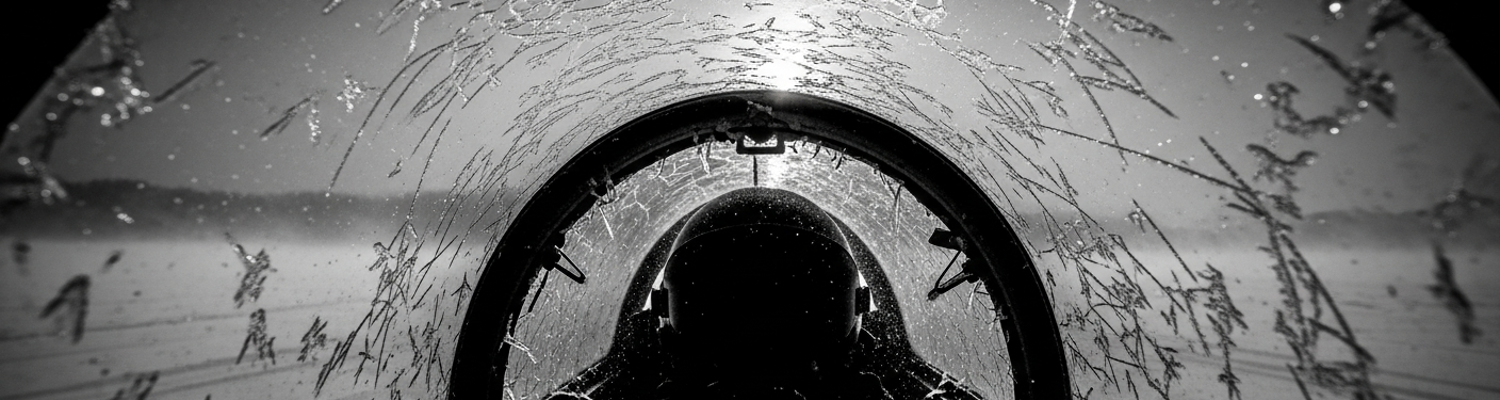

Ammunition Supply Chain Strains
A terse radio message, stripped of all but essential details, signaled the crisis. It was a message not of heroic combat, but of mundane, acute shortages, a pattern that defined the operational tempo in MiG Alley. The air war over Korea was fed by a tenuous flow of steel and brass that began thousands of miles away.
A close review of operational logs reveals the problem’s core was the F-86 Sabre itself. Each fighter carried six M3 Browning .50 caliber machine guns, an armament choice dictating an enormous logistical burden. A full ammunition load for a single sortie was 1,800 rounds, 300 rounds per gun. The M3s fired at approximately 1,200 rounds per minute, a pace that gave a pilot only about 15 seconds of total firing time. This mechanical fact forced pilots into a disciplined style of combat using short, precise bursts. It also meant that after every flight, ground crews replenished those 1,800 rounds, a weight of nearly 450 pounds per aircraft. For a unit like the 4th Fighter-Interceptor Wing based at Suwon Air Base (K-13), with its three squadrons of 75 Sabres, a day of heavy sorties could consume over 20 tons of .50 caliber ammunition. This figure excludes the weight of metal ammunition links, wooden crates, and inevitable wastage. Armorers worked in grueling shifts on pierced steel planking flight lines, breaking down crates, linking rounds, and feeding the long belts into the Sabre’s fuselage bays.
Every bullet traveled an ocean.
Archival evidence shows the journey for each round was a precarious, multi-stage marathon. The process began at supply depots in the United States, followed by a trans-Pacific voyage to the massive logistical hub in Japan. The Rear Headquarters of the Eighth Army in Yokohama was the nerve center, processing requisitions and managing theater-wide stock levels. From Yokohama’s docks, ammunition crates were loaded onto transport ships. A system dubbed the “Red Ball Express” was established to expedite high-priority cargo, using a 737-mile rail line in Japan to move supplies from Yokohama to the port of Sasebo, where they were transferred directly onto ships bound for Korea. This sea journey to the port of Pusan was the next link, a passage at the mercy of weather. Pusan was the only port on the peninsula with facilities large enough to handle the volume of incoming war material, and it was perpetually congested. From Pusan, the ammunition began its final, most vulnerable leg, moved by the Korean National Railroad or by truck convoys of the 70th Transportation Truck Battalion to forward airbases like Suwon. This land-based movement was fraught with peril. Rail lines and roads were subject to guerrilla attacks, poor conditions, and the mechanical failure of overworked vehicles. A single washed-out bridge or a backed-up railyard in Pusan could mean an entire fighter wing was effectively disarmed.
Korean Airfield Supply Line Bottlenecks
The supply lines for nearly all combat consumables were consistently strained. While ammunition shortages were acute, keeping F-86 Sabres in the air was equally dependent on a steady flow of less dramatic materials. The primitive nature of forward air bases like K-13 at Suwon meant almost nothing could be sourced locally. Every gallon of jet fuel, every quart of hydraulic fluid, and every spare tire had to complete the arduous journey from the United States, through the congested port of Pusan, and up the peninsula’s rough and often-targeted road and rail networks. A particularly telling example is the consumption of external drop tanks. A round-trip mission from a base like Suwon to MiG Alley and back took approximately 90 minutes. This required Sabres to carry external fuel tanks, which were almost always jettisoned in combat, turning them into a single-use commodity. The demand for these bulky aluminum tanks placed an enormous burden on the supply chain, from manufacturing in the US to the final delivery to the flight line.
The airfields themselves were a source of constant logistical problems. Most Korean runways were hastily constructed or repaired World War II-era strips, many using pierced steel planking (PSP). These surfaces, while functional for rapid deployment, were notoriously hard on aircraft. A close examination of maintenance records shows that the uneven, often warped steel plates of runways like the one at K-13 caused significant wear and damage to the Sabre’s tires and landing gear. Each takeoff and landing on PSP created a rolling wave effect in the metal, battering undercarriages and shaking sensitive components loose. The dust and debris kicked up by jet blast from these semi-prepared surfaces were ingested by engines, leading to accelerated wear on the delicate turbine blades of the General Electric J47 engine. Consequently, engine changes, a complex and time-consuming procedure, were far more frequent than planners had anticipated. This created a high-stakes race to ship replacement engines and their myriad components from the main depot maintenance facilities in Japan, such as those managed by the Far East Air Materiel Command (FEAMCOM), to the front-line bases in Korea.
Maintaining aircraft readiness under these conditions was a complex, unglamorous, and unending effort. The Far East Air Materiel Command, headquartered in Japan, was the nerve center for this monumental task. When an F-86 returned from a mission, a small army of ground crew descended upon it. Their work was not the stuff of headlines, but it was the bedrock of the air war. They refueled the aircraft, reloaded the six .50 caliber machine guns, and meticulously inspected every inch of the airframe for damage. This included checking for popped rivets, skin cracks from high-G maneuvers, and the threat of hydraulic leaks. The primitive living and working conditions, often in tents with wooden floors and no running water, did little to ease the burden. Specialized mobile maintenance units, like the 6405th Korea Air Materiel Unit, were organized to move between bases, assisting with everything from repairing damaged aircraft to rehabilitating stocks of pierced steel planking. When aircraft sustained damage beyond the repair capabilities of a forward base, or required major overhauls, they had to be rotated back to large depot facilities in Japan. Records (FEAMCOM Materiel Status Report Q4-1951) indicate that F-80s operating from Korean bases required an average of 7,500 man-hours of maintenance work each time they were sent back to Japan for a major overhaul, a figure that speaks to the punishing operational environment.
The sheer volume of parts needed for sustained jet operations was a defining challenge. The logistical tail of the F-86 was enormous. Every single part, from the smallest bolt to a complete wing assembly, had a specific part number and had to be requisitioned through a complex bureaucratic system that stretched back across the Pacific. FEAMCOM and its subordinate depot wings in Japan managed this flow, breaking down bulk shipments and forwarding them to the Korean theater. The system was perpetually backlogged. An urgent request for a new hydraulic pump or a set of vacuum tubes for the advanced APG-30 gunsight could get lost in a mountain of paperwork. The introduction of jet aircraft created logistical demands that were orders of magnitude greater than those for the piston-engine fighters of World War II. A single fighter group, such as the 51st at Kimpo, required 60,000 gallons of fuel daily. This flow of supplies, spare parts, and consumables had to move without interruption. A failure at any point, a storm in the Pacific, a backlog at the Port of Pusan, or a guerrilla attack on a rail line, could ground an entire fighter wing.
High-Altitude Aircraft System Failures
The air war over Korea pushed early jet-age technology to its absolute breaking point. For pilots of the F-86 Sabre, the opponent was not just the formidable MiG-15, but the brutal physics of operating at the edge of the atmosphere. A close review of operational logs and pilot debriefs from units like the 4th and 51st Fighter-Interceptor Wings reveals a persistent pattern of system failures directly attributable to the extreme cold and thin air of altitudes approaching 40,000 feet. The General Electric J47 turbojet, while a powerful engine for its time, was susceptible to flameouts when pushed to its performance limits. The MiG-15 held a distinct advantage in service ceiling and climb rate, often forcing Sabre pilots to engage at altitudes where their own aircraft struggled. In the thin, frigid air above 35,000 feet, the J47’s axial-flow compressor was less efficient. A sudden throttle adjustment during a high-G maneuver could disrupt the delicate balance of airflow and fuel, causing a compressor stall that would extinguish the engine entirely.
Thrust gone. Silence. A terrifying fall in hostile airspace while attempting a complex and often-unsuccessful mid-air restart procedure.
The cold was a relentless enemy. Beyond the engine, the extreme temperatures waged a separate war on the Sabre’s mechanical systems. Archival maintenance records indicate a frequent complaint was the freezing of hydraulic lines. The F-86 relied on hydraulic pressure for its flight controls, and the standard petroleum-based MIL-H-5606 hydraulic fluid, while rated for low temperatures, could become dangerously viscous or even begin to freeze in the prolonged cold soaks of high-altitude patrols. Temperatures could plummet to -54°C (-65°F) or lower, causing the fluid to thicken. This resulted in sluggish, delayed responses from critical control surfaces like the ailerons and the all-moving tailplane. In the worst cases, ice crystals forming within the fluid could block lines or valves entirely, leaving a pilot with controls that were either completely frozen or dangerously unresponsive. A pilot expecting to pull out of a steep dive would find the stick unresponsive, a catastrophic failure that could lead directly to loss of control. This forced ground crews to experiment constantly with insulating hydraulic reservoirs and lines, a battle of attrition against an environment for which the aircraft was not fully prepared.
The cold also disarmed the Sabre. The aircraft’s six M3 .50 caliber machine guns, a formidable weapon system at lower altitudes, frequently failed in the thin, frigid air of MiG Alley. The guns were dependent on lubricants for their rapid-firing mechanism, and at extreme temperatures, these lubricants would congeal, causing the bolts to seize and the guns to stop firing. A pilot lining up a perfect shot on a MiG-15 might press the trigger and be met with silence, or find that only one or two of his six guns actually fired. The thin air also created problems for the pneumatic gun-charging mechanisms, further increasing the rate of stoppages. This unreliability was a source of intense frustration for pilots and a major focus for armorers on the ground, who struggled to find winterized lubricants that could function reliably in such a punishing environment. The failure of even a few guns would drastically alter the cone of fire, making a kill far less likely.
Extreme Environment Maintenance Woes
An examination of after-action reports and maintenance logs from the 4th and 51st Fighter-Interceptor Wings reveals a persistent adversary that had nothing to do with enemy pilots: the gun camera. The AN/N-6 gun camera, typically loaded with 16mm film, was the sole arbiter of a pilot’s claim. It was the only objective proof that a MiG-15 had been damaged or destroyed. The camera was designed to activate the moment the pilot depressed the trigger, running just before and during the firing of the six M3 machine guns. In theory, this provided undeniable evidence for intelligence officers to confirm kills.
In the skies over Korea, theory often failed.
The extreme G-forces of high-speed dogfights could cause the film to shudder in its transport mechanism, jamming the camera solid. More insidiously, the intense cold at altitudes above 35,000 feet made the film stock brittle. A sudden jerk or vibration from the guns could cause the film to snap, leaving the pilot with a useless camera for the remainder of the engagement. The result was a constant source of conflict, with pilots returning to bases like K-14 at Kimpo absolutely certain they had scored a kill, only to find their film was blank or jammed. Without that footage, the claim was often downgraded or denied entirely, impacting not just pilot morale but the broader strategic assessment of the air war’s effectiveness.
Corrosion was the universal enemy. The Korean peninsula’s climate, with its oppressively humid, salt-heavy summers and frigid winters, waged a relentless war of decay against both aircraft and equipment. Airbases like K-13 at Suwon, located near the coast and operating from hastily repaired grounds, were petri dishes for rust and oxidation. Maintenance crews found themselves in a constant battle against the fine grey powder of aluminum oxide forming on untreated airframe surfaces and the reddish-brown bloom of rust on any steel component. This was not merely a cosmetic issue. Archival maintenance notes (NARA Record Group 342) show that corrosion was a direct threat to operational readiness. It attacked landing gear struts, seized fasteners, and crept into electrical connections, causing intermittent and maddeningly difficult-to-diagnose system failures. The very ground the Sabres operated from, often pierced steel planking, exacerbated the problem by trapping moisture and kicking up debris. Ground crews worked in punishing conditions, their efforts dedicated as much to cleaning and applying preventative compounds as to re-arming and refueling. Every toolbox, every piece of ground support equipment, and every spare part sitting in an unheated tent was susceptible.
For the Sabre pilot, the cockpit was a bubble of advanced, yet fragile, technology where the enemy was frequently the machine itself. Pilot debriefs are littered with accounts of contending with failing machines in addition to enemy aircraft. The revolutionary APG-30 radar gunsight, a system that gave Sabre pilots a distinct advantage by automatically calculating the required lead for a shot, was a complex assembly of vacuum tubes and sensitive electronics. It was a war-winner when it worked, but its reliability was a constant concern. A hard maneuver or simple component failure could cause the targeting pipper to vanish from the gunsight glass, forcing the pilot to revert to manual estimation in the heat of combat. Hydraulic failures were another constant dread. While aircraft were designed with redundant systems, a significant leak could lead to a loss of pressure, making control surfaces sluggish or, in a catastrophic failure, completely unresponsive. A pilot might find their ability to roll or pull out of a dive dangerously compromised, a situation that could be a death sentence when a MiG was on their tail. The cumulative effect of these potential failures, from a faulty oxygen regulator to a dead radio, added a heavy psychological weight to every mission, forcing pilots to be not just warriors, but also obsessive systems managers.
IFF System Failures and Fratricide Risk
A review of maintenance and operational logs from the Korean air war reveals a persistent electronic vulnerability that threatened to turn allies into enemies. The linchpin of target discrimination, the Identification Friend or Foe (IFF) system, was a piece of early 1950s technology pushed to its breaking point. Aboard the F-86 Sabre, this system was the AN/APX-6 transponder, a complex box of vacuum tubes and sensitive, hand-tuned cavities. Archival studies of this exact unit confirm its inherent fragility. Designed before the rigors of sustained high-altitude jet combat were fully understood, the transponder was notoriously prone to failure above 35,000 feet. Post-war analyses in vacuum chambers demonstrated that the thin atmosphere at these altitudes could cause high-voltage electrical arcing between components, effectively short-circuiting the unit. For a Sabre pilot pushing his jet to the edge of its performance envelope in MiG Alley, the failure was silent. He would have no indication that the small box, which was supposed to automatically reply to friendly radar interrogations with a coded pulse, had gone dead. He was now, to the vast network of friendly radar on the ground and in the sea below, electronically indistinguishable from a MiG-15.
The sky was filled with ghosts. From the darkened tents of Ground Control Intercept (GCI) stations, the air war was a series of abstract green blips on a circular screen. Controllers from the U.S. Air Force directed the deadly chess match, their entire perception of the battle filtered through the limitations of early warning radar like the AN/CPS-1. These systems were not sophisticated pulse-Doppler radars; they showed position, but not allegiance. An F-86 with a functioning IFF would cause a distinct, second symbol to flash alongside its primary radar return, painting it as friendly. Without that reply, it was just another anonymous target. An operational report might show a GCI controller vectoring a flight of four Sabres from the 51st Fighter-Interceptor Wing onto a group of “bogeys” approaching the Yalu. The controller’s only data points were speed and heading, which were often identical for friendly patrols and enemy fighters. The risk of fratricide was baked into the system. Historical records from Sabre pilots are explicit on this point; there were numerous instances where American pilots initiated attack runs on other F-86s, mistaking the swept-wing silhouette for a MiG, only breaking off at the last moment after a frantic radio call or a terrifyingly close visual confirmation.
This electronic ambiguity had a specific, terrifying shape for allied units flying dissimilar aircraft. The Royal Australian Air Force’s No. 77 Squadron presented a unique and dangerous identification challenge. They flew the Gloster Meteor, a British-made jet with a distinctly different profile from the Sabres and MiGs. It was a capable aircraft, but its straight, untapered wings gave it a cross-like planform, unlike the sharply swept wings of the primary MiG Alley combatants. This visual difference, which should have been a safety feature, became a liability when combined with IFF failure. A Sabre pilot, tense and scanning the sky for the familiar shark-like shape of a MiG, could be vectored by GCI onto a lone, non-responsive blip. In a high-speed, high-G turn, at distances where visual identification was difficult, the unfamiliar shape of the Meteor could be mistaken for something hostile. The history of the Meteor itself carried a warning; during its introduction in World War II, it was so frequently mistaken for the German Me 262 that the RAF had to paint them in an all-white scheme to prevent friendly anti-aircraft fire. In Korea, a similar dynamic was at play. A Sabre pilot, closing fast on a target his radar controller had designated as hostile, would be primed for a kill. Seeing an aircraft that was clearly not another Sabre, and receiving no IFF confirmation, the logical, lethal conclusion was to open fire. Only the last-second recognition of the Meteor’s unique planform, a shape that did not match the MiG’s profile, could have prevented a tragedy. It was a recurring nightmare for the pilots of No. 77 Squadron, who flew every mission knowing their electronic signature was fragile and their visual signature was dangerously unfamiliar.