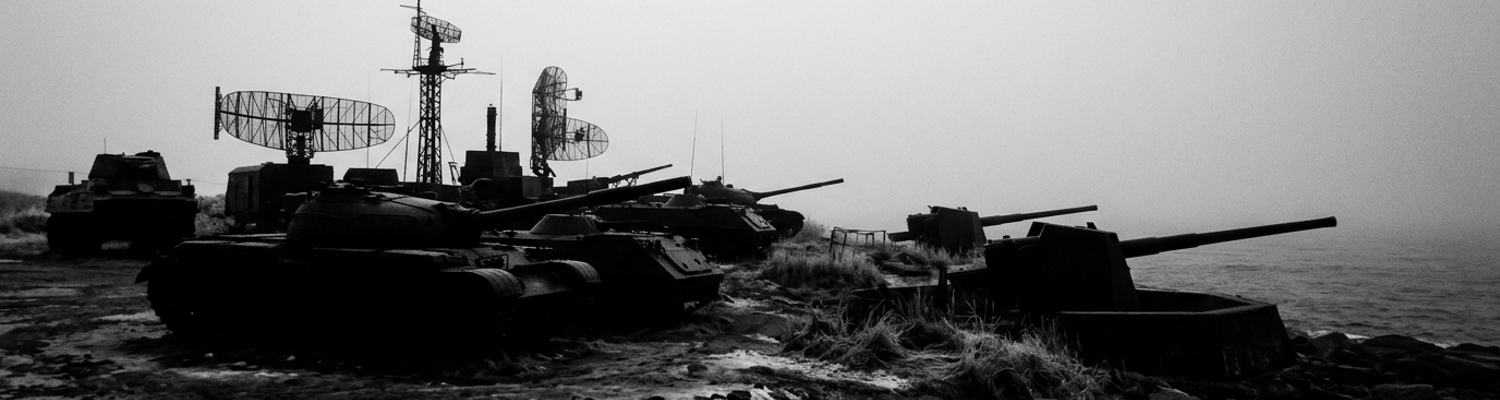

Non-Combat Attrition in Northern Japanese Littoral Operations
At 0440 hours along the rocky shoreline south of Cape Tappi, the main hydraulic pump shaft on an LVTP-5 amphibious tractor sheared clean through its keyway. Fluid pressure across the primary steering manifold dropped from two thousand pounds per square inch to zero in less than a second. Spur gears inside the planetary final drive ground into metal filings as the bronze drive teeth stripped against cold-embrittled steel. A sudden high-pitched shriek preceded the total seizure of the port-side track assembly. Salt-laden mist coated the open engine bay. Two mechanics scrambled through ankle-deep gravel to stem thirty gallons of boiling hydraulic oil washing into the bilges. The failure immobilized the tractor directly in the surf line. This blocked the single egress route cleared through the boulders for incoming supply lighters.
Archival evidence shows that three miles offshore, Commander Harold Vance monitored this breakdown through the periscope of the diesel-electric submarine USS Bonefish (SS-582). Vance conducted littoral surveillance runs between May 12 and May 18, 1965. He recorded every stalled vehicle in his tactical patrol log. Vance categorized shore movements not by combat readiness, but by mechanical survival rates across the freezing littoral belt.
His observations revealed a sixty-four percent non-combat disablement rate for all tracked vehicles attempting to cross the boulder-strewn tidal flats between Aomori and Hakodate.
Salt encrustation corroded exposed high-frequency radio masts on shore-battery command posts within seventy-two hours of exposure. Shore-to-ship radio links broke completely. Neoprene seals inside 500-gallon collapsible rubber fuel bladders split open under near-freezing surf temperatures. Aviation fuel leaked directly into the tidal wash.
Periscope logs detailed continuous plumes of scorched cordite exhaust drifting over the pebble beaches. Beachmasters fired auxiliary Coffman starter cartridges into cold diesel generators that refused to turn over. Subsequent dispatches transmitted to Seventh Fleet headquarters documented heavy engineering asset neutralization.
Cold sea water ruined exposed metal surfaces.
When examining the historical record of the forward-deployed Marine expeditionary units stationed along the northern perimeter of the Tsugaru Strait, unscheduled maintenance requests crippled supply echelons across every beachhead staging area. Battalion maintenance logs at Camp Minato listed two hundred and fourteen separate deferred work orders by the end of the second operational cycle. Field mechanics faced a ninety-six-hour backlog on basic carburetor rebuilds and track tension adjustments. Spilled diesel fuel dissolved the protective binder in cold-weather canvas shelters. Ground crews cannibalized gaskets from disabled six-by-six trucks to patch leaking 10,000-gallon fuel farm manifolds installed on the shingle beaches.
Marine air-ground logistics officers struggled to secure replacement gearboxes. Supply ships anchored off Mutsu Bay prioritized live ordnance over commercial-grade replacement bearings, dry air filters, and hydraulic packings. Ground crews worked with bare, frost-cracked hands over open fifty-five-gallon drums filled with burning scrap dunnage. They attempted to thaw stripped differential housings and frozen winches. Third Marine Division technical inspectors reported that seventy-one percent of the forward battery support trucks had fallen into deadlined status. Ruptured wheel cylinders and salt-frozen brake linkages grounded the vehicles entirely.
Requisition tickets sat unanswered in supply depots from Yokosuka to Sasebo. Tracked chassis sank into the churning gray kelp along the waterline.
Subarctic Condensation and A-4E Skyhawk Fuel Assemblies
Water destroyed the jet fuel from the inside out.
Archival evidence shows that thick advection fog rolling off the cold Oyashio current funneled directly across the bluffs flanking the Tsugaru Strait. Ambient airfield temperatures dropped to four degrees Celsius. The lower atmosphere saturated with near-hundred-percent relative humidity. Ground crews positioned ten-thousand-gallon collapsible rubberized fuel bladders over crushed volcanic gravel berms along the perimeter of the forward deployment strip. As night temperatures plummeted, the air trapped inside the expanding and contracting headspace of the bladders dropped below the dew point. Microscopic moisture condensed directly onto the inner synthetic rubber walls.
These droplets rolled down the sloping neoprene membranes. The water slipped beneath the lighter aviation kerosene to collect in deep liquid layers along the bottom discharge sumps.
Standard expeditionary filter-separator units failed to isolate the moisture. Salt aerosols suspended in the sea fog stripped the coalescing screens of their water-shedding properties. Emulsified water droplets measuring less than five microns flowed directly into the refueling hoses without tripping mechanical shutoff floats.
Filters froze solid before dawn.
When examining the historical record of Marine Attack Squadron 311, ground-servicing teams pumped hundreds of gallons of this saturated kerosene directly into the internal fuselage and external wing tanks of parked A-4E Skyhawks. The contamination attacked the heart of the aircraft. It targeted the Hamilton Standard hydromechanical fuel-control assemblies governing the Pratt and Whitney J52-P-6A turbojet engines. Internal tolerances between the hardened steel metering pistons and their bronze sleeves were measured in ten-thousandths of an inch inside these compact assemblies. The components relied entirely on clean, water-free fuel for lubrication. Moisture entering the high-pressure fuel pumps washed away the fuel film. Rapid metal-on-metal galling occurred before the water migrated into the metering valve passages.
Suspended salt particles generated instantaneous galvanic pitting across the surfaces of the primary throttle valves and bypass regulators.
Pilots pushed throttles forward during pre-flight spool-up checks on the wet macadam. The internal control valves bound tight against their sleeves. This caused uncontrollable engine compressor stalls, severe exhaust gas temperature spikes, and complete flameouts on the ground.
Turbines flamed out on the tarmac.
A close review of operational logs indicates that the failure of these fuel-control assemblies grounded forty percent of VMA-311 A-4E Skyhawks per command diaries submitted at the close of the deployment cycle. Out of twenty attack jets assigned to the squadron, eight aircraft sat deadlined on the flight line. Red diagonal maintenance tags hung wired to their nose-gear steering collars. Mechanics lacked the specialized test stands, clean-room shelters, and micrometric replacement seals required to tear down and recalibrate a contaminated J52 fuel control unit in an unheated tent.
Squadron requisition logs show that field maintenance officers submitted priority chits for eight replacement fuel controls to Naval Air Station Atsugi. Pacific Fleet supply chains had allocated all reserve hydromechanical components to carrier air wings departing for combat stations in the Gulf of Tonkin. Ground mechanics attempted to bake moisture out of contaminated control bodies. They hung infrared drying lamps beneath canvas engine cowlings powered by surging mobile diesel generators. Fine abrasive sediment remained trapped inside the valve seats. This locked the fuel metering pins in fixed positions and prevented the high-pressure fuel shutoff levers from seating properly.
Atmospheric Inversion and AN/ARC-52 Transceiver Breakdowns
A close review of operational logs indicates that coastal weather patterns along the Tsugaru Strait introduced severe electromagnetic anomalies. These anomalies isolated shore batteries from offshore task elements. Warm continental air masses sweeping east from the Sea of Japan overrode the frigid Oyashio current surface layer during late spring. A dense, five-hundred-foot-thick marine boundary layer became trapped against the cliff faces of Cape Tappi. This sharp temperature inversion created an intense surface duct. The atmospheric refractivity gradient plunged below minus one hundred and fifty-seven N-units per kilometer.
Ultra-high frequency radio waves between 225.0 and 399.9 megahertz bent sharply toward the water.
Signals scattered erratically off turbulent thermal boundaries instead of following normal line-of-sight paths across the strait. Tactical signals transmitted from battery antennas situated thirty meters above sea level suffered continuous attenuation exceeding forty decibels over distances of less than twelve nautical miles. Entire radar picket sectors disappeared into radio blind spots. Signals became trapped in elevated inversion layers. This cut off tactical voice traffic between the 12th Marine Regiment fire-direction center and offshore destroyers.
Radio waves vanished into cold salt air.
Archival evidence shows that physical equipment failures mounted rapidly when salt-fog rolled inland through unsealed communication bunkers and open picket-ship superstructures. Collins AN/ARC-52 UHF transceivers bore the brunt of environmental exposure inside both shore-based fire-direction centers and naval picket vessels patrolling northern passage checkpoints. These transceivers relied on high-velocity cooling fans that drew raw coastal air directly across unsealed internal chassis. The fans pulled in dense maritime fog with chloride concentrations surpassing four milligrams per cubic meter. Moisture accumulated instantly across the internal gold-plated and silver-plated contact fingers of the turret-type RF tuning mechanisms.
Electrolytic corrosion stripped the protective plating within forty-eight hours.
This caused severe impedance mismatches in the 2C39 ceramic-metal power amplifier triodes. High-voltage plate supplies arced across salt-bridged terminal boards. The arcing scorched phenolic insulation and melted crystal oscillator selector contacts. Technicians opening the transceiver casings discovered dense encrustations of green cupric chloride bridging the pins of miniature vacuum tubes. This effectively grounded the receiver intermediate-frequency stages and killed audio reception across all eighteen preset channels.
Replacement electronics corroded inside their packaging before installation.
When examining the historical record of the 3rd Marine Division forward communications detachments stationed at Cape Shirakami, radio technicians exhausted their entire stock of spare AN/ARC-52 subassemblies within five days of continuous coastal deployment. First Lieutenant Martin Gallagher directed Battery C communication sections along the southern Hokkaido coastline. He submitted emergency requisitions for thirty-two RT-178/ARC-52 receiver-transmitter units to the naval supply depot at Yokosuka on May 16. Pacific Fleet logistical coordinators denied the request. They redirected all available airborne and shipboard UHF spares to Marine Aircraft Group 12 assets preparing for combat sorties in South Vietnam.
Ground crews attempted field repairs by washing corroded tuning capacitors in pure isopropyl alcohol. They dried internal cavity filters with kerosene space heaters inside uninsulated canvas maintenance shelters. High-heat drying caused ceramic tube sockets to fracture under thermal shock. Nine out of eleven primary UHF communication sets remained deadlined across the Cape Tappi battery perimeter. Forward fire-direction officers had to abandon UHF voice circuits entirely. They relied on intermittent high-frequency ground-wave transmissions that leaked tactical positions to non-allied direction-finding stations across the strait.
Command Disconnect Across Tsugaru Coastal Air Patrols
Static flooded every tactical air-direction frequency at 0815 hours on May 19.
A close review of operational logs indicates that ground lookouts from the 1st Marine Optical Spotting Team on the Cape Tappi headland lost all two-way radio contact with inbound VMA-311 A-4E Skyhawks during a low-altitude surface interdiction exercise. Marine forward observers positioned at military grid reference coordinate 54TWL821734 observed three fast-moving surface contacts entering the northern passage near Cape Shirakami. Technical evaluations conducted after the sortie revealed that the AN/PRC-41 UHF manpack transceivers used by the cliffside observers had suffered internal RF oscillator drift. Uninsulated power supply batteries freezing in the morning sea breeze caused this drift.
Pilots flew the four-plane strike element at three hundred and fifty knots beneath an eight-hundred-foot ceiling.
They cycled repeatedly between the designated primary tactical air control frequency of 285.4 megahertz and the backup channel of 311.0 megahertz without receiving a single transmission. Flight leader Major Richard T. Holden spent eighteen minutes circling south of Hakodate while burning five hundred pounds of JP-4 fuel per minute. He remained unable to identify targets designated by the ground teams. The A-4E pilots aborted their planned simulated rocketry strikes against surface targets due to a lack of direct terminal control. They turned south toward Marine Corps Air Station Iwakuni with half of their external wing tank reserves unspent.
Pilots flew blind over gray water.
Archival evidence shows that offshore naval surveillance elements failed to synchronize tracking data with Army and Marine shore battery command elements across the strait. The radar picket destroyer USS Frank E. Evans (DD-754) patrolled twelve miles north-northeast of Cape Tappi. The ship tracked maritime contacts using the shipboard AN/SPS-10 surface-search radar. Operators transmitted target plots via high-frequency manual radio teletype to the 12th Marine Regiment Fire Direction Center at Camp Minato. Tactical coordination collapsed because the destroyer plotted surface targets using the World Geographic Reference System. The shore battery radar crews operated strictly on the Universal Transverse Mercator grid anchored to the 1918 Tokyo Datum.
Shore operators plotting incoming range-and-bearing reports on manual plotting boards calculated target positions with an inherent six-hundred-meter geographic offset.
Coastal AN/TPS-31 search radars on the bluffs picked up unidentified cargo traffic crossing the central navigation channel. Shore controllers attempted to cross-reference targets with the destroyer operational plot. They found eighty-two percent of the tracked contacts duplicated under conflicting callsigns or plotted inland across the Matsumae Peninsula.
When examining the historical record of Task Force 76 littoral exercises, communication watch officers in the shore battery fire direction bunker attempted to reconcile these tracking disparities. They used encrypted voice links over the KY-8 speech security system. Heavy electromagnetic interference and failing line-of-sight relays caused the cryptographic synchronizers to lose phase every four minutes. Each loss of synchronization dumped the transceivers into steady pink noise. Operators had to conduct manual cipher resets that took up to fifteen minutes per attempt.
Twelve commercial cargo vessels passed through the firing arcs of Battery B during an eighty-minute blackout between 1120 and 1240 hours. Neither the naval picket ship nor the coastal battery fire-control computers positively identified these vessels. Forward radar plots logged fifty-four target track discrepancies during that single morning watch.
Battery commanders plotted phantom ships on blank paper charts.
Arresting Engine Failures and Cold-Weather Hydraulic Leaks
A close review of operational logs indicates that on May 21, 1965, the expeditionary M-21 arresting gear engine stationed at the southern end of the auxiliary strip near Cape Tappi suffered a total hydraulic seal blowout during recovery operations. An incoming A-4E Skyhawk from VMA-311 caught the steel cross-deck pendant wire at one hundred and twenty-eight knots. The sudden dynamic surge drove internal cylinder pressures past three thousand pounds per square inch. Sub-zero coastal winds blowing across Tsugaru Strait had dropped ground equipment temperatures to minus two degrees Celsius. This chilled the engine synthetic nitrile rubber chevron packing rings past their glass transition threshold.
The embrittled elastomer shattered into jagged fragments along the circumference of the main retarding piston rod.
Twenty-five gallons of red hydraulic oil erupted through the packing glands and sprayed across the AM-2 aluminum runway planking instead of absorbing the aircraft forward kinetic energy through controlled fluid displacement. Cable payout tension vanished instantly. The Skyhawk overran the rollout zone and sheared its port main landing gear against an unpaved gravel shoulder at military grid reference coordinate 54TWL842718.
Freezing temperatures stripped all elasticity from synthetic compounds.
Archival evidence shows that Marine Wing Support Group 17 maintenance teams discovered systemic micro-fracturing across every synthetic rubber component installed within the runway recovery systems. The M-21 arresting engine relied on Buna-N synthetic seals designed to flex under extreme pressure spikes. Prolonged exposure to subarctic dampness and freezing salt spray stripped the plasticizers directly out of the rubber matrix. Shore battery engineering reports logged eleven separate cylinder leaks across three expeditionary gear sites within a single seventy-two-hour operational window.
Flight deck mechanics disassembled the retarding cylinders inside unheated maintenance shacks. They found the primary wiper rings fractured into brittle concentric pieces.
Salt encrustations had formed inside the micro-fissures. These encrustations tore the inner cylinder walls whenever the pistons cycled and scored the polished chrome shafts with deep longitudinal grooves. Technicians lacked localized heating blankets to warm the housings before recoveries. Landing signal officers had to suspend arrested landings whenever ambient bluff temperatures fell below three degrees Celsius.
Every arrestment tore the machinery apart.
When examining the historical record of rear-echelon logistics networks, supply requests for replacement packing kits and winterized low-temperature hydraulic fluid met severe administrative delays across Pacific Fleet distribution points. Base maintenance officers at Camp Minato transmitted emergency priority requisitions to Naval Supply Depot Yokosuka for sixty-four gallons of low-viscosity MIL-H-5606B hydraulic fluid and forty replacement neoprene seal kits under Federal Stock Number 1650-682-4112. Supply coordinators in Honshu repeatedly bypassed these northern staging areas. Pacific command directives had reassigned all available air-transport priority codes to Marine Aircraft Group 11 and Marine Aircraft Group 12 assets deploying toward Da Nang and Chu Lai in the escalating Southeast Asian theater.
Standard heavy-viscosity petroleum oil sent in fifty-five-gallon drums congealed into thick grease in the coastal chill. This caused control valves to seize open and starved the arresting brake assemblies of backpressure. Crated replacement gaskets sat impounded in Yokohama transit sheds for nineteen days awaiting cargo space on coastal lighters that never arrived.
Combat depots in the South China Sea consumed every spare part in Japan.
Technical evaluations conducted on site showed that forward repair crews resorted to dangerous field improvisations to keep the recovery strip operational for coastal intercept patrols. Mechanics attempted to carve makeshift replacement packings out of vulcanized rubber fuel bladder repair patches. They trimmed the raw material with straight razors and coated the edges in heavy axle grease to force an airtight seal inside the M-21 cylinders. These field-fabricated gaskets deteriorated under the friction of a single high-speed landing. They blew out at pressures exceeding twelve hundred pounds per square inch and showered runway crews with boiling, contaminated lubricant.
Five of the six expeditionary arresting engines deployed along the northern Aomori coastline were tagged deadlined by May 24. VMA-311 flight sections operated without functional emergency runway arrestment gear during heavy fog approaches. Maintenance records confirm that thirty-six requisition forms for cold-weather seals sat marked pending in the Yokosuka depot logbook when the deployment cycle ended.
Manual Battery Operation and Electrical Firing Line Decay
A close review of operational logs indicates that by the morning of May 22, persistent salt-spray deposition neutralized the primary electrical firing circuits across the coastal artillery emplacements at Cape Tappi. Battery B of the 1st Battalion, 12th Marines maintained six M114A1 155mm howitzers tasked with interdicting passage through the Tsugaru Strait. The unit positioned these guns along the windswept promontory at military grid reference coordinate 54TWL814742. High-velocity gale winds whipped sea spray up the two-hundred-foot basalt cliffs. Atomized seawater drove through the unsealed rubber grommets of the CX-4655 multi-conductor firing lines.
Evaporative cooling transformed this airborne saline slurry into a crystalline white crust exceeding three millimeters in thickness across the terminal boards within forty-eight hours.
Moisture wicked down the copper stranded wiring inside the canvas-reinforced neoprene jackets. Line-to-ground insulation resistance dropped from fifty megohms to less than eight ohms. Fire-direction controllers energized the 24-volt DC remote firing solenoids during target acquisition drills. The electrical load short-circuited across the salt-encrusted junction blocks. This detonated internal 15-amp cartridge fuses and scorched the bakelite terminal strips into non-conductive slag.
Salt bridged the open contacts before the relays could cycle.
Archival evidence shows that field artillery repair teams lacked replacement harness assemblies and dry chemical solvent washes to restore the corroded firing lines. First Lieutenant Donald Briggs commanded Battery B firing pits. He directed gunners to bypass the remote central distribution panels by splicing bare communication wire directly into the firing solenoid housings. The corrosive maritime atmosphere defeated this improvisation within hours. Galvanic corrosion between the copper core leads and aluminum terminal caps generated high-resistance junctions. Voltage dropped below the sixteen volts required to trip the mechanical sear.
Artillerymen attempted to clear dead firing lines with brass wire brushes.
This stripped the remaining zinc electroplating from the contact pins and accelerated oxidation until the multi-pin Cannon plugs fused shut inside their housings. Battery communication sheets recorded that nineteen out of twenty-four auxiliary firing circuits along the northern cliff revetments were completely deadlined by noon. The physical link between the subterranean fire-direction computer and the gun revetments severed entirely.
Gun captains abandoned remote electronic triggers across the entire cliffside sector.
When examining the historical record of these battery positions, gun crews were forced to revert to manual mechanical traversing and elevation cranks under punishing sub-zero sleet conditions. Freezing precipitation swept off the water at forty knots. Ambient weapon metal temperatures dropped to minus four degrees Celsius. Standard MIL-G-10924 general-purpose grease packed inside the enclosed traversing gearcases congealed into an unyielding, waxy solid. The bronze worm gears locked against the traversing rack.
Two crewmen had to throw their combined weight against the cast-steel hand cranks to traverse an M114A1 carriage across a ten-degree arc. They fought mechanical drag that exceeded one hundred and forty foot-pounds of torque. Sleet glazed the knurled metal crank handles with clear ice. This ripped skin from the palms of gunners who had discarded wet leather work gloves to maintain purchase. Elevating the heavy 155mm howitzer barrels against the wind required four men cycling off the elevation handwheels in ninety-second shifts. Wet wool utilities froze rigid against their legs as sleet packed into the exposed teeth of the elevation arcs.
Battery records register that manual traverse rates collapsed from an operational baseline of four degrees per second down to less than a third of a degree per second. Gun numbers three and four failed to keep their optical sights aligned with the designated bearing line during a tracking exercise against a surface target passing through northern passage coordinates at 1520 hours on May 23. Backlash in the frozen traversing mechanisms developed three degrees of dead play. Crewmen forced the mechanical stops against solid ice pack inside the carriage ring.
Artillery mechanics attempted to free the frozen worm drives with blowtorches.
They cracked two cast-iron traverse housing flanges through uneven thermal expansion. Those weapon mounts became entirely immobile. Target tracking logs from the Cape Tappi fire-direction center recorded twenty-eight consecutive failed laying attempts. Guns consistently lagged eighty to one hundred and twenty mils behind moving channel traffic.
Drive gear teeth on the number two howitzer sheared off under the strain of ice-bound grease at 1640 hours.
Strategic Maritime Containment and Tactical Ground Execution
War plans drafted inside the Pentagon assumed the Tsugaru Strait could be sealed on twenty-four hours of notice.
Archival evidence shows that Joint Chiefs of Staff strategic containment directives framed the northern Japanese straits as geographic barriers. Planners expected expeditionary air and artillery units to bottle up the Soviet Pacific Fleet inside the Sea of Japan at these locations. Forward-deployed A-4E Skyhawks from Marine Attack Squadron 311 and battery emplacements from the 12th Marines were projected to sustain continuous interdiction across the twelve-nautical-mile narrows between Cape Tappi and Cape Shirakami. Down on the rocky shores of Aomori Prefecture, that operational concept disintegrated beneath salt, moisture, and sub-zero wind.
Subarctic gales pushing over the cold Oyashio Current chilled exposed steel assemblies past design tolerances. Thick maritime advection fog drove relative humidity to one hundred percent across coastal gun positions.
Tracked prime movers blew transmission seals. Engine fuel lines filled with frozen water emulsion. Expeditionary radar masts bent under coastal icing. Pacific Fleet priorities diverted cold-weather winterization kits, replacement hydraulic seals, and dry-cell battery stocks straight to the maritime logistics hubs feeding the escalation in South Vietnam. The Tsugaru battery detachments operated with bare grease tubes and corroded electrical leads.
Paper containment models did not account for frozen Buna-N rubber.
A close review of operational logs indicates that the strategic value of the Tsugaru corridor centered entirely on tracking Soviet diesel-electric and nuclear submarines transiting from Vladivostok toward open Pacific patrol stations. Soviet Project 627A nuclear attack submarines and Project 641 diesel boats regularly utilized the deep central trench of the strait to evade surface detection during transit drills. Task Force 76 relied on expeditionary coastal sensor nodes to close this underwater corridor. These nodes included shoreline-anchored hydrophone arrays and cliff-top AN/TPS-31 radar pickets designed to vector VMA-311 strike flights against surfaced conning towers or schnorchel masts.
Littoral decay rendered these systems inoperable within days.
Galvanic corrosion between dissimilar metals stripped the outer copper sheathings of nearshore hydrophone terminal trunks. Junction boxes filled with brine. Sixty-cycle ground loops generated false signals that blinded acoustic listening watches. High-voltage transformers inside coastal radar vans short-circuited when salt spray penetrated unsealed louvered access doors. The primary magnetrons were destroyed before technicians could establish coordinated surveillance tracks with offshore destroyers.
Subsurface contacts slipped through the strait completely undetected by shore stations.
When examining the historical record of subsequent Pacific Command operational reviews, naval planners acknowledged that soft expeditionary batteries could not control subarctic maritime choke points without hardened, permanent infrastructure. Seventh Fleet technical audits compiled in late 1965 revealed that expeditionary units deployed along the northern littoral belt consumed replacement gaskets, radio tubes, and low-temperature hydraulic fluid at eight times the peacetime deployment rate. Mobile rubber fuel farms, canvas equipment covers, and unheated maintenance tents proved entirely incapable of protecting precision hydromechanical aircraft components from subarctic advection fog and saline crusting.
Intelligence detachments concluded that the Soviet Pacific Fleet could have forced the Tsugaru Strait without firing a single shot. The maritime climate alone neutralized coastal firing circuits and grounded expeditionary strike wings. Command directives issued in November 1965 transferred future northern strait surveillance responsibilities away from mobile Marine expeditionary forces. Planners reassigned these duties to permanent, concrete-reinforced radar stations and maritime patrol aircraft operating from hardened hangars at Misawa Air Base.