
The Isthmus of Panama at the turn of the twentieth century was a monument to failure. Rusting French dredges and locomotives sat silent in the jungle, consumed by vegetation. They were artifacts of an engineering defeat delivered not by rock or soil, but by microorganisms and the insects that carried them. The French attempt to build a sea-level canal from 1881 to 1889 dissolved under the biological assault of yellow fever and malaria. These diseases claimed an estimated 22,000 lives, a rate of attrition that no industrial project could sustain. When the United States purchased the French assets and rights, the US Army inherited this lethal reputation. As American personnel arrived on May 4, 1904, to take command of the Canal Zone, they faced the same biological enemy. An outbreak of yellow fever during the first year confirmed that American technology alone was insufficient. The project teetered on the brink of a second, identical collapse. This crisis forced a violent break with established medical thinking inside the US Army Medical Department. The passive, treatment-focused approach to disease was discarded. In its place, the Army would field-test a new doctrine of aggressive, environmental warfare. The objective was not to cure the sick, but to exterminate the vectors of sickness on a nationwide scale. The success of the Panama Canal, a cornerstone of American strategic ambition, would depend entirely on this sanitary war.
A Doctrine Forged in Failure
The intellectual ammunition for this new war came directly from the failures of the past. The work of Cuban physician Carlos Finlay, who first theorized that a specific mosquito transmitted yellow fever, had been validated by a US Army board. That board, led by Major Walter Reed in post-Spanish-American War Cuba, proved the Aedes aegypti mosquito was the vector. Simultaneously, British research by Ronald Ross in India had convicted the Anopheles mosquito as the carrier of malaria. These were revolutionary scientific discoveries, but they remained academic until an institution could weaponize them. Colonel William C. Gorgas, an Army surgeon, became the architect of that weaponization. As Chief Sanitary Officer in Havana, Gorgas had applied the new science with military discipline, organizing campaigns that eliminated yellow fever from the city inside of a year. He arrived in Panama in 1904 as Chief Sanitary Officer for the Isthmian Canal Commission (ICC), intending to replicate his Cuban success on a far grander and more difficult scale. His plans met immediate and powerful resistance. The first ICC, led by Chairman Admiral John G. Walker, was composed of men who viewed the mosquito theory as fanciful nonsense. Walker publicly dismissed Gorgas’s focus on insects, clinging to the outdated miasma theory that disease arose from foul air and general filth. He believed sanitation was little more than street sweeping and garbage collection. Consequently, the commission systematically denied Gorgas’s requests for personnel, equipment, and budget. For a critical year, Gorgas operated with a skeleton crew, his plans for a large-scale sanitary offensive completely stonewalled. The predictable result was the yellow fever epidemic of 1905, which panicked the American workforce and threatened a mass exodus. The crisis reached Washington, forcing President Theodore Roosevelt to intervene directly. Advised that he could have a canal with Gorgas or a failure without him, Roosevelt issued an ultimatum to the commission. He placed his full political weight behind Gorgas, effectively giving the doctor unlimited authority and resources to prosecute his war.
The Sanitary War Machine
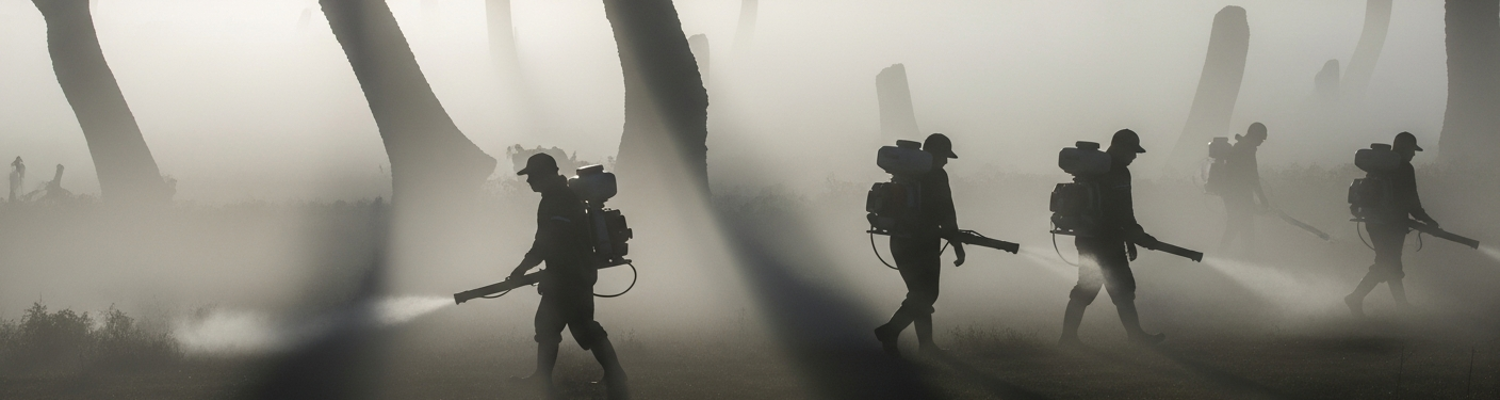
With presidential backing and a budget that would eventually total twenty million dollars, a tenth of the canal's entire cost, Gorgas transformed his Sanitary Department into a military-style field command. The organization swelled to over 4,000 men, structured into specialized brigades with distinct missions. The Isthmus of Panama became a fifty-mile-long, ten-mile-wide battleground. The enemy was the mosquito's life cycle, and the campaign against it was relentless. The first front was the destruction of breeding grounds. The Ditching Brigade, composed largely of West Indian laborers, dug hundreds of miles of primary and secondary drainage channels through swamps and jungles. Army engineers directed the draining of more than 100 square miles of swampland, often lining the new ditches with concrete to create permanent, low-maintenance waterways. The Larvicide Brigade followed, deploying teams armed with brass hand-pump sprayers. They coated any remaining standing water, from vast swamps to small puddles in railroad yards, with a film of oil. This suffocated the aquatic mosquito larvae. Joseph LePrince, a key Gorgas deputy, developed a potent larvicide cocktail of crude oil, kerosene, and carbolic acid for more stubborn areas. Over the course of the project, the Sanitary Department would dispense approximately 700,000 gallons of oil and 124,000 gallons of larvicide.
The second front was the direct assault on adult mosquitoes and the denial of breeding sites in urban areas. The Fumigation Brigades operated with methodical precision, moving house by house through the cities of Panama and Colón. A squad would arrive at a building, seal every door, window, and crack with paper and paste, and then ignite sulfur pots or pyrethrum powder inside. They used a standard measure of two pounds of chemical per thousand cubic feet of space, leaving the building sealed for hours. The campaign was so intense it consumed the entire available supply of pyrethrum in the United States. This process was deeply intrusive. Sanitary inspectors, vested with legal authority, could enter any home at any time. They searched for water containers and issued on-the-spot fines, typically five dollars, for any violations of the sanitary code. Resistance was met with the force of law. Simultaneously, Army engineers undertook a massive civil works project. They constructed modern water and sewer systems for Panama City and Colón, replacing the thousands of individual rainwater cisterns and barrels that were the primary urban breeding grounds for Aedes aegypti. The Army also screened thousands of buildings, from the barracks of the segregated